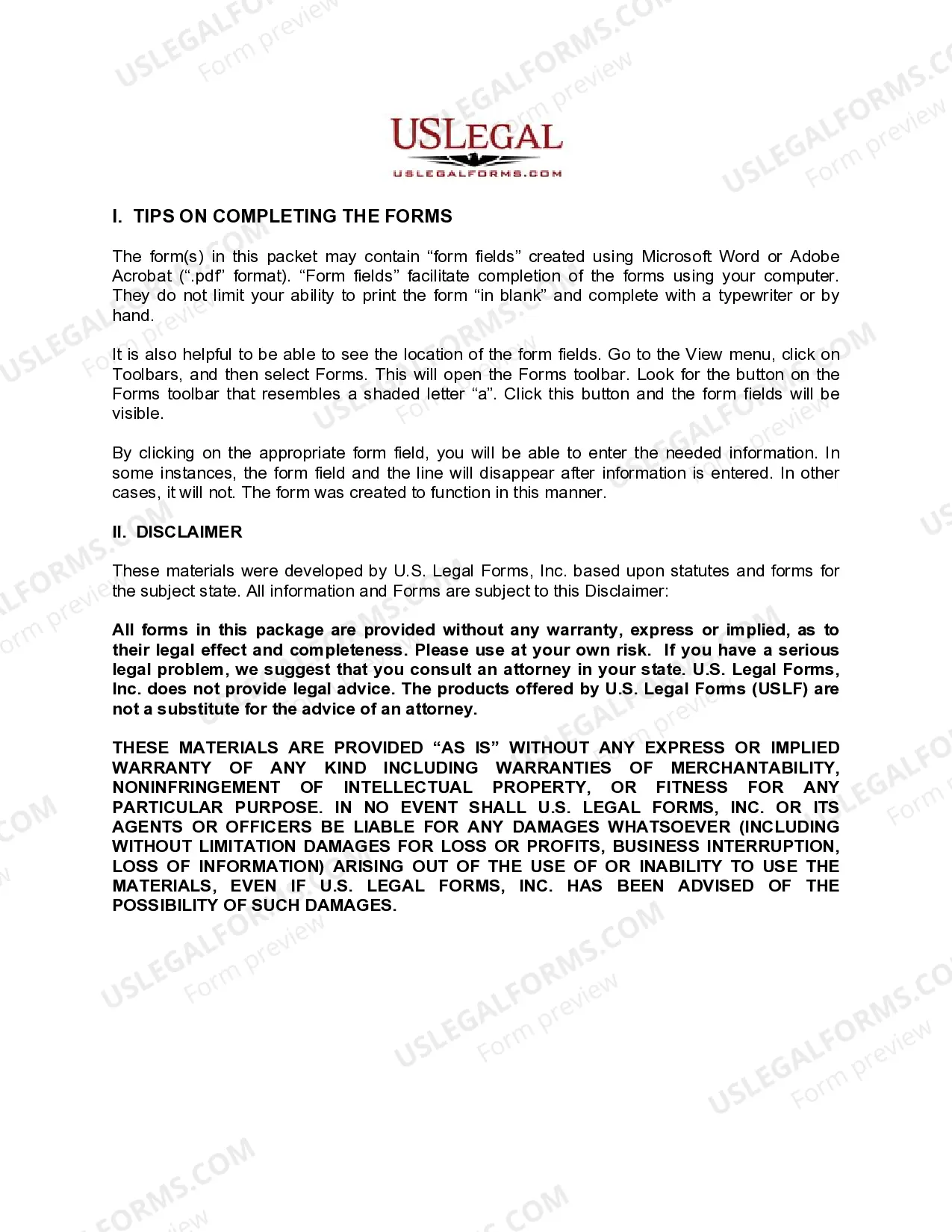
Mississippi Warranty Deed for Three Individuals to One Individual (Subject to Life Estate)
Understanding this form
A Warranty Deed for Three Individuals to One Individual (Subject to Life Estate) is a legal document used to transfer property ownership from three grantors to one grantee. This form establishes that the grantee will hold the property only for the duration of their natural life, after which the ownership may revert to other specified parties. This form is different from regular warranty deeds as it specifically incorporates a life estate provision, limiting the grantee's rights in the property during their lifetime.
What’s included in this form
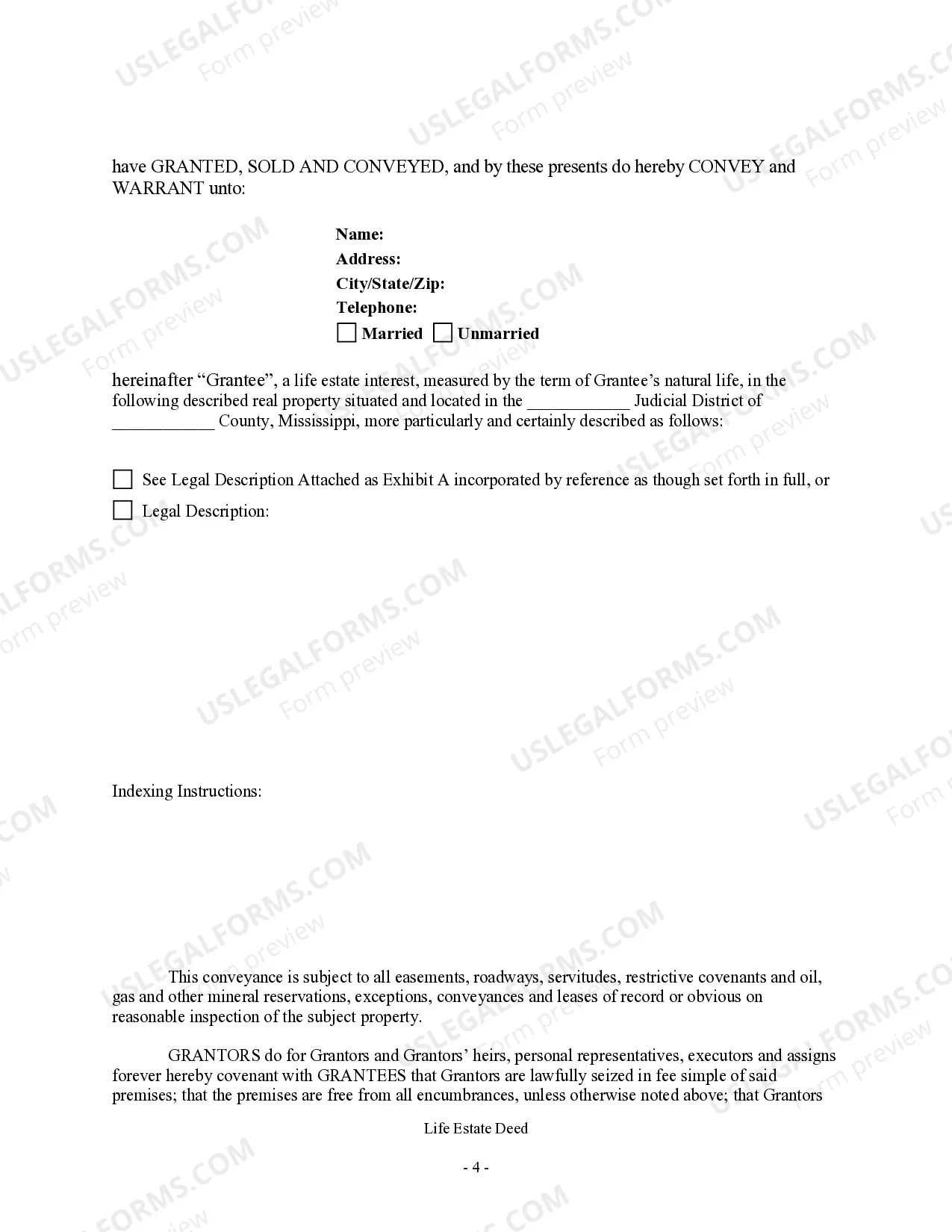
- Information about the grantors (three individuals transferring property).
- Details of the grantee (one individual receiving property).
- Property description including a legal description attached as an exhibit.
- Consideration clause stating the payment received for the transfer.
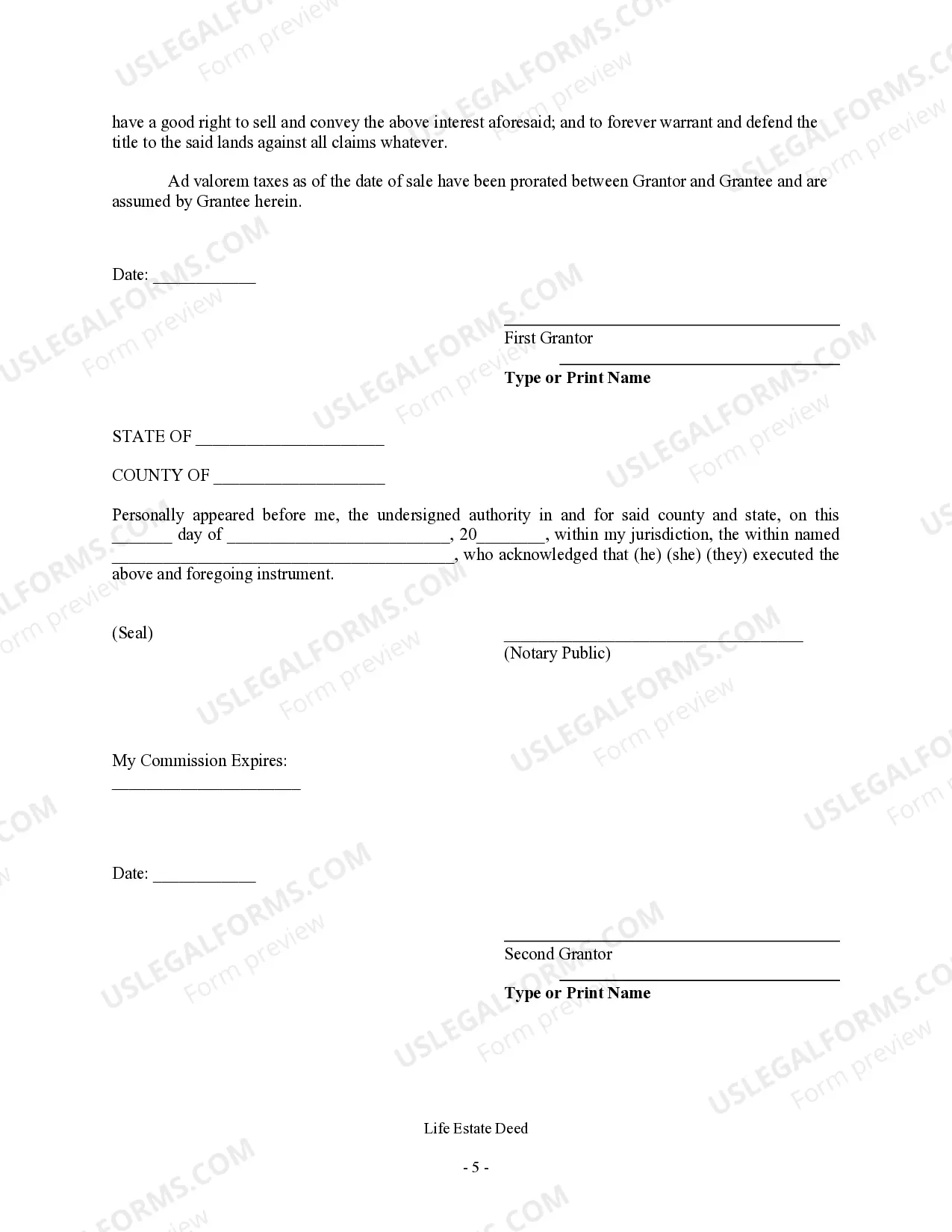
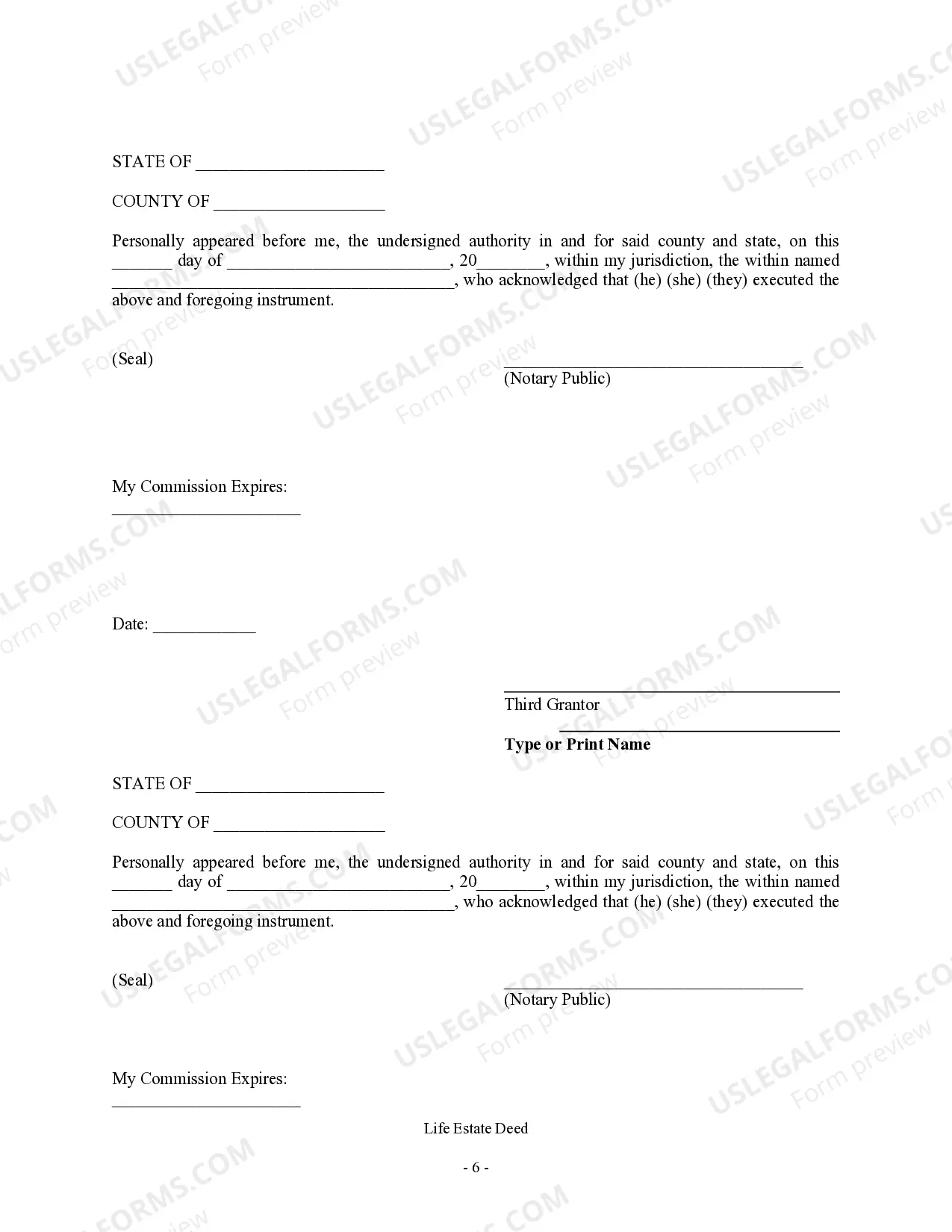
- Notary acknowledgement sections for signing and witnessing the document.







When this form is needed
This form should be used when three individuals wish to transfer property rights to a single individual while ensuring that the transfer is subject to a life estate. It is pertinent in cases of property inheritance, joint ownership transfers, or gifting property while retaining the grantors' rights in specific situations.
Who should use this form
- Individuals looking to transfer property ownership with specific conditions.
- Individuals involved in joint ownership of real property.
- Estate planners or individuals managing estates to ensure a life estate provision.
Completing this form step by step
- Identify the parties involved: the three grantors and the one grantee.
- Provide a detailed legal description of the property being transferred.
- Enter the date and amount of consideration for the property transfer.
- Ensure all parties sign and date the document in the designated areas.
- Obtain notarization for the document where required to ensure legality.
Does this form need to be notarized?
Yes, this form must be notarized to be legally valid. Notarization provides an additional layer of authenticity and security. U.S. Legal Forms offers integrated online notarization services, allowing you to complete this process securely and conveniently via a video call, any time of the day, without the need to travel.
Get your form ready online
Our built-in tools help you complete, sign, share, and store your documents in one place.
Make edits, fill in missing information, and update formatting in US Legal Forms—just like you would in MS Word.
Download a copy, print it, send it by email, or mail it via USPS—whatever works best for your next step.
Sign and collect signatures with our SignNow integration. Send to multiple recipients, set reminders, and more. Go Premium to unlock E-Sign.
If this form requires notarization, complete it online through a secure video call—no need to meet a notary in person or wait for an appointment.
We protect your documents and personal data by following strict security and privacy standards.

Make edits, fill in missing information, and update formatting in US Legal Forms—just like you would in MS Word.

Download a copy, print it, send it by email, or mail it via USPS—whatever works best for your next step.

Sign and collect signatures with our SignNow integration. Send to multiple recipients, set reminders, and more. Go Premium to unlock E-Sign.

If this form requires notarization, complete it online through a secure video call—no need to meet a notary in person or wait for an appointment.

We protect your documents and personal data by following strict security and privacy standards.
Common mistakes to avoid
- Failing to include a proper legal description of the property.
- Not obtaining necessary signatures from all grantors.
- Omitting notarization, if required by local regulations.
- Leaving out the consideration clause or not specifying it clearly.
Advantages of online completion
- Convenient access to legally vetted forms without needing a lawyer.
- Editable templates that can be customized to fit your specific situation.
- Immediate download and usability for quick property transactions.
- Reliable resources that ensure compliance with state laws.
Looking for another form?
Form popularity
FAQ
Adding someone to your house deed requires the filing of a legal form known as a quitclaim deed. When executed and notarized, the quitclaim deed legally overrides the current deed to your home. By filing the quitclaim deed, you can add someone to the title of your home, in effect transferring a share of ownership.
A life estate is where a natural person owns all the benefits of ownership in the property during their life, or the life of another, with the property going to a remainder person after the death of the life tenant.One common type of deed used to reserve a life estate is a warranty deed.
It is possible to be named on the title deed of a home without being on the mortgage. However, doing so assumes risks of ownership because the title is not free and clear of liens and possible other encumbrances. Free and clear means that no one else has rights to the title above the owner.
Remainderman Rights and Life Estates Typically, the deed will state that the occupant of property is allowed to use it for the duration of their life. Almost all deeds creating a life estate will also name a remaindermanthe person or persons who get the property when the life tenant dies.
If you've recently married and already own a home or other real estate, you may want to add your new spouse to the deed for your property so the two of you own it jointly. To add a spouse to a deed, all you have to do is literally fill out, sign and record a new deed in your county recorder's office.
A person owns property in a life estate only throughout their lifetime. Beneficiaries cannot sell property in a life estate before the beneficiary's death. One benefit of a life estate is that property can pass when the life tenant dies without being part of the tenant's estate.
The date the deed was made; The name of the party granting the life estate and their address; The name of the grantee and their address; The address and a legal description of the property that is subject to the life estate;
Yes you can. This is called a transfer of equity but you will need the permission of your lender. If you are not married or in a civil partnership you may wish to consider creating a deed of trust and a living together agreement which we can explain to you.
To add a co-owner, the bank would have to create a new home loan agreement, which must be registered after paying the due stamp duty and registration charges. The bank would also insist on making the co-owner a co-borrower in the home loan applicable.