Mississippi Warranty Deed from Husband to Himself and Wife
Overview of this form
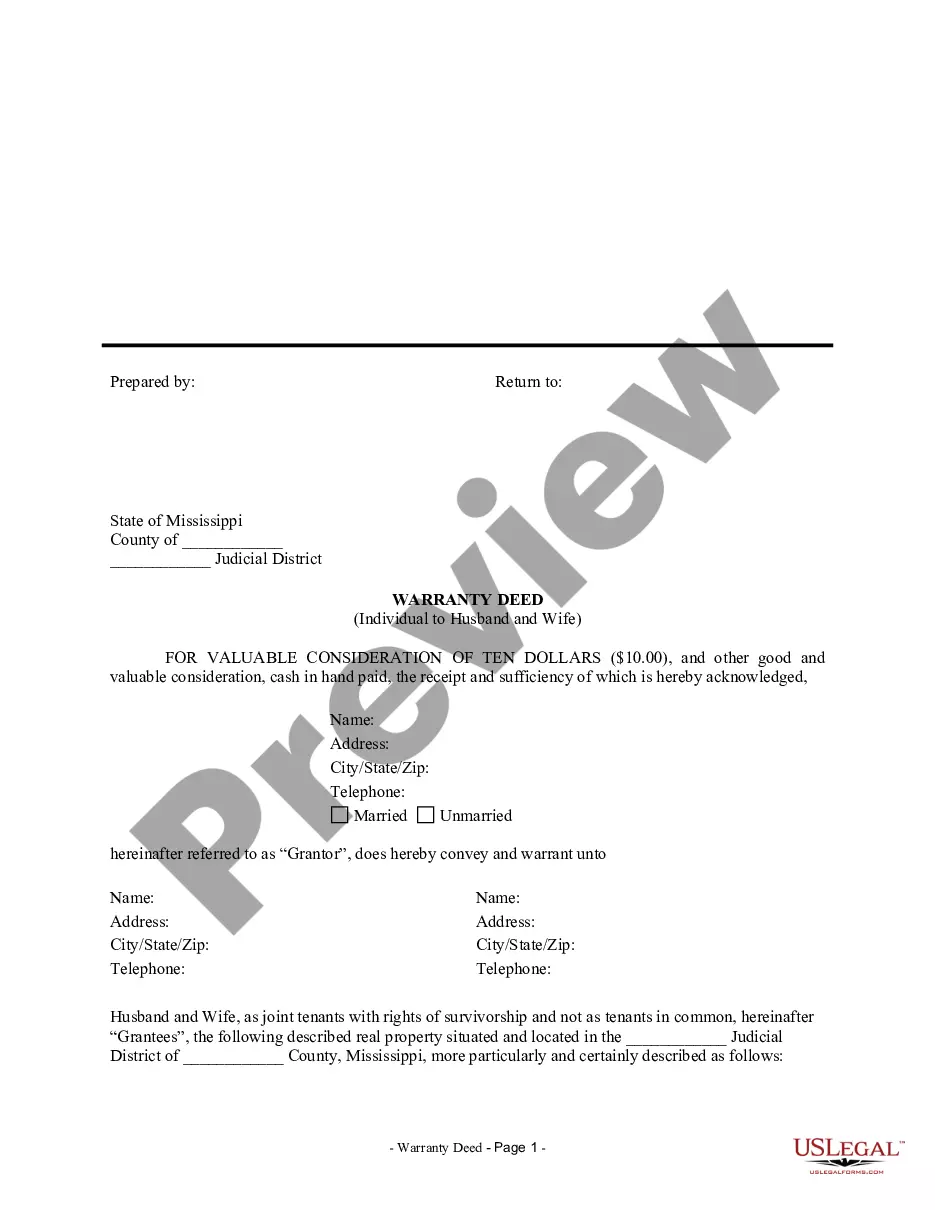
This Warranty Deed from Husband to Himself and Wife is a legal document used to transfer property ownership from a husband to both himself and his wife. This deed establishes joint tenancy with rights of survivorship, meaning that if one spouse passes away, the other automatically inherits the property. Unlike other deeds, this form specifically reserves the rights to any oil, gas, and minerals under the property, ensuring those rights remain with the husband as the grantor.
What’s included in this form
- Grantor details: Information about the husband transferring ownership.
- Grantee details: Information about both the husband and wife receiving ownership.
- Property description: A detailed legal description of the property being transferred.
- Joint tenancy with rights of survivorship: Indicates how ownership is shared between the spouses.
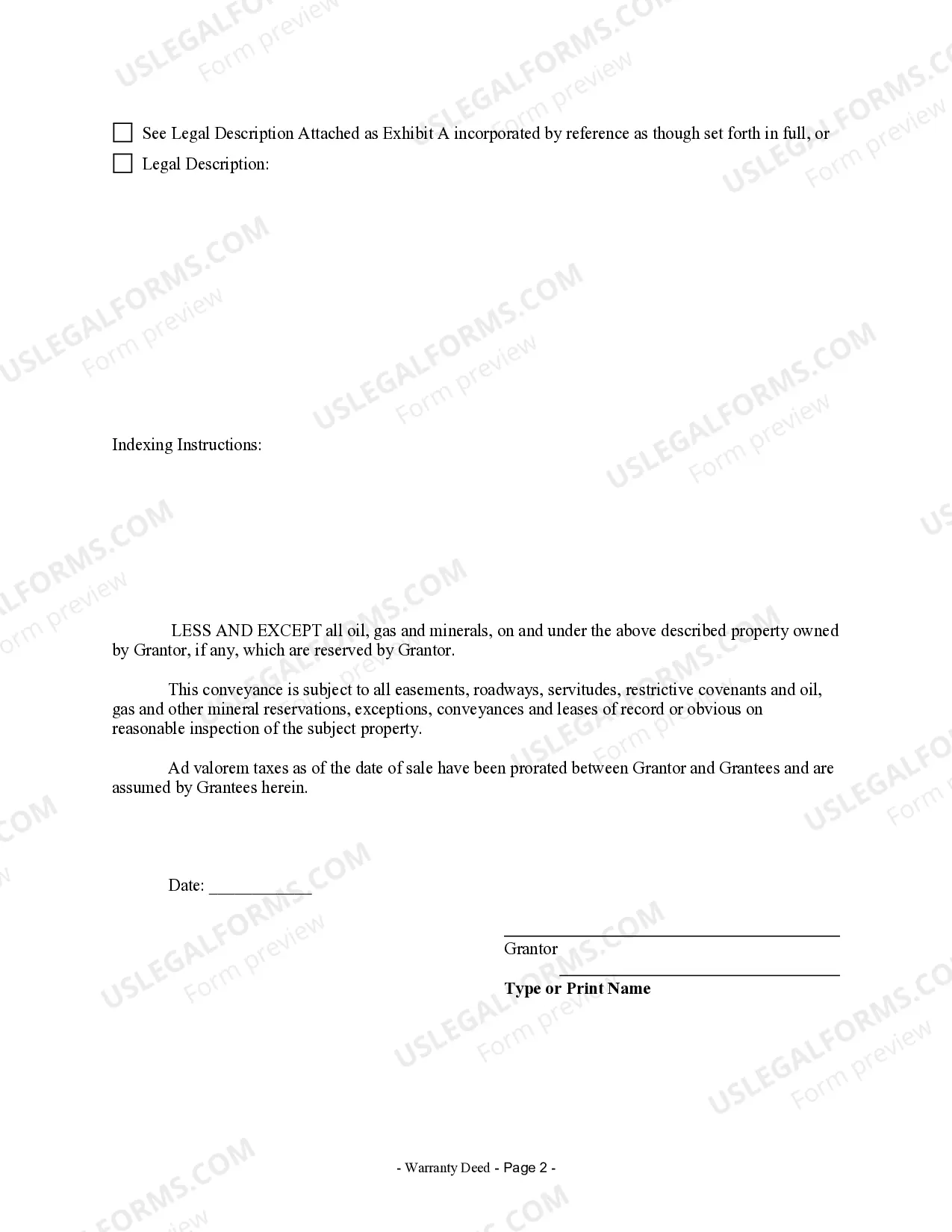
- Reservation clause: Specifies that oil, gas, and mineral rights are retained by the grantor.




When this form is needed
This form is appropriate in various situations, such as when a husband wants to add his wife to the title of jointly owned property or when the couple wishes to clarify their ownership rights together. It is often used during marriage, changes in property ownership, or estate planning to ensure both spouses have equal rights to the property.
Who can use this document
- Couples wishing to hold property jointly.
- Married individuals looking to formalize their property ownership arrangement.
- Spouses seeking to ensure their partner inherits property upon death without probate complications.
- Individuals who want to reserve mineral and gas rights while transferring property ownership.
Completing this form step by step
- Identify the parties: Fill in the names and addresses of the grantor (husband) and grantees (husband and wife).
- Specify the property: Provide the legal description of the property being transferred.
- Enter the consideration: State the amount of consideration (often ten dollars) being exchanged.
- Incorporate the reservation clause: If applicable, ensure to note that oil, gas, and mineral rights are reserved by the grantor.
- Sign and date: Ensure both spouses sign and date the document to validate the transfer.
Is notarization required?
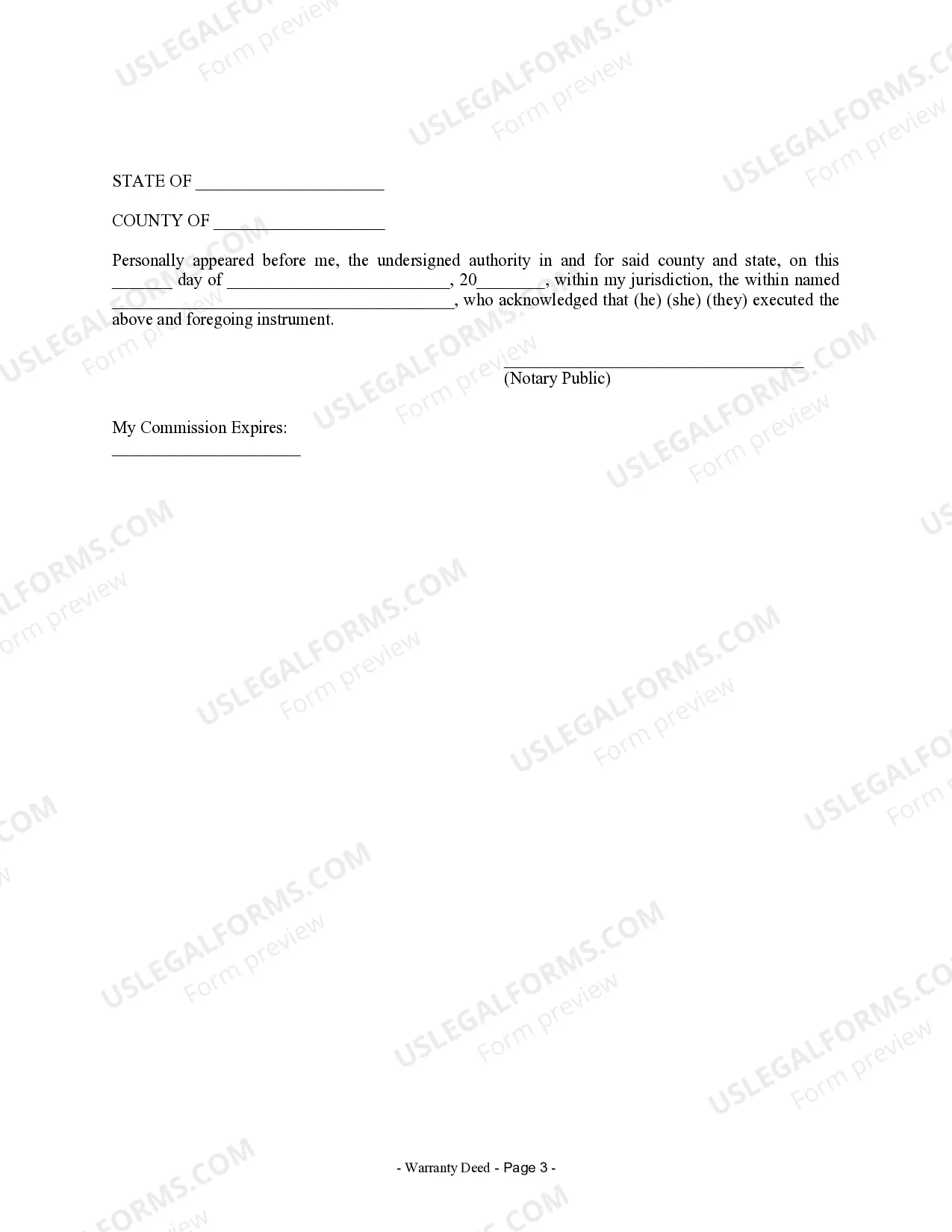
To make this form legally binding, it must be notarized. Our online notarization service, powered by Notarize, lets you verify and sign documents remotely through an encrypted video session.
Get your form ready online
Our built-in tools help you complete, sign, share, and store your documents in one place.
Make edits, fill in missing information, and update formatting in US Legal Forms—just like you would in MS Word.
Download a copy, print it, send it by email, or mail it via USPS—whatever works best for your next step.
Sign and collect signatures with our SignNow integration. Send to multiple recipients, set reminders, and more. Go Premium to unlock E-Sign.
If this form requires notarization, complete it online through a secure video call—no need to meet a notary in person or wait for an appointment.
We protect your documents and personal data by following strict security and privacy standards.

Make edits, fill in missing information, and update formatting in US Legal Forms—just like you would in MS Word.

Download a copy, print it, send it by email, or mail it via USPS—whatever works best for your next step.

Sign and collect signatures with our SignNow integration. Send to multiple recipients, set reminders, and more. Go Premium to unlock E-Sign.

If this form requires notarization, complete it online through a secure video call—no need to meet a notary in person or wait for an appointment.

We protect your documents and personal data by following strict security and privacy standards.
Mistakes to watch out for
- Failing to include a complete legal description of the property.
- Not specifying the rights of survivorship, leading to potential legal issues later.
- Omitting the reservation clause if mineral rights are relevant to the property.
- Neglecting to sign the form, which invalidates the deed.
- Using outdated forms that do not comply with current state laws.
Why use this form online
- Convenience: Download and complete the form at your own pace from home.
- Editability: Customize to fit your specific situation without legal jargon.
- Reliability: Ensure your form complies with state laws, drafted by licensed attorneys.
Looking for another form?



Form popularity
FAQ
Contrary to normal expectations, the Deed DOES NOT have to be recorded to be effective or to show delivery, and because of that, the Deed DOES NOT have to be signed in front of a Notary Public. However, if you plan to record it, then it does have to be notarized as that is a County Recorder requirement.
The mortgage company usually prepares this deed as part of the loan package and delivers it to the title company for you to sign at closing. The title company is commonly the trustee to the deed and holds legal title to the property until the loan gets fully repaid.
After your Warranty Deed has been recorded at the County Clerk's Office, it can be sent to the grantee. However, any person or corporation can be designated as the recipient of the recorded Warranty Deed.
Typically, the lender will provide you with a copy of the deed of trust after the closing. The original warranty deeds are often mailed to the grantee after they are recorded. These are your original copies and should be kept in a safe place, such as a fireproof lockbox or a safe deposit box at a financial institution.
A warranty deed guarantees that: The grantor is the rightful owner of the property and has the legal right to transfer the title.The title would withstand third-party claims to ownership of the property. The grantor will do anything to ensure the grantee's title to the property.
A property deed, or house deed, is a legal document that transfers ownership of real estate from the grantor (seller) to the grantee (buyer). Property deeds are the legal tool of defining ownership. When a property or house is sold, the buyer and seller sign the deed to transfer ownership.
The original deed is returned to the owner of the property from the office of the recorder after proper entry. The office of the Recorder of Deeds maintains a set of indexes about each deed recorded, for an easy search. Almost all states have a grantor-grantee index including a reference to all documents recorded.
It's important to note that a warranty deed does not actually prove the grantor has ownership (a title search is the best way to prove that), but it is a promise by the grantor that they are transferring ownership and if it turns out they don't actually own the property, the grantor will be responsible for compensating