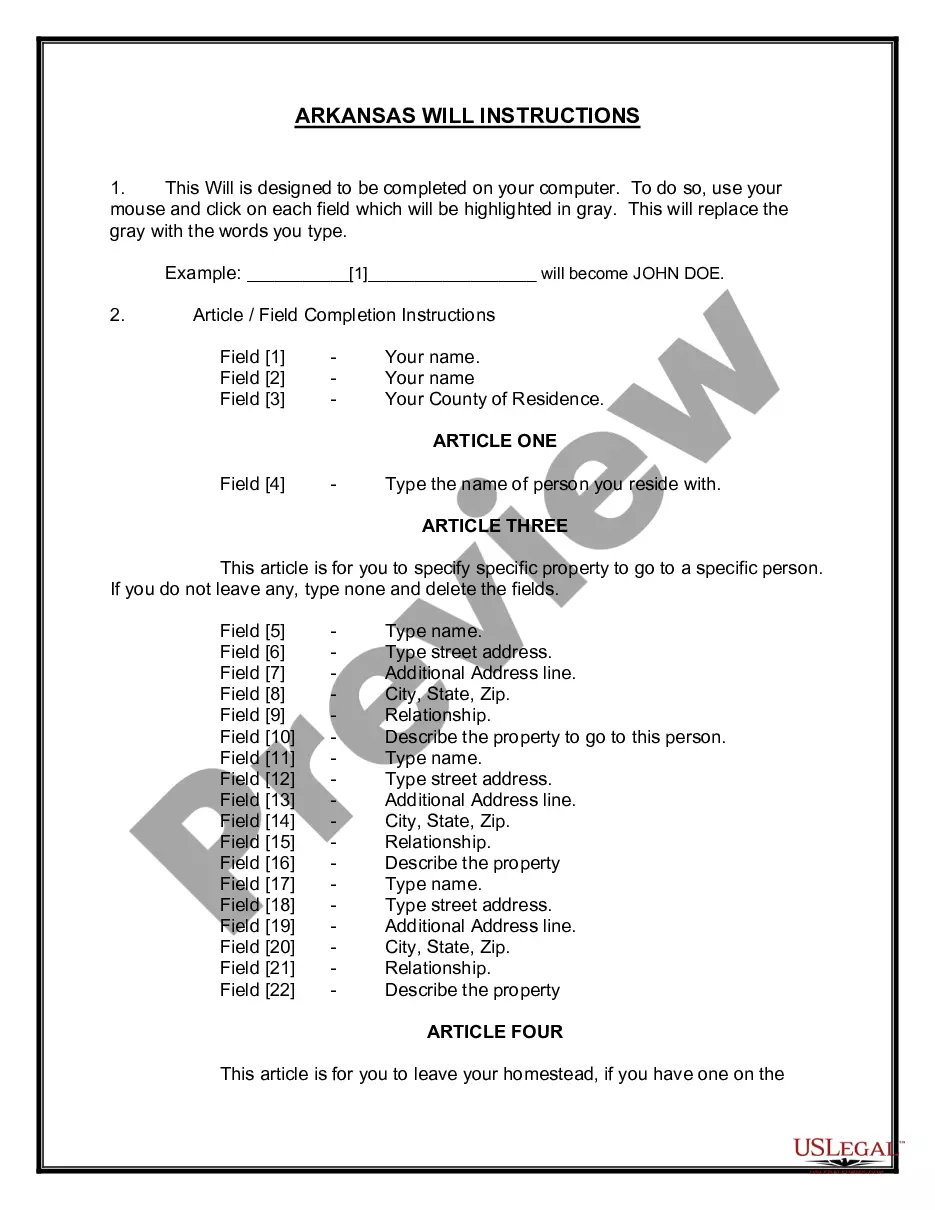
Missouri Last Will and Testament for Divorced and Remarried Person with Mine, Yours and Ours Children
About this form
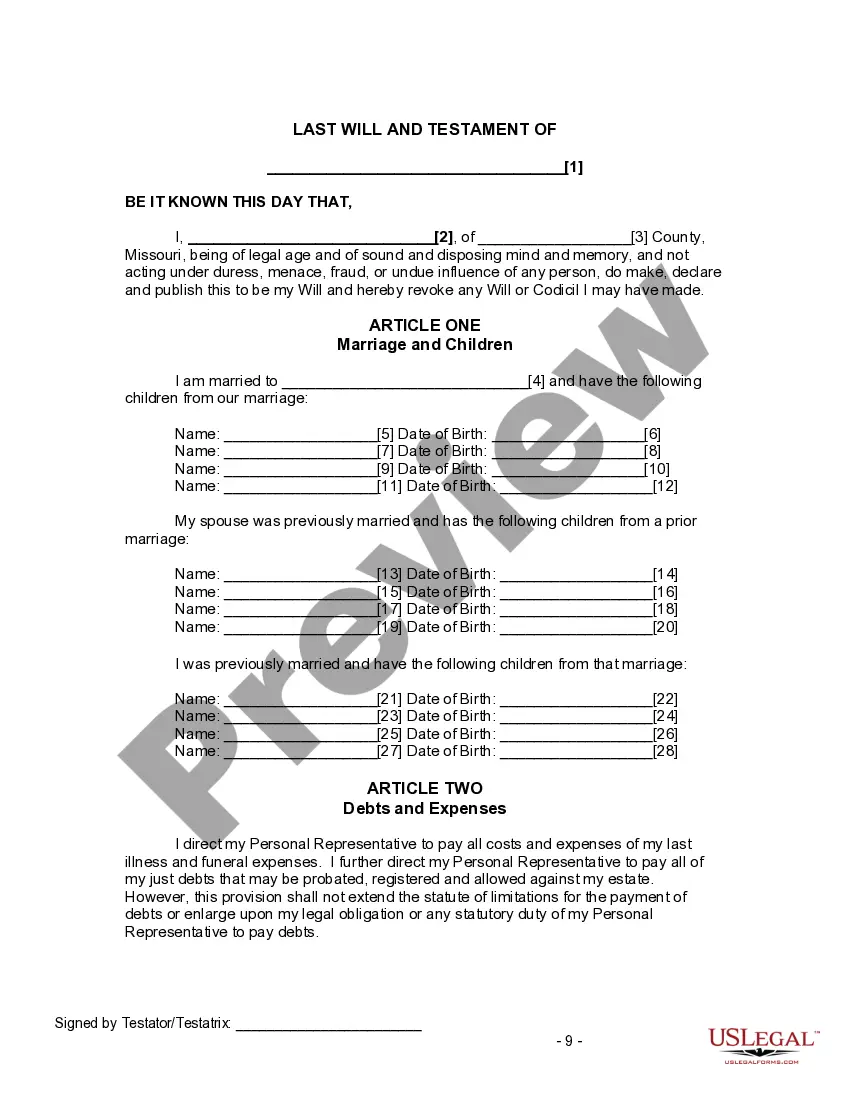
This legal form is a Last Will and Testament specifically designed for a divorced and remarried person with children from previous and current marriages, referred to as "mine, yours, and ours" children. Unlike standard wills, this form accommodates complex family dynamics by explicitly stating how assets are distributed among all children and spouses involved. It appoints a personal representative to oversee the estate and includes provisions for minors, ensuring a comprehensive estate plan that reflects your unique family situation.
Key components of this form
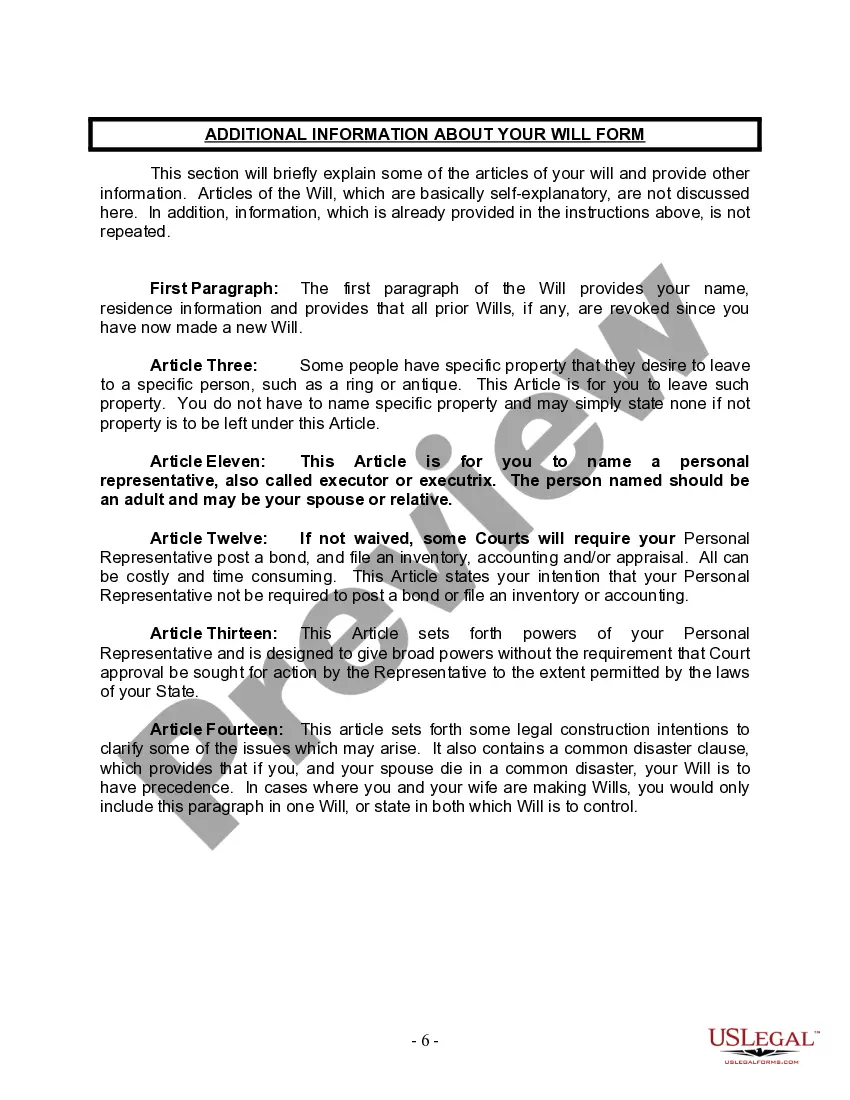
- Appointment of a personal representative or executor
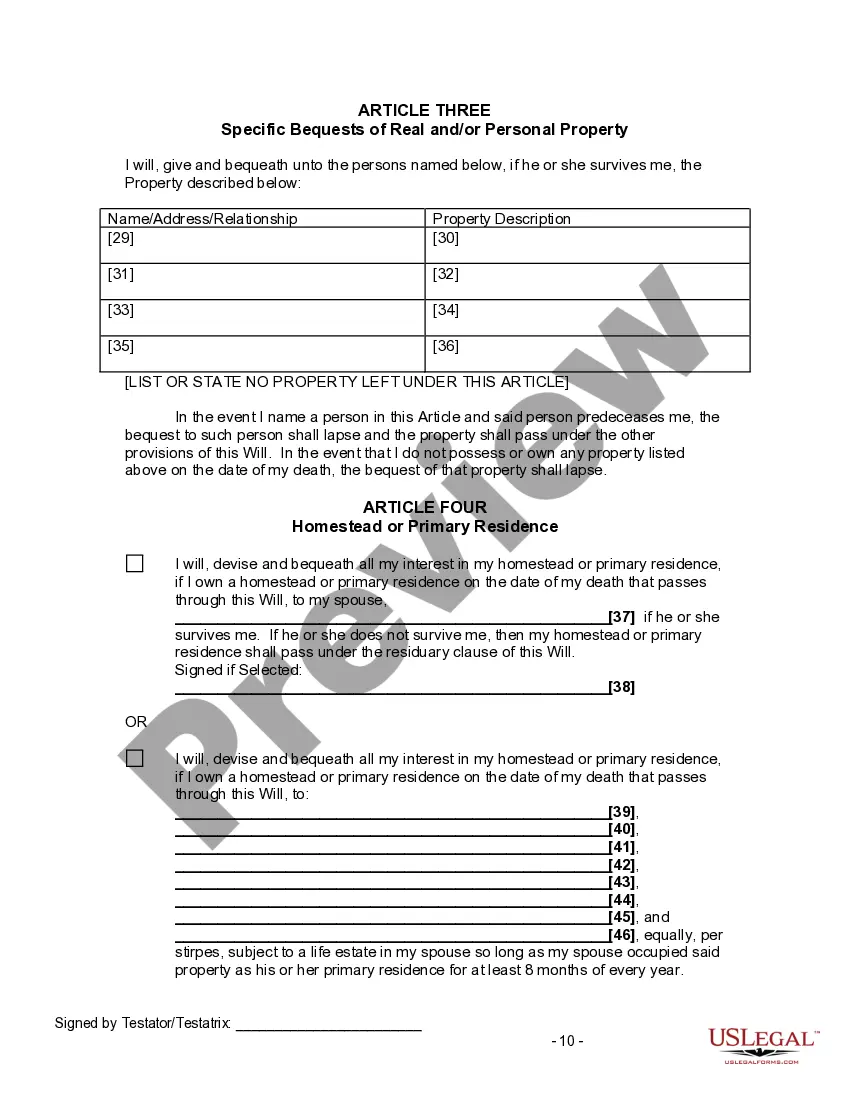
- Specific bequests of property to beneficiaries
- Establishment of trusts for minor children
- Designation of guardians for minor children
- Residuary clause for remaining assets





Situations where this form applies
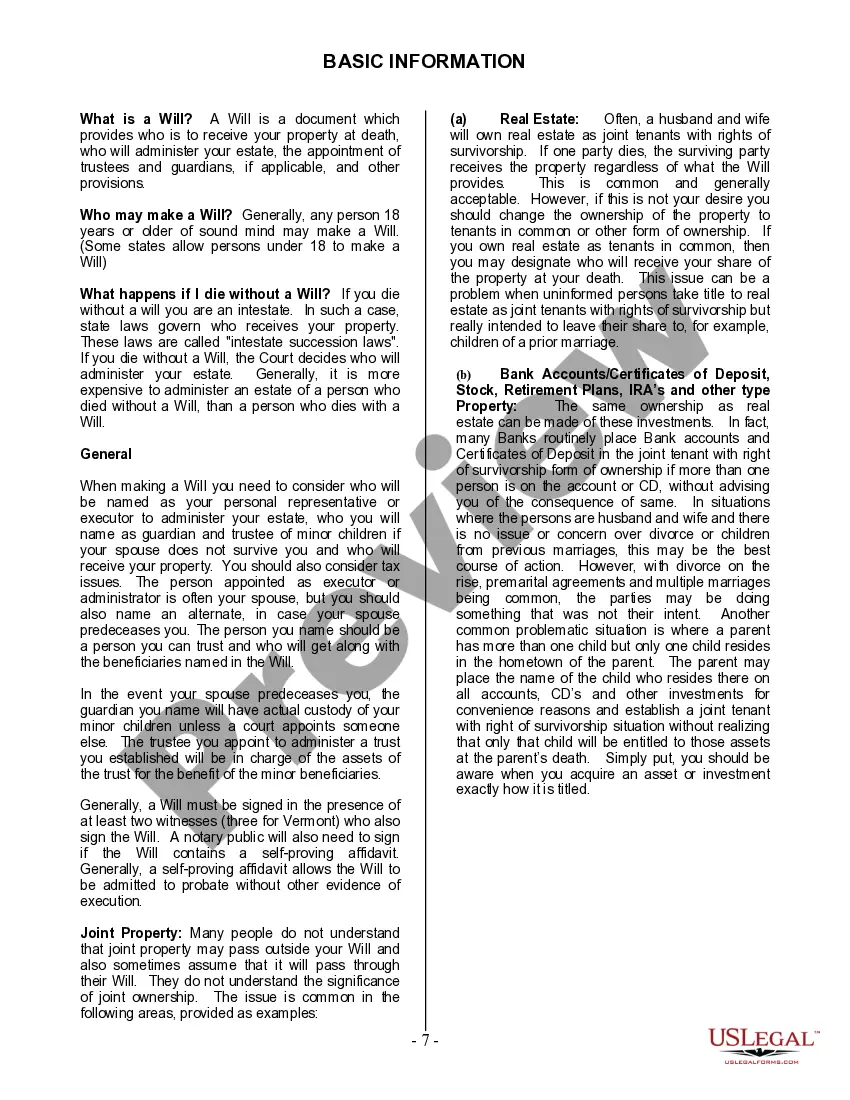
This form is necessary when a divorced individual who has remarried wants to outline the distribution of their estate clearly. It is particularly important in circumstances where there are children from multiple marriages. This will provides clarity on who receives assets upon death, thereby minimizing potential disputes among heirs.
Who this form is for
- Individuals who are divorced and remarried
- Parents with children from multiple marriages
- Anyone seeking to ensure fair distribution of their assets among children and stepchildren
- Those who need to appoint a personal representative to manage their estate
How to complete this form
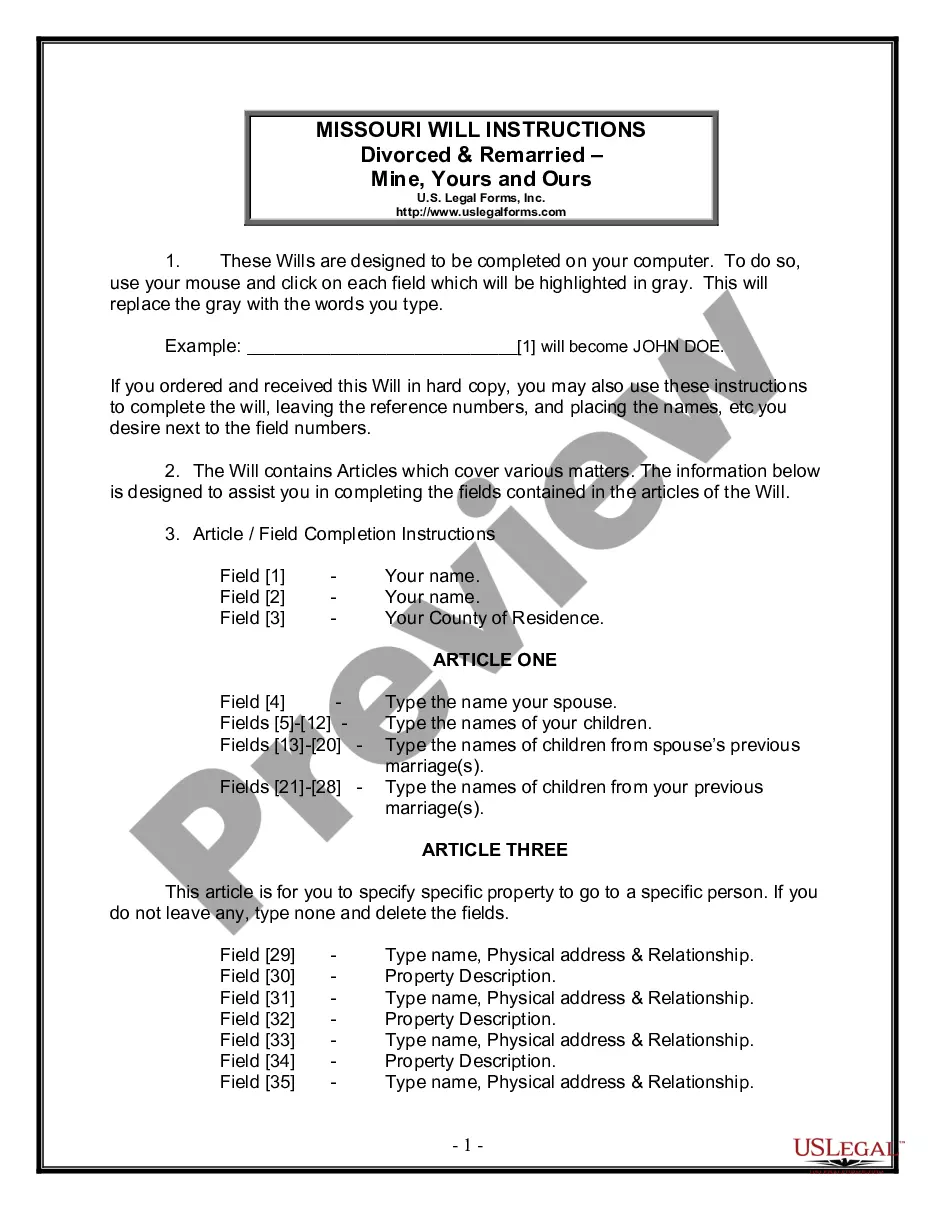
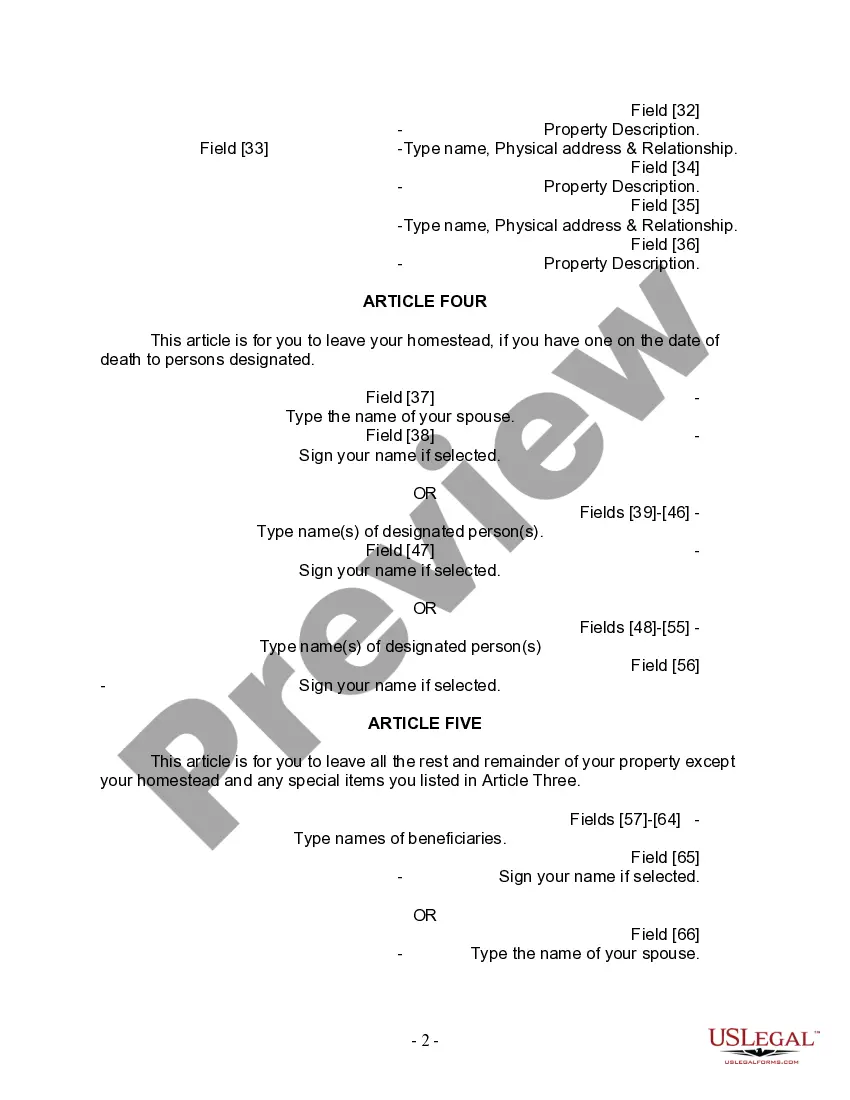
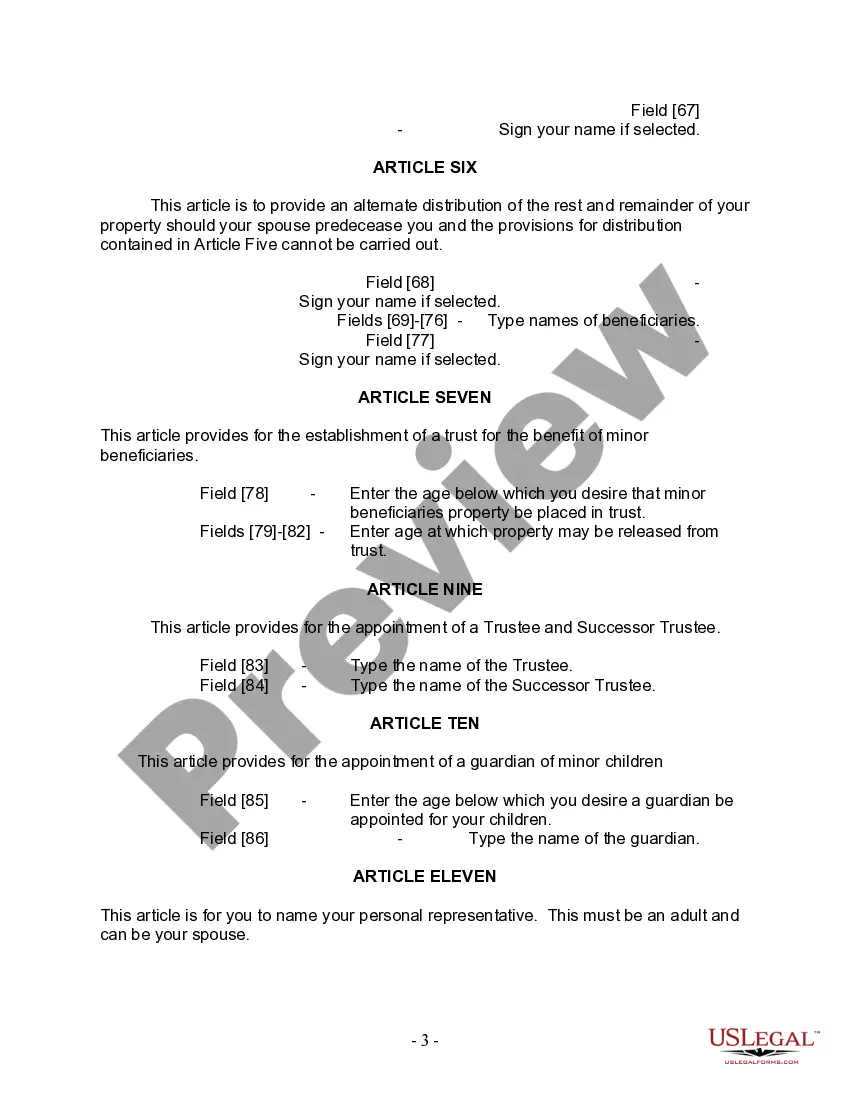
- Provide your full name and current county of residence.
- List the name of your current spouse and all children from both your current and previous marriages.
- Specify any specific property bequests to beneficiaries.
- Designate a guardian for minor children and a personal representative for your estate.
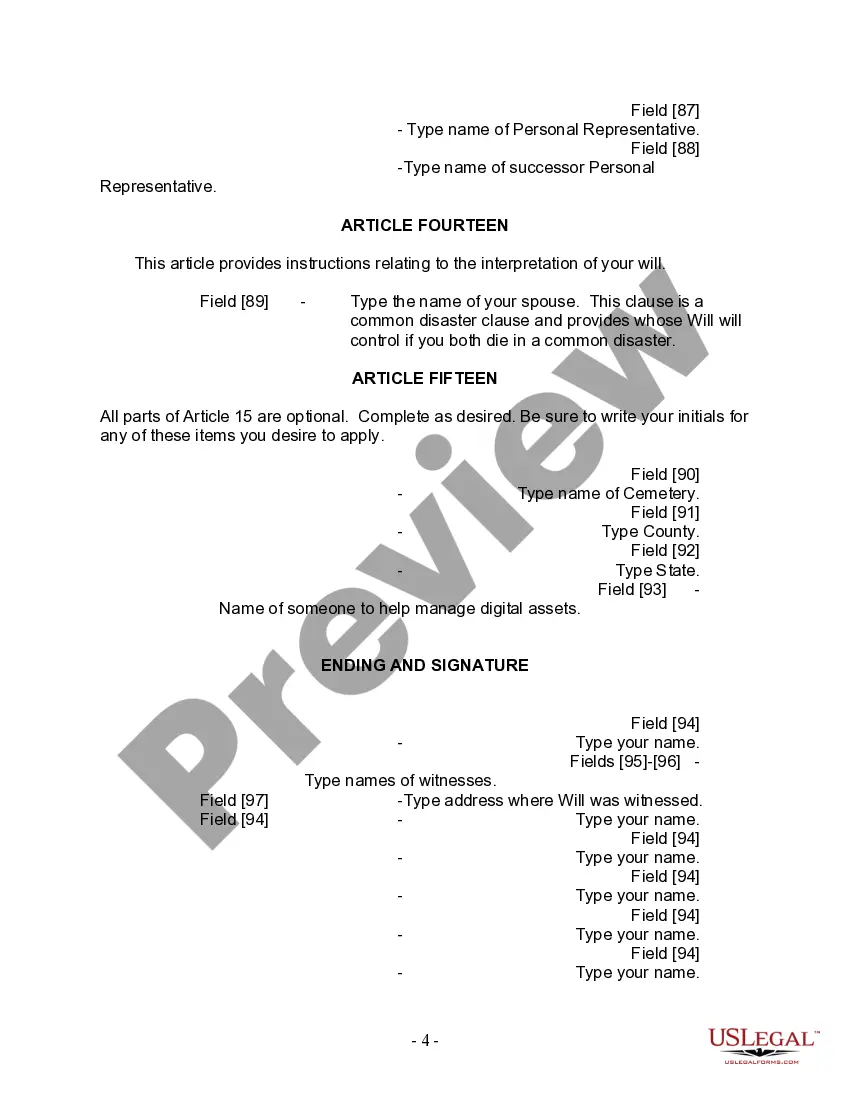
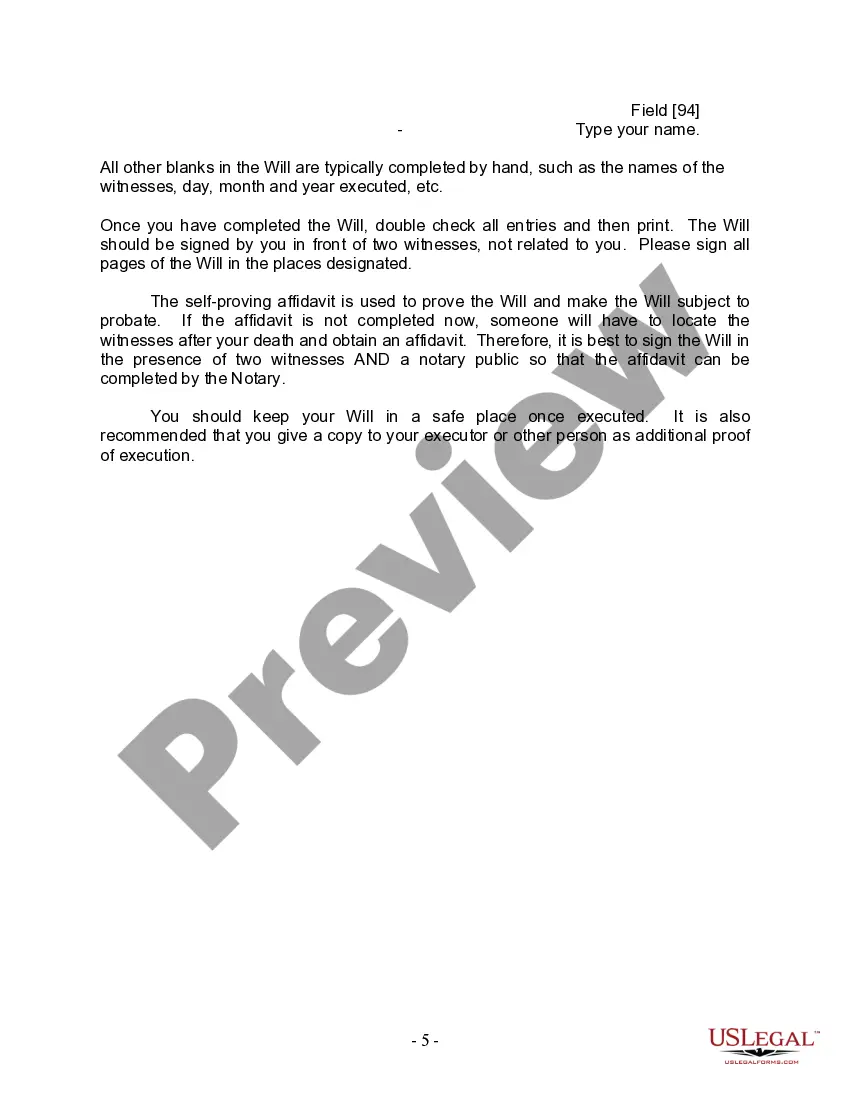
- Sign the will in front of two witnesses and consider having it notarized for self-proving.
Notarization requirements for this form
Yes, this form must be notarized to be legally valid. Having a notary public present ensures the signatures are verified, making the will subject to probate without additional witness testimony. US Legal Forms offers integrated online notarization services for convenience.
Get your form ready online
Our built-in tools help you complete, sign, share, and store your documents in one place.
Make edits, fill in missing information, and update formatting in US Legal Forms—just like you would in MS Word.
Download a copy, print it, send it by email, or mail it via USPS—whatever works best for your next step.
Sign and collect signatures with our SignNow integration. Send to multiple recipients, set reminders, and more. Go Premium to unlock E-Sign.
If this form requires notarization, complete it online through a secure video call—no need to meet a notary in person or wait for an appointment.
We protect your documents and personal data by following strict security and privacy standards.

Make edits, fill in missing information, and update formatting in US Legal Forms—just like you would in MS Word.

Download a copy, print it, send it by email, or mail it via USPS—whatever works best for your next step.

Sign and collect signatures with our SignNow integration. Send to multiple recipients, set reminders, and more. Go Premium to unlock E-Sign.

If this form requires notarization, complete it online through a secure video call—no need to meet a notary in person or wait for an appointment.

We protect your documents and personal data by following strict security and privacy standards.
Common mistakes to avoid
- Not updating the will after significant life changes, such as divorce or remarriage.
- Failing to name a personal representative or guardian.
- Not considering state-specific requirements for witness signatures.
- Overlooking the importance of including a self-proving affidavit.
Benefits of completing this form online
- Convenience of completing the form anytime and anywhere.
- Editable format allows for easy adjustments before finalizing.
- Trusted templates drafted by licensed attorneys ensure legal validity.
- Accessible instructions guide you through each component clearly.
Legal use & context
- This will is legally recognized in Missouri and provides clear instructions for asset distribution.
- Creating a legally binding will reduces complications for heirs and beneficiaries after death.
- Proper execution of the document ensures that it adheres to state-specific requirements and is enforceable.
Key takeaways
- A Last Will and Testament is essential for managing personal affairs after death.
- The form is tailored for individuals with blended families.
- Notarization is important to simplify the probate process.
Looking for another form?


Form popularity
FAQ
Although Missouri does not require a will to be notarized, most Missouri practitioners use two witnesses and a notary to make the will self-proving (see Drafting Note, Self-Proving Affidavit).
The living will must be in writing. It must be dated. Principal must be a competent person. It must be signed by the principal (the person to whom the living will applies) If not signed wholly in the principal's handwriting, it must be witnessed by two adults. Living will has no effect when principal is pregnant.
While some states recognize handwritten wills, also known as holographic wills, Missouri does not recognize holographic wills as valid unless all of the statutory requirements are met, or the will is considered valid in the state where it was prepared and executed.552, 447 (Mo. 1920).
The law says: Every will shall be in writing, signed by the testator, or by some person, by his direction, in his presence; and shall be attested by two or more competent witnesses subscribing their names to the will in the presence of the testator.
Create the initial document. Start by titling the document Last Will and Testament" and including your full legal name and address. Designate an executor. Appoint a guardian. Name the beneficiaries. Designate the assets. Ask witnesses to sign your will. Store your will in a safe place.
As long as it was properly signed and witnessed by two adult independent witnesses who are present at the time you sign your will, it should be legally binding.Using the wrong wording could mean that your instructions aren't followed, or even that your will isn't valid.
To make a will self-proved in Missouri, the testator and witnesses must sign a self proving affidavit before a notary public. An affidavit is a sworn statement, and a notary public is an officer of the court. Therefore, an affidavit before a notary public is like making a statement in court.
Although Missouri does not require a will to be notarized, most Missouri practitioners use two witnesses and a notary to make the will self-proving (see Drafting Note, Self-Proving Affidavit).