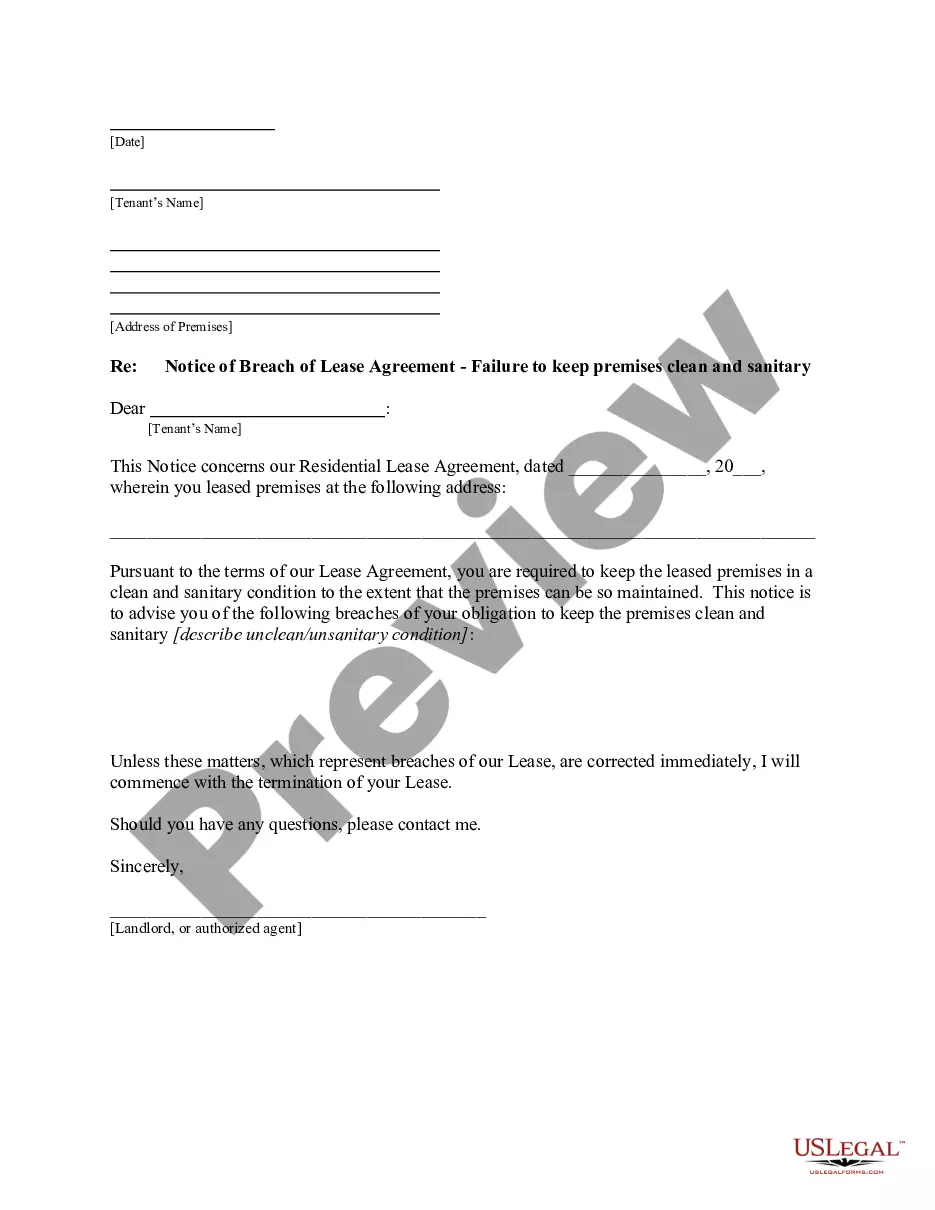
Missouri Last Will and Testament for Divorced Person Not Remarried with No Children
About this form
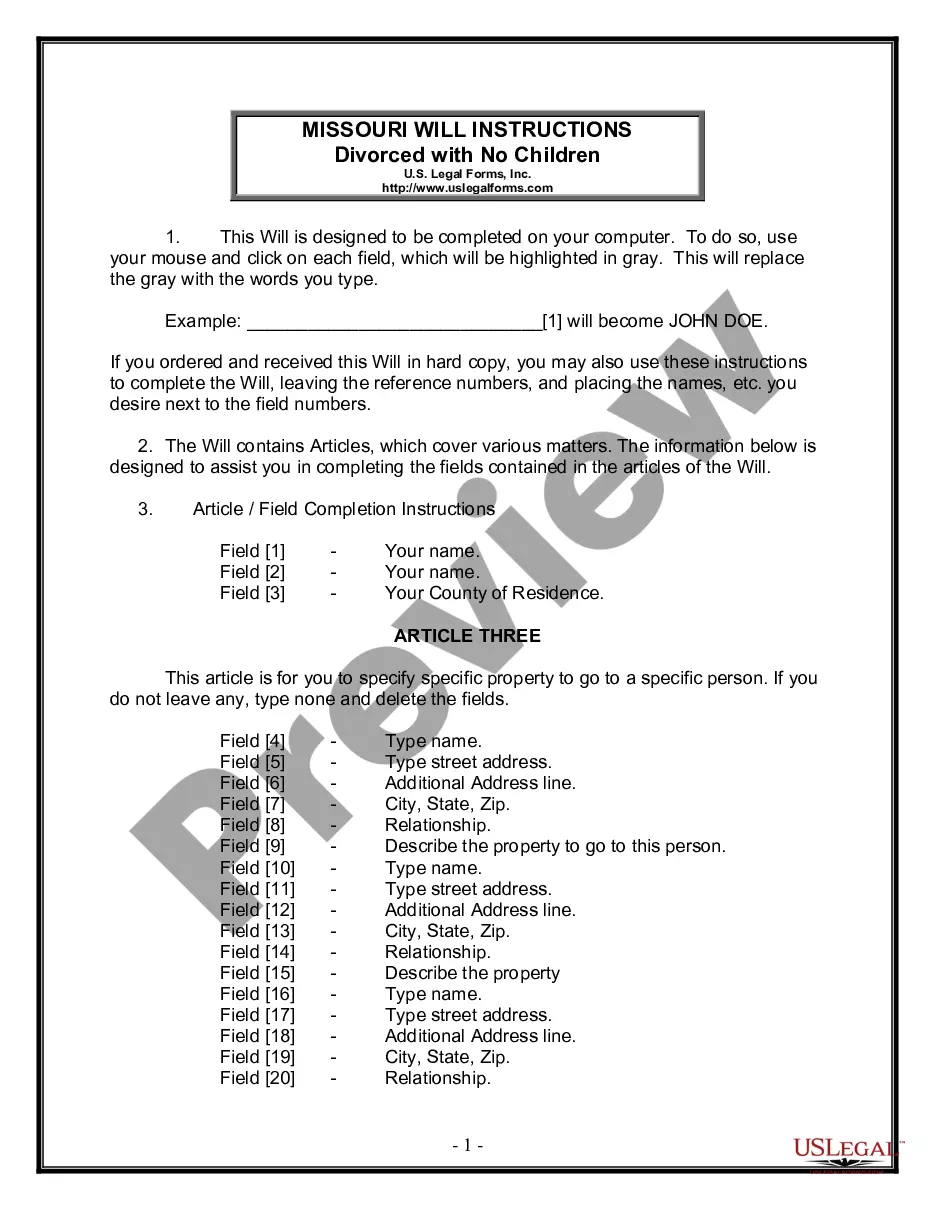
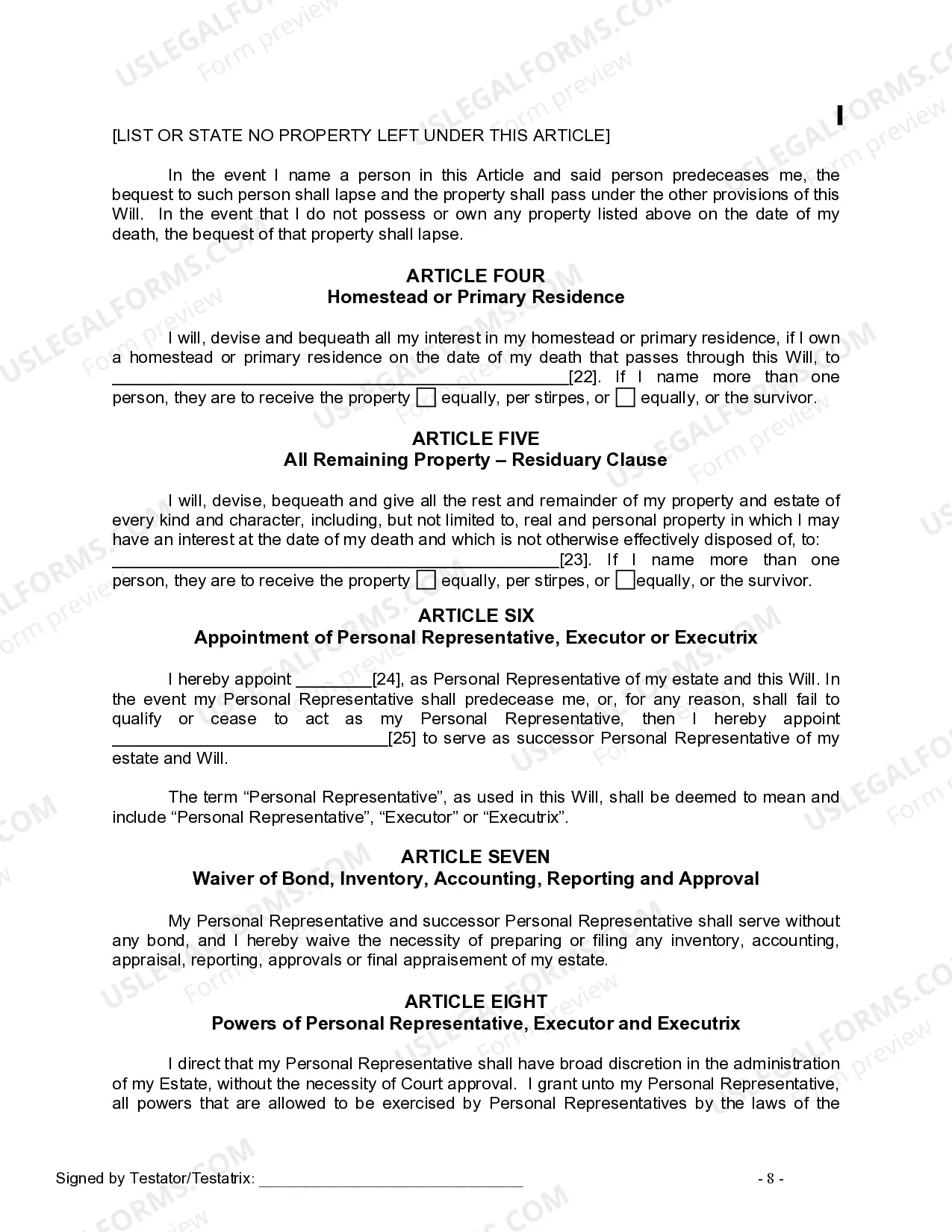
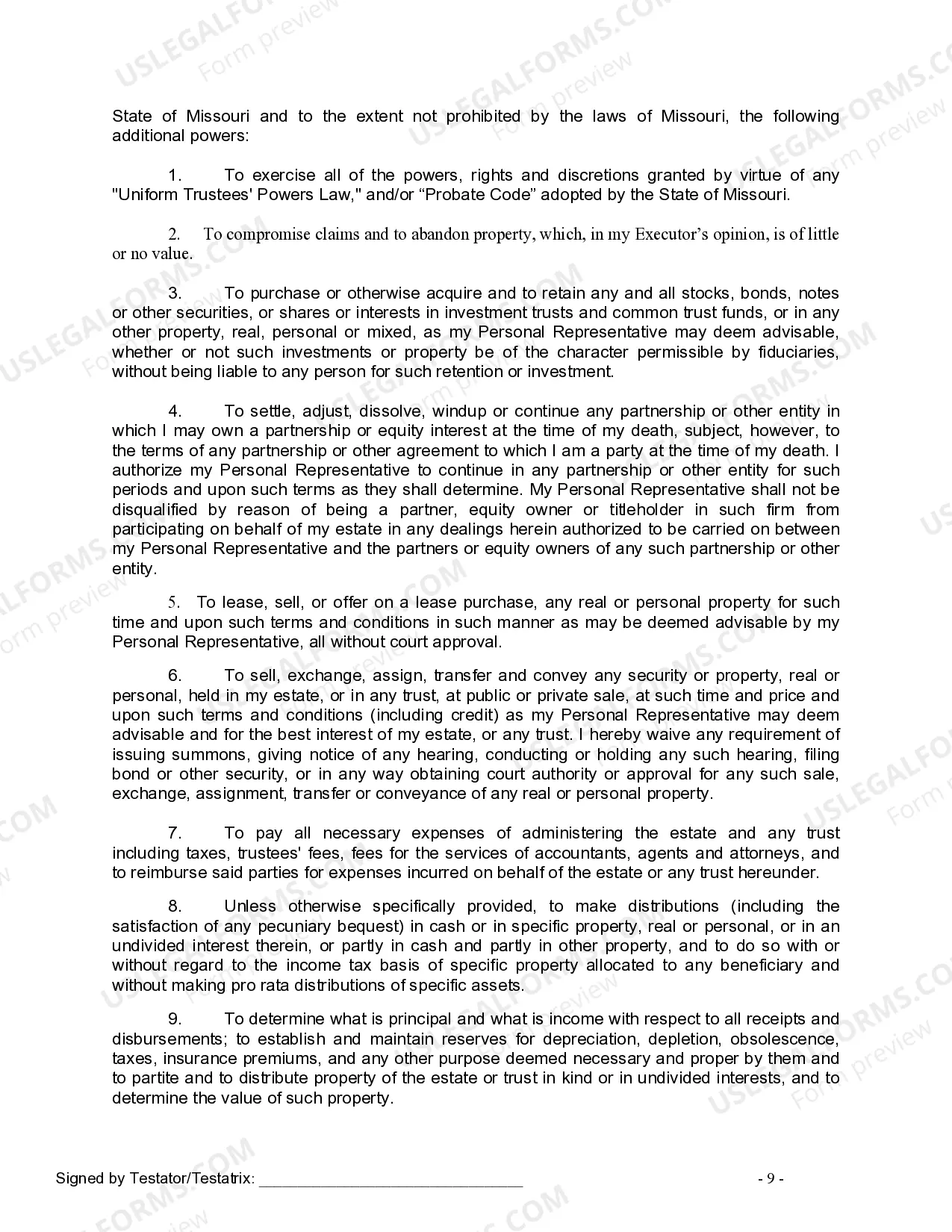
This Last Will and Testament is specifically designed for individuals who are divorced, not remarried, and have no children. It outlines how you want your assets distributed upon your death, appoints a personal representative to manage your estate, and addresses other important provisions regarding your wishes. Unlike typical wills, this form takes into account your unique situation, ensuring that your estate is handled according to your desires without complications involving a spouse or children.
Form components explained
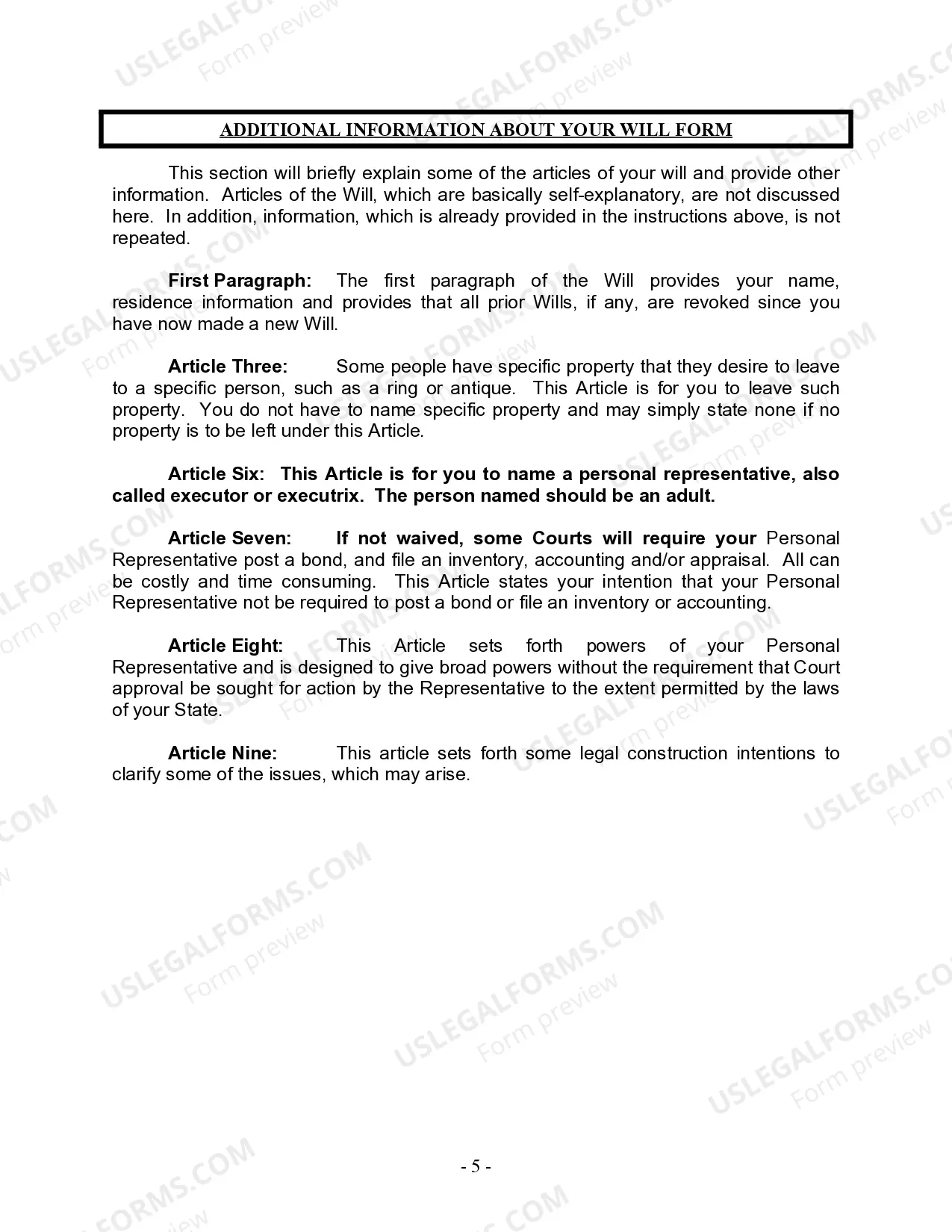
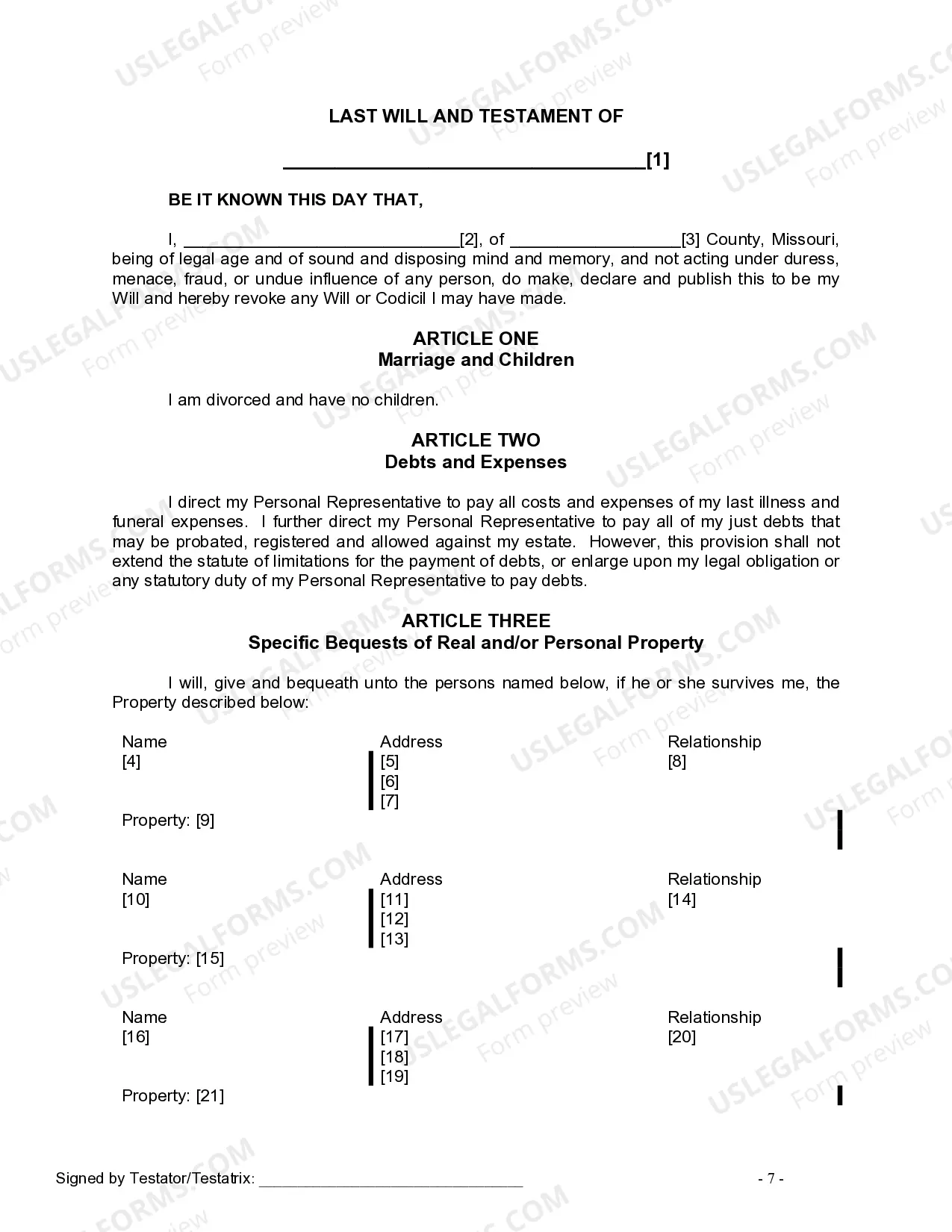
- Personal information: Includes your name and county of residence.
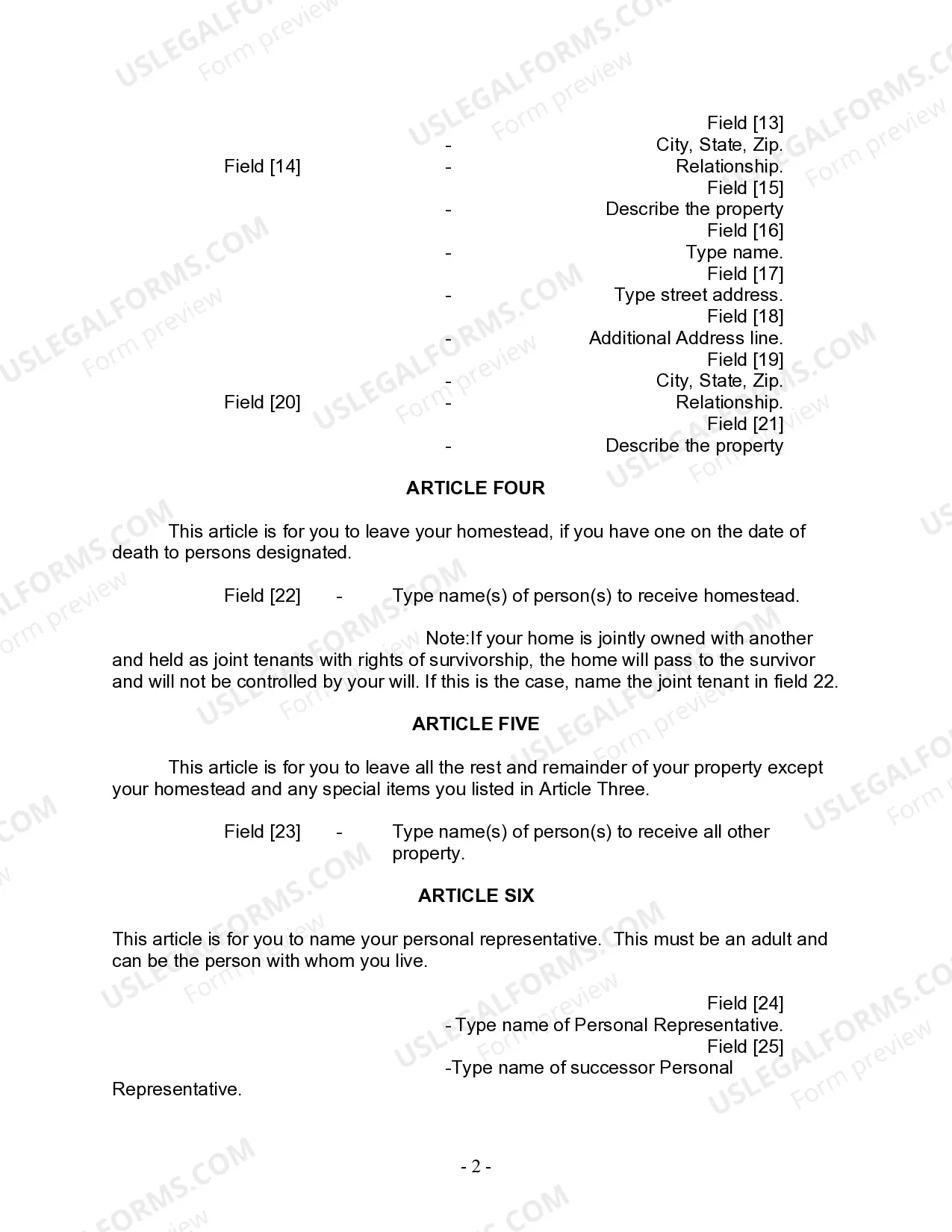
- Specific bequests: Allows you to designate specific properties to particular individuals.
- Homestead designation: Specifies how your primary residence will be treated.
- Distribution of remaining property: Outlines what happens to all residual assets.
- Appointment of a personal representative: Names who will manage your estate after your death.
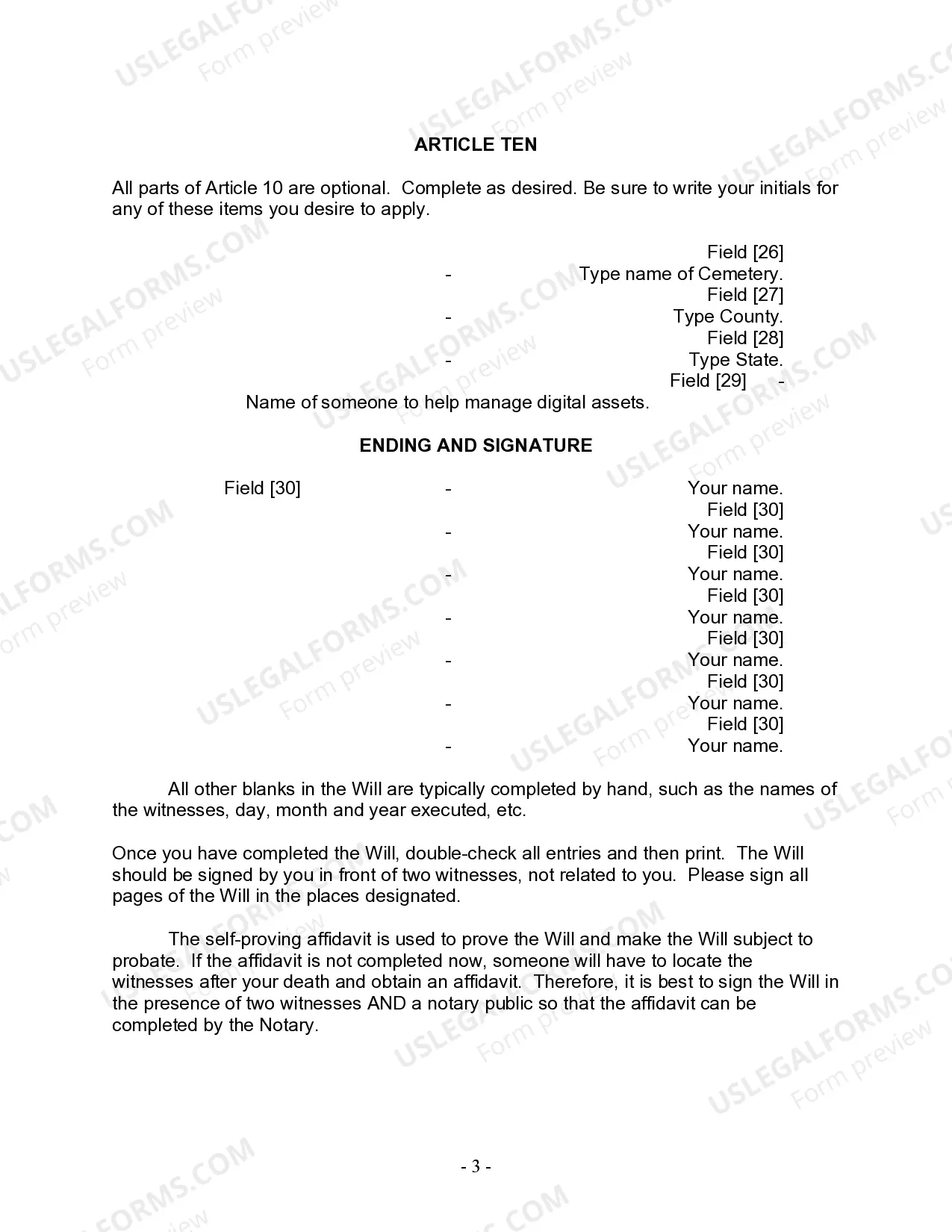
- Optional provisions: Offers additional personalized instructions regarding burial and debts.



When this form is needed
This form should be used when a divorced individual without children wishes to articulate their last wishes regarding property distribution and estate management. It is advisable to create a will in scenarios such as planning for unexpected events, ensuring that your assets are distributed according to your preferences, or when significant life changes occur, such as divorce. Clear documentation can prevent future disputes among potential heirs.
Who this form is for
- Individuals who are divorced and have not remarried.
- People who do not have children.
- Anyone wanting to clearly define how their assets should be handled after their death.
- Those seeking to appoint someone trustworthy to manage their estate.
Instructions for completing this form
- Enter your personal information such as your name and county of residence.
- Designate any specific bequests you wish to make, including descriptions of the property and the intended recipients.
- Specify who will receive your homestead or primary residence if applicable.
- Name your personal representative and a successor in case the primary representative is unable to serve.
- Ensure all required fields are filled out, and double-check for accuracy before signing.
- Sign the document in front of two witnesses and a notary public if applicable.
Notarization guidance
To make this form legally binding, it must be notarized. Our online notarization service, powered by Notarize, lets you verify and sign documents remotely through an encrypted video session.
Get your form ready online
Our built-in tools help you complete, sign, share, and store your documents in one place.
Make edits, fill in missing information, and update formatting in US Legal Forms—just like you would in MS Word.
Download a copy, print it, send it by email, or mail it via USPS—whatever works best for your next step.
Sign and collect signatures with our SignNow integration. Send to multiple recipients, set reminders, and more. Go Premium to unlock E-Sign.
If this form requires notarization, complete it online through a secure video call—no need to meet a notary in person or wait for an appointment.
We protect your documents and personal data by following strict security and privacy standards.

Make edits, fill in missing information, and update formatting in US Legal Forms—just like you would in MS Word.

Download a copy, print it, send it by email, or mail it via USPS—whatever works best for your next step.

Sign and collect signatures with our SignNow integration. Send to multiple recipients, set reminders, and more. Go Premium to unlock E-Sign.

If this form requires notarization, complete it online through a secure video call—no need to meet a notary in person or wait for an appointment.

We protect your documents and personal data by following strict security and privacy standards.
Mistakes to watch out for
- Not having two witnesses present during the signing.
- Failing to accurately describe property bequests, leading to confusion.
- Not appointing a successor personal representative.
- Neglecting to sign all pages of the will where required.
- Overlooking the self-proving affidavit if required by state law.
Benefits of using this form online
- Convenient: Complete your will quickly from any location.
- Editability: Customize the form to fit your specific needs and circumstances perfectly.
- Reliability: Trust that the form meets legal standards as drafted by licensed attorneys.
Looking for another form?
Form popularity
FAQ
While some states recognize handwritten wills, also known as holographic wills, Missouri does not recognize holographic wills as valid unless all of the statutory requirements are met, or the will is considered valid in the state where it was prepared and executed.552, 447 (Mo. 1920).
To make a will self-proved in Missouri, the testator and witnesses must sign a self proving affidavit before a notary public. An affidavit is a sworn statement, and a notary public is an officer of the court. Therefore, an affidavit before a notary public is like making a statement in court.
No, in Missouri, you do not need to notarize your will to make it legal. However, Missouri allows you to make your will "self-proving" and you'll need to go to a notary if you want to do that. A self-proving will speeds up probate because the court can accept the will without contacting the witnesses who signed it.
While some states recognize handwritten wills, also known as holographic wills, Missouri does not recognize holographic wills as valid unless all of the statutory requirements are met, or the will is considered valid in the state where it was prepared and executed.552, 447 (Mo. 1920).
Although Missouri does not require a will to be notarized, most Missouri practitioners use two witnesses and a notary to make the will self-proving (see Drafting Note, Self-Proving Affidavit).
Capacity: The testator must be of sound mind. Signature: The will must be signed by the testator or by someone else in the testator's name in his presence, by his direction. Witnesses: A Missouri will must be signed by at least two witnesses who should not be beneficiaries, in the presence of the testator.
A notarized will does not need to be probated.When a person dies leaving behind a will that is not notarized, the law requires that its validity be ascertained by a notary or by a court. Similarly, any non-notarized modification made to a will must be probated, whether the will is notarized or not.
Missouri's Requirements for a Proper Holographic Will Despite their shortcomings, Missouri accepts holographic wills.The testator must sign the will. The testator's signature must be witnessed by two people who sign in the testator's presence.