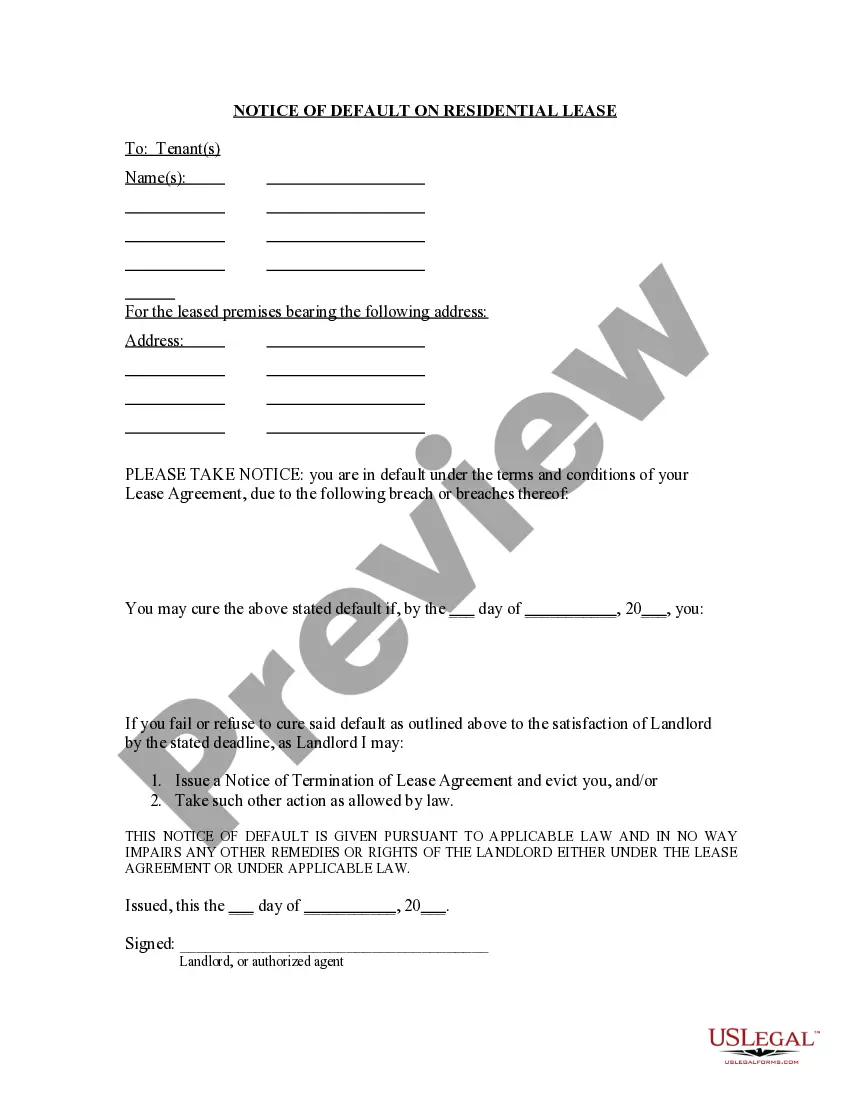
Missouri Notice of Default on Residential Lease
What is this form?
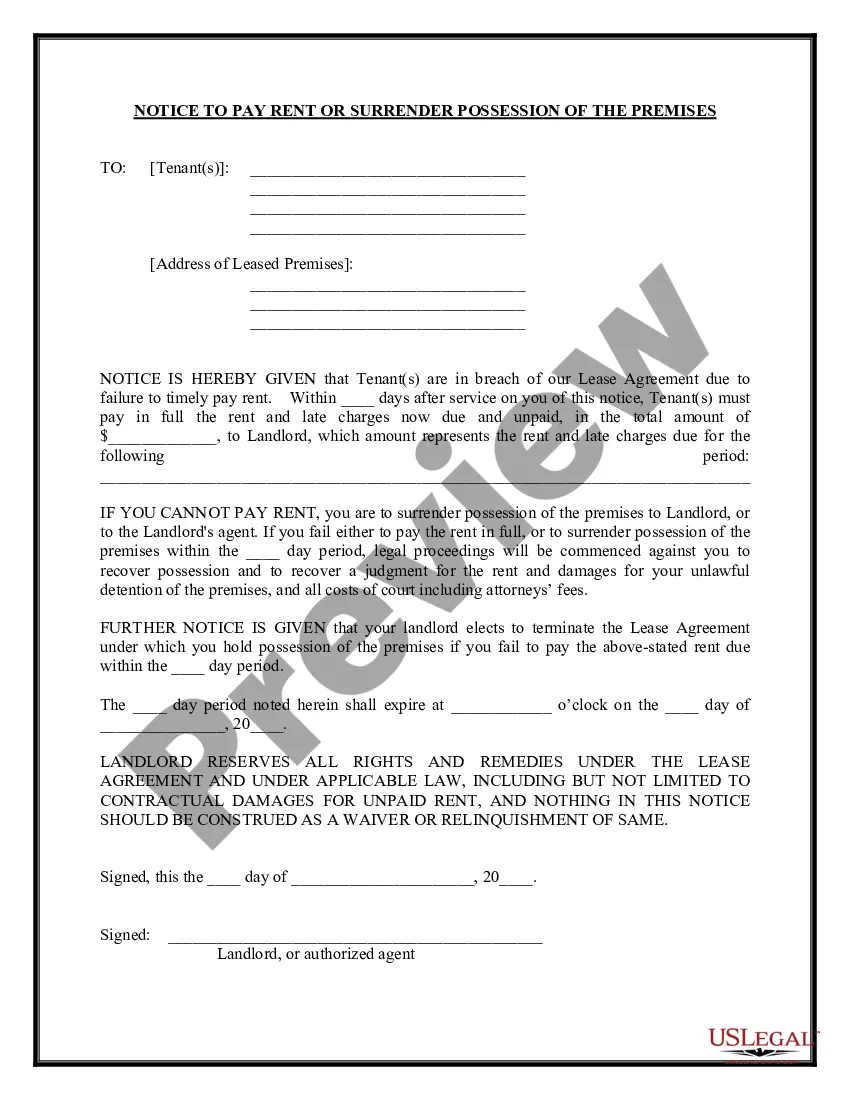
The Notice of Default on Residential Lease is a formal document used by landlords to inform tenants about a failure to meet their rental obligations, typically related to unpaid rent. This form specifies the reasons for the default, along with a deadline for the tenant to remedy the situation. Unlike other notices, this document not only highlights the specific issues but also informs the tenant of potential consequences, such as eviction, if the default is not cured within the provided timeframe.
What’s included in this form
- Notice issued under applicable law, outlining tenant's failure to fulfill lease obligations.
- Specific reasons for the default, typically focusing on unpaid rent.
- Deadline for the tenant to correct the default and avoid further action.
- Landlord's rights to take additional legal action if the default is not addressed.
- Spaces for dates and signatures from the landlord or authorized agent.


When this form is needed
This form should be used when a tenant has failed to pay rent or is in default of other lease obligations. By issuing this notice, the landlord officially communicates the issues and the need for the tenant to take corrective action within a specified period, thus helping to avoid more serious actions like eviction.
Who this form is for
- Landlords seeking to notify tenants of defaults on their rental lease.
- Property managers acting on behalf of landlords to handle rental agreements.
- Tenants who wish to understand formal communications from landlords regarding lease defaults.
Instructions for completing this form
- Identify the landlord or authorized agent's name and address.
- Specify the tenant's name and the address of the rental property.
- Clearly outline the specific reasons for the default, such as unpaid rent.
- Enter the deadline date by which the tenant must cure the default.
- Sign and date the notice to make it legally binding.
Does this form need to be notarized?
Notarization is generally not required for this form. However, certain states or situations might demand it. You can complete notarization online through US Legal Forms, powered by Notarize, using a verified video call available anytime.
Get your form ready online
Our built-in tools help you complete, sign, share, and store your documents in one place.
Make edits, fill in missing information, and update formatting in US Legal Forms—just like you would in MS Word.
Download a copy, print it, send it by email, or mail it via USPS—whatever works best for your next step.
Sign and collect signatures with our SignNow integration. Send to multiple recipients, set reminders, and more. Go Premium to unlock E-Sign.
If this form requires notarization, complete it online through a secure video call—no need to meet a notary in person or wait for an appointment.
We protect your documents and personal data by following strict security and privacy standards.

Make edits, fill in missing information, and update formatting in US Legal Forms—just like you would in MS Word.

Download a copy, print it, send it by email, or mail it via USPS—whatever works best for your next step.

Sign and collect signatures with our SignNow integration. Send to multiple recipients, set reminders, and more. Go Premium to unlock E-Sign.

If this form requires notarization, complete it online through a secure video call—no need to meet a notary in person or wait for an appointment.

We protect your documents and personal data by following strict security and privacy standards.
Typical mistakes to avoid
- Failing to specify clear reasons for the default.
- Not providing the correct deadline date for action.
- Omitting the landlord's or agent's signature.
- Not delivering the notice properly to the tenant.
Why use this form online
- Convenience of completing the form from anywhere at any time.
- Editable fields allow for quick updates without reprinting.
- Access to templates drafted by licensed attorneys ensures legal compliance.
- Instant download allows for immediate use in addressing lease issues.
Legal use & context
- This form is a vital step in the legal process of pursuing eviction for non-payment of rent.
- Failure to issue a Notice of Default may limit a landlord's ability to terminate a lease or pursue legal remedies.
- The notice serves as evidence of the landlord's attempt to communicate the default to the tenant before taking further action.
Looking for another form?
Form popularity
FAQ
A notice to quit for unpaid rent in Missouri is a legal document sent by a landlord to a tenant, demanding that the tenant vacate the property due to non-payment of rent. This notice typically follows a Missouri Notice of Default on Residential Lease if the tenant fails to address the outstanding balance. It outlines the specific time frame in which the tenant must leave the premises. Understanding this process can help both landlords and tenants navigate the complexities of lease agreements effectively.
A notice of default letter to a tenant is a written communication that outlines the tenant's failure to meet their rental obligations, such as late or unpaid rent. This letter specifies the amount owed and the steps the tenant must take to remedy the situation. By utilizing a Missouri Notice of Default on Residential Lease, landlords can provide clarity and foster a responsible approach to addressing the payment issue. This proactive measure can prevent further complications and maintain a positive landlord-tenant relationship.
The purpose of a notice of default is to inform a tenant of their failure to comply with lease terms, particularly regarding unpaid rent. This notice acts as an official record of the landlord's attempt to resolve the issue before pursuing legal action. In the context of a Missouri Notice of Default on Residential Lease, it helps establish a clear communication channel between the landlord and tenant. Ultimately, this notice encourages tenants to fulfill their obligations promptly.
A 14/30 notice in Missouri refers to the time frames for terminating a lease or addressing lease violations. A landlord must provide a 14-day notice for unpaid rent, while a 30-day notice is typically used for lease terminations without cause. Understanding these notices is vital for both parties to maintain compliance and avoid issues like a Missouri Notice of Default on Residential Lease. You can find resources and templates on platforms like USLegalForms to help navigate these requirements.
Missouri law 441.060 outlines the requirements for residential leases, particularly regarding the notice period for rent payments and lease terminations. This law ensures that both landlords and tenants have a clear understanding of their responsibilities. Being aware of this law can help prevent conflicts and situations that lead to a Missouri Notice of Default on Residential Lease.
In Missouri, landlords cannot retaliate against tenants for exercising their rights, such as reporting code violations. They also cannot lock out tenants or shut off utilities without proper legal procedures. Understanding these rights helps tenants protect themselves from potential disputes, including those related to a Missouri Notice of Default on Residential Lease.
In Missouri, a residential lease must include essential details such as the names of the landlord and tenant, the rental property's address, and the lease duration. It's also crucial to specify the rent amount, payment terms, and any security deposit requirements. Ensuring these elements are clear can prevent misunderstandings and issues like a Missouri Notice of Default on Residential Lease.
When reviewing a lease agreement, look for red flags that could indicate potential issues. These may include vague terms, excessive fees, or unclear maintenance responsibilities. Additionally, be cautious of clauses that waive your rights as a tenant. A thorough understanding of your lease can help you avoid a Missouri Notice of Default on Residential Lease.