Missouri Letter from Tenant to Landlord about Illegal entry by landlord
Understanding this form
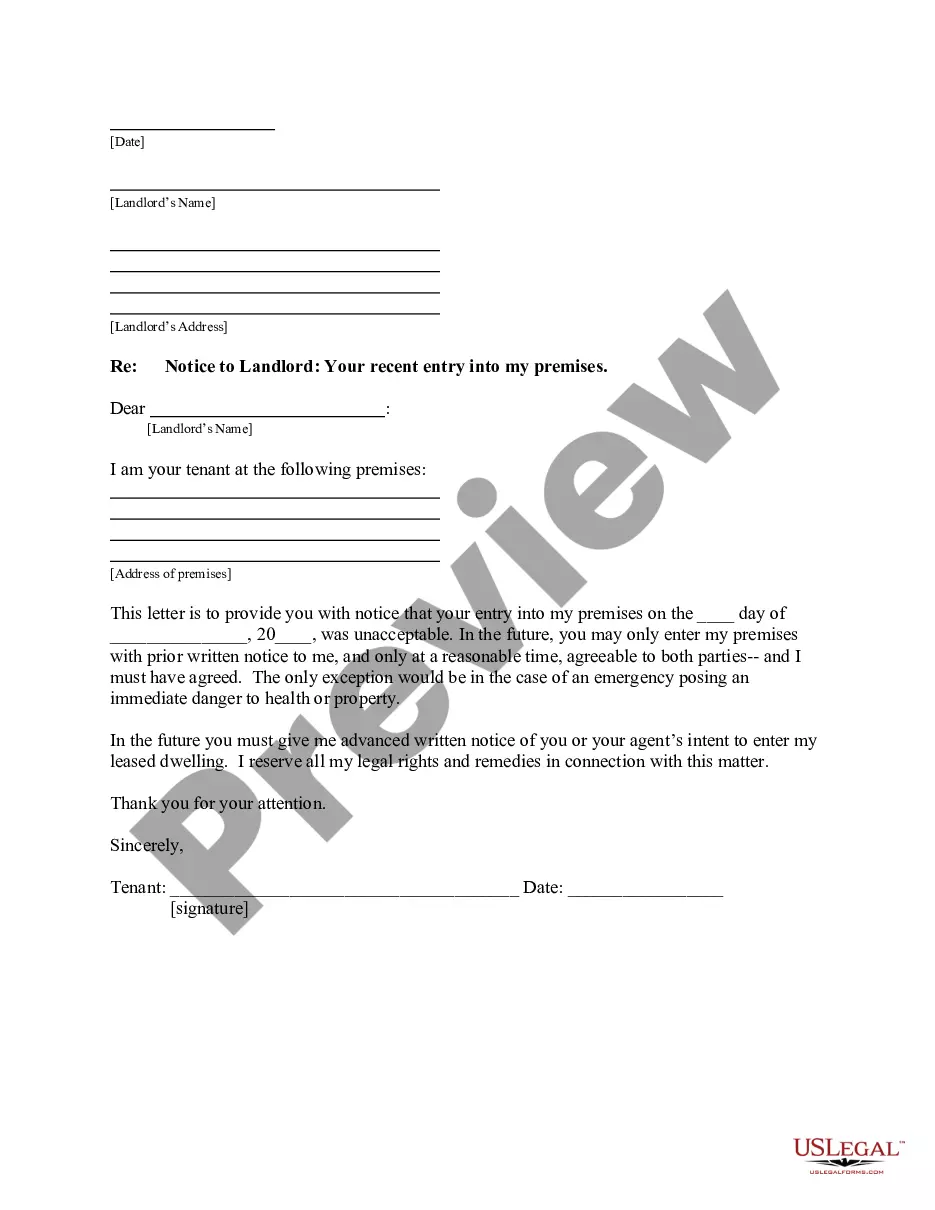
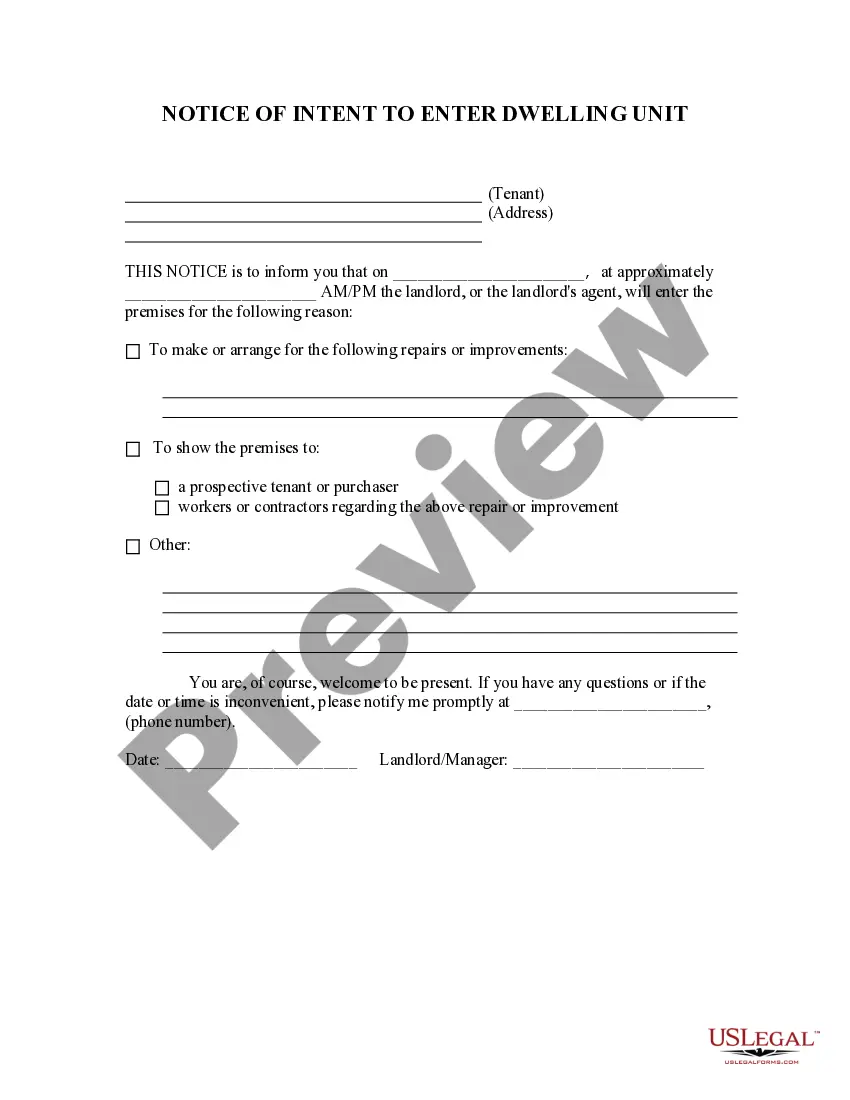
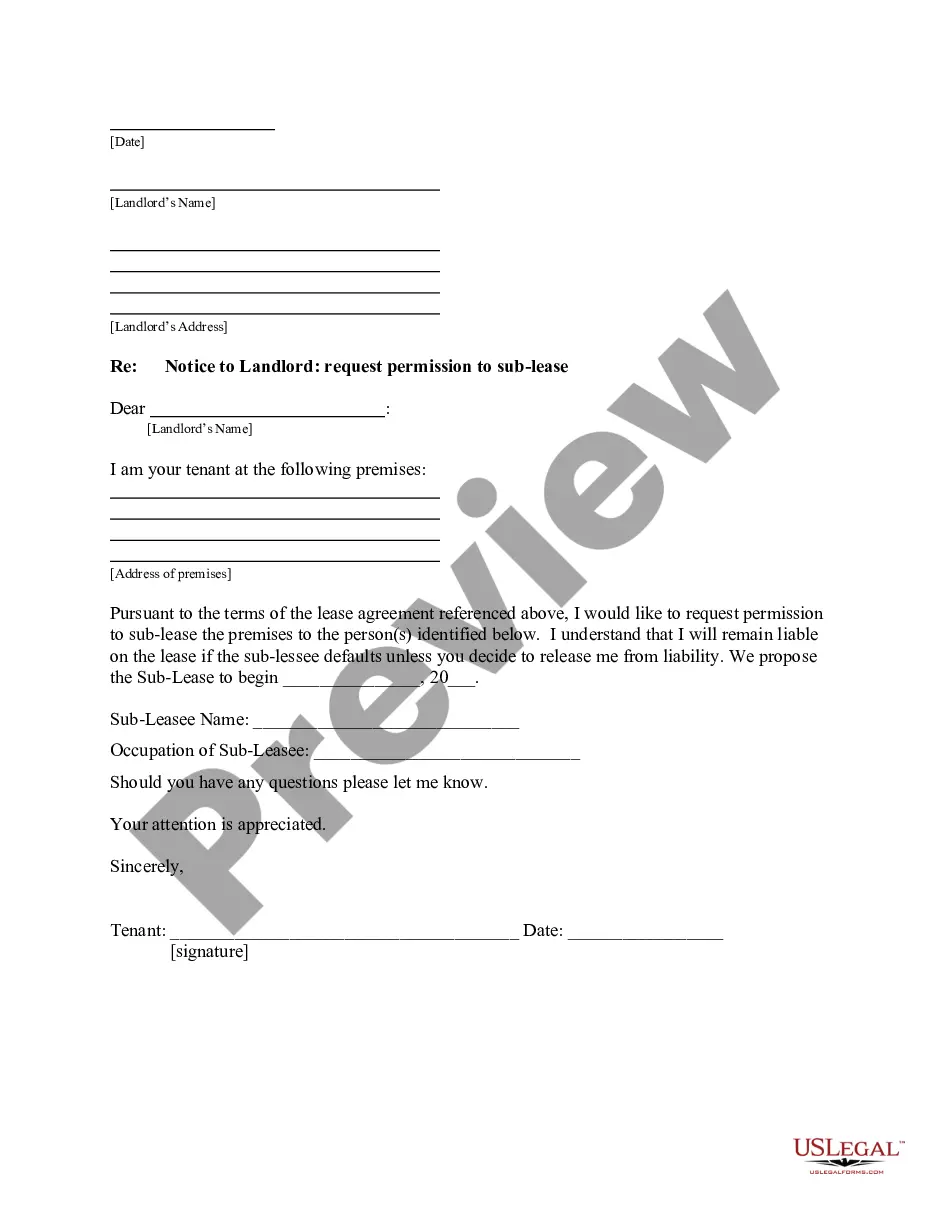
This form is a Letter from Tenant to Landlord about illegal entry by landlord. It is designed to formally notify the landlord that any future entry into the tenant's dwelling requires prior written notice and should occur at a reasonable time. This form is crucial for tenants seeking to assert their rights regarding privacy and entry into their leased property, setting clear expectations for landlord access while outlining the only exception for emergencies.
Form components explained
- Request for advanced written notice of entry
- Provisions for reasonable timing of entry
- Statement of legal rights reserved by the tenant
- Signature field for the tenant
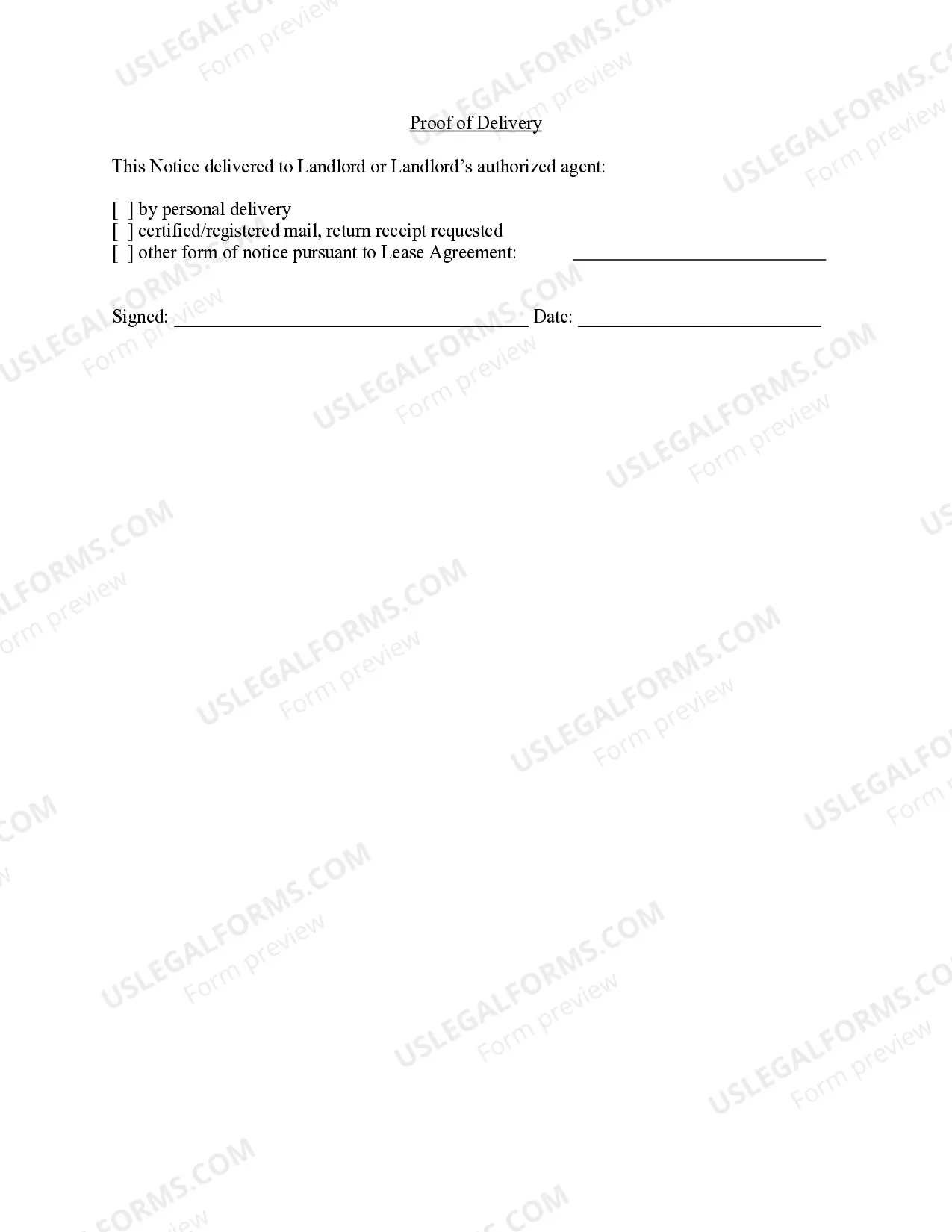
- Proof of delivery options for notifying the landlord

Situations where this form applies
This form should be used when a tenant has experienced unauthorized entry by their landlord or believes that future entries may occur without proper notification. It is suitable for situations where the tenant wishes to reinforce their right to privacy and ensure that their landlord follows the legal requirements for property access.
Who should use this form
- Tenants who have concerns about unauthorized landlord entries
- Individuals renting residential properties
- People seeking to document their rights regarding property access
How to complete this form
- Fill in the date of the letter at the designated space.
- Include the tenant's name and signature at the bottom of the letter.
- Decide on the delivery method (personal delivery or certified/registered mail) for the notice.
- Keep a copy of the letter for your records.
- Send the letter to the landlord or their authorized agent as specified.
Notarization requirements for this form
In most cases, this form does not require notarization. However, some jurisdictions or signing circumstances might. US Legal Forms offers online notarization powered by Notarize, accessible 24/7 for a quick, remote process.
Get your form ready online
Our built-in tools help you complete, sign, share, and store your documents in one place.
Make edits, fill in missing information, and update formatting in US Legal Forms—just like you would in MS Word.
Download a copy, print it, send it by email, or mail it via USPS—whatever works best for your next step.
Sign and collect signatures with our SignNow integration. Send to multiple recipients, set reminders, and more. Go Premium to unlock E-Sign.
If this form requires notarization, complete it online through a secure video call—no need to meet a notary in person or wait for an appointment.
We protect your documents and personal data by following strict security and privacy standards.

Make edits, fill in missing information, and update formatting in US Legal Forms—just like you would in MS Word.

Download a copy, print it, send it by email, or mail it via USPS—whatever works best for your next step.

Sign and collect signatures with our SignNow integration. Send to multiple recipients, set reminders, and more. Go Premium to unlock E-Sign.

If this form requires notarization, complete it online through a secure video call—no need to meet a notary in person or wait for an appointment.

We protect your documents and personal data by following strict security and privacy standards.
Common mistakes to avoid
- Failing to send the letter via a method that provides proof of delivery.
- Not signing the letter, which may weaken its validity.
- Omitting necessary details such as the specific date of delivery.
Benefits of using this form online
- Convenient access to download and complete the form anytime.
- Ability to customize the form to meet individual circumstances.
- Reliable templates created by licensed attorneys to ensure compliance.
Legal use & context
Using this letter can help enforce a tenant's rights against illegal entry by landlords. It serves as a formal request, establishing a record of the tenant's expectations regarding privacy and property access.
Main things to remember
- This form helps tenants assert their rights regarding landlord entry.
- Clear communication is crucial for preventing disputes in rental agreements.
- Understanding and completing the form accurately can promote better tenant-landlord relationships.
Looking for another form?
Form popularity
FAQ
In Missouri, landlords cannot enter a tenant's property without permission unless it's an emergency situation. If a landlord frequently enters your home without consent, it may violate your rights as a tenant. A Missouri Letter from Tenant to Landlord about Illegal entry by landlord can help you assert your rights and formally address this violation.
When a landlord enters without permission, document the incident and speak with your landlord about your rights. You can express your concerns verbally first but follow up with a written notice, such as a Missouri Letter from Tenant to Landlord about Illegal entry by landlord, to formally address the issue. If necessary, seek legal advice to understand your options.
A 14/30 notice in Missouri refers to a notice given by landlords to tenants to terminate a lease agreement. The 14 days notice is typically for non-payment of rent, while the 30 days notice applies for other lease violations. Understanding these notices is crucial, especially if you find yourself needing to respond with a Missouri Letter from Tenant to Landlord about Illegal entry by landlord.
If your landlord enters your property without permission, first document the incident with dates and times. You should address the issue directly with your landlord, and consider sending a Missouri Letter from Tenant to Landlord about Illegal entry by landlord to formally express your concerns. If the problem continues, consult a legal advisor for further action.
To write a legal letter to a landlord, start by clearly stating your intention and outlining the specific issue, such as illegal entry. Use a formal tone and include relevant details, such as dates and occurrences. You can find templates and guidance on uslegalforms to create a Missouri Letter from Tenant to Landlord about Illegal entry by landlord that suits your situation.
Law 441.060 in Missouri pertains to a landlord's rights regarding entry into a rental property. This law requires landlords to provide proper notice before entering a tenant's home, except in emergencies. If your landlord violates this law, you may want to write a Missouri Letter from Tenant to Landlord about Illegal entry by landlord to address the issue directly.
To report a landlord in Missouri, you can contact your local housing authority or the Missouri Attorney General's office. It is essential to gather evidence of the illegal entry or misconduct before filing a complaint. Additionally, consider sending a Missouri Letter from Tenant to Landlord about Illegal entry by landlord to formally document your concerns.
When writing a notice letter to a landlord, be clear and concise about the issue at hand. State the reason for your letter, such as illegal entry, and reference any applicable laws or lease agreements. Use a Missouri Letter from Tenant to Landlord about Illegal entry by landlord template to ensure you include all necessary information and maintain a professional tone throughout your correspondence.
Yes, a tenant can refuse entry to a landlord in Missouri if the landlord does not provide proper notice or if the entry is deemed illegal. According to Missouri law, landlords must give tenants reasonable notice, typically 24 hours, before entering the rental property. If you find yourself in this situation, consider drafting a Missouri Letter from Tenant to Landlord about Illegal entry by landlord to clearly communicate your rights and concerns.
When communicating with your landlord, it's important to avoid confrontational language or personal attacks. Instead of making accusations, focus on specific issues, such as the need for a formal Missouri Letter from Tenant to Landlord about Illegal entry by landlord. Refrain from using vague statements or emotional language; instead, present clear facts and your expectations. Maintaining a respectful tone can facilitate better communication and potentially lead to a more positive outcome.