Minnesota Quitclaim Deed by Two Individuals to LLC
What is this form?
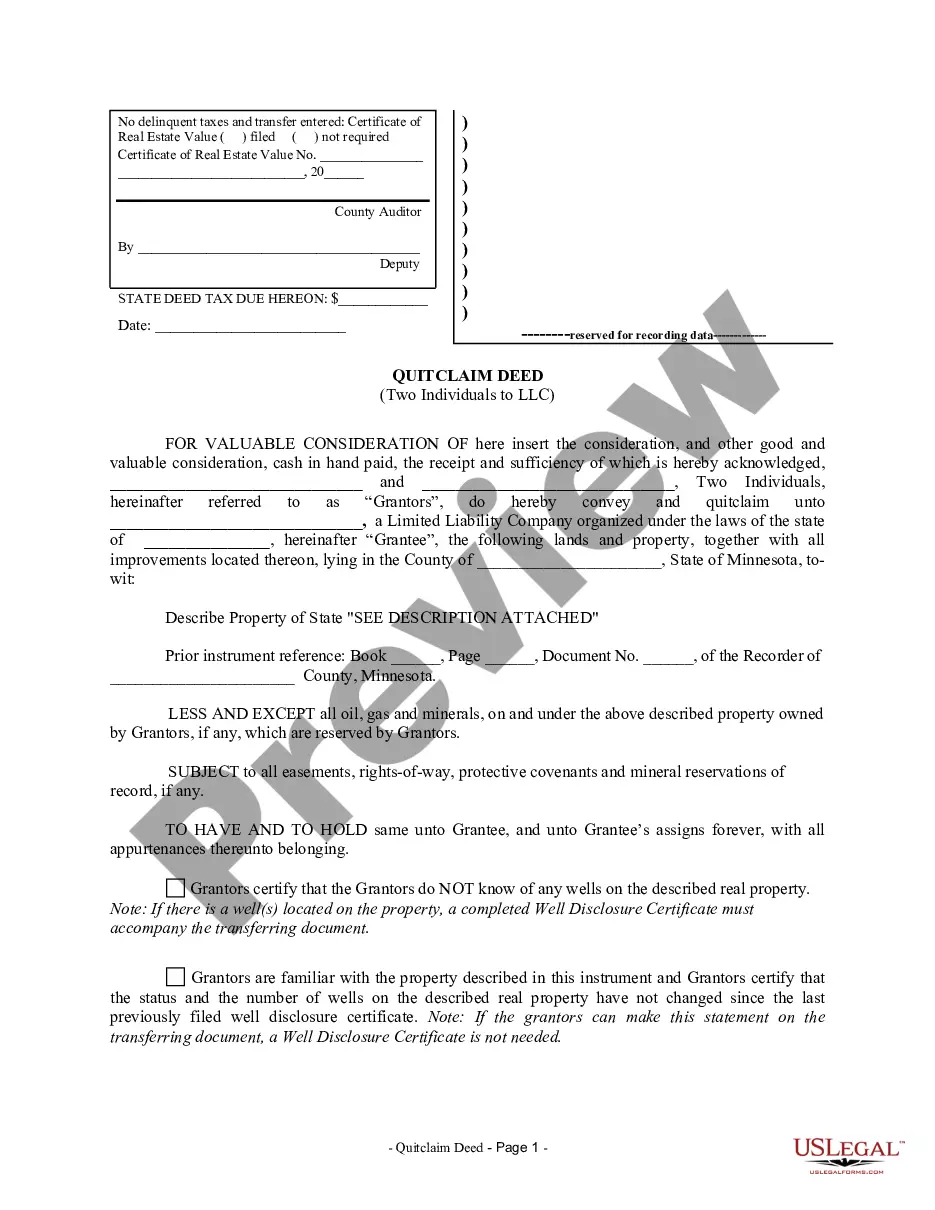
This Quitclaim Deed by Two Individuals to LLC is a legal document used when two individuals, known as Grantors, wish to transfer their interest in a property to a limited liability company (LLC), referred to as the Grantee. This form allows the Grantors to convey ownership of the property, with specific reservations on oil, gas, and minerals, if applicable. It is distinct from a warranty deed, as it does not guarantee a clear title to the property.
What’s included in this form
- Identification of the Grantors: Names of the two individuals transferring the property.
- Identification of the Grantee: Name of the LLC receiving the property.
- Property description: Details of the property being conveyed.
- Reservations: Specification that oil, gas, and minerals are not included in the transfer.
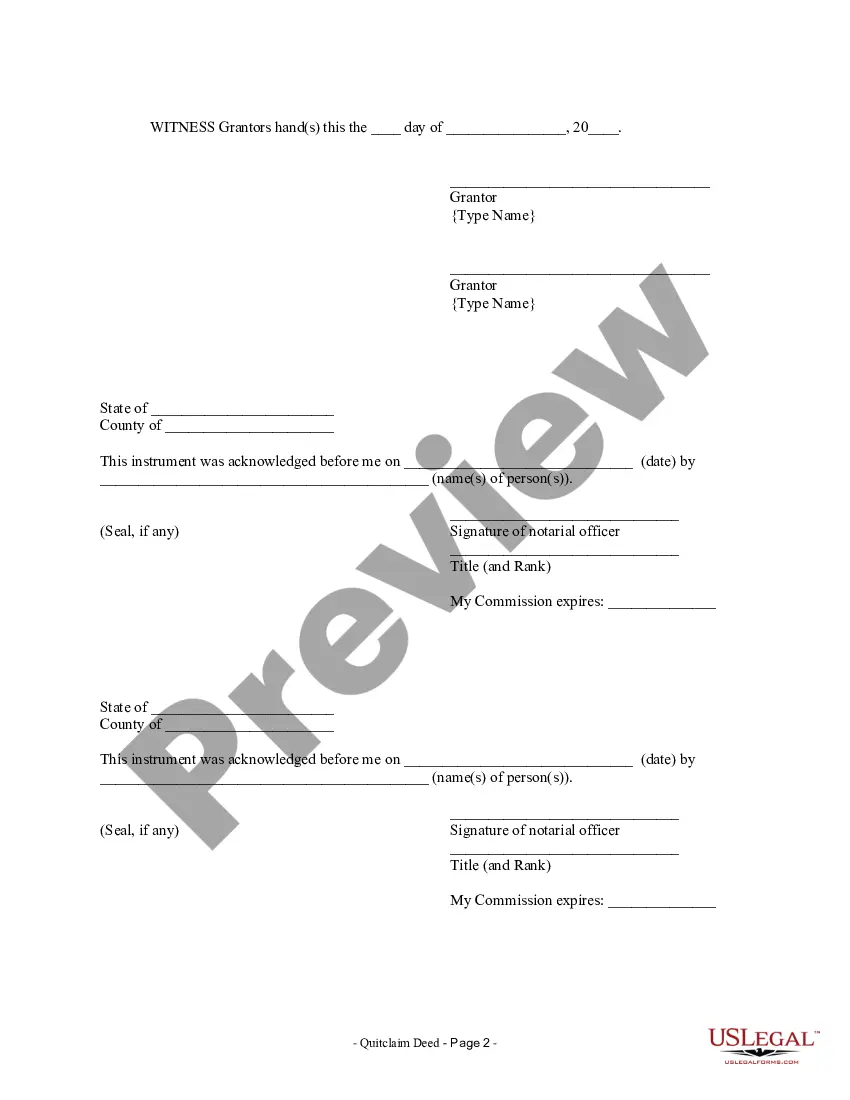
- Signatures: Space for the Grantors to sign and date the document before a notary.



When this form is needed
This Quitclaim Deed should be used when two individuals want to transfer property ownership to an LLC, particularly for business purposes. Common scenarios may include real estate owned personally that needs to be transferred to a business entity for liability protection, management, or investment reasons. Additionally, it is often utilized in transferring property among family members who want to manage the ownership through an LLC.
Who can use this document
- Two individuals who jointly own property and wish to transfer it to an LLC.
- Members of an LLC who need to formalize the property transfer from their personal names.
- Individuals looking to simplify property management through the use of an LLC.
Instructions for completing this form
- Identify the Grantors by entering the names of both individuals.
- Enter the name of the LLC as the Grantee.
- Provide a complete and accurate description of the property being transferred.
- Specify any reservations by indicating if oil, gas, and minerals are excluded from the transaction.
- Both Grantors should sign the deed and date it in the designated areas.
- Have the document notarized to ensure its legal validity.
Does this document require notarization?
This form must be notarized to be legally valid. US Legal Forms provides secure online notarization powered by Notarize, allowing you to complete the process through a verified video call.
Get your form ready online
Our built-in tools help you complete, sign, share, and store your documents in one place.
Make edits, fill in missing information, and update formatting in US Legal Forms—just like you would in MS Word.
Download a copy, print it, send it by email, or mail it via USPS—whatever works best for your next step.
Sign and collect signatures with our SignNow integration. Send to multiple recipients, set reminders, and more. Go Premium to unlock E-Sign.
If this form requires notarization, complete it online through a secure video call—no need to meet a notary in person or wait for an appointment.
We protect your documents and personal data by following strict security and privacy standards.

Make edits, fill in missing information, and update formatting in US Legal Forms—just like you would in MS Word.

Download a copy, print it, send it by email, or mail it via USPS—whatever works best for your next step.

Sign and collect signatures with our SignNow integration. Send to multiple recipients, set reminders, and more. Go Premium to unlock E-Sign.

If this form requires notarization, complete it online through a secure video call—no need to meet a notary in person or wait for an appointment.

We protect your documents and personal data by following strict security and privacy standards.
Typical mistakes to avoid
- Failing to include a complete and accurate property description.
- Not specifying any reservations about oil, gas, or minerals.
- Missing signatures from both Grantors or failure to date the form.
- Neglecting to have the document notarized when required.
Why complete this form online
- Immediate access to legal forms drafted by licensed attorneys.
- Convenience of downloading and editing forms at your own pace.
- Reliable compliance with state-specific legal requirements.
- Cost-effective alternative to hiring an attorney for simple transfers.
Looking for another form?
Form popularity
FAQ
You do not necessarily need a lawyer to execute a Minnesota Quitclaim Deed by Two Individuals to LLC. However, having legal assistance can ensure that the deed meets all state requirements and is properly filed. A lawyer can also provide guidance on any potential issues related to the transfer of property. If you prefer a more straightforward process, consider using platforms like US Legal Forms, which offer templates and resources to help you complete the deed accurately.
Yes, you can quitclaim a house to an LLC. This process involves executing a quitclaim deed that transfers ownership from individuals to the LLC. It is crucial to ensure that the deed meets Minnesota's legal requirements for property transfers. Platforms like US Legal Forms can assist you in creating the deed correctly and provide detailed instructions for filing.
To quitclaim a deed to an LLC, you must prepare a quitclaim deed that specifies the transfer of property from the individuals to the LLC. Ensure that the deed includes all necessary information about the property and the parties involved. Once the document is signed and notarized, file the Minnesota Quitclaim Deed by Two Individuals to LLC with the appropriate county office. Using resources from US Legal Forms can simplify this task and provide you with the necessary templates.
Filing a quitclaim deed in Minnesota involves preparing the deed document with accurate property details and the names of the individuals involved. Once completed, you must sign the deed in front of a notary public. After notarization, file the Minnesota Quitclaim Deed with the county recorder’s office. US Legal Forms provides templates and guidance to help you navigate this process efficiently.
To transfer ownership in an LLC, you typically need to follow your operating agreement. This agreement outlines the process for transferring membership interests. In many cases, a formal document, such as a Minnesota Quitclaim Deed by Two Individuals to LLC, may be required to record the transfer with the state. Using platforms like US Legal Forms can streamline the process and ensure compliance with state laws.
While quitclaim deeds are simple, they can lead to issues such as unclear title or unresolved liens. A Minnesota Quitclaim Deed by Two Individuals to LLC might not provide the same protections as other types of deeds. To avoid complications, it's advisable to consult resources like uslegalforms, which can guide you through the process and ensure your deed is correctly executed.
In Minnesota, a quitclaim deed transfers ownership of property without guaranteeing clear title. When using a Minnesota Quitclaim Deed by Two Individuals to LLC, the individuals relinquish their interest in the property, and the LLC assumes ownership. This deed effectively conveys rights but does not confirm the absence of liens or encumbrances.
People often place their property in an LLC for several reasons, including liability protection and tax benefits. By using a Minnesota Quitclaim Deed by Two Individuals to LLC, individuals can protect their personal assets from claims against their property. Additionally, an LLC can provide more flexibility in managing and transferring ownership.
Absolutely, you can execute a quitclaim deed to transfer property to an LLC. The Minnesota Quitclaim Deed by Two Individuals to LLC allows for a simple transfer process, making it an effective tool for property owners. Just make sure to follow the necessary legal steps to ensure a valid transfer.
Yes, a quitclaim deed requires signatures from both the grantors and the grantee. In the context of a Minnesota Quitclaim Deed by Two Individuals to LLC, both individuals must sign the deed to transfer their interests to the LLC. This signature requirement helps to establish clear ownership and avoid future disputes.