Minnesota Warranty Deed from Corporation to Individual
Overview of this form
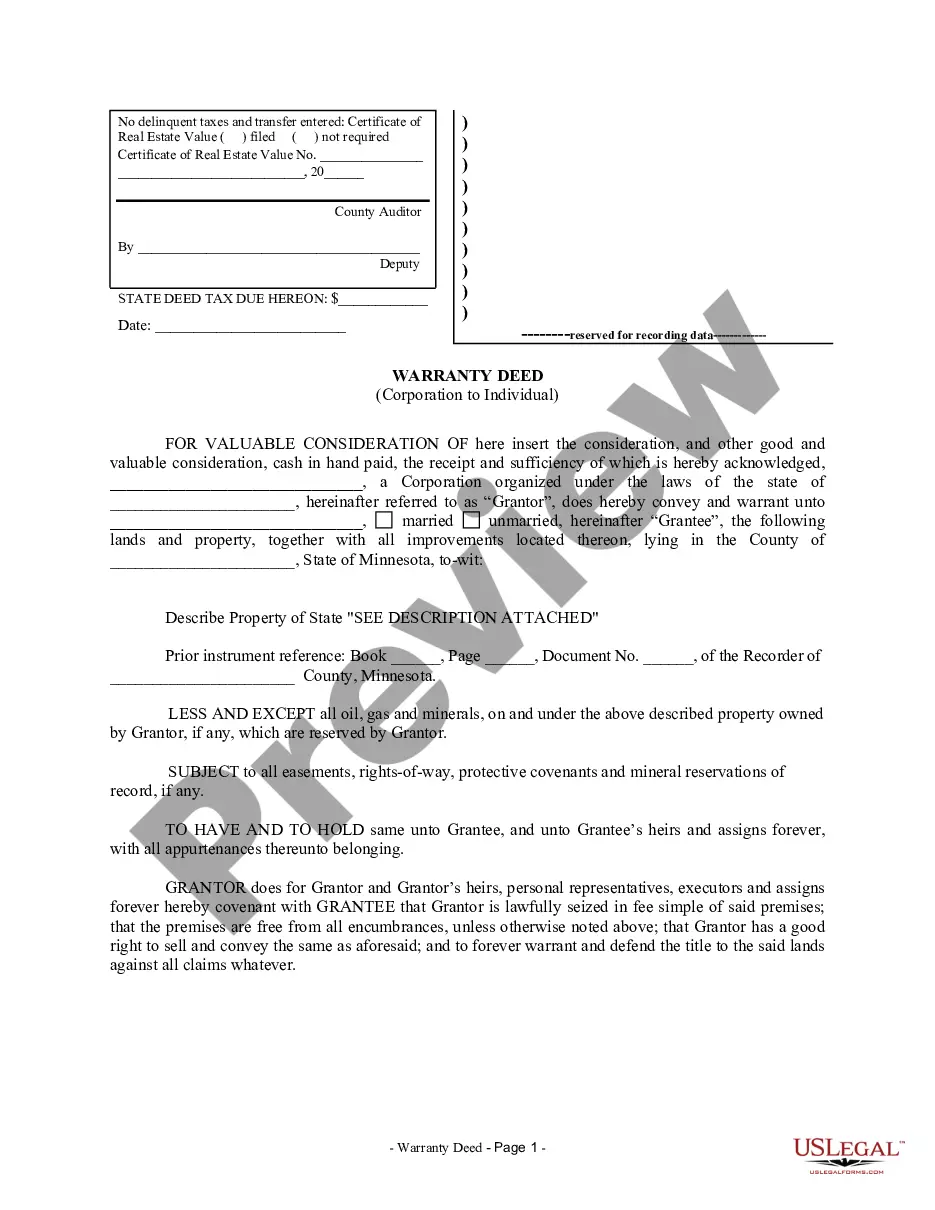
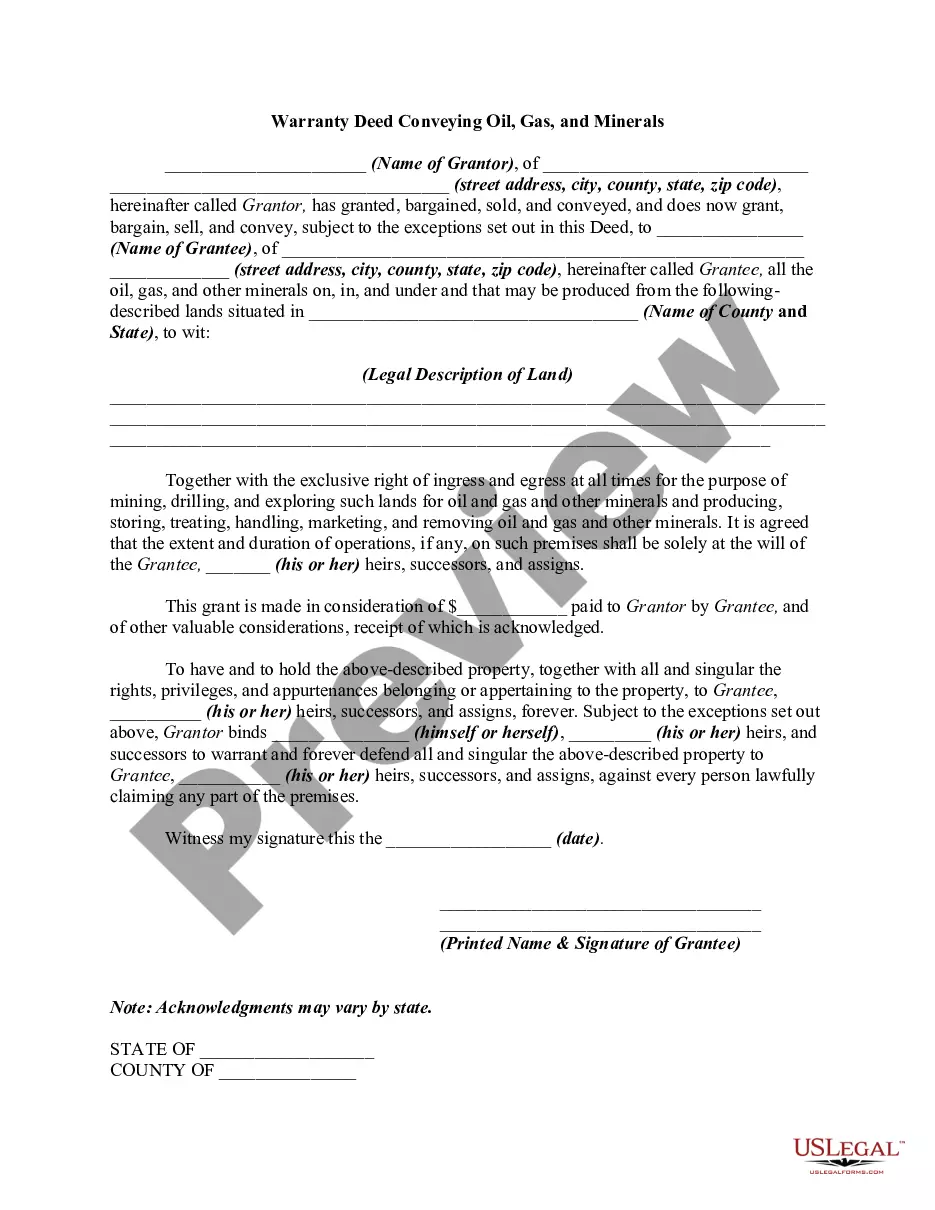
The Warranty Deed from Corporation to Individual is a legal document that facilitates the transfer of property ownership from a corporation (the Grantor) to an individual (the Grantee). This form guarantees that the property title is valid and free from encumbrances, except for specified reservations. It is distinct from other types of deeds due to its unique structure accommodating corporate entities as grantors, making it suitable for various property transactions involving corporations and individuals.
Form components explained
- Identification of the Grantor (corporation) and Grantee (individual).
- Legal description of the property being transferred.
- Disclosure of any reservations or exceptions, such as oil, gas, and mineral rights.
- Covenants of the Grantor regarding the property's ownership status and title warranty.
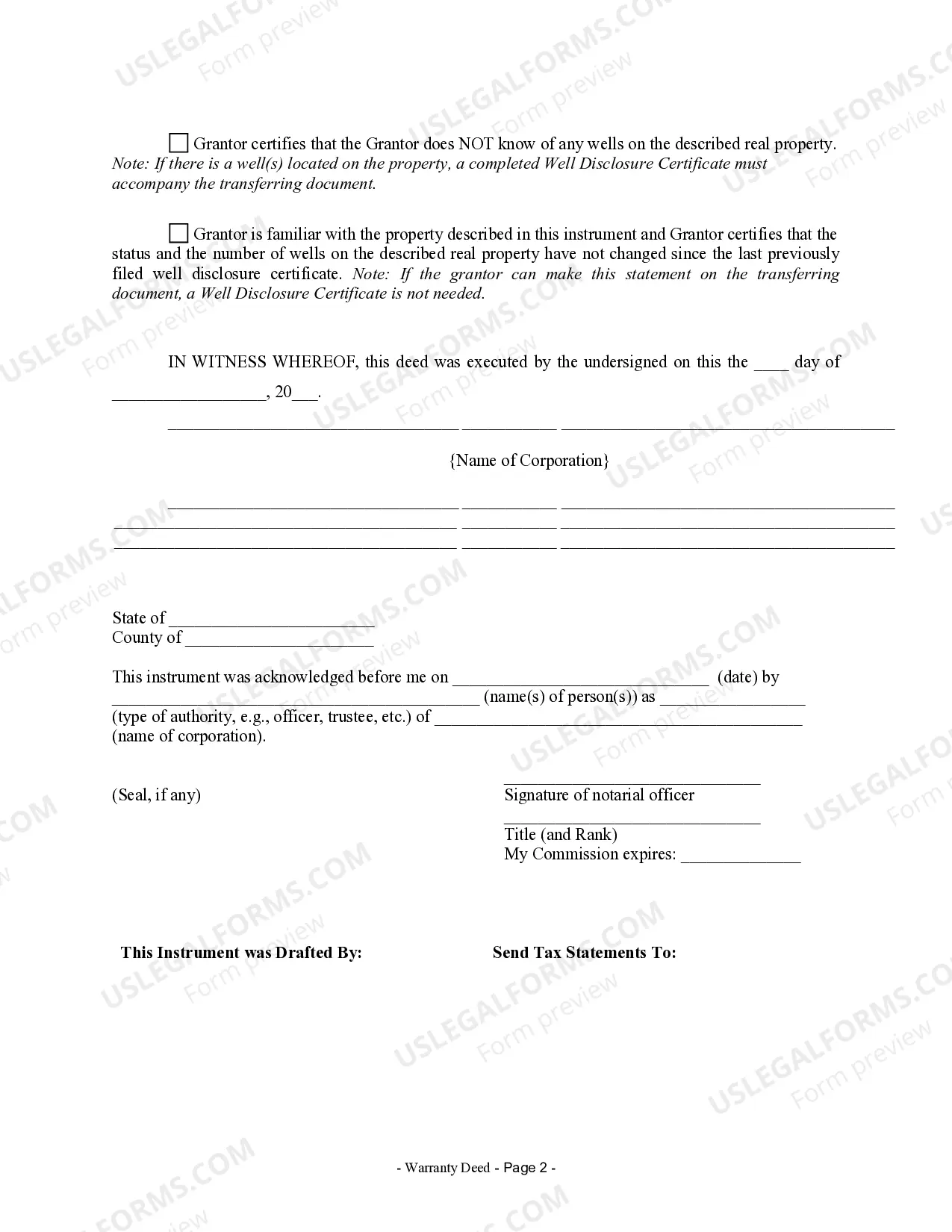
- Execution section, including signatures, dates, and witness acknowledgment.
- Notarization area for legal validation.


When to use this document
This form should be utilized when a corporation is conveying property to an individual. Common scenarios include real estate transactions where a company sells or transfers land or buildings to a single person. It is also beneficial for individuals purchasing property from a corporate entity, ensuring proper legal documentation to affirm ownership rights.
Who can use this document
- Corporations looking to transfer property ownership to individuals.
- Individuals acquiring property from a corporation.
- Real estate professionals involved in transactions between corporations and individuals.
- Legal representatives assisting in the property transfer process.
Steps to complete this form
- Identify the Grantor corporation and the Grantee individual, including their respective details.
- Describe the property being transferred clearly and accurately.
- Specify any reservations or exceptions, such as rights to oil, gas, or minerals.
- Ensure all signatures are obtained from authorized representatives of the corporation.
- Complete the notarization section to validate the deed.
Does this document require notarization?
To make this form legally binding, it must be notarized. Our online notarization service, powered by Notarize, lets you verify and sign documents remotely through an encrypted video session.
Get your form ready online
Our built-in tools help you complete, sign, share, and store your documents in one place.
Make edits, fill in missing information, and update formatting in US Legal Forms—just like you would in MS Word.
Download a copy, print it, send it by email, or mail it via USPS—whatever works best for your next step.
Sign and collect signatures with our SignNow integration. Send to multiple recipients, set reminders, and more. Go Premium to unlock E-Sign.
If this form requires notarization, complete it online through a secure video call—no need to meet a notary in person or wait for an appointment.
We protect your documents and personal data by following strict security and privacy standards.

Make edits, fill in missing information, and update formatting in US Legal Forms—just like you would in MS Word.

Download a copy, print it, send it by email, or mail it via USPS—whatever works best for your next step.

Sign and collect signatures with our SignNow integration. Send to multiple recipients, set reminders, and more. Go Premium to unlock E-Sign.

If this form requires notarization, complete it online through a secure video call—no need to meet a notary in person or wait for an appointment.

We protect your documents and personal data by following strict security and privacy standards.
Mistakes to watch out for
- Failing to provide a clear and accurate legal description of the property.
- Not obtaining the proper signatures from the authorized corporate officers.
- Overlooking state-specific notarization or filing requirements.
- Neglecting to specify any reservations or exceptions which could lead to disputes.
Benefits of using this form online
- Instant access to downloadable templates drafted by licensed attorneys.
- Convenient editing capabilities, allowing users to customize the form to their specific needs.
- Cost-effective solution compared to hiring legal counsel for document creation.
- Ensures compliance with state laws and reduces the risk of errors.
Looking for another form?

Form popularity
FAQ
To file a quitclaim deed in Minnesota, you must complete the necessary forms, which are available online or at your local government office. After filling out the quitclaim deed, sign it in front of a notary, and then submit it to the county recorder's office. If you need guidance with a Minnesota Warranty Deed from Corporation to Individual, uslegalforms provides useful tools and templates to assist you through the process.
In New Jersey, having a lawyer to transfer a deed is not a requirement, but it is advisable. The process can be complicated, and legal advice can help you navigate any potential issues. If you're considering a Minnesota Warranty Deed from Corporation to Individual, consulting with a legal expert can ensure that your transfer goes smoothly.
Yes, you can file a quitclaim deed online in many jurisdictions. Various online platforms, including uslegalforms, offer resources and templates to help you complete the filing process effectively. If you're dealing with a Minnesota Warranty Deed from Corporation to Individual, online services can simplify your experience and save you time.
Yes, you can file a general warranty deed yourself. In fact, many individuals choose to handle this process independently. For a Minnesota Warranty Deed from Corporation to Individual, you should carefully fill out the required forms and understand the filing process to ensure the deed is valid and enforceable.
While hiring a lawyer is not mandatory to transfer a deed, it can be beneficial, especially for complex transactions. If you feel comfortable navigating the process, you can complete a Minnesota Warranty Deed from Corporation to Individual on your own. However, consulting a legal professional can provide peace of mind and ensure that everything is done correctly.
Yes, you can transfer a warranty deed. This process typically involves completing the deed form, signing it, and filing it with the appropriate local government office. When transferring a Minnesota Warranty Deed from Corporation to Individual, ensure that all parties involved understand the terms and conditions outlined in the deed.
Filling out a warranty deed form, such as the Minnesota Warranty Deed from Corporation to Individual, requires clear and accurate information. Begin by providing the names of the grantor and grantee, followed by the property description, which includes the parcel number and address. Ensure you include the date of transfer and signatures from both parties. For added ease, consider using platforms like US Legal Forms, which offer guided assistance in completing these forms correctly.
To transfer a warranty deed, you must first complete the Minnesota Warranty Deed from Corporation to Individual form. This entails filling in the names of the parties involved, the legal description of the property, and any necessary details regarding the transfer. Once completed, you will need to sign the deed in the presence of a notary public. Finally, file the deed with the appropriate county office to make the transfer official.
A warranty deed may become invalid for several reasons. One common issue is the lack of proper signatures or notarization, which can undermine the document's legitimacy. Additionally, if the corporation transferring the property does not have the authority to do so, the deed may be considered void. To avoid such pitfalls, consider using US Legal Forms to create a valid Minnesota Warranty Deed from Corporation to Individual, ensuring all legal requirements are met.
A corporate warranty deed is a legal document used to transfer property ownership from a corporation to an individual. This type of deed guarantees that the corporation holds clear title to the property and has the authority to transfer it. When you obtain a Minnesota Warranty Deed from Corporation to Individual, you receive assurance that there are no hidden liens or claims against the property. It is essential for ensuring a smooth transfer and protecting your investment.