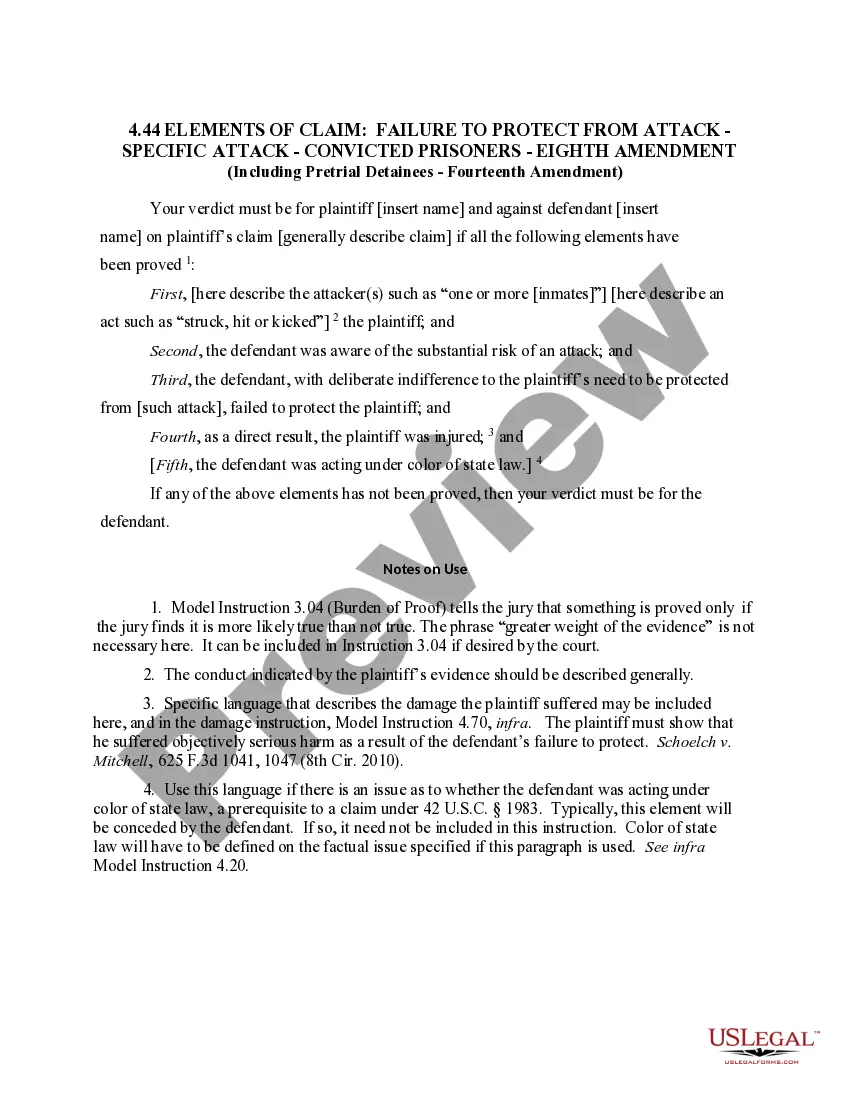
Michigan Last Will and Testament for a Married Person with No Children
About this form
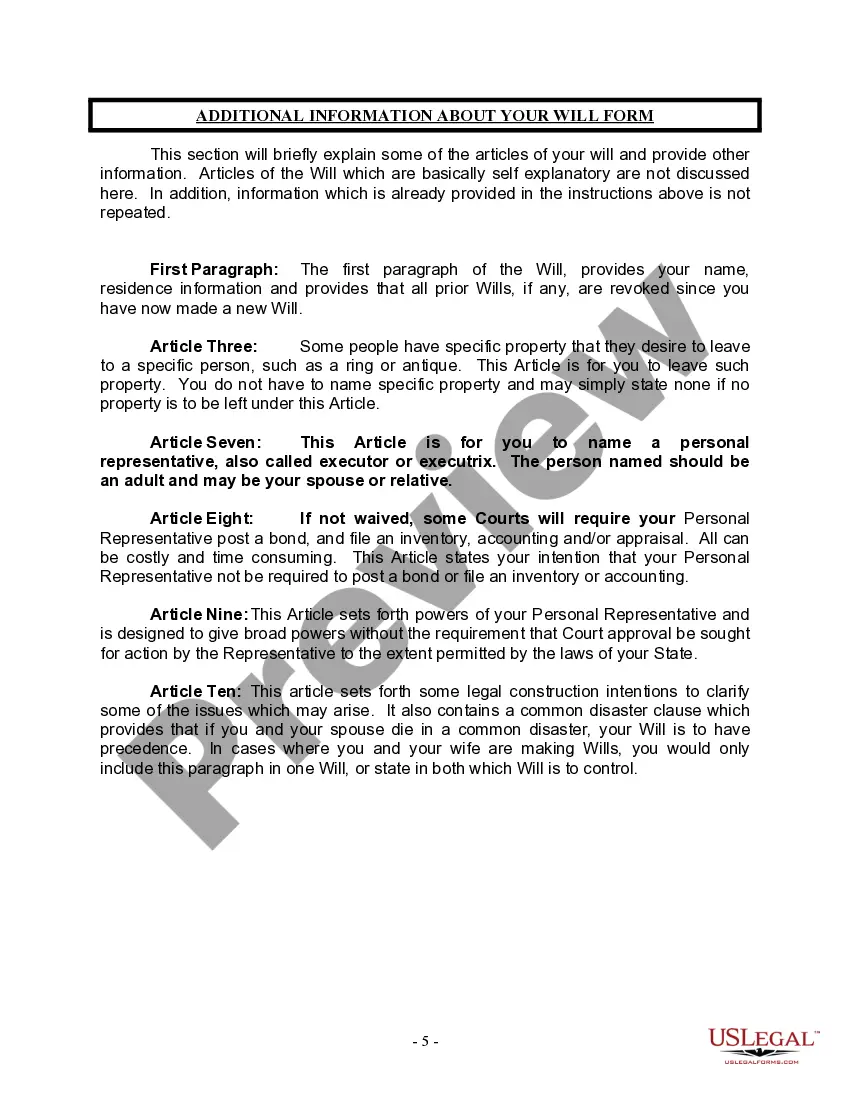
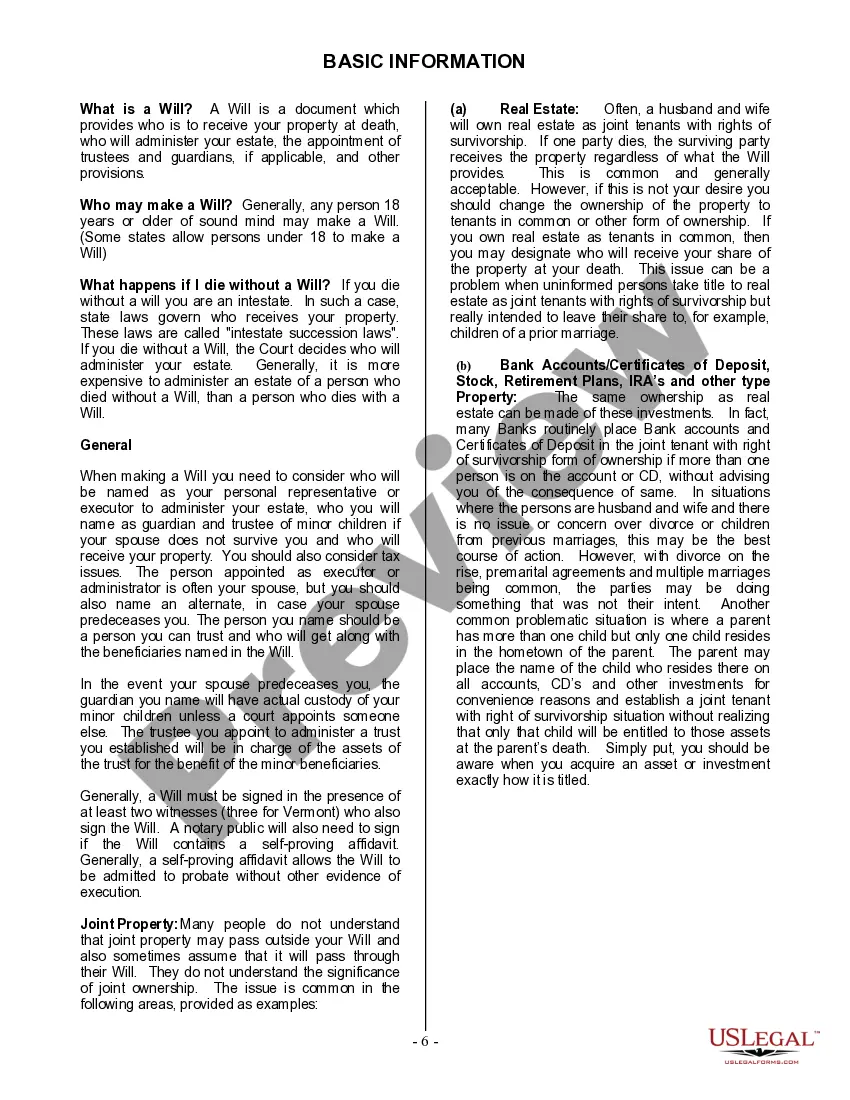
The Last Will and Testament for a Married Person with No Children is a legal document that outlines how a married individual wishes to distribute their property and appoint a personal representative upon their death. This form is specifically tailored for married individuals without children, distinguishing it from other wills that may involve children or different family structures. The will provides clarity on property distribution, executor appointment, and other pertinent provisions relevant to the individual's wishes and circumstances.
What’s included in this form
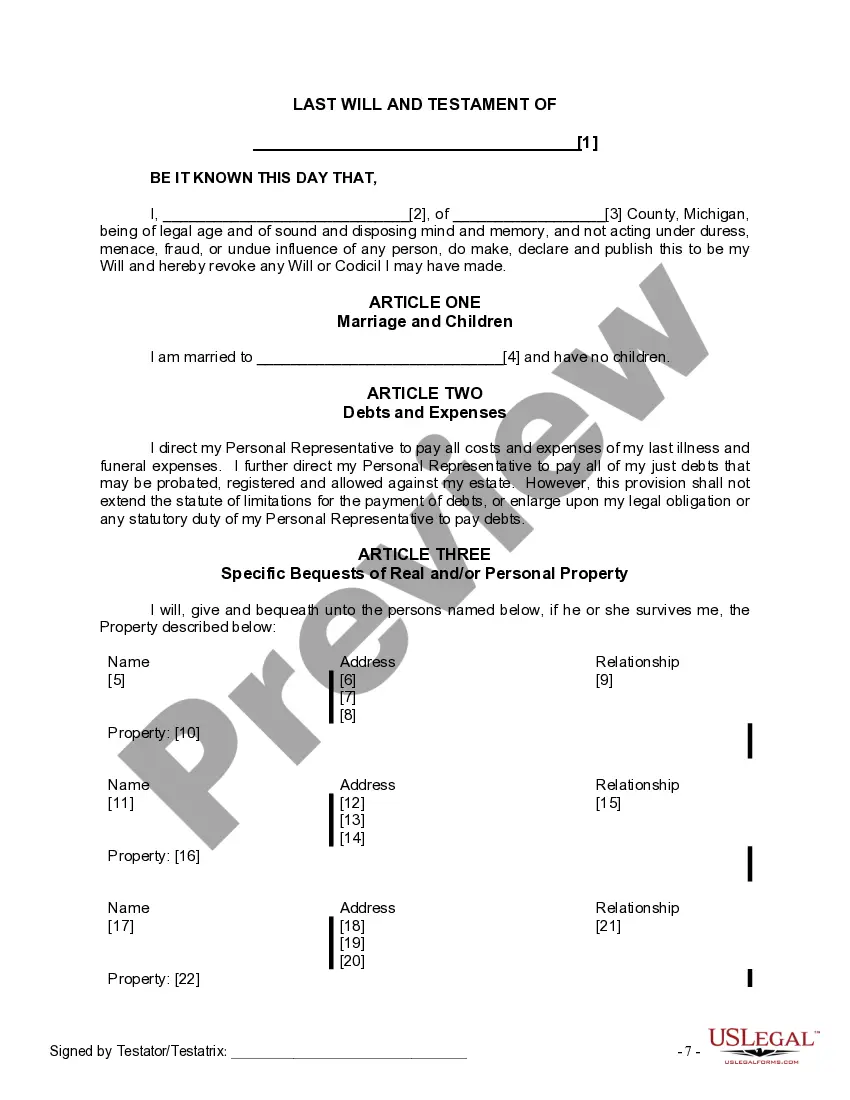
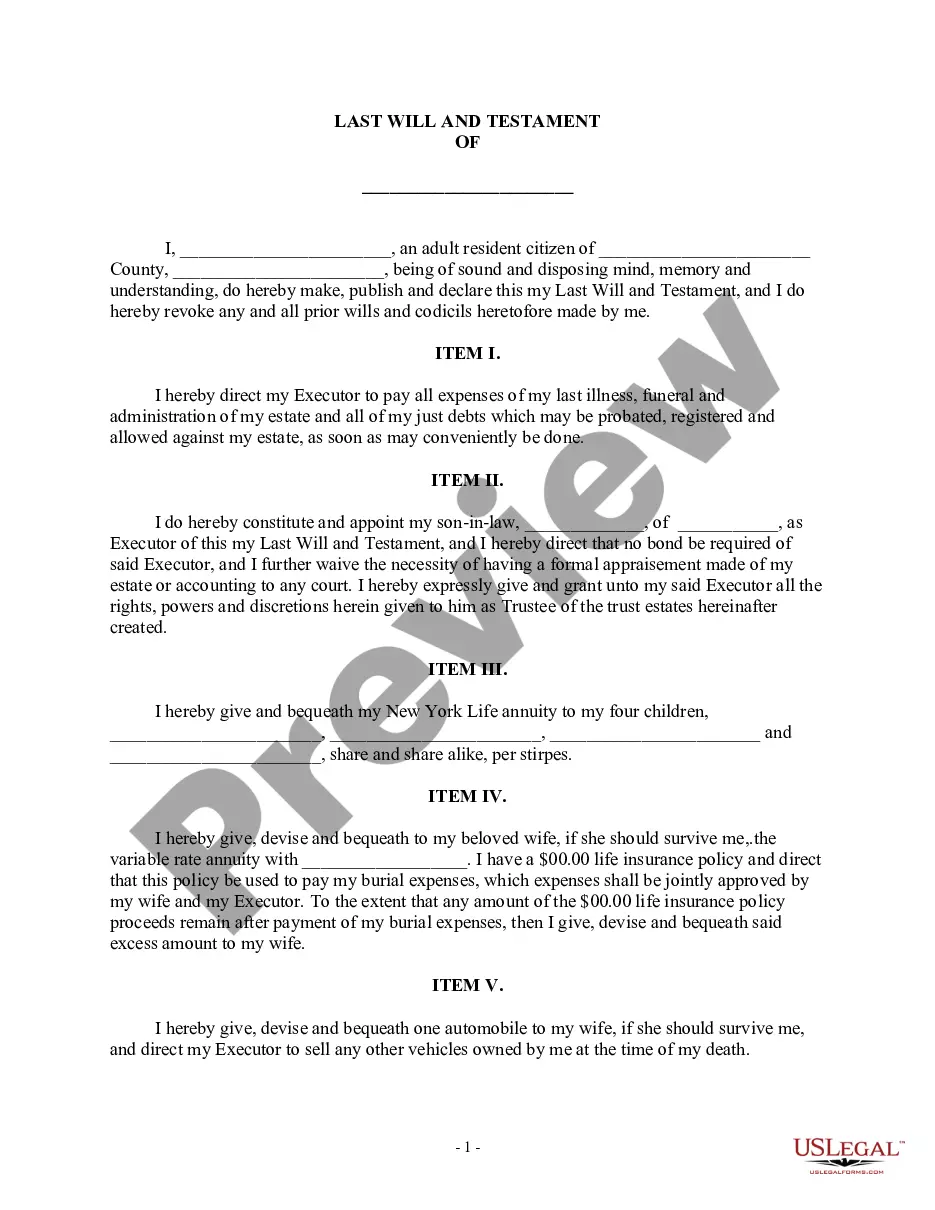
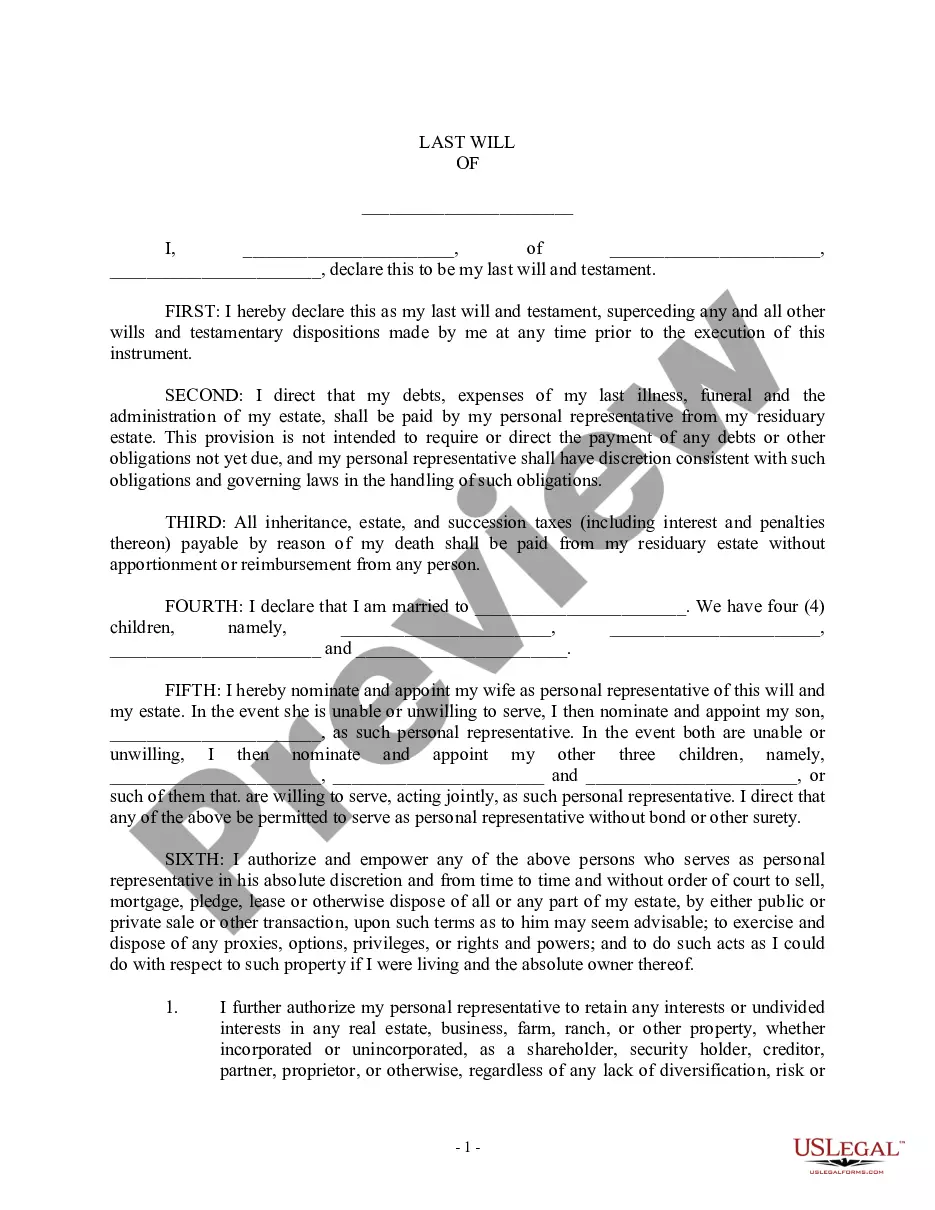
- Article One: Details the marriage and confirms the absence of children.
- Article Two: Directs the payment of debts, funeral expenses, and administration costs.
- Specific Bequests: Allows the testator to leave specific items or property to designated individuals.
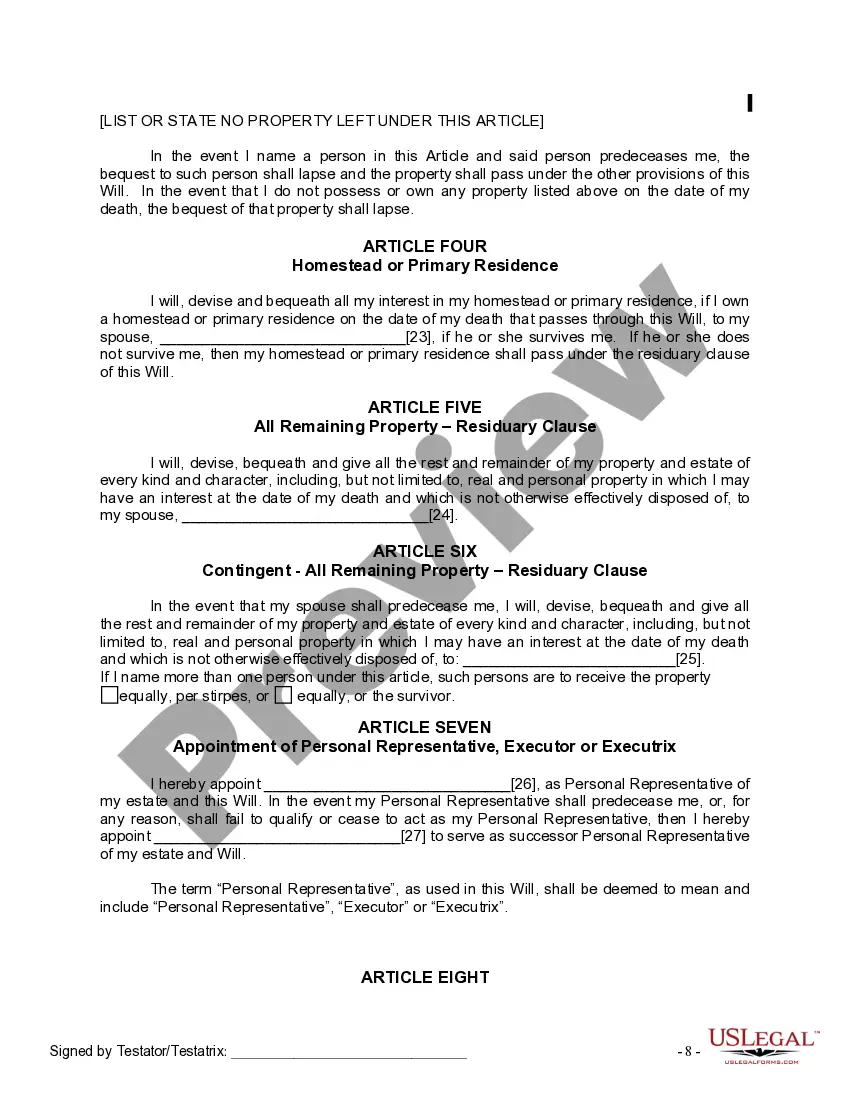
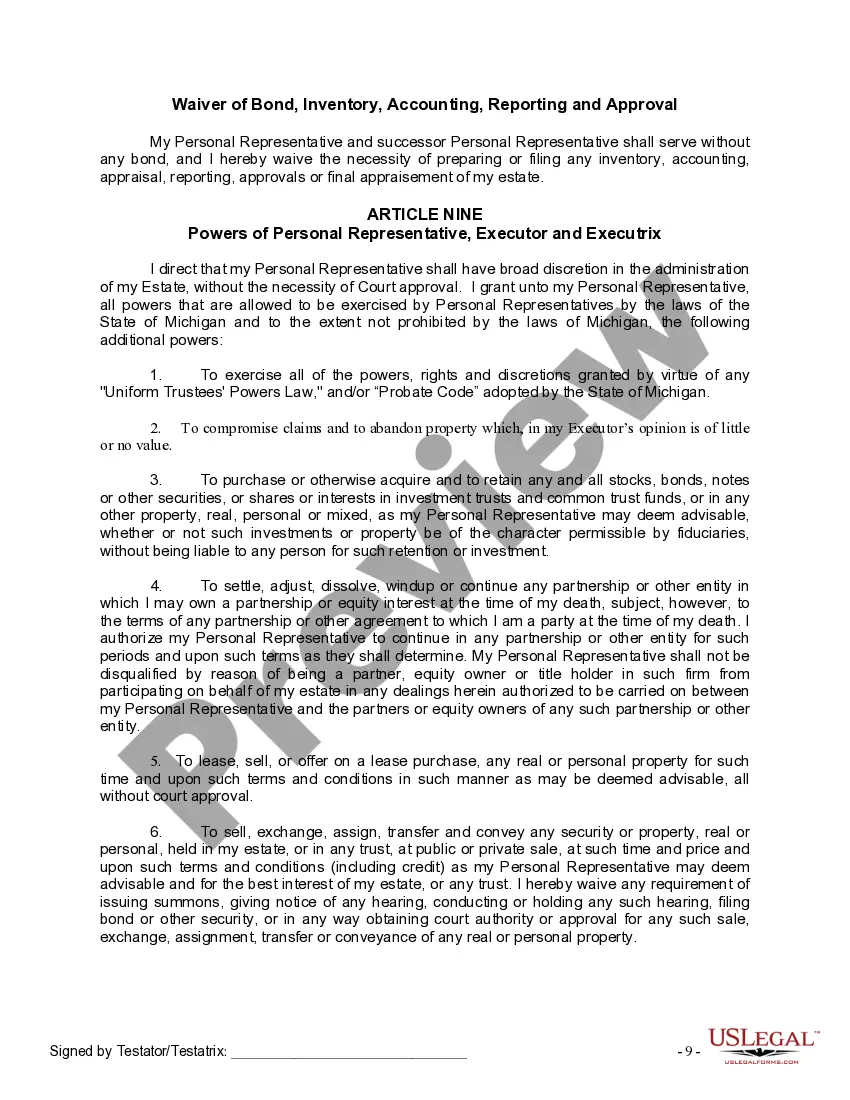
- Homestead Clause: Specifies the distribution of the primary residence to the spouse.
- Residuary Clause: Allocates all remaining property to the spouse after other bequests are fulfilled.
- Executor Appointment: Names the personal representative responsible for executing the will's terms.





Situations where this form applies
This form is essential for a married individual without children who wants to ensure their wishes are clearly documented regarding the distribution of their estate. It is particularly useful when establishing a plan for asset management and ensuring that their spouse is the primary beneficiary, thus preventing potential disputes or confusion after their passing.
Who this form is for
- Individuals who are married and have no children.
- People looking to make legal arrangements regarding their estate.
- Those who wish to secure their partner's inheritance rights in the absence of children.
Completing this form step by step
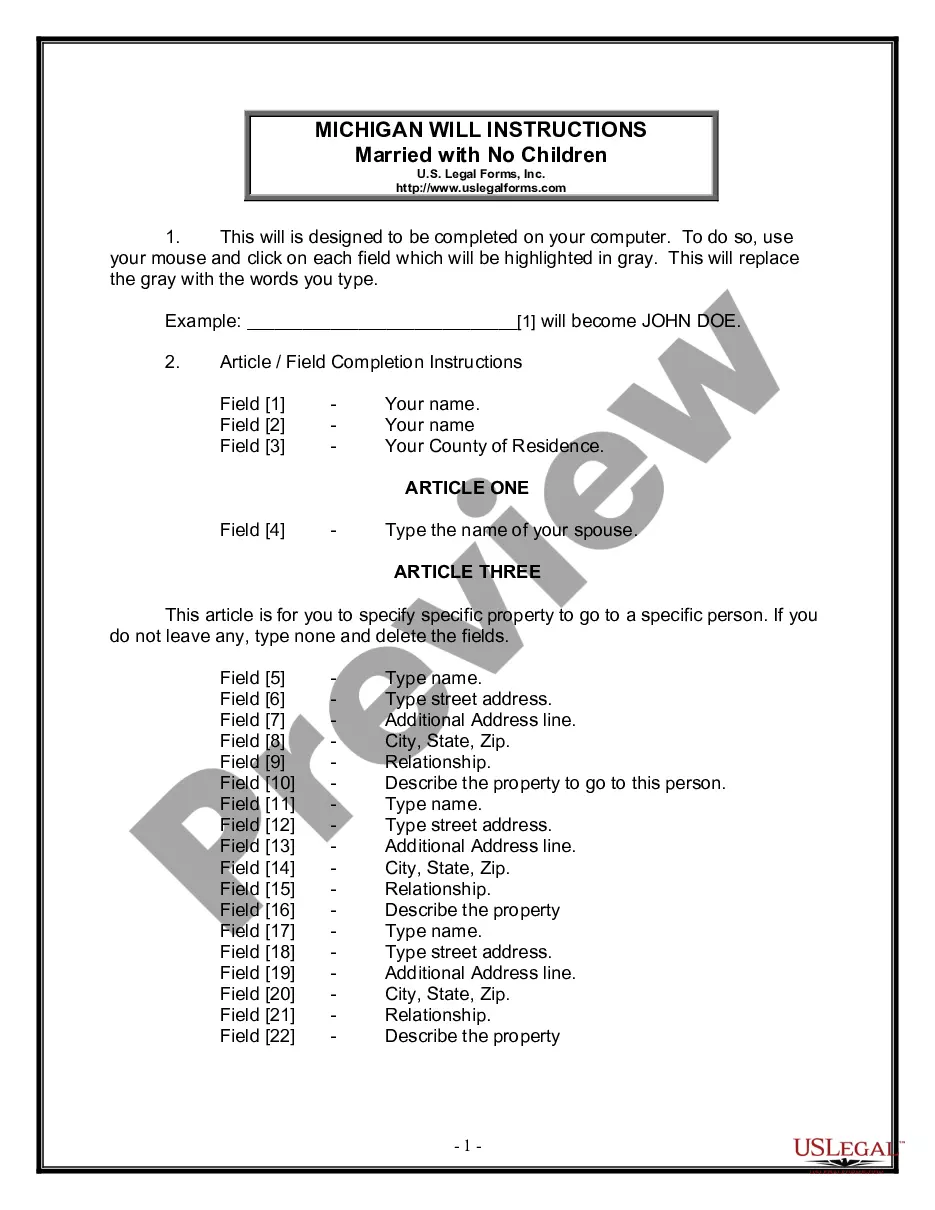
- Enter your full name and details in the designated fields.
- Specify your spouse's name and provide county of residence.
- Outline any specific bequests you wish to leave, detailing persons and property involved.
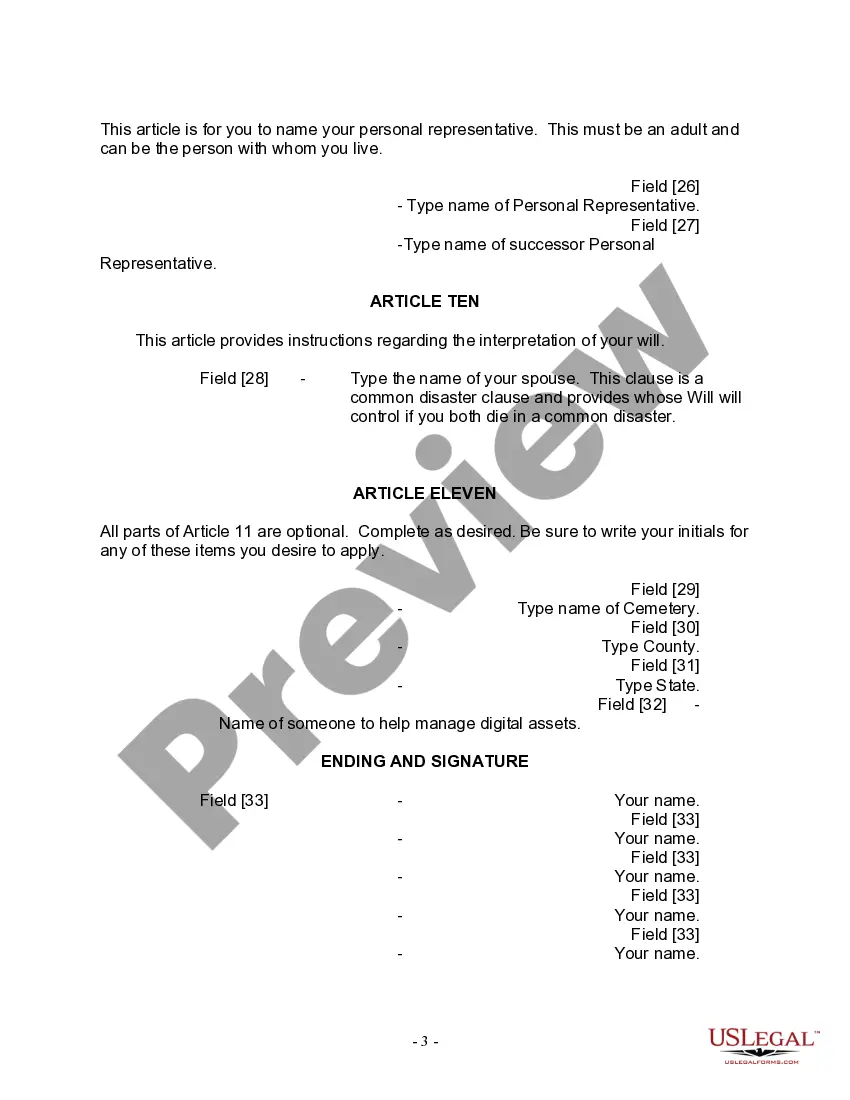
- Name your personal representative who will manage your estate after your death.
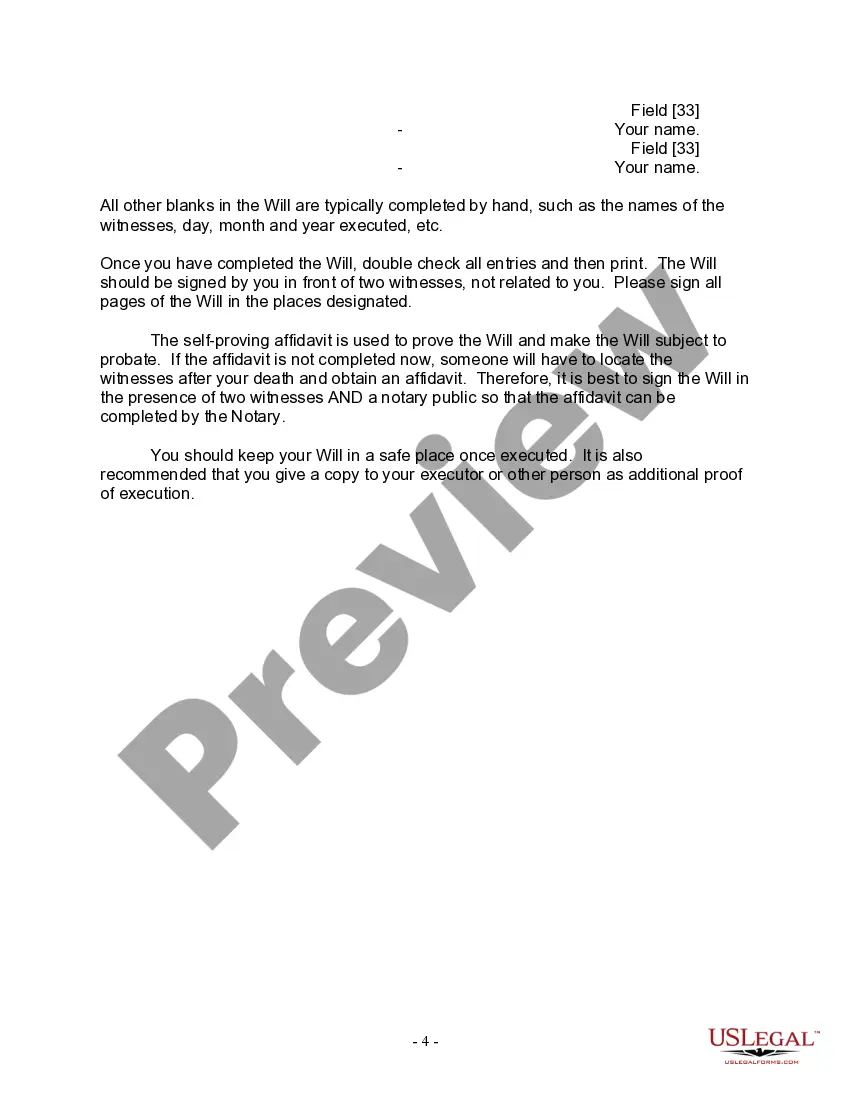
- Ensure the will is signed in the presence of two witnesses to validate it.
Notarization requirements for this form
Yes, this form must be notarized to be legally valid. This requirement helps ensure the authenticity of the document and supports the self-proving affidavit process. US Legal Forms offers integrated online notarization, allowing you to securely complete your will with a notary public without needing to travel.
Get your form ready online
Our built-in tools help you complete, sign, share, and store your documents in one place.
Make edits, fill in missing information, and update formatting in US Legal Forms—just like you would in MS Word.
Download a copy, print it, send it by email, or mail it via USPS—whatever works best for your next step.
Sign and collect signatures with our SignNow integration. Send to multiple recipients, set reminders, and more. Go Premium to unlock E-Sign.
If this form requires notarization, complete it online through a secure video call—no need to meet a notary in person or wait for an appointment.
We protect your documents and personal data by following strict security and privacy standards.

Make edits, fill in missing information, and update formatting in US Legal Forms—just like you would in MS Word.

Download a copy, print it, send it by email, or mail it via USPS—whatever works best for your next step.

Sign and collect signatures with our SignNow integration. Send to multiple recipients, set reminders, and more. Go Premium to unlock E-Sign.

If this form requires notarization, complete it online through a secure video call—no need to meet a notary in person or wait for an appointment.

We protect your documents and personal data by following strict security and privacy standards.
Common mistakes to avoid
- Failing to properly sign the will in front of witnesses.
- Not naming an alternate personal representative.
- Neglecting to review and update the will after significant life changes.
- Leaving blank fields that could cause confusion about asset distribution.
Why use this form online
- Convenience of filling out and editing the document at your own pace.
- Instant access to a legally sound template crafted by licensed attorneys.
- Ability to store forms securely and obtain multiple copies as needed.
- Eliminates the need for legal appointments, saving time and costs.
Main things to remember
- This will is tailored for married individuals without children, ensuring their assets are directed to their spouse.
- Proper execution requires signatures from two witnesses and potentially a notary public.
- Clear instructions should be provided for asset distribution to avoid confusion.
- Utilizing this form can simplify the estate planning process and provide peace of mind.
Looking for another form?


Form popularity
FAQ
In Michigan, you do not have to file your will with the court while you are alive. However, a Michigan Last Will and Testament for a Married Person with No Children must be submitted to the probate court after your passing. This process allows the court to validate your will and ensure your wishes are fulfilled. By using the US Legal Forms platform, you can easily create and store your will, simplifying the probate process for your loved ones.
Certainly, a Michigan Last Will and Testament for a Married Person with No Children is beneficial. It allows you to outline how your estate should be divided, ensuring your spouse receives what you intend. Moreover, a will can simplify the process of asset distribution, avoiding potential disputes. By planning ahead, you can protect your family's future and reduce stress during difficult times.
Yes, having a Michigan Last Will and Testament for a Married Person with No Children is important. Even without children, a will helps ensure your spouse inherits your assets according to your wishes. This legal document can also specify how to handle any debts or personal belongings. Ultimately, a will provides clarity and peace of mind for you and your loved ones.
Avoiding probate in Michigan without a will can be achieved through several strategies, including establishing a living trust or utilizing joint ownership of assets. Assets that have designated beneficiaries, such as life insurance policies and retirement accounts, also bypass probate. Using a Michigan Last Will and Testament for a Married Person with No Children can simplify the process and help ensure that your estate is settled efficiently.
In Michigan, when a married person passes away without a will, their spouse typically inherits a significant portion of their estate. However, the specific distribution can vary depending on whether there are surviving children or other relatives. For a married person with no children, the spouse usually receives all assets. It's essential to have a Michigan Last Will and Testament for a Married Person with No Children to ensure your wishes are followed.
You can write your own Michigan Last Will and Testament for a Married Person with No Children. Michigan law allows individuals to create their own wills, provided they meet specific requirements. After drafting your will, having it notarized is a good step to ensure its validity. However, using a professional service like US Legal Forms can help you navigate the process and ensure your will complies with state laws.
Marital Property Is Divided FairlyMichigan law requires judges to divide property fairly. Fair usually means that each person gets about half of everything.Your property might be divided unequally if one person is more at fault for the marriage ending or if one person needs more property.
Michigan defines adultery as "the sexual intercourse of two persons, either of whom is married to a third person." (Mich. Comp. Laws § 750.29.) Adultery is a felony-level crime in Michigan, but the state will only prosecute it if the innocent spouse files a criminal complaint within a year of the offense.
Michigan is an equitable distribution state. This means courts will attempt to divide property and assets in a divorce in a fair and equal way but it doesn't mean that the assets will always be divided on a 50/50 basis.Separate property can become marital property if it is commingled with marital property.
Michigan abolished common-law marriage in 1957. Today, a couple must consent and obtain a license to marry in Michigan.If a couple wants their out-of-state common-law marriage recognized in Michigan, it is advisable for them to consult with a Michigan attorney.