Maine Mutual Wills package with Last Wills and Testaments for Married Couple with No Children
Overview of this form
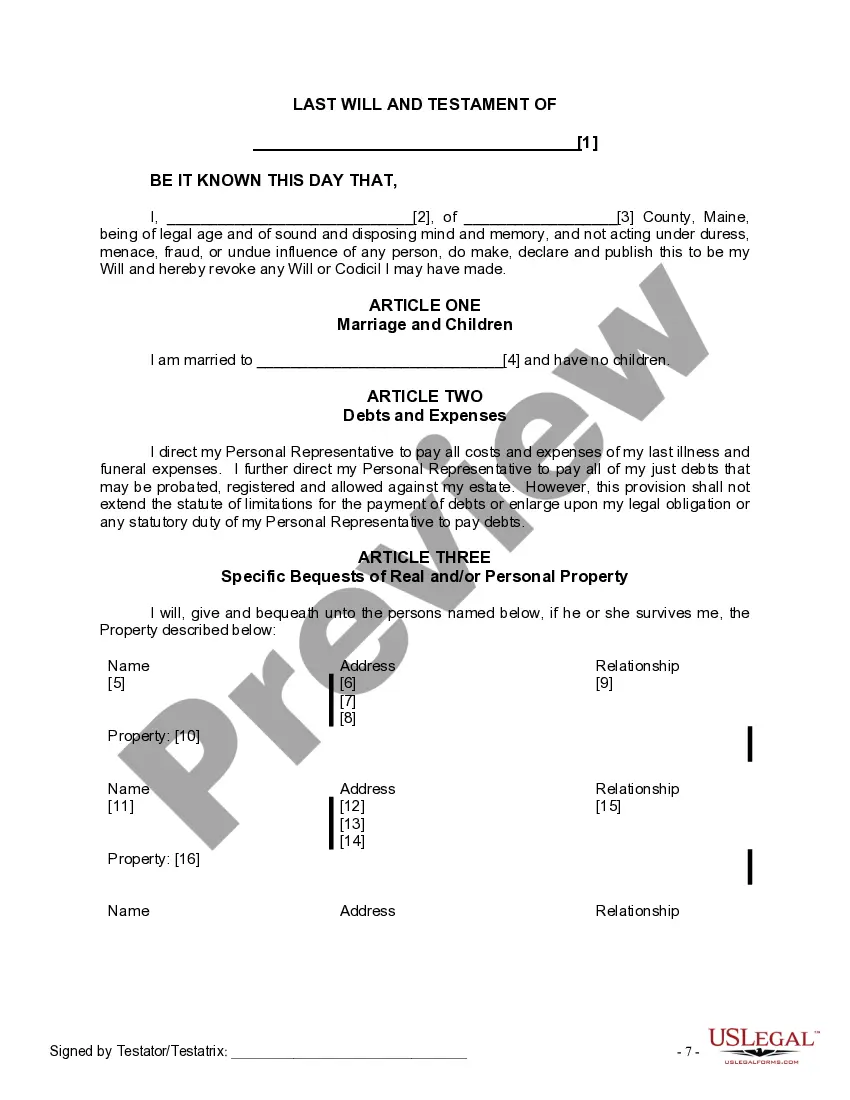
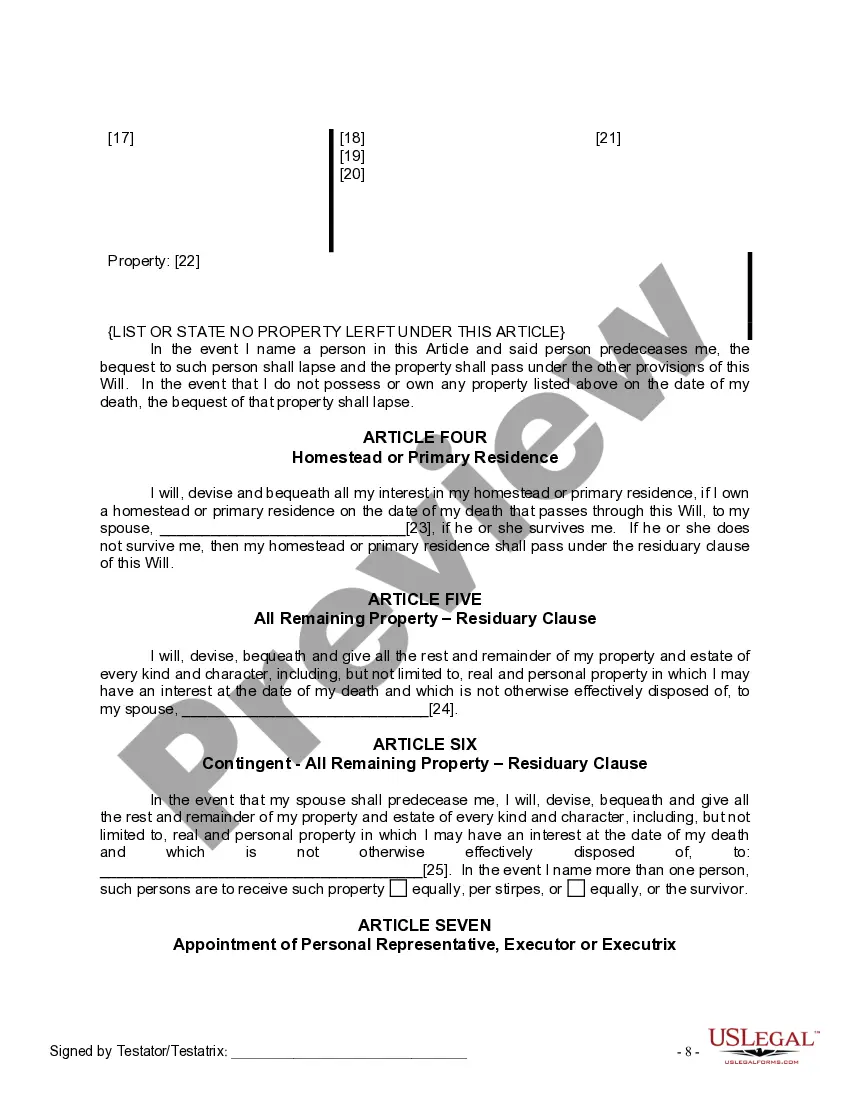
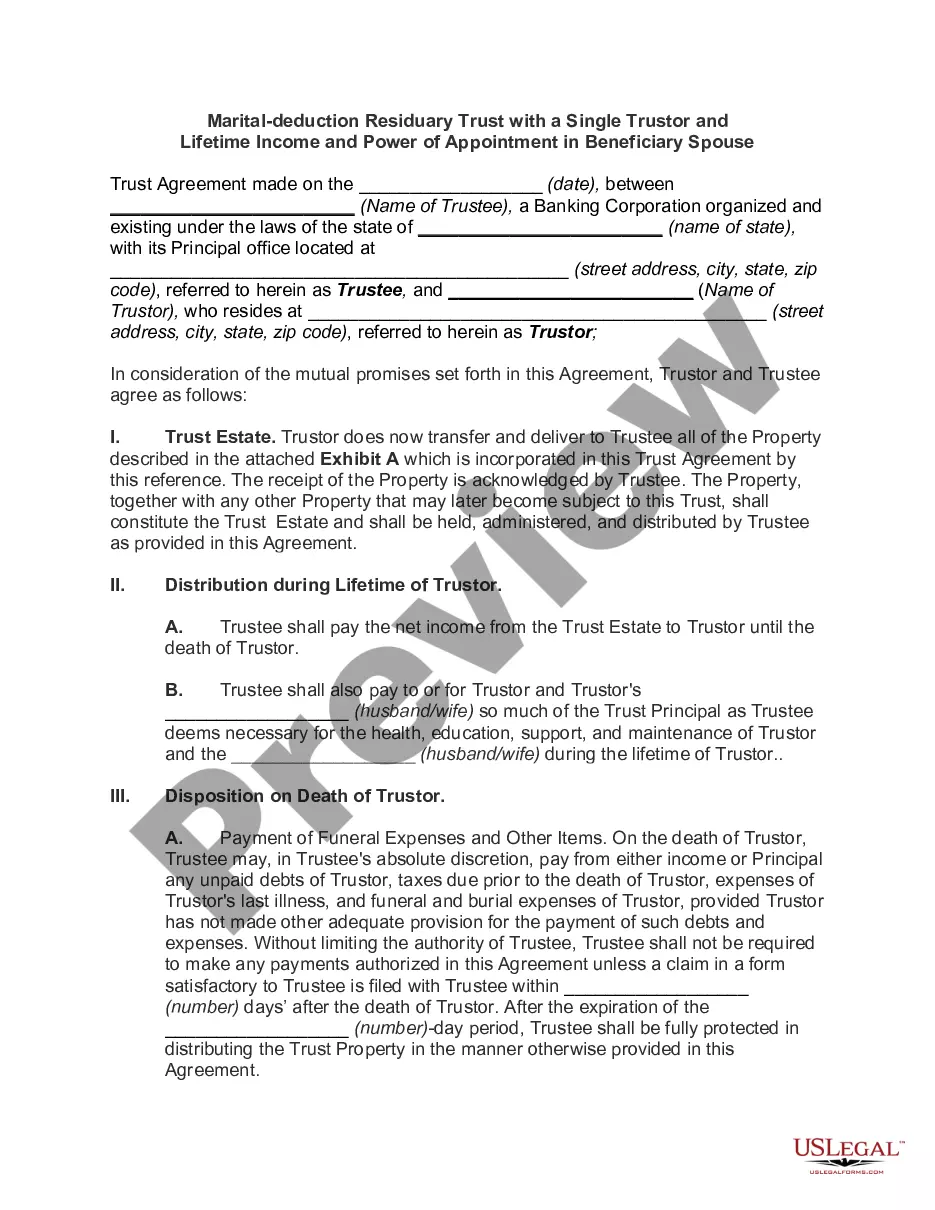
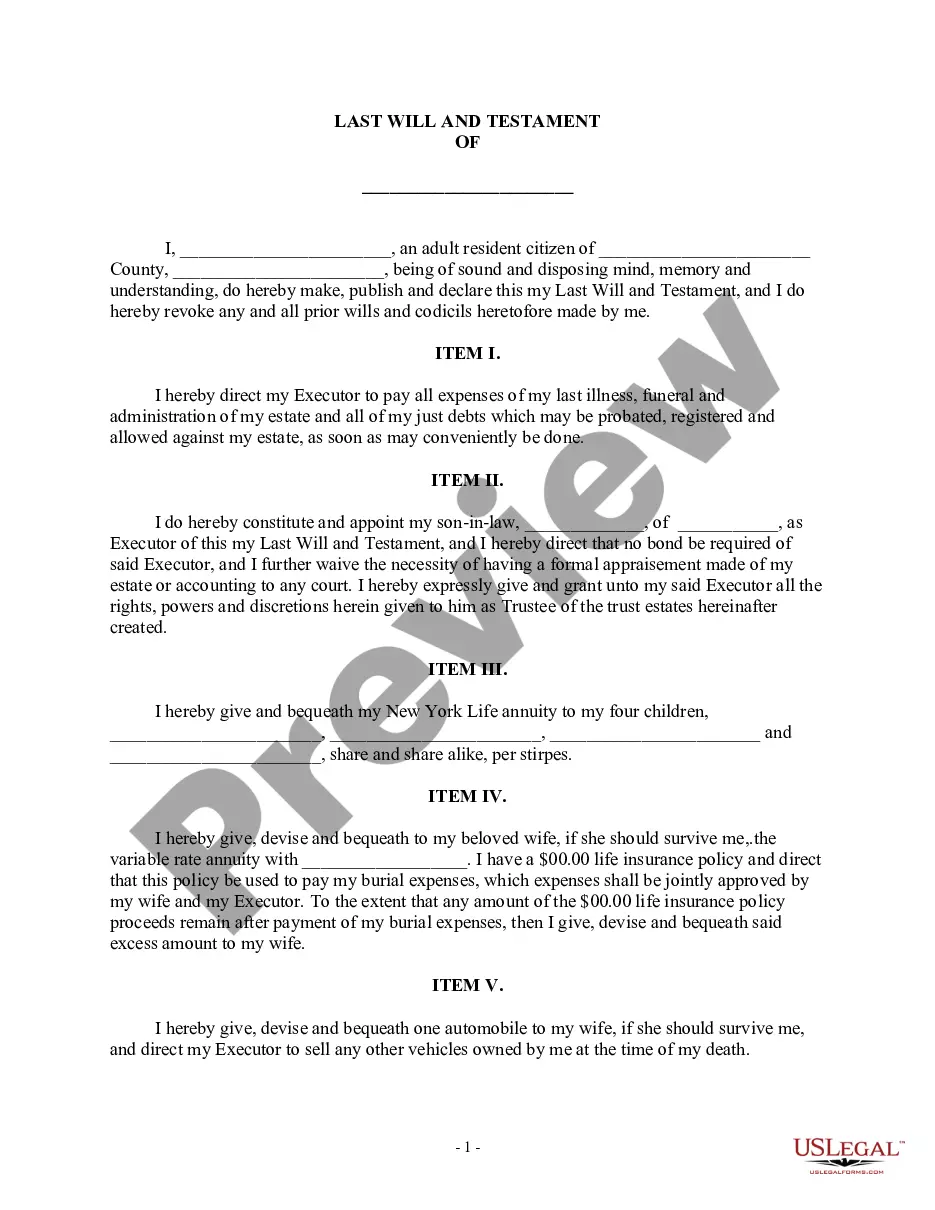
The Mutual Wills package with Last Wills and Testaments for Married Couples with No Children provides a robust estate planning solution tailored for couples without children. Unlike standard wills, this package includes mutual wills, which means each spouse's will is designed to complement the other, ensuring that both parties' wishes are honored in the distribution of property upon death. This unique structure helps prevent disputes and ensures clarity in asset allocation between spouses.
What’s included in this form
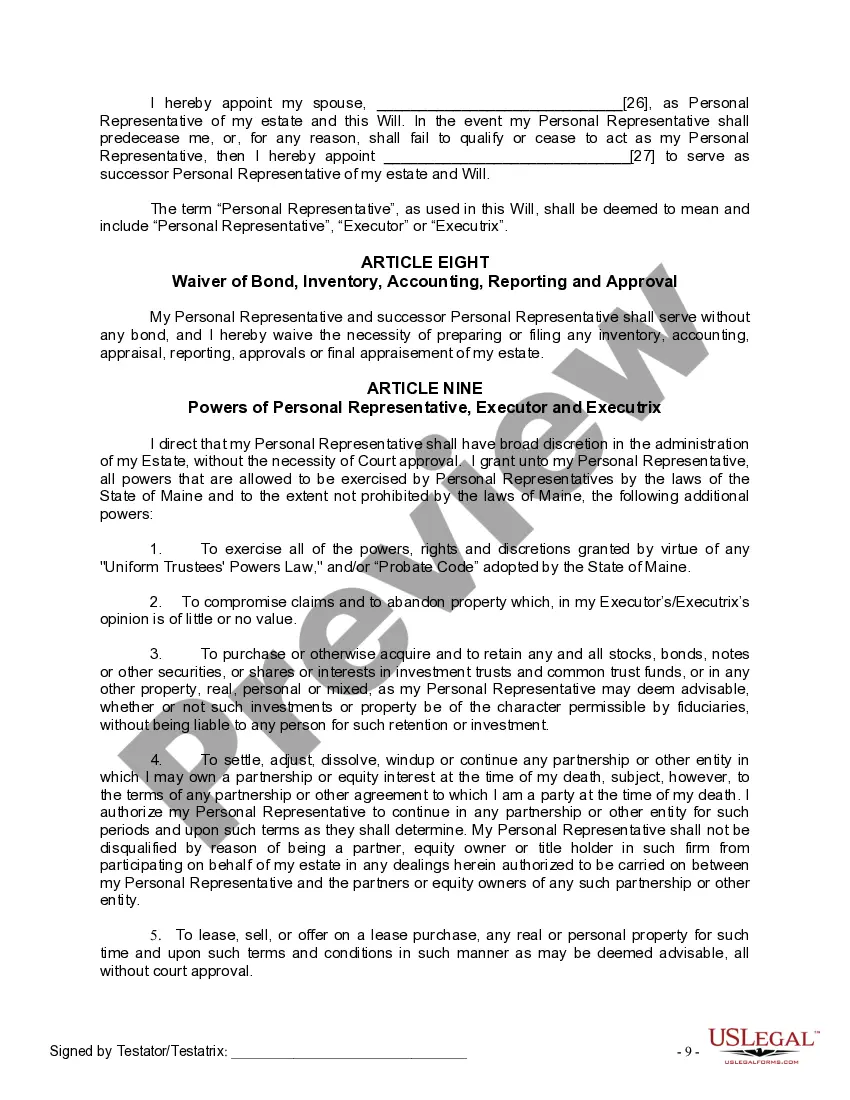
- Appointment of Personal Representative: Designate a trusted individual to manage your estate.
- Property Distribution: Clearly specify who will inherit your property and assets.
- Provisions for Spouse: Includes specific clauses that address the needs of both partners.
- Self-Proving Affidavit: If applicable, a notarized affidavit included for easier probate.
- Instructions for Execution: Detailed steps on how to properly sign and witness the wills.




Common use cases
This Mutual Wills package is particularly useful for married couples without children who want to ensure that both spouses' final wishes regarding property and asset distribution are clearly documented and legally binding. It is ideal in scenarios where spouses want to avoid probate disputes and ensure that their assets are transferred seamlessly to each other upon death.
Who should use this form
This form is suitable for:
- Married couples without children seeking to establish mutual wills.
- Individuals looking to make their estate planning process straightforward and conflict-free.
- Spouses who want to ensure that their wishes regarding property distribution are legally documented and upheld.
Completing this form step by step
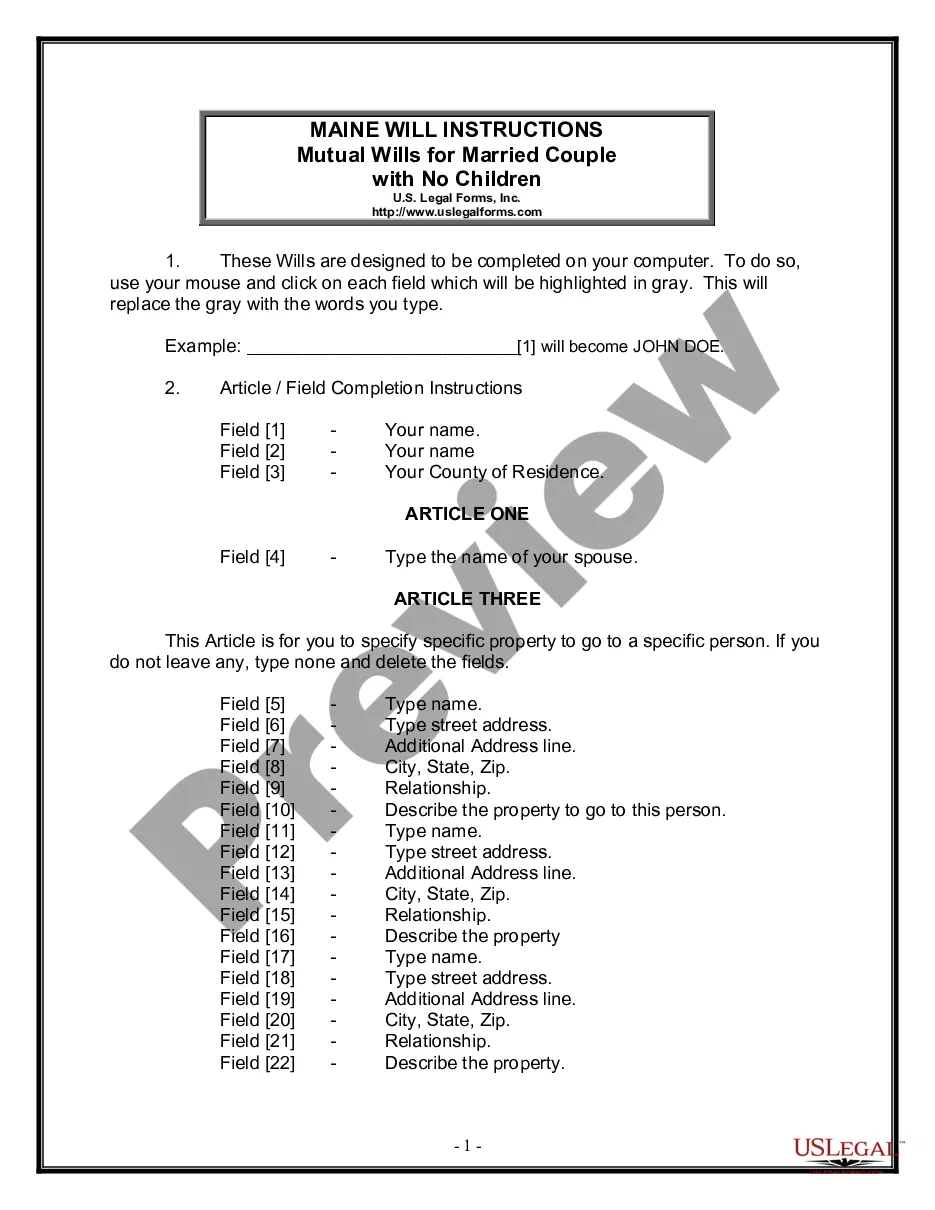
- Identify the parties: Enter each spouse's name and county of residence.
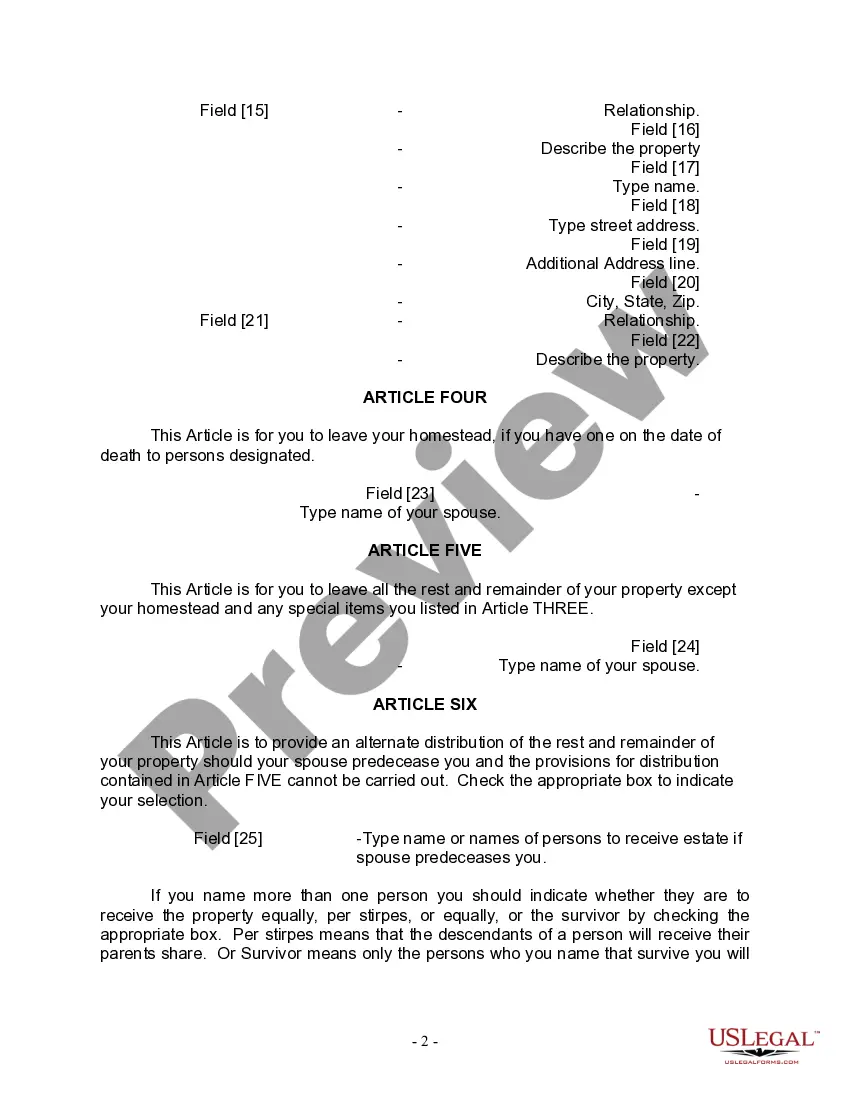
- Designate beneficiaries: Specify who will inherit specific property, including homestead and other assets.
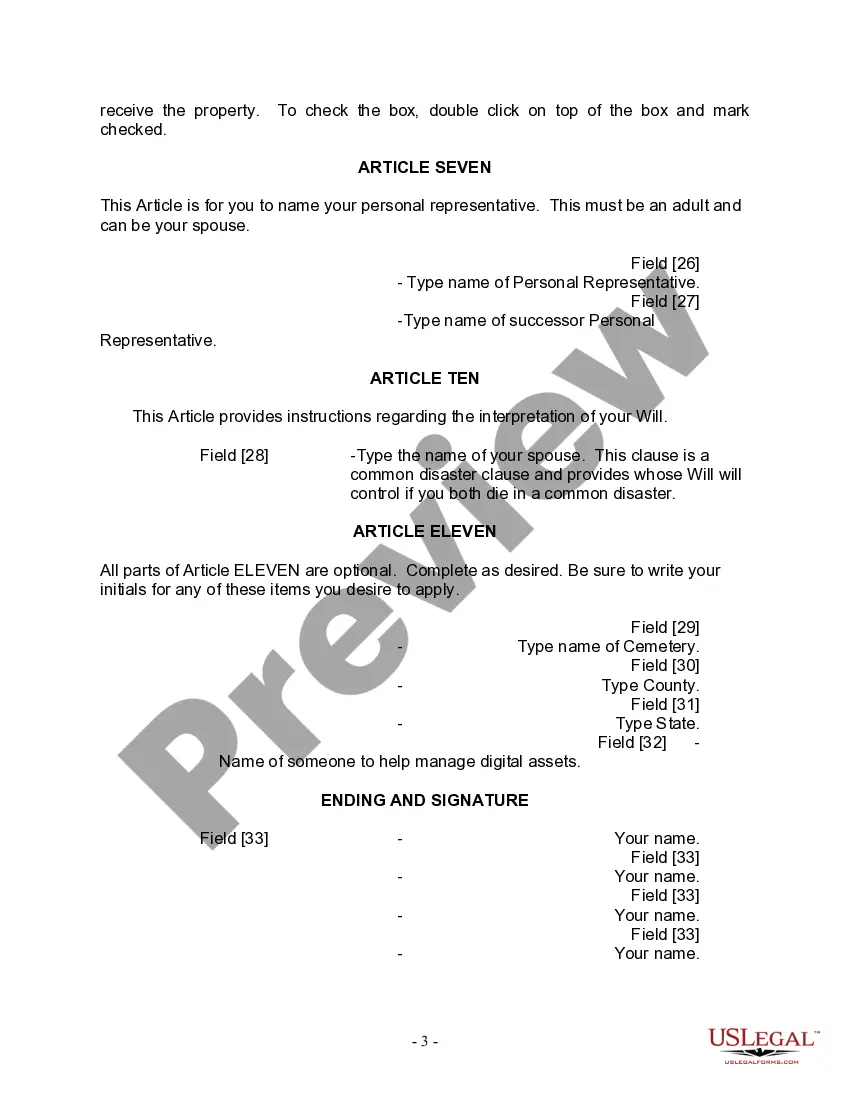
- Appoint a Personal Representative: Name an individual to manage your estate after your passing.
- Sign with witnesses: Ensure that both spouses sign the wills in front of two non-related witnesses.
- Optional notarization: If desired, have the wills signed in front of a notary to complete the self-proving affidavit.
Does this form need to be notarized?
Notarization is required for this form to take effect. Our online notarization service, powered by Notarize, lets you verify and sign documents remotely through an encrypted video session, available 24/7.
Get your form ready online
Our built-in tools help you complete, sign, share, and store your documents in one place.
Make edits, fill in missing information, and update formatting in US Legal Forms—just like you would in MS Word.
Download a copy, print it, send it by email, or mail it via USPS—whatever works best for your next step.
Sign and collect signatures with our SignNow integration. Send to multiple recipients, set reminders, and more. Go Premium to unlock E-Sign.
If this form requires notarization, complete it online through a secure video call—no need to meet a notary in person or wait for an appointment.
We protect your documents and personal data by following strict security and privacy standards.

Make edits, fill in missing information, and update formatting in US Legal Forms—just like you would in MS Word.

Download a copy, print it, send it by email, or mail it via USPS—whatever works best for your next step.

Sign and collect signatures with our SignNow integration. Send to multiple recipients, set reminders, and more. Go Premium to unlock E-Sign.

If this form requires notarization, complete it online through a secure video call—no need to meet a notary in person or wait for an appointment.

We protect your documents and personal data by following strict security and privacy standards.
Common mistakes
- Failing to have wills signed in the presence of two witnesses, leading to potential invalidation.
- Not reviewing state laws regarding mutual wills, which can impact the enforceability of the documents.
- Neglecting to update wills after significant life changes, such as moving states or changes in financial status.
Benefits of using this form online
- Convenience: Easily complete the form from home without the need for an in-person meeting with an attorney.
- Editability: Make necessary changes easily before finalizing your documents.
- Reliable templates: Ensure that legal language meets state requirements through professionally drafted documents.
Legal use & context
- Mutual wills are legally binding documents created to ensure agreed-upon distributions among spouses.
- They can protect both parties from unilateral changes that may occur if one spouse passes away.
- Ensure the proper execution of the wills to avoid probate complications.
Key takeaways
- Mutual wills are designed for married couples to safeguard their mutual intent in asset distribution.
- The form requires careful completion and witnessing to ensure its enforceability.
- Consider adding a self-proving affidavit to enhance the ease of probate when the time comes.
Looking for another form?
Form popularity
FAQ
A will can also be declared invalid if someone proves in court that it was procured by undue influence. This usually involves some evil-doer who occupies a position of trust -- for example, a caregiver or adult child -- manipulating a vulnerable person to leave all, or most, of his property to the manipulator instead
Like most wills, a joint will lets the will-makers name who will get their property and assets after they die.After one spouse has died, all the couple's property will be left to the surviving spouse; and. After the surviving spouse dies, the remaining property will be left to the couple's children.
Tip 1: You absolutely need a will It's important for couples without kids to have wills because they don't have natural heirs to inherit their wealth. Generally speaking, if you die without a will, your assets will go to your spouse.Then your spouse's will would determine who gets what.
It is a customary estate planning practice for each spouse to have his or her own will. While some practitioners may draft a joint will for a married couple, it is not recommended.
Bank accounts. Brokerage or investment accounts. Retirement accounts and pension plans. A life insurance policy.
An adult can make a valid will without notifying their wife or husband. Not telling a spouse would be unusual, but not illegal.
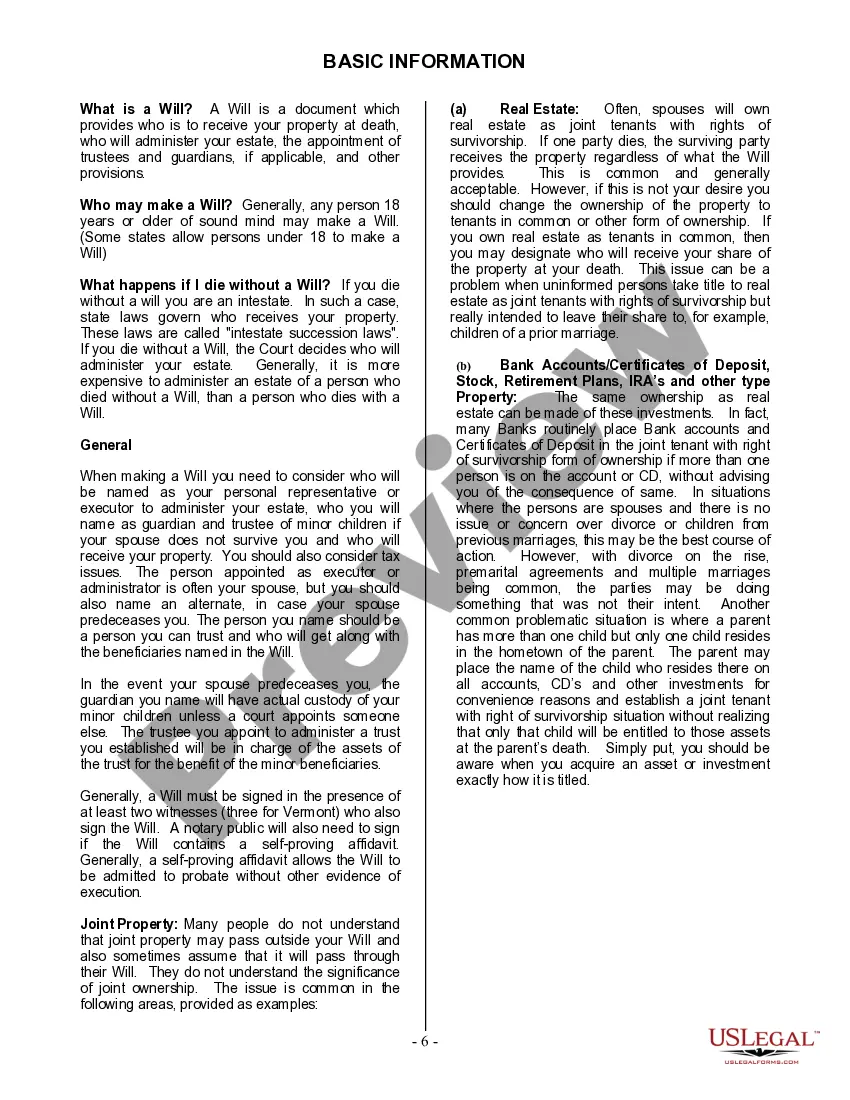
Many married couples own most of their assets jointly with the right of survivorship. When one spouse dies, the surviving spouse automatically receives complete ownership of the property.Since one never knows which spouse will survive the other, it is important that both have a Will.
Property in a living trust. One of the ways to avoid probate is to set up a living trust. Retirement plan proceeds, including money from a pension, IRA, or 401(k) Stocks and bonds held in beneficiary. Proceeds from a payable-on-death bank account.