Maine Last Will and Testament for Married Person with Minor Children from Prior Marriage
About this form
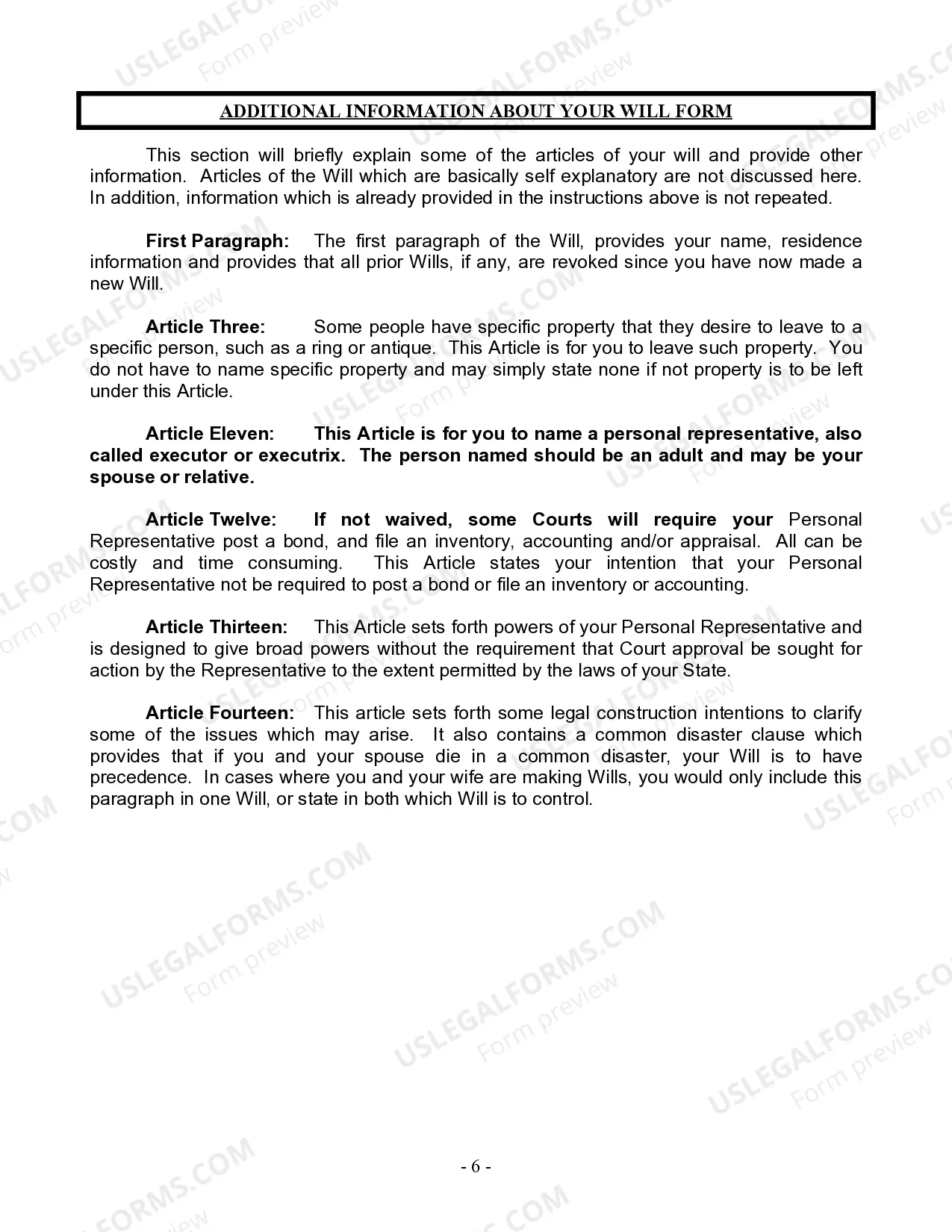
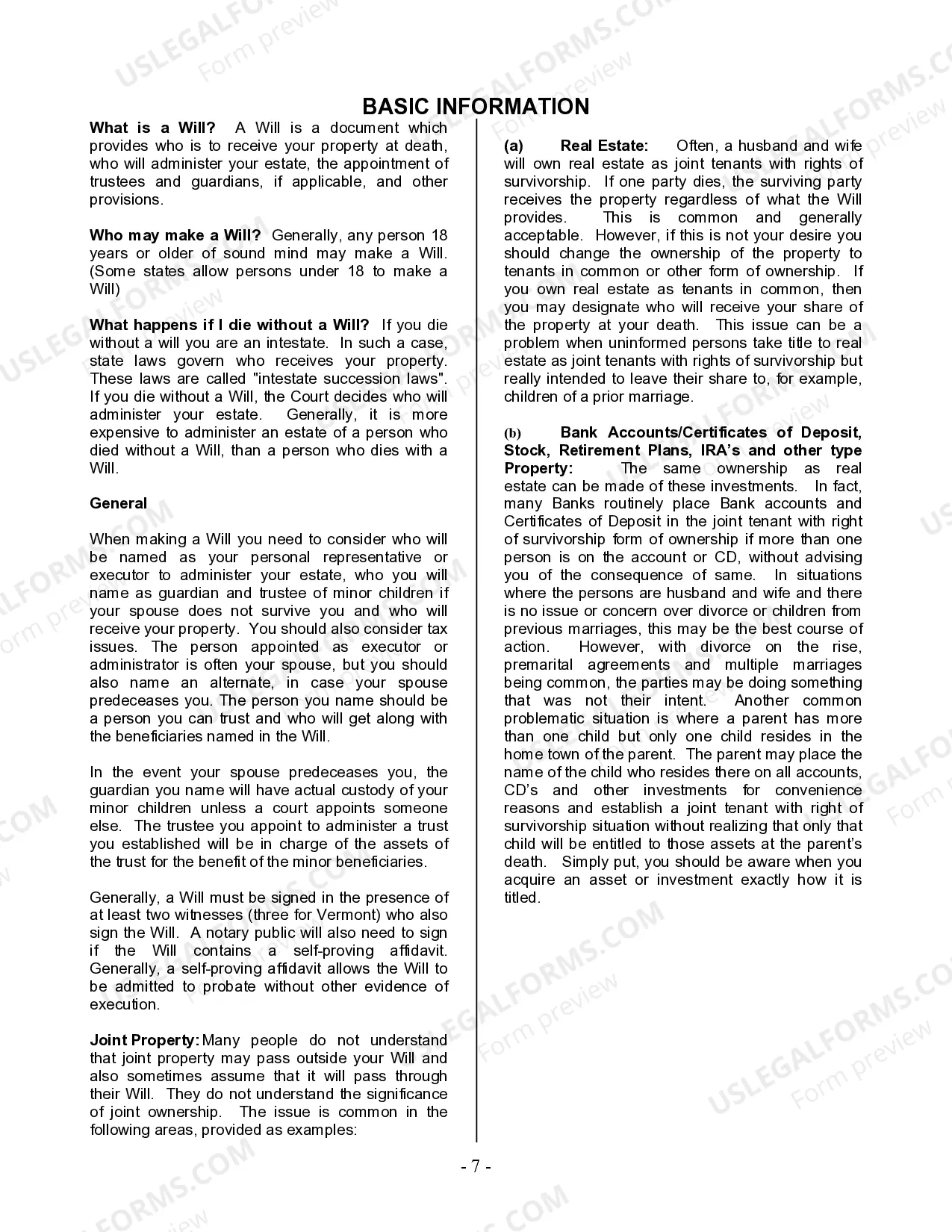
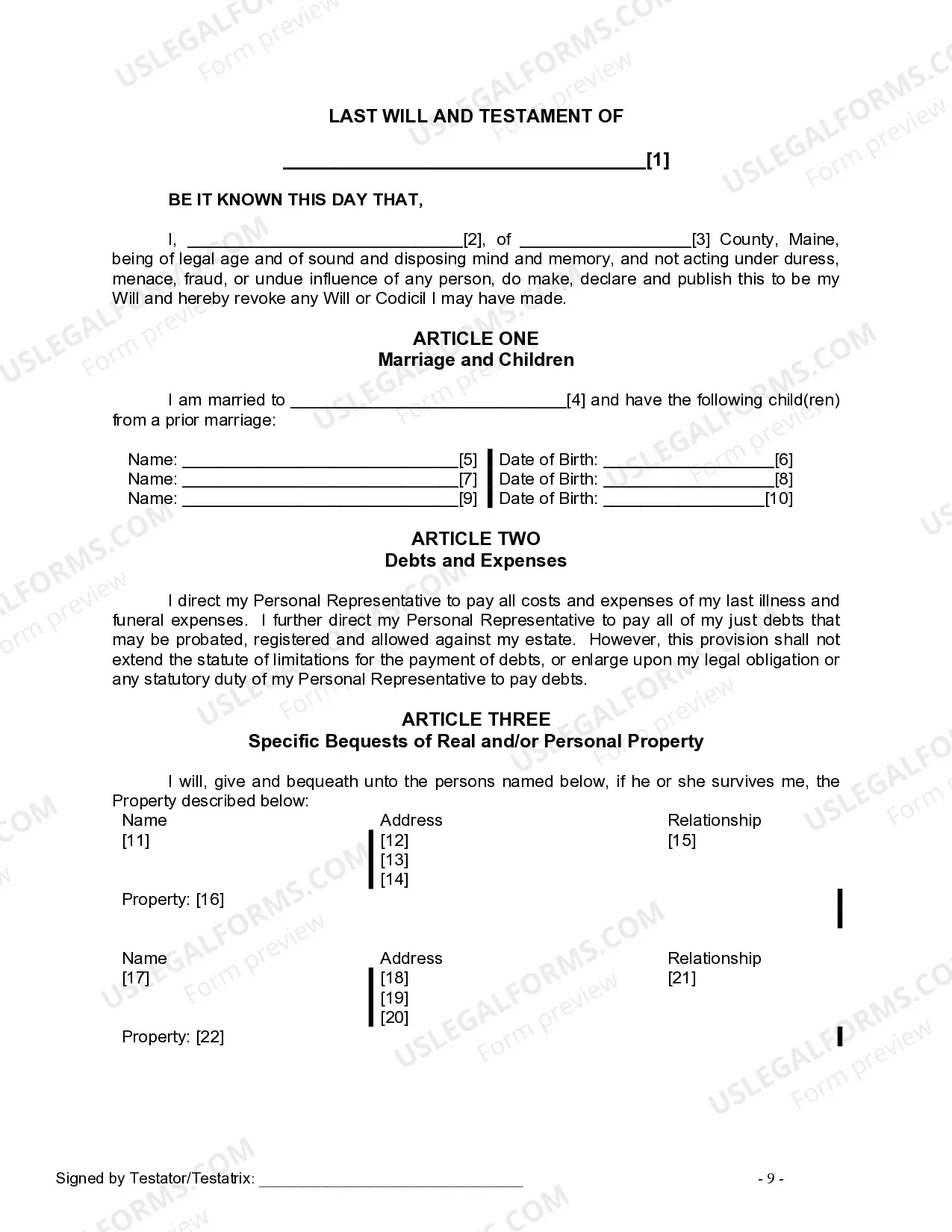
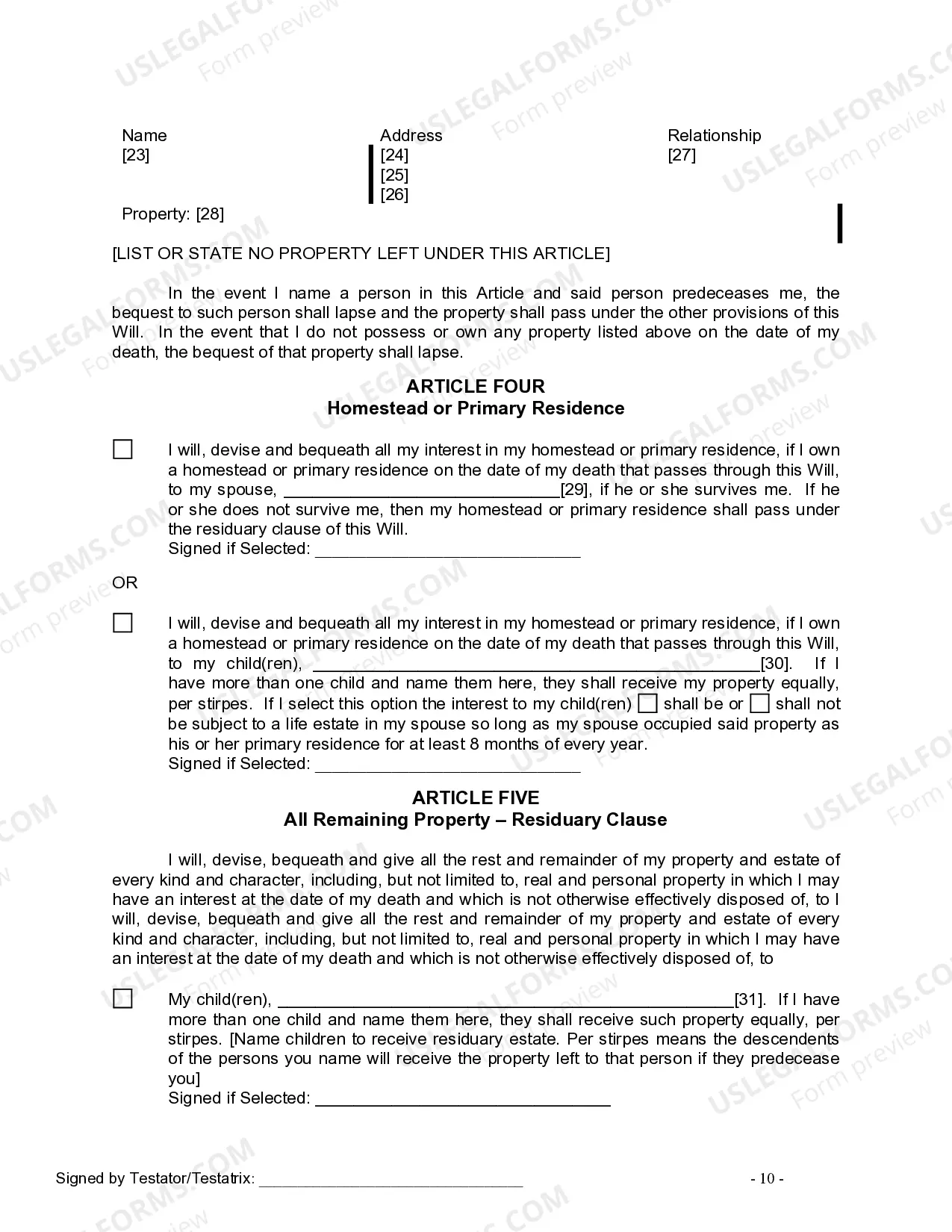
This form is a Last Will and Testament specifically designed for a married person with minor children from a prior marriage. It outlines how your estate will be distributed after your death, including the appointment of a personal representative or executor, who will manage your affairs. This will also designate beneficiaries for your property and include provisions for appointing a trustee to oversee assets left for minor children, distinguishing it from simpler wills that may not address unique family dynamics.
Form components explained
- Articles delineating specific bequests of property.
- Appointment of a personal representative to manage the estate.
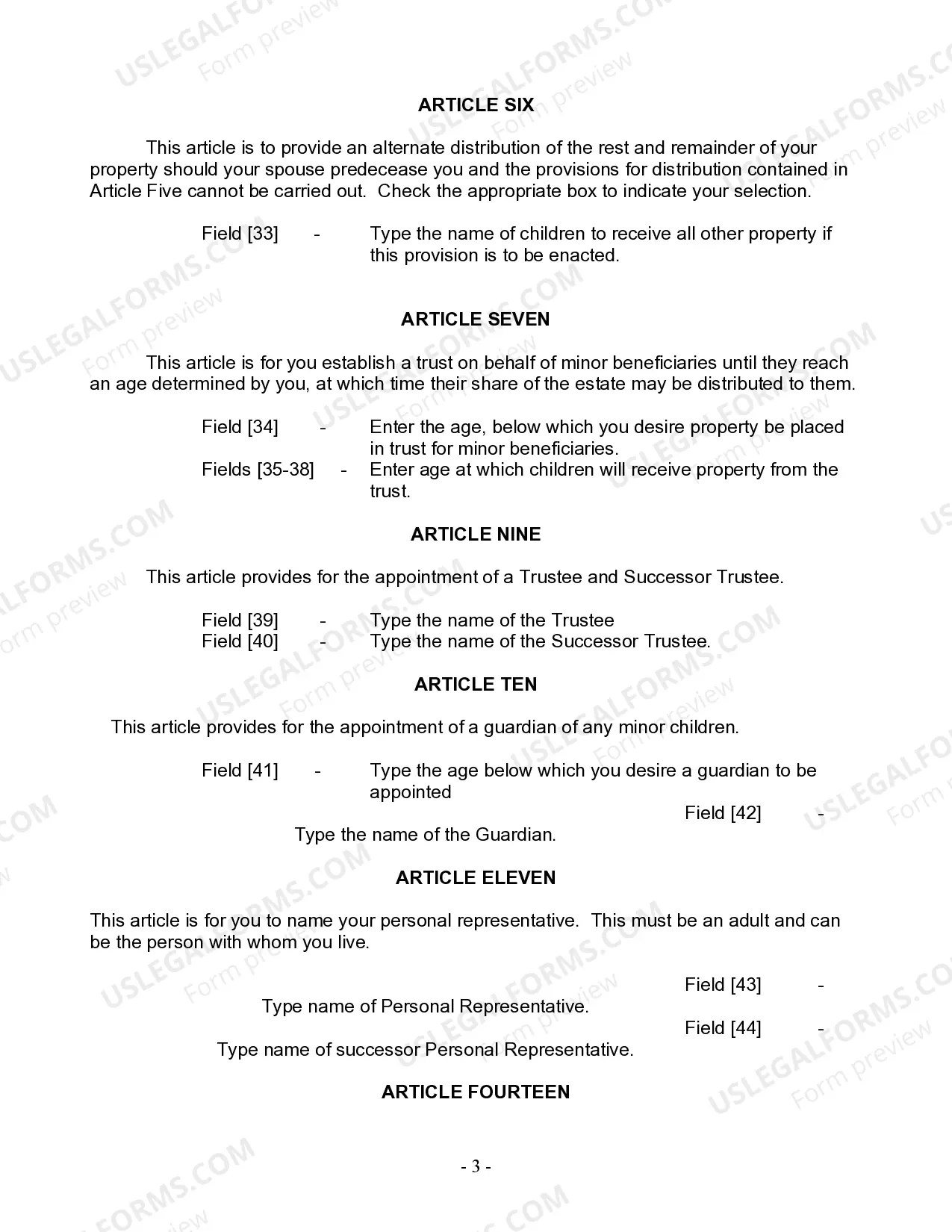
- Designations for guardianship and trusteeship for minor children.
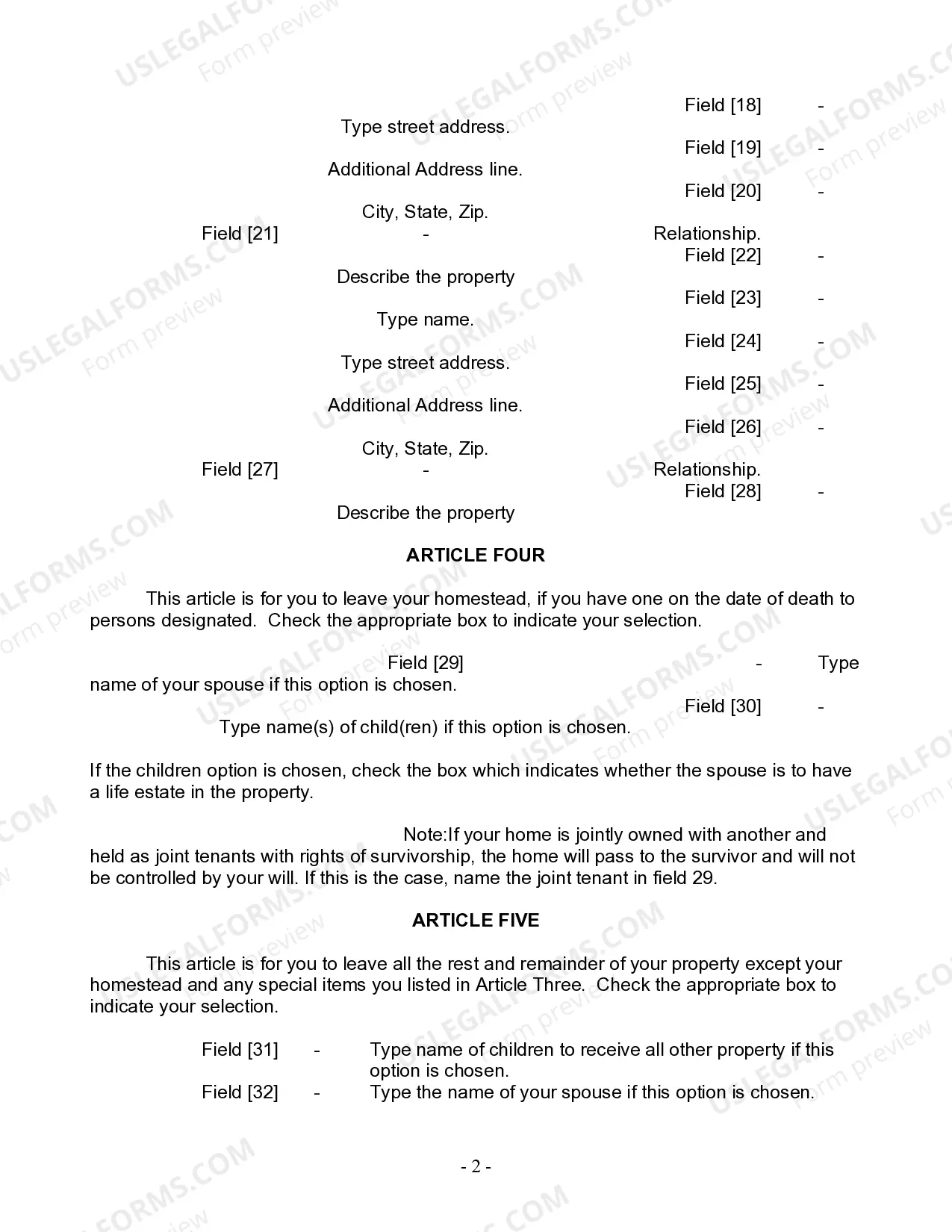
- Instructions regarding the homestead or primary residence.
- Provisions for distributing remaining estate assets.


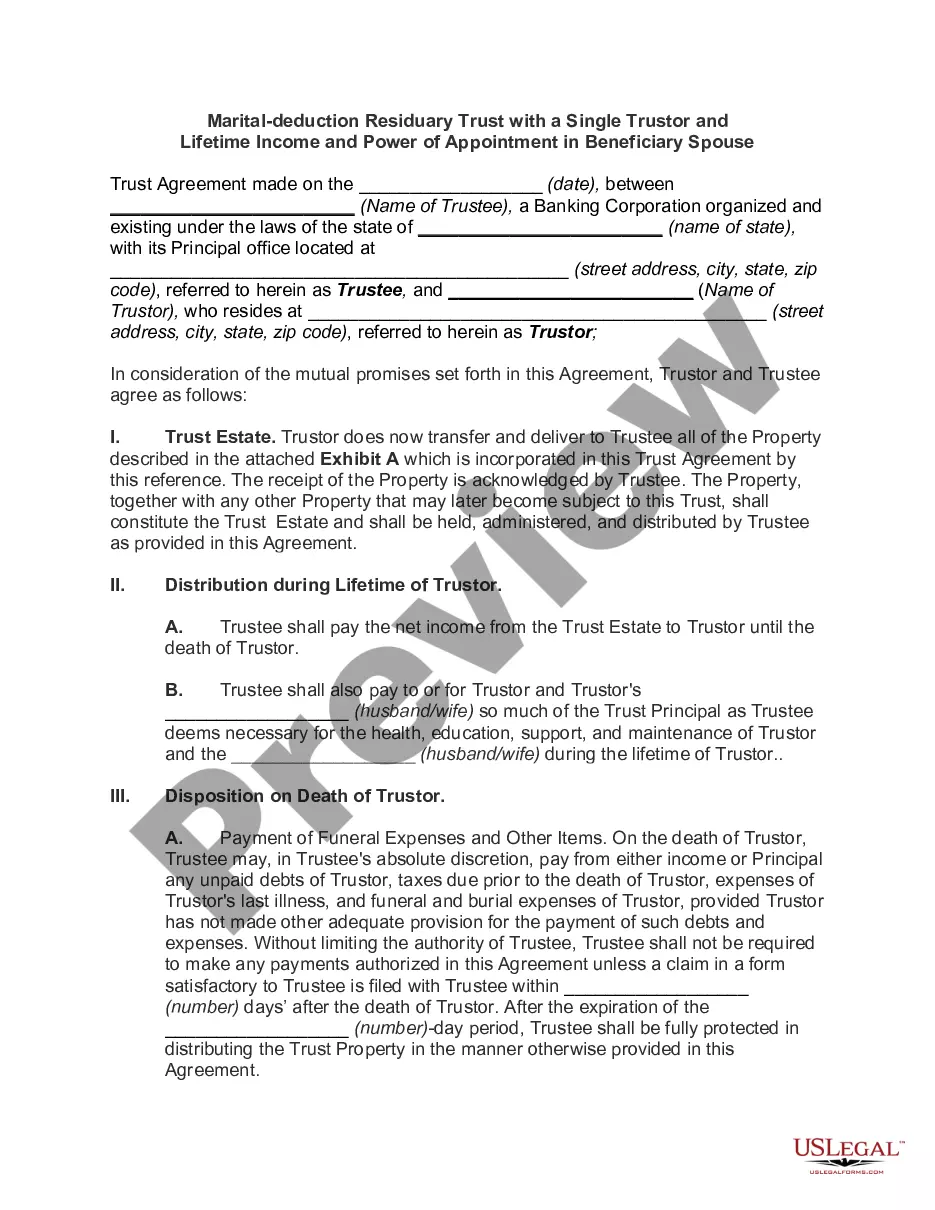
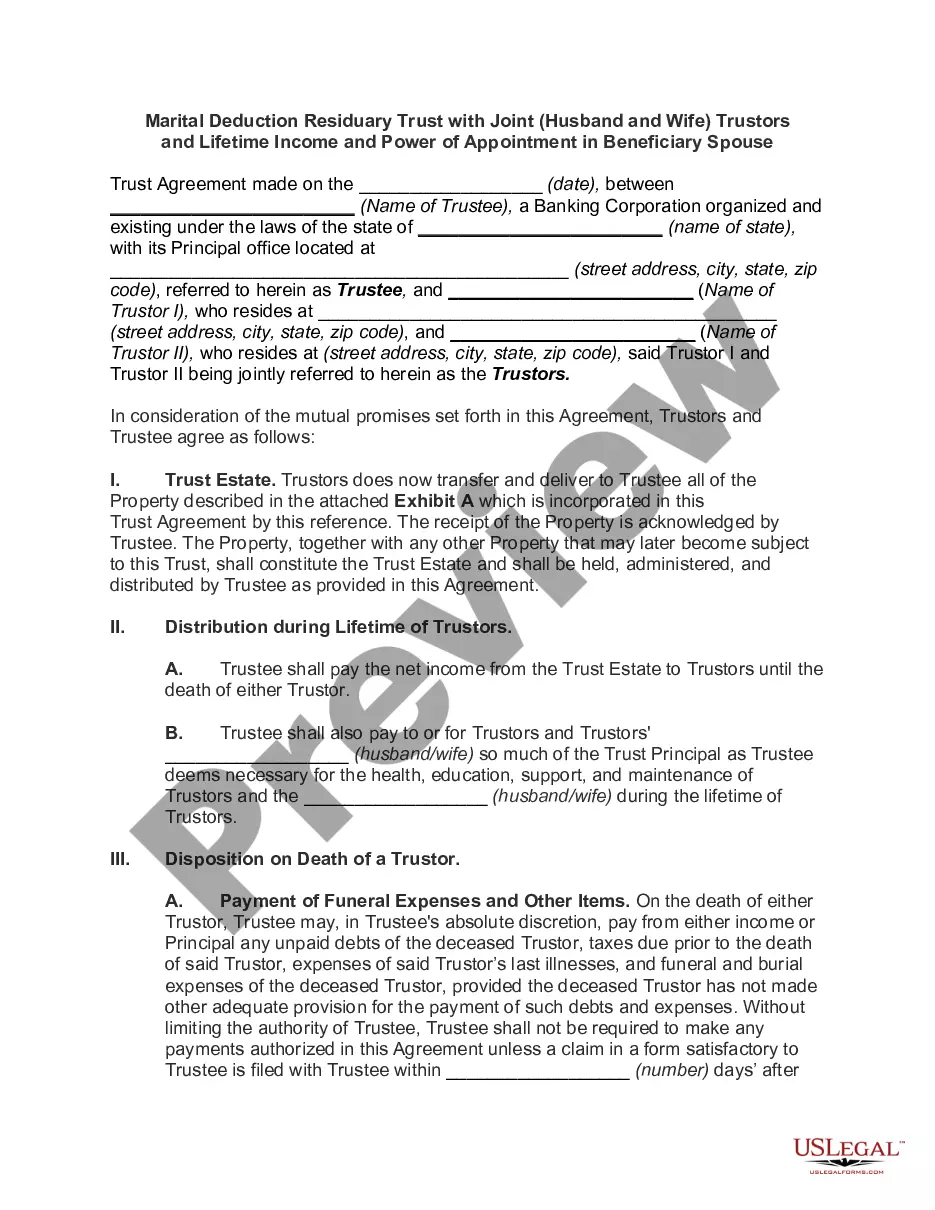



Common use cases
This form should be used when a married individual has minor children from a previous marriage and wishes to establish a clear plan for the distribution of their assets upon death. It offers security and clarity in ensuring that all parties, including children from prior relationships, are properly considered and provided for in the event of the individual's passing.
Who needs this form
- Married individuals with minor children from a previous marriage.
- Anyone wanting to define the distribution of their property after death.
- Individuals looking to appoint guardians for their minor children.
- Persons seeking to ensure their estate is managed by a trusted personal representative.
How to complete this form
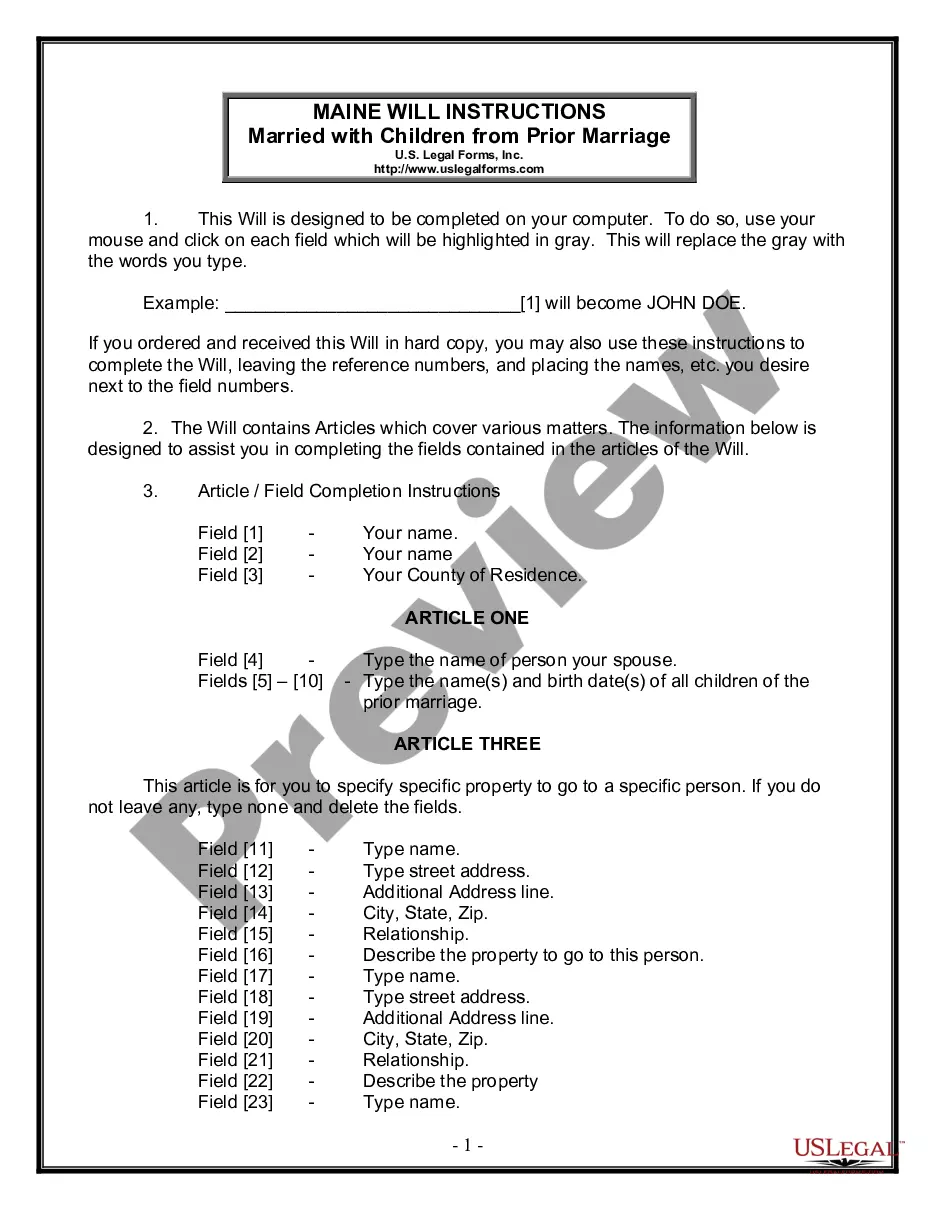
- Begin by filling out your personal information such as your name, residence, and the names of your spouse and children from any prior marriage.
- Designate beneficiaries for any specific gifts or property in the relevant articles.
- Decide on the appointment of a personal representative and any guardians or trustees for minor children.
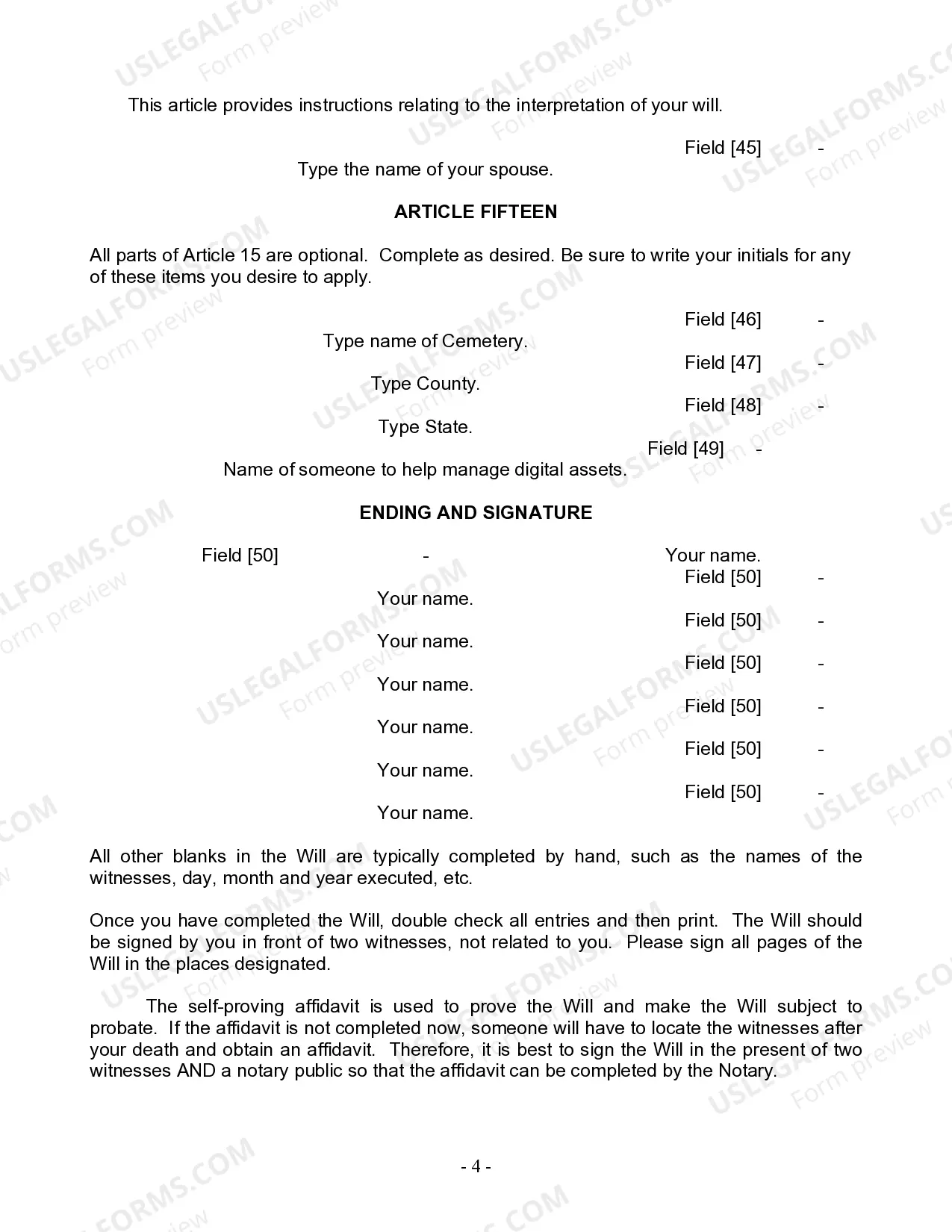
- Have the will signed in front of two witnesses who are not related to you.
- Consider notarizing the will to enhance its enforceability, particularly if your state requires a self-proving affidavit.
Does this document require notarization?
Notarization is required for this form to take effect. Our online notarization service, powered by Notarize, lets you verify and sign documents remotely through an encrypted video session, available 24/7.
Get your form ready online
Our built-in tools help you complete, sign, share, and store your documents in one place.
Make edits, fill in missing information, and update formatting in US Legal Forms—just like you would in MS Word.
Download a copy, print it, send it by email, or mail it via USPS—whatever works best for your next step.
Sign and collect signatures with our SignNow integration. Send to multiple recipients, set reminders, and more. Go Premium to unlock E-Sign.
If this form requires notarization, complete it online through a secure video call—no need to meet a notary in person or wait for an appointment.
We protect your documents and personal data by following strict security and privacy standards.

Make edits, fill in missing information, and update formatting in US Legal Forms—just like you would in MS Word.

Download a copy, print it, send it by email, or mail it via USPS—whatever works best for your next step.

Sign and collect signatures with our SignNow integration. Send to multiple recipients, set reminders, and more. Go Premium to unlock E-Sign.

If this form requires notarization, complete it online through a secure video call—no need to meet a notary in person or wait for an appointment.

We protect your documents and personal data by following strict security and privacy standards.
Common mistakes
- Failing to have the will signed by two independent witnesses.
- Not specifying how to handle specific items or assets.
- Ignoring state-specific requirements for notarization or witnessing.
- Leaving out essential details regarding guardianship and trustees.
Why use this form online
- Convenient access and the ability to complete the form at your own pace.
- Editability allows you to make changes as your circumstances evolve.
- A reliable template created by licensed attorneys ensures legal soundness.
Summary of main points
- This Will allows for clear directives regarding the distribution of assets in blended families.
- Proper execution, with witnesses and notarization, is essential for legal validity.
- Form completion can prevent future family disputes and ensure that your children are cared for according to your wishes.
- Consult local laws to ensure the document meets jurisdiction requirements.
Looking for another form?
Form popularity
FAQ
A joint will is a legal document executed by two (or more) people, which merges their individual wills into a single, combined last will and testament. Like most wills, a joint will lets the will-makers name who will get their property and assets after they die. Joint wills are usually created by married couples.
Create the initial document. Start by titling the document Last Will and Testament" and including your full legal name and address. Designate an executor. Appoint a guardian. Name the beneficiaries. Designate the assets. Ask witnesses to sign your will. Store your will in a safe place.
A notarized will does not need to be probated.When a person dies leaving behind a will that is not notarized, the law requires that its validity be ascertained by a notary or by a court. Similarly, any non-notarized modification made to a will must be probated, whether the will is notarized or not.
In addition, Maine allows a will to be made without witnesses if it is written by hand by the testator and signed at the end. 18-A M.R.S.A. § 2-503. This is called a holographic will.
No, in Maine, you do not need to notarize your will to make it legal. However, Maine allows you to make your will "self-proving" and you'll need to go to a notary if you want to do that. A self-proving will speeds up probate because the court can accept the will without contacting the witnesses who signed it.
To start the probate process, you need to file an Application for Probate in the probate court in the county where the decedent lived. In Maine, each county has its own probate court. If there is a Will, it needs to be submitted to the probate court. The probate judge will decide whether or not the Will is valid.
In Maine, anyone aged 18 or older who is of sound mind can make a Will. When you write your Will, you list all your property and who you want to give it to after you die (these people are called your beneficiaries).
Notarizing a will is not necessary as long as your will has been properly constructed and witnessed; the court will view it as a legally binding document. However, you may still want to include a self-proving affidavit and get your will notarized, since it can help the probate process move faster.