Maine Notice of Default for Past Due Payments in connection with Contract for Deed
Understanding this form
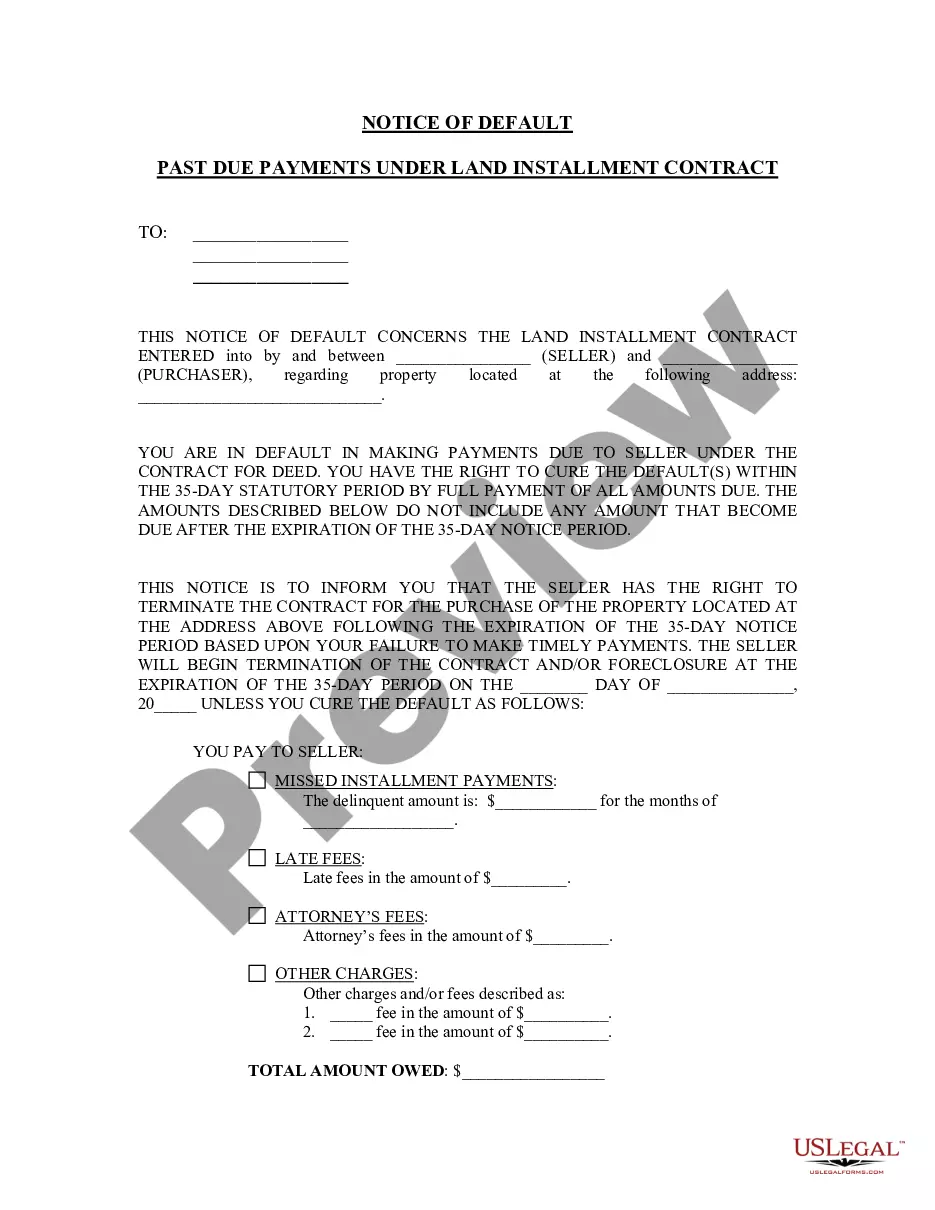
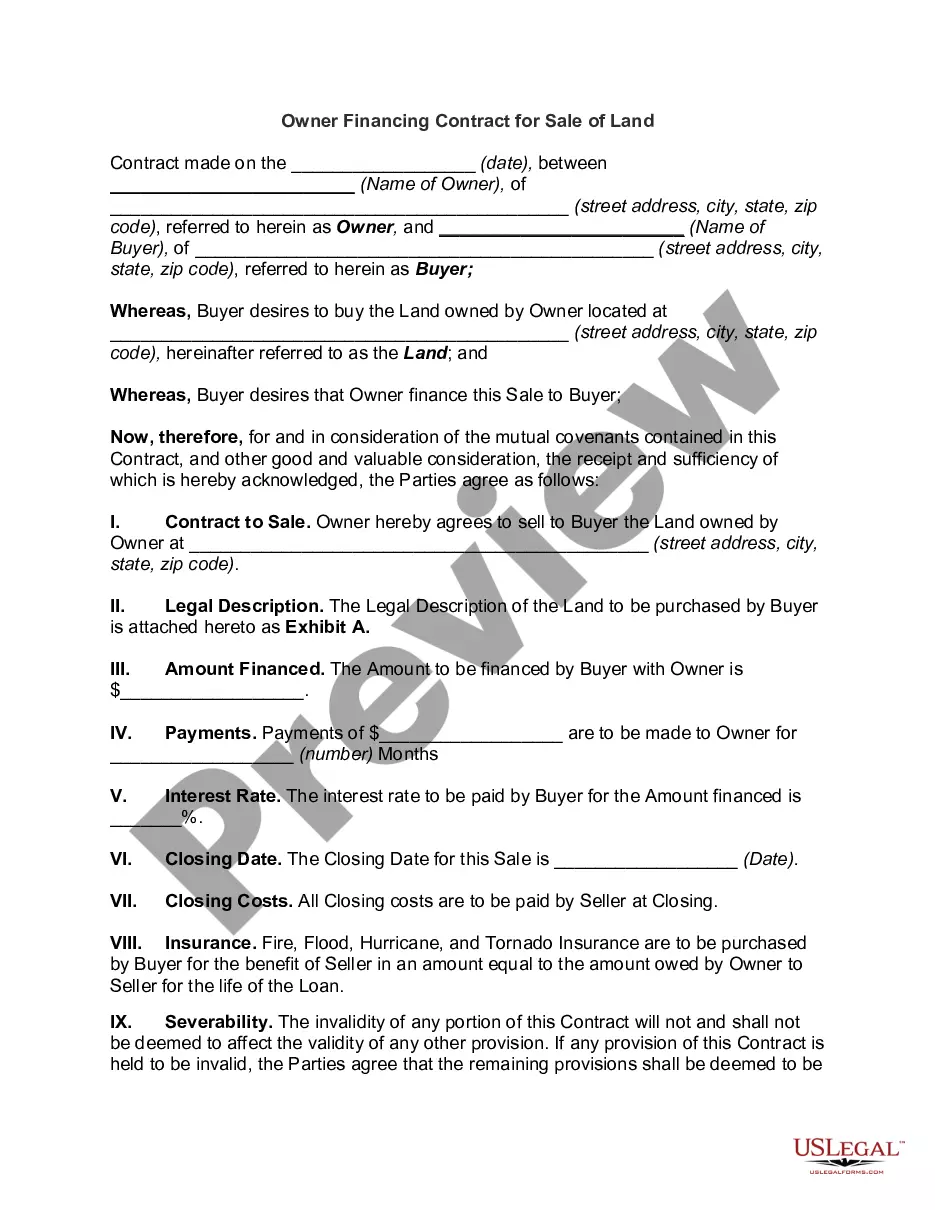
The Notice of Default for Past Due Payments in connection with Contract for Deed is a legal document that serves as the Seller's formal notification to the Purchaser regarding late payments. This form is critical as it establishes the Seller's intention to notify the Purchaser that payment obligations, as specified in the contract for deed, have not been fulfilled. This form is essential in initiating the default process, differing from other forms that may merely notify of payment failures without the legal backing to enforce the terms of the contract.
Key components of this form
- Identification of the Seller and Purchaser involved in the contract for deed.
- Details regarding the contract for deed, including property description and payment terms.
- Specific amounts due and the dates of missed payments.
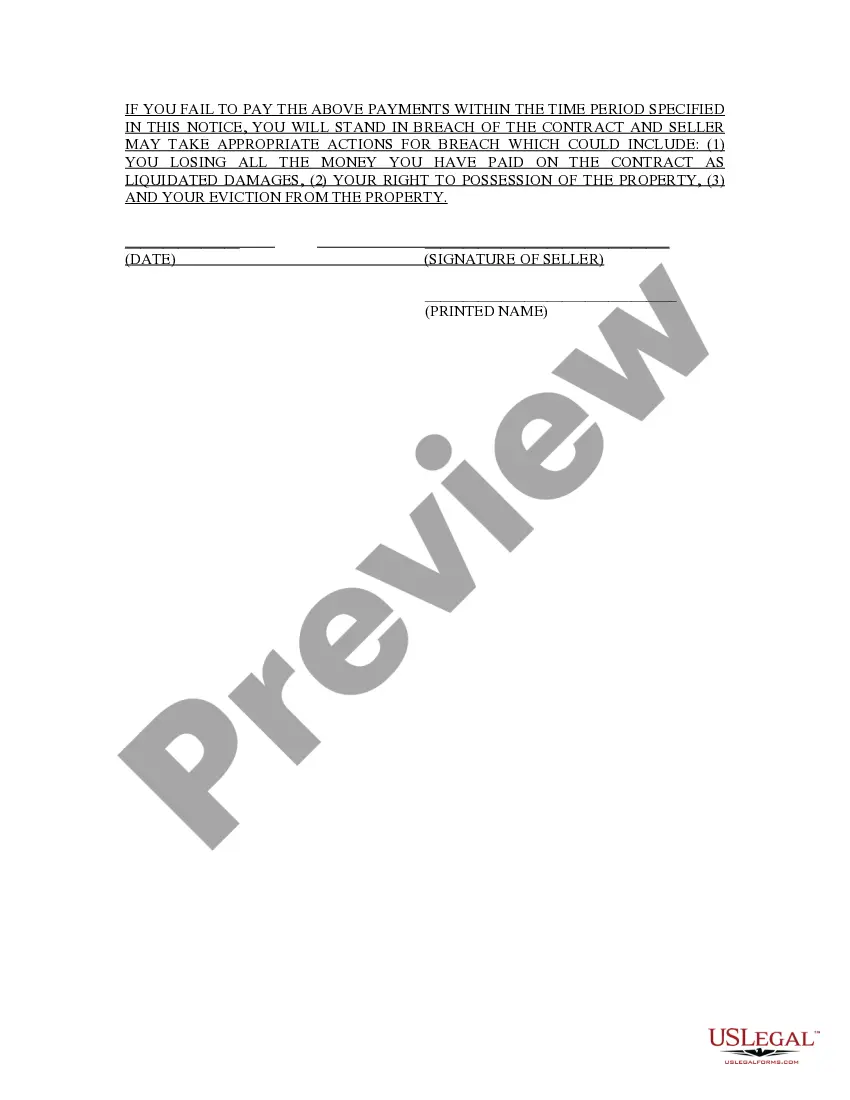
- Consequences of continued non-payment and the potential for contract default.
- Instructions on how to respond to the notice and make necessary payments.

When this form is needed
This form should be used whenever a Seller needs to formally notify a Purchaser that they have failed to make timely payments under a contract for deed. It is particularly necessary when the Purchaser has missed one or more scheduled payments, and the Seller seeks to take appropriate legal action or negotiate a resolution before moving forward with contract enforcement or termination.
Who can use this document
- Sellers who have entered into a contract for deed with a Purchaser.
- Real estate investors managing contracts for deed.
- Property owners looking to enforce payment obligations with their buyers.
- Attorneys representing clients in real estate or contract disputes.
Completing this form step by step
- Identify and enter the names and contact details of the Seller and Purchaser.
- Provide a detailed description of the property involved in the contract for deed.
- List the exact payment amounts that are overdue and corresponding due dates.
- Include a clear statement regarding the consequences of failing to rectify the overdue payments.
- Sign and date the document to validate the notice.
Notarization guidance
This form needs to be notarized to ensure legal validity. US Legal Forms provides secure online notarization powered by Notarize, allowing you to complete the process through a verified video call, available anytime.
Get your form ready online
Our built-in tools help you complete, sign, share, and store your documents in one place.
Make edits, fill in missing information, and update formatting in US Legal Forms—just like you would in MS Word.
Download a copy, print it, send it by email, or mail it via USPS—whatever works best for your next step.
Sign and collect signatures with our SignNow integration. Send to multiple recipients, set reminders, and more. Go Premium to unlock E-Sign.
If this form requires notarization, complete it online through a secure video call—no need to meet a notary in person or wait for an appointment.
We protect your documents and personal data by following strict security and privacy standards.

Make edits, fill in missing information, and update formatting in US Legal Forms—just like you would in MS Word.

Download a copy, print it, send it by email, or mail it via USPS—whatever works best for your next step.

Sign and collect signatures with our SignNow integration. Send to multiple recipients, set reminders, and more. Go Premium to unlock E-Sign.

If this form requires notarization, complete it online through a secure video call—no need to meet a notary in person or wait for an appointment.

We protect your documents and personal data by following strict security and privacy standards.
Common mistakes
- Failing to accurately specify the amounts due and the dates of missed payments.
- Not providing a clear explanation of the consequences of continued non-payment.
- Omitting necessary signatures or contact information for either party.
- Using vague language that may lead to misinterpretation of the terms.
Advantages of online completion
- Immediate access to a professionally drafted legal form tailored to your needs.
- Editability allows you to customize the document before finalizing it.
- Convenience of downloading the form directly, saving time compared to traditional methods.
- Assurance of legal compliance, as forms are created by licensed attorneys.
What to keep in mind
- This form is essential for notifying a Purchaser of default on payments in a contract for deed.
- Accurate completion is vital to enforce contractual obligations.
- Potential errors can lead to delays or complications in the resolution process.
Looking for another form?
Form popularity
FAQ
Write to the agency making the claim. Present evidence of why the NOD was improperly issued or why you legitimately cannot make payments. Ask the agency in the letter if they will take a lower monthly payment, total settlement or a payment plan. Send a copy of your letter by certified mail.
What happens when you get a default notice? Your creditor will ask you to pay the full amount of the debt instead of paying the instalments you first agreed.Your creditor can also take further action after the account has defaulted, including: Passing the debt to a collection agency.
Breach: Everything You Need to Know. In contract law, a breach means the failure of a contracting party to perform their obligations according to the terms of the agreement.Default, according to the law of obligations and banking law, means to refuse to pay a debt when due.
In law, a default is the failure to do something required by law.
Once a default is recorded on your credit profile, you can't have it removed before the six years are up (unless it's an error). However, there are several things that can reduce its negative impact: Repayment. Try and pay off what you owe as soon as possible.
A default notice (sometimes referred to as a default letter or Notice of Default) is a formal letter sent to you by a creditor as a result of payments missed on a credit agreement between yourself and a credit provider.The notice will give you 14 days to pay any amount owed before issuing a default.
Generally, if a defendant fails to respond to a complaint you can get a default judgment after 45 days. However, the court system is very slow these days and it can take several months to get the court to issue the default judgment.
A default is a non-material breach of contract, whereby one party fails to perform a contractual obligation. What specifically constitutes a default will be set out in the contract terms, but generally, it can be defined as an omission or a failure to do what is expected or required.