Maryland Assignment of Contract for Deed by Seller
Overview of this form
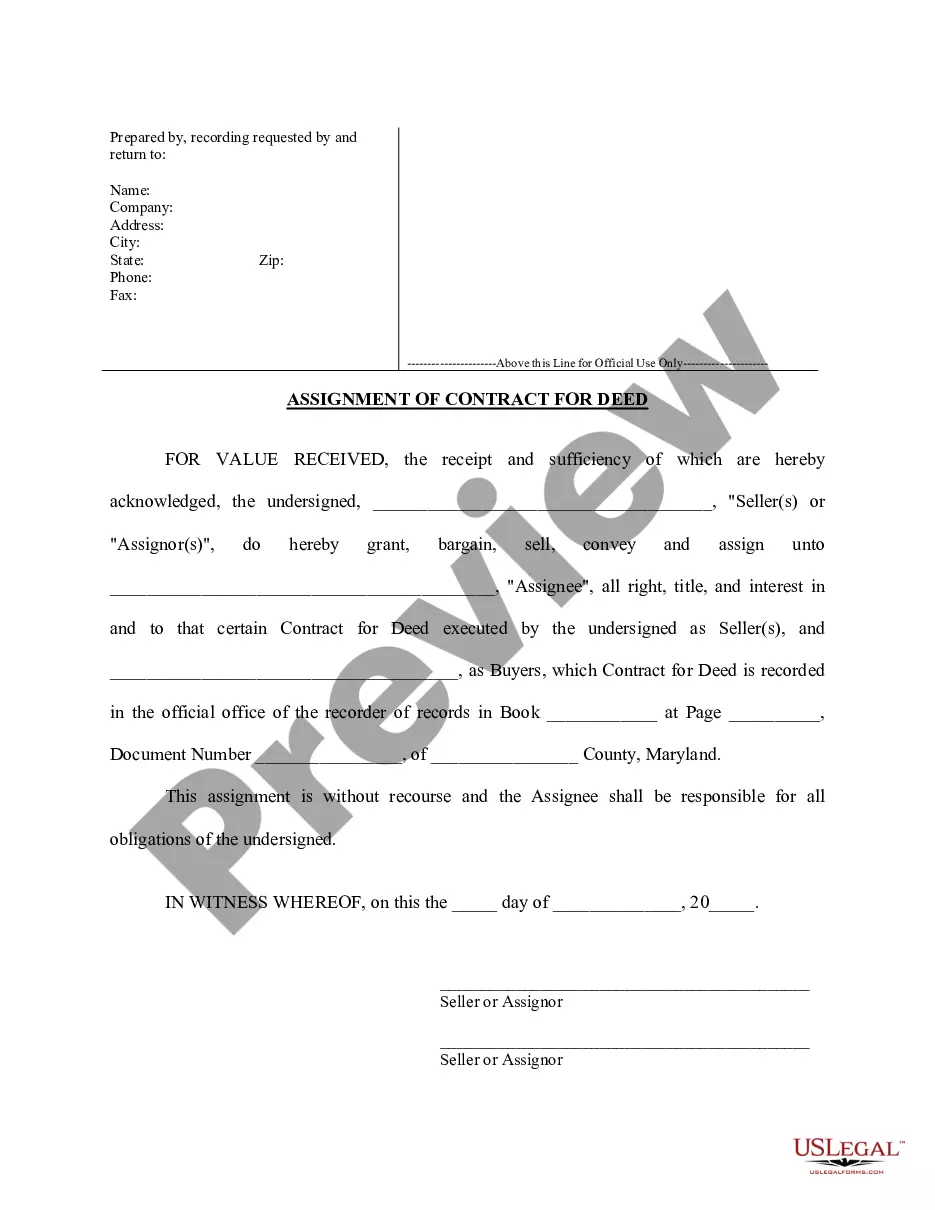
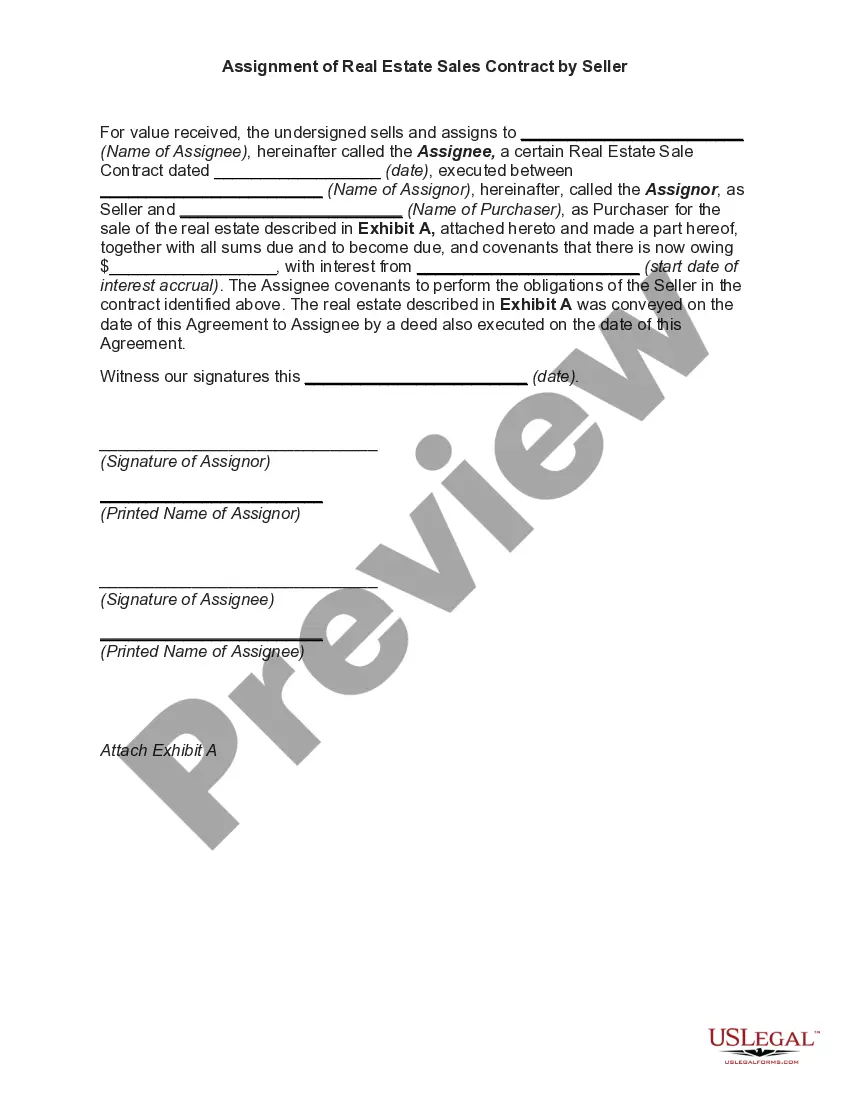
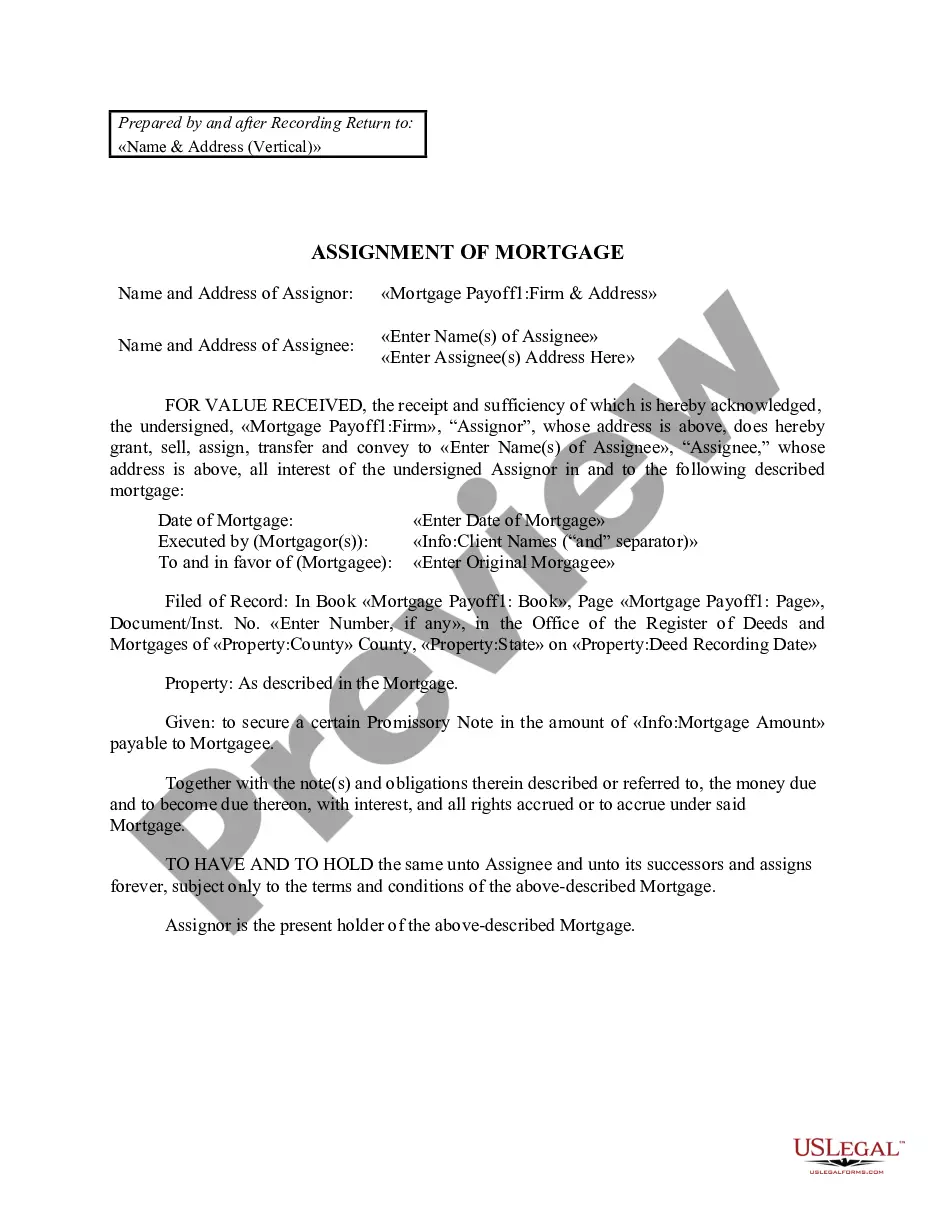
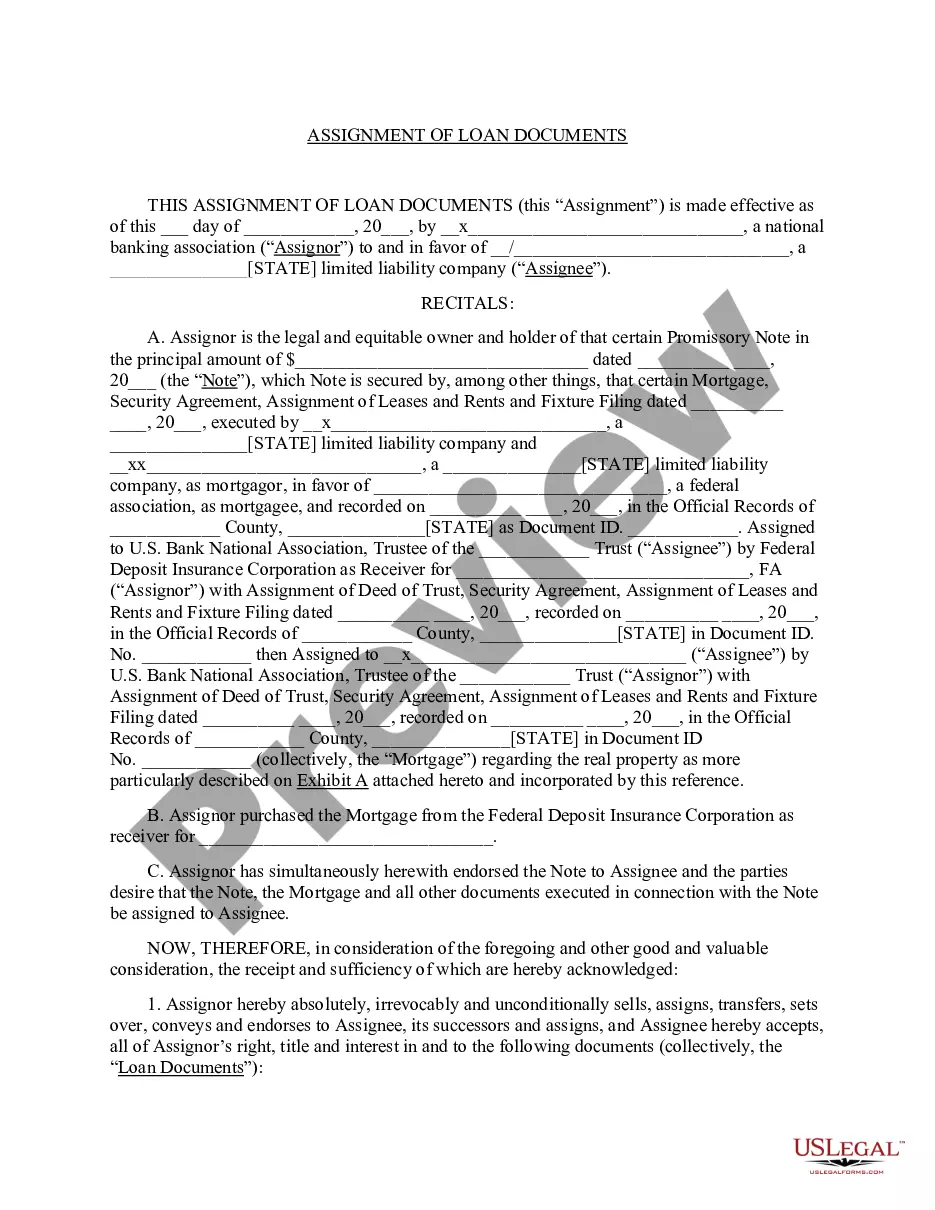
The Assignment of Contract for Deed by Seller is a legal document that allows a seller, who has signed a contract for deed, to transfer their rights and obligations under that contract to a third party. This form is often utilized when the seller wants to sell their interest in the contract for a cash payment that is less than the total owed. The new party, known as the assignee, assumes the seller's position and will receive future payments from the purchaser of the property. This assignment can also facilitate the transfer of ownership to the assignee, if desired.
Key parts of this document
- Assignment Clause: Details the transfer of rights from the seller to the assignee.
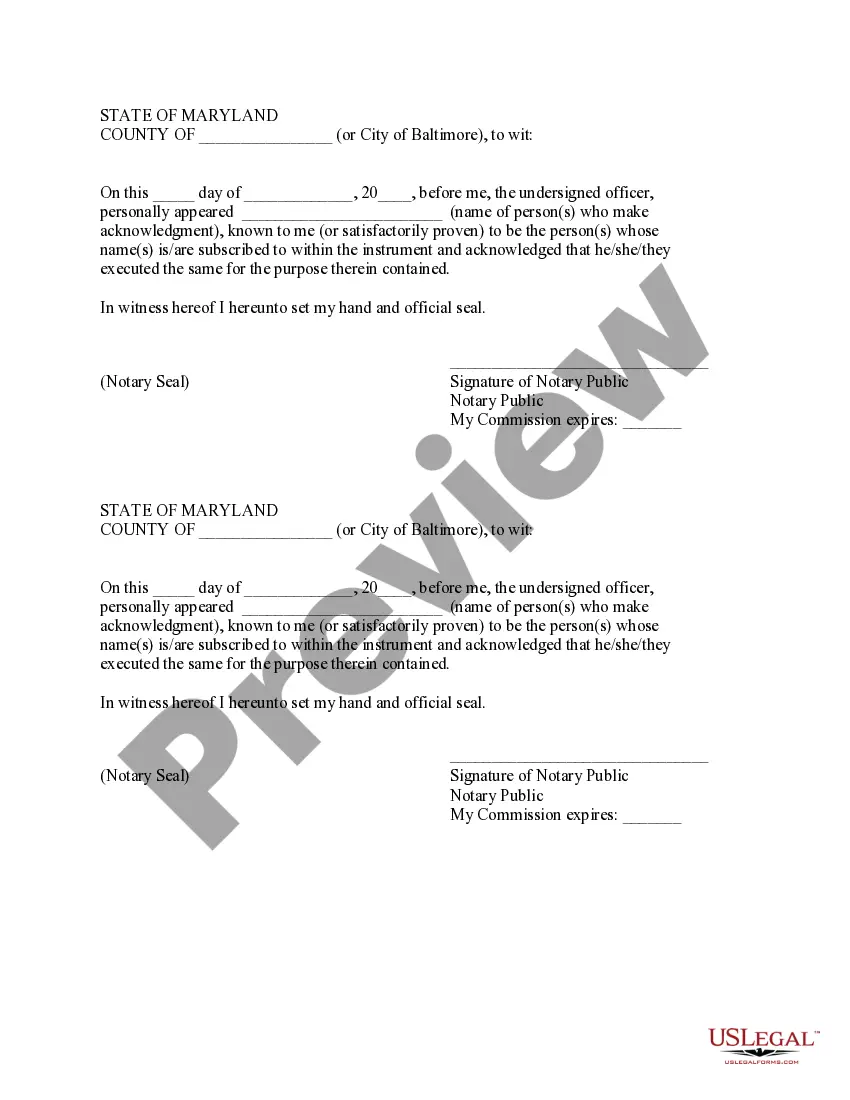
- Notarization Statement: Indicates the need for notarization of the document.
- Date of Execution: The date when the form is signed.
- Parties Involved: Names and addresses of the seller and the assignee.
- Witness Section: Space for a notary public to verify the identity of the signing parties.
Common use cases
This form is typically used when a seller wishes to transfer their contract for deed to another individual or entity. Common scenarios include situations where the seller needs immediate cash without waiting for full payment from the purchaser, or when the seller prefers to avoid handling future payment collections directly. Additionally, it may be used when the assignee intends to take over the responsibilities of the contract and receive payments directly from the original purchaser.
Intended users of this form
- Current sellers under a contract for deed looking to transfer their contractual obligations.
- Individuals or entities interested in purchasing the rights to the contract from the seller.
- Real estate investors or agents managing contracts for deed transactions.
Completing this form step by step
- Identify the parties involved: Fill in the full names and addresses of the seller and assignee.
- Specify the terms of the assignment: Clearly state the details about the contract being assigned.
- Enter the date: Provide the date of execution where indicated.
- Sign the form: Both the seller and assignee need to sign and date the document.
- Notarize the document: Ensure that you have the form notarized by a qualified notary public.
Does this document require notarization?
Yes, this form must be notarized to be legally valid. US Legal Forms provides integrated online notarization services, allowing you to have the form notarized securely via video call at any time, ensuring a smooth and efficient process.
Get your form ready online
Our built-in tools help you complete, sign, share, and store your documents in one place.
Make edits, fill in missing information, and update formatting in US Legal Forms—just like you would in MS Word.
Download a copy, print it, send it by email, or mail it via USPS—whatever works best for your next step.
Sign and collect signatures with our SignNow integration. Send to multiple recipients, set reminders, and more. Go Premium to unlock E-Sign.
If this form requires notarization, complete it online through a secure video call—no need to meet a notary in person or wait for an appointment.
We protect your documents and personal data by following strict security and privacy standards.

Make edits, fill in missing information, and update formatting in US Legal Forms—just like you would in MS Word.

Download a copy, print it, send it by email, or mail it via USPS—whatever works best for your next step.

Sign and collect signatures with our SignNow integration. Send to multiple recipients, set reminders, and more. Go Premium to unlock E-Sign.

If this form requires notarization, complete it online through a secure video call—no need to meet a notary in person or wait for an appointment.

We protect your documents and personal data by following strict security and privacy standards.
Mistakes to watch out for
- Failing to provide complete names and addresses of all parties.
- Not having the form notarized when required.
- Leaving out the date of execution.
- Not clearly specifying the rights being assigned.
Why complete this form online
- Convenience: Download and fill out the form at your own pace.
- Editability: Make necessary adjustments easily before finalizing.
- Reliability: Access professionally drafted documents created by licensed attorneys.
Quick recap
- The Assignment of Contract for Deed by Seller facilitates transferring the seller's rights to a third party.
- Proper completion includes accurate details about the parties, notarization, and clarity of contract terms.
- Understanding state-specific requirements is crucial for legal compliance.
Looking for another form?


Form popularity
FAQ
Generally speaking, contracts can be freely assigned to third parties.This contract cannot be assigned to anyone without the written consent of both parties.
An assignment of contract occurs when one party to an existing contract (the "assignor") hands off the contract's obligations and benefits to another party (the "assignee"). Ideally, the assignor wants the assignee to step into his shoes and assume all of his contractual obligations and rights.
An assignment of purchase agreement and sale is when a buyer of a new home sells a third party the right to assume the purchase contract. In this situation, the buyer is the assignor, and the third party is the assignee. Under the agreement, the assignee pays a higher price.
An agreement in which one party transfers its contractual rights and obligations to another party.For a form of an assignment and assumption agreement used with an asset purchase, see Standard Document, Assignment and Assumption Agreement.
A real estate assignment contract is a wholesale strategy used by real estate investors to facilitate the sale of a property between an owner and an end buyer.That means they may then sell their rights to buy the house to another buyer.
In your Assignment Agreement, you should include information like: the name of the person handing over contractual duties (called "the assignor"); the recipient of the contractual rights and obligations (called "the assignee"); the other party to the original contract (called "the obligor"); the name of the contract