Massachusetts Revocation of Anatomical Gift Donation
What is this form?
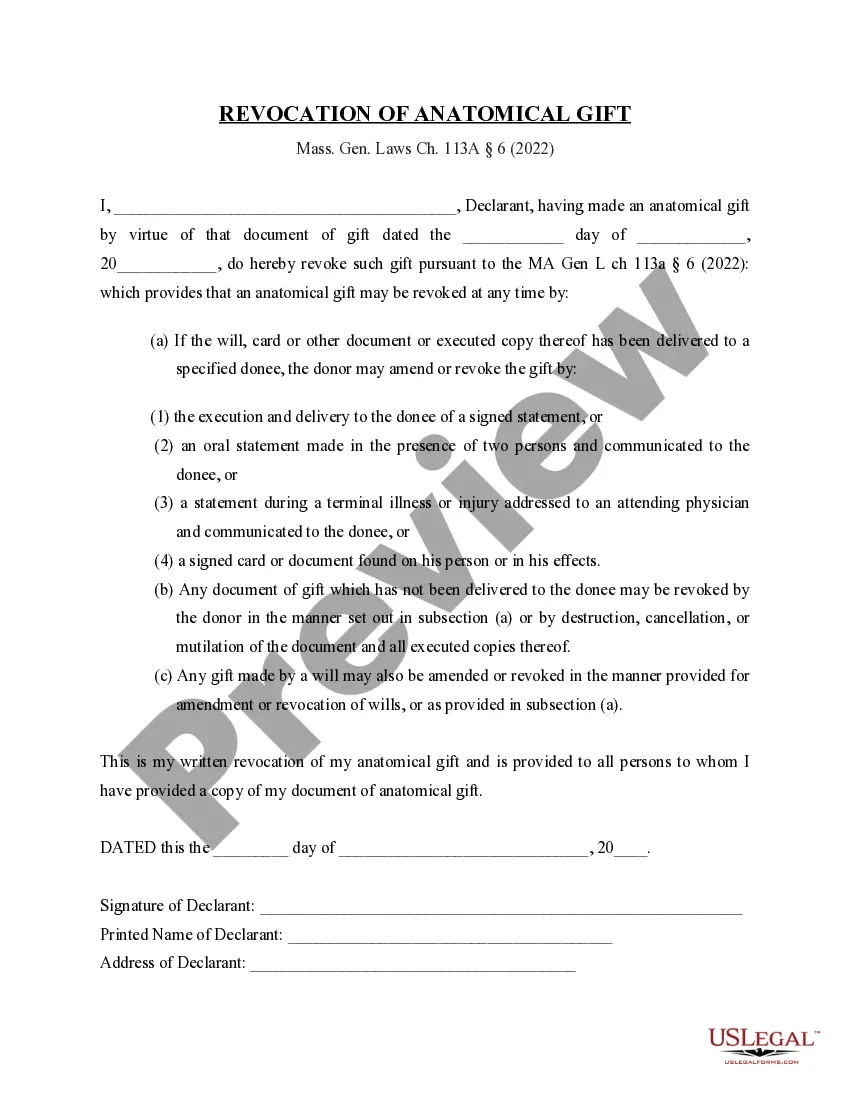
The Revocation of Anatomical Gift Donation form allows an individual to revoke a prior decision to donate their body parts or organs at the time of death. This form differs from other anatomical gift documents, as it specifically serves to cancel previously made gifts under the laws governing anatomical donations. It is designed for individuals who wish to withdraw their consent formally and ensures that their current wishes are respected regarding organ donation.
Main sections of this form
- Declarant information: Individual's name, signature, and address.
- Date of previous anatomical gift: Reference to the original document of gift.
- Revocation declaration: Clear statement revoking the prior anatomical gift.
- Legal reference: Citation of applicable Massachusetts General Laws governing anatomical gifts.
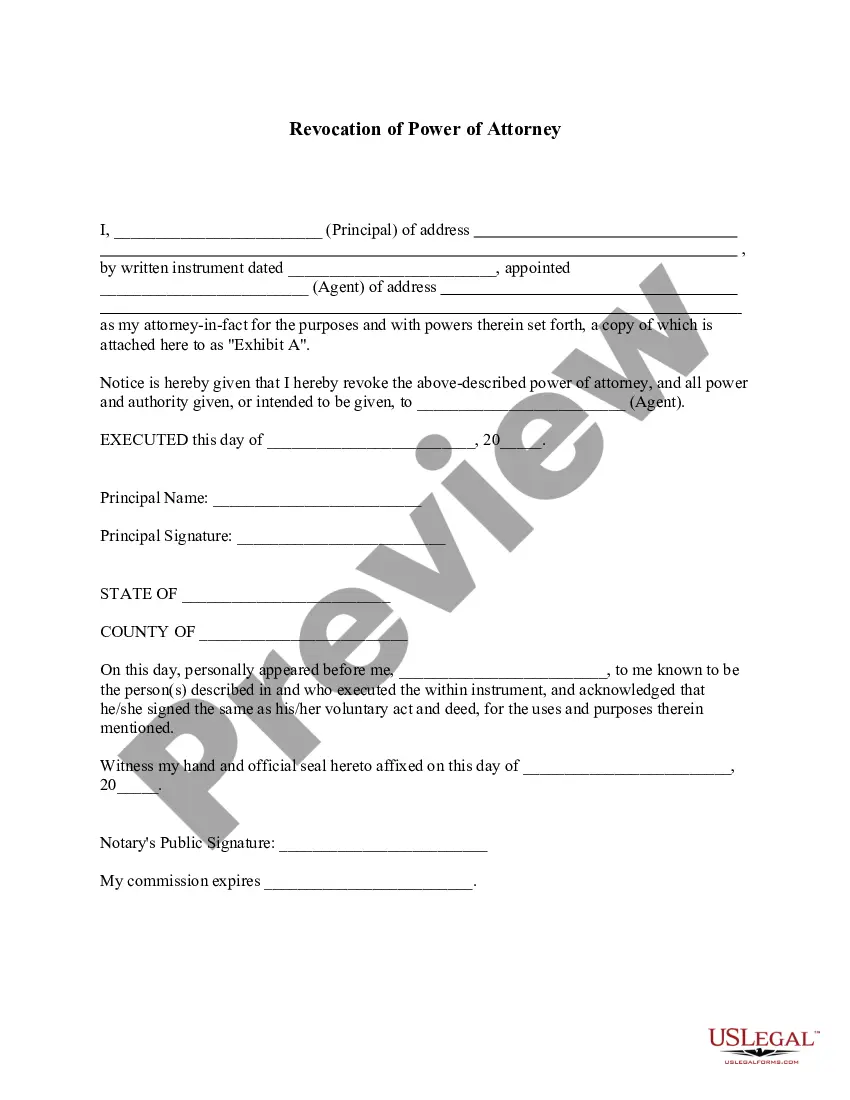
When to use this form
You should use this form if you have previously made an anatomical gift and wish to revoke it. Circumstances that may prompt this revocation include a change in personal beliefs, wishes, or medical conditions. This form is also relevant if your circumstances change and you no longer wish for your body parts or organs to be donated after your death.
Who should use this form
This form is suitable for:
- Individuals who have made an anatomical gift and wish to formally revoke it.
- Those who want to ensure that their current wishes regarding organ donation are legally recognized.
- Residents of Massachusetts who want to follow state law in revoking anatomical gifts.
Instructions for completing this form
- Identify yourself by providing your full name as the Declarant.
- Enter the date of your original anatomical gift document.
- Clearly state your intent to revoke the prior anatomical gift.
- Include the date of signing for this revocation.
- Sign the document and provide your address.
Notarization guidance
Notarization is generally not required for this form. However, certain states or situations might demand it. You can complete notarization online through US Legal Forms, powered by Notarize, using a verified video call available anytime.
Get your form ready online
Our built-in tools help you complete, sign, share, and store your documents in one place.
Make edits, fill in missing information, and update formatting in US Legal Forms—just like you would in MS Word.
Download a copy, print it, send it by email, or mail it via USPS—whatever works best for your next step.
Sign and collect signatures with our SignNow integration. Send to multiple recipients, set reminders, and more. Go Premium to unlock E-Sign.
If this form requires notarization, complete it online through a secure video call—no need to meet a notary in person or wait for an appointment.
We protect your documents and personal data by following strict security and privacy standards.

Make edits, fill in missing information, and update formatting in US Legal Forms—just like you would in MS Word.

Download a copy, print it, send it by email, or mail it via USPS—whatever works best for your next step.

Sign and collect signatures with our SignNow integration. Send to multiple recipients, set reminders, and more. Go Premium to unlock E-Sign.

If this form requires notarization, complete it online through a secure video call—no need to meet a notary in person or wait for an appointment.

We protect your documents and personal data by following strict security and privacy standards.
Mistakes to watch out for
- Failing to include the date of the original anatomical gift document.
- Not signing the revocation, which may render it invalid.
- Overlooking to communicate the revocation to the designated donee.
Benefits of completing this form online
- Convenience of downloading from anywhere with internet access.
- Editability allows you to input your information easily.
- Access to attorney-drafted forms ensures compliance with legal requirements.
Looking for another form?
Form popularity
FAQ
To opt out of being a donor under the Massachusetts Revocation of Anatomical Gift Donation, you must sign a written statement indicating your decision. This statement should be submitted to the appropriate registry. It’s essential to ensure that your decision is noted, as this will help prevent any confusion regarding your wishes.
Proof of auto insurance with a licensed Massachusetts insurance agent or company. Proof of Massachusetts residency. A completed RMV-1 Application Form. Proof that you own the vehicle such as previous registration or title from another state.
Yes, HOWEVER, you will need required documents in order to register the vehicle if your name is not on the title.Bring in the title documents, proof of insurance, signature form (TR-212a), and payment, and we will register the vehicle without the owner in the office.
Selling a car means that, as the original owner, you don't have to pay any tax.This may make selling a car a better option than giving it to a friend or family member, which could cause the gift tax to come into play. According to the IRS, any gift worth more than $13,000 is liable for gift taxes, as of 2010.
Massachusetts does allow you to transfer a car between immediate family members. Fill out the back of the title as if selling it to your child, brother, sister, or spouse and write, Gift, in the purchase price area of the assignment.
Vehicle Bills of Sale; Vehicle Inspection Forms; Odometer Disclosure Statements.
A completed Registration and Title Application. Previous owner's certificate of title assigned to the new owner. A $75 title fee. Registration fee (fees vary by plate type, refer to the RMV's Schedule of Fees) Sales tax exemption form completed and signed by previous owner.
Yes. HOWEVER, you will have to pay any sales taxes, etc due on the value of the vehicle, not the $1 sales price.
Massachusetts allows cars to be gifted or inherited. Gifting to family members (parents, children, siblings, or spouses) means that there is no sales tax due. The process for gifting is the same as described above, except that the recipient will need to complete the Sales Tax Exemption form.