Massachusetts Letter from Tenant to Landlord containing Notice of termination for landlord's noncompliance with possibility to cure
About this form
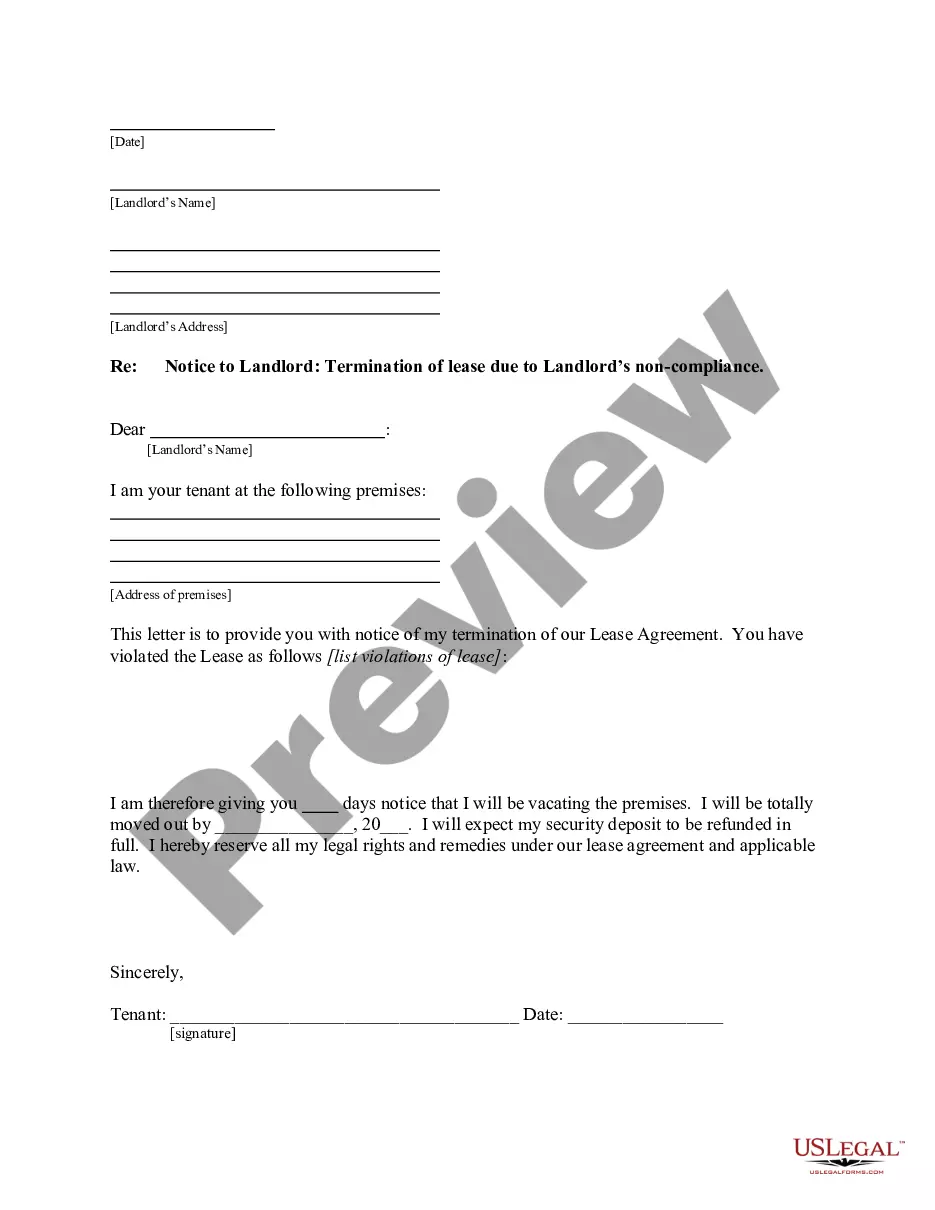
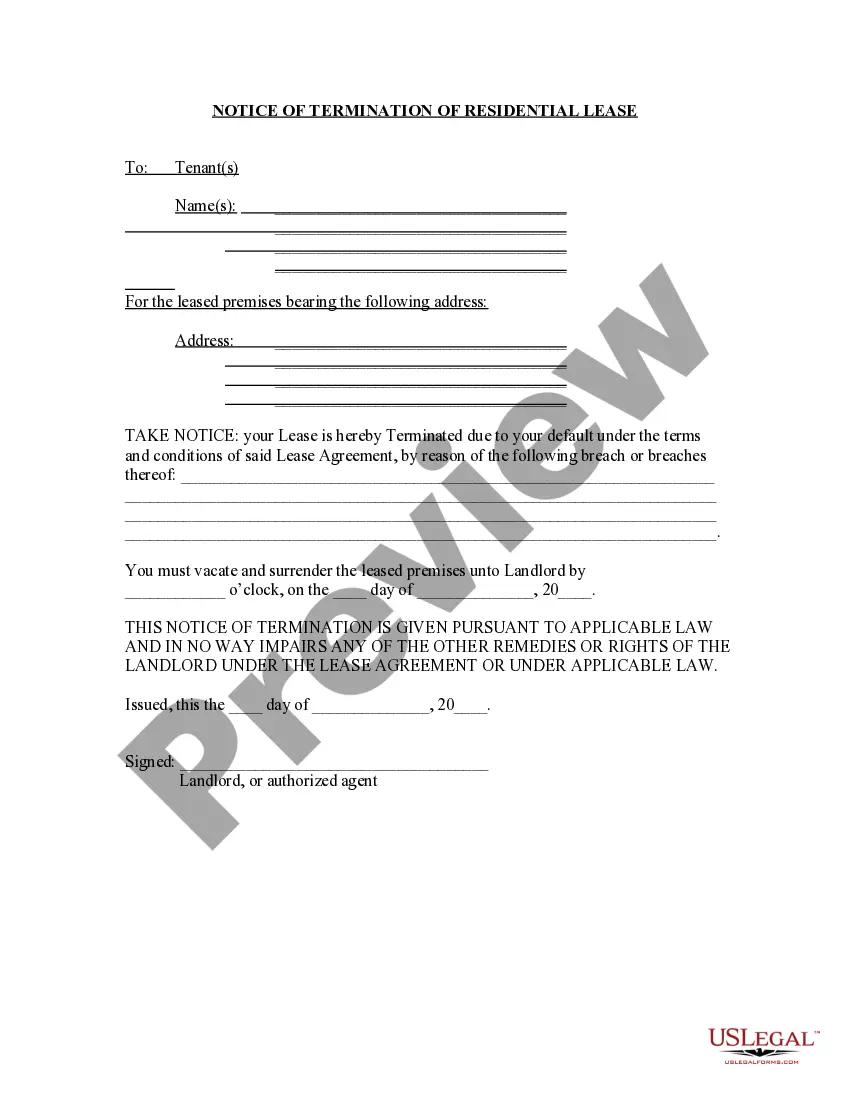
This Letter from Tenant to Landlord containing Notice of termination for landlord's noncompliance with possibility to cure is a formal notice that a tenant provides to inform a landlord of their intention to vacate the premises due to the landlord's breach of the lease agreement. This form outlines the noncompliance issues and indicates that the landlord has a chance to remedy the situation before the tenant vacates. It is distinct from other eviction notices as it specifically addresses the landlordâs failure to comply with lease terms, allowing for a potential cure.
Form components explained
- Tenant's name and signature with date
- Details of the landlord's noncompliance with the lease agreement
- Notice of the intention to terminate the lease
- Statement of the landlord's opportunity to cure the noncompliance
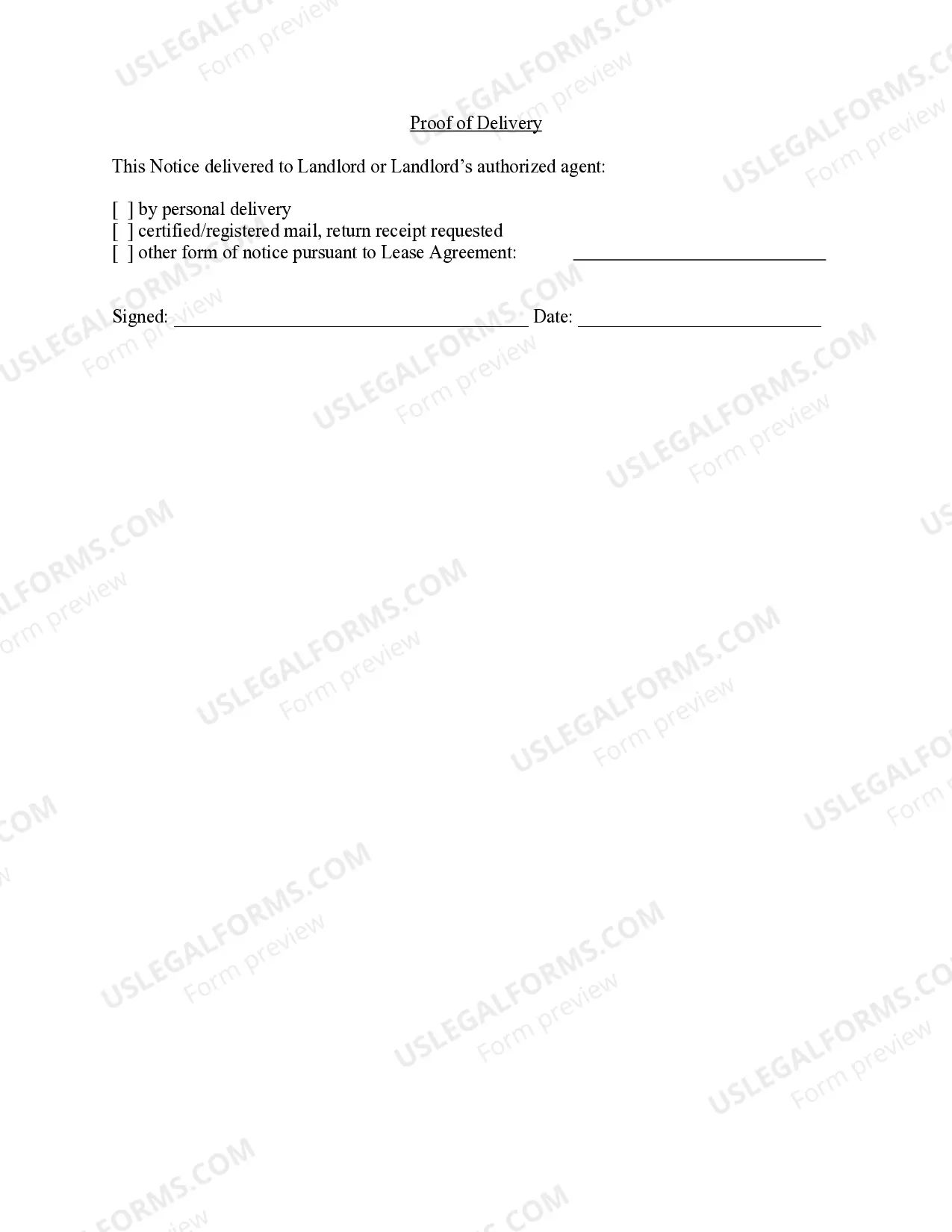
- Proof of delivery method (personal delivery or certified mail)



Common use cases
This form should be used when a tenant has experienced issues with their landlord, such as failing to make necessary repairs, not providing essential services, or violating specific terms outlined in the lease. It is advisable to send this notice when the landlord has not rectified these breaches after being notified, thereby prompting the tenant to vacate while giving the landlord an opportunity to remedy the situation.
Intended users of this form
- Tenants experiencing issues with their landlord that breach their lease agreement
- Individuals seeking to document their reasons for termination of tenancy legally
- Renters looking for a structured way to communicate termination to their landlords
How to complete this form
- Identify the tenant's name and contact information.
- Detail the specific noncompliance issues of the landlord.
- Indicate that you are terminating your tenancy due to these issues.
- Provide the date on which you are sending the notice.
- Sign the document and choose the method of delivery to the landlord.
Is notarization required?
This form does not typically require notarization unless specified by local law. Always verify if your jurisdiction has additional requirements regarding formal notices.
Get your form ready online
Our built-in tools help you complete, sign, share, and store your documents in one place.
Make edits, fill in missing information, and update formatting in US Legal Forms—just like you would in MS Word.
Download a copy, print it, send it by email, or mail it via USPS—whatever works best for your next step.
Sign and collect signatures with our SignNow integration. Send to multiple recipients, set reminders, and more. Go Premium to unlock E-Sign.
If this form requires notarization, complete it online through a secure video call—no need to meet a notary in person or wait for an appointment.
We protect your documents and personal data by following strict security and privacy standards.

Make edits, fill in missing information, and update formatting in US Legal Forms—just like you would in MS Word.

Download a copy, print it, send it by email, or mail it via USPS—whatever works best for your next step.

Sign and collect signatures with our SignNow integration. Send to multiple recipients, set reminders, and more. Go Premium to unlock E-Sign.

If this form requires notarization, complete it online through a secure video call—no need to meet a notary in person or wait for an appointment.

We protect your documents and personal data by following strict security and privacy standards.
Common mistakes
- Failing to specify the noncompliance issues clearly.
- Not providing sufficient evidence of delivery to the landlord.
- Missing the required notice period before termination.
- Not signing the form, which could render it invalid.
Advantages of online completion
- Convenient access: Download and fill out the form at your convenience.
- Editability: You can easily modify the form as needed before submitting.
- Reliability: Forms are drafted by licensed attorneys, ensuring legal compliance.
Legal use & context
- This notice legally informs the landlord of their noncompliance and the tenant's intent to terminate the lease.
- It plays a critical role in preserving the tenantâs legal rights should disputes arise later.
- Proper delivery and completion of this form is essential for its enforceability in court.
What to keep in mind
- This form is designed for tenants who wish to terminate a lease due to landlord noncompliance.
- Clearly outline the noncompliance issues in your notice.
- Ensure to follow state-specific guidelines for notice periods and delivery methods.
Looking for another form?







Form popularity
FAQ
There is no notice of entry law in Massachusetts. The landlord does not need to provide any notice if they wish to enter the premises for the following reasons: Non-emergency maintenance and repairs.
Injury at Rental Property: You could have a case for a lawsuit against your landlord if you are injured at the rental property due to a landlord's neglect. Filing an Illegal Eviction: You can countersue your landlord if you feel your landlord is trying to evict you illegally.
Pay any delinquent rent that is due to the landlord within the allotted time of the notice. Move out of the premises within the allotted time of the notice. File an answer with the judicial court. File a motion to stay with the court.
The law requires tenants at will to give landlords written notice that they are moving out at least one full rental period or 30 days (whichever is longer) before moving.
Every tenant has a right to enjoy peaceful possession of the property without any disturbance or encumbrance from anyone including the owner. At no point of time under your tenancy can your landlord ask you to evict or leave the premises without assigning a valid reason.
Review Your Lease Before You Sign. Research Local Laws. Keep Records. Pay Your Rent. Maintain Respectful Communication. Seek an Agreeable Solution. Request Repairs in Writing. What Do You Think?
Your landlord discriminates against you. Your landlord takes your security deposit illegally. Your rental unit is inhabitable. The property owner interferes with your right to quiet enjoyment. Your landlord fails to make the necessary repairs.
The above are some of the many factors that help answer how long an eviction in Massachusetts take. Generally, an uncontested eviction will take between one to two months. A contested eviction, with requests for discovery and a jury trial, can take anywhere from three to six months.
If you think your landlord is violating the Fair Housing Act, you can get that landlord in trouble by filing a complaint at HUD.gov. Your remedy for breach of quiet enjoyment is to terminate the lease and move or sue in small claims court.