Massachusetts Warranty Deed from Husband and Wife to an Individual
What is this form?
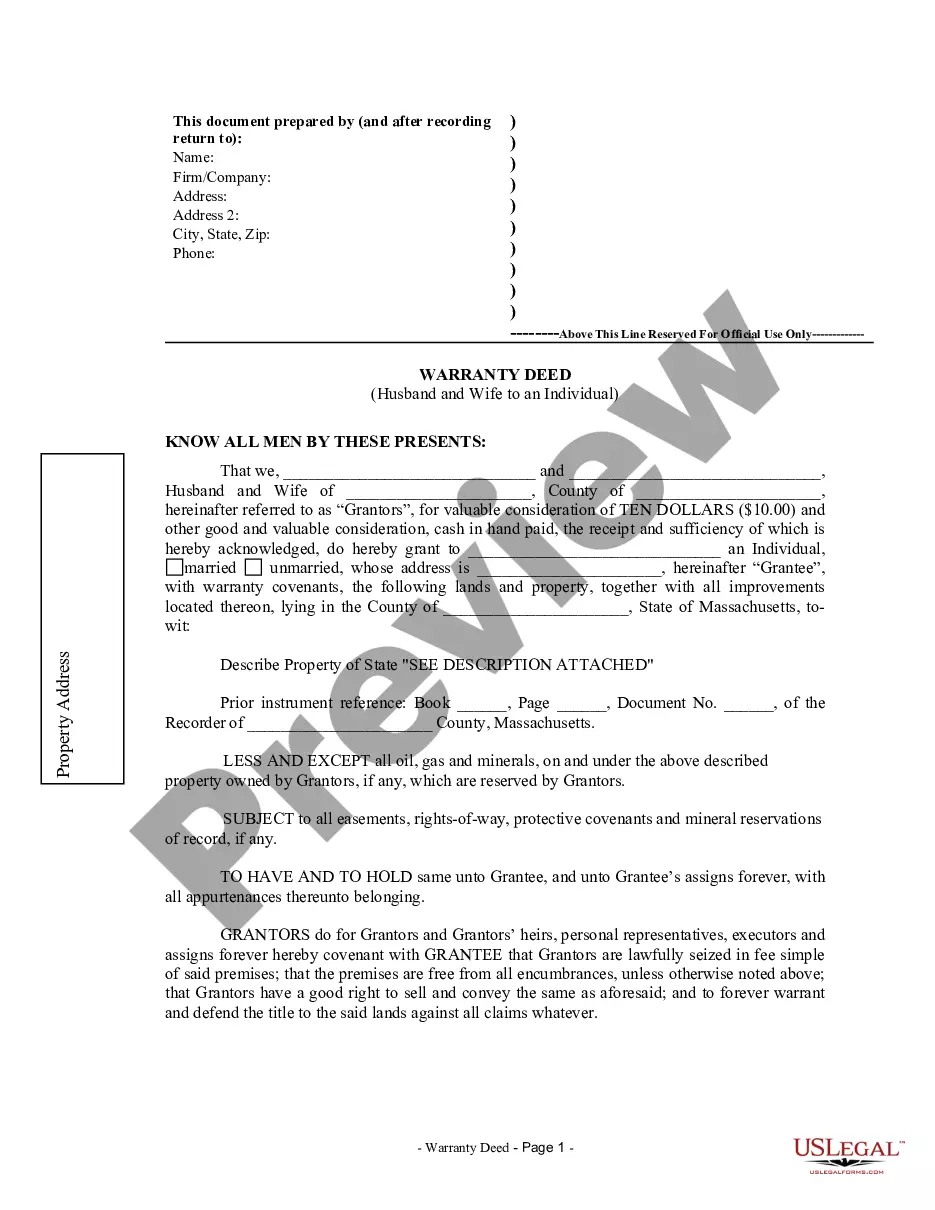
This Warranty Deed allows a husband and wife to transfer property ownership to an individual, known as the grantee. This form serves as a legally binding document that confirms the conveyance of property rights while reserving ownership of any oil, gas, and minerals beneath the surface. Unlike other types of deeds, a warranty deed provides a guarantee against future claims on the property, making it essential for secure property transfer.
Main sections of this form
- Identification of the grantors (husband and wife).
- Details on the grantee (the individual receiving the property).
- Description of the property being conveyed.
- Clauses that reserve rights to oil, gas, and minerals.
- Warranties provided by grantors regarding the title of the property.
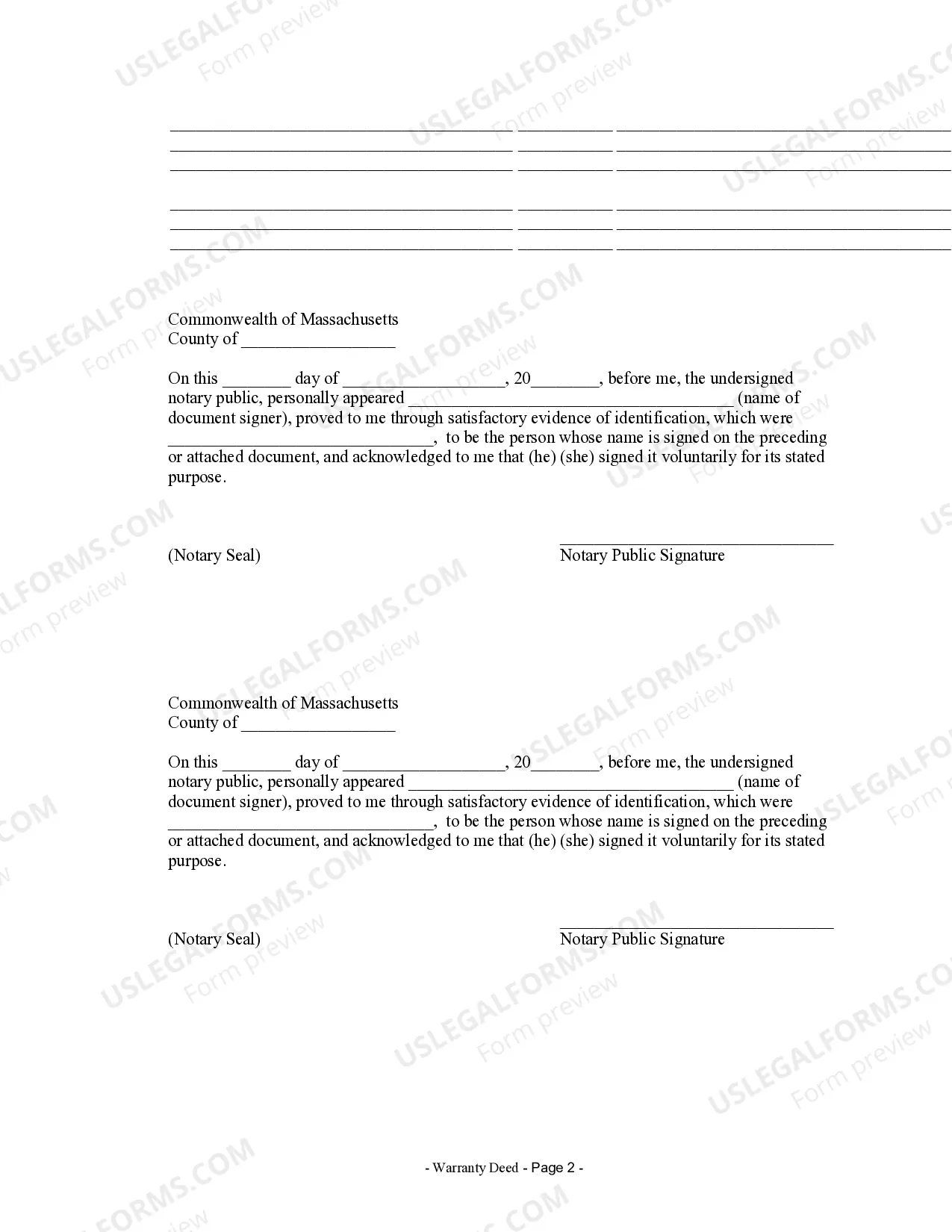
- Signature and notary section for validity.





When to use this form
You should use this Warranty Deed when a married couple is transferring ownership of real estate to a single individual. It is often employed in situations such as gifting property, selling it to a relative, or completing estate planning. This form ensures a clear title transfer and provides the grantee with assurances about the property's ownership status.
Who this form is for
- Husbands and wives looking to transfer property ownership.
- Individuals receiving property from a married couple.
- Real estate professionals involved in property transactions.
- Estate planners managing property transfers for clients.
Instructions for completing this form
- Identify the parties by entering the names of the husband and wife and the individual receiving the property.
- Clearly specify the property description, including any reference numbers from prior instruments.
- Reserve rights to any oil, gas, and minerals if applicable by including the necessary clauses.
- Ensure both grantors sign the deed, including their printed names.
- Complete the notary section to validate the deed.
Notarization requirements for this form
This form needs to be notarized to ensure legal validity. US Legal Forms provides secure online notarization powered by Notarize, allowing you to complete the process through a verified video call, available anytime.
Get your form ready online
Our built-in tools help you complete, sign, share, and store your documents in one place.
Make edits, fill in missing information, and update formatting in US Legal Forms—just like you would in MS Word.
Download a copy, print it, send it by email, or mail it via USPS—whatever works best for your next step.
Sign and collect signatures with our SignNow integration. Send to multiple recipients, set reminders, and more. Go Premium to unlock E-Sign.
If this form requires notarization, complete it online through a secure video call—no need to meet a notary in person or wait for an appointment.
We protect your documents and personal data by following strict security and privacy standards.

Make edits, fill in missing information, and update formatting in US Legal Forms—just like you would in MS Word.

Download a copy, print it, send it by email, or mail it via USPS—whatever works best for your next step.

Sign and collect signatures with our SignNow integration. Send to multiple recipients, set reminders, and more. Go Premium to unlock E-Sign.

If this form requires notarization, complete it online through a secure video call—no need to meet a notary in person or wait for an appointment.

We protect your documents and personal data by following strict security and privacy standards.
Common mistakes
- Failing to provide a complete property description.
- Not reserving rights for oil, gas, and minerals when necessary.
- Omitting signatures from both grantors on the deed.
- Leaving the notary section incomplete.
Benefits of using this form online
- Convenient access to downloadable legal templates from licensed attorneys.
- Editability lets users customize the form to suit specific needs.
- Compliance with statewide laws ensures legal reliability.
What to keep in mind
- A Warranty Deed transfers property from a husband and wife to an individual.
- It provides legal assurances regarding the ownership title.
- Completion involves clear identification, property description, and notarization.
Looking for another form?





Form popularity
FAQ
Adding someone to your house deed requires the filing of a legal form known as a quitclaim deed. When executed and notarized, the quitclaim deed legally overrides the current deed to your home. By filing the quitclaim deed, you can add someone to the title of your home, in effect transferring a share of ownership.
It's often easier to qualify for a joint mortgage, because both spouses can contribute income and assets to the application. However, if one spouse can qualify for a mortgage based on his own income and credit, the mortgage does not need to be in both spouses' names unless you live in a community property state.
A In order to make your partner a joint owner you will need to add his name at the Land Registry, for which there is a fee of £280 (assuming you transfer half the house to him). You won't, however, have to pay capital gains tax, as gifts between civil partners (and spouses) are tax free.
In California, all property bought during the marriage with income that was earned during the marriage is deemed "community property." The law implies that both spouses own this property equally, regardless of which name is on the title deed.
Contact an attorney to prepare a quitclaim deed. Choose the way you want to hold the title. Sign the quitclaim deed as directed by your attorney. File the deed with the county's register of deeds so it can be recorded on public record.
If you've recently married and already own a home or other real estate, you may want to add your new spouse to the deed for your property so the two of you own it jointly. To add a spouse to a deed, all you have to do is literally fill out, sign and record a new deed in your county recorder's office.
Adding someone to your house deed requires the filing of a legal form known as a quitclaim deed. When executed and notarized, the quitclaim deed legally overrides the current deed to your home. By filing the quitclaim deed, you can add someone to the title of your home, in effect transferring a share of ownership.
If you live in a common-law state, you can keep your spouse's name off the title the document that says who owns the property.You can put your spouse on the title without putting them on the mortgage; this would mean that they share ownership of the home but aren't legally responsible for making mortgage payments.