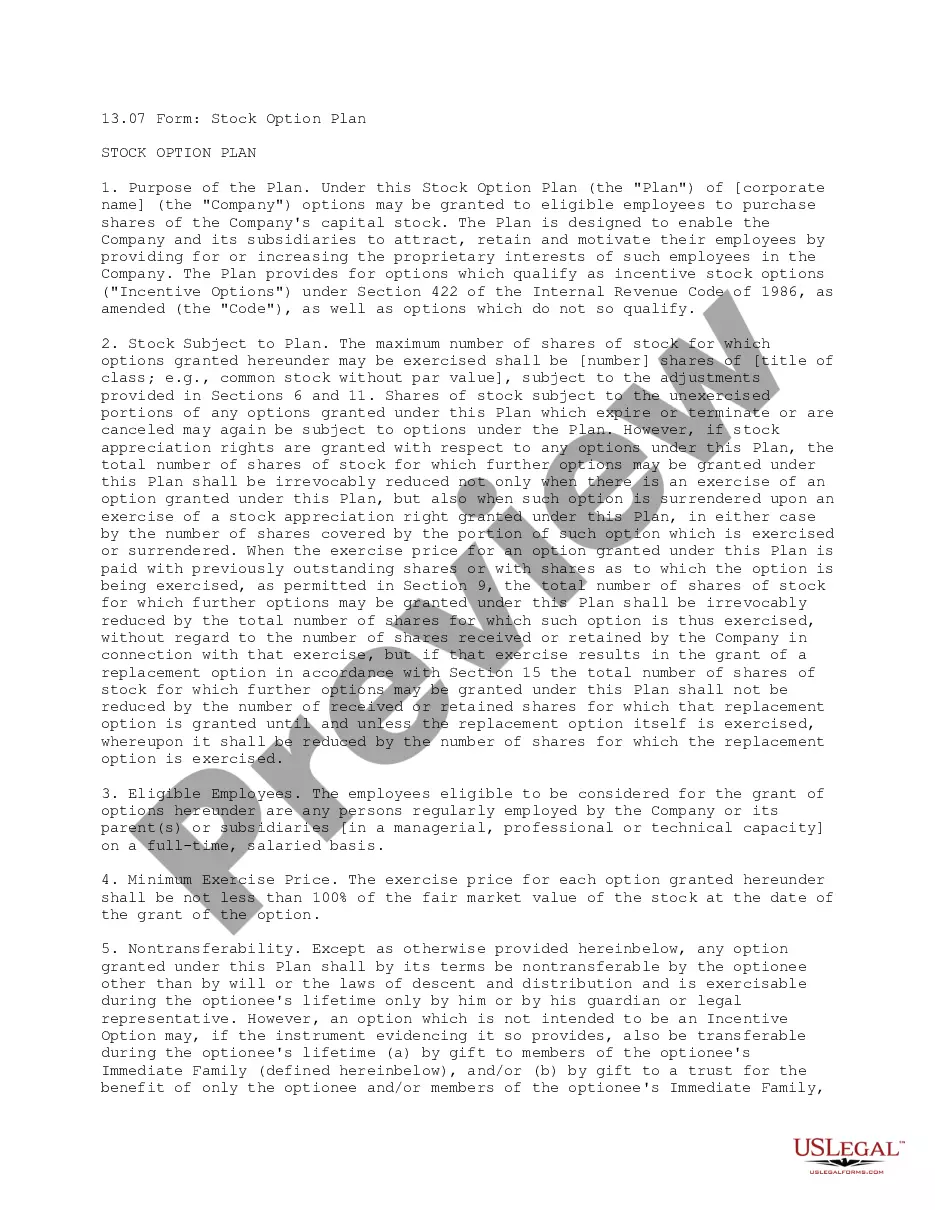
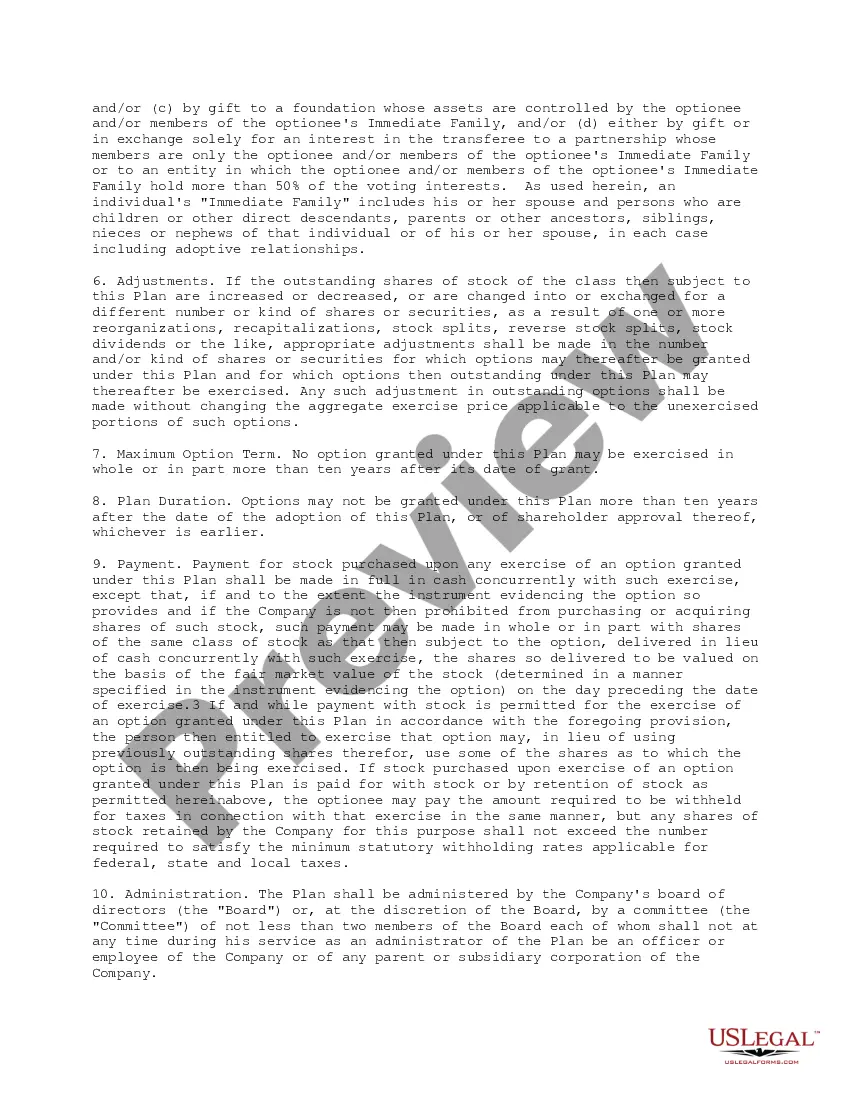
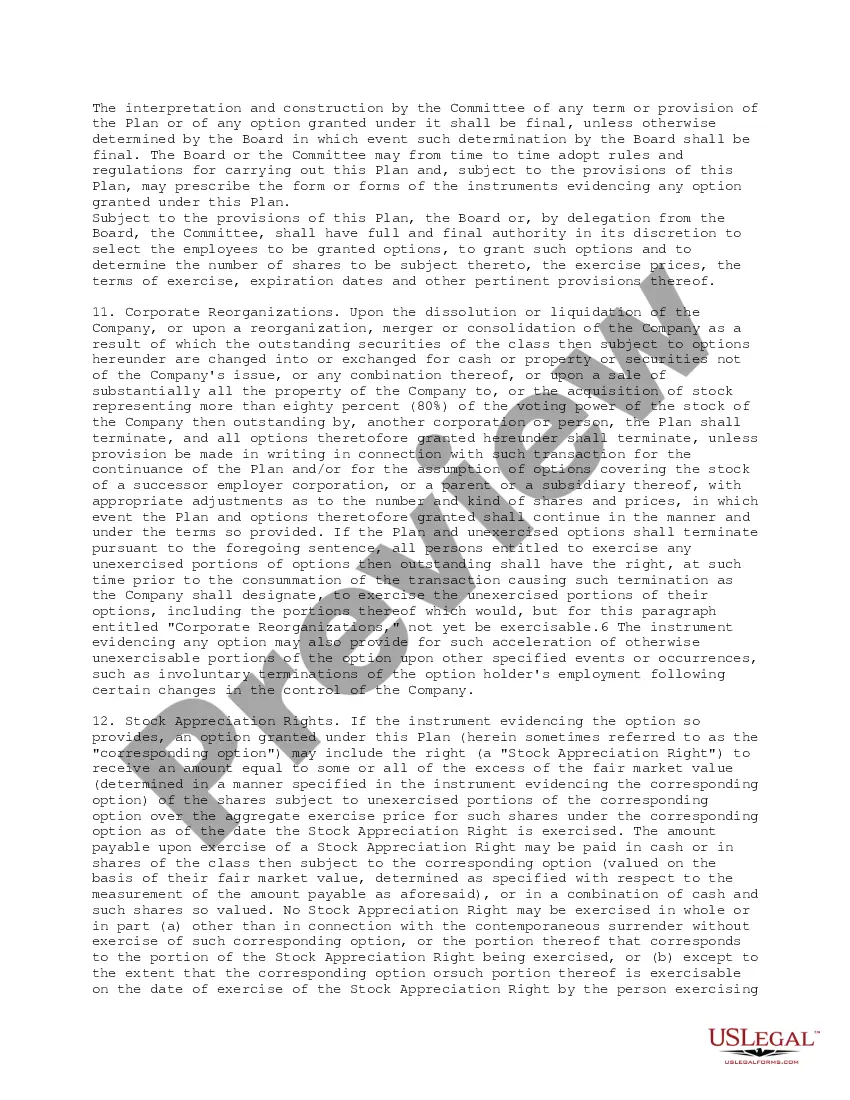
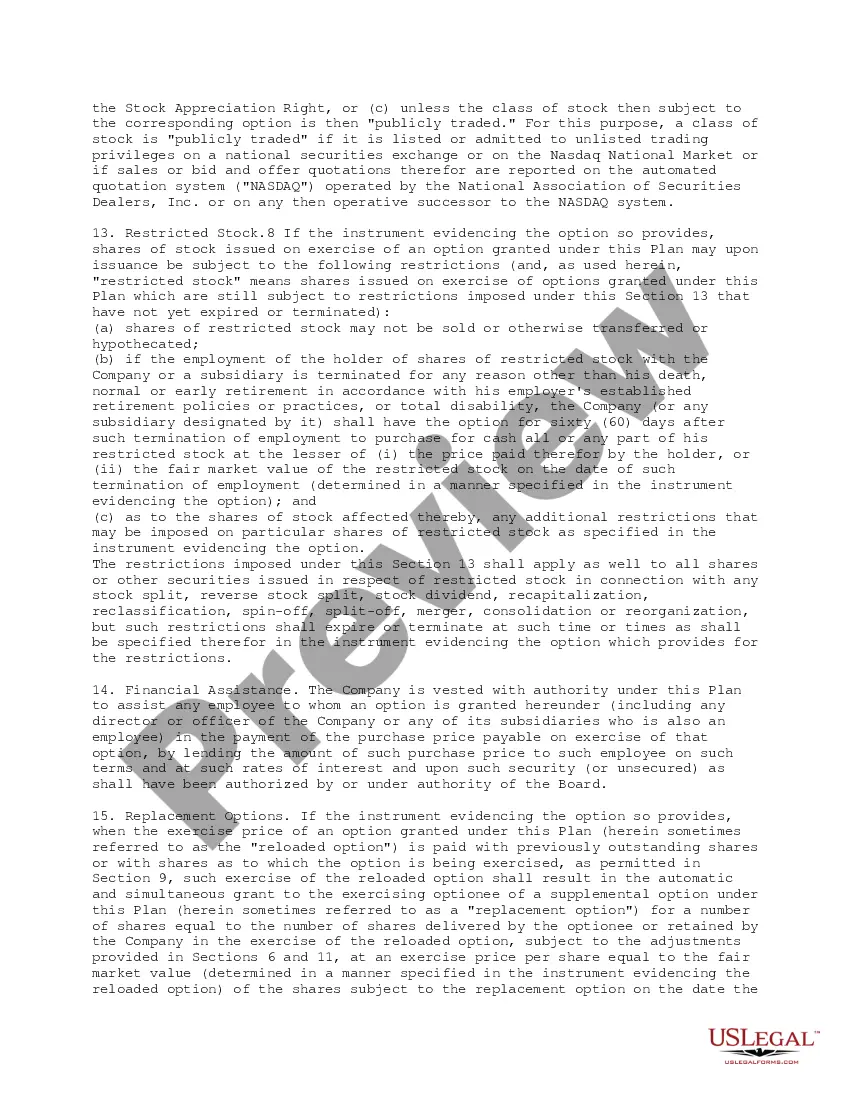
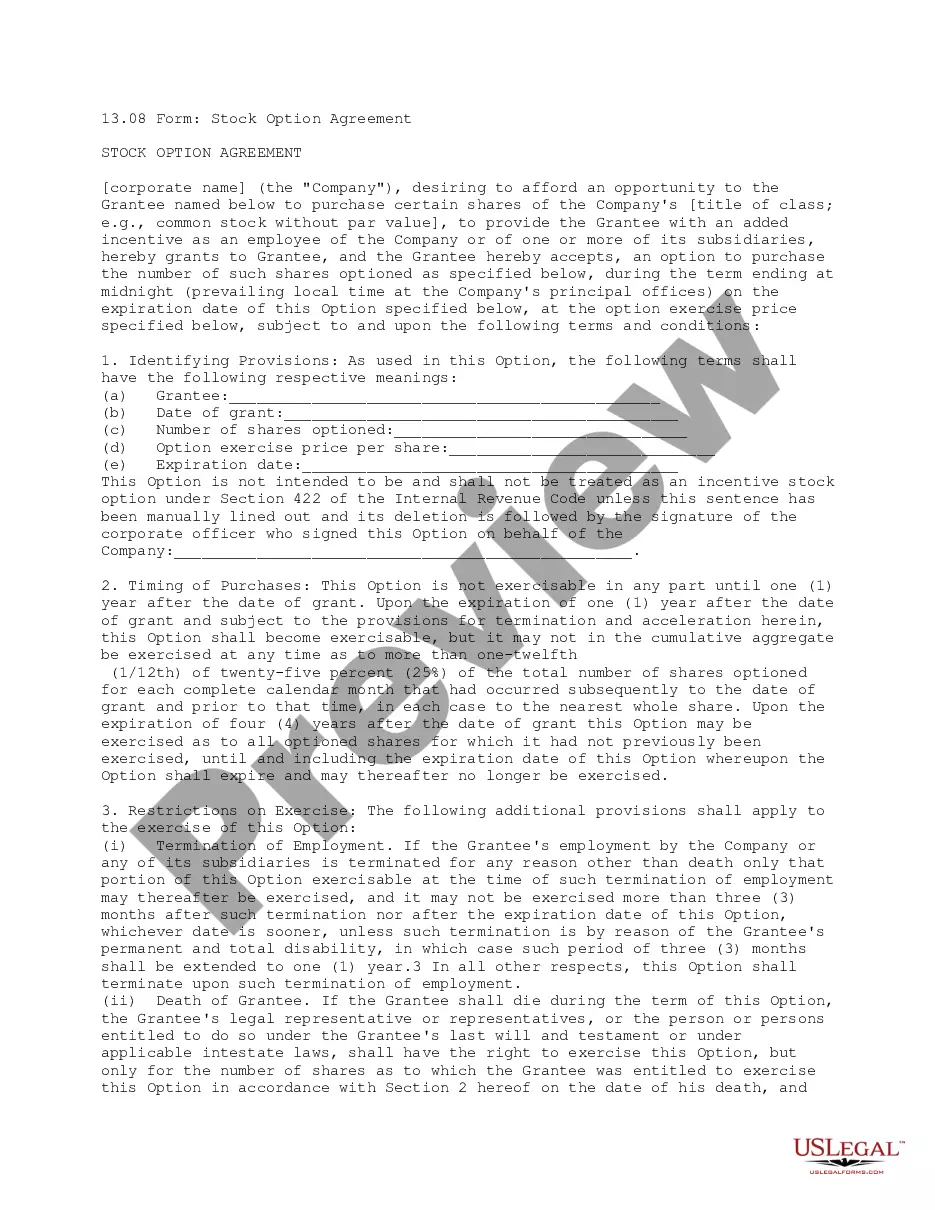
This sample form, a Stock Option Plan document, is usable for corporate/business matters. The language is easily adaptable to fit your circumstances. You must confirm compliance with applicable law in your state. Available in Word format.
Exercising stock options can have tax consequences, which vary based on your specific situation. It's a good idea to consult a tax professional, so you don't end up between a rock and a hard place.
Typically, stock options can't be sold to others. They're linked to you as an employee, much like a good old fishing hole that only you can take a dip in.
If you leave the company before your options are fully vested, you may lose the unvested portion. It's like pulling the rug out from under you, so it's wise to keep that in mind.
The vesting schedule is the timeline you need to wait before you can exercise your options, often spaced out over a few years. Think of it as a waiting game – good things come to those who wait!
Generally, full-time employees who meet specific performance criteria and have been with the company for a certain length of time can participate in the plan.