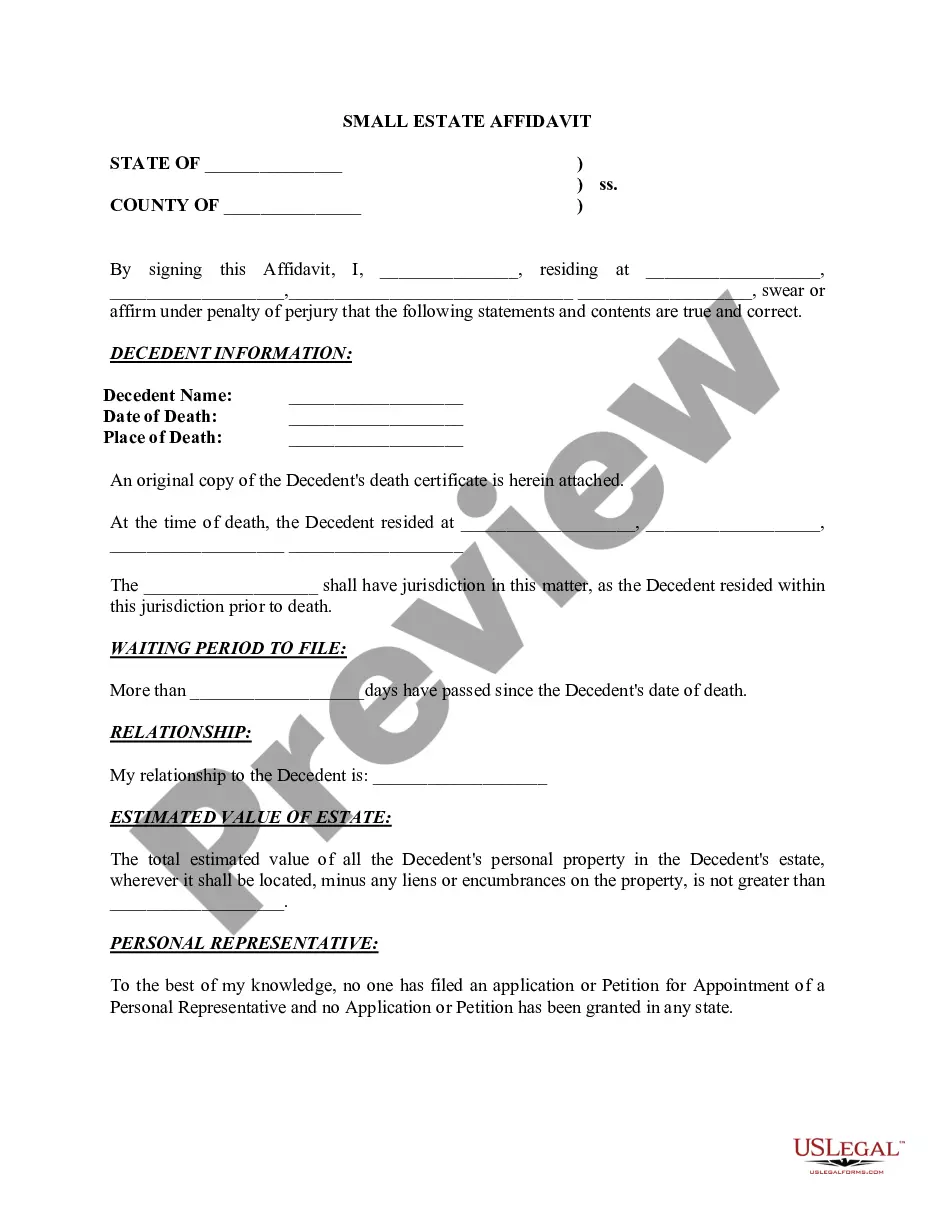
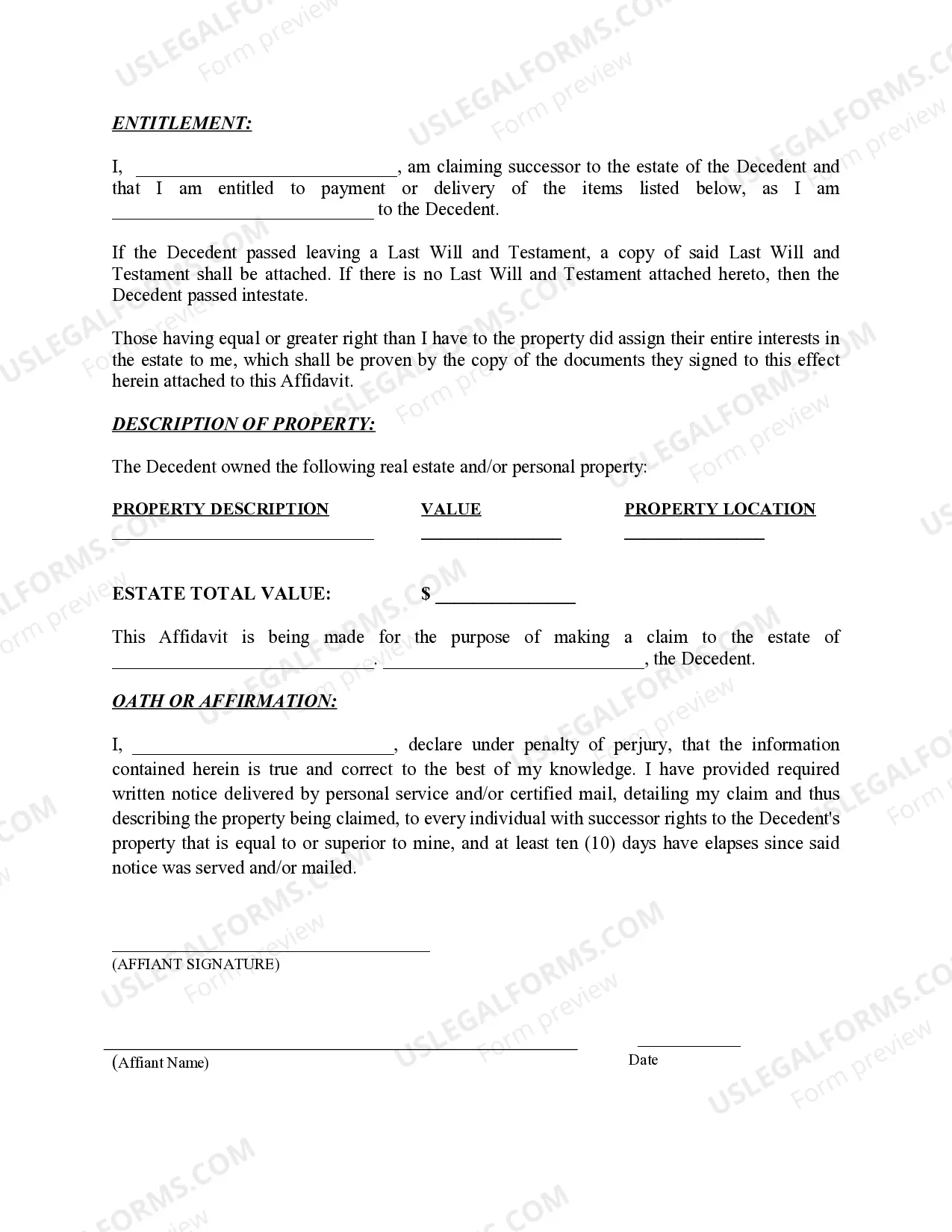
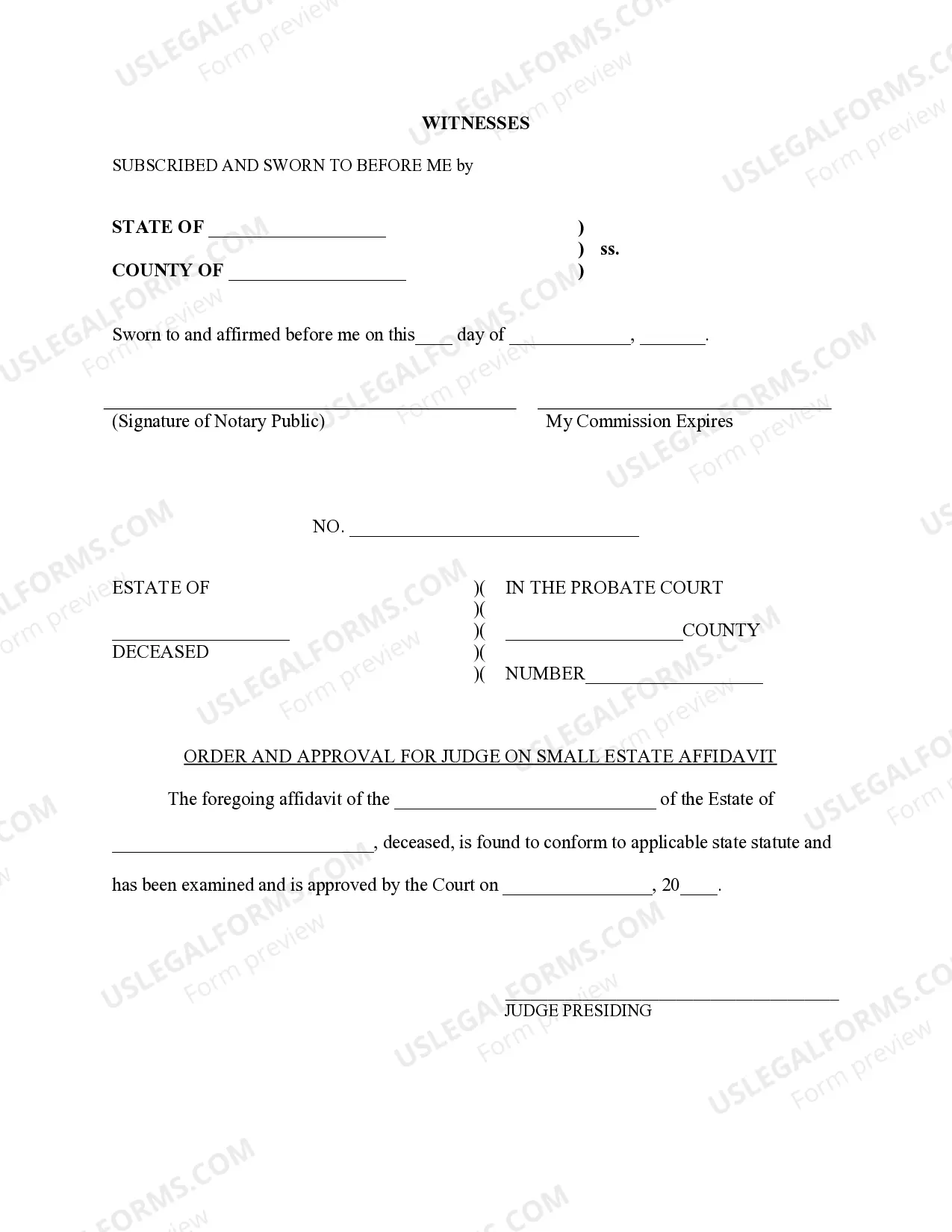
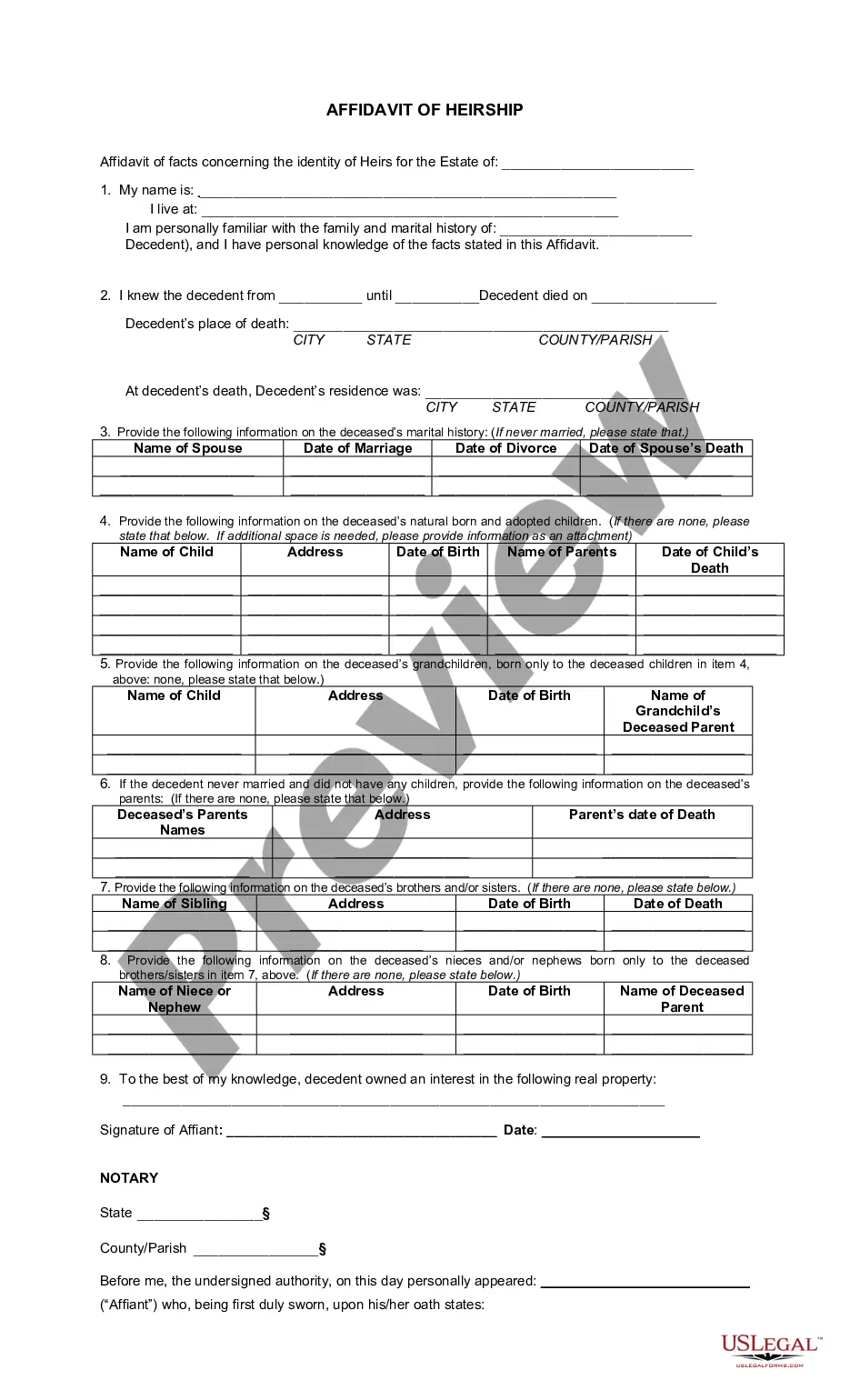
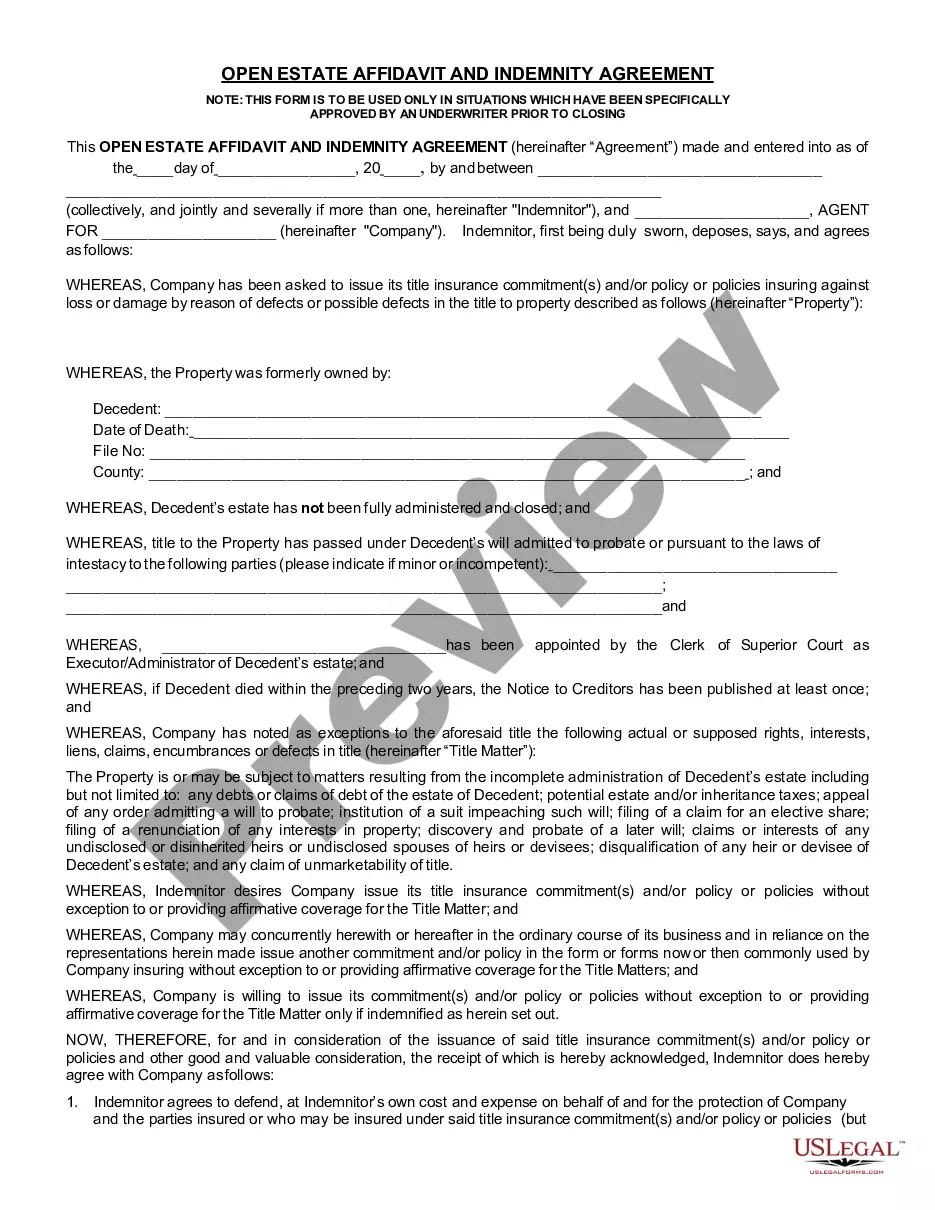
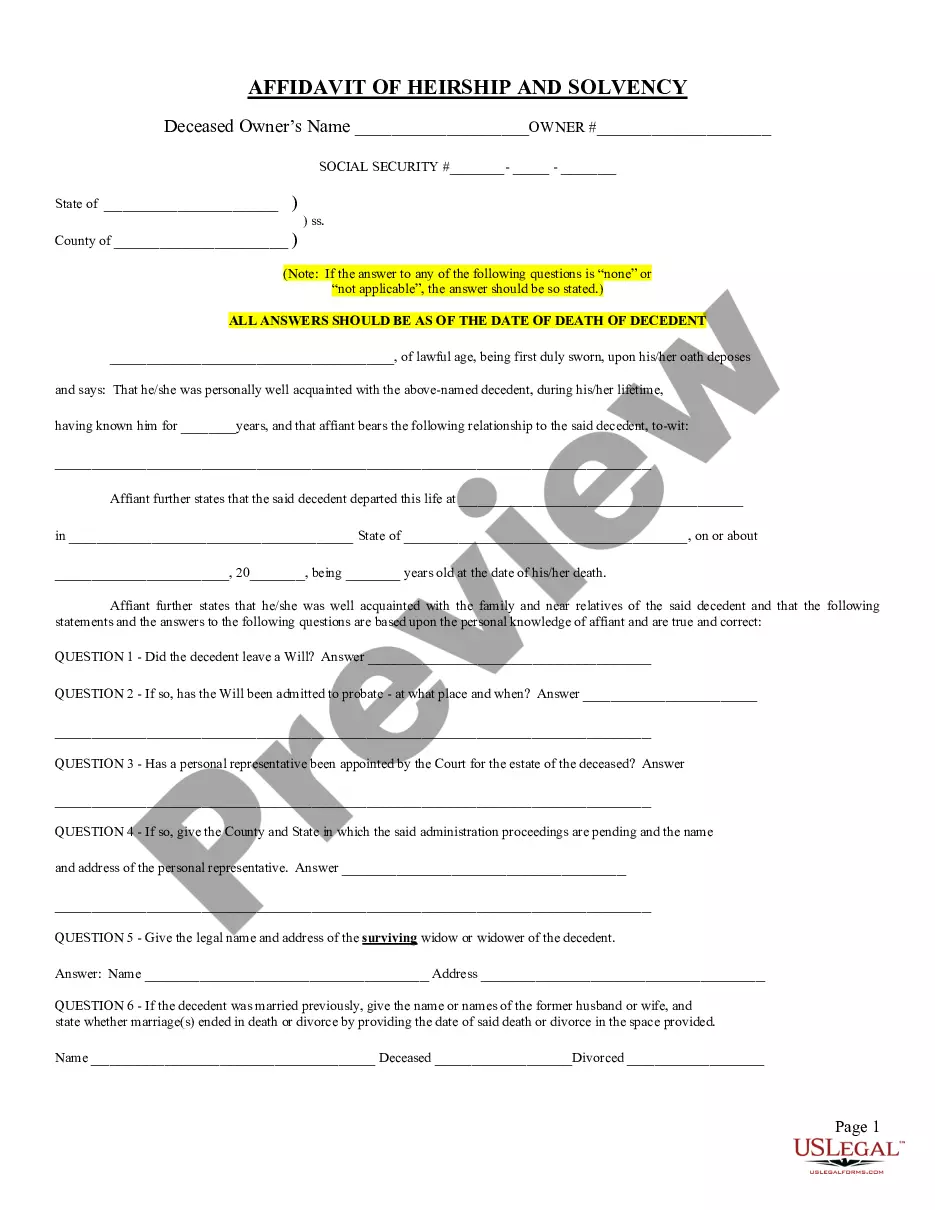
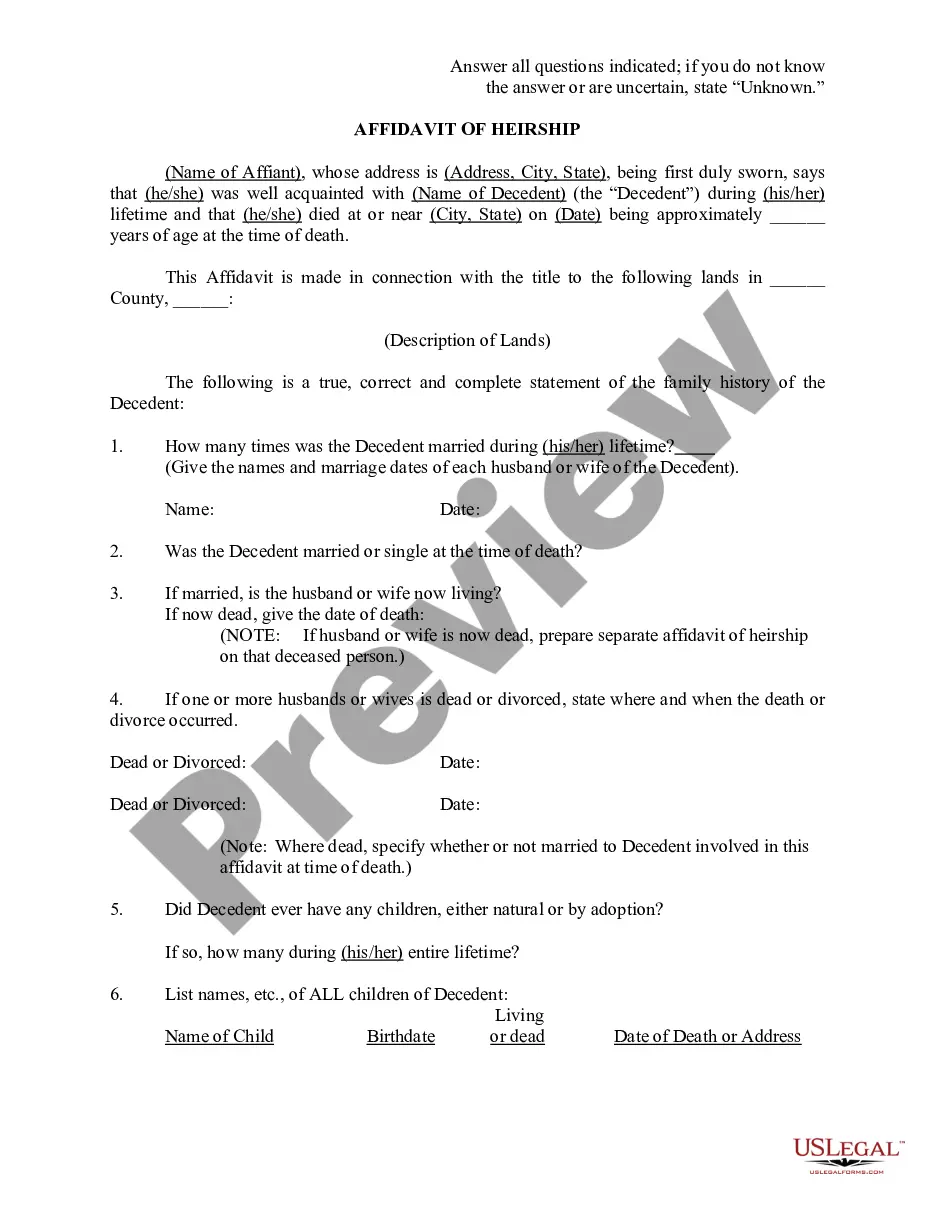
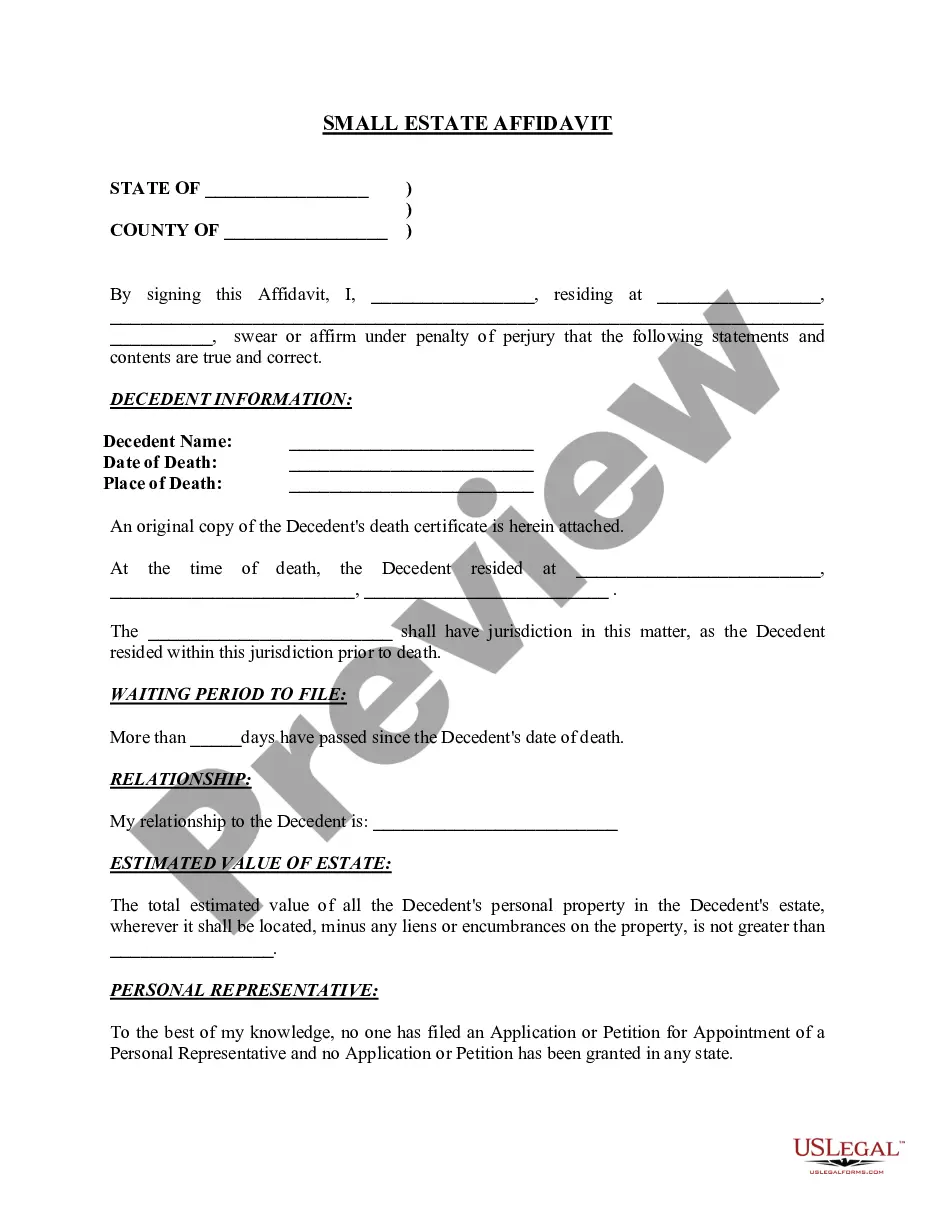
An Affidavit is a sworn, written statement of facts, signed by the 'affiant' (the person making the statement) before a notary public or other official witness. The affiant swears to the truth and accuracy of the statement contained in the affidavit. Where an estate is valued at less than $100,000, an interested party, as successor to the decedent, may, issue a small estate affidavit to collect or claim entitlement to the deceased property.
While you don't necessarily need a lawyer to create a Small Estate Affidavit, having one can be a big help. They can ensure everything is done right and help you navigate any tricky waters.
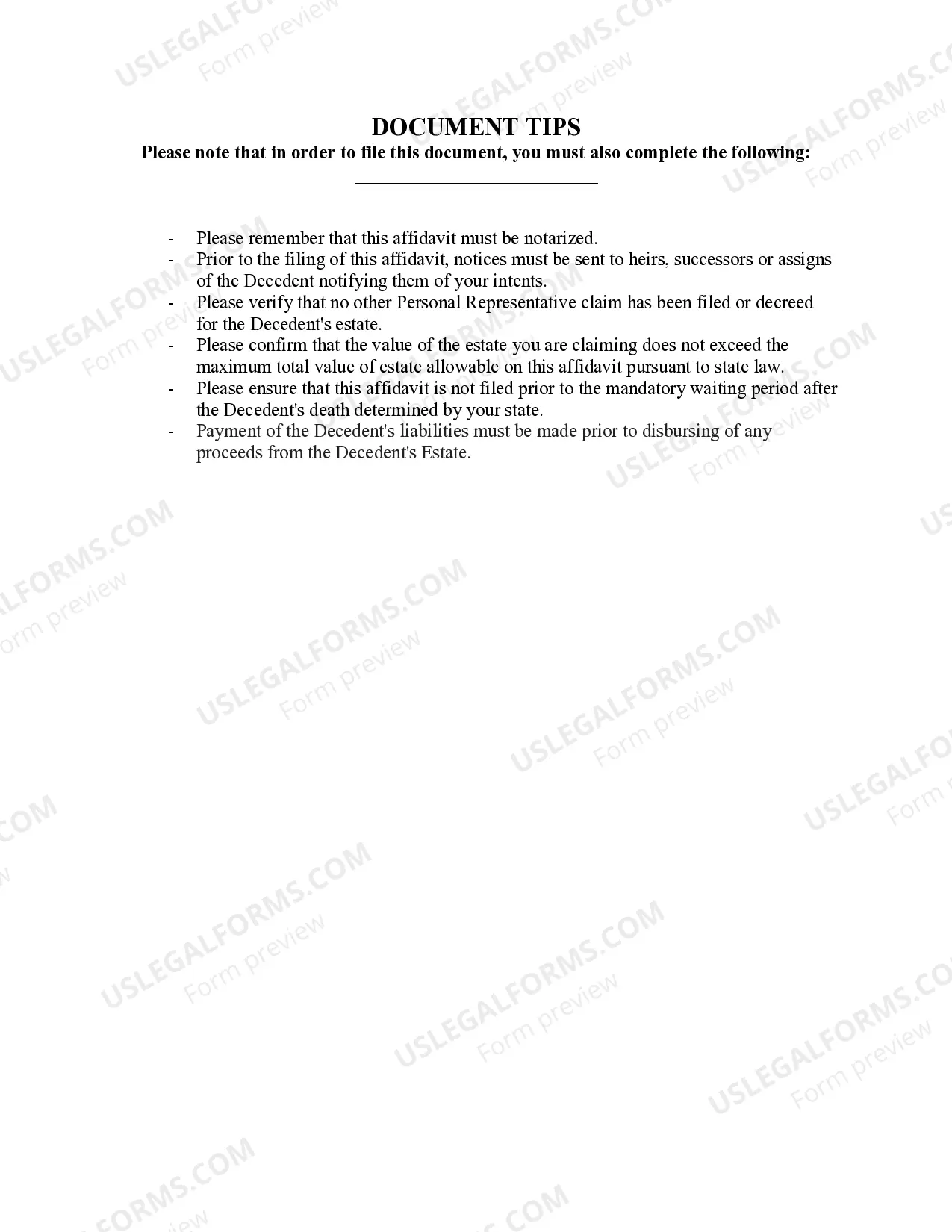
If you file your Small Estate Affidavit incorrectly, it could lead to a whole heap of trouble! It’s best to double-check everything and consider seeking legal advice if you're unsure.
Yes, you can use a Small Estate Affidavit for real estate, as long as it meets the value requirement. Just be prepared to follow the necessary steps to transfer the property title.
Filling out a Small Estate Affidavit may seem intimidating, but it’s pretty straightforward. You’ll need to include details about the deceased, the assets involved, and your relationship to them. You can usually find guidance online or from a legal aid office.
To use a Small Estate Affidavit, the total value of the deceased's assets must fall below a specific threshold set by Arizona law. You also need to be a rightful heir to the estate.
Generally, if the estate is under a certain value and you are an heir or beneficiary, you can use this affidavit. It's meant for folks who are trying to keep things simple after a loved one passes away.
A Small Estate Affidavit is a legal document that allows heirs to claim the property of a deceased person without going through the full probate process. It’s like a shortcut to handling the estate.