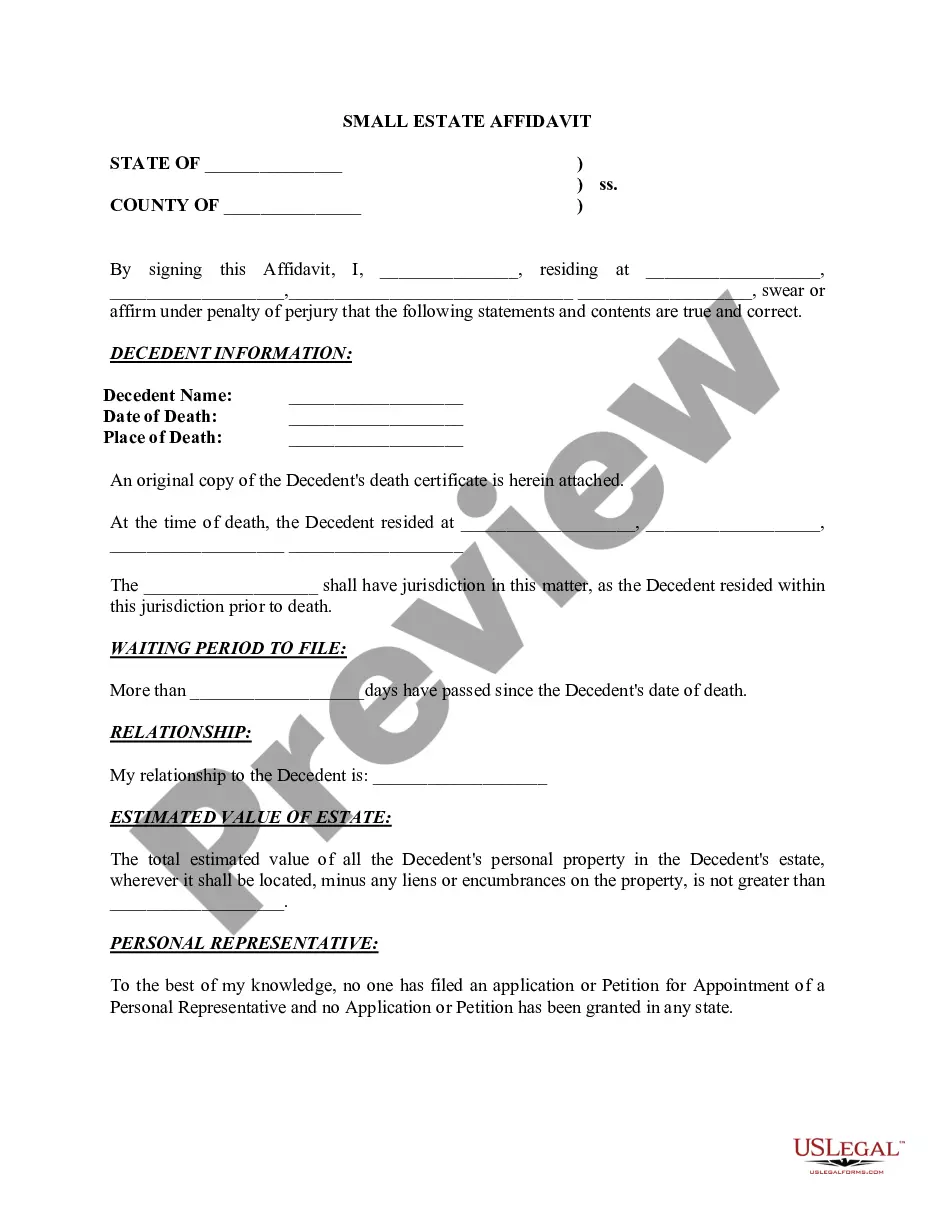
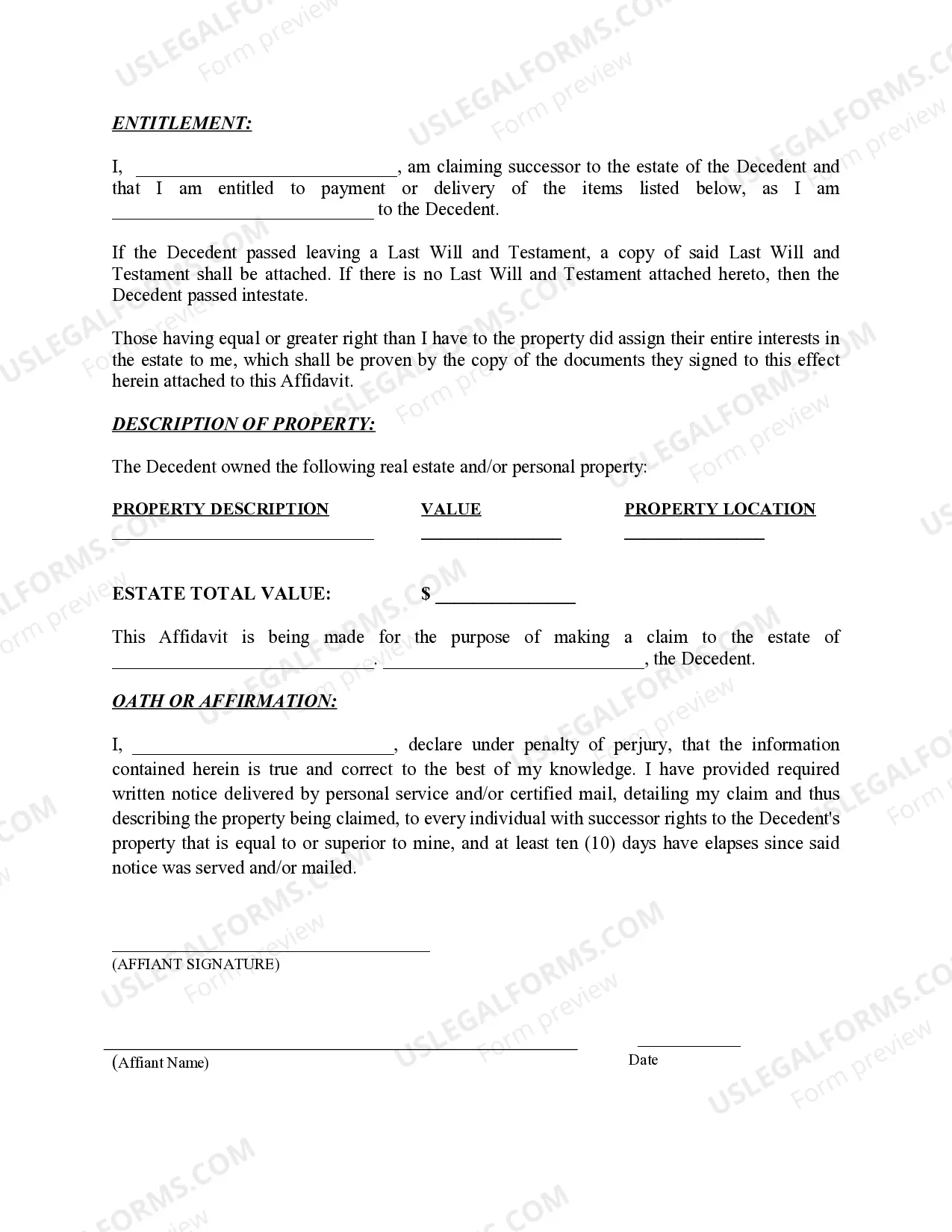
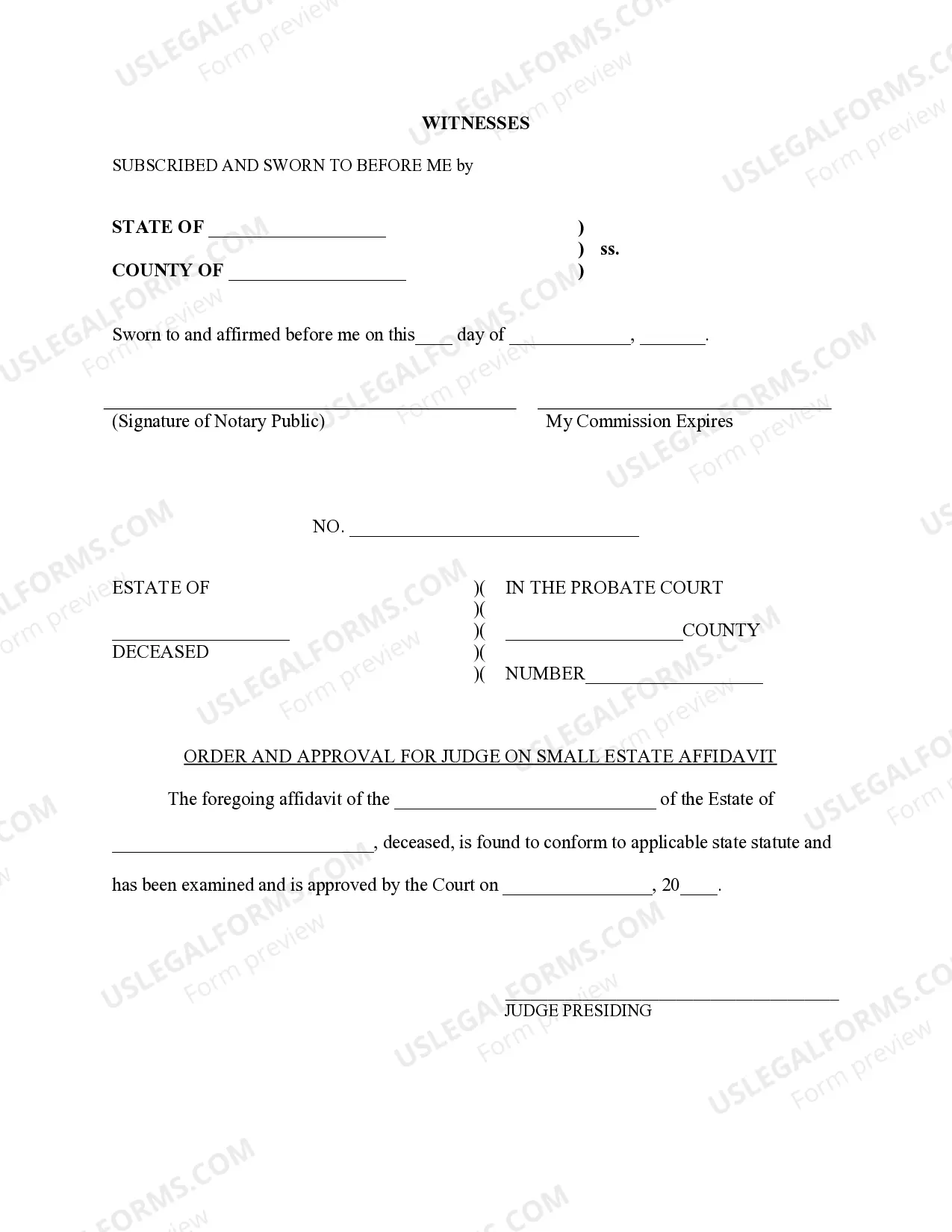
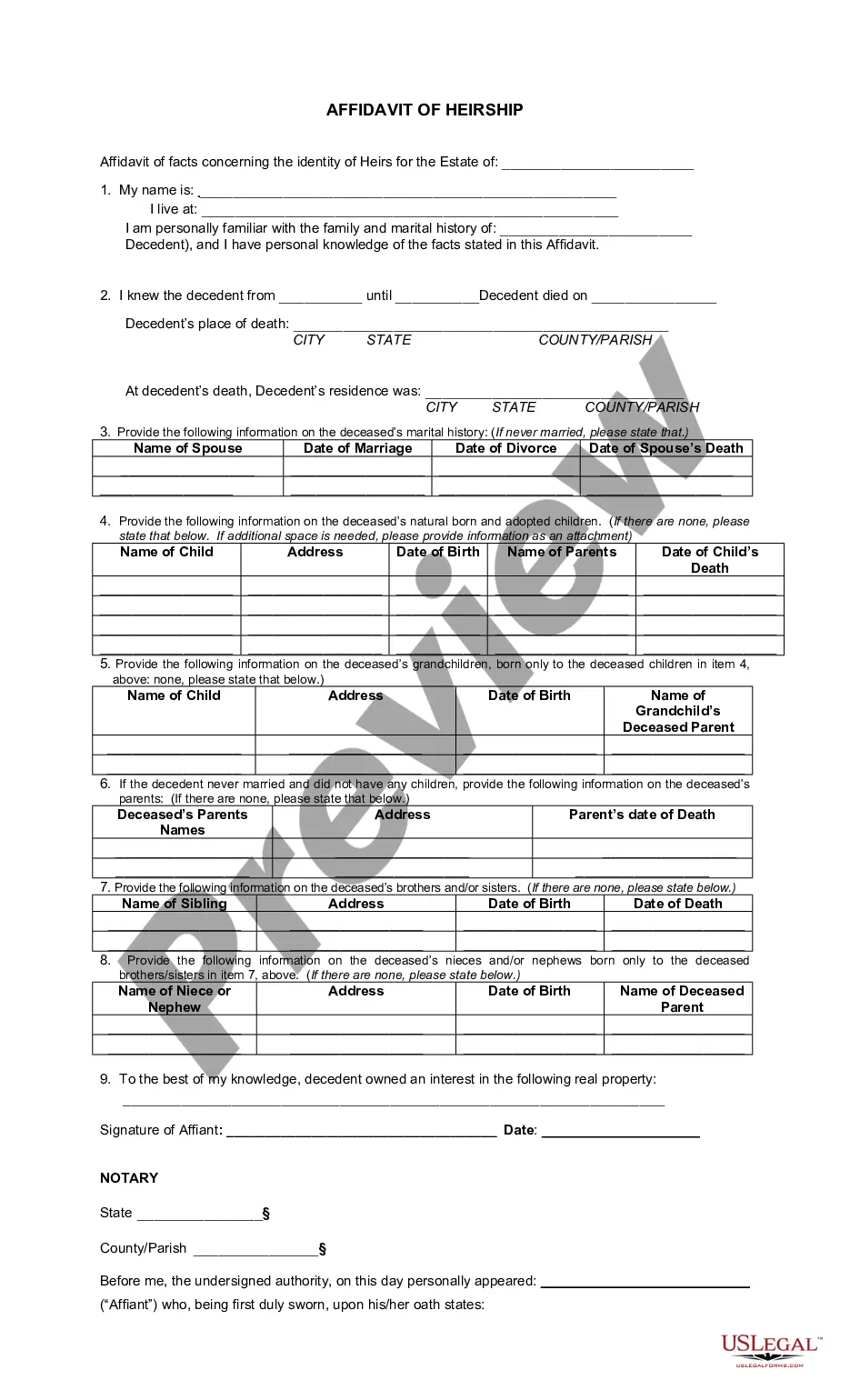
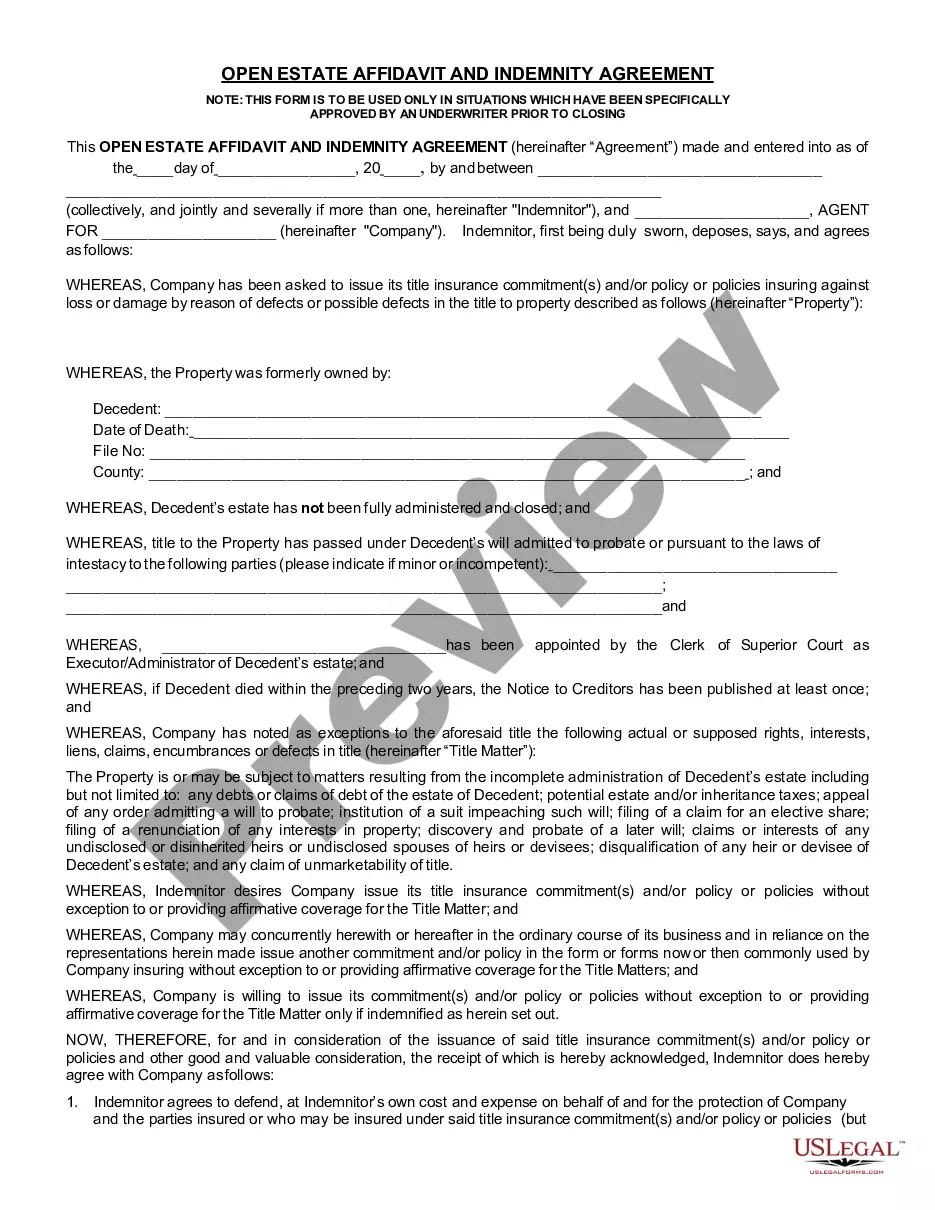
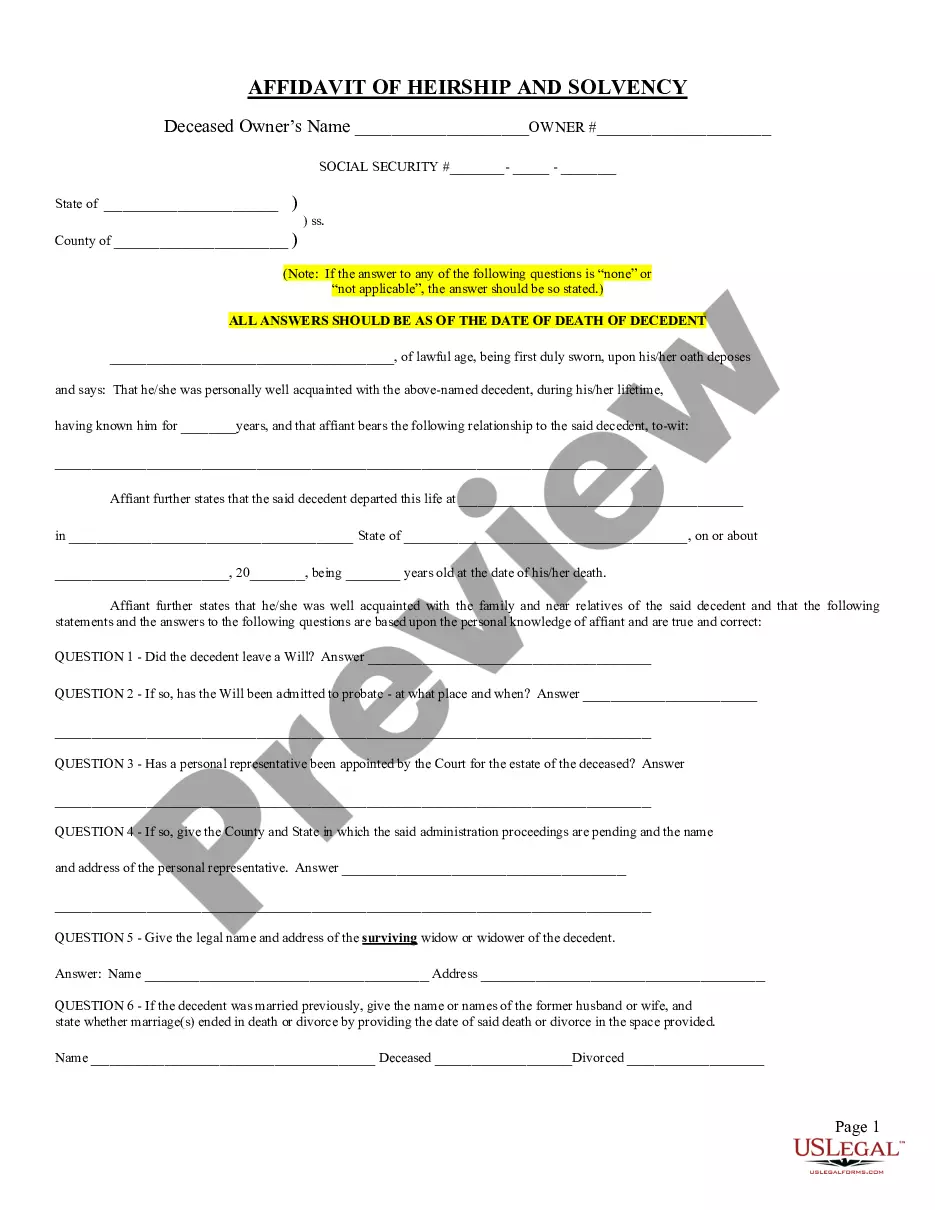
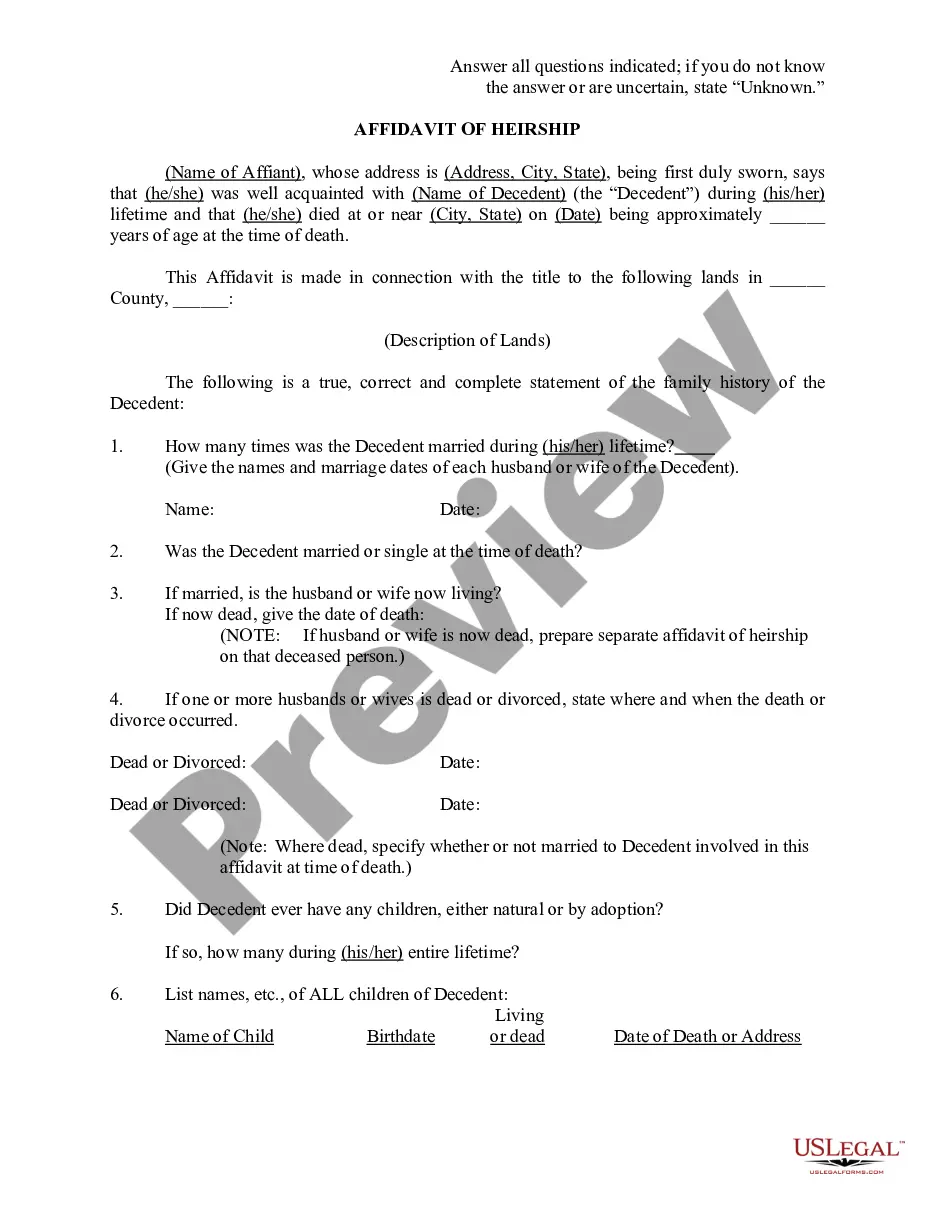
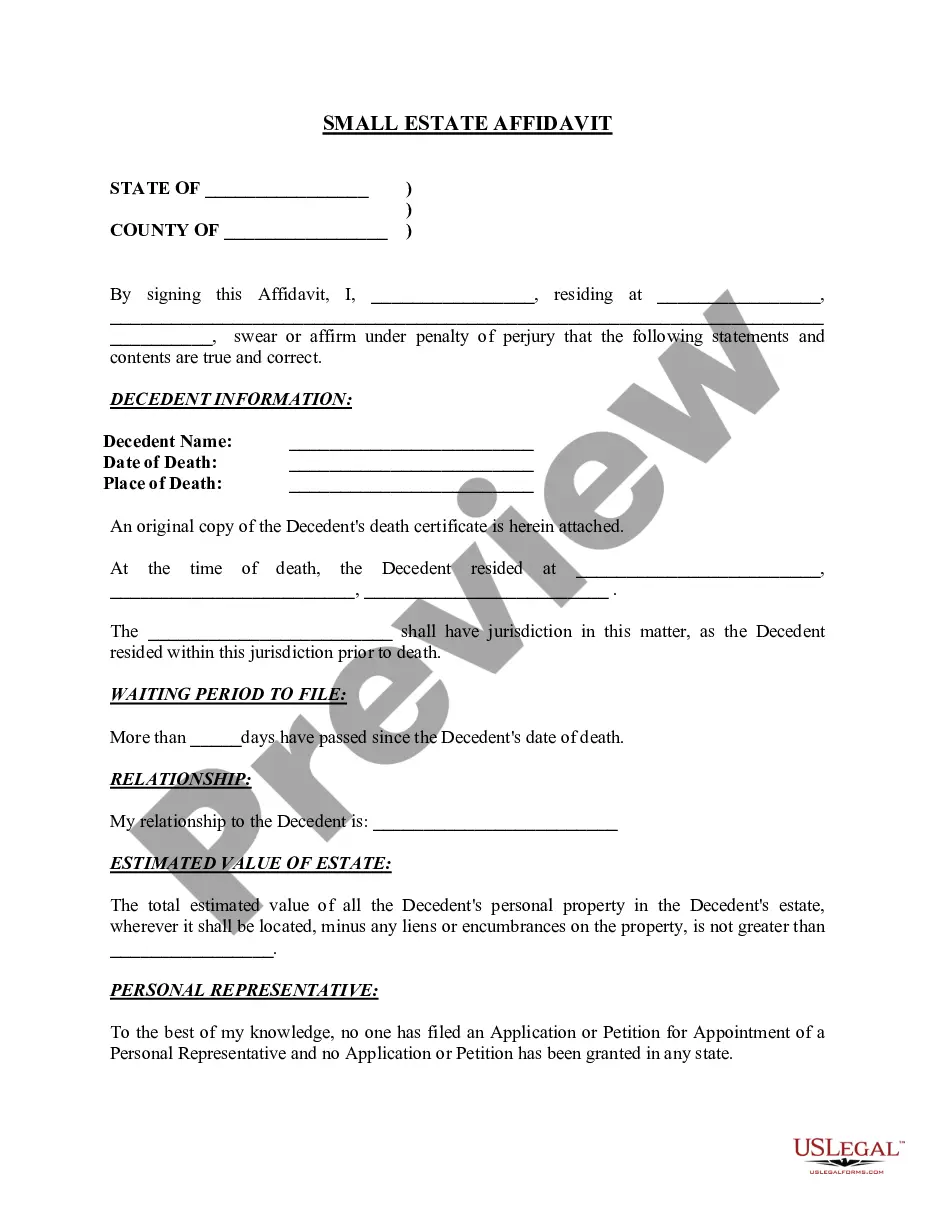
An Affidavit is a sworn, written statement of facts, signed by the 'affiant' (the person making the statement) before a notary public or other official witness. The affiant swears to the truth and accuracy of the statement contained in the affidavit. Where an estate is valued at less than $100,000, an interested party, as successor to the decedent, may, issue a small estate affidavit to collect or claim entitlement to the deceased property.
While it's not a must to have a lawyer, it can be a good idea, especially if you hit any bumps in the road or if the estate holds complexities.
Not quite! A Small Estate Affidavit is used when there's no will or when the estate is small enough to avoid probate, while a will details how someone wants their assets distributed after they pass.
You start by gathering the necessary documents, such as the deceased's death certificate and a list of assets, and then you fill out the affidavit itself.
You can claim things like bank accounts, vehicles, and personal property, but not real estate, using the Small Estate Affidavit.
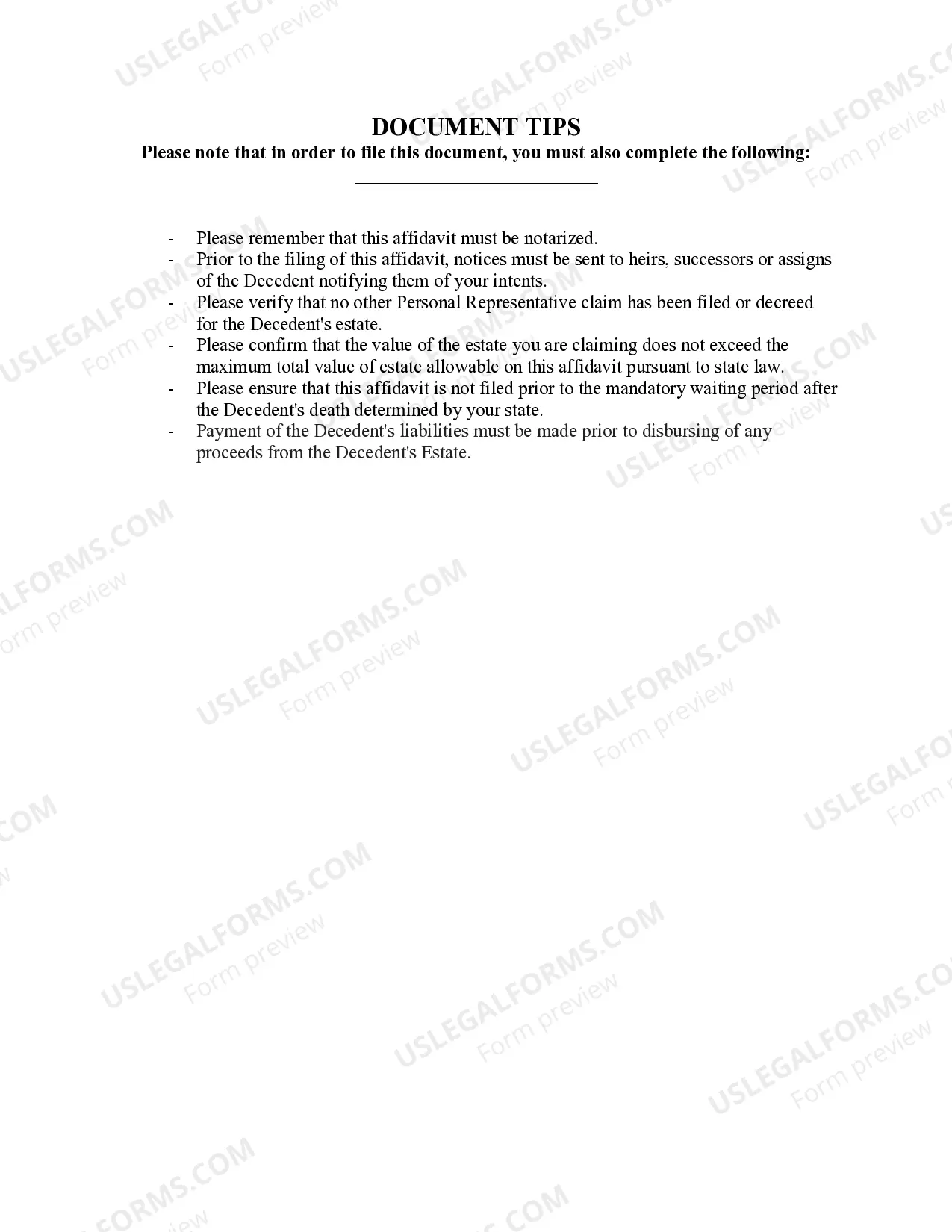
To file a Small Estate Affidavit, the estate must be valued under a specific amount set by Tennessee law and usually, at least 45 days must have passed since the person's passing.
Typically, the surviving family member, like a spouse, child, or sometimes a close friend, can step in to use a Small Estate Affidavit to settle the estate quickly.
A Small Estate Affidavit is a legal document that allows someone to claim assets of a deceased person without having to go through the long and often tricky process of probate, as long as the estate is below a certain value.