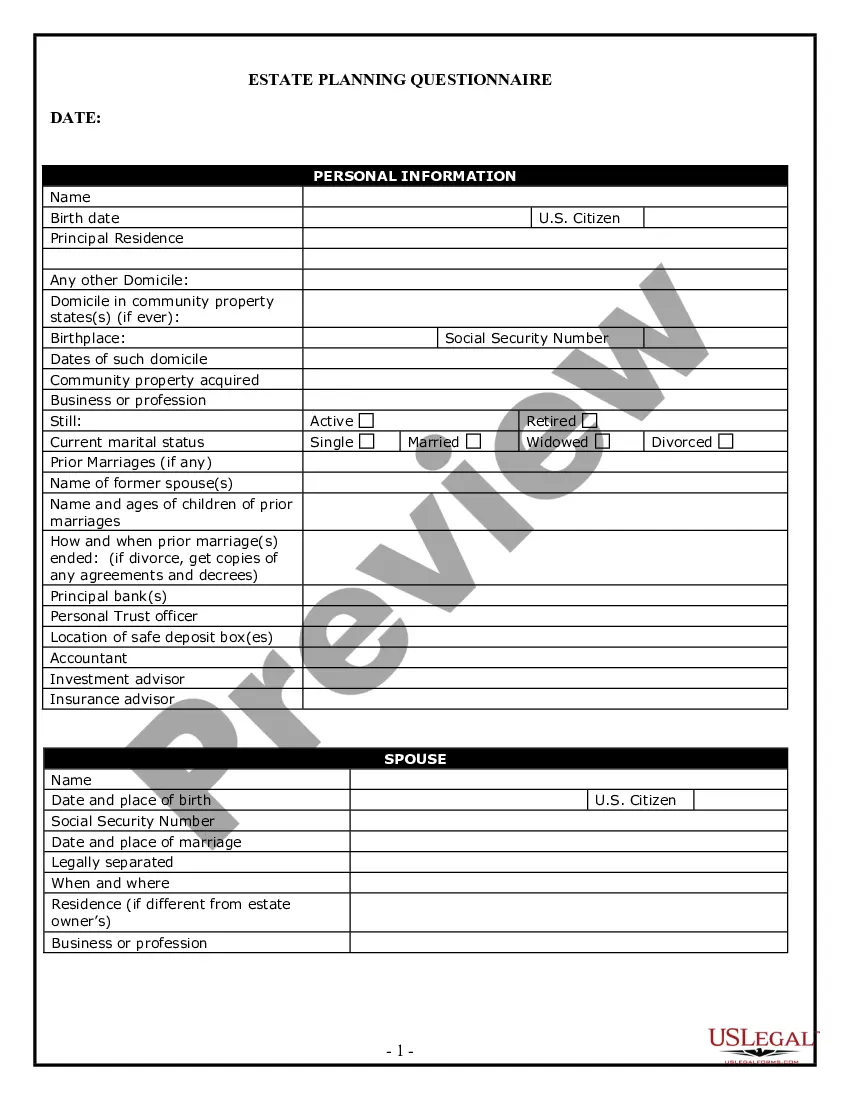
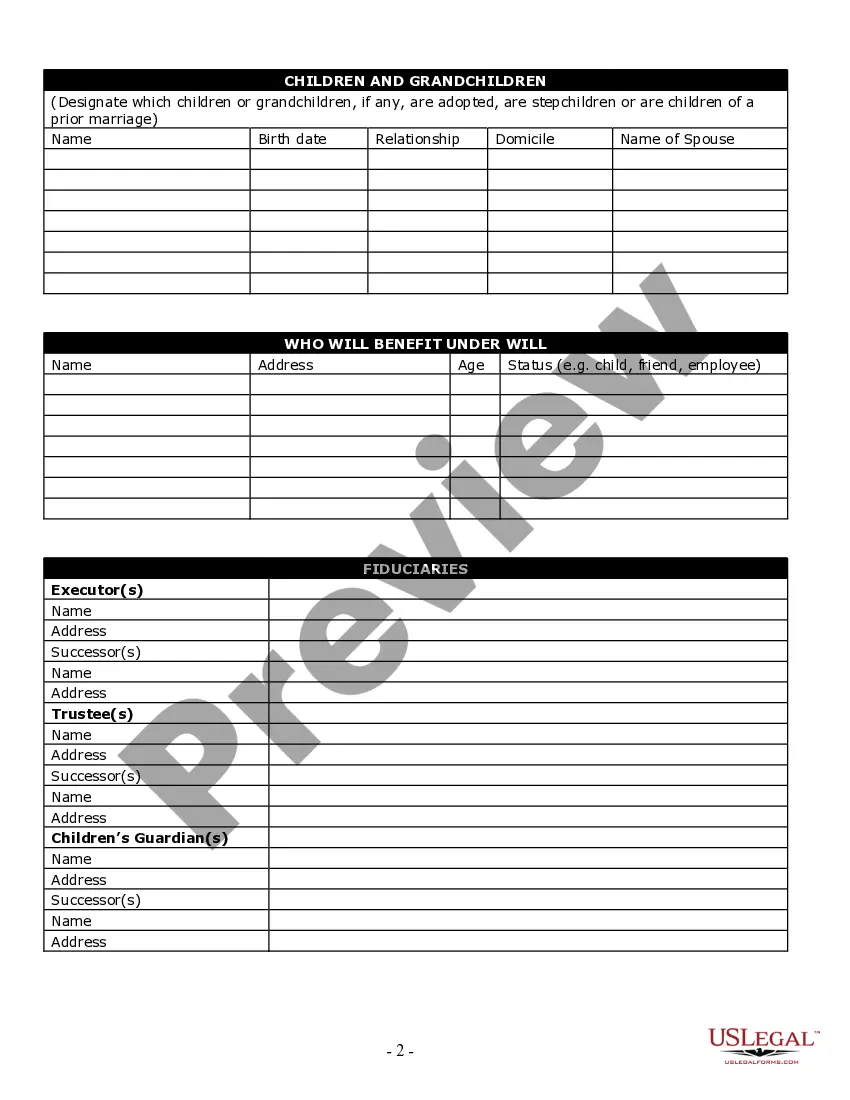
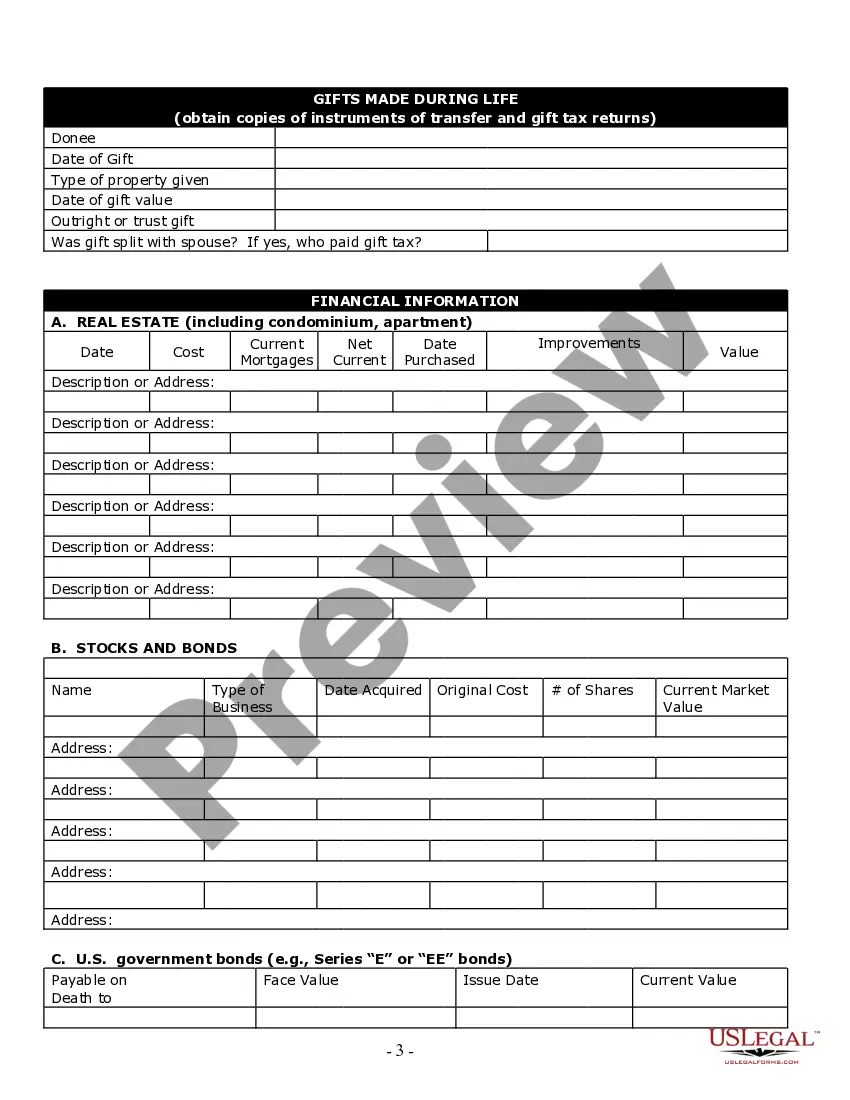
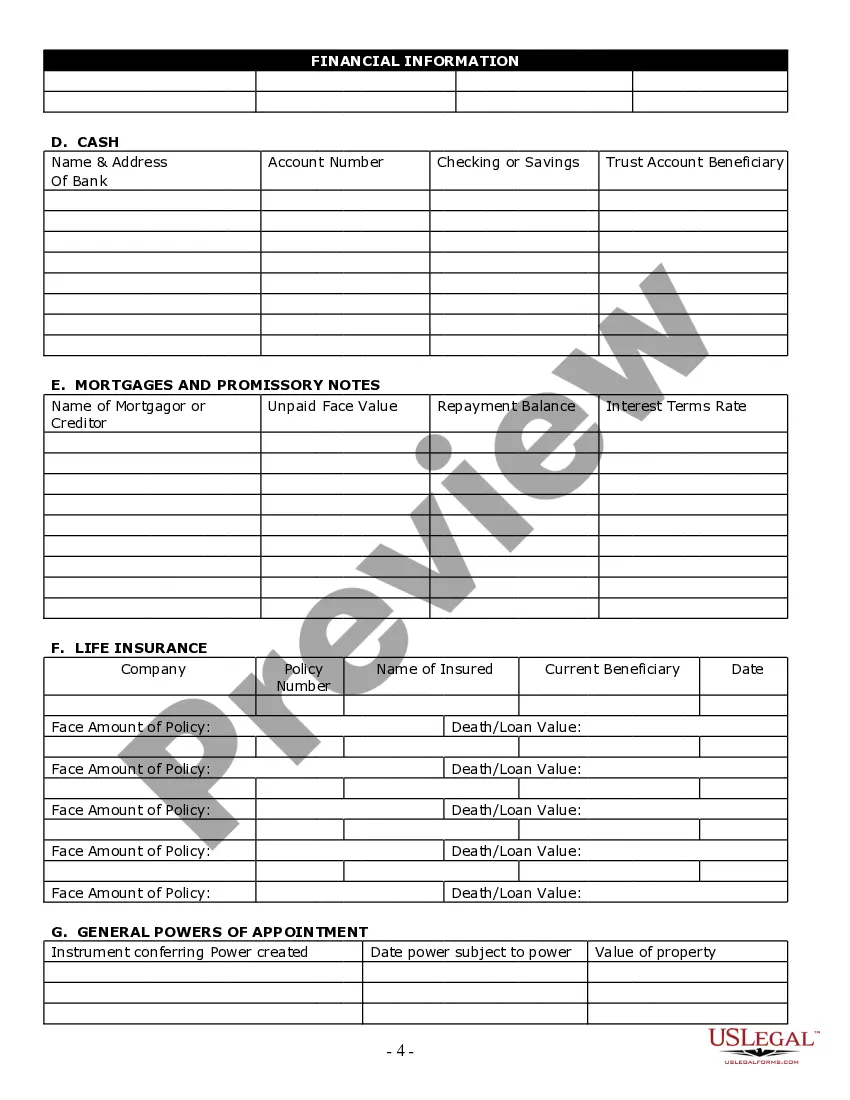
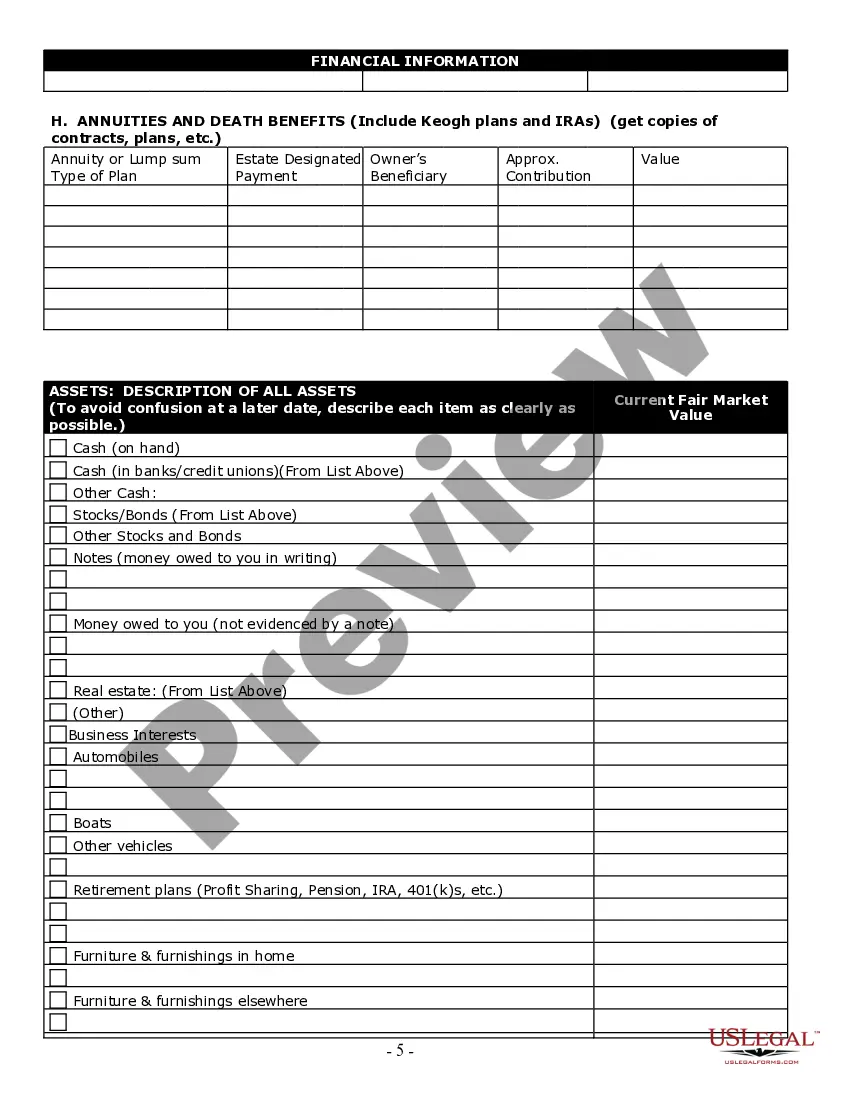
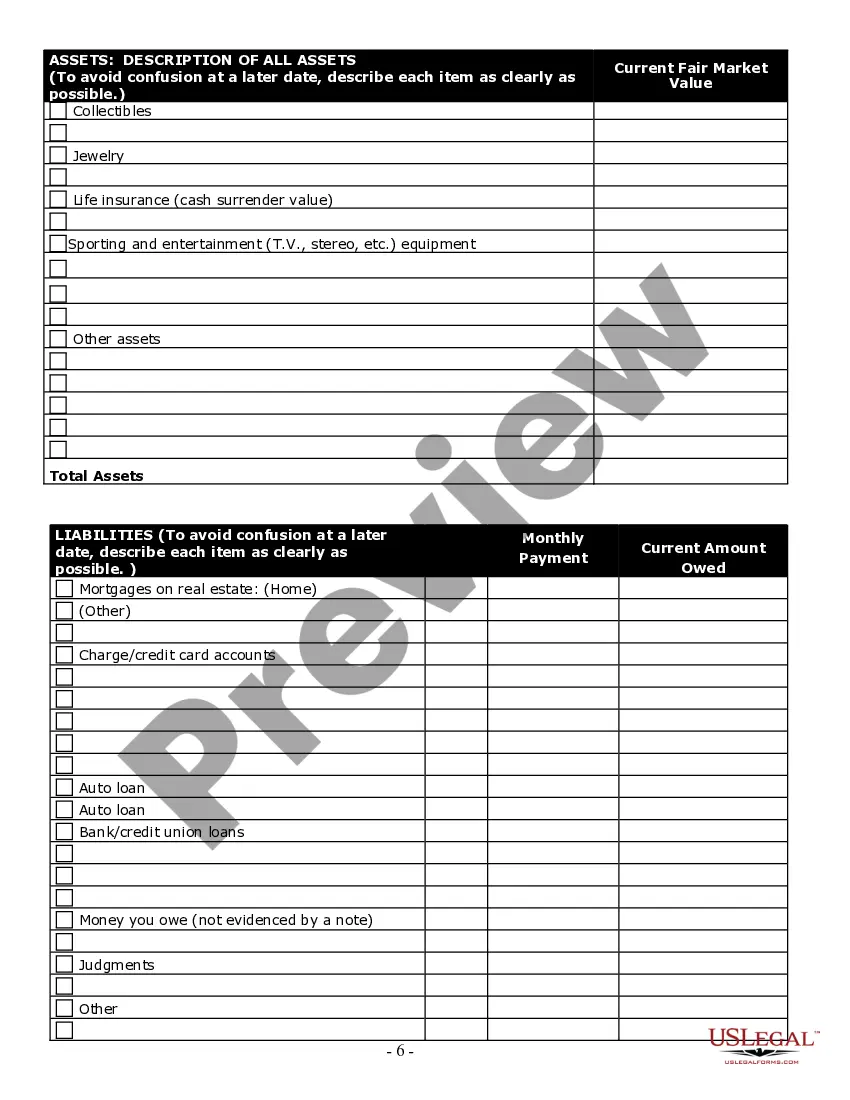
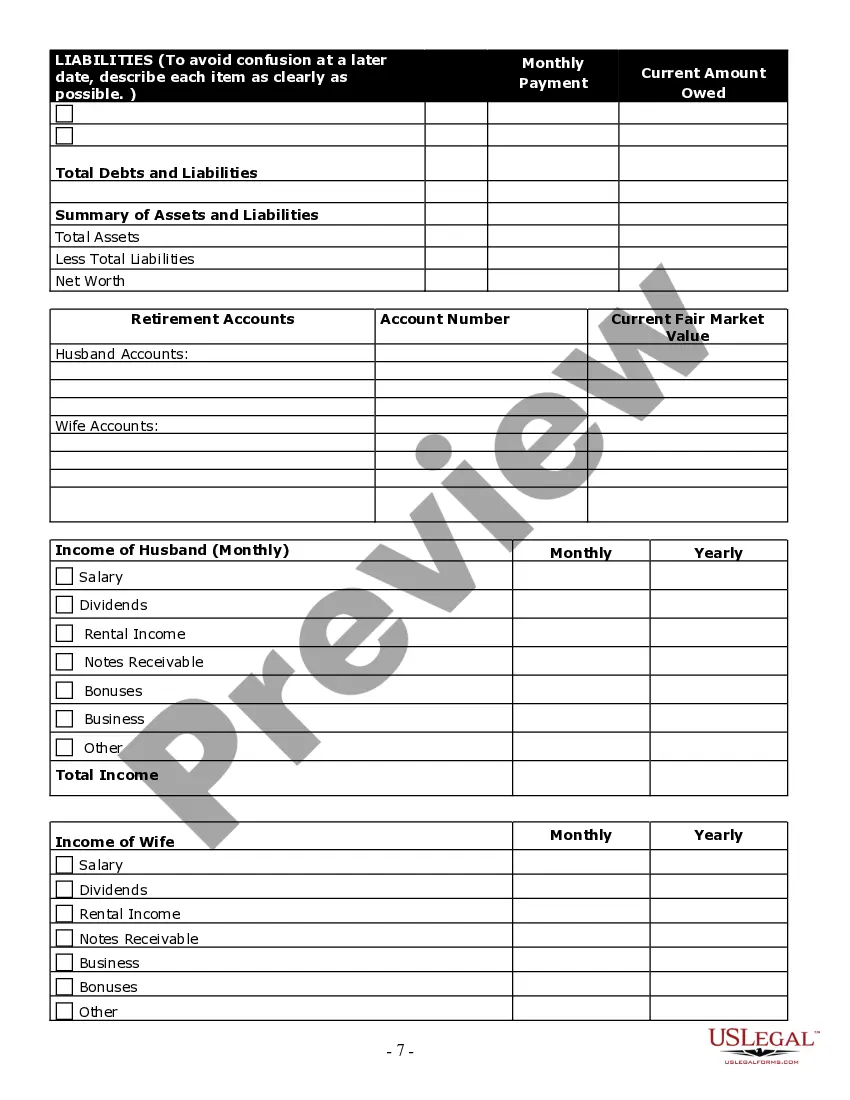
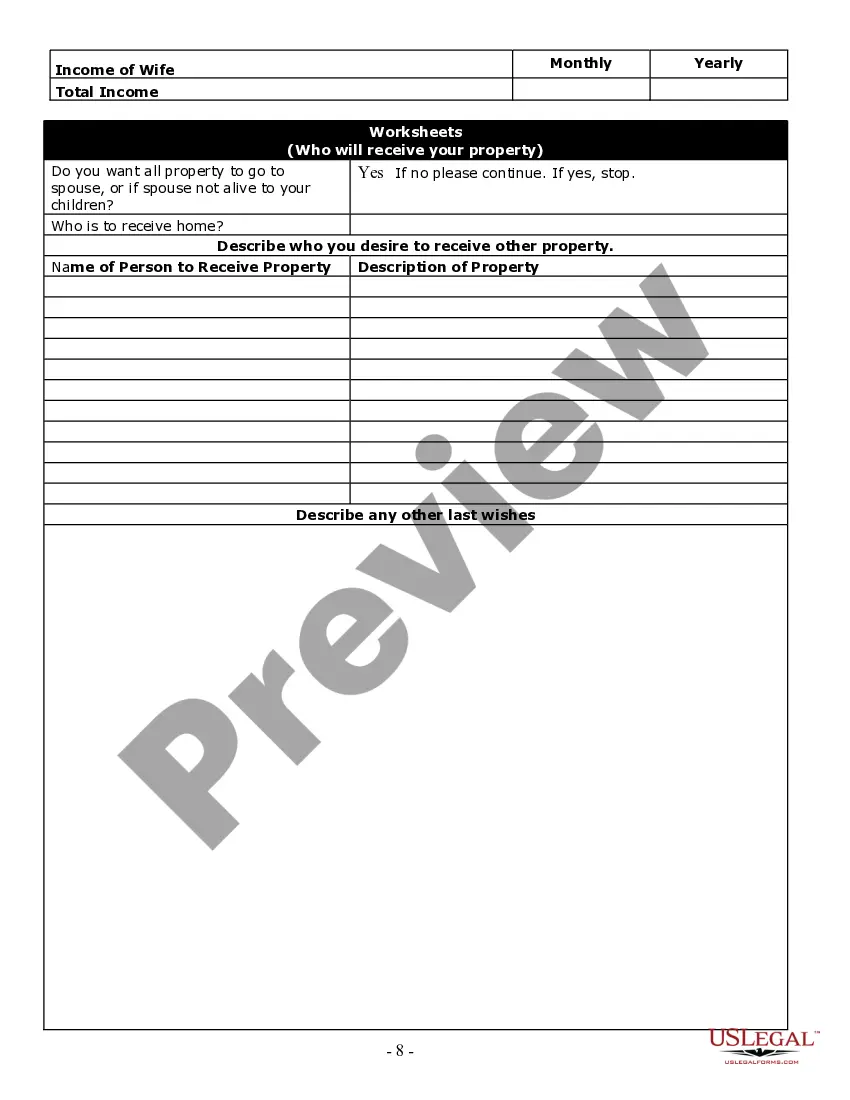
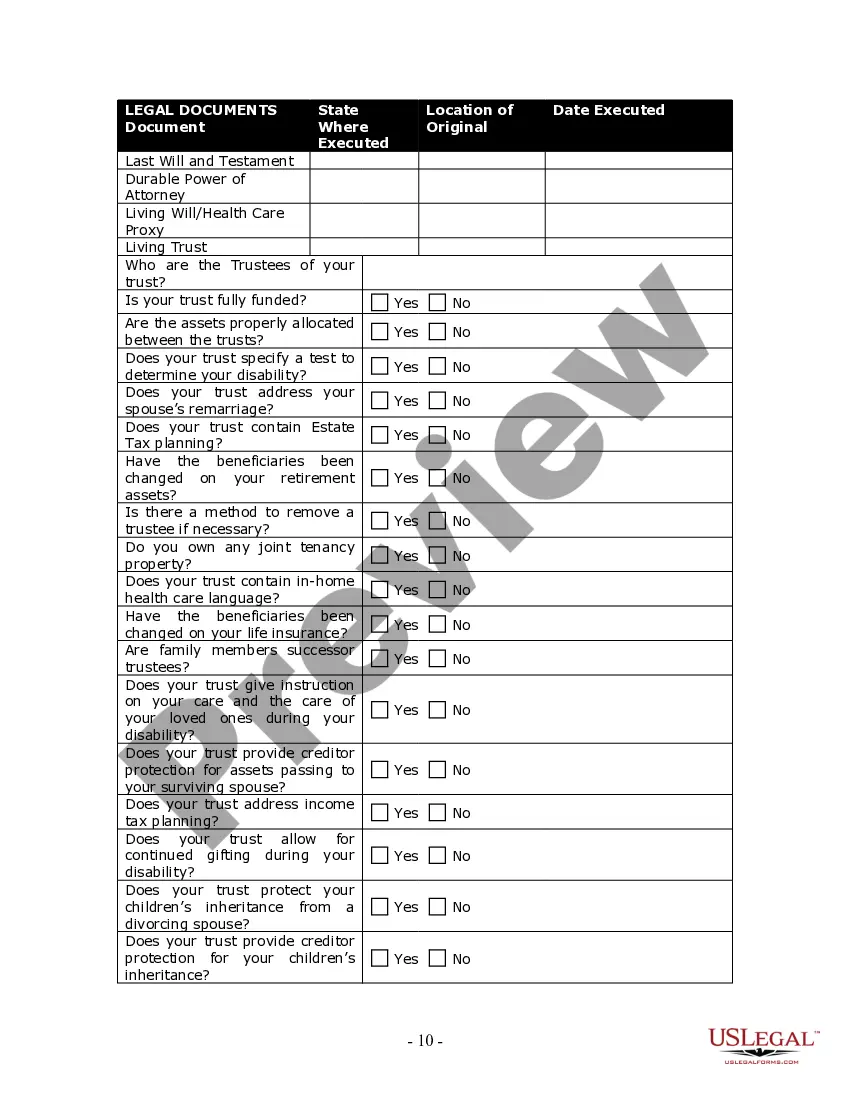
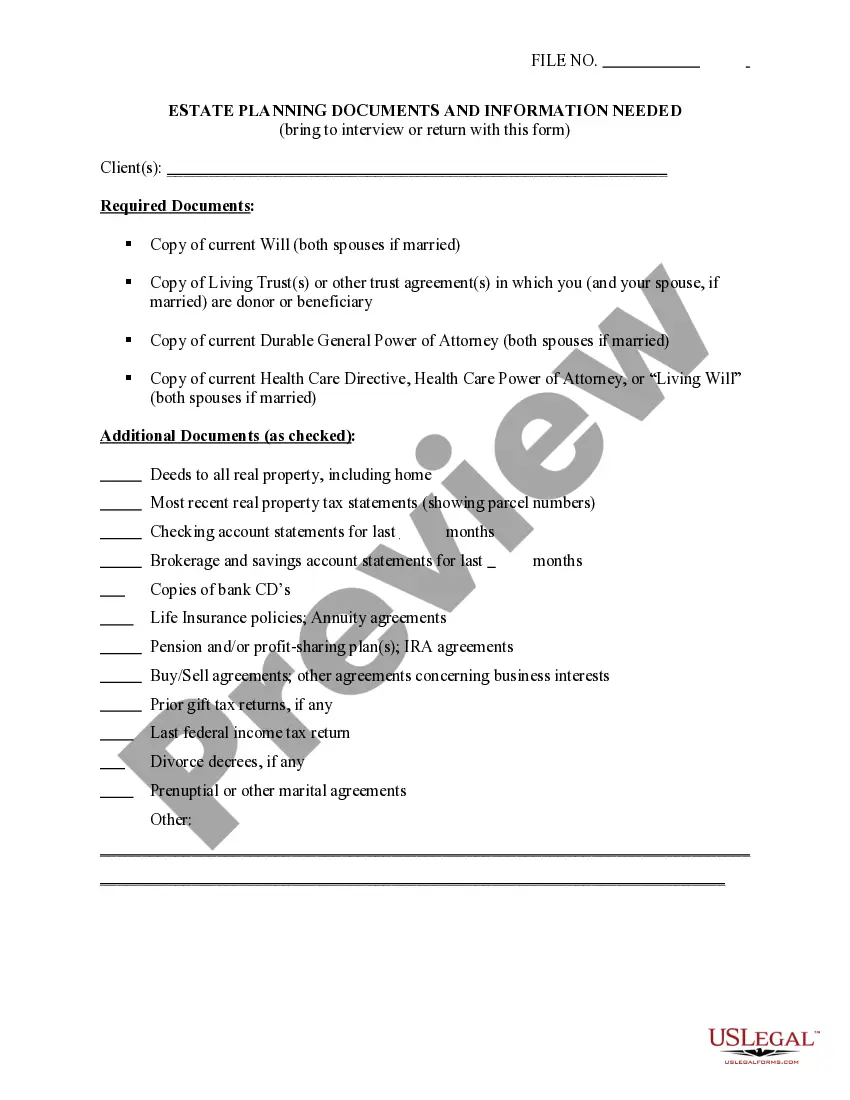
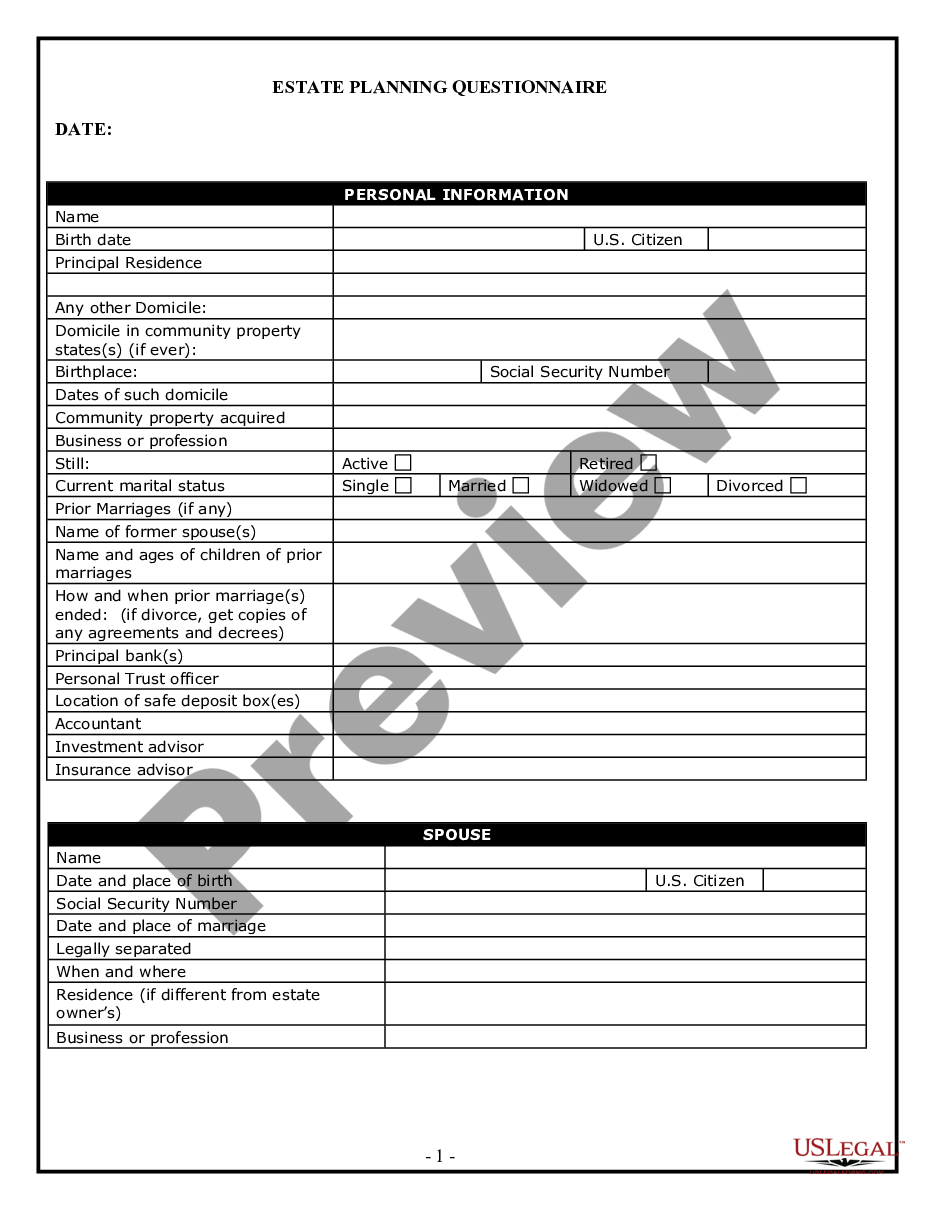
This questionnaire may also be used by an attorney as an important information gathering and issue identification tool when forming an attorney-client relationship with a new estate planning client. This form helps ensure thorough case preparation and effective evaluation of a new client's needs. It may be used by an attorney or new client to save on attorney fees related to initial interviews.
Choosing an executor is like picking the right captain for a ship. You want someone trustworthy, organized, and who understands your wishes. It’s vital they can steer the ship smoothly when the time comes.
Absolutely! Your estate plan can change as easily as the weather in Anchorage. Major life events like marriage, divorce, or having a child are great reasons to revisit your plans.
If you pass without an estate plan, the state steps in like the unwanted guest at a party. They’ll determine how your assets are distributed, which may not align with your wishes and could cause a family ruckus.
While you can’t dodge taxes like a game of hopscotch, there are ways to lessen the load. Utilizing trusts, gifting while you’re alive, and strategically passing your assets can help keep Uncle Sam at bay.
Short and sweet, yes! A will acts like a safety net for anything that doesn’t end up in your trust. It’s a good backup plan to make sure there’s no confusion about your wishes.
You’ll need a few key documents to cover all bases. This usually includes a will, a power of attorney, and a health care directive. Think of them as your trusty toolbox for ensuring everything runs smoothly.
Estate planning is like putting your ducks in a row for the future. It’s about making sure your assets are managed and distributed according to your wishes when you’re no longer around. It’s important because it keeps your loved ones out of a pickle.