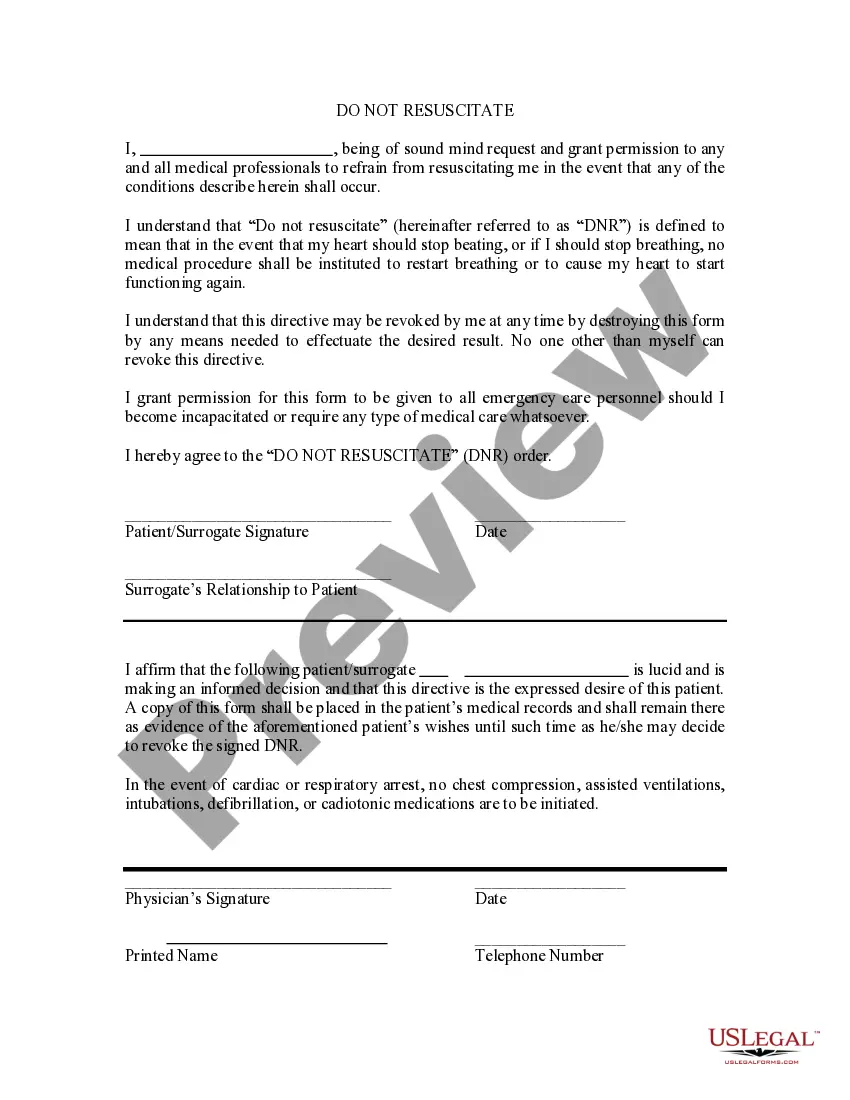
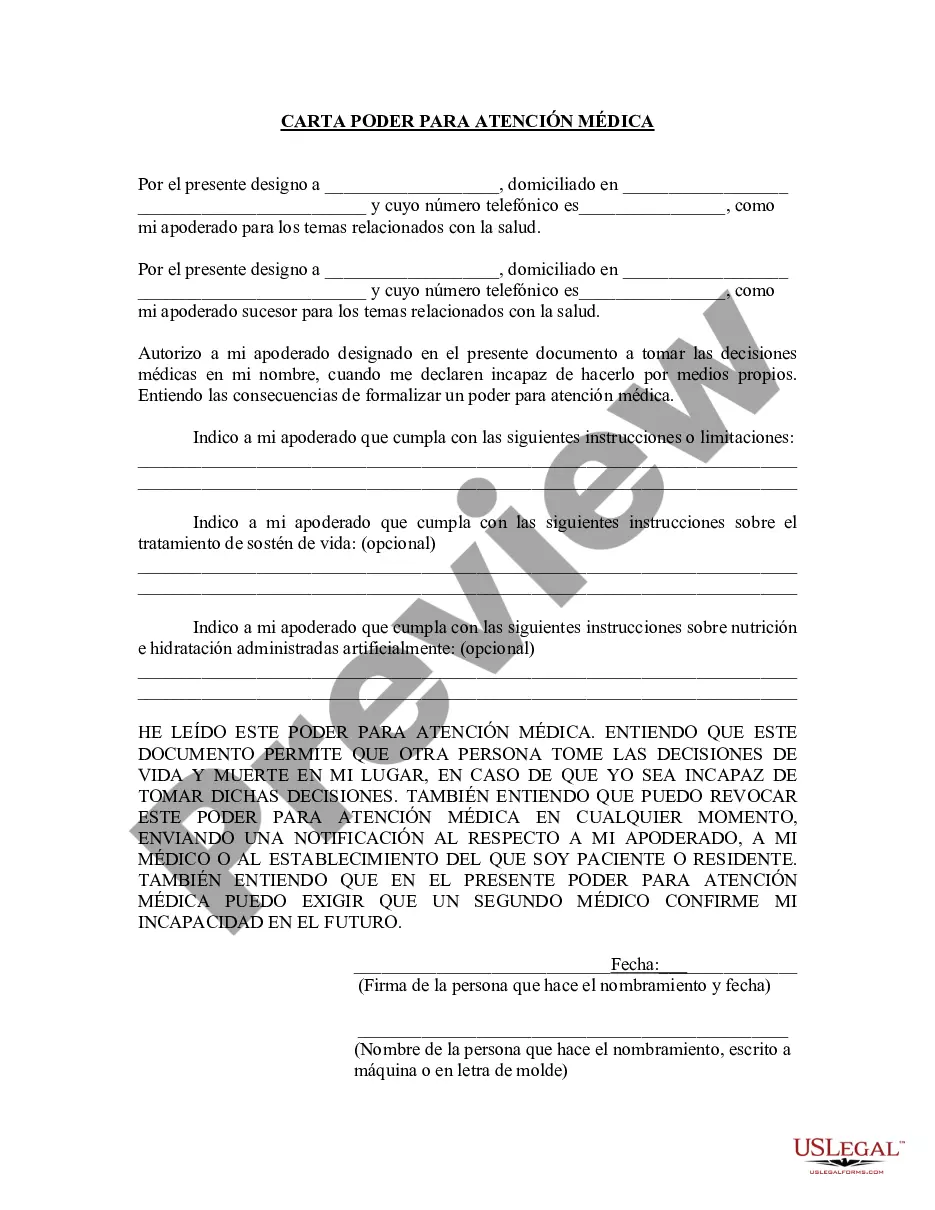
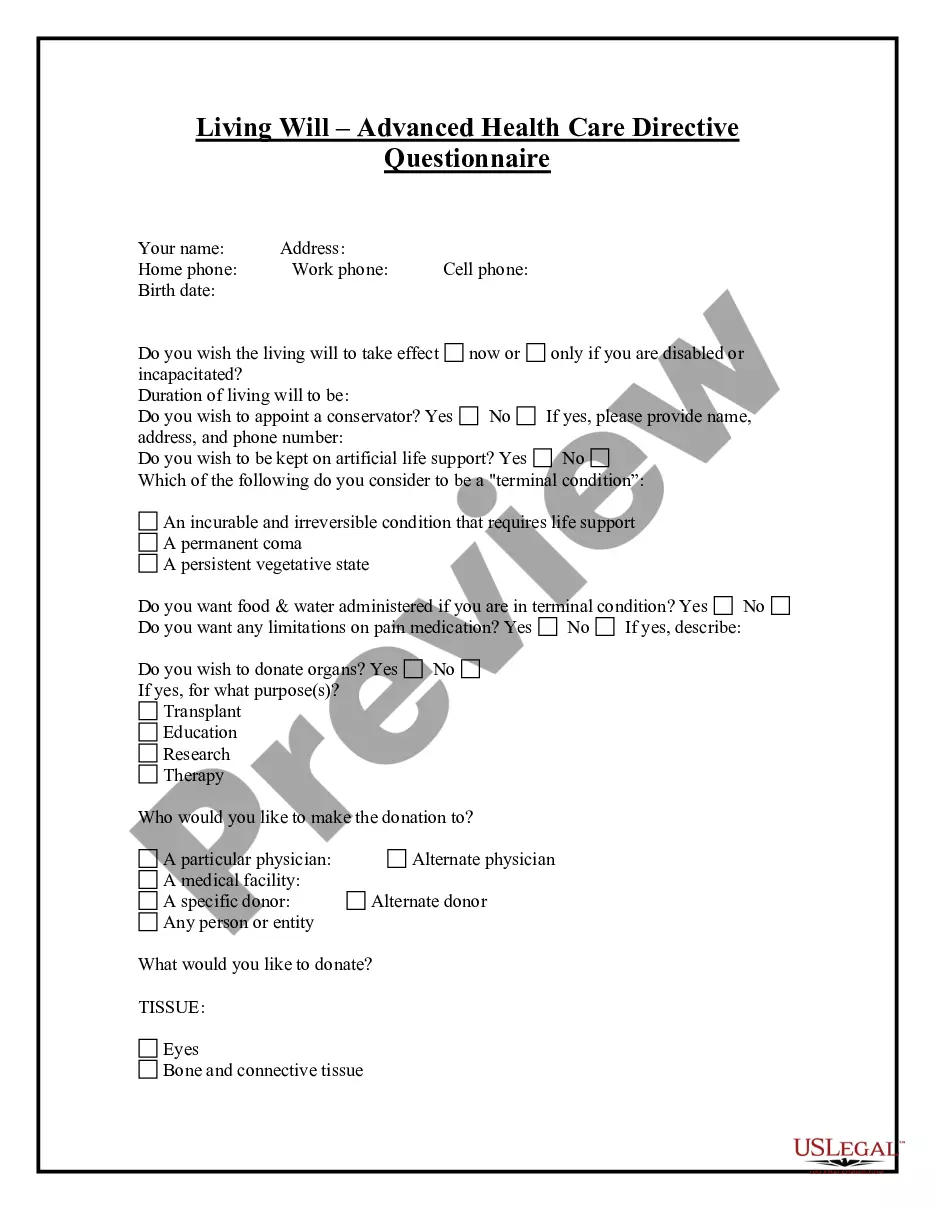
This is a form initiated by a patient requesting that he/she not be resuscitated should he/she stop breathing or should his/her heart stop beating. This form is also to be signed by a physician attesting to patient's wishes and to be placed in the patient's file.
No, a DNR order only pertains to resuscitation efforts. You can still receive all other medical treatments and care as needed.
If EMS personnel see a valid DNR order, they will honor it, meaning they won't perform CPR or other resuscitation efforts as instructed in the document.
Absolutely! You have the right to change or revoke your DNR order whenever you want. Just let your doctor or healthcare provider know.
Yes, a DNR order is valid in medical facilities like hospitals and nursing homes, as long as it meets the legal requirements.
You can get a DNR order by talking with your doctor, who can help you understand your options and fill out the necessary paperwork.
Typically, a DNR order can be requested by a patient or their legal representative, usually a family member or healthcare proxy when the patient is unable to speak for themselves.
A DNR order is a legal document that tells medical staff not to perform CPR or other life-saving measures if your heart stops or if you stop breathing.