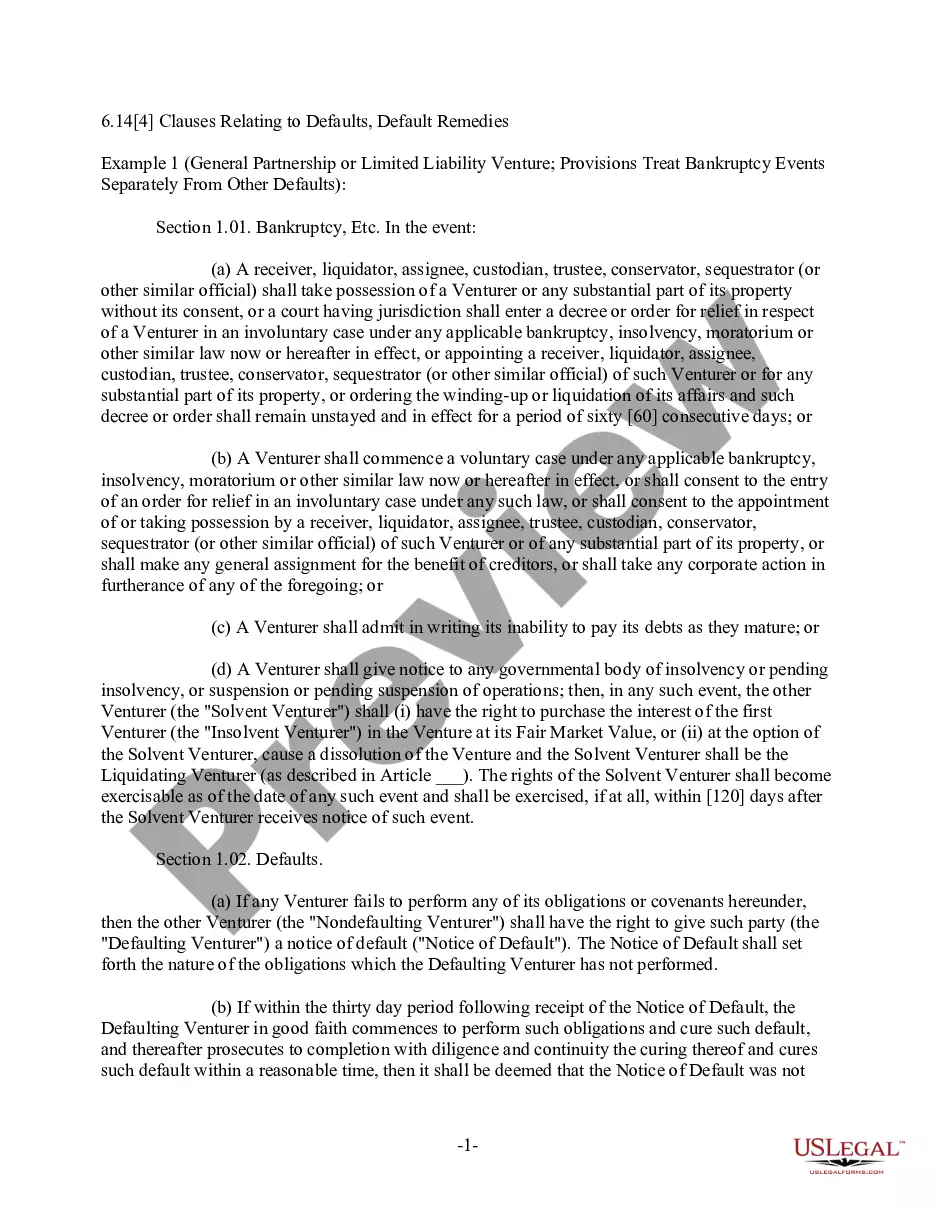
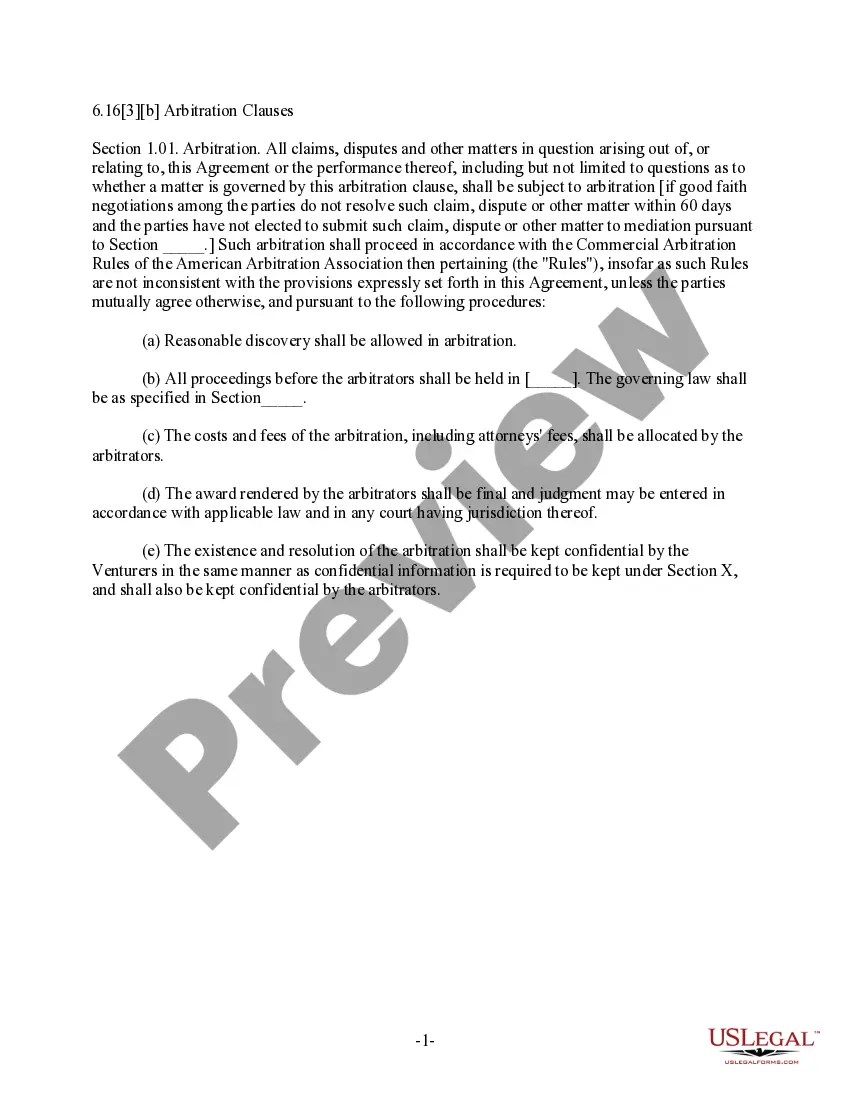
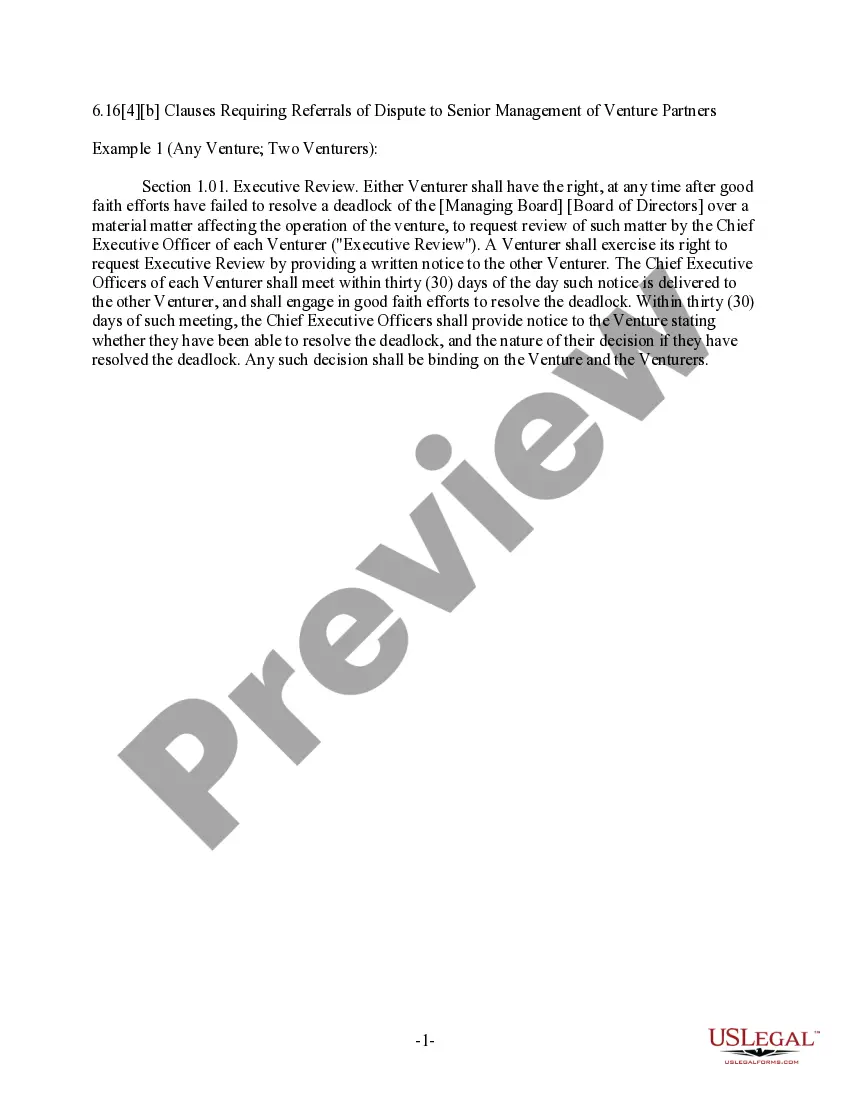
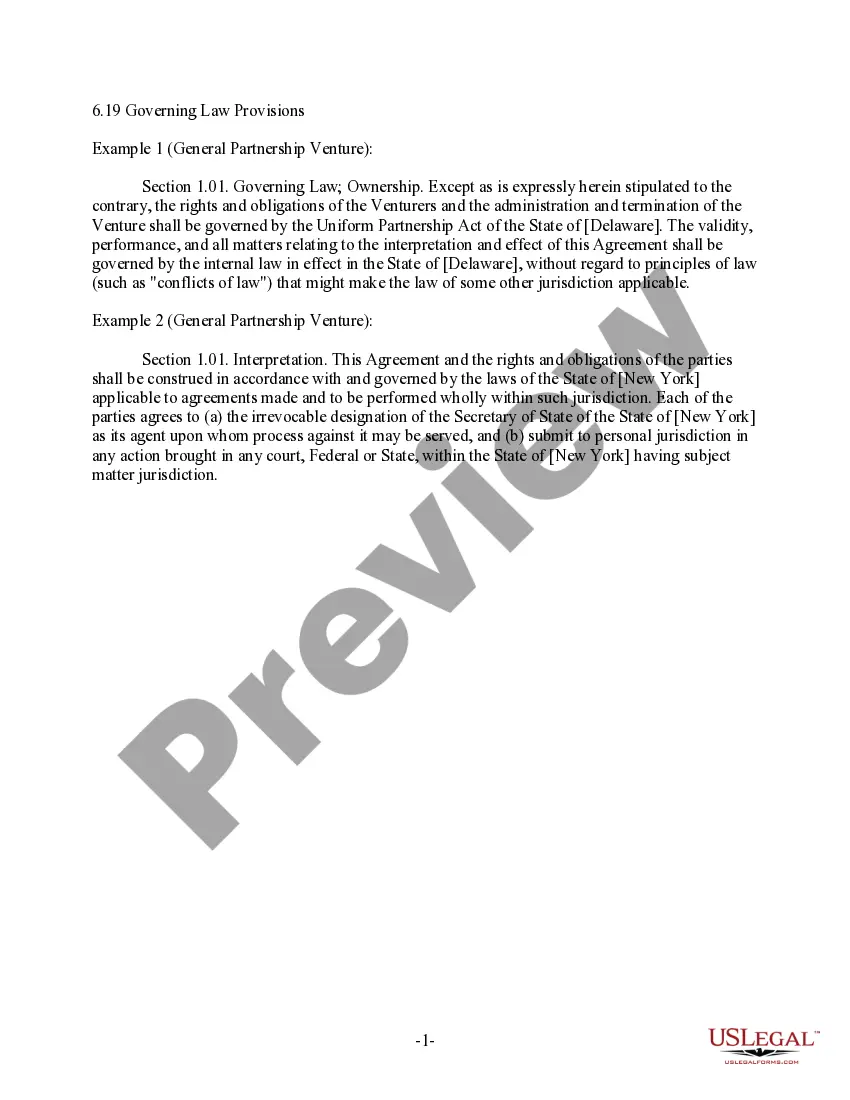
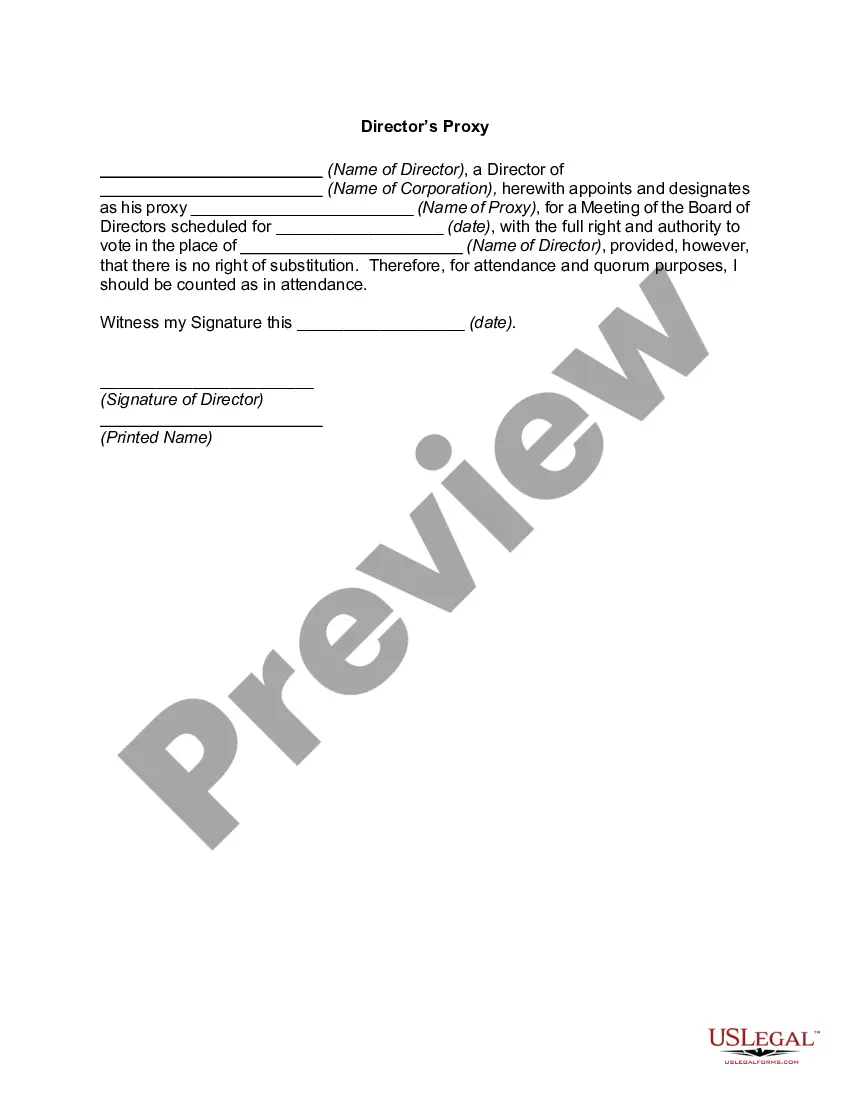
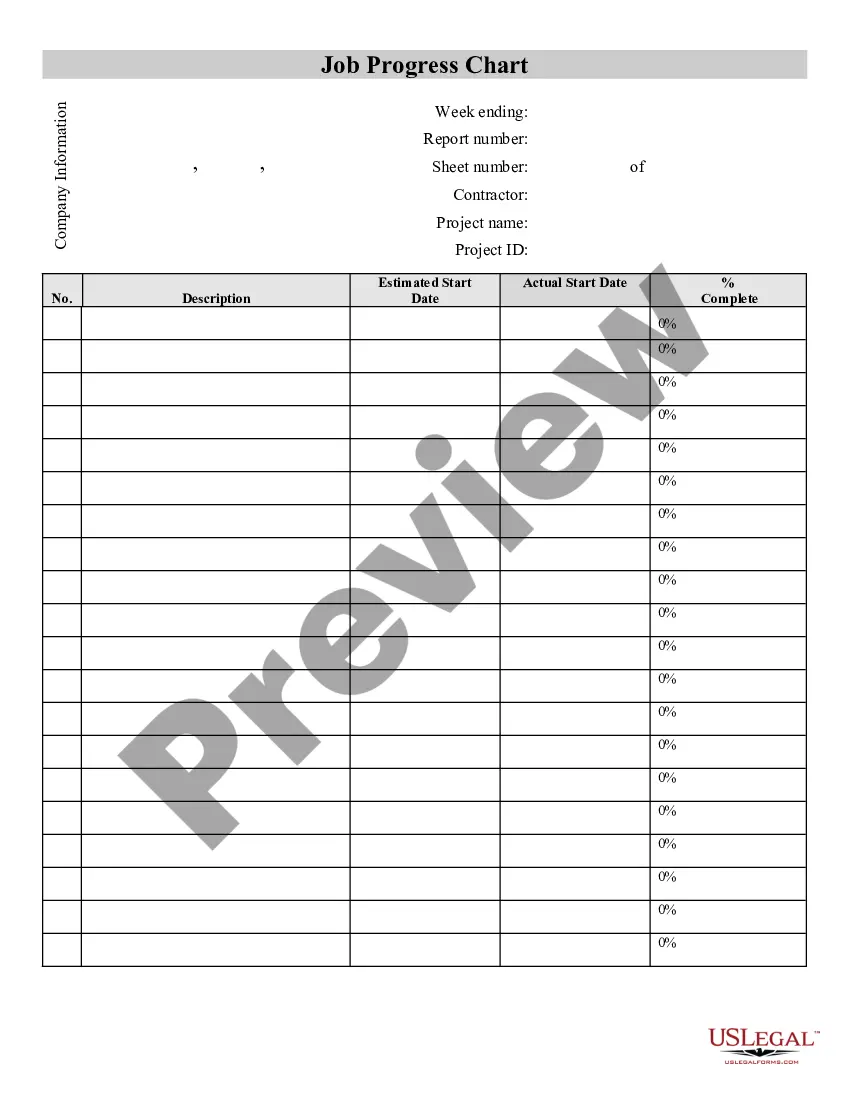
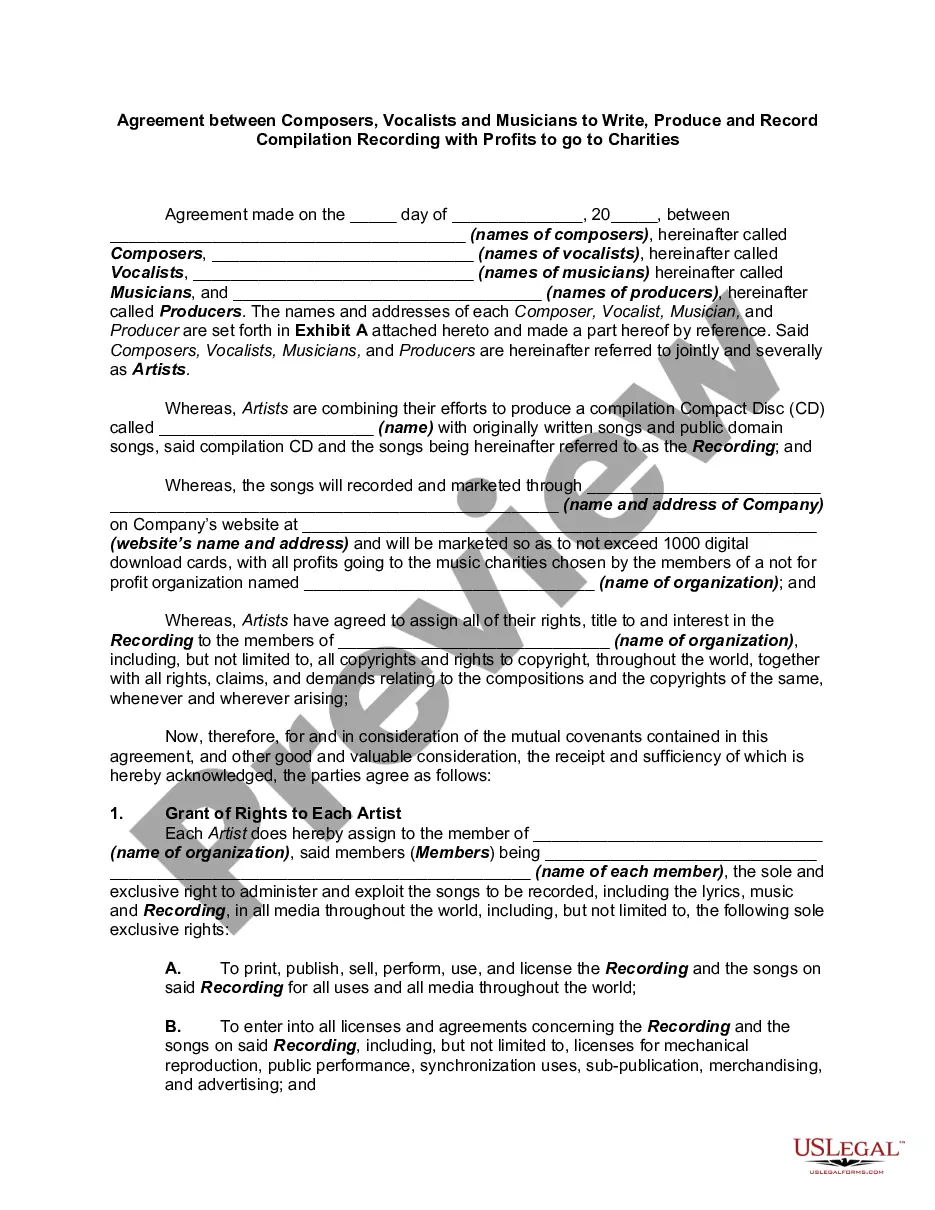
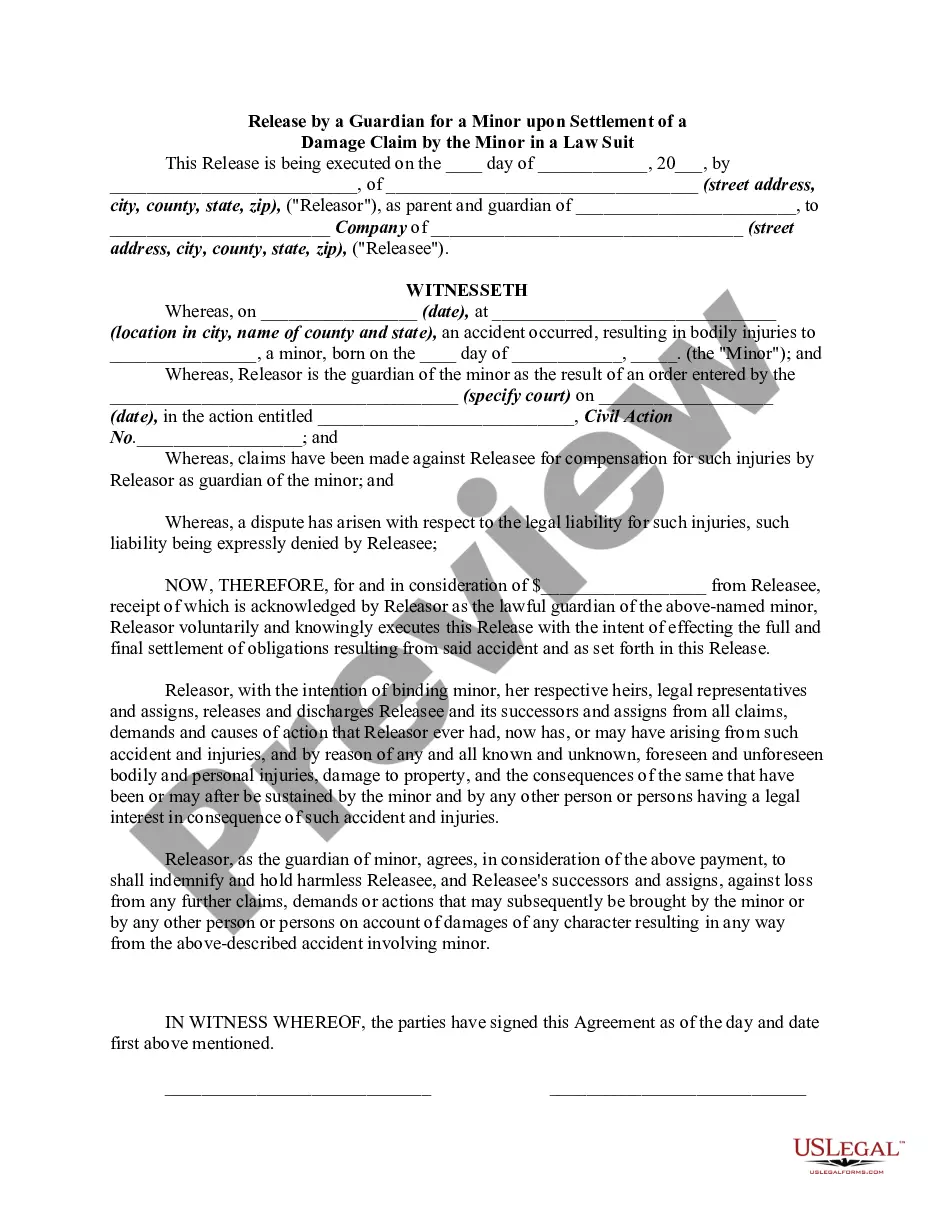
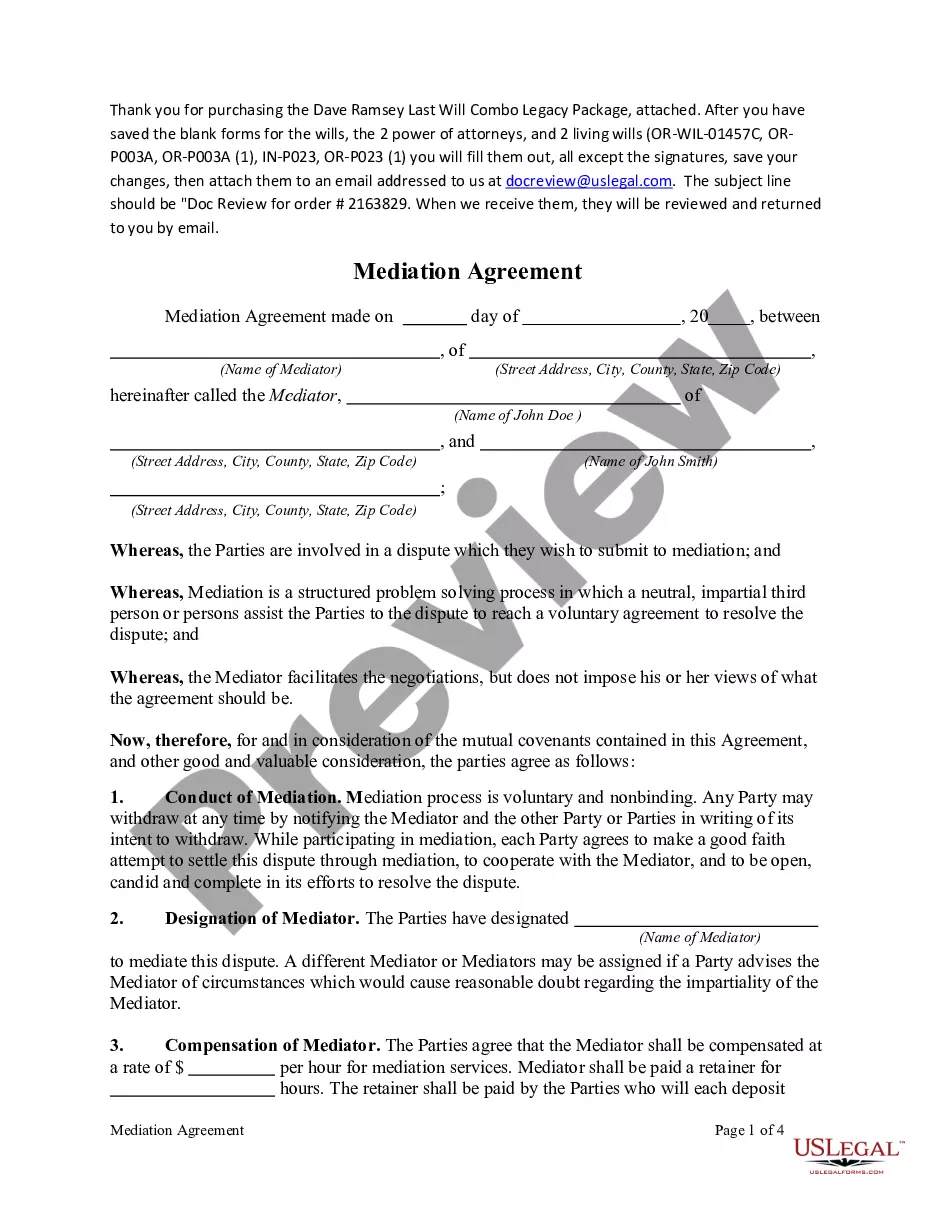
This form is a model adaptable for use in partnership matters. Adapt the form to your specific needs and fill in the information. Don't reinvent the wheel, save time and money.
If mediation doesn’t lead to an agreement, you still have other options. You can take the matter to court or explore other dispute resolution methods. The key is that mediation gave it a fair shot before going down a tougher path.
While it’s not a must to have a lawyer for mediation, having legal advice can help you understand your rights and options better. It's always good to have a trusted guide in your corner.
Yes, mediation is typically a private matter. What’s discussed behind those closed doors stays between the parties and the mediator, making it a safe space to air out concerns without it becoming public.
If one party ignores the mediation clause, the other party can remind them of the agreement. If they still refuse, it might lead them to court, but the initial intention was to avoid that rocky road.
Absolutely! You can add a mediation clause to most contracts. It’s like adding a safety net, ensuring that if trouble brews, you have a plan in place to resolve things smoothly.
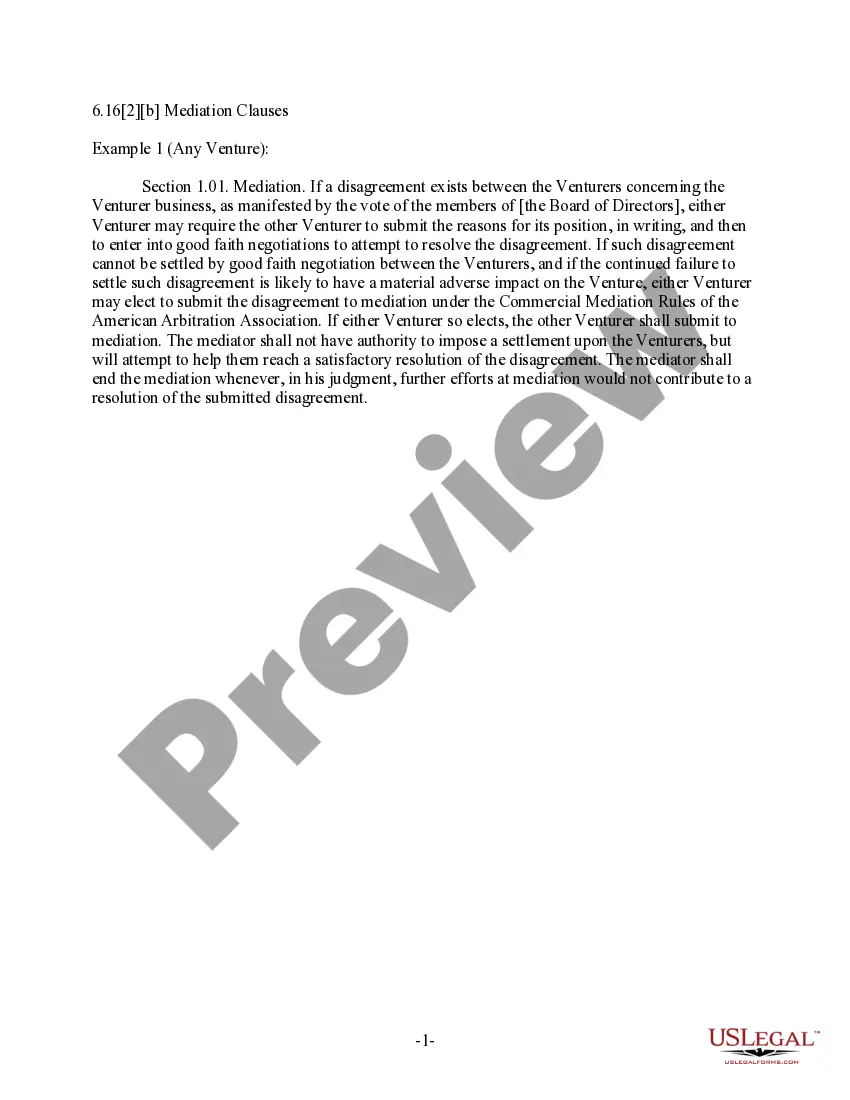
A mediation clause outlines the process for solving disputes. Typically, if a problem arises, both parties agree to meet with a neutral third party, called a mediator, who helps them talk it out and find common ground.
A mediation clause is a part of a contract that tells parties to resolve their disputes through mediation before going to court. It’s important in Long Beach because it helps people settle issues peacefully without the hassle of a courtroom.