You can check your property deed or consult local property records to find out if there is a cathodic protection easement. Contacting local authorities can also shed light on any easements.
Building or using land with a cathodic protection easement is possible, but typically there are restrictions to ensure access for maintenance and prevent interference with the system.
The party that owns or operates the pipeline or structure is generally responsible for maintaining the cathodic protection system, ensuring it works correctly over time.
Cathodic protection easements are usually found along the routes of pipelines or near metal structures that need protection, often in areas where corrosion is a concern.
Cathodic protection works by using electrical currents to counteract the corrosion process. Think of it as giving your metal structures a protective shield!
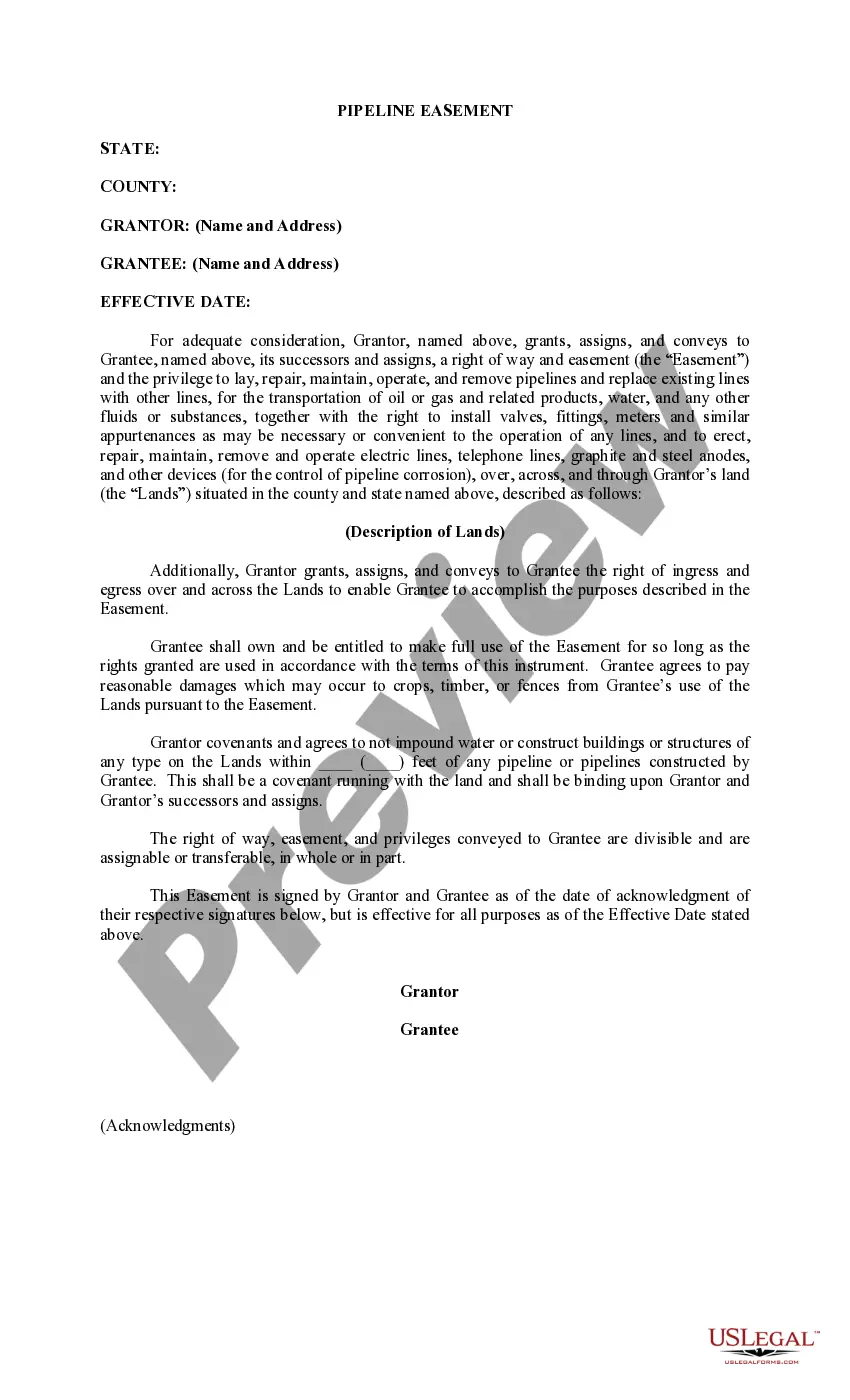
You need a cathodic protection easement to ensure the safety and longevity of metal structures like pipelines. It helps prevent damage that could lead to leaks or failures.
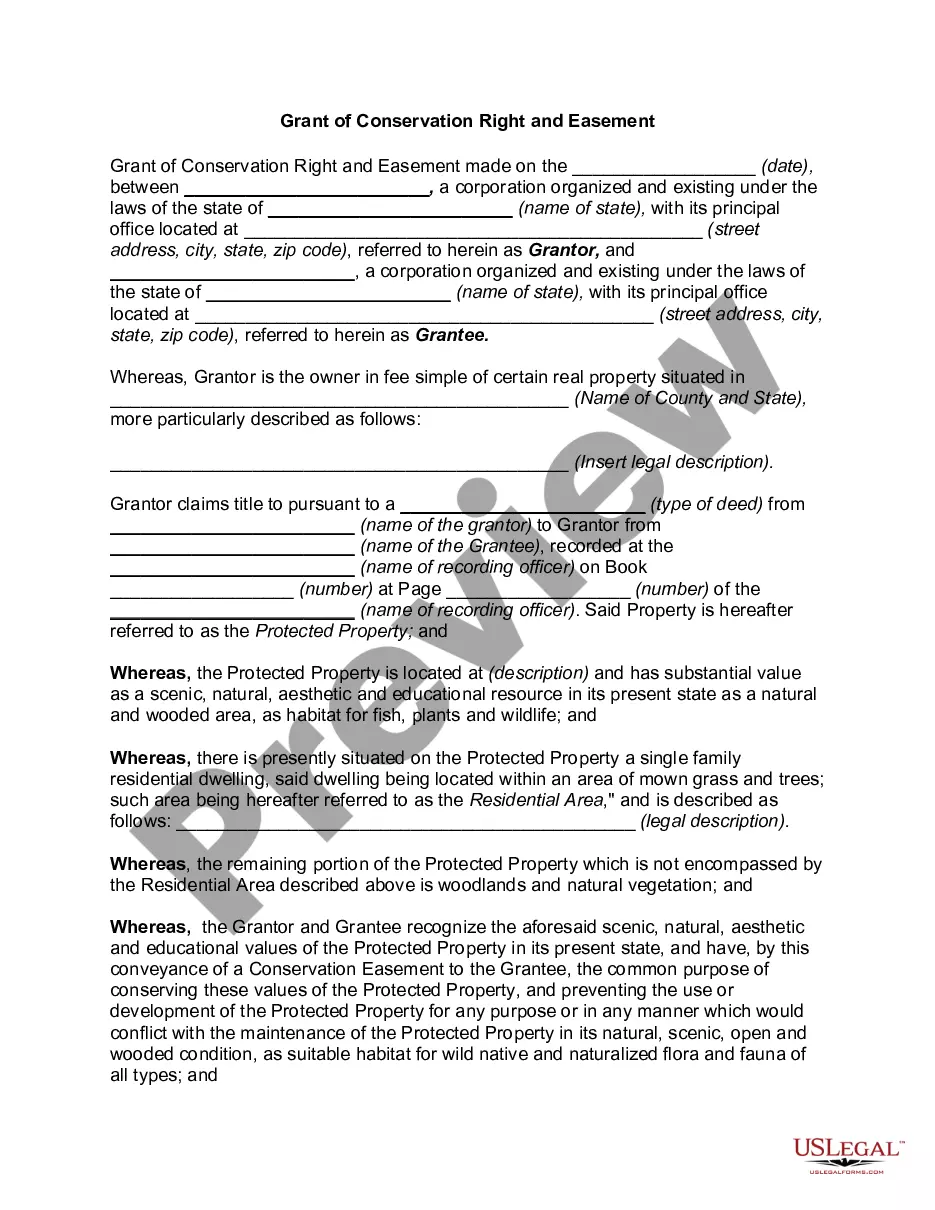
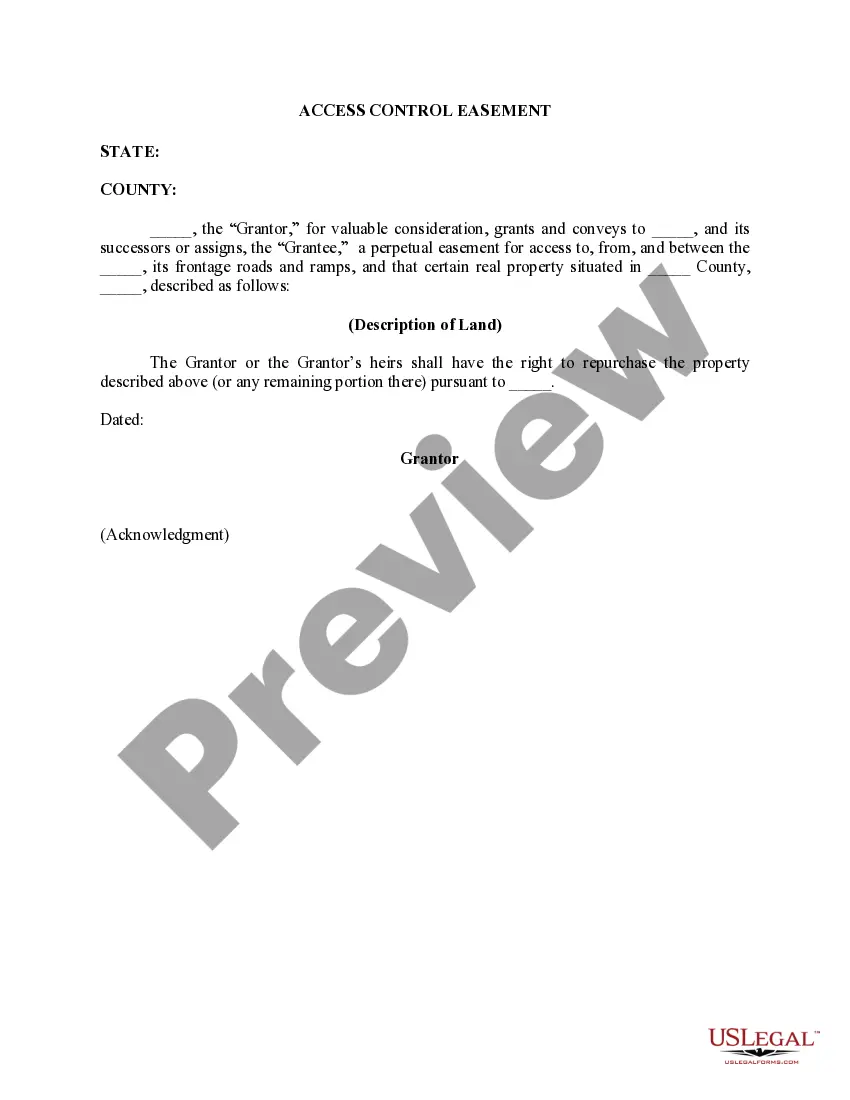
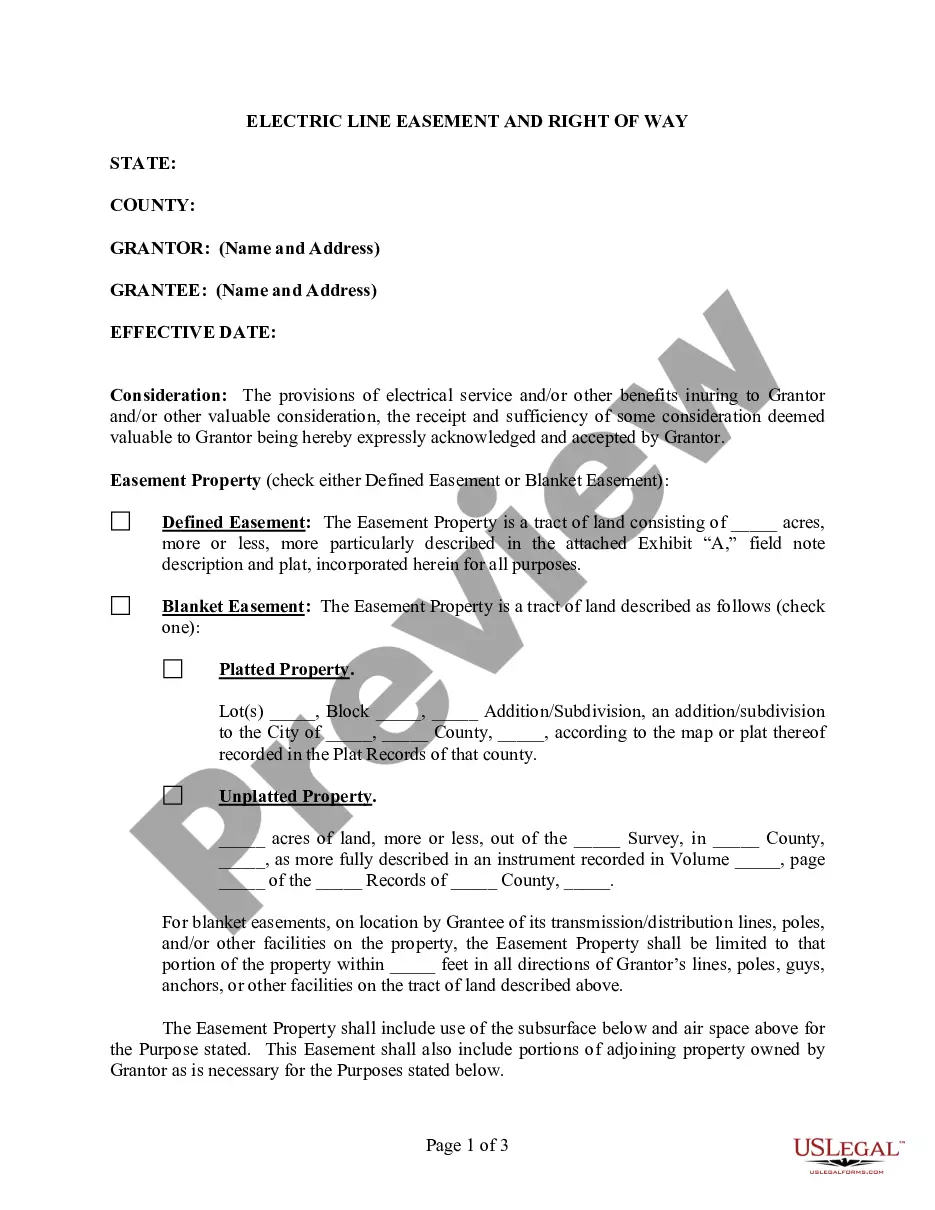
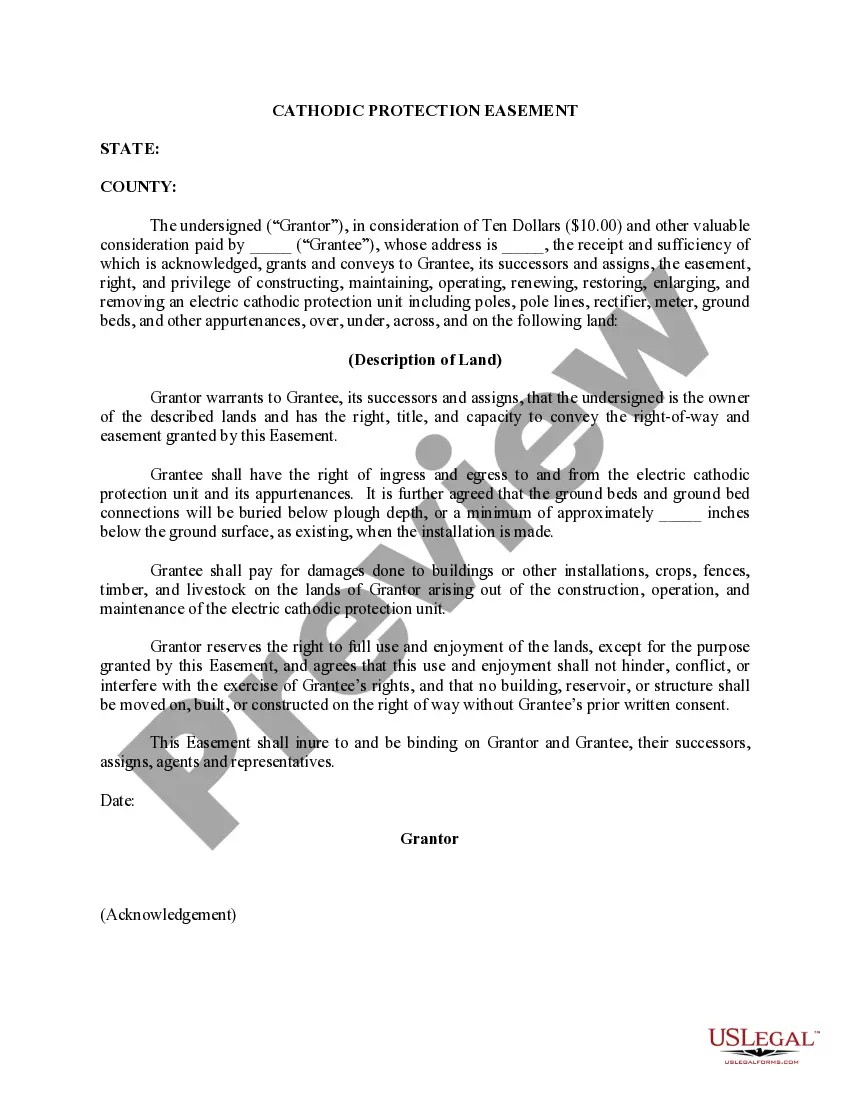
A cathodic protection easement is a legal agreement that allows for the installation and maintenance of systems that protect pipelines and other metal structures from corrosion.