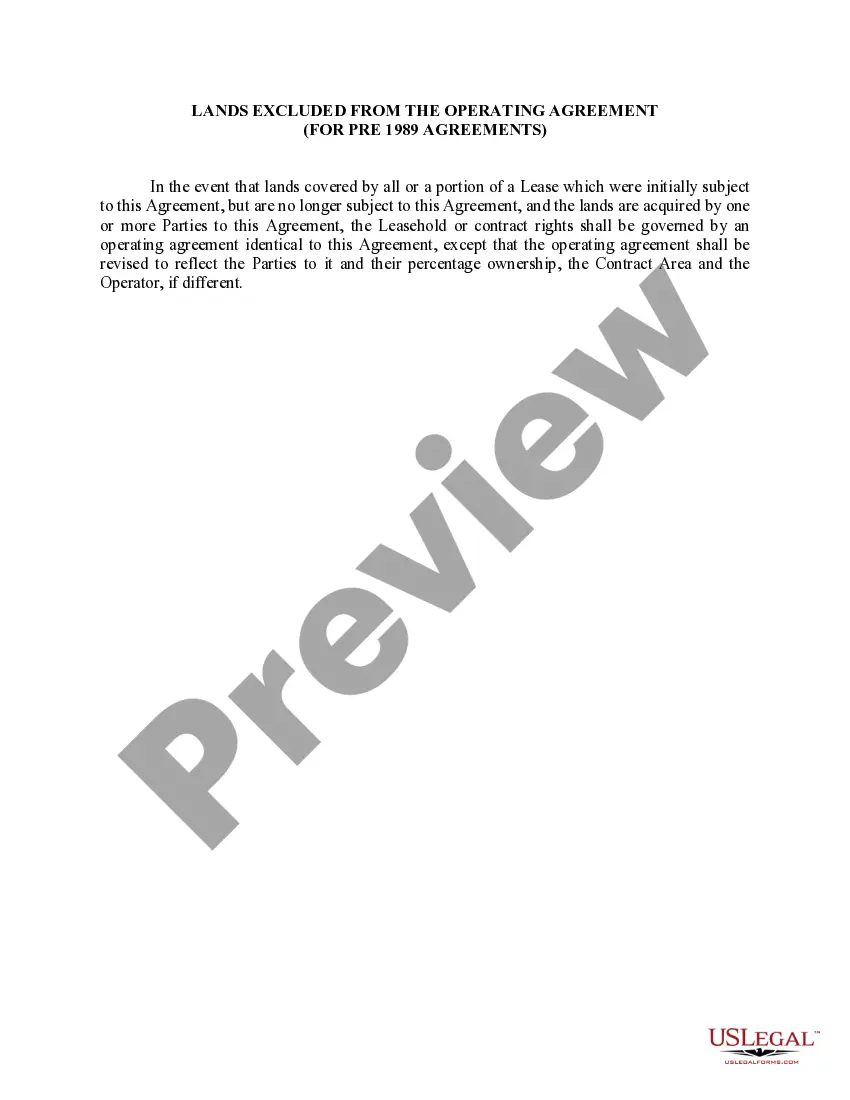
This is a paragraph that sets out the Agreement that will be in force should some of the lands covered in the original Agreement no longer be subject to the Agreement, due to the lands being acquired by one or more Parties.
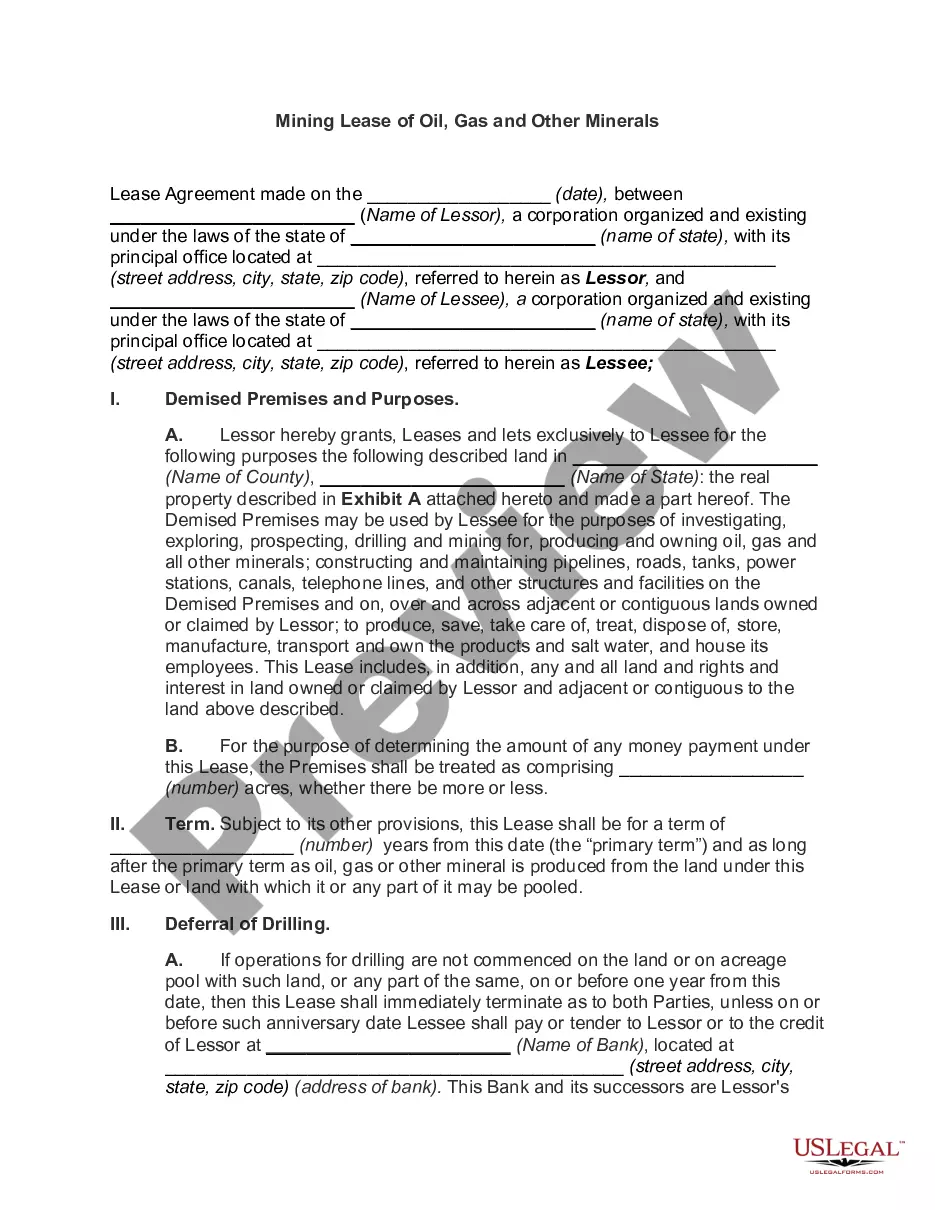
Using excluded land without permission can lead to various consequences, such as fines or legal action. It’s best to play by the rules and ask first to avoid any troubles.
The decision on which lands are excluded typically comes from negotiations among stakeholders, like government bodies, landowners, and other involved parties. It's a bit of a tug-of-war sometimes.
Often, excluded lands may still have some protections, but they might not be as comprehensive as those under the operating agreement. It’s like keeping an umbrella nearby, but not using it every time it drizzles.
When lands are excluded, it can affect local residents in various ways, like limiting access to resources or opportunities for development. It’s essential for residents to stay informed about these changes.
Yes, in some cases, excluded lands can be considered for inclusion in the operating agreement later on. It often depends on new agreements or changes in regulations.
To find out if a piece of land is excluded, you’ll need to check the official documents related to the operating agreement. They usually have a list or map showing what's included and what isn't.
When lands are excluded from the operating agreement, it simply means those areas are not covered by the rules and guidelines of the agreement. It’s like saying they are off the table for discussion.