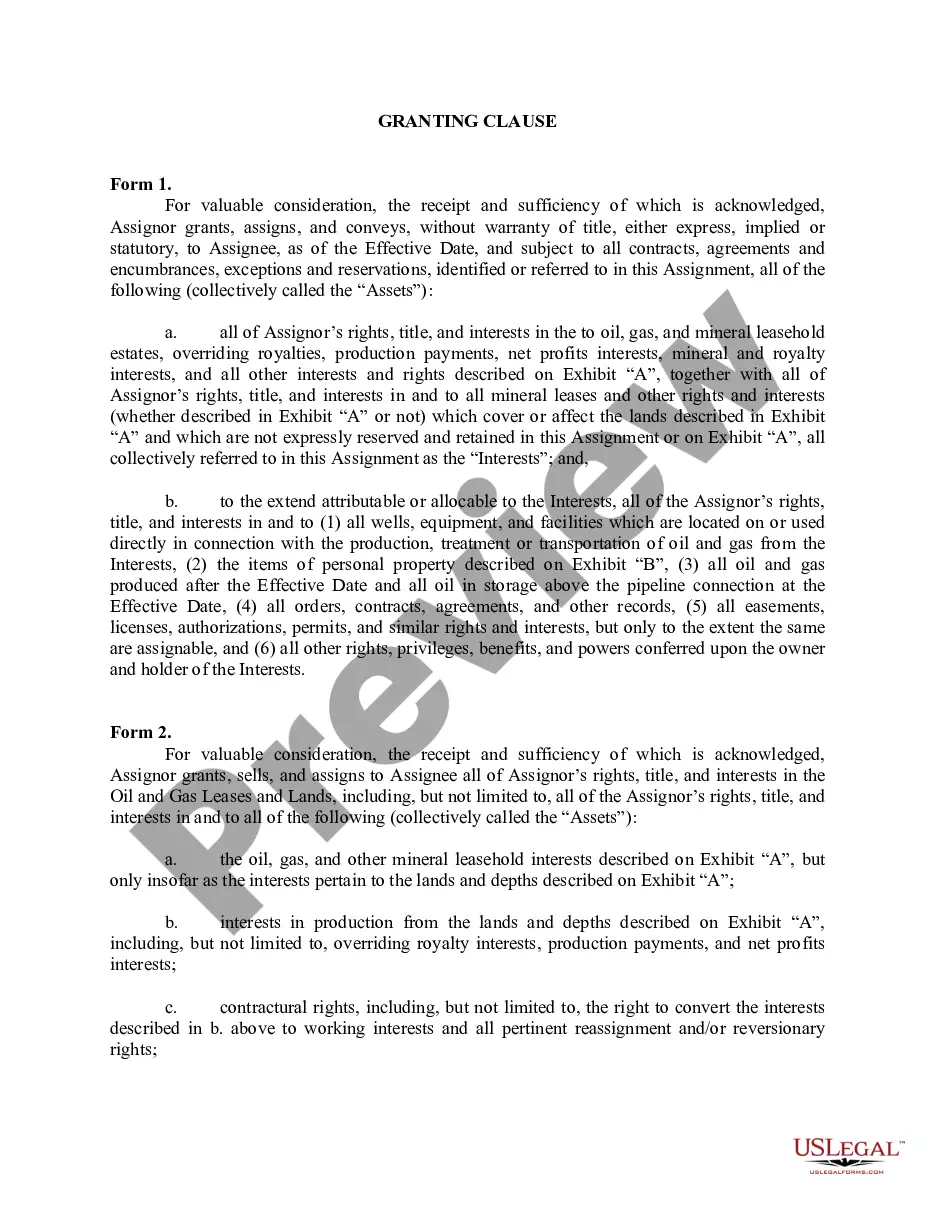
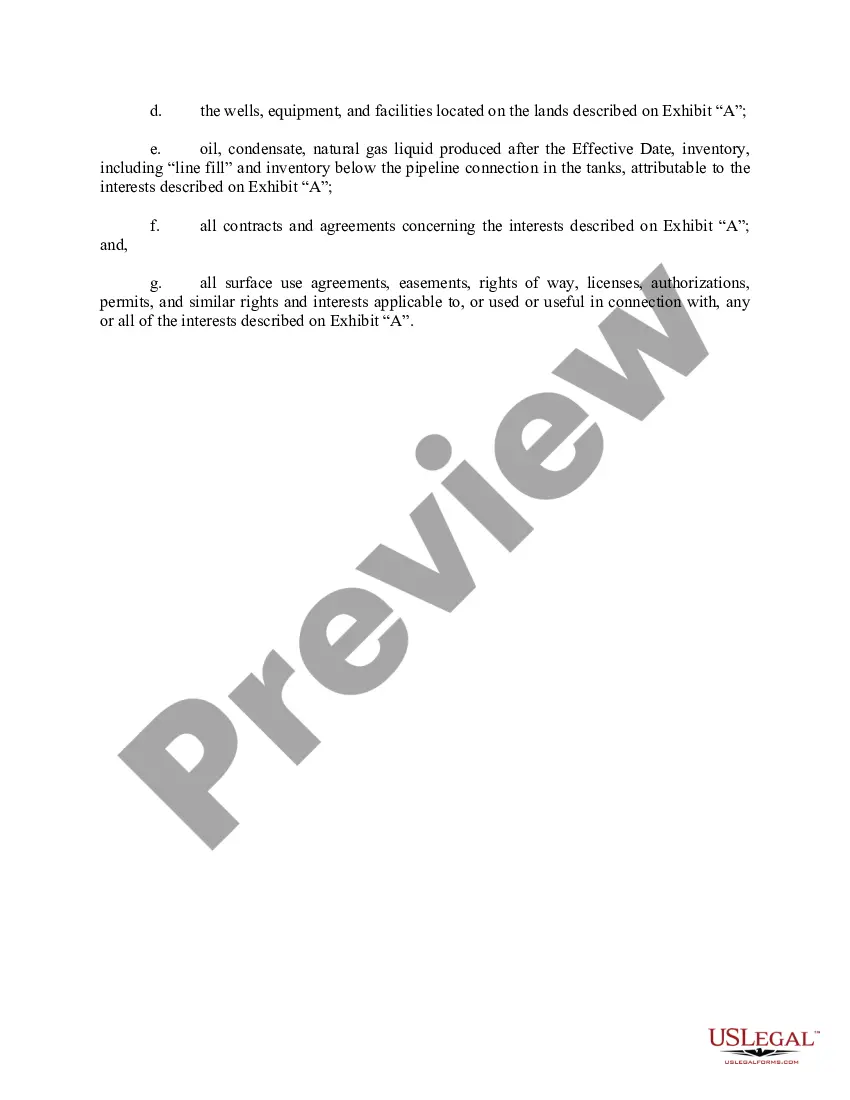
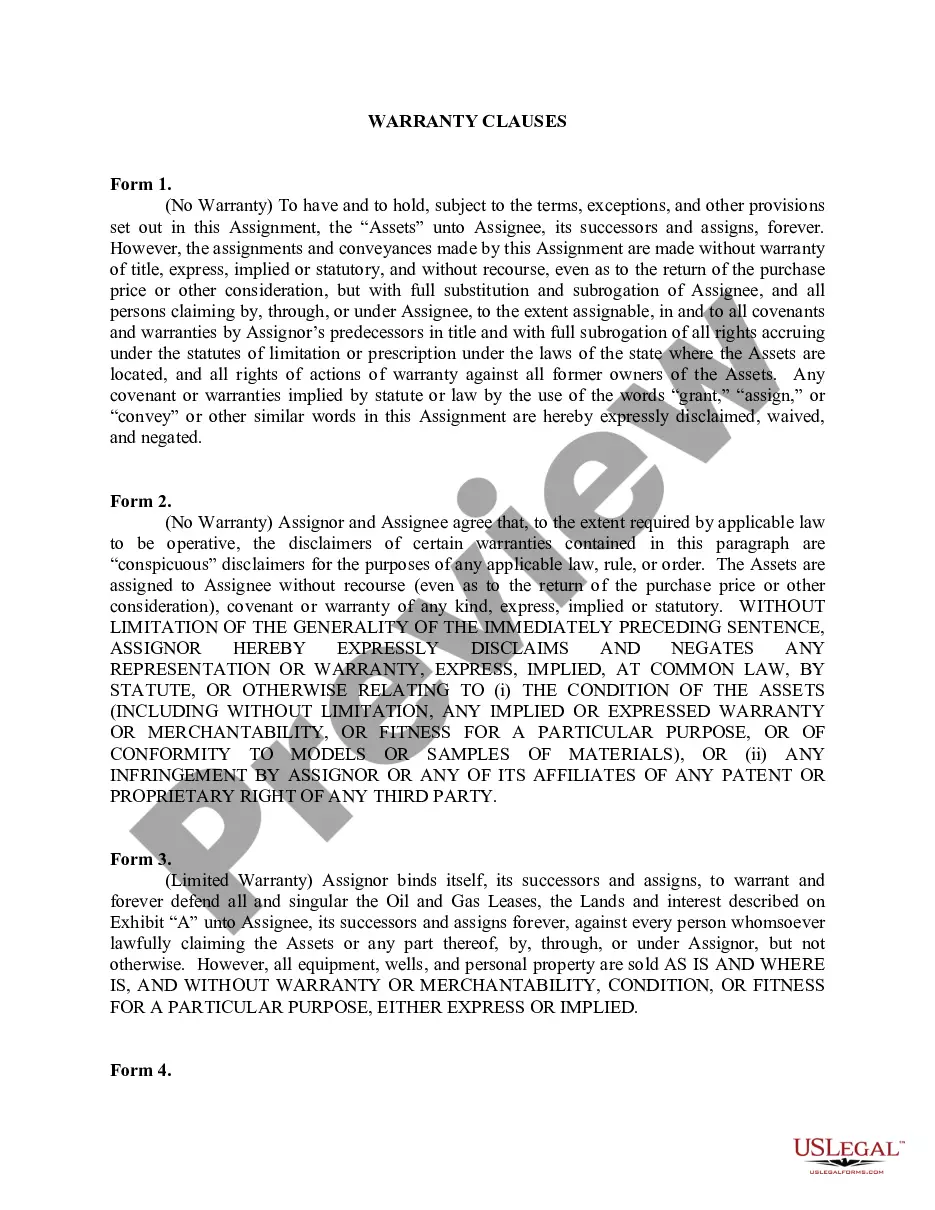
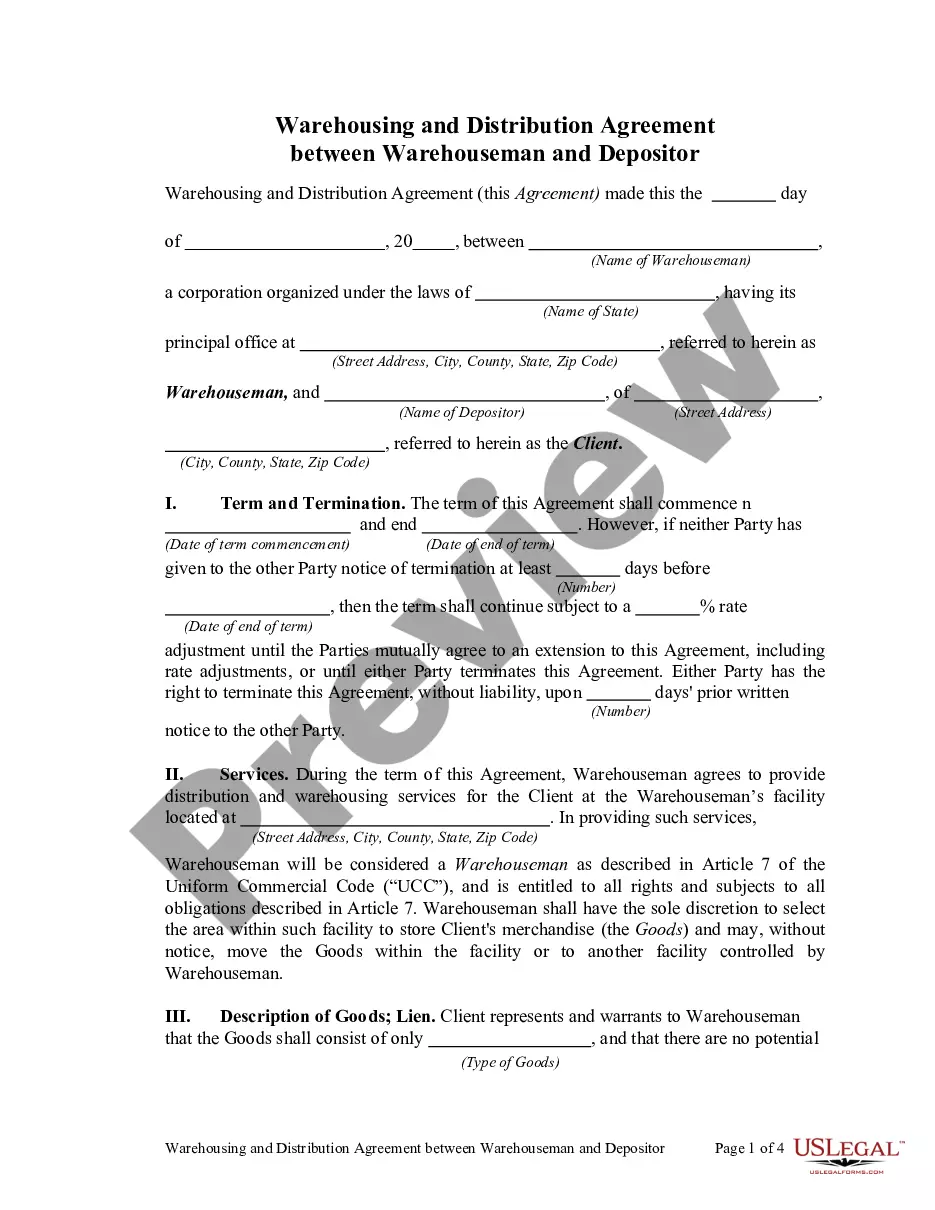
The Granting Clause form, the the receipt and sufficiency of which is acknowledged, assignor grants, assigns, and conveys, without warranty of title, either express, implied or statutory, to assignee.
If you feel that way, you can voice your concerns at city meetings or talk to local leaders. It’s important to speak up; after all, a community thrives when everyone has a say!
You can usually find the granting clause in property records at the local government office or online. It's like digging through a treasure chest to find the key to your property rights.
Yes, it can change! As the city grows or as needs evolve, the granting clause might be updated. It’s similar to revisiting a game’s rulebook to make sure it still works for everyone.
Not necessarily! Different areas might have different clauses depending on zoning laws and development plans. It’s kind of like each neighborhood having its own clubhouse rules.
The granting clause directs how land can be used, ensuring everything goes according to the city’s plans. It keeps things organized, like ensuring everyone plays by the same set of rules.
It's important because it outlines what you can and can't do with your property. Think of it as rules for the road, helping you navigate your rights as a homeowner.
The granting clause is a part of the local government documents that describes how property rights and responsibilities are given to the city. It's like having a deed that lays out the rules for owning and using your land.