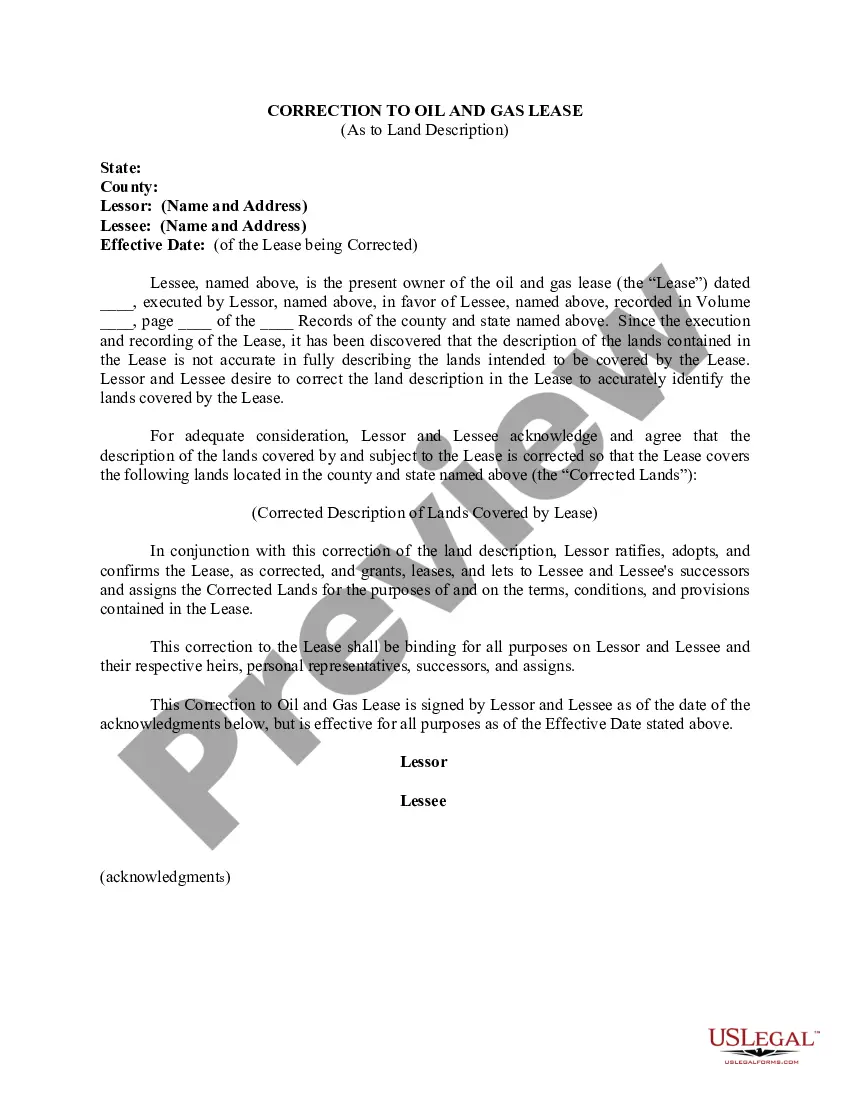
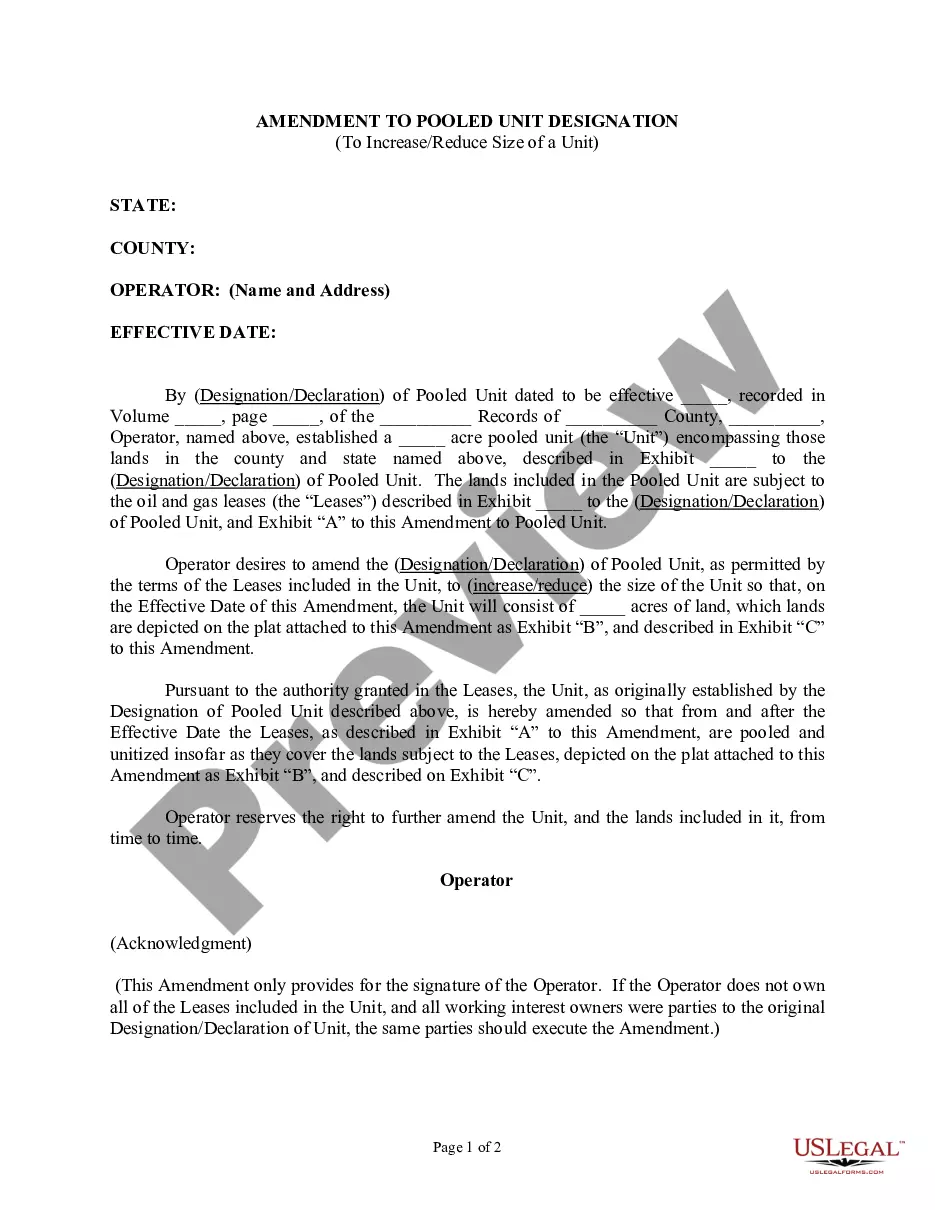
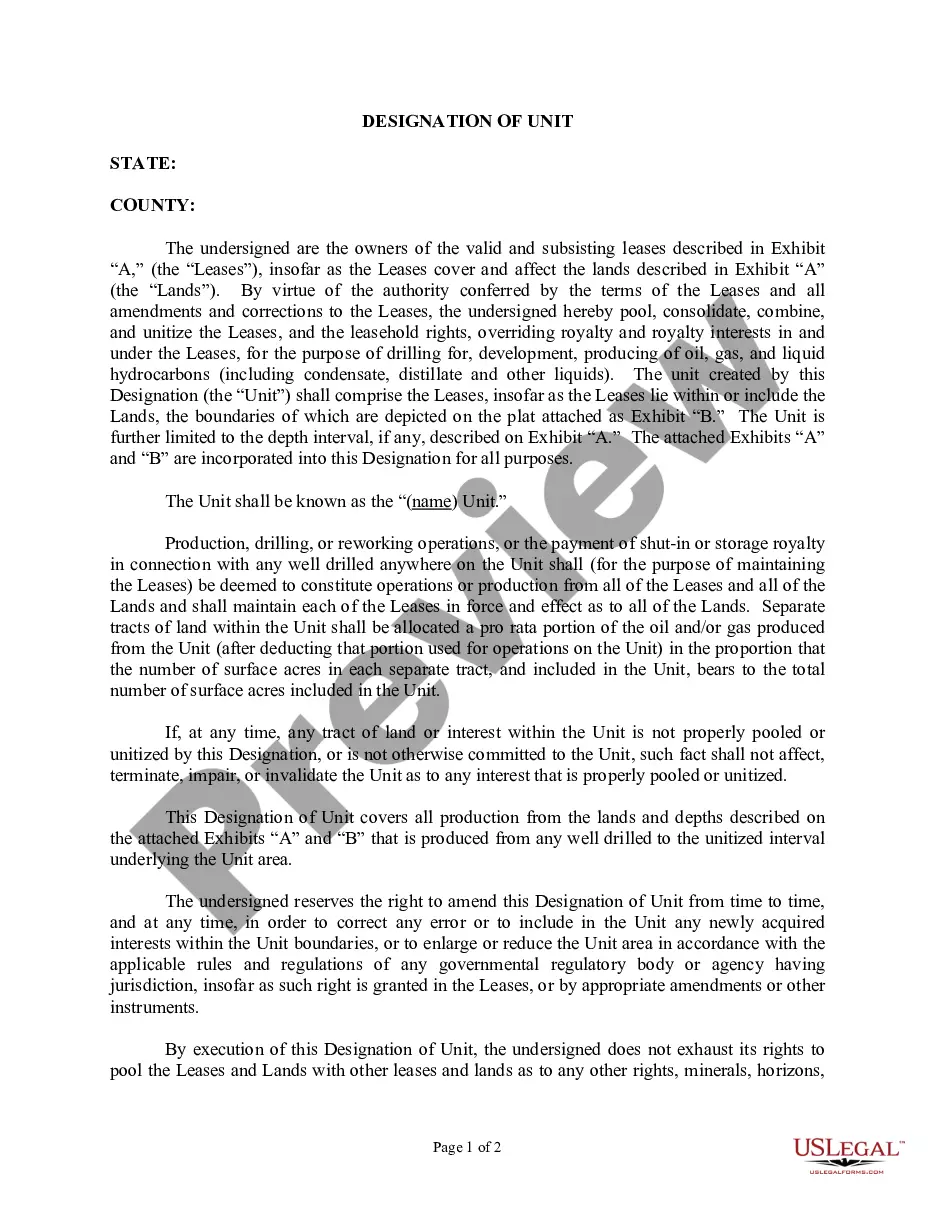
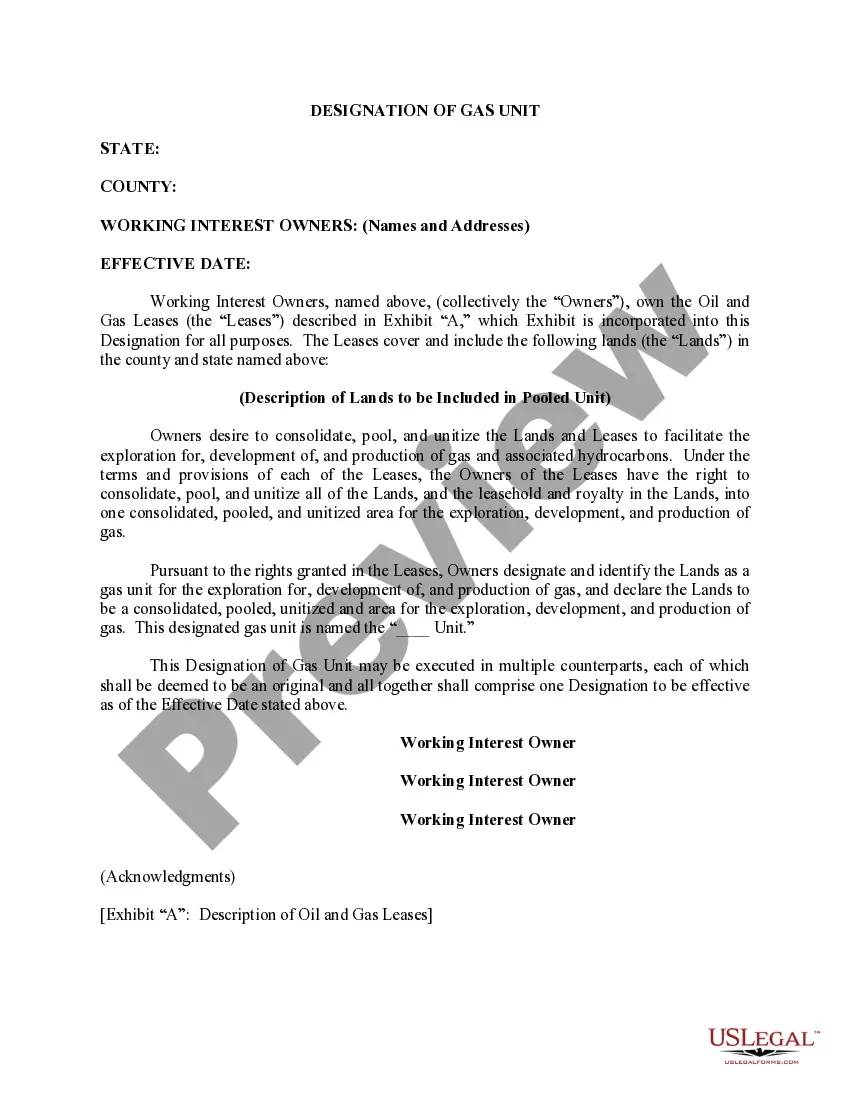
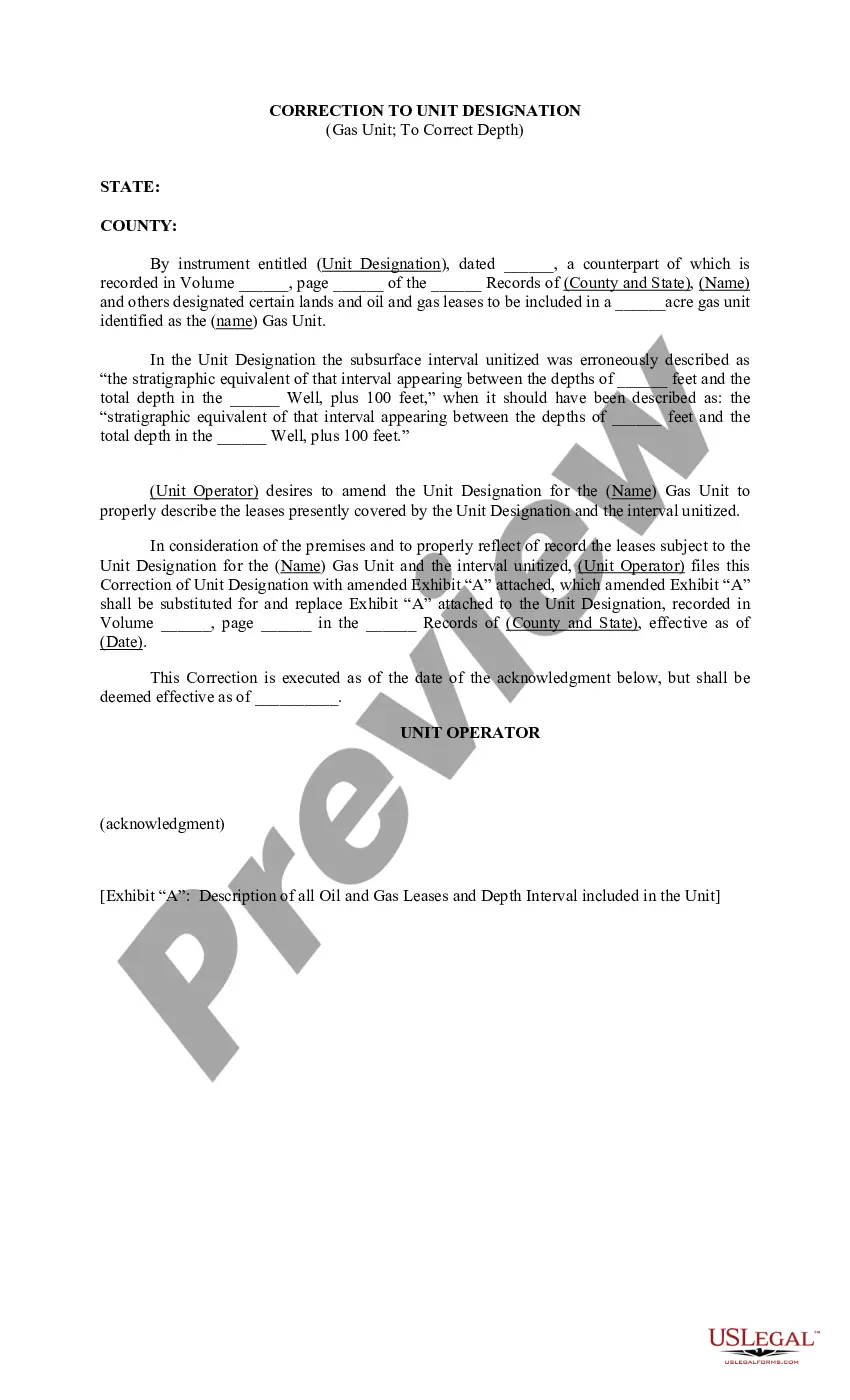
This form is used by a Unit Operator to amend the Unit Designation to properly describe the leases covered by the original Unit Designation, and the interval unitized.
If you let it slide, you might run into trouble later, like potential legal issues when selling your property or problems proving your ownership rights.
It shouldn’t change your property tax amount, but it’s wise to check with the tax assessor to make sure everything stays in the clear.
The timeline can vary, but typically, you’re looking at a few weeks to a couple of months depending on the complexity of your case.
You can handle it on your own, but having a professional on your side can smooth the process and help you avoid any bumps in the road.
Gather all necessary documents related to your property, including your deed, tax records, and any correspondence that might help clarify your case.
If you notice discrepancies in your property documents or if your unit is listed incorrectly in public records, it’s a good idea to look into correcting the designation.
Correcting unit designations ensures that properties are accurately identified, which helps avoid any confusion down the line when it comes to ownership and property rights.