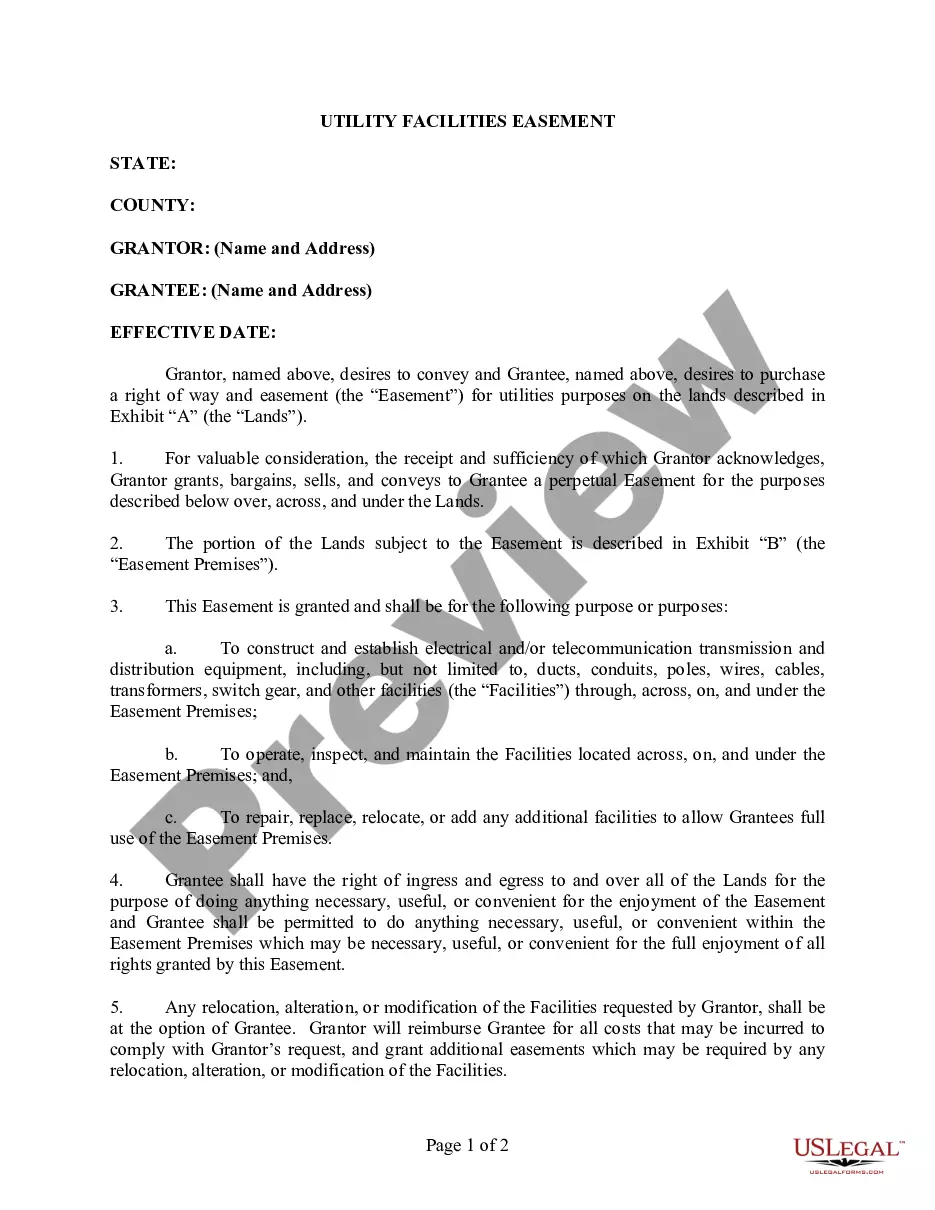
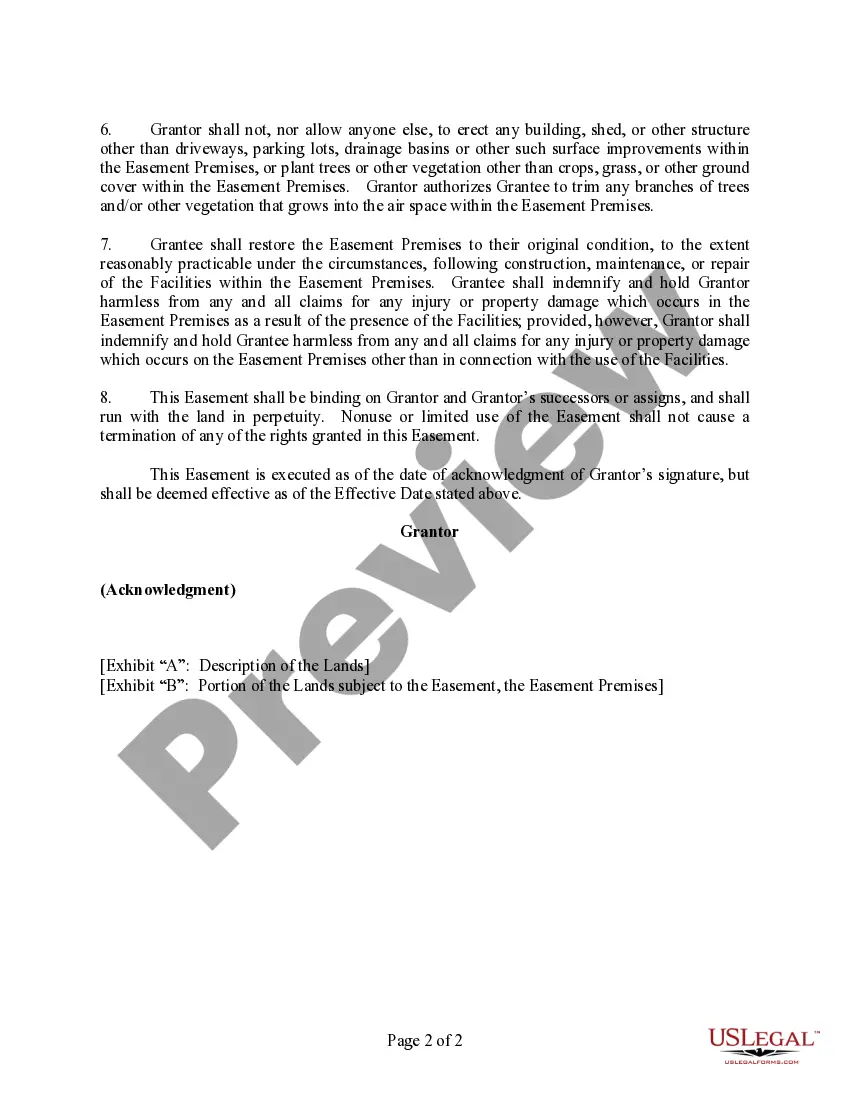
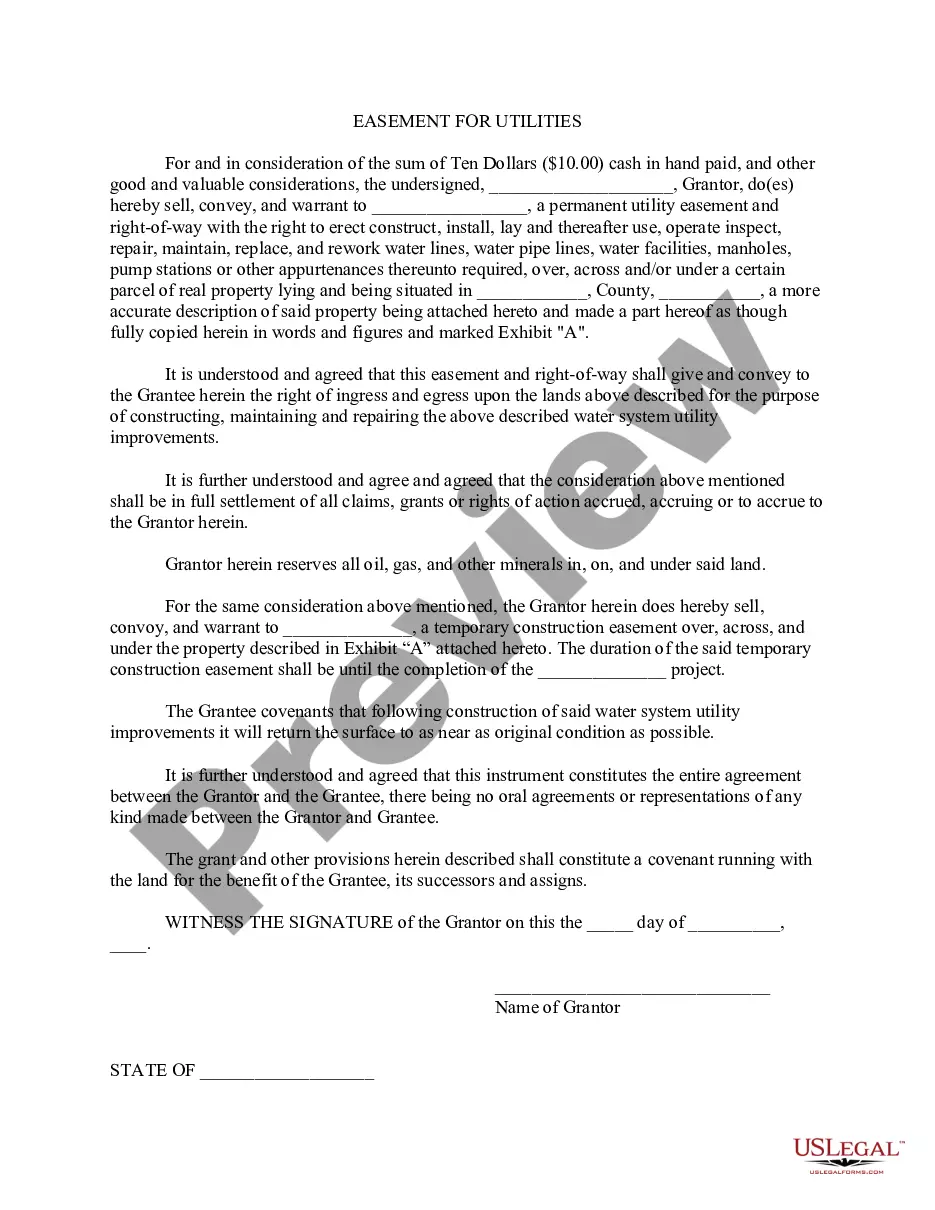
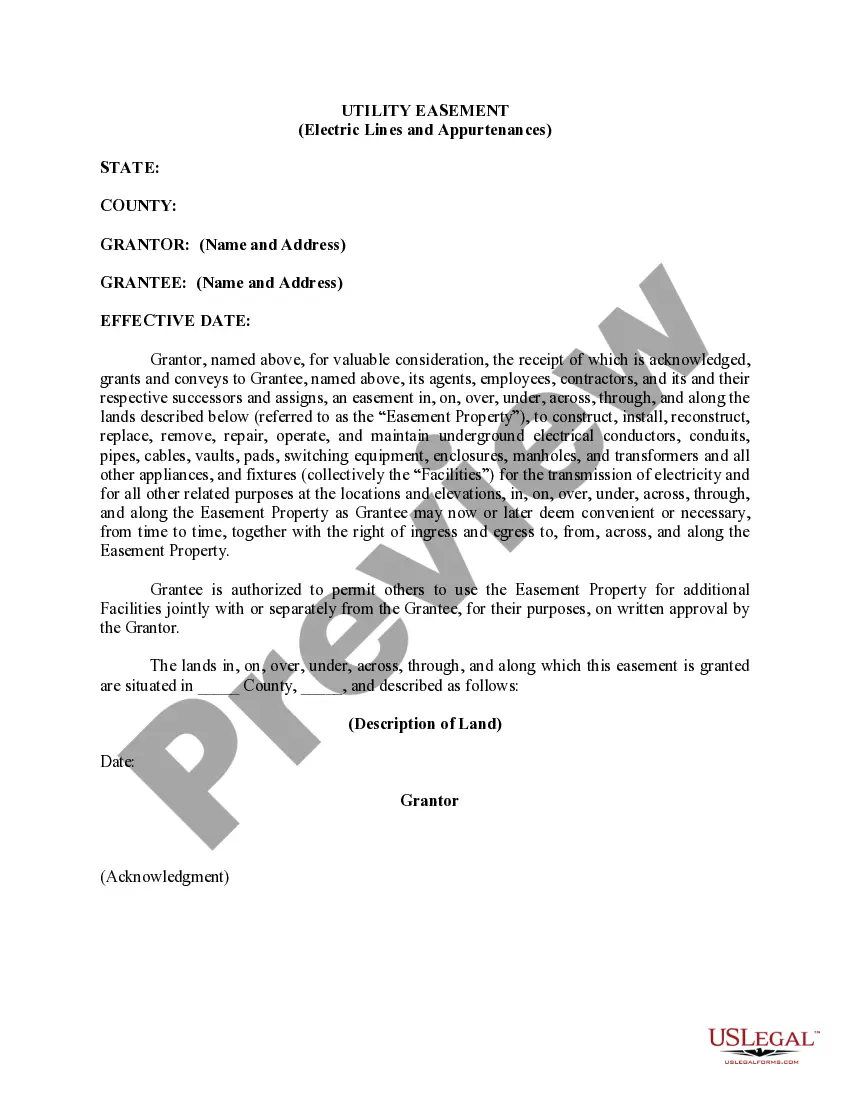
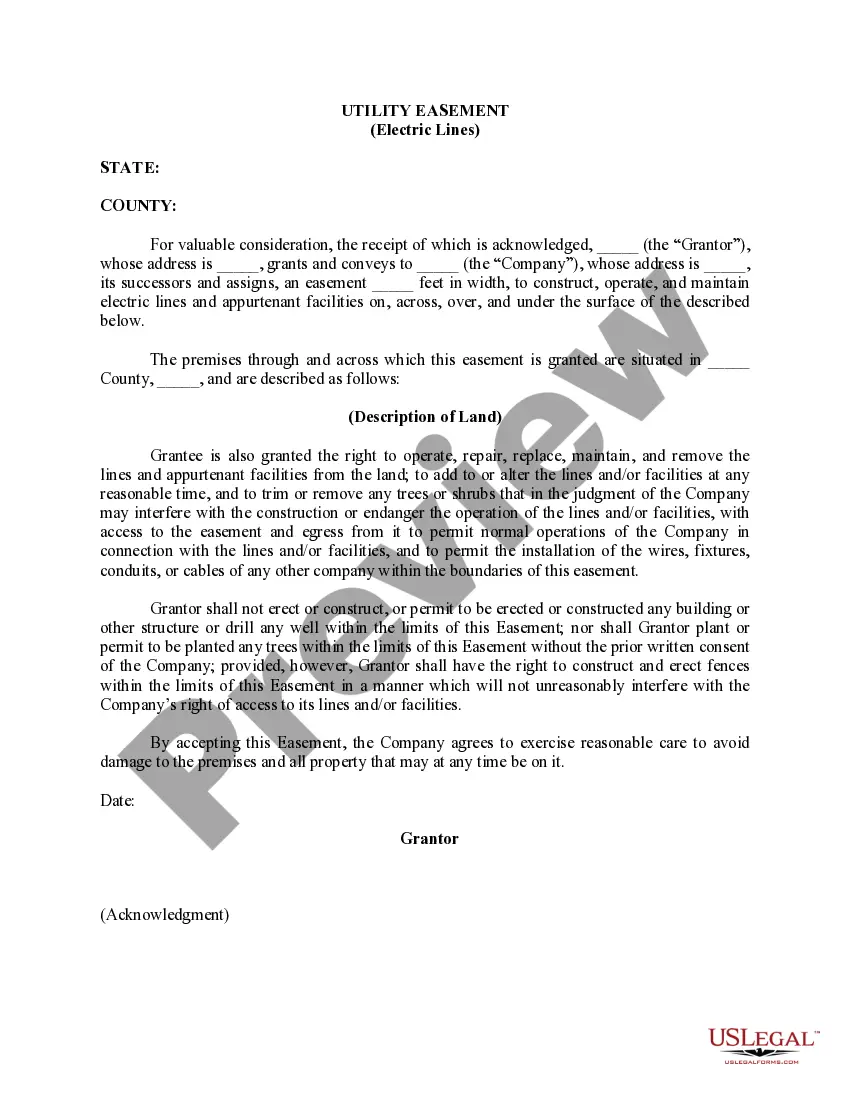
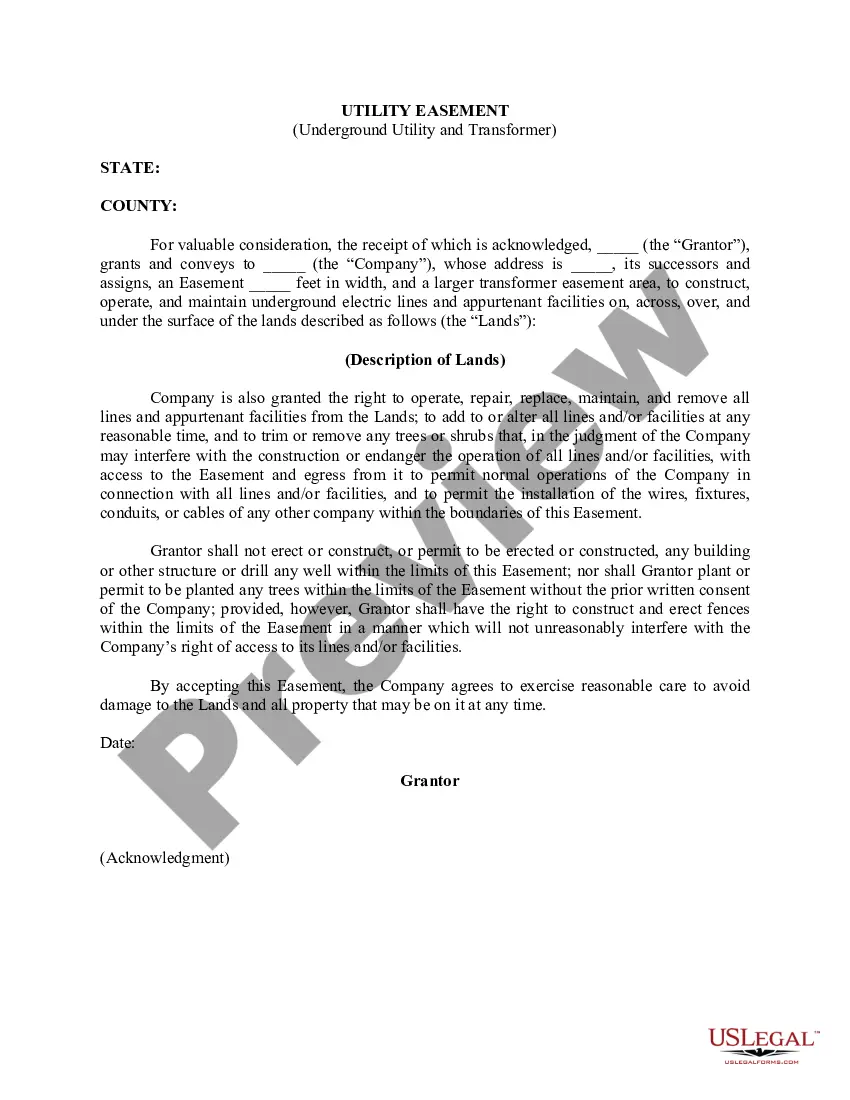
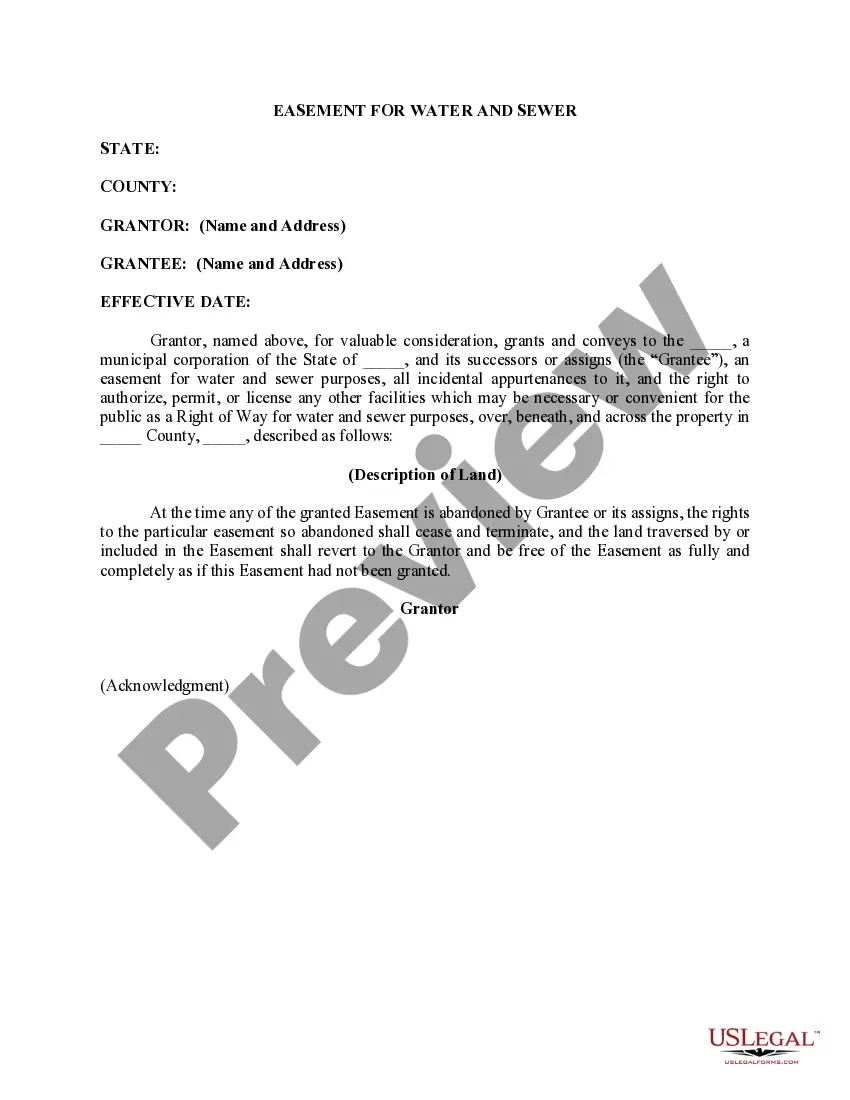
This form is used when Grantor desires to convey and Grantee desires to purchase a right of way and easement for utilities purposes on the lands described within.
To dig deeper into the easement on your property, you can contact your local government or check online property records. It’s kind of like doing a bit of detective work to uncover the history of your land!
Absolutely! There are several types of utility easements, including ones for water, electricity, gas, and even telecommunications. Each has its own little quirks, but all are designed to keep your services flowing smoothly.
Yes, utility companies generally have the right to access your easement when needed. It's like giving them a key to your front door for emergencies. However, they usually try to give you a heads-up before coming over.
If you're having trouble with utility companies using your easement, the first step is to reach out to them directly. Think of it as having a friendly chat to clear the air. If that doesn't work, consider getting some legal advice.
Building on a utility easement isn't usually the best idea. It's like trying to plant a garden in a tornado zone—there's a good chance it will be damaged when the utility work comes around. It's best to stay clear and keep the area open.
To find out if your property has a utility easement, check your property deed or survey documents. Sometimes, utility companies will also have records, so don't hesitate to give them a shout if you're unsure.
A utility easement in Atlanta is a legal right that allows utility companies to use a portion of your property to install and maintain utilities like water, electricity, and gas. It's like giving them a backstage pass to your yard, so they can keep the lights on and the water flowing.