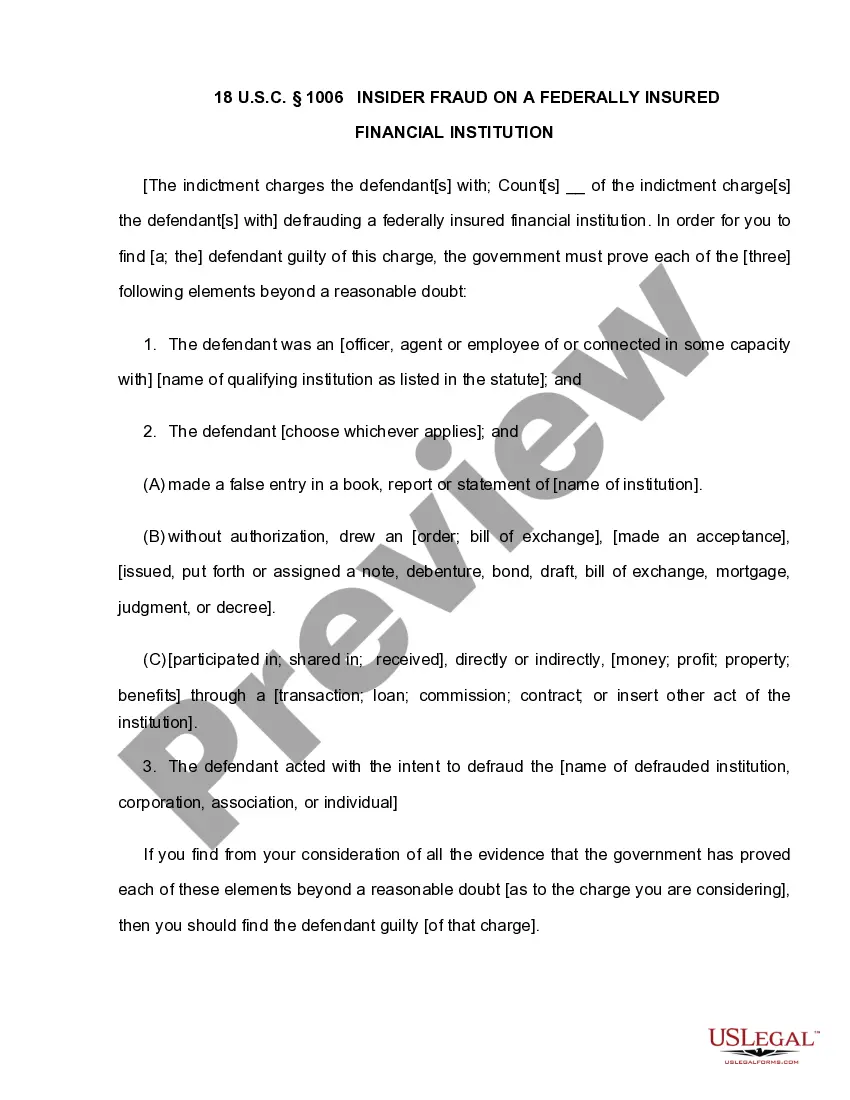
Suffolk New York Subsurface Underground Carbon Dioxide Storage Lease and Agreement (with Landowner, Long Form)
Description
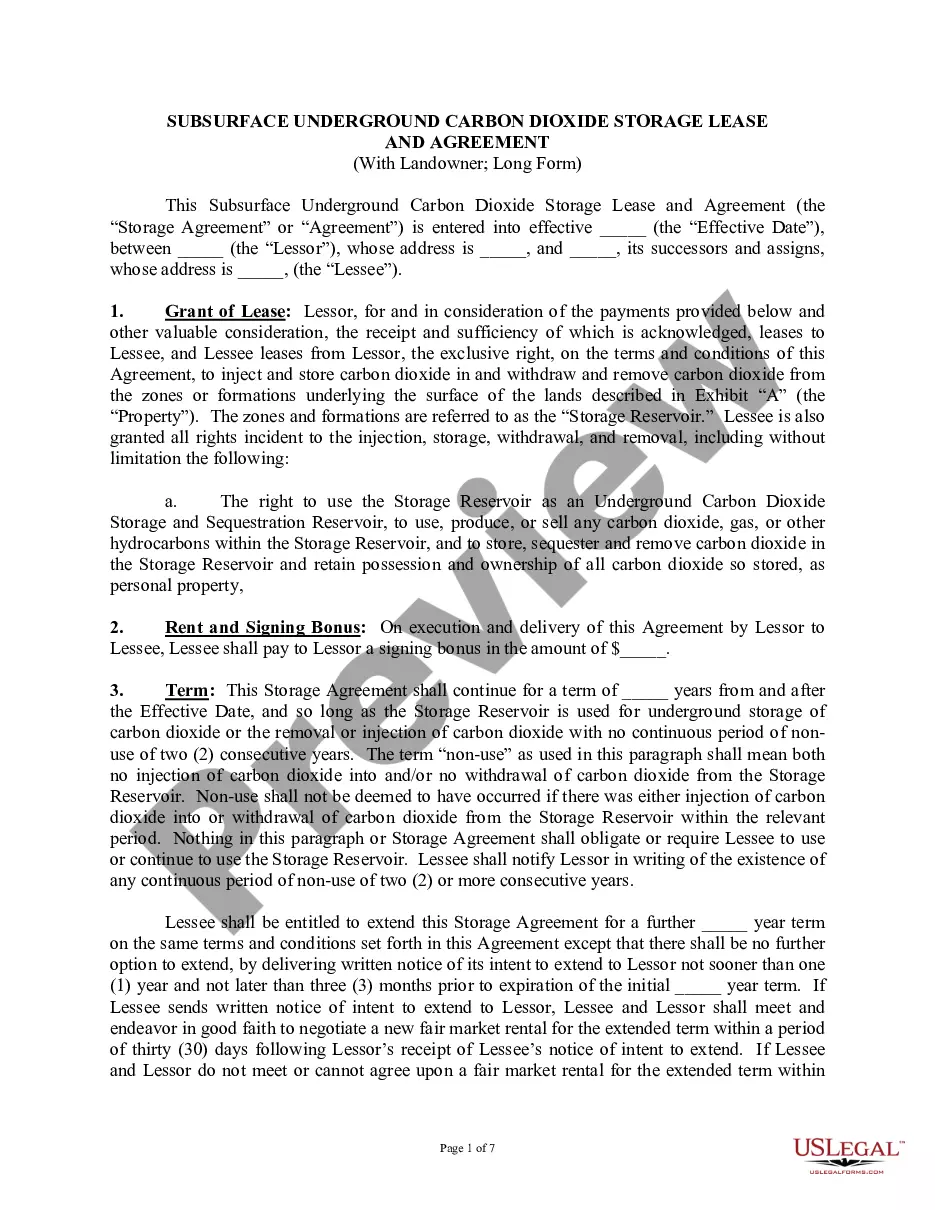
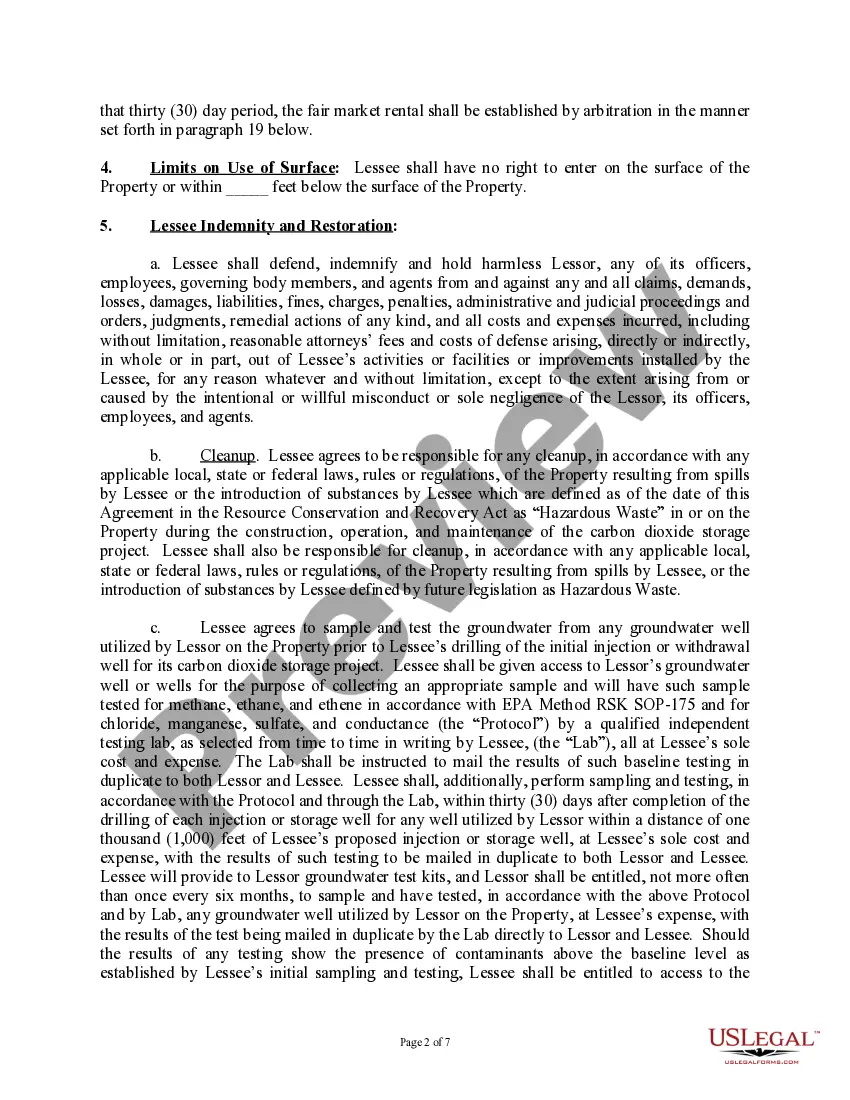
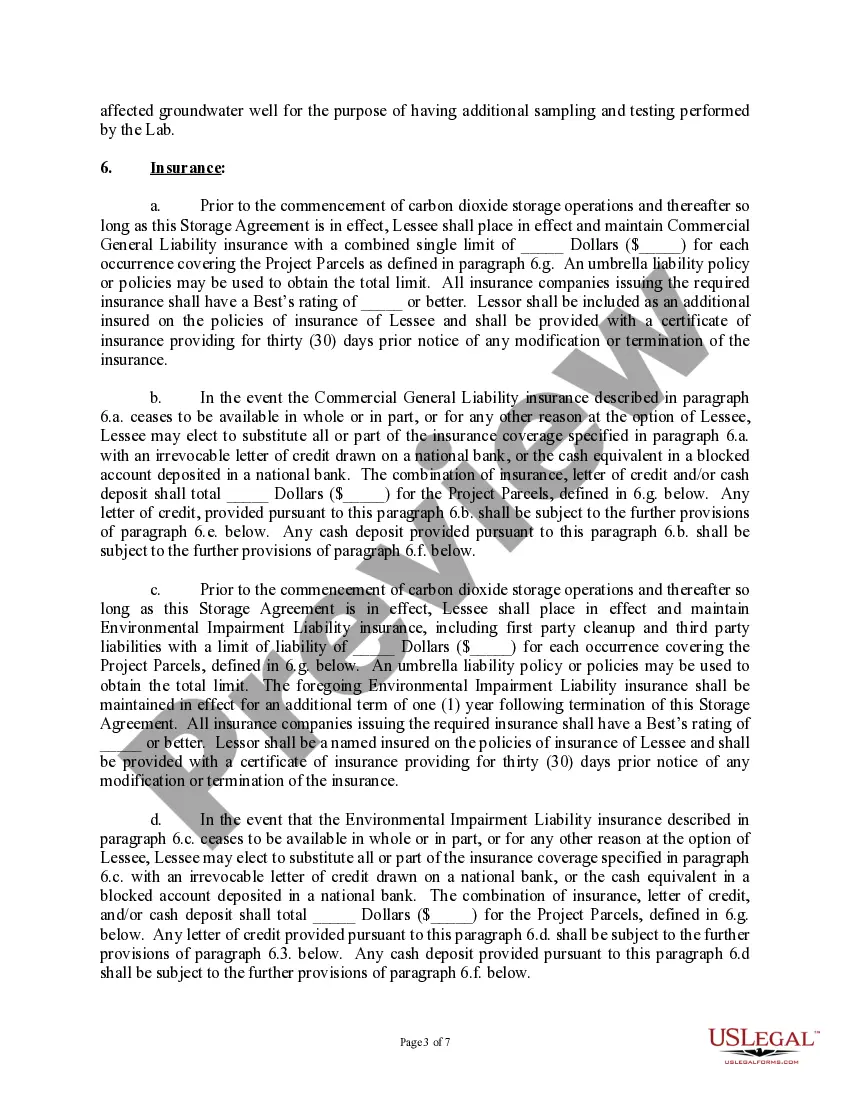
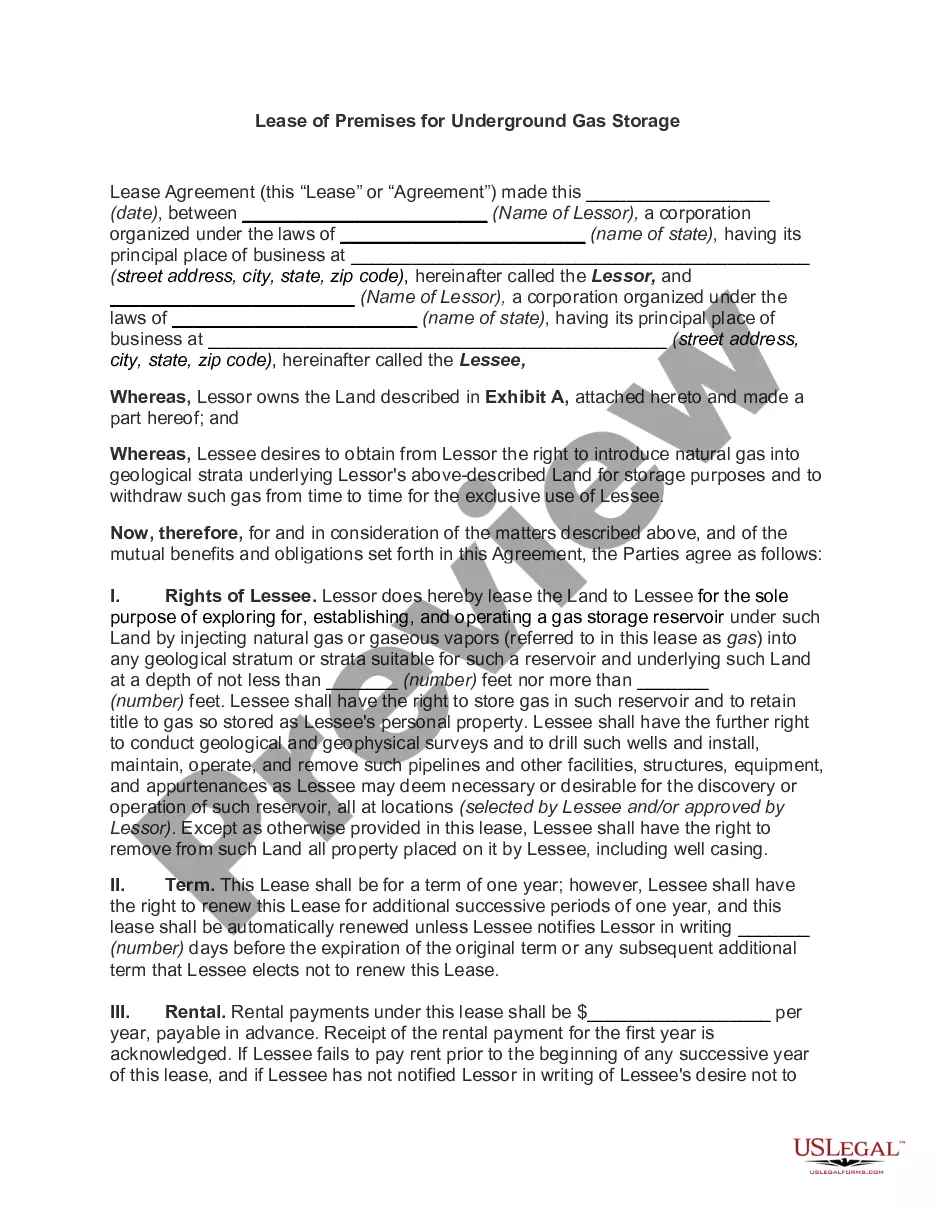
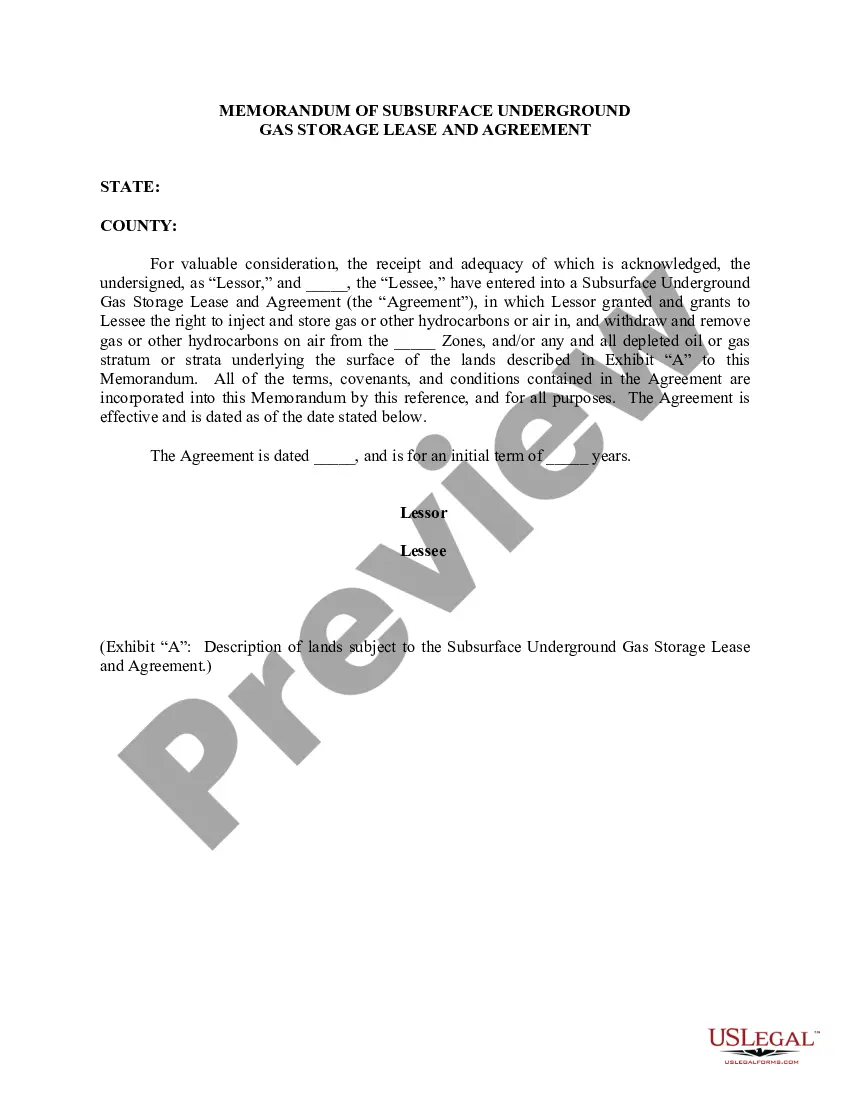
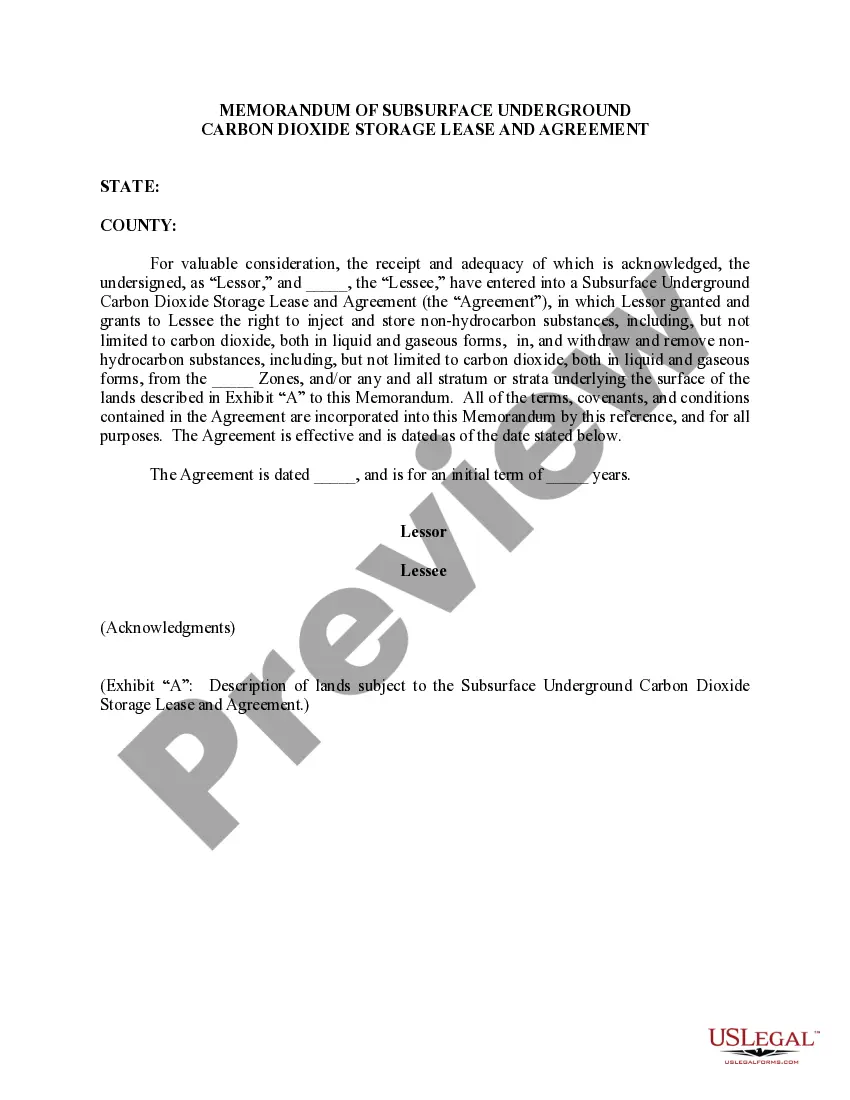
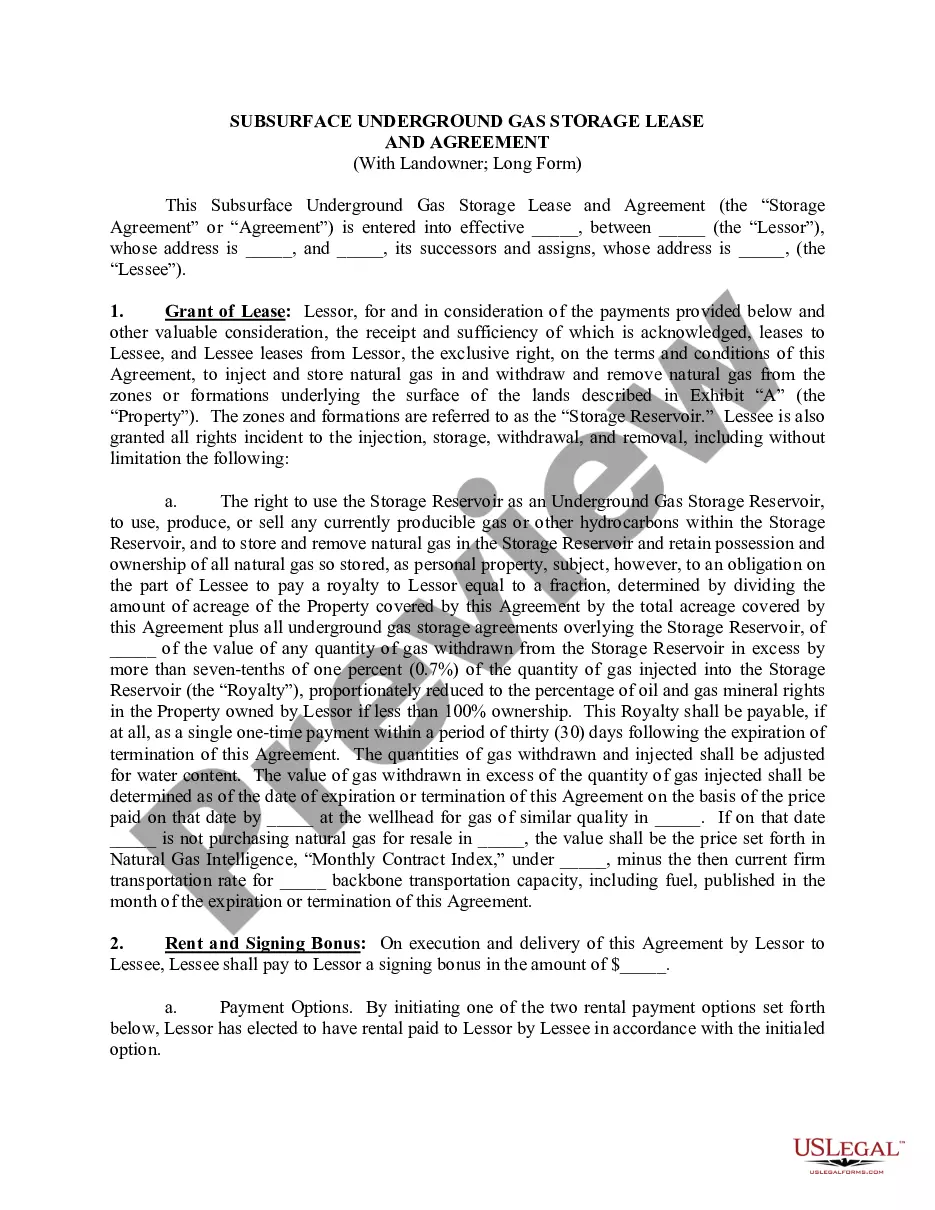
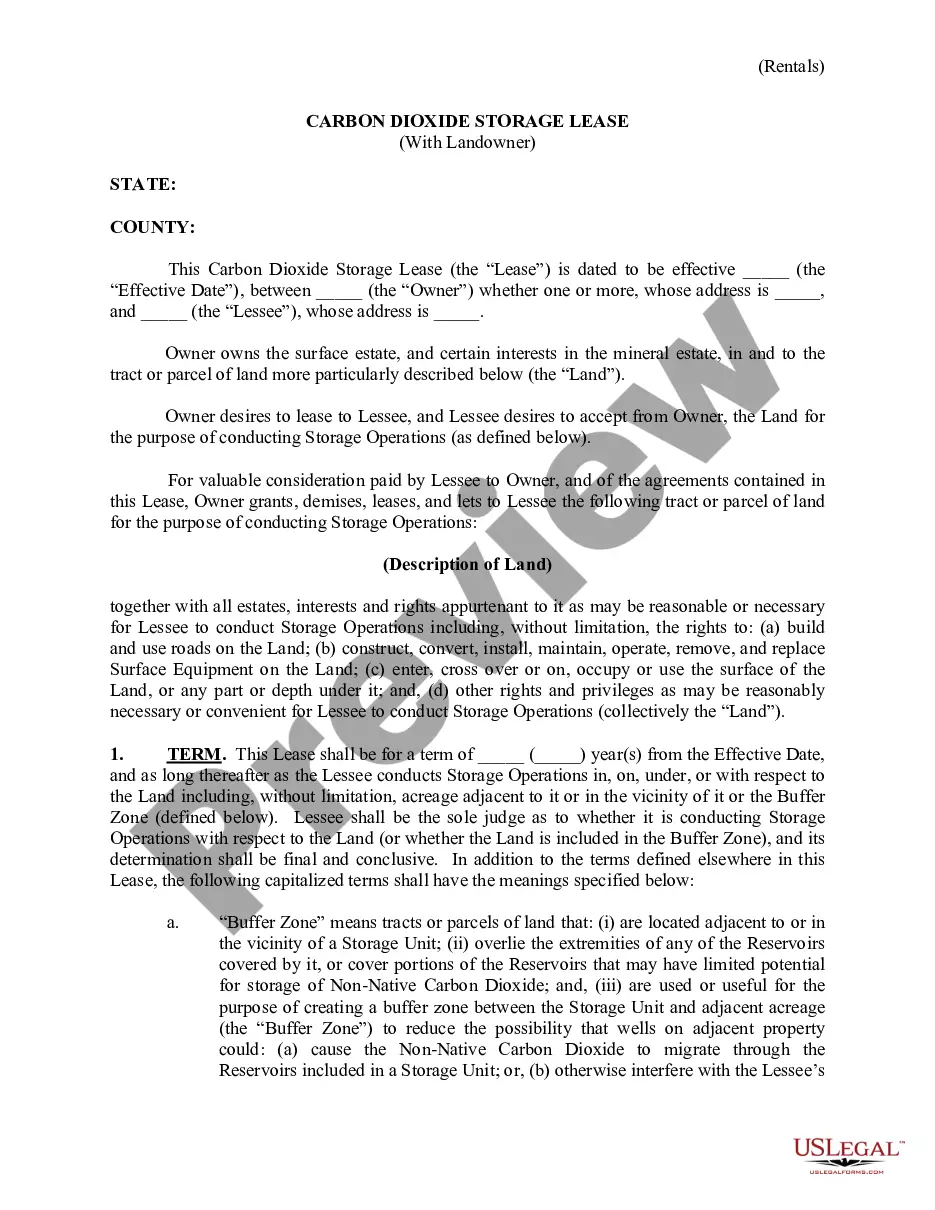





How to fill out Subsurface Underground Carbon Dioxide Storage Lease And Agreement (with Landowner, Long Form)?
Managing legal documents is a requirement in the modern era. Nevertheless, you don't always have to look for expert help to create some of them from the beginning, such as Suffolk Subsurface Underground Carbon Dioxide Storage Lease and Agreement (with Landowner, Long Form), with a service like US Legal Forms.
US Legal Forms offers more than 85,000 templates to choose from in various categories including estate plans, property agreements, and divorce filings. All documents are categorized by their applicable state, simplifying the search process.
Here is how you can find and download Suffolk Subsurface Underground Carbon Dioxide Storage Lease and Agreement (with Landowner, Long Form).
If you are already subscribed to US Legal Forms, you can locate the relevant Suffolk Subsurface Underground Carbon Dioxide Storage Lease and Agreement (with Landowner, Long Form), Log In to your account, and download it. It is important to note that our website cannot fully replace a legal expert. If you are faced with a particularly complex issue, we recommend engaging the services of an attorney to review your document prior to execution and submission.
With over 25 years in business, US Legal Forms has become a preferred platform for various legal documents for millions of clients. Join them today and effortlessly acquire your state-compliant paperwork!
- Review the document's preview and outline (if available) to gather basic information regarding what you will receive once you acquire the document.
- Confirm that the document you select is tailored to your state/county/region, as state laws can influence the legitimacy of certain documents.
- Look into similar document templates or restart your search to identify the right document.
- Click Buy now and set up your account. If you already have one, opt to Log In.
- Choose the pricing {plan and an appropriate payment method, and purchase Suffolk Subsurface Underground Carbon Dioxide Storage Lease and Agreement (with Landowner, Long Form).
- Select to save the form template in any available file format.
- Navigate to the My documents section to re-download the document.
Form popularity
FAQ
The study shows that the cost of geologic sequestration without by-product credits (such as additional oil produced with enhanced oil recovery (EOR)) ranges from $2.84 to $28.12 per metric ton of CO2, depending on characteristics specific to the type of geologic formation.
The costs for carbon dioxide (CO2) capture and storage (CCS) in geologic formations is estimated to be $675/t CO2.
If you add up all the carbon dioxide released for each person in the country based on our use of fossil fuels and calculate the number of trees you need to take up the carbon dioxide released, the total is equivalent to about 730 trees per person, or roughly 7 acres of forested land.
But such technology is expensiveabout $600 per ton of CO2, by one recent estimate.
A typical acre of mixed woods in Maine, if left alone, will absorb around 4 tons of CO2 per year. So, if left to grow without harvest, 10 average acres in Maine would sequester about 40 tons of CO2 per year.
No-till farming, an especially promising method which leaves the soil intact and crop residues in the field, sequesters an average of 0.3 metric tons of carbon per acre per year.
Geological storage of CO2 can be undertaken in a variety of geological settings in sedimentary basins. Within these basins, oil fields, depleted gas fields, deep coal seams and saline formations are all possible storage formations (Figure 5.3).
Direct air capture is very expensive because the CO2 in the atmosphere is only . 04%, Herzog tells CNBC, and the technical process of removing carbon dioxide from a gas gets more expensive the lower the concentration of the carbon dioxide gets.
An approximate value for a 50-year-old oak forest would be 30,000 pounds of carbon dioxide sequestered per acre, said Timothy J. Fahey, professor of ecology in the department of natural resources at Cornell University. The forest would be emitting about 22,000 pounds of oxygen. Every little bit matters, he said.
Estimated costs for sequestering up to 500 million tons of carbon per yearan amount that would offset up to one-third of current annual U.S. carbon emissionsrange from $30 to $90 per ton.