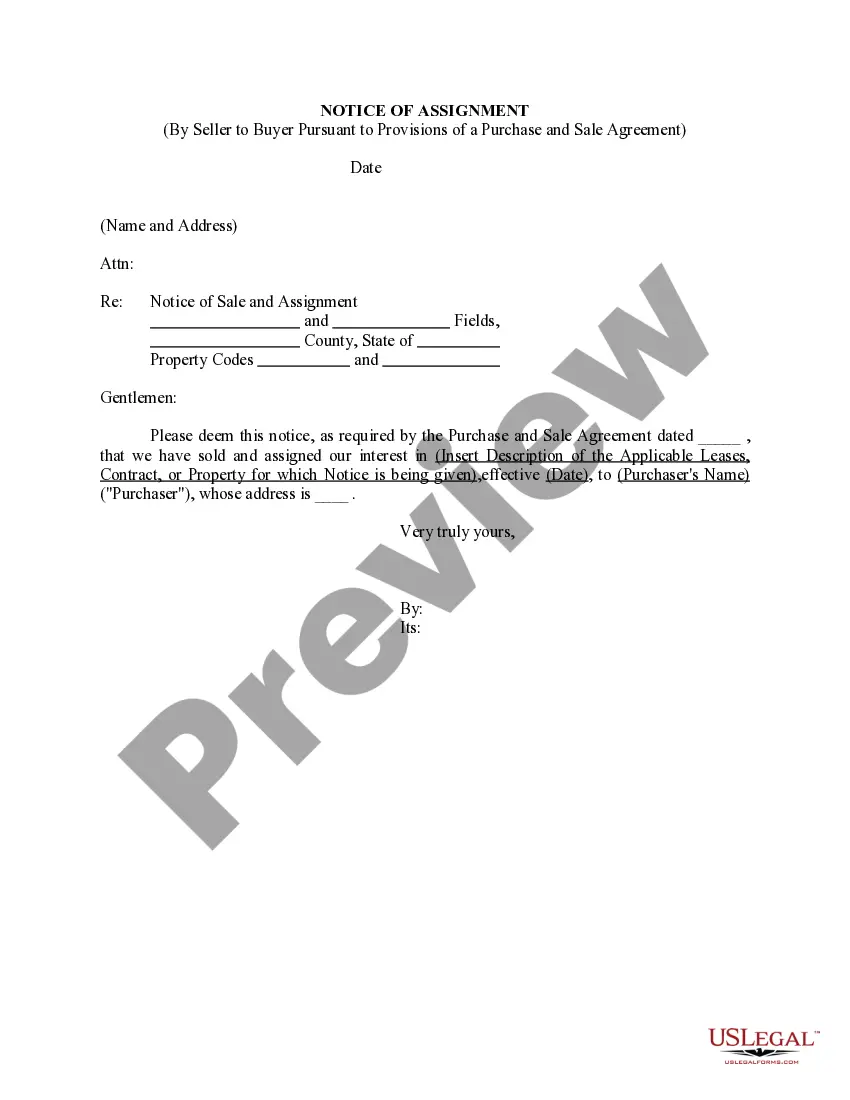
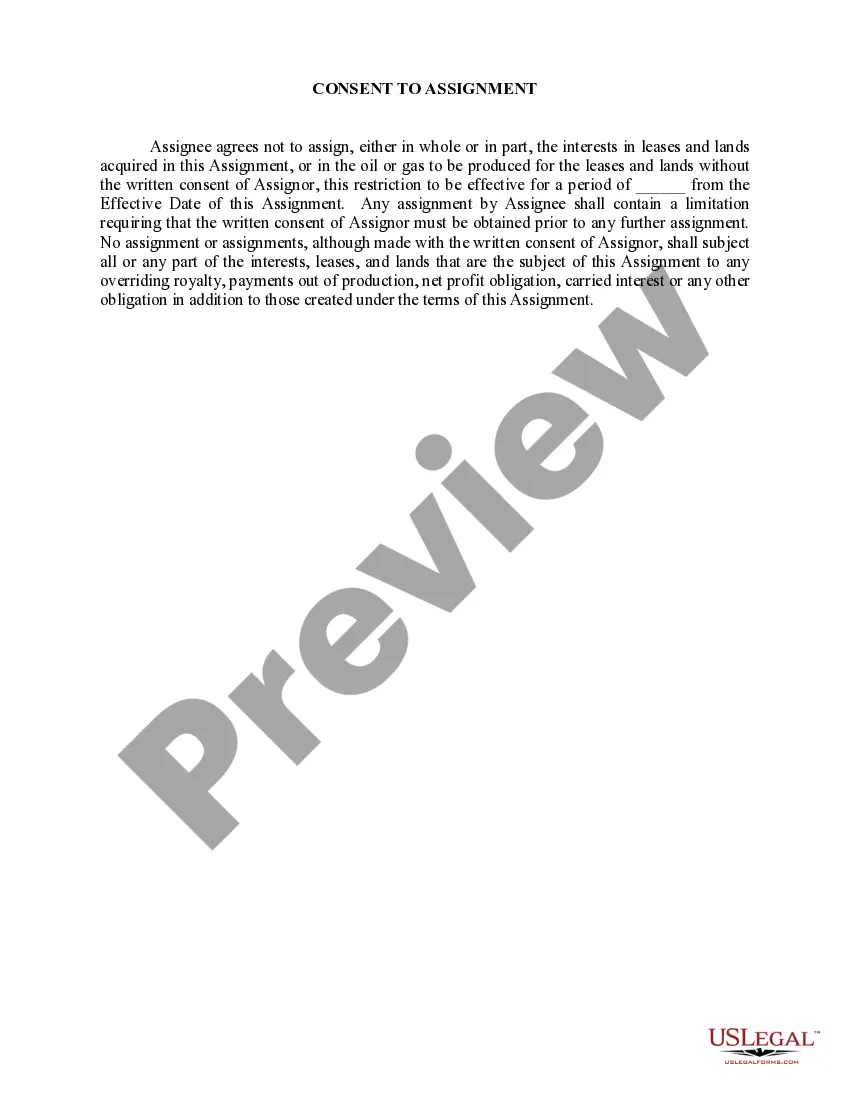
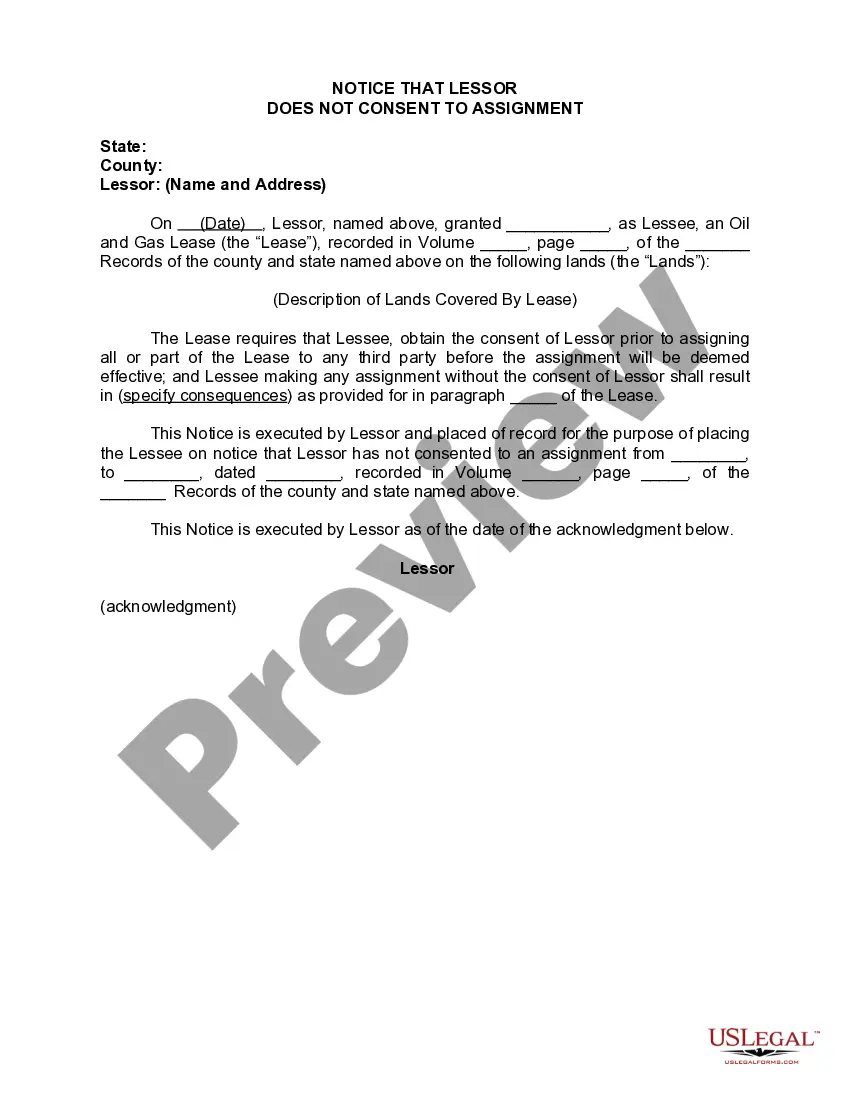
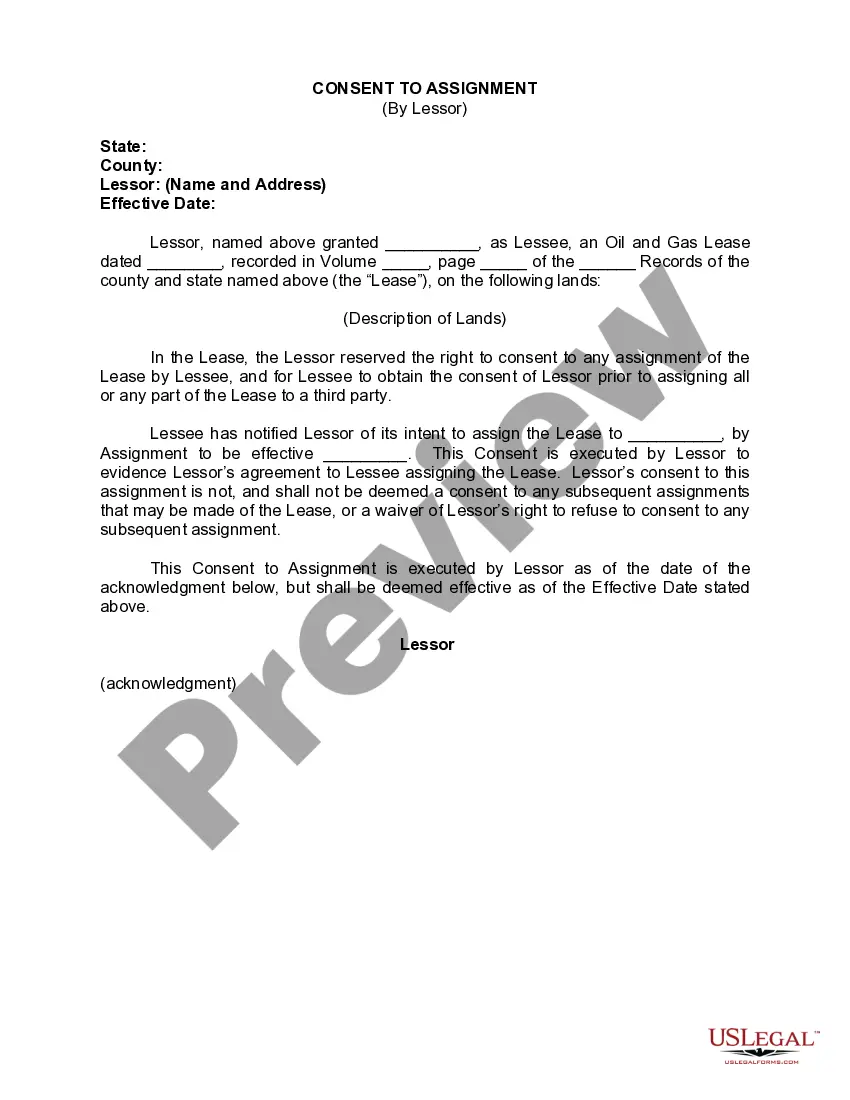
A lease may require a lessor consent to any assignment of the lease. This form is a notice that the lessor does not consent to the assignment. A lease may provide that if the lessor does not consent, the assignment is ineffective or void. When filed of record, this serves as constructive notice that any assignment of the lease made by lessee.
If a lessor refuses without a good reason, tenants might consider negotiating or seeking legal advice to explore their options. Sometimes you need to bring in the heavy hitters!
While lessors can refuse consent, they can’t do it for reasons that are considered unreasonable. It's like trying to change the rules of the game halfway through!
If a tenant assigns their lease without the lessor's consent, they may face penalties such as eviction or breach of contract claims. It’s one of those 'better safe than sorry' situations!
To request consent, a tenant should formally ask the lessor in writing, explaining why the assignment makes sense. Think of it like making a case for why they deserve a second chance!
Yes, tenants have certain rights under Texas law, but the specifics can vary. It’s important to look over your lease and know your rights, like reading the fine print!
When a lessor doesn't consent to an assignment, it means they aren’t allowing the tenant to transfer their lease to someone else. It's like saying, 'You can't pass the baton, buddy!'
Trusted and secure by over 3 million people of the world’s leading companies
Austin Texas Notice That Lessor Does Not Consent to Assignment