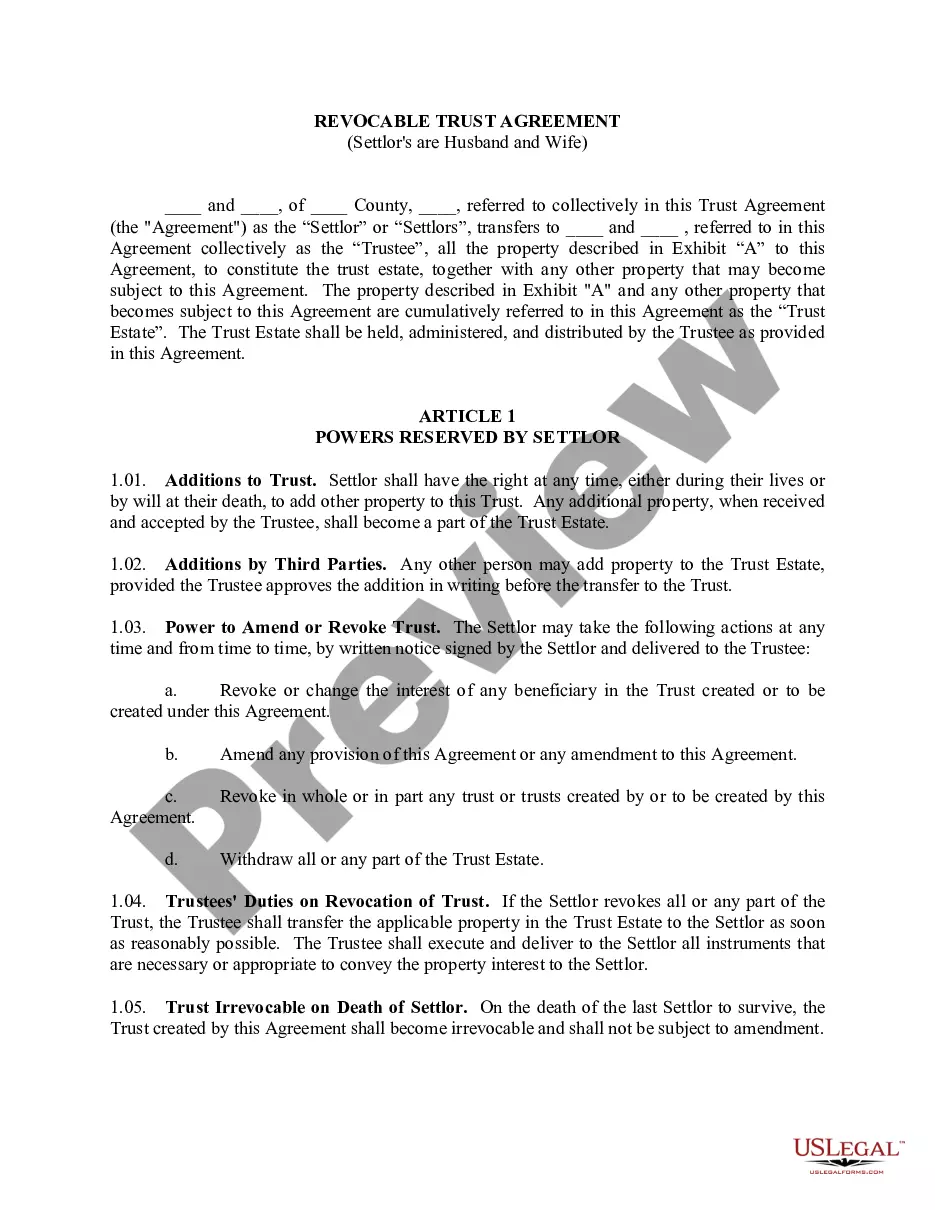
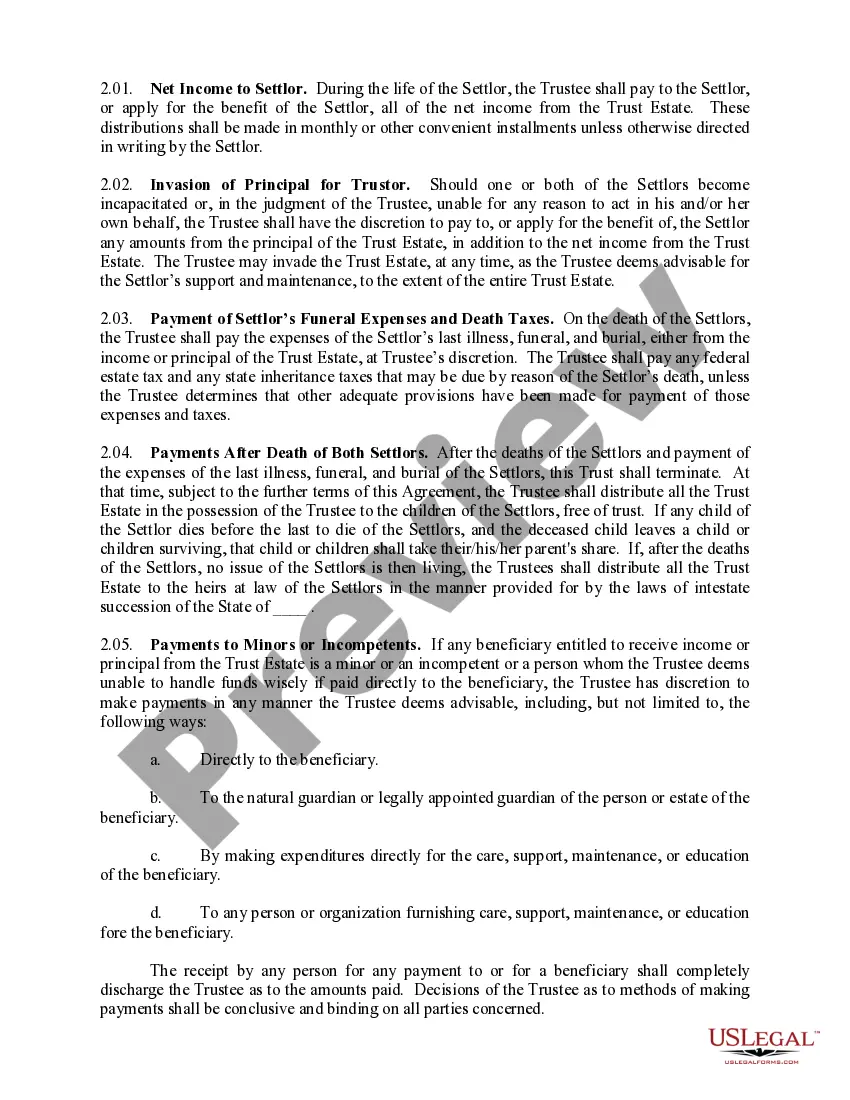
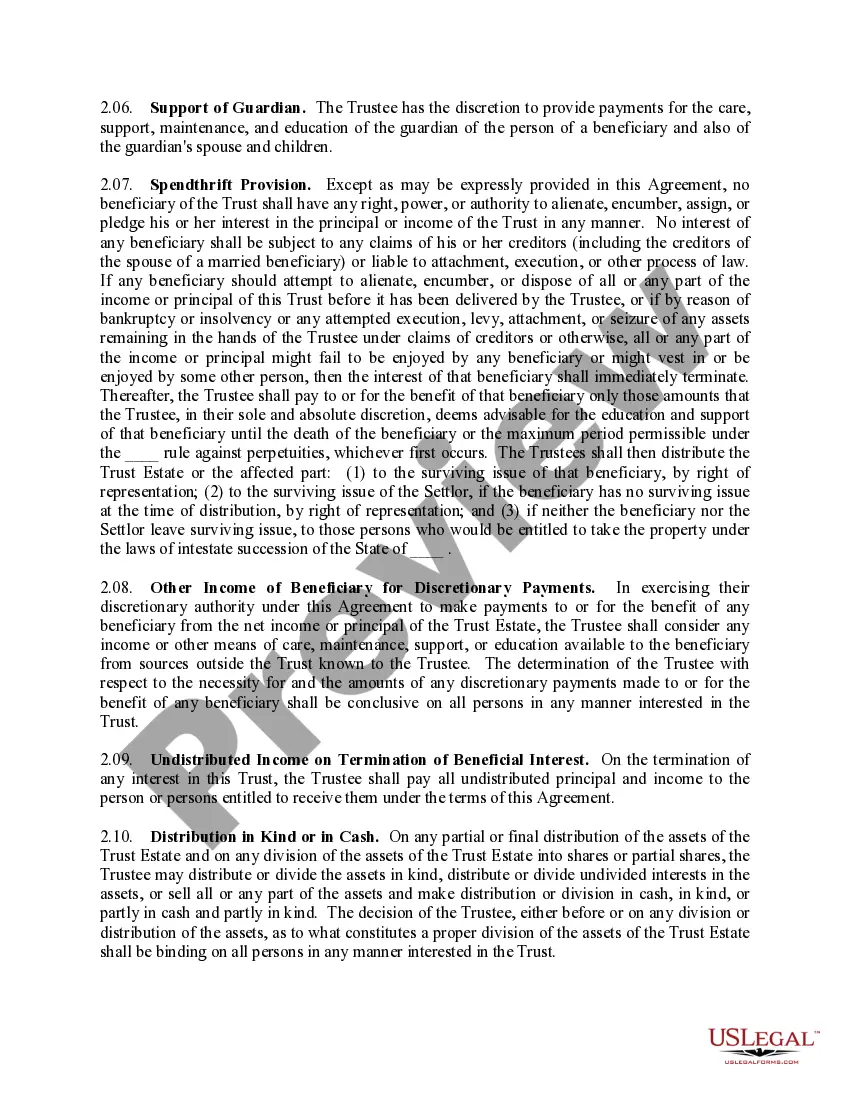
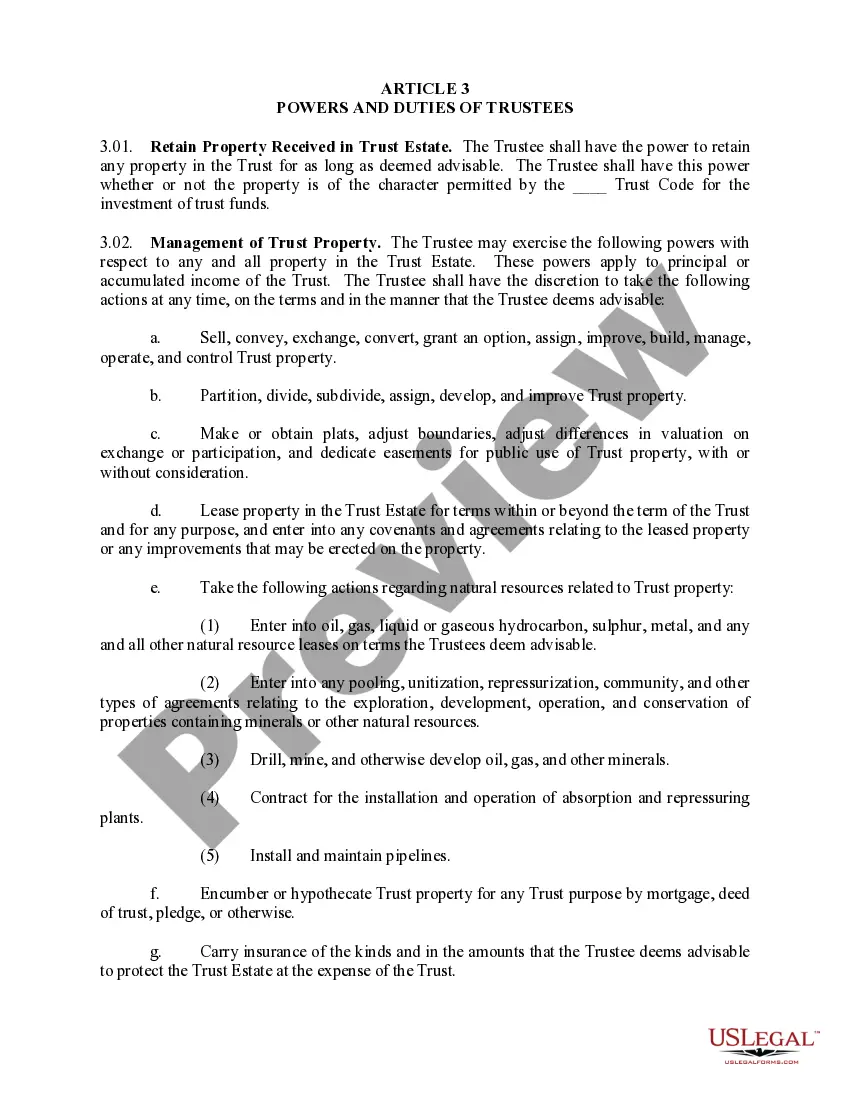
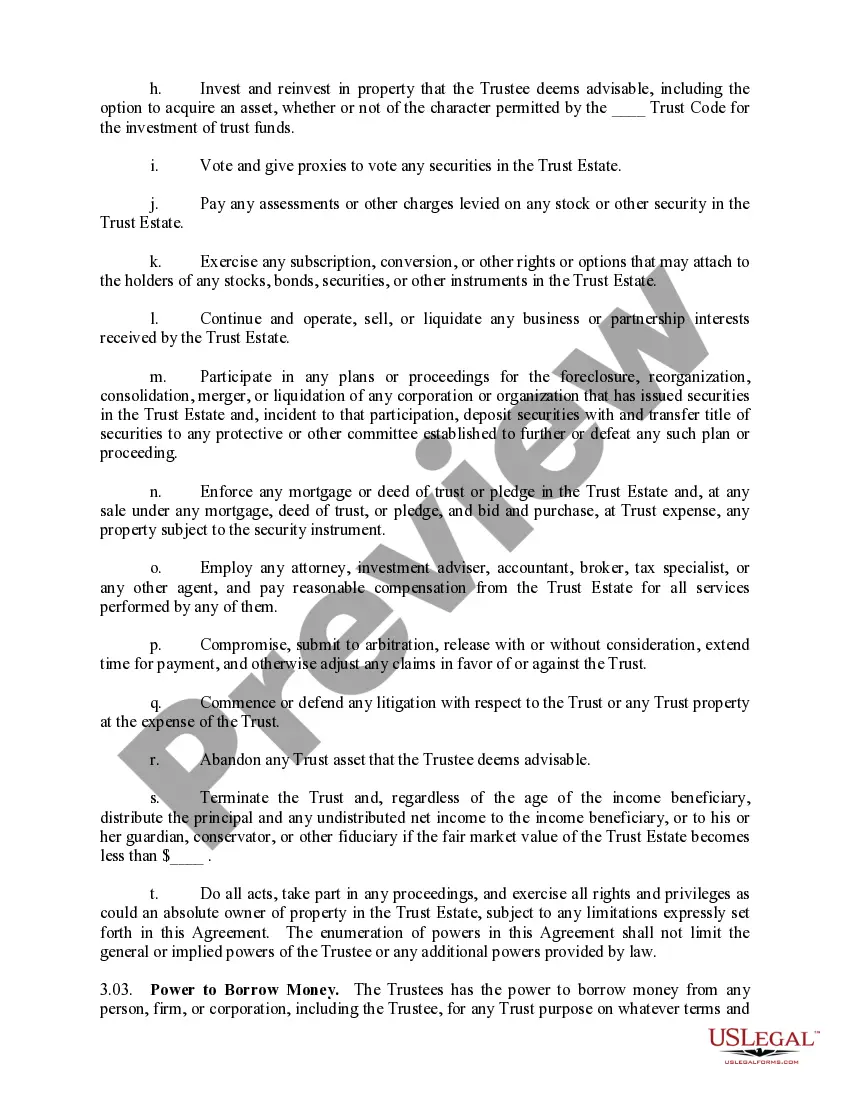
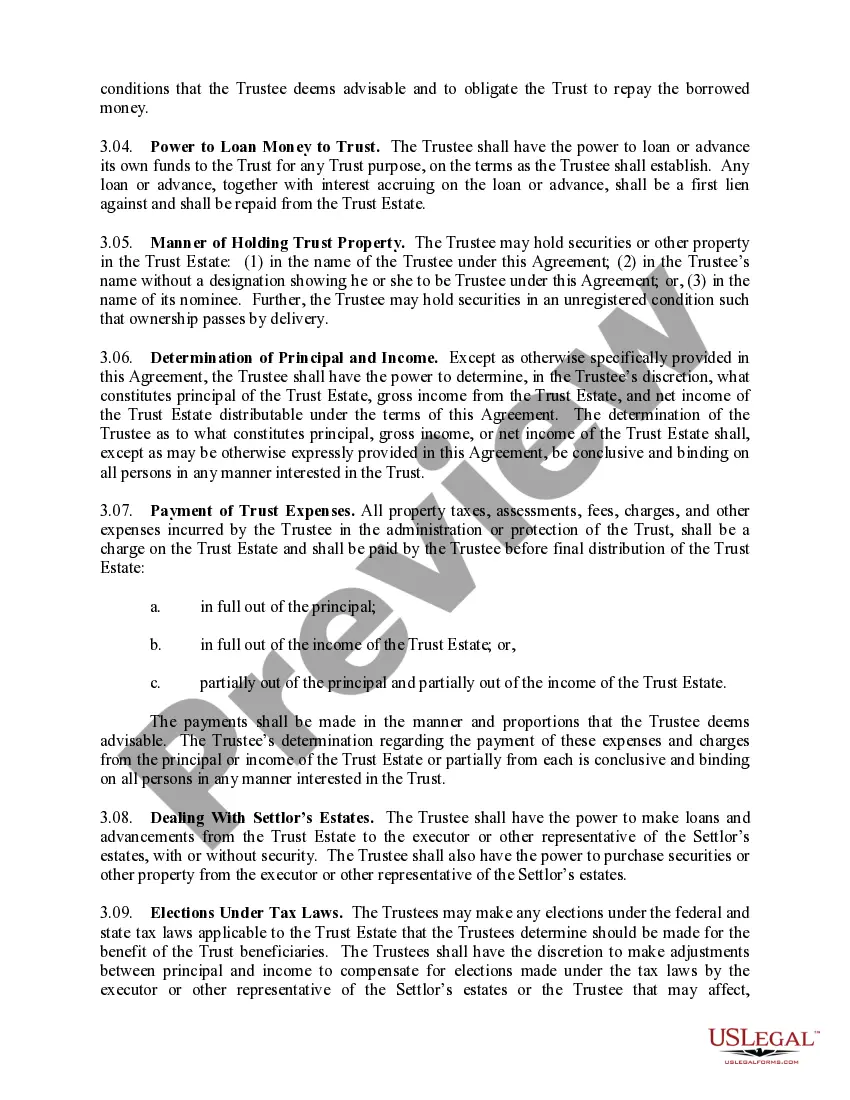
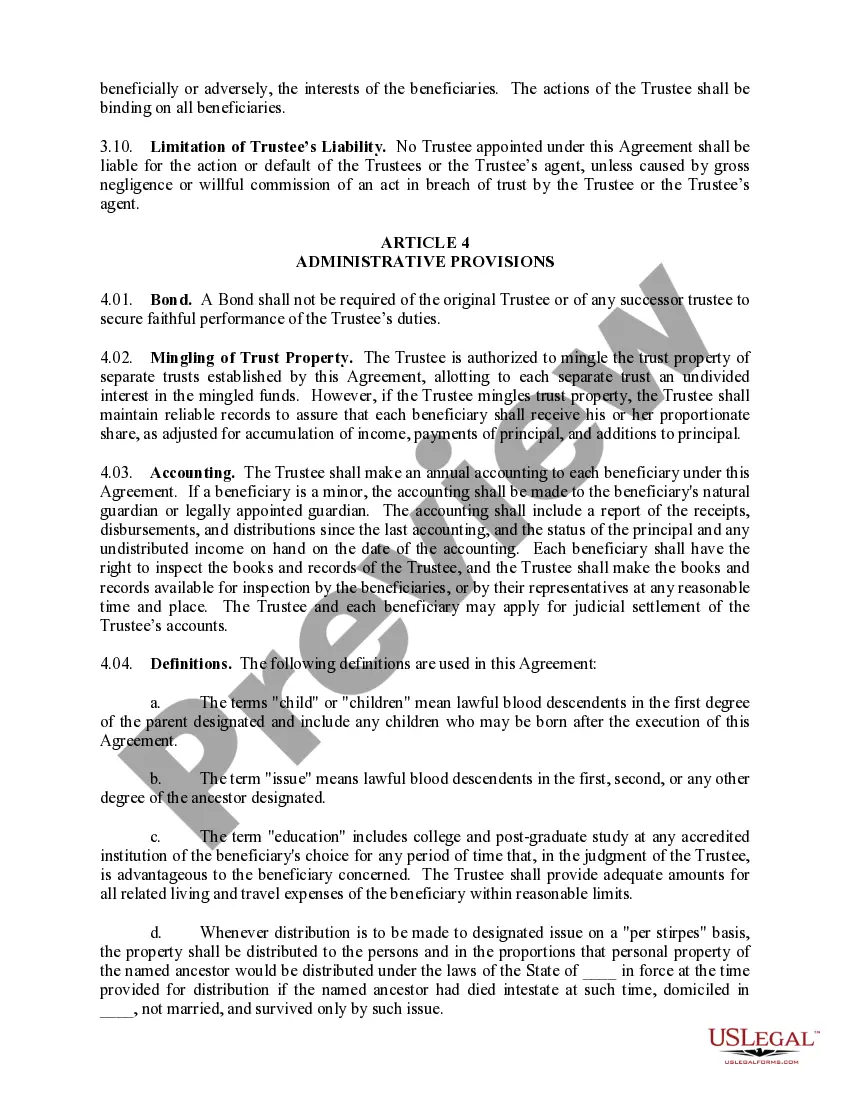
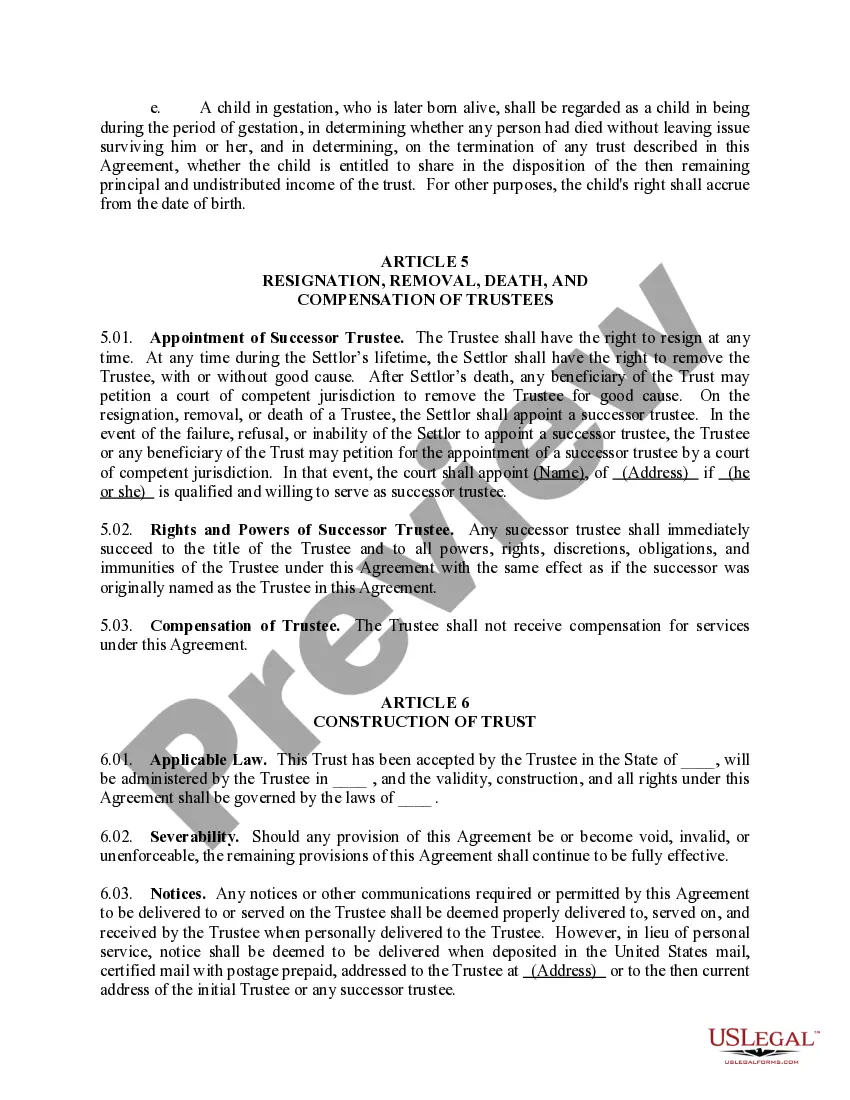
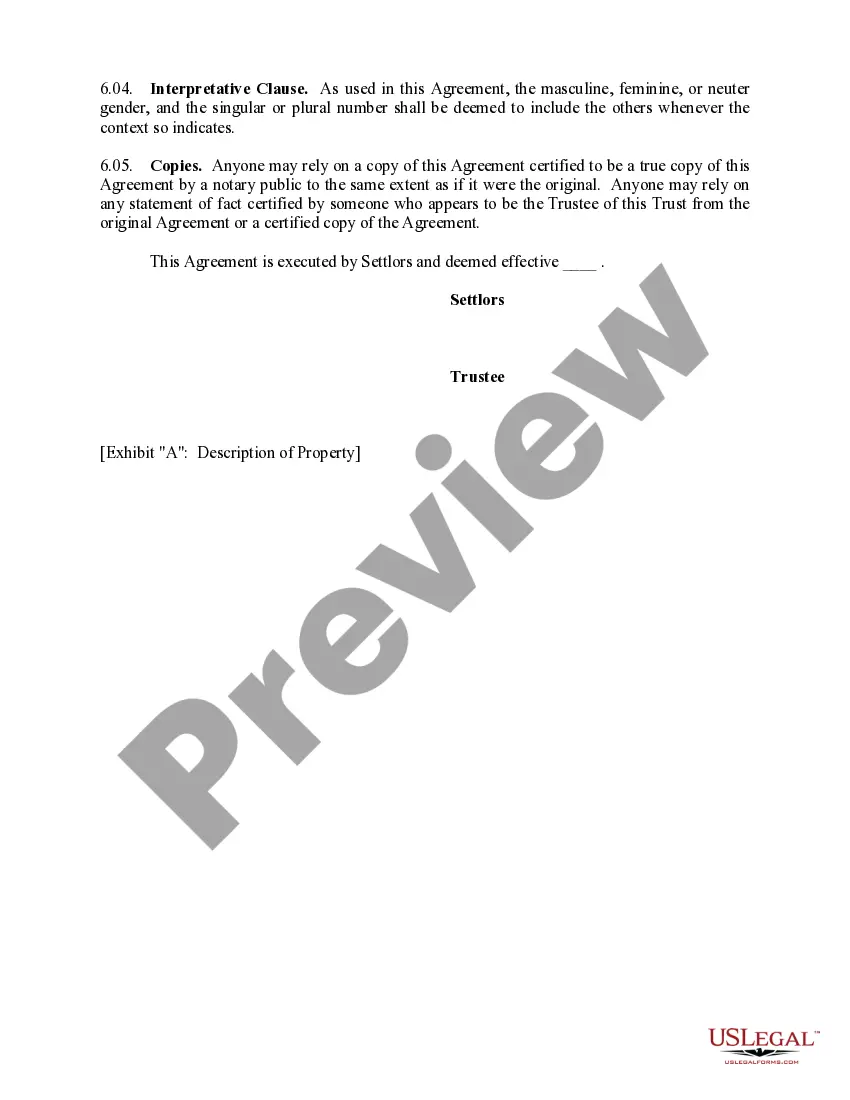
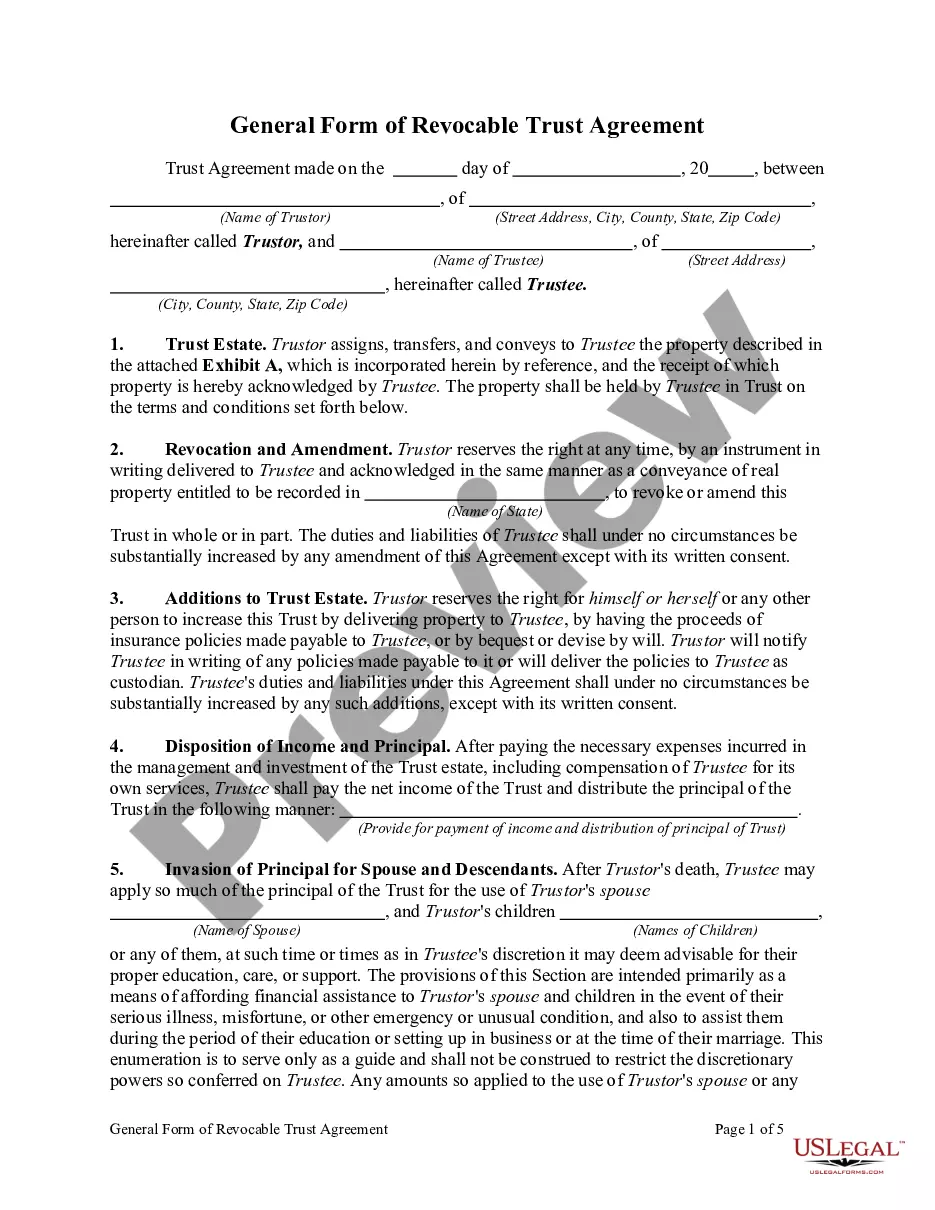
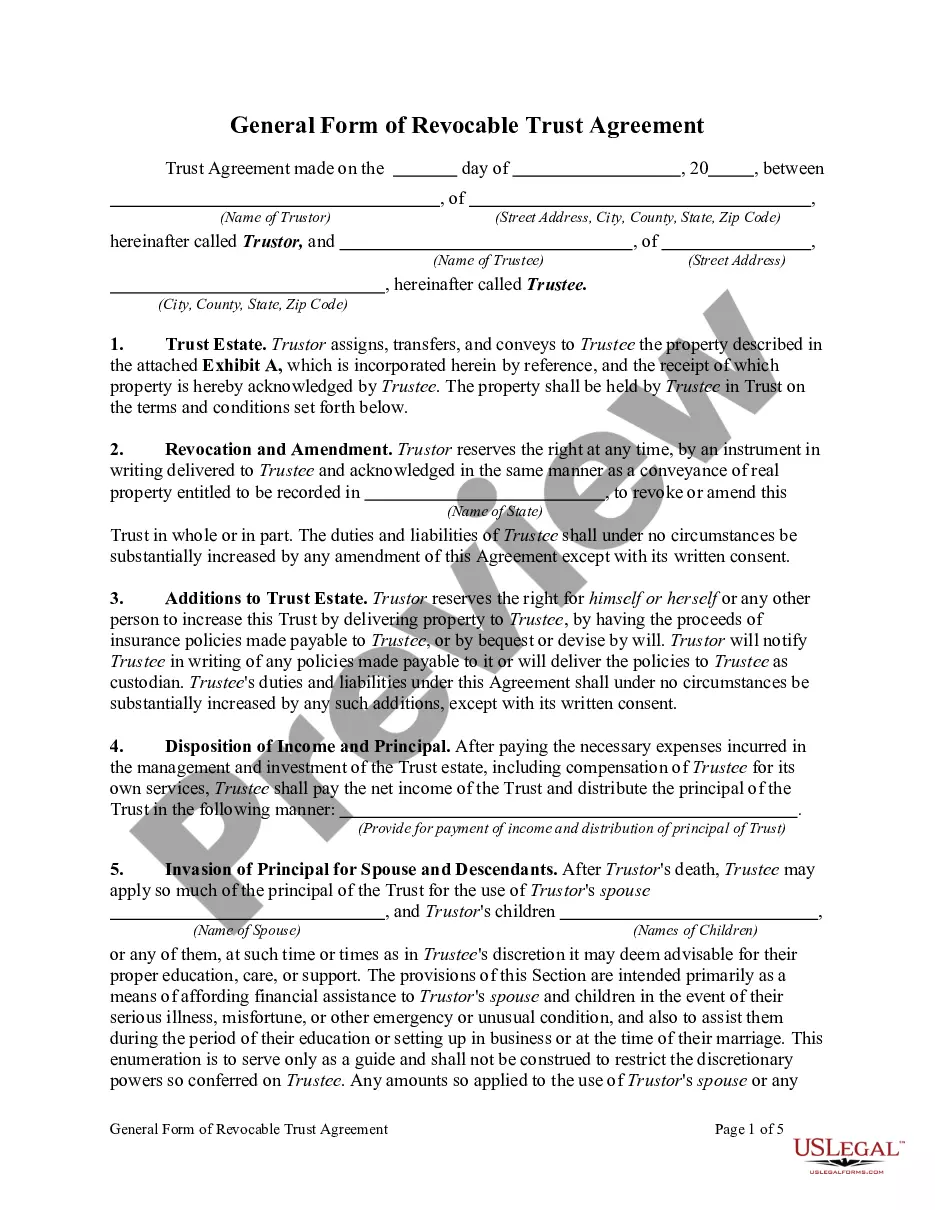
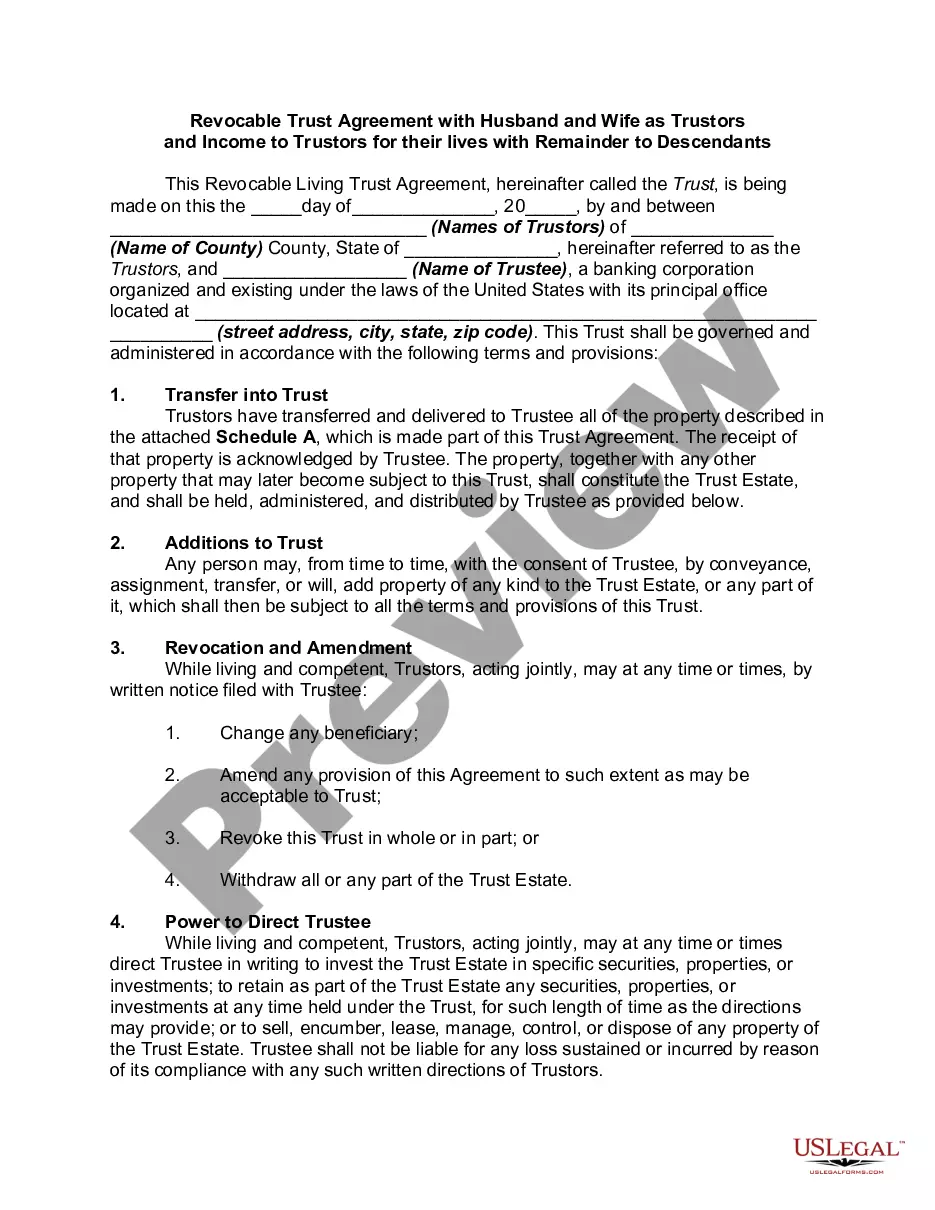
This form provides for the establishment of a trust, specifying the duties and responsibilities of the trustee, and the distribution of the assets to be transferred to the trust. This form of trust is known as a revocable intervivos trust. Being a trust does not automatically accomplish the transfer of an owners property into the trust. This must be done by conveying, in deeds or assignments, the property to the Trustee.
A will takes effect only after you pass away, while a revocable trust is active while you're alive. This means a trust can help you manage your assets now, rather than waiting for them to be handled after you're gone!
While a revocable trust doesn’t offer tax benefits during your lifetime, it can help to avoid probate and make things smoother for your heirs, which is certainly a win!
You can place a wide range of assets into the trust, like your home, bank accounts, investments, and even personal belongings. It's like creating a treasure chest for everything important!
Absolutely! That's the beauty of a revocable trust. As life goes on and situations change, you can update the trust to reflect your current wishes.
If one spouse passes away, the trust usually continues to operate. The surviving spouse can keep managing it, and it typically simplifies things when it comes to distributing the assets later on.
When both partners are the settlors, it means they both have a say in managing the trust. They can make changes to it as often as they like, and they can also take back the assets whenever they want. It’s a flexible arrangement that lets both have control!
A revocable trust agreement is basically a legal setup where a couple, like husband and wife, can manage their assets during their lifetime and decide how they should be distributed after they're gone. Think of it like a safety net for your belongings!