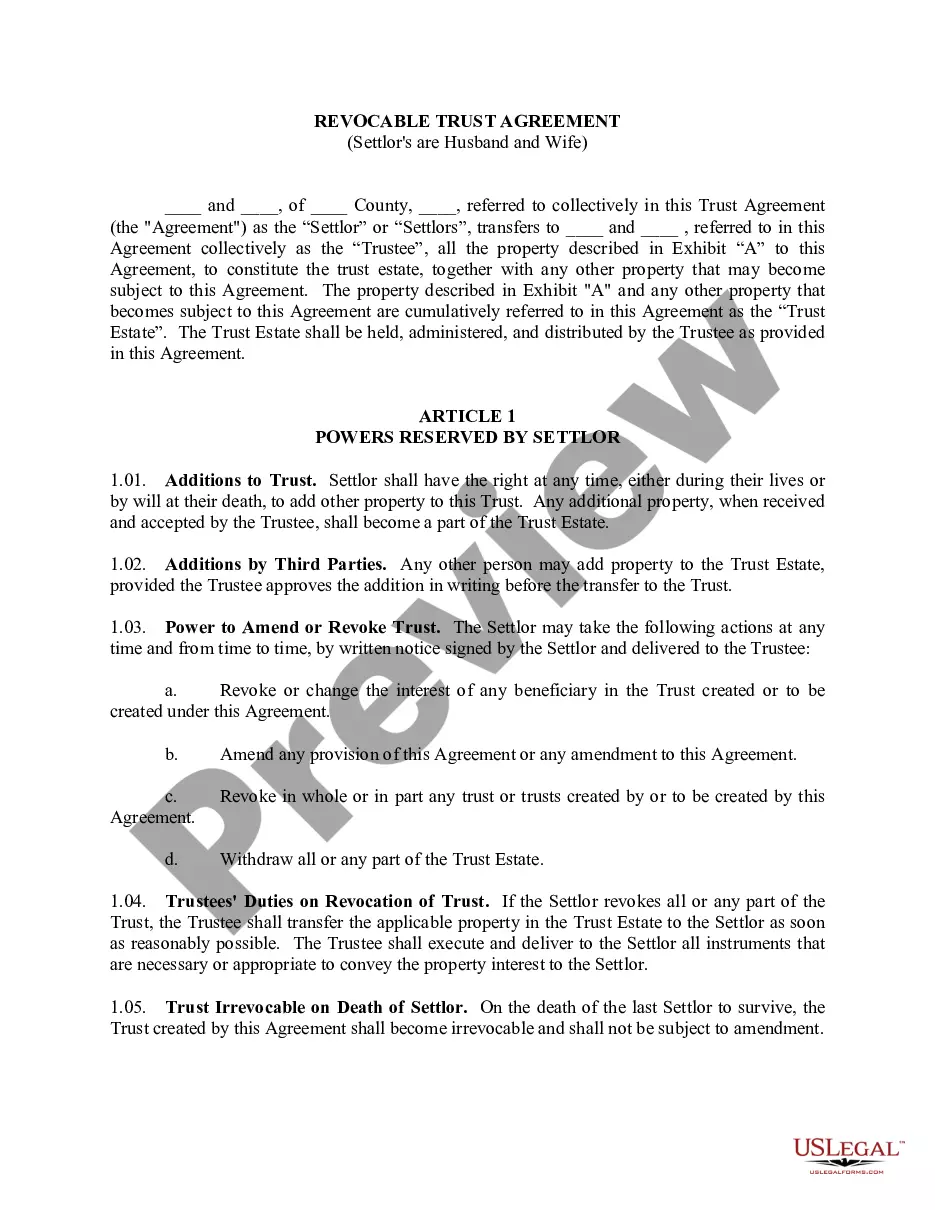
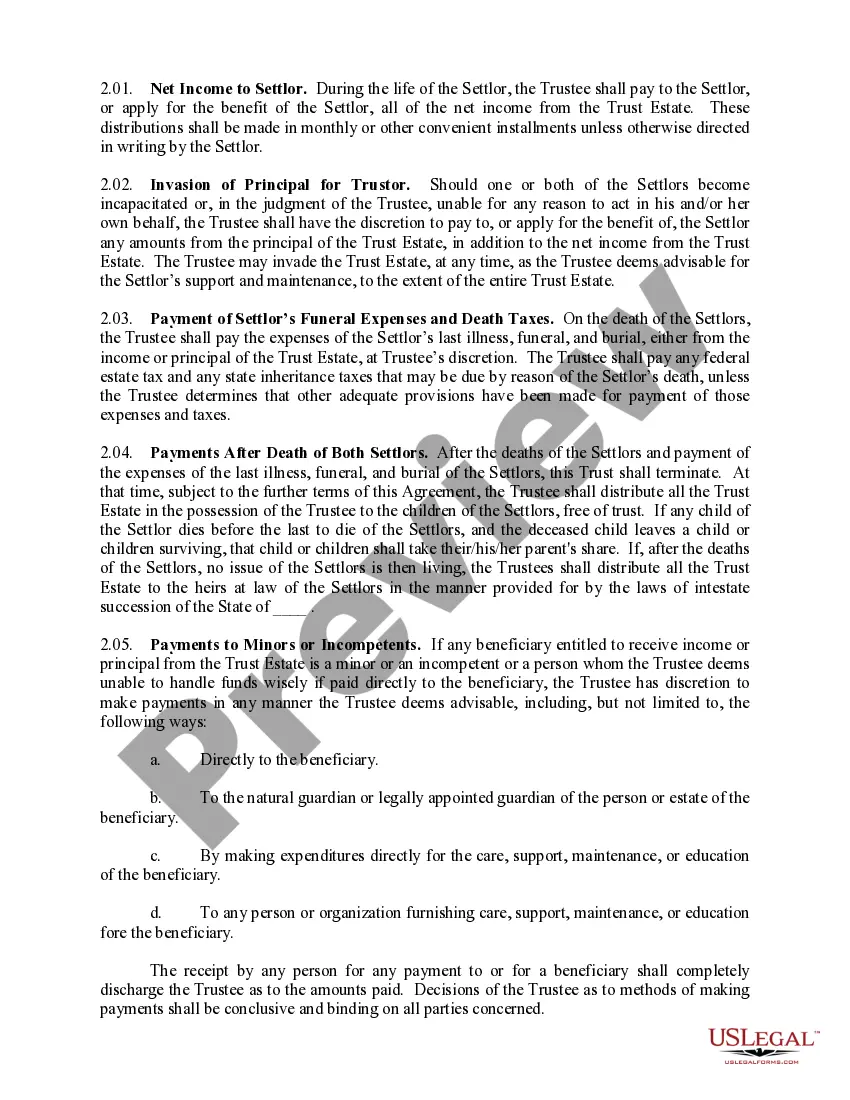
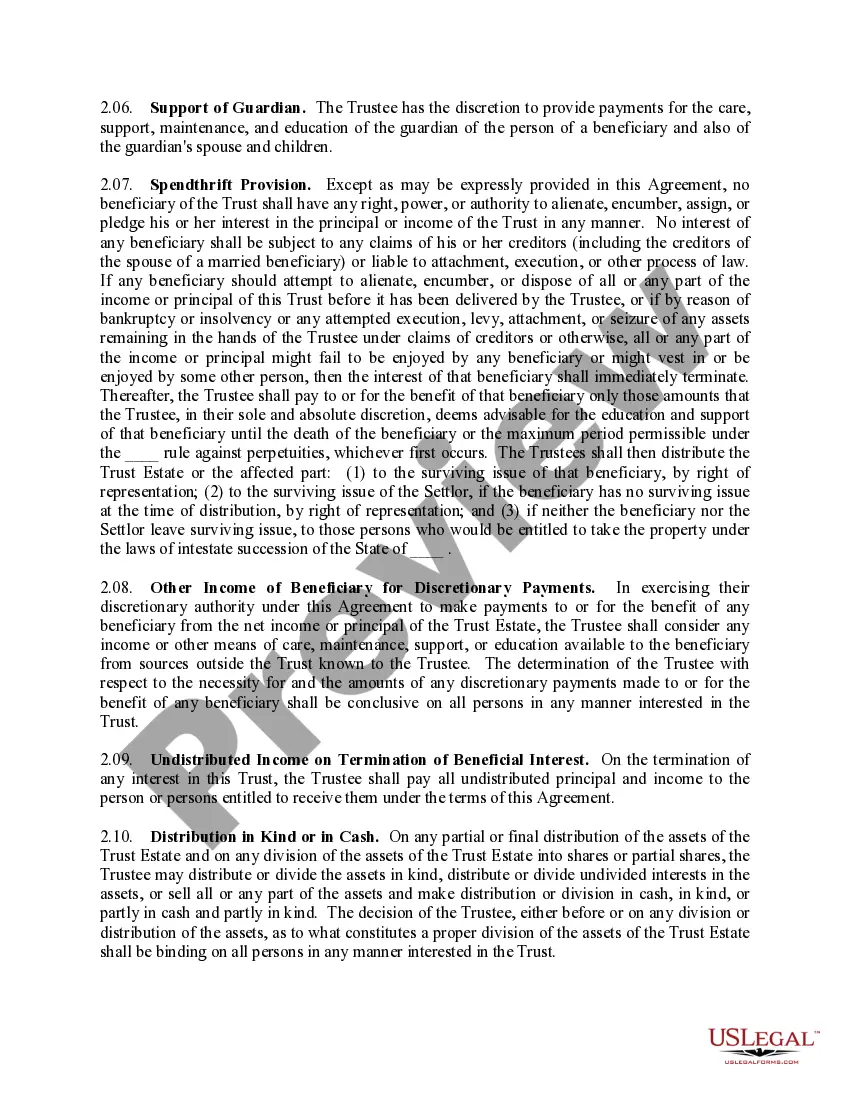
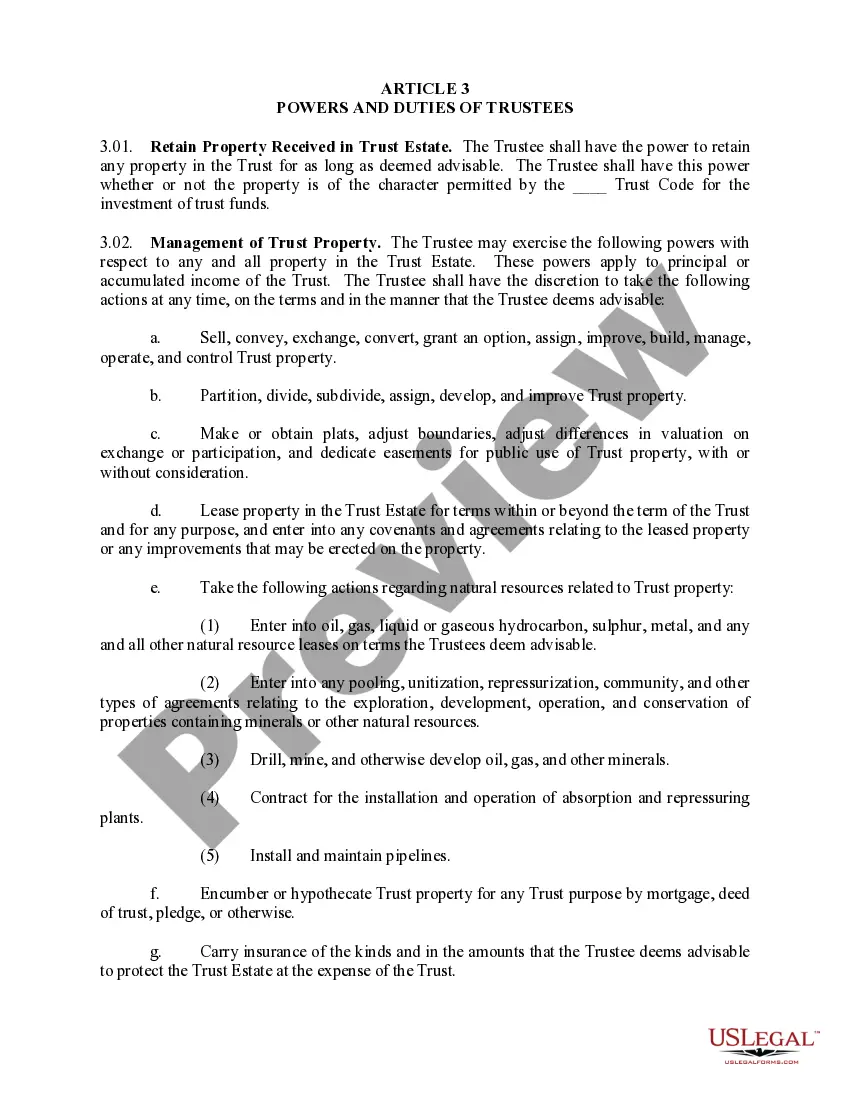
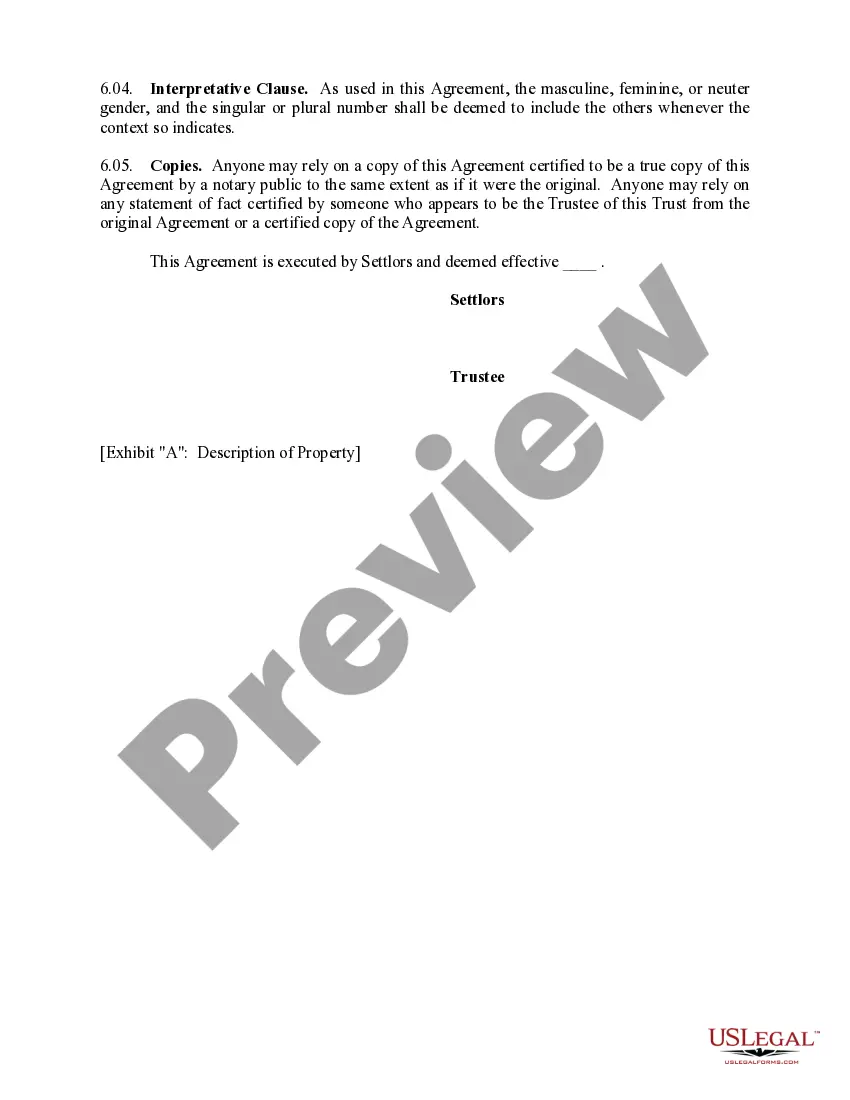
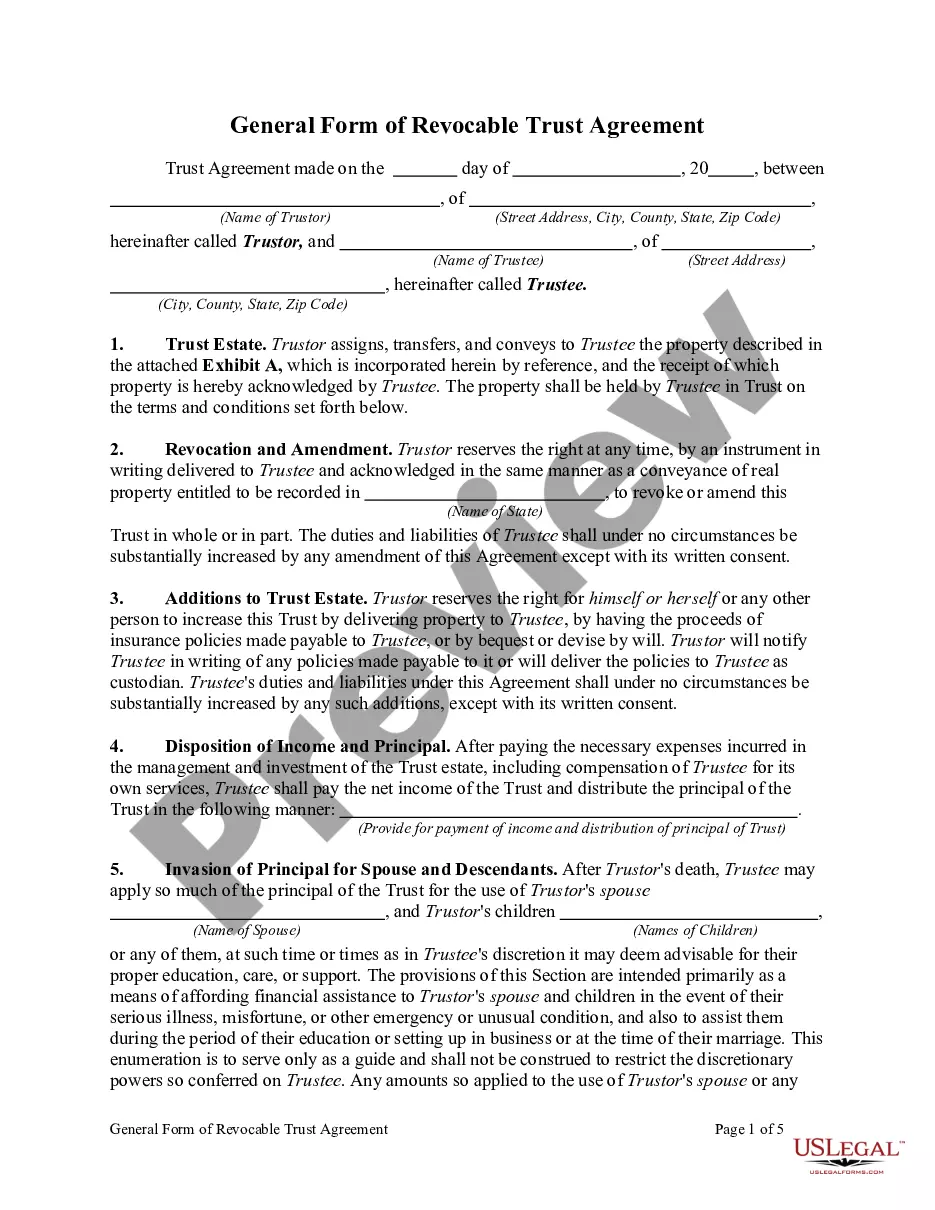
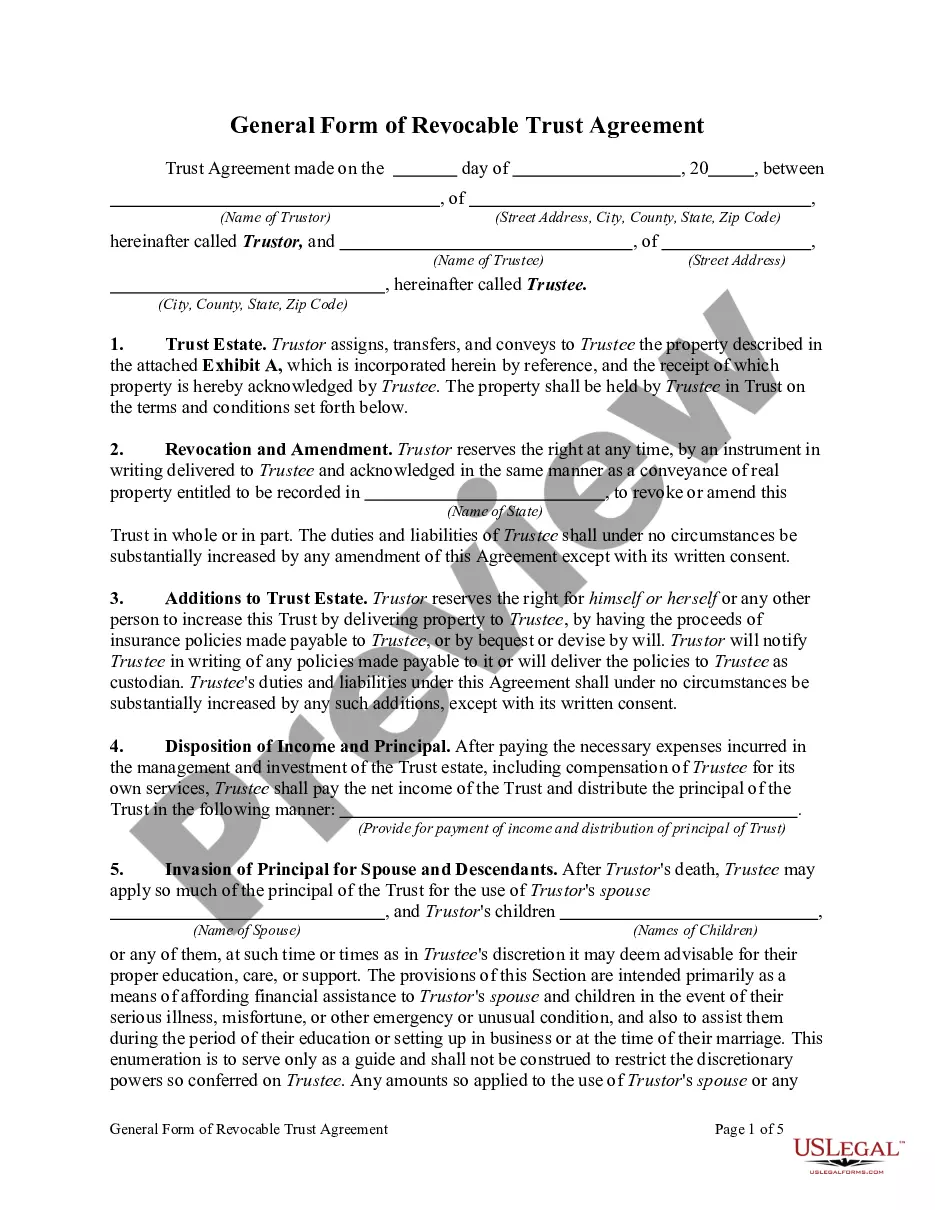
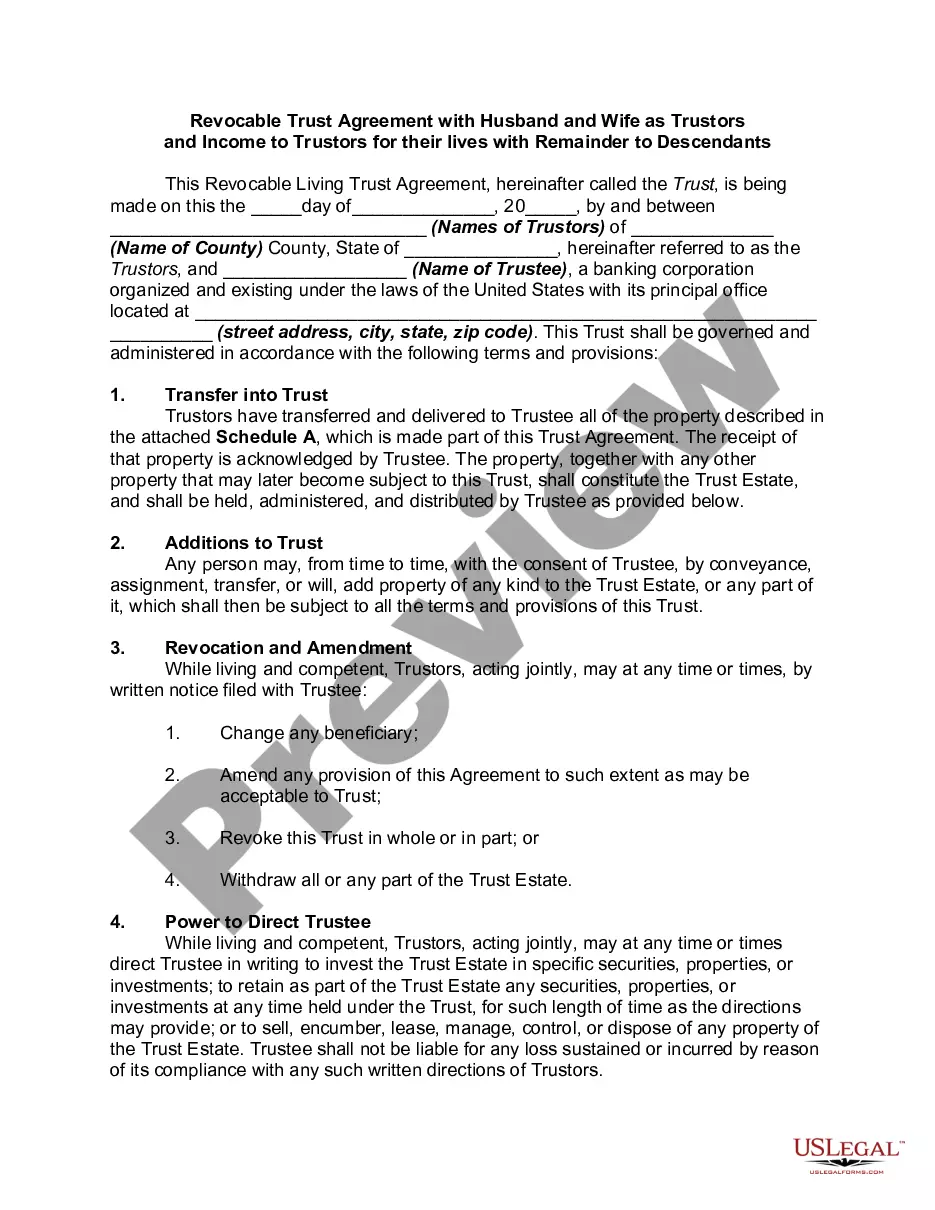
This form provides for the establishment of a trust, specifying the duties and responsibilities of the trustee, and the distribution of the assets to be transferred to the trust. This form of trust is known as a revocable intervivos trust. Being a trust does not automatically accomplish the transfer of an owners property into the trust. This must be done by conveying, in deeds or assignments, the property to the Trustee.
When both of you have passed, the trust assets are distributed according to your instructions in the trust document, much like passing down the family heirloom. Your wishes live on through your planning!
As a husband and wife, you can serve as your own trustees, or you can choose a trusted family member or friend. It's all about making sure the right hands are guiding your treasure!
If one spouse passes, the trust usually remains intact and continues to manage the assets for the surviving spouse. It’s like a safety net, ensuring that everything is taken care of even through life's unexpected turns.
A revocable trust typically doesn't go through the probate process. This means your assets can be passed on to your beneficiaries faster and with less hassle, sparing everyone a lengthy wait.
Absolutely! Since it's a revocable trust, you and your spouse can modify it as needed. Life changes, and so can your trust—just like updating your playlist!
Having a trust can help you both ensure that your wishes are carried out when you're no longer around. It's like locking in your plans for the future, so there are no surprises for your loved ones.
A revocable trust agreement is a legal setup that allows you to manage your assets during your lifetime and decide how they should be distributed after your passing. Think of it as a treasure map for your family's future!