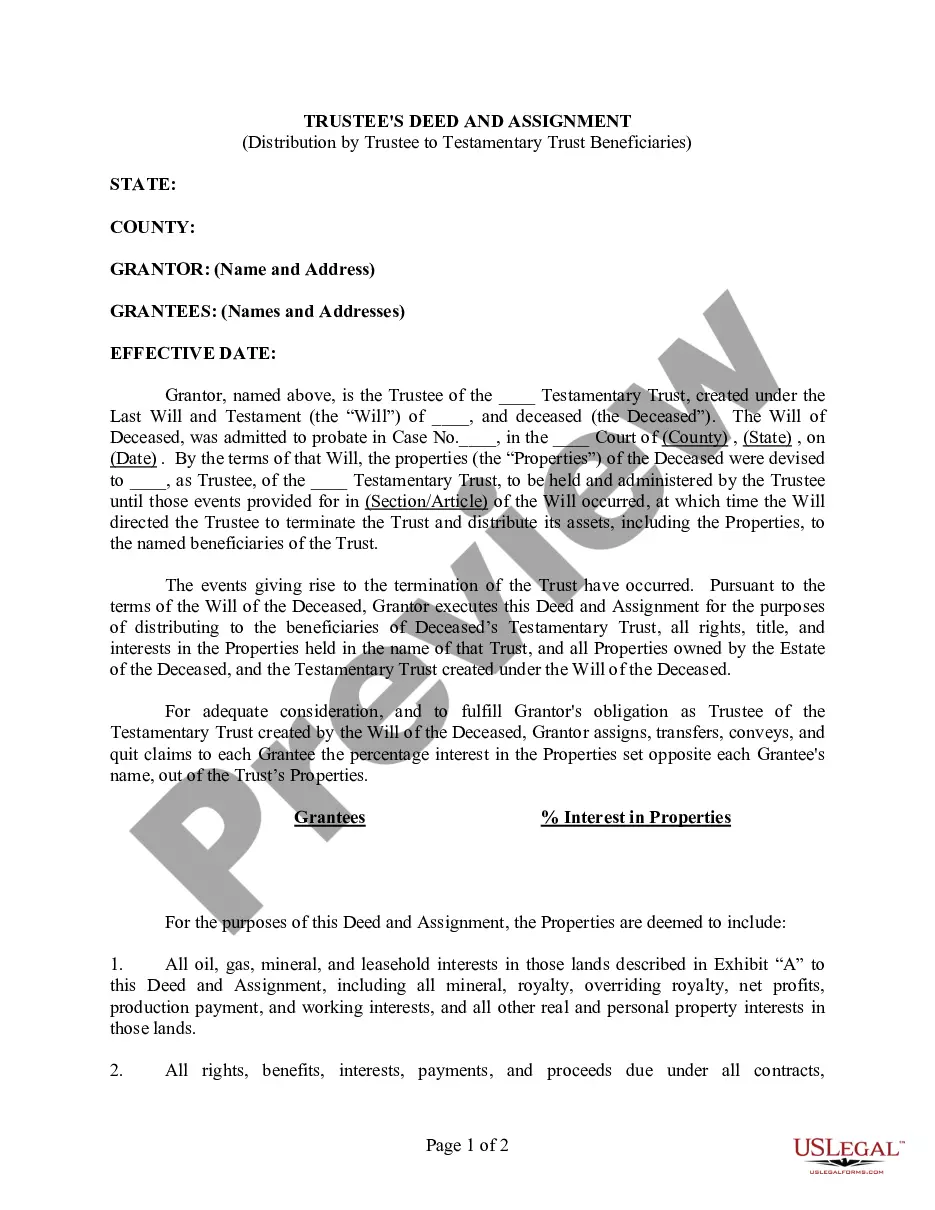
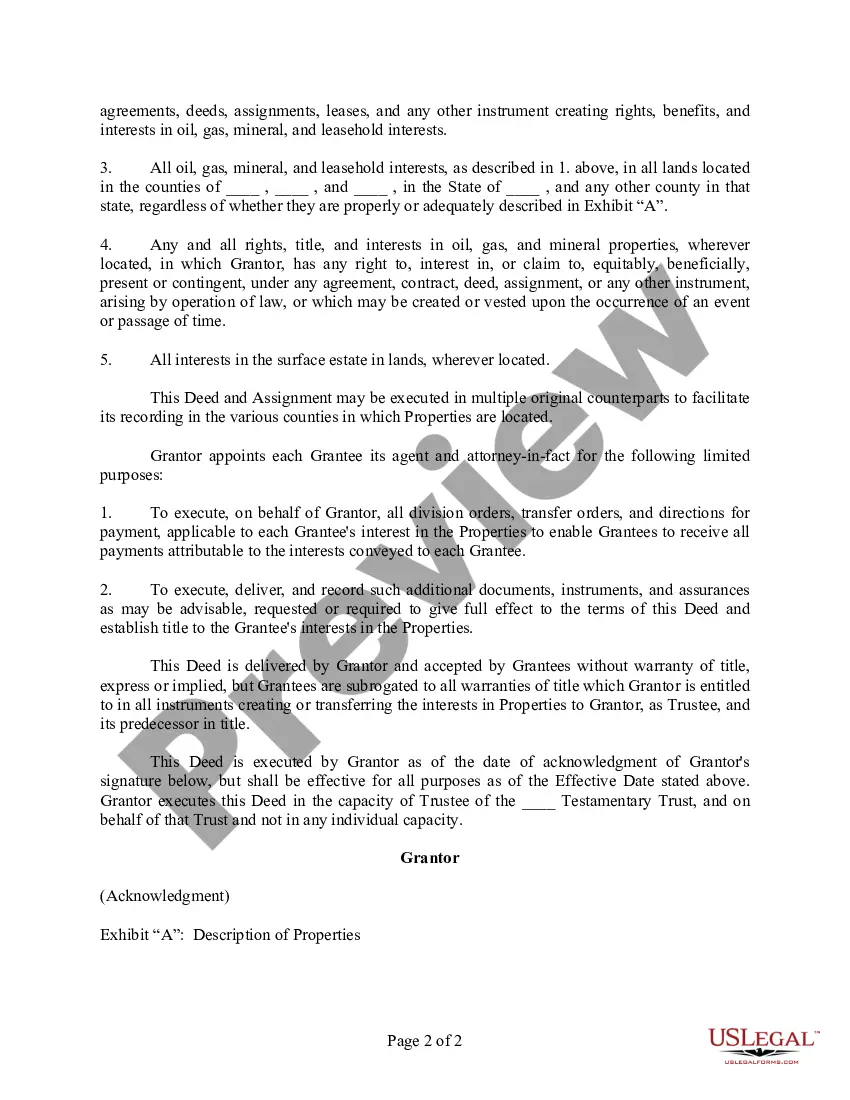
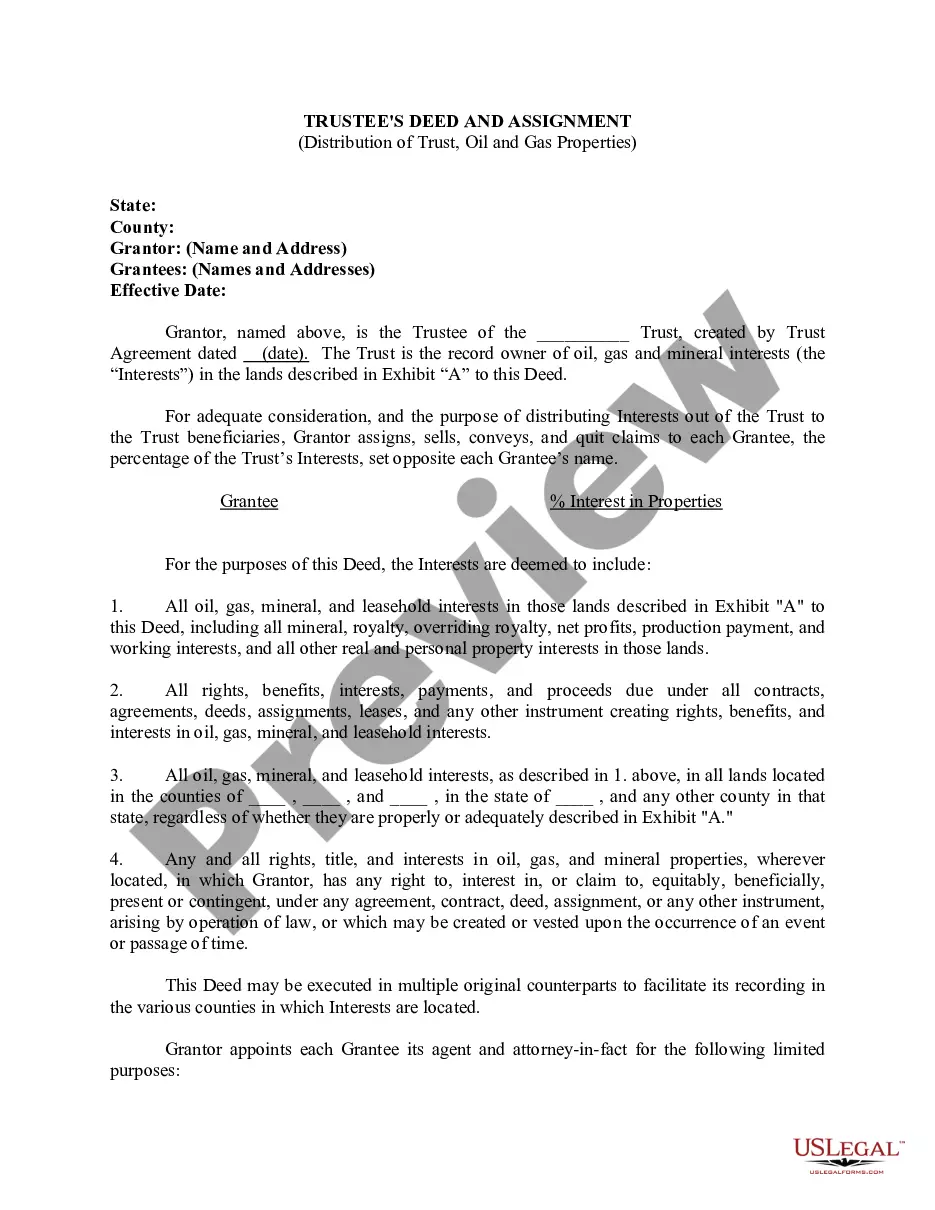
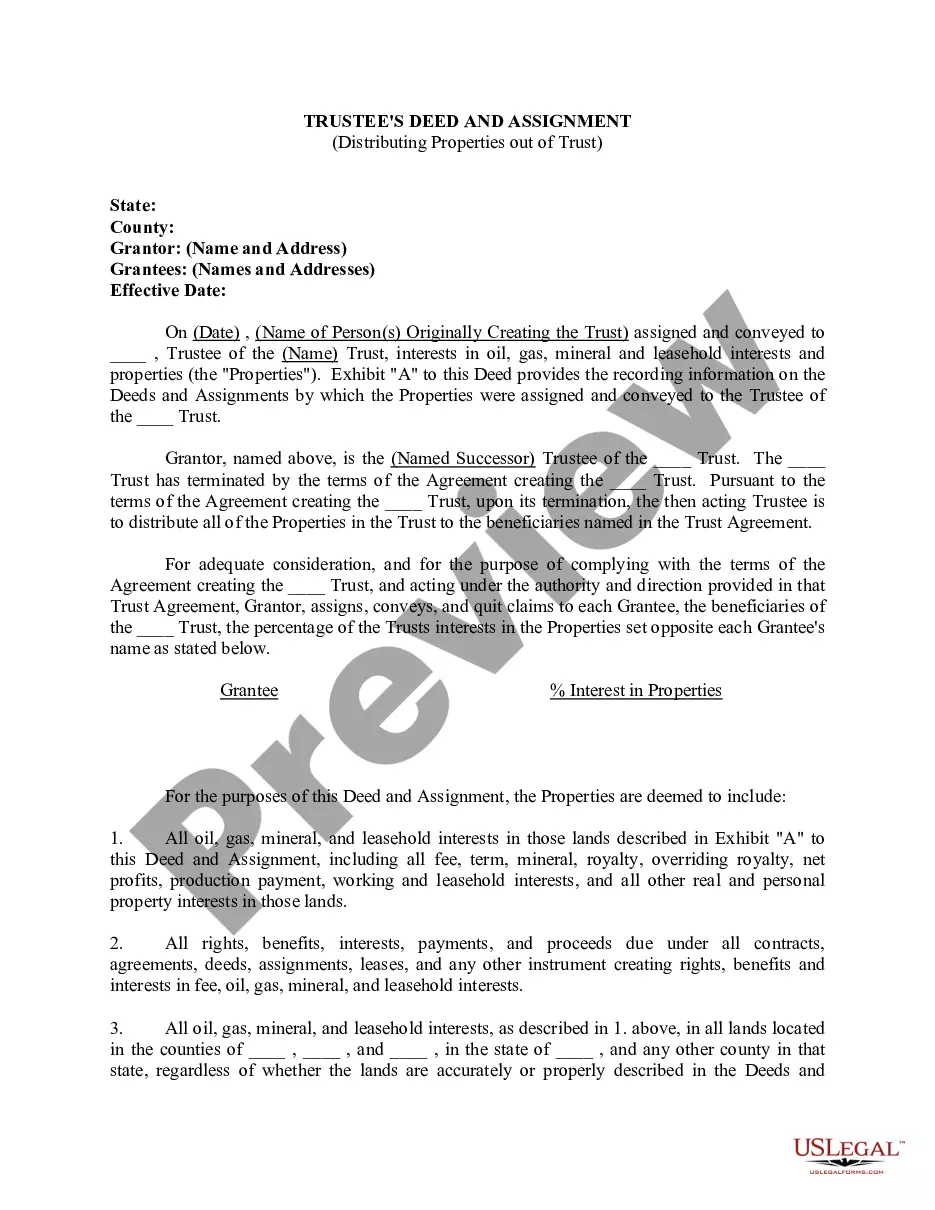
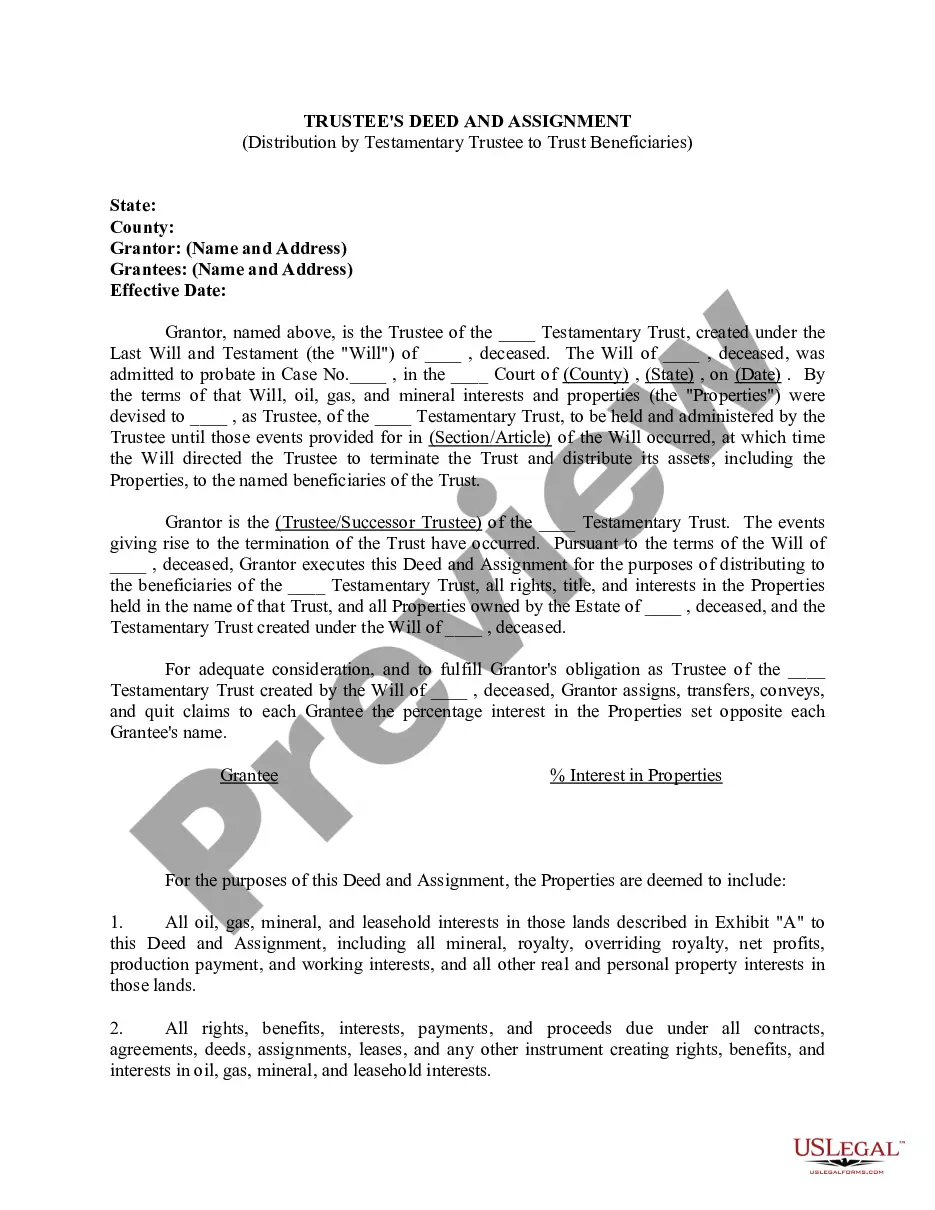
This is a form of deed in which a Trustee of a trust, created under the last will and testament of a deceased party, distributes the assets and interests out of the trust to the beneficiaries named in the trust created under the terms of the deceased's will.
While you can give it a shot on your own, having a lawyer is a smart move. They help navigate the legal maze and ensure everything is up to snuff.
If a trustee drops the ball and doesn't manage the trust properly, beneficiaries can take legal action. It’s a serious matter, and there might be consequences for the trustee.
Generally, no. A Testamentary Trust is set in stone by the will. However, a living trust can have its terms adjusted while you're still kicking.
Once all is said and done, the trustee will distribute the assets according to the trust terms. It's the trustee’s job to make sure everyone gets their fair slice of the pie.
A Testamentary Trust is created as part of a will and comes into action after someone passes away. It's like a safety net for the beneficiaries.
A trustee can be an individual or an institution, as long as they are responsible and trustworthy. They should know the ropes of handling assets.
A Trustee's Deed is basically a document that shows a trustee is transferring property to someone after a trust has been settled. Think of it as the official paper trail.