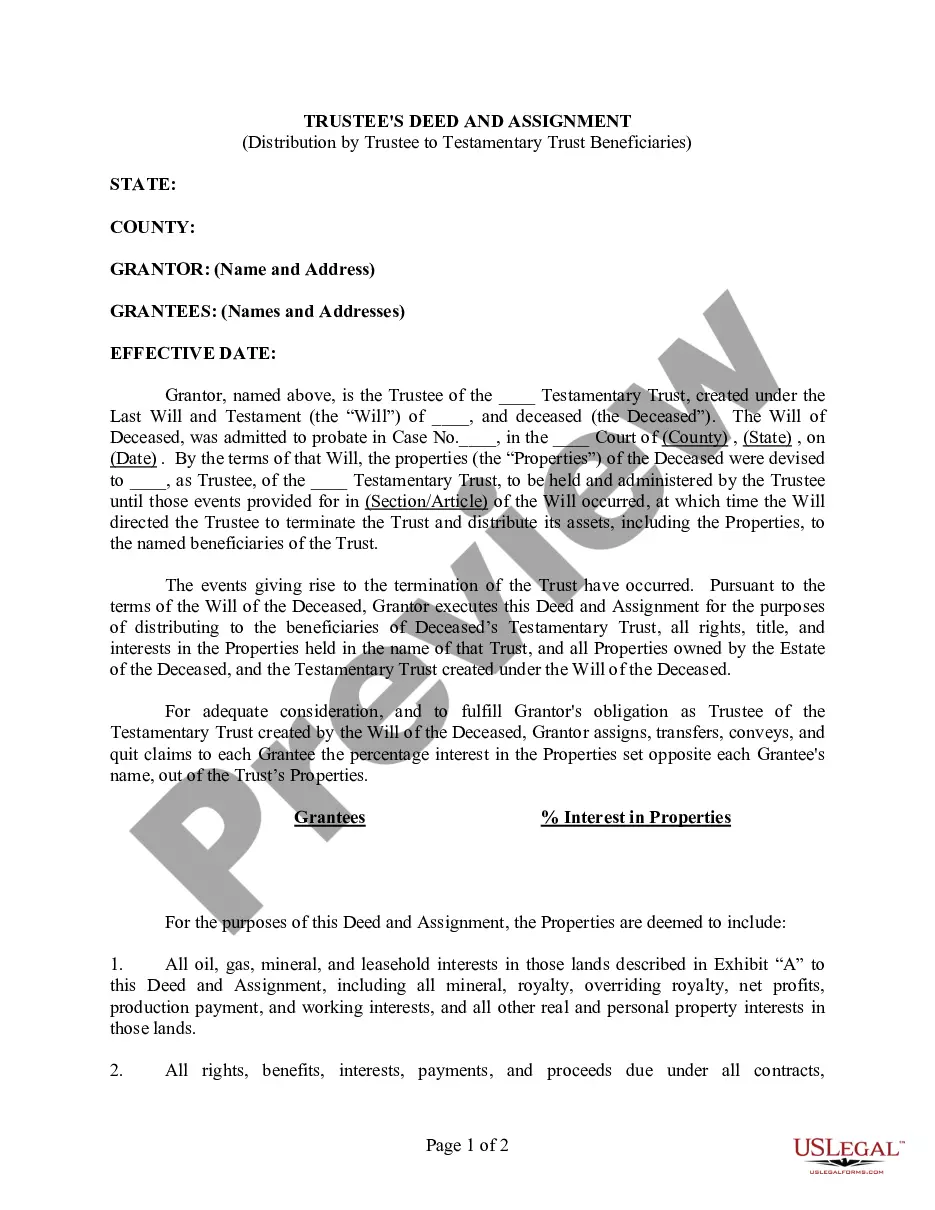
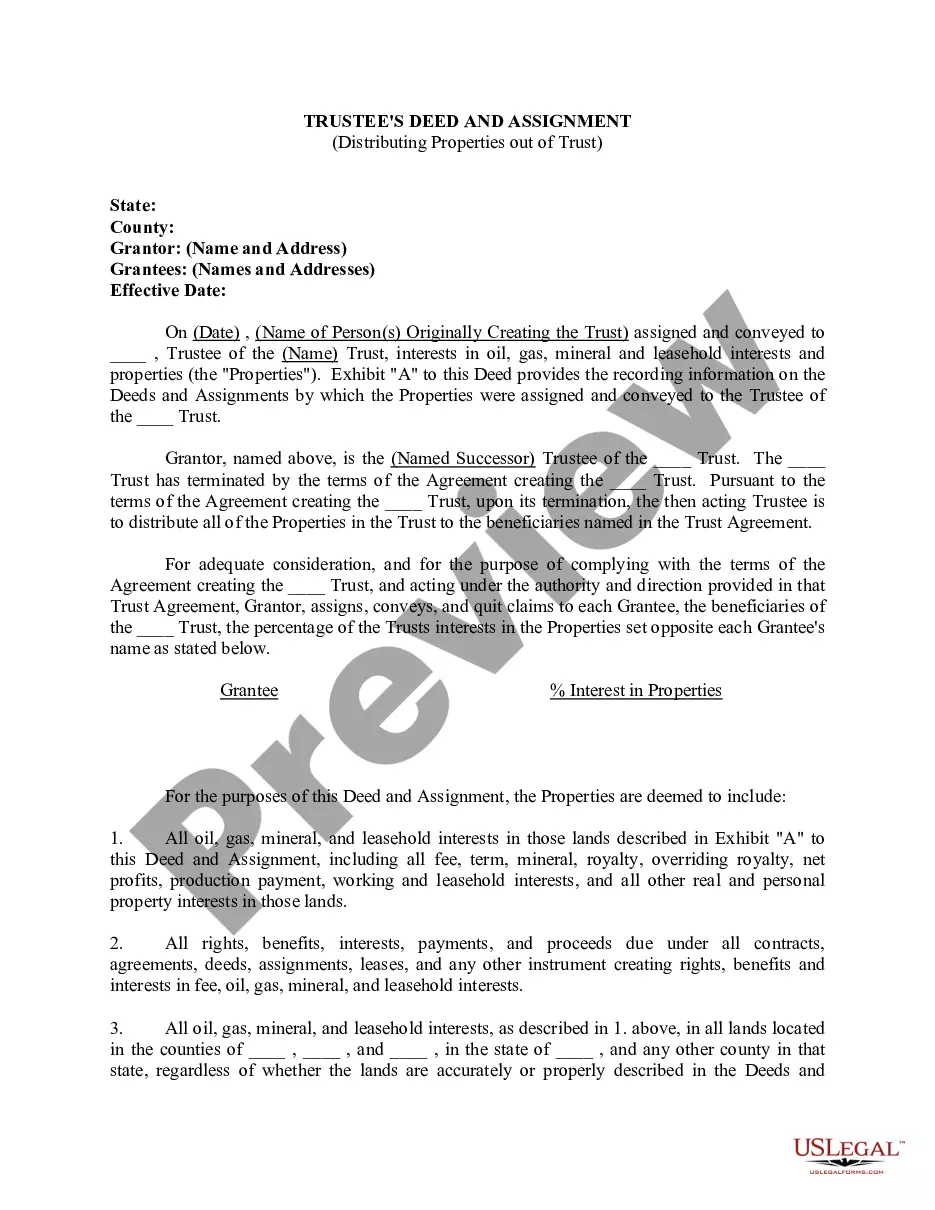
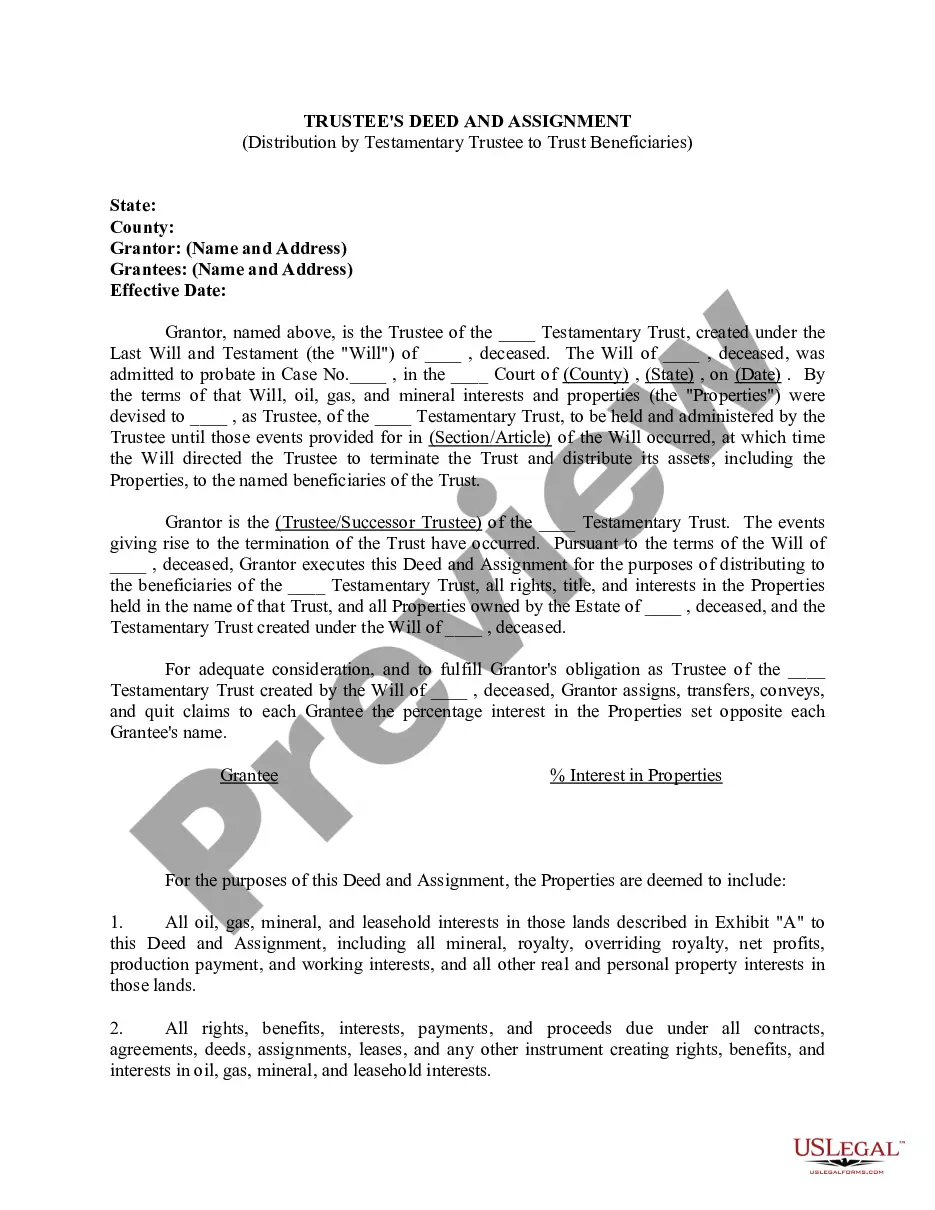
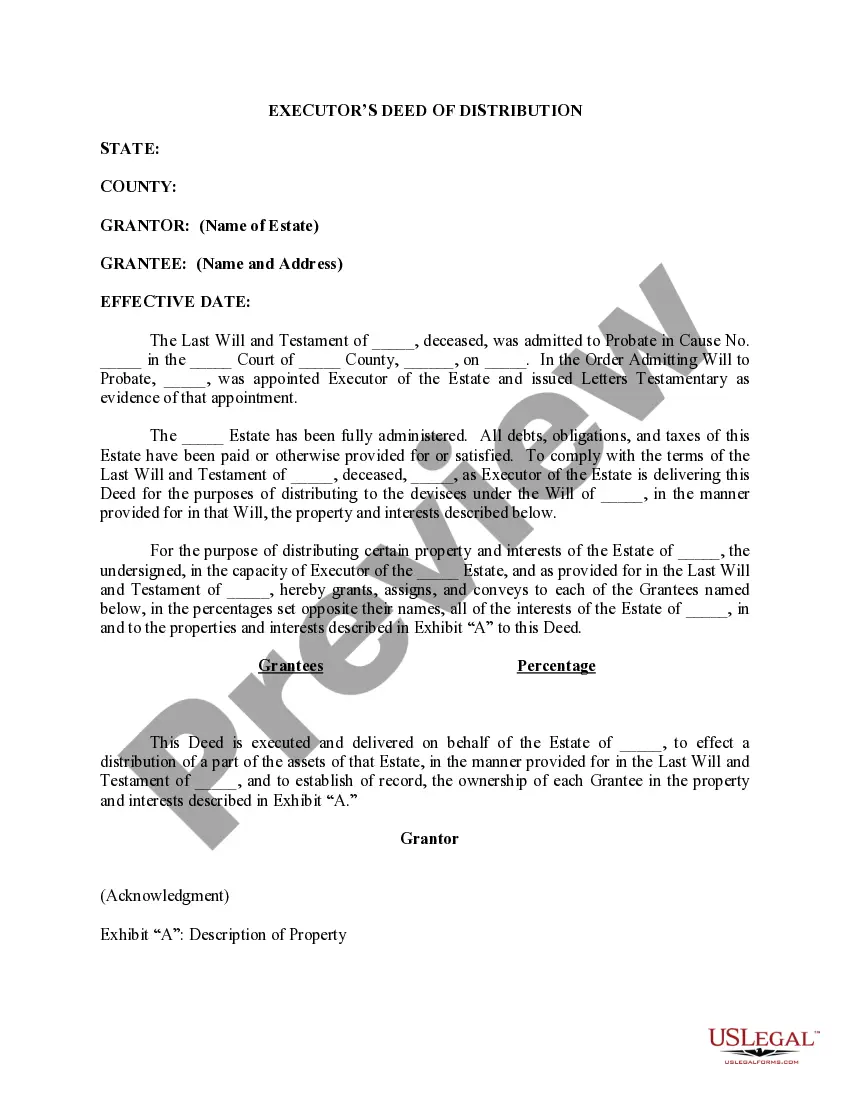
On the conclusion of the administration of an estate, it is often useful for the Executor to execute a deed to the beneficiaries under a will. This form addresses that situation.
The timeline can vary. It might take a few months to several years, depending on the estate’s complexity and any potential disputes. Patience is key – it's not a sprint, it’s a marathon!
Not quite! An Executor’s Deed of Distribution is used to transfer property from the deceased’s estate to the heirs, while a property deed records ownership of a property. It’s sort of like the difference between a map and the territory!
If there’s no will, the state’s intestacy laws come into play. This means the court decides how to distribute the assets, like a game of Rock, Paper, Scissors – but the rules are set by law!
While it's not strictly required to have a lawyer, it's often a good idea to have one in your corner. They can help navigate any legal twists and turns, ensuring you don't hit a snag down the road.
Only the executor appointed by the court can create this deed. They’re the ones entrusted to take care of the estate’s affairs and ensure everything is squared away.
An Executor's Deed of Distribution is a legal document that allows the executor of an estate to distribute property to the heirs or beneficiaries after someone passes away. It’s like giving the final gift basket after sorting through the estate!
Trusted and secure by over 3 million people of the world’s leading companies
Seattle Washington Executor's Deed of Distribution