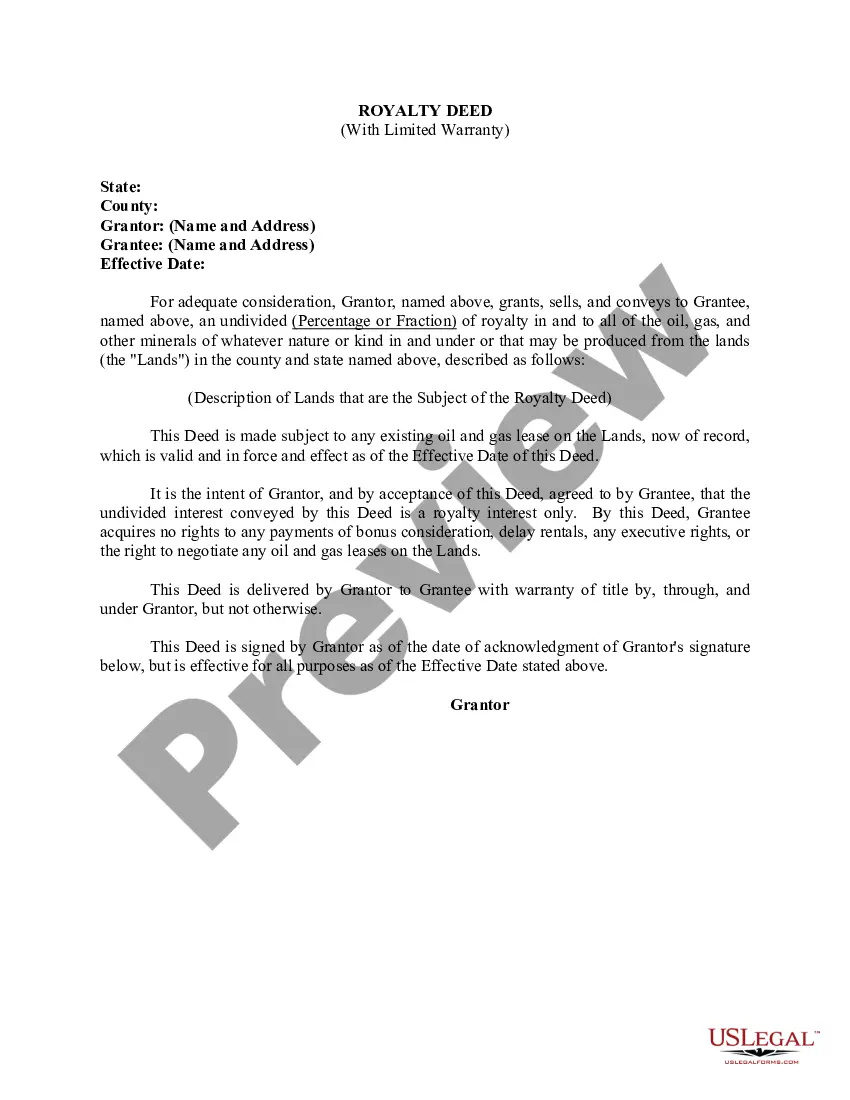
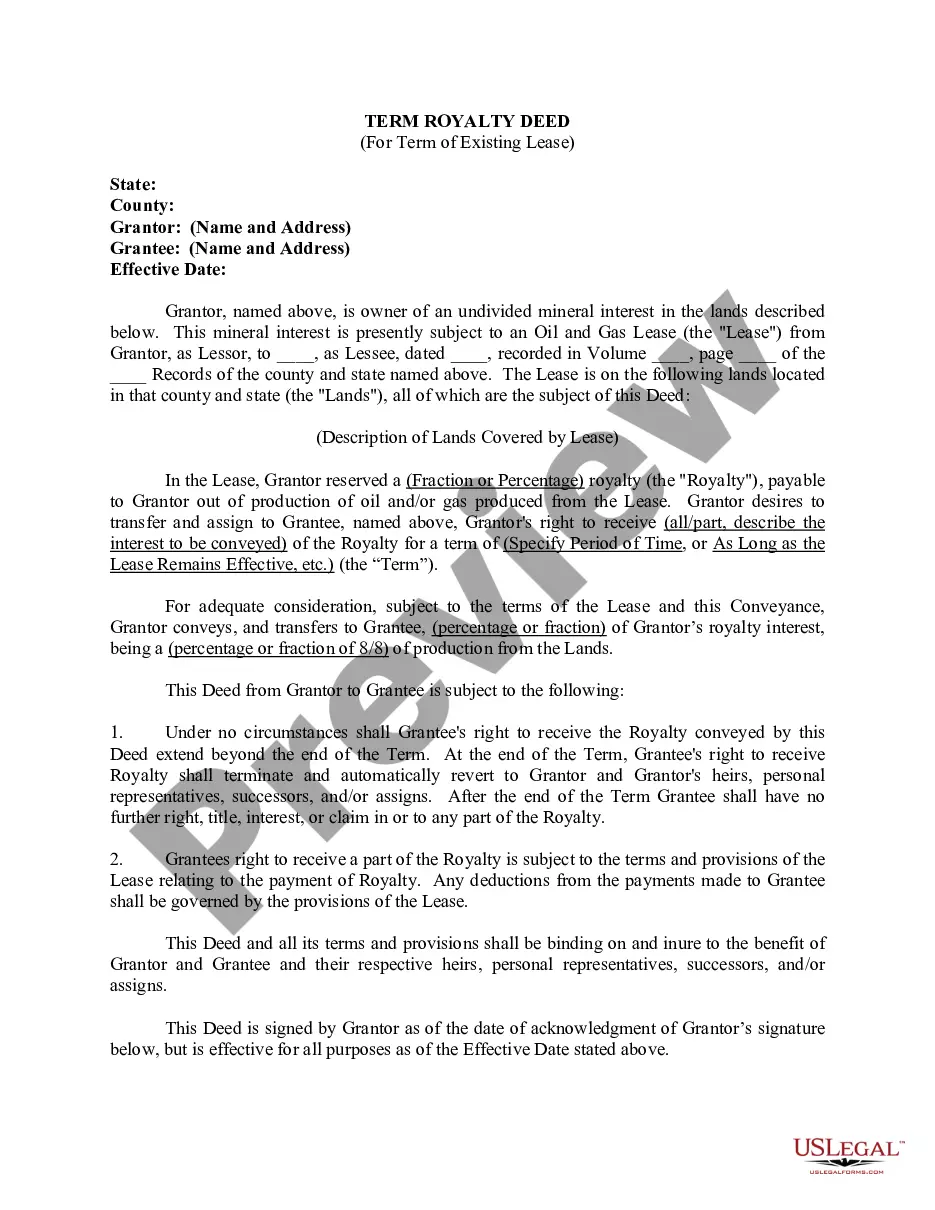
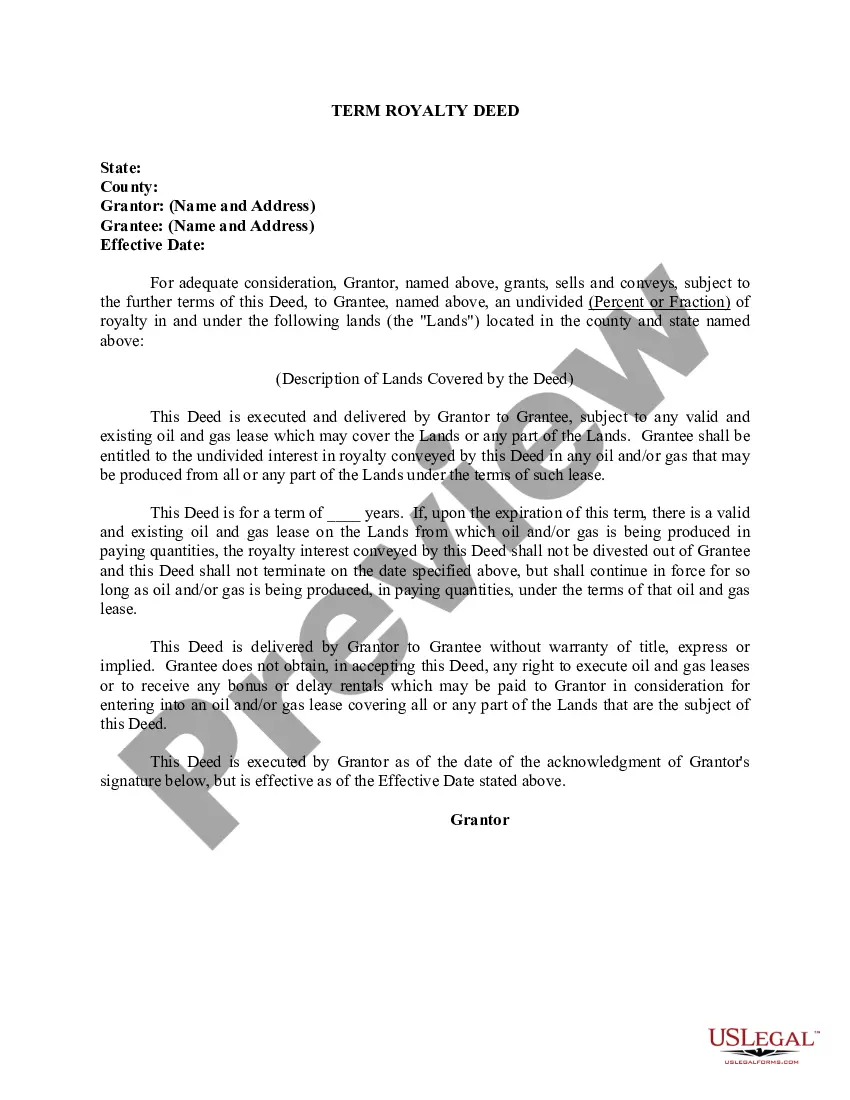
This form conveys a royalty interest for a specified term of years. If there is production at the end of that term, or the lands are subject to an oil and gas lease, the interest will continue to be owned by the grantee until production ceases.

Kansas City Missouri Term Royalty Deed Related Searches
How to fill out kansas city online
kansas city form rd-108 instructions
KCMO Quick Tax login
kansas city rd-111
kansas city rd-108
Kansas City tax
kansas city rd-105
KCMO earnings tax
Interesting Questions
When you sell the land, the Royalty Deed usually remains in place, allowing the buyer to still access the rights. It’s like passing along a family heirloom—just because you sell the house doesn’t mean you take the treasure with you.
Generally, once a Royalty Deed is signed, it can’t be easily changed or revoked unless both parties agree to it or there’s a specific provision in the deed. It’s a bit like a promise—you’ve got to keep your word.
You should include details like the property description, the specific rights being transferred, and any royalties or payment agreements. It’s like writing a recipe where every ingredient matters.
While it’s not strictly necessary, having a lawyer can be a smart move. They can help you navigate the legal waters and ensure everything is shipshape.
Landowners, oil and gas companies, or mineral rights buyers often use Royalty Deeds. It's a common practice in areas where resources are plentiful, like a gold rush in the old days.
While a regular deed transfers ownership of land itself, a Royalty Deed focuses on the rights to minerals or resources. Think of it as selling the rights to dig for gold while still keeping the land above.
A Royalty Deed is a type of legal document that transfers ownership of rights to minerals or resources found beneath a piece of land. It's like giving someone the keys to the treasure chest hidden beneath your property.