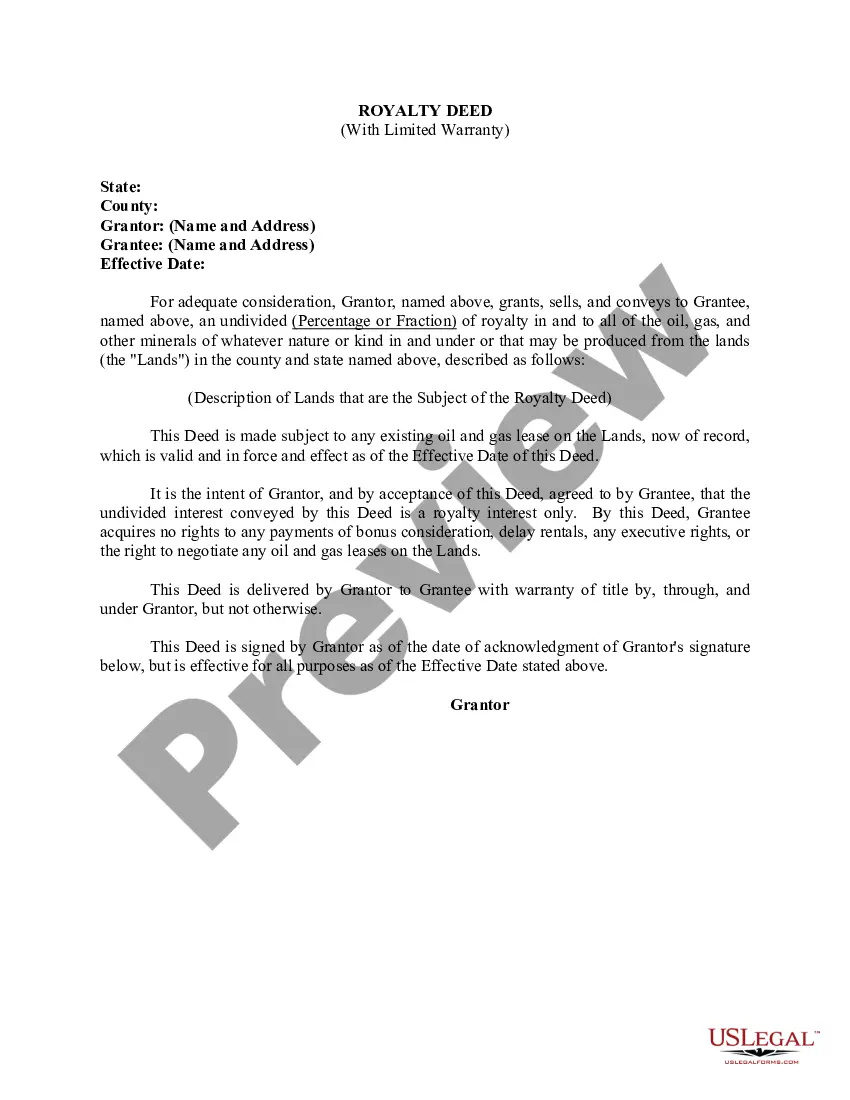
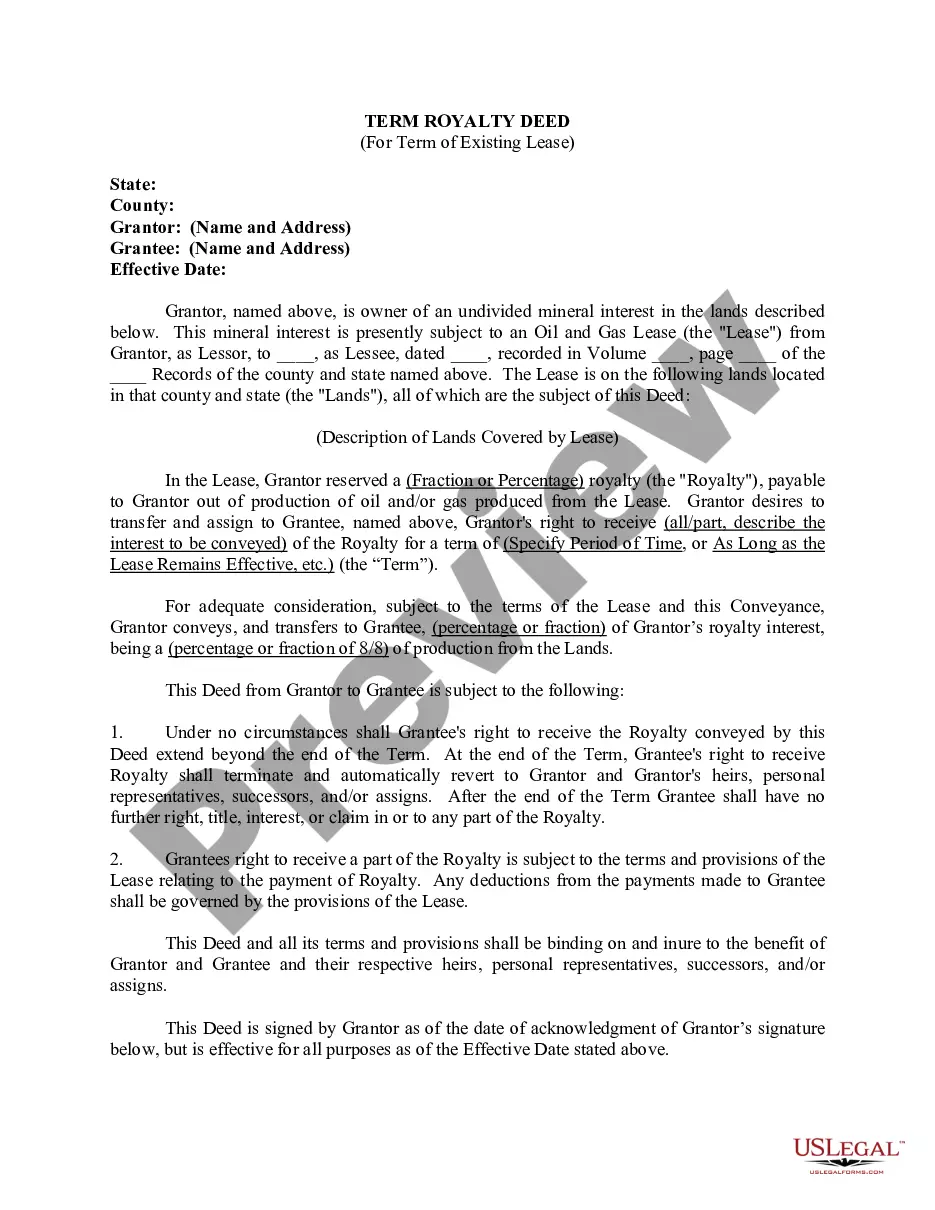
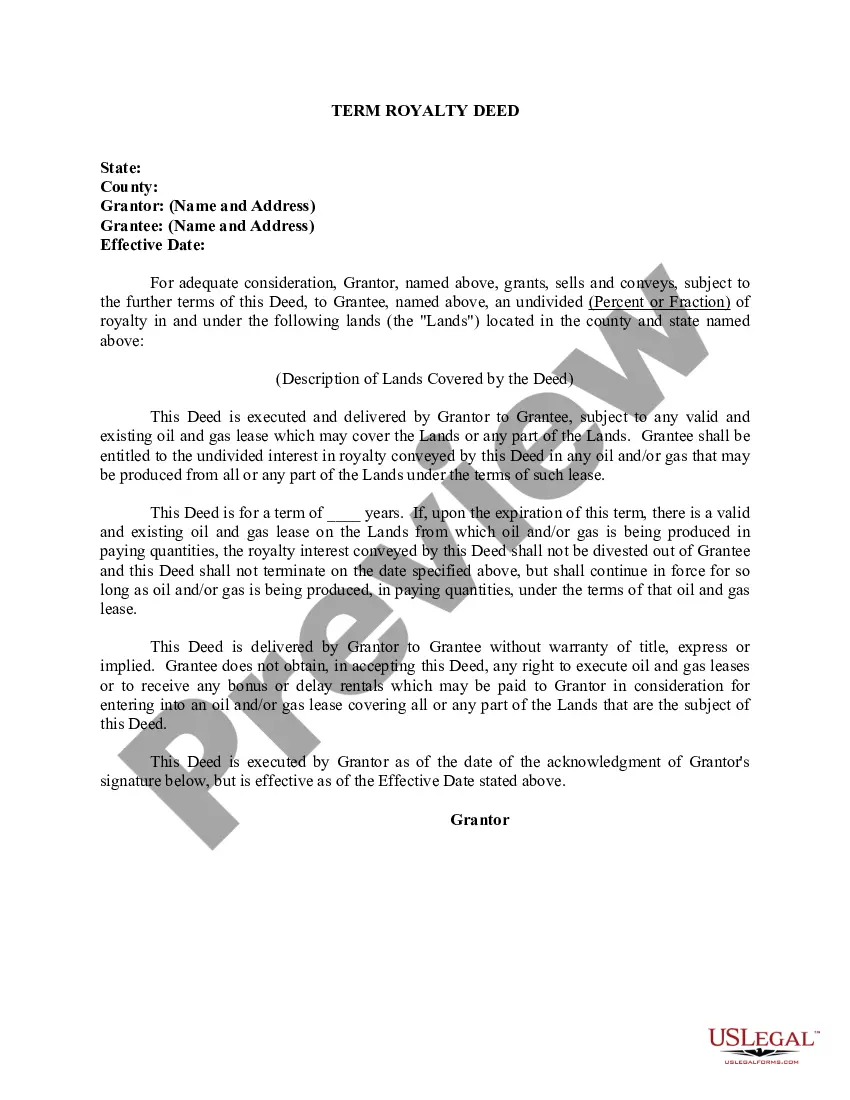
This form conveys a royalty interest for a specified term of years. If there is production at the end of that term, or the lands are subject to an oil and gas lease, the interest will continue to be owned by the grantee until production ceases.

Generally, once you sign a Royalty Deed, it's pretty much set in stone. Canceling it later can be like trying to unring a bell, but it may be possible with the right legal procedure.
If there are multiple Royalty Deeds, it could get a bit tangled. Each holder may have rights to different parts of the royalty profits, so it's best to keep everything crystal clear from the start.
It's wise to consult a lawyer when dealing with Royalty Deeds. They can help ensure everything's on the up and up and that you know what you're getting into.
While a regular deed transfers ownership of the property, a Royalty Deed keeps the land ownership in one person's hands but allows another to benefit from any profits or royalties that come from it.
A Royalty Deed is like a ticket that grants someone the rights to royalty payments from a particular piece of land, like a golden egg from a goose, without giving them ownership of the land itself.