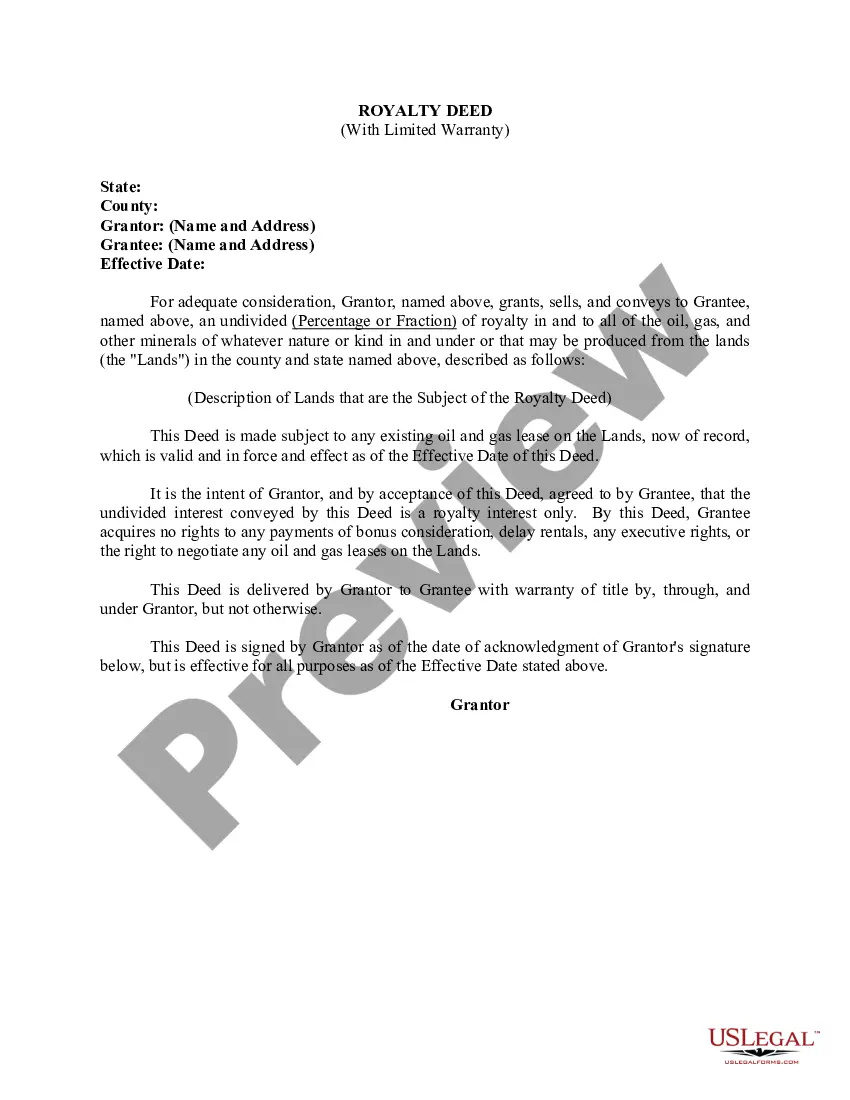
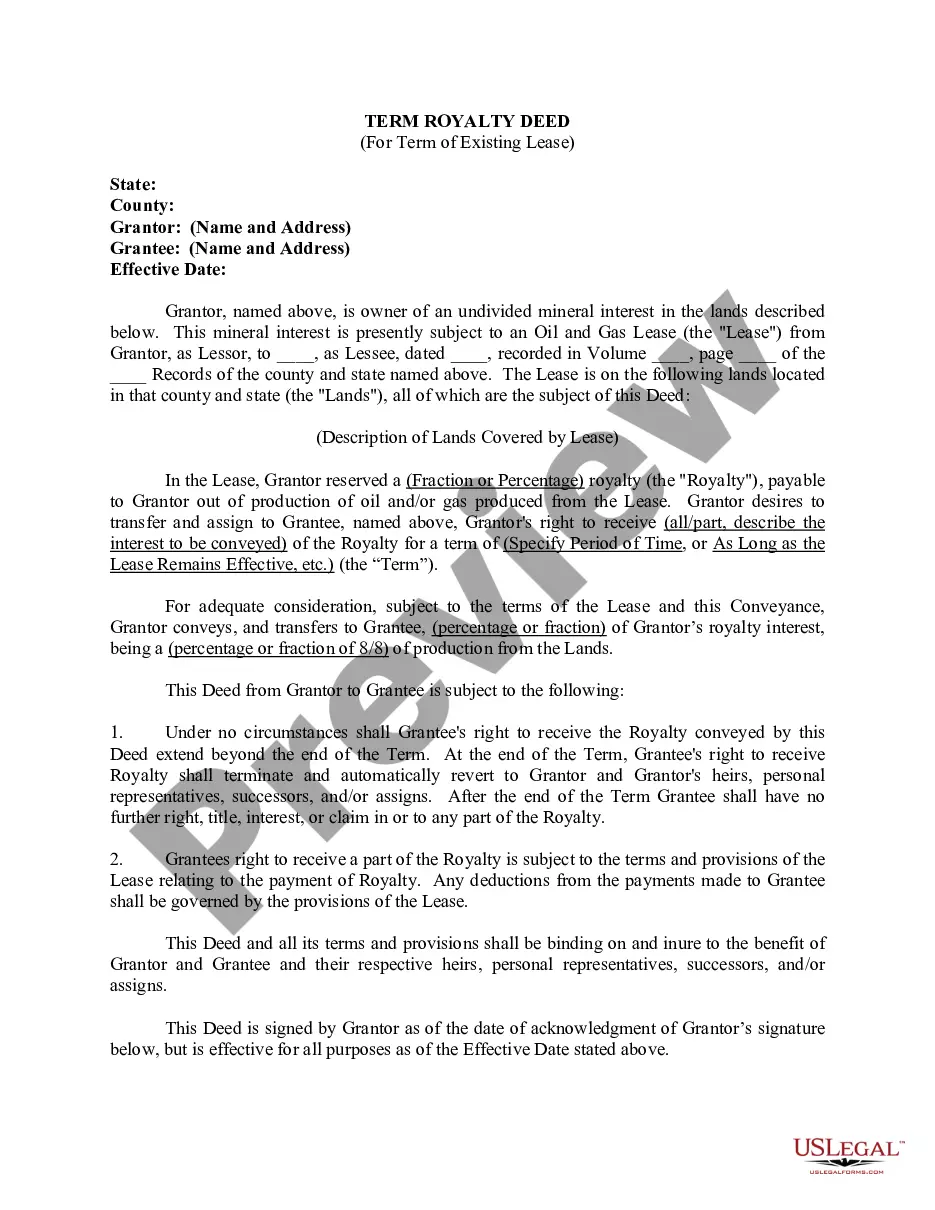
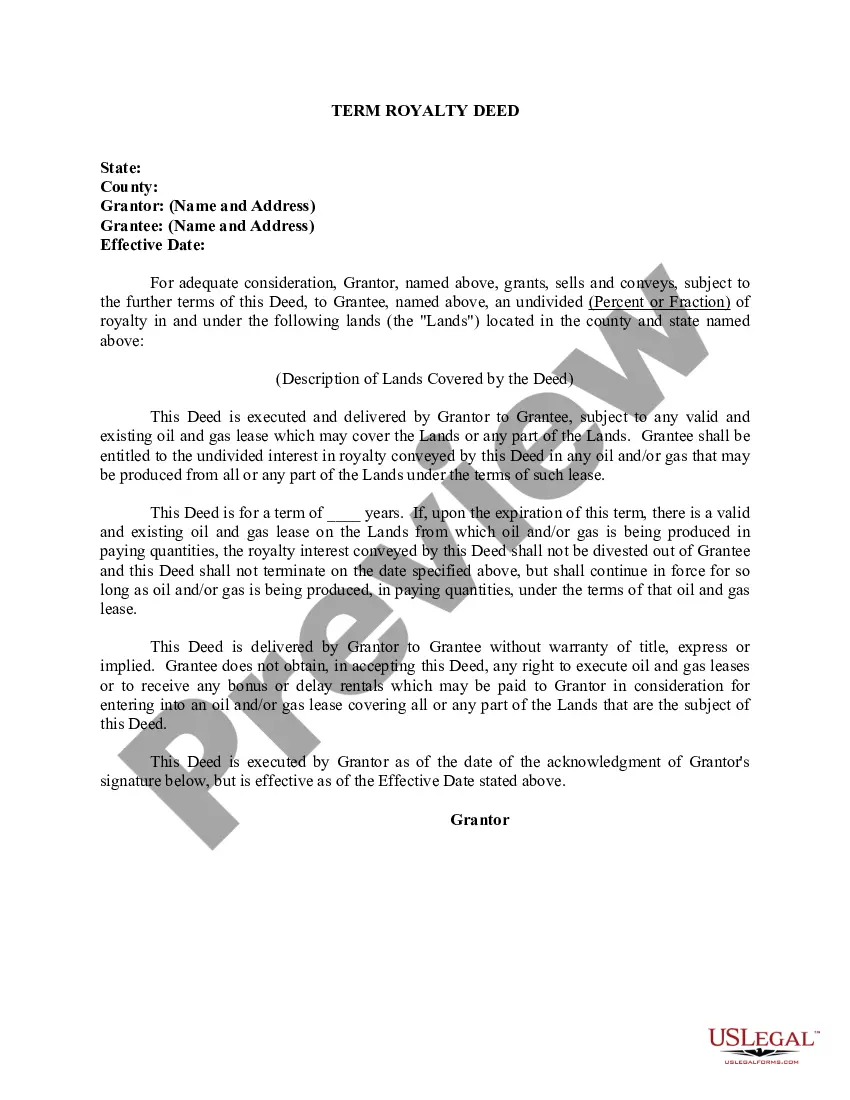
This form conveys a royalty interest for a specified term of years. If there is production at the end of that term, or the lands are subject to an oil and gas lease, the interest will continue to be owned by the grantee until production ceases.

You can check public records at the county clerk’s office or consult with a title company—they’re in the know about such things!
Yes, transferring mineral rights can have tax consequences, so it’s wise to consult a tax professional to avoid any surprises.
Before signing, think about the long-term implications on your property, the value of your mineral rights, and whether you're ready to share any future profits.
Unfortunately, once a Royalty Deed is signed and recorded, it's typically a done deal. You can't just change your mind like that.
When you sign a Royalty Deed, you're giving someone else the right to extract and profit from the minerals. Basically, you're sharing the spoils of what's under your property!
Anyone looking to sell off their mineral rights while still owning their property might consider a Royalty Deed, including landowners and investors.
A Royalty Deed is a legal document that allows the owner to transfer certain rights to the minerals or resources in the land while keeping the ownership of the land itself.