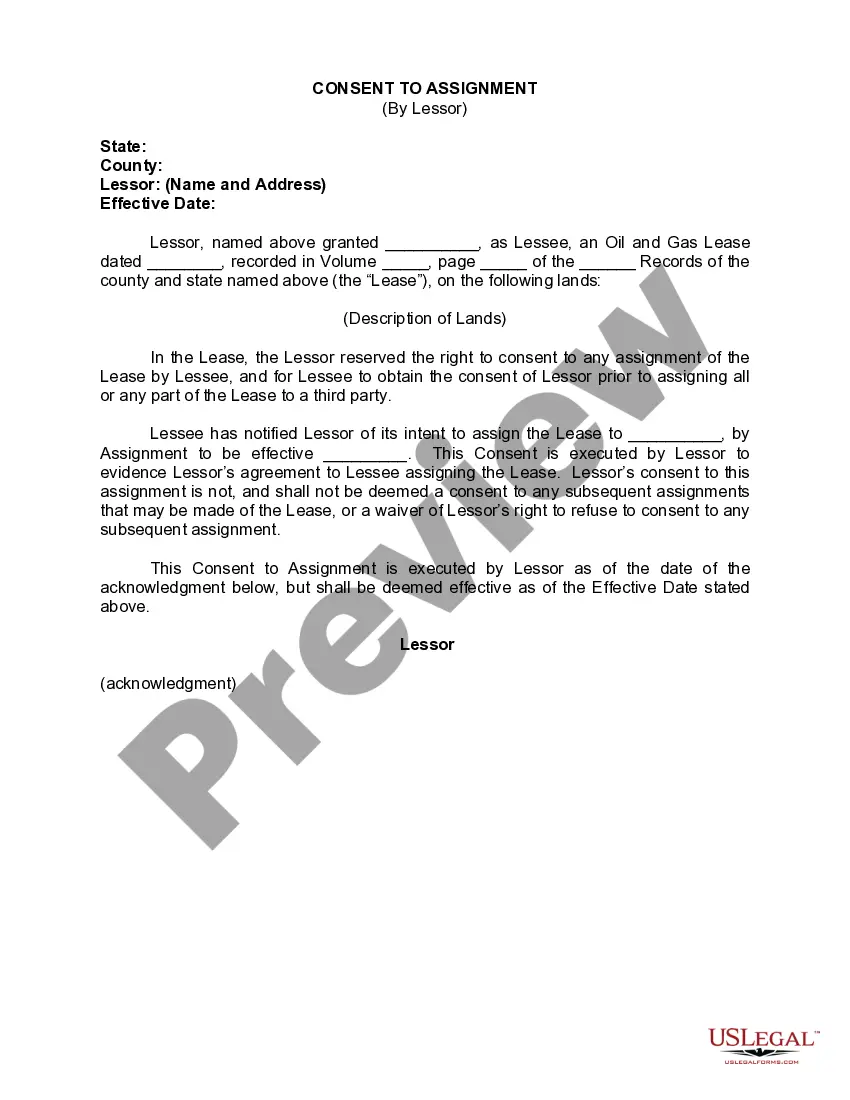
Some leases require the consent of the lessor to any assignment to be made of a lease by the lessee. This form provides for that consent, specifically providing that it will not be deemed a consent to any subsequent assignments made of the lease.
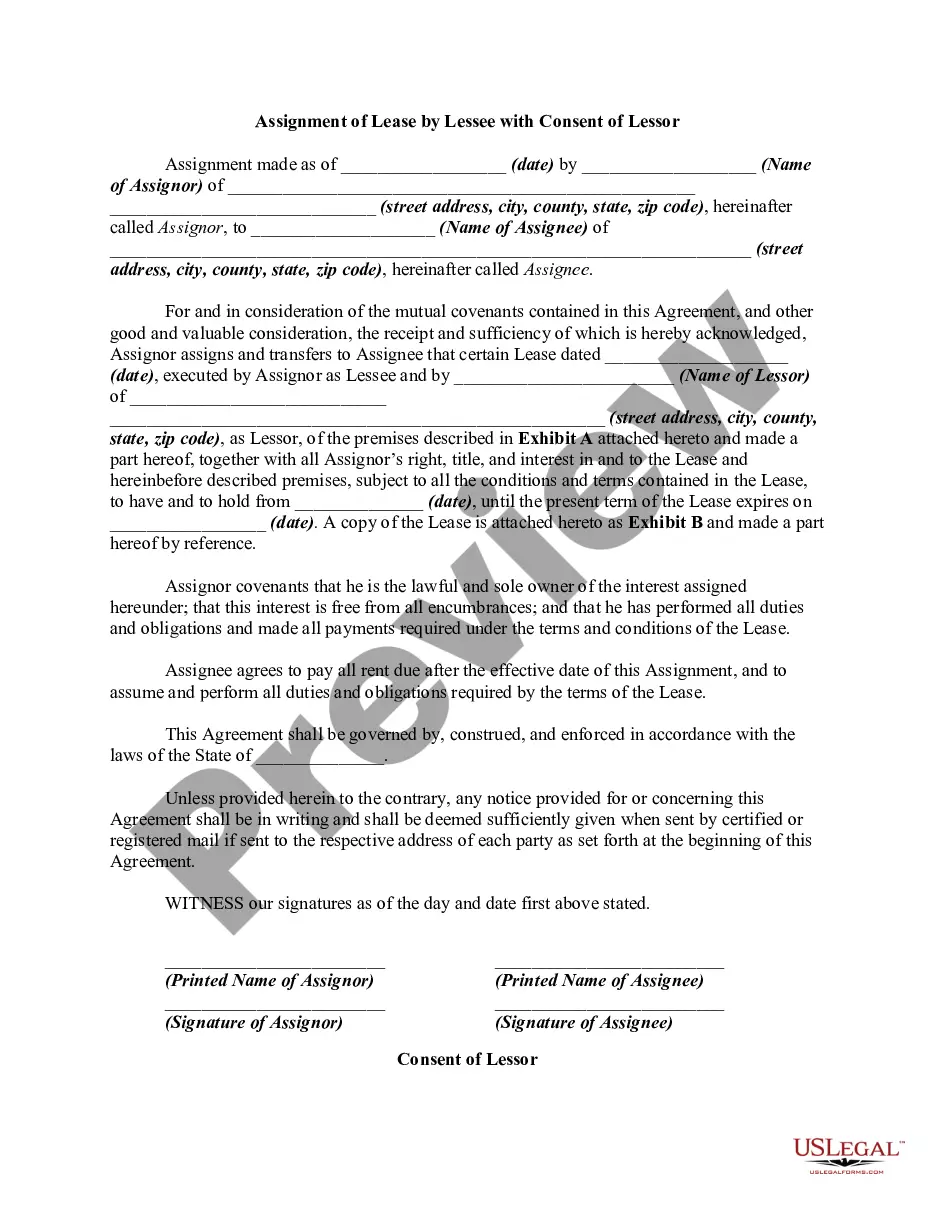
If a tenant assigns their lease without getting consent, it could lead to legal trouble or eviction. It's like jumping into the deep end without checking for water first.
No, it's not a lease termination. The original tenant still holds some responsibility until the lease is fully assigned. It's like a backup player—still part of the team until the end.
Yes, the new tenant usually has to meet the owner's criteria, such as creditworthiness and income. It’s about making sure the new tenant is a good fit.
A tenant should approach their lessor with a written request outlining who they want to assign the lease to and why. It's like making a case for a new teammate.
Yes, the property owner can refuse if they have valid reasons, like the new tenant not being financially reliable. It's like a coach choosing the best player for the team.
Sometimes life changes happen, and a tenant might need to move. The Consent to Assignment lets them find someone to take over their lease without breaking the rules.
It's an agreement where the property owner allows a tenant to transfer their lease to someone else. Think of it like passing the baton in a relay race.