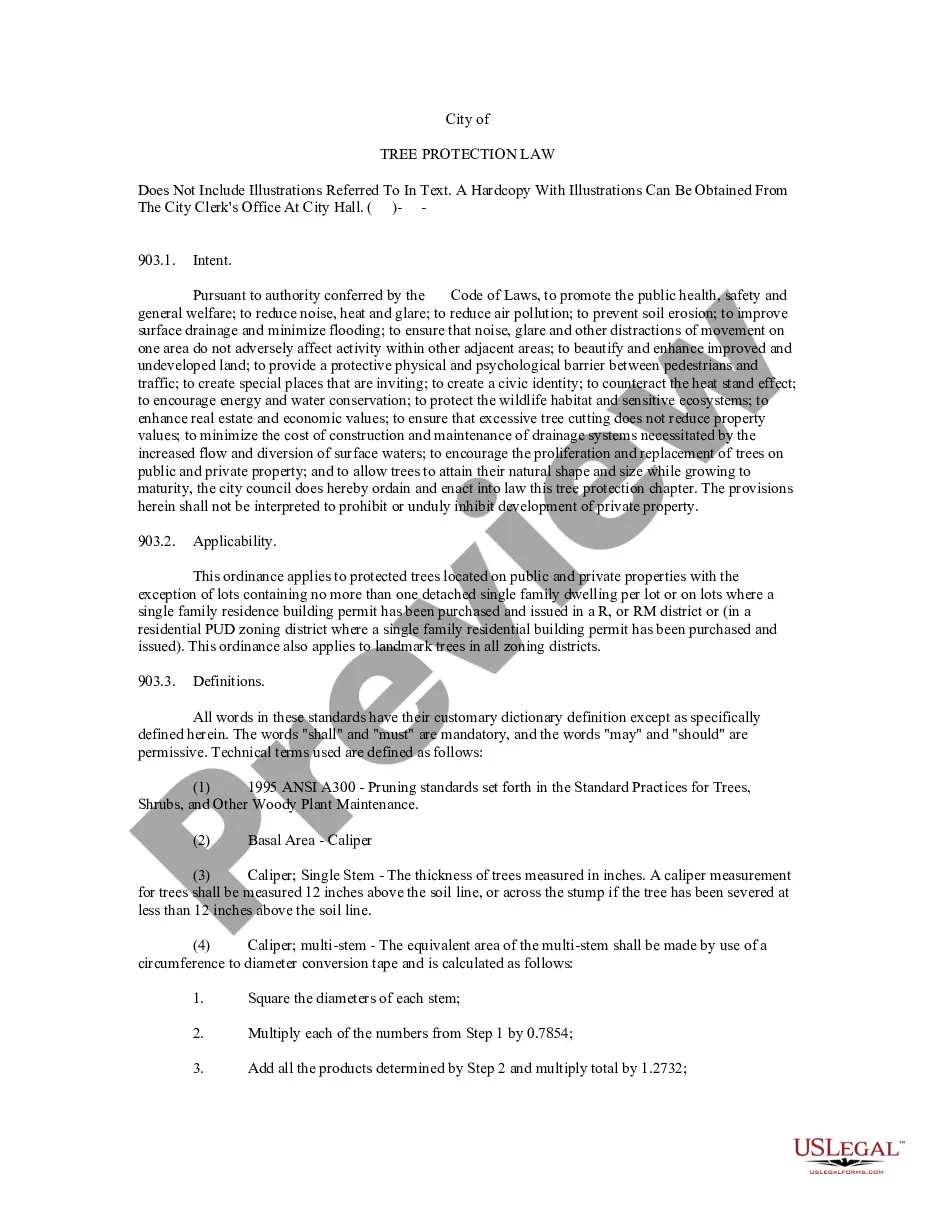
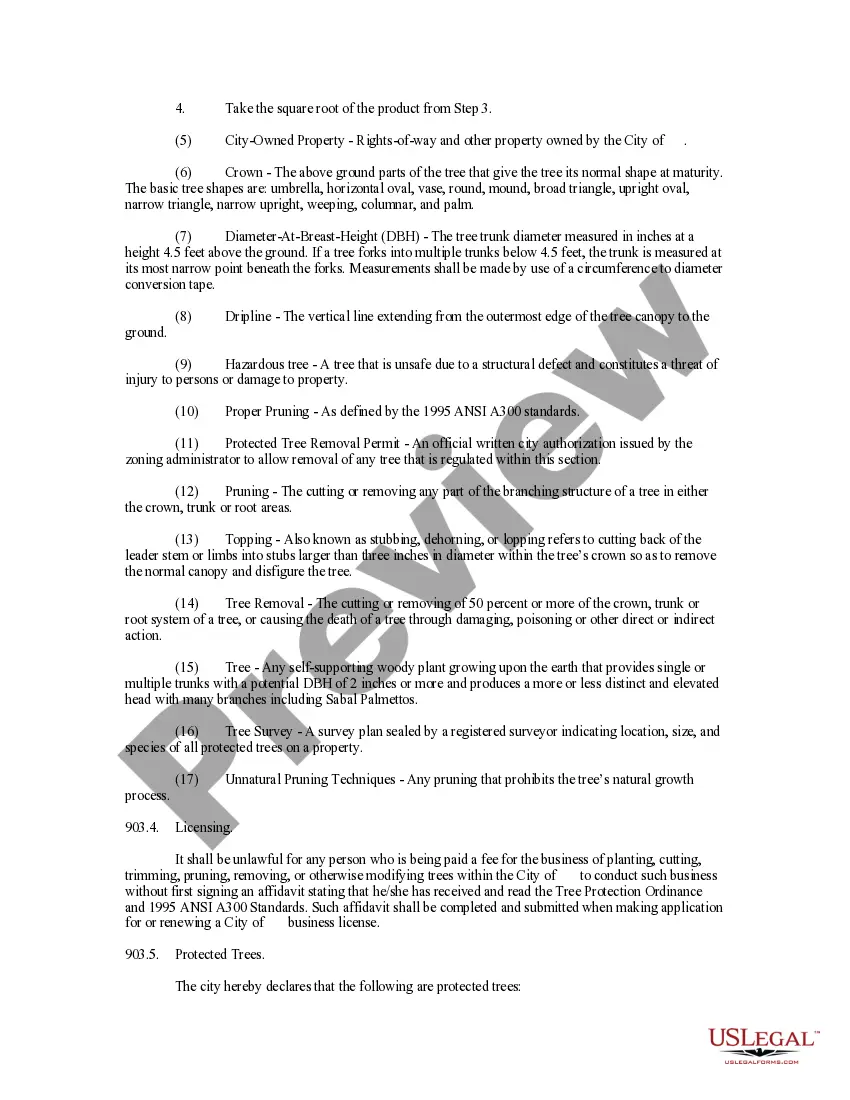
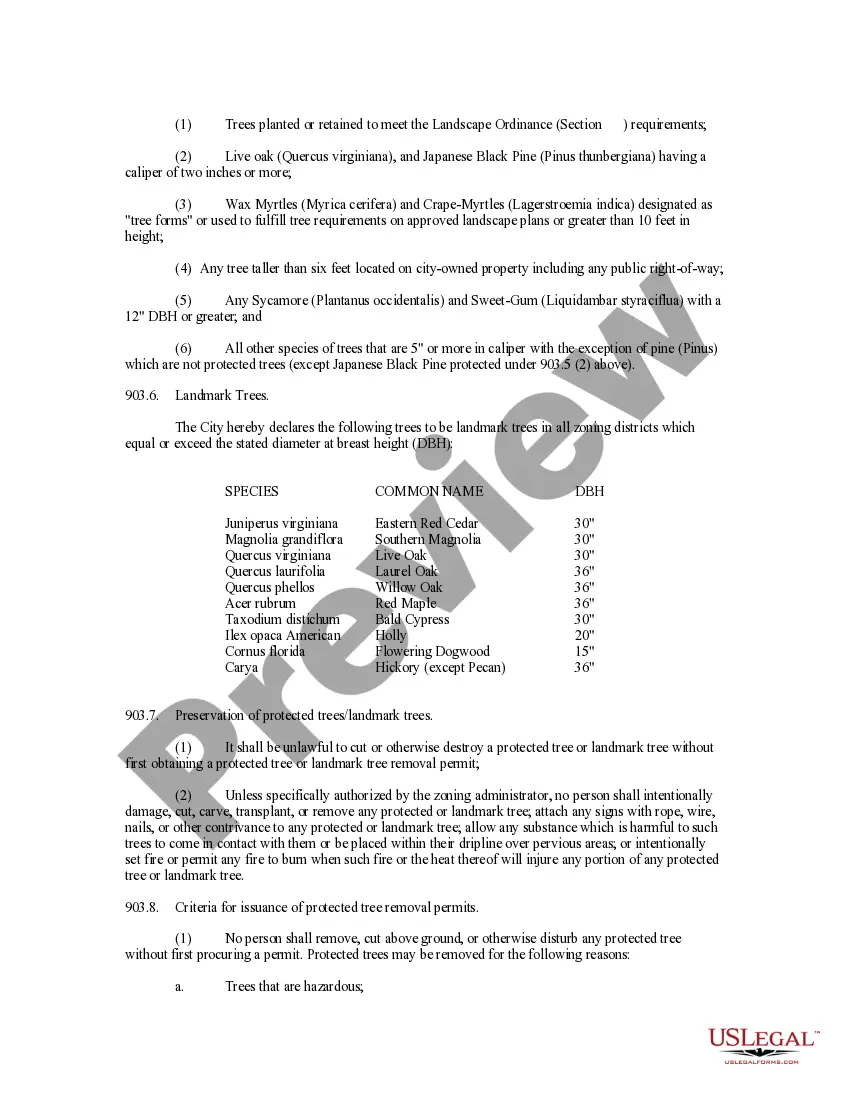
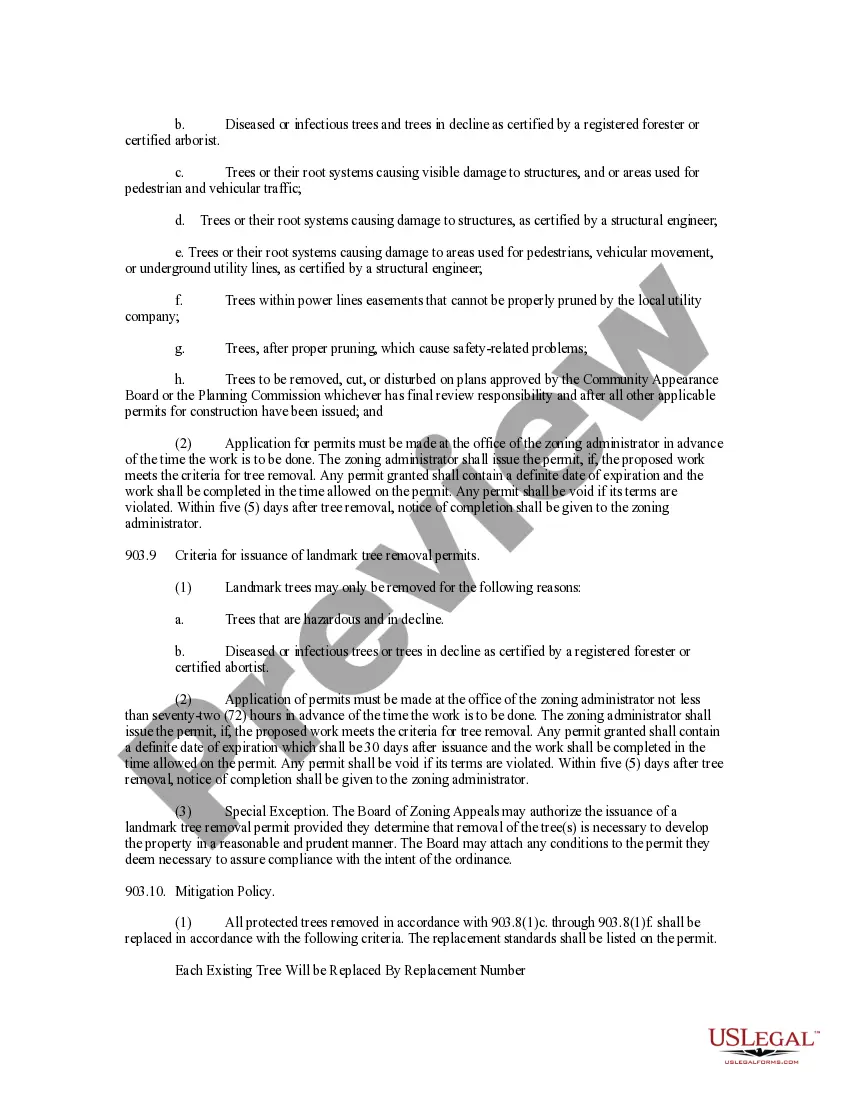
Harris Texas Tree Protection Law
Description

Get your form ready online
Our built-in tools help you complete, sign, share, and store your documents in one place.
Make edits, fill in missing information, and update formatting in US Legal Forms—just like you would in MS Word.
Download a copy, print it, send it by email, or mail it via USPS—whatever works best for your next step.
Sign and collect signatures with our SignNow integration. Send to multiple recipients, set reminders, and more. Go Premium to unlock E-Sign.
If this form requires notarization, complete it online through a secure video call—no need to meet a notary in person or wait for an appointment.
We protect your documents and personal data by following strict security and privacy standards.

Make edits, fill in missing information, and update formatting in US Legal Forms—just like you would in MS Word.

Download a copy, print it, send it by email, or mail it via USPS—whatever works best for your next step.

Sign and collect signatures with our SignNow integration. Send to multiple recipients, set reminders, and more. Go Premium to unlock E-Sign.

If this form requires notarization, complete it online through a secure video call—no need to meet a notary in person or wait for an appointment.

We protect your documents and personal data by following strict security and privacy standards.
Looking for another form?








How to fill out Tree Protection Law?
How long does it generally take you to prepare a legal document.
As each state has its own laws and regulations for various life circumstances, finding a Harris Tree Protection Law that meets all local stipulations can be draining, and having it drafted by a professional lawyer is frequently costly.
Numerous online platforms provide the most prevalent state-specific forms for download, but utilizing the US Legal Forms database is the most advantageous.
Give it a shot!
- US Legal Forms is the most extensive online compilation of templates, organized by state and field of use.
- Besides the Harris Tree Protection Law, you can access any particular form to operate your business or personal transactions, adhering to your county regulations.
- Experts validate all samples for their authenticity, ensuring you can prepare your documentation accurately.
- Using the service is extraordinarily simple.
- If you already possess an account on the site and your subscription is active, you merely need to Log In, select the required sample, and download it.
- You can access the file in your account whenever in the future.
- If you are a newcomer to the platform, there will be additional steps to complete before obtaining your Harris Tree Protection Law.
- Review the content of the page you are on.
- Examine the description of the template or Preview it (if accessible).
- Search for another form using the related option in the header.
- Click Buy Now when you are confident in the chosen file.
- Choose the subscription plan that best fits your needs.
- Register for an account on the platform or Log In to advance to payment choices.
- Process the payment through PayPal or with your credit card.
- Alter the file format if necessary.
- Click Download to save the Harris Tree Protection Law.
- Print the document or utilize any desired online editor to complete it digitally.
- Regardless of how many times you need to use the purchased template, you can find all the files you have ever saved in your account by accessing the My documents tab.
Form popularity
FAQ
Protected Species: Texas Ash, Bald Cypress, American Elm, Cedar Elm, Texas Madrone, Bigtooth Maple, ALL Oaks, Pecan, Arizona Walnut, and Eastern Black Walnut.
To obtain a permit, you can call the Urban Forestry Division at (713) 867-0378, and a City forester will be sent to evaluate your situation. Violations can result in a $500 per day fine and prosecution. Any property owner who unnecessarily destroys a protected tree can be fined $90 per diameter inch.
The reality is you are permitted to prune or cut down any tree on your land, regardless of whether it is healthy or not, if it is not subject to a Tree Preservation Order or located with a conservation area.
There are no state laws that prevent someone from removing their own tree that is on their property. Unlike other states, Texas also doesn't require a tree owner to get a permit to remove a tree on their property.
They are: Dead trees. Dangerous trees. Fallen trees. Pest trees. Non-significant local trees.
There are no state laws that prevent someone from removing their own tree that is on their property. Unlike other states, Texas also doesn't require a tree owner to get a permit to remove a tree on their property.
Ohio. Ohio state law has no provisions for tree removal on private property. Its capital city of Columbus has special requirements for the removal of street trees near public sidewalks and adjacent private properties, but the removal of trees on private property are the responsibility of the owner.
Ohio. Ohio state law has no provisions for tree removal on private property. Its capital city of Columbus has special requirements for the removal of street trees near public sidewalks and adjacent private properties, but the removal of trees on private property are the responsibility of the owner.
ARE YOU LICENSED? There is no applicable licensing to be had in the state of Texas. A word to the wise: There is no governing or regulatory body for the tree care industry in this state at all.
Ohio law does not require contractors to be licensed, but many cities do, said Dominic Binkley with the Ohio Attorney General's Office.