Chicago Illinois Noise Ordinance
Description

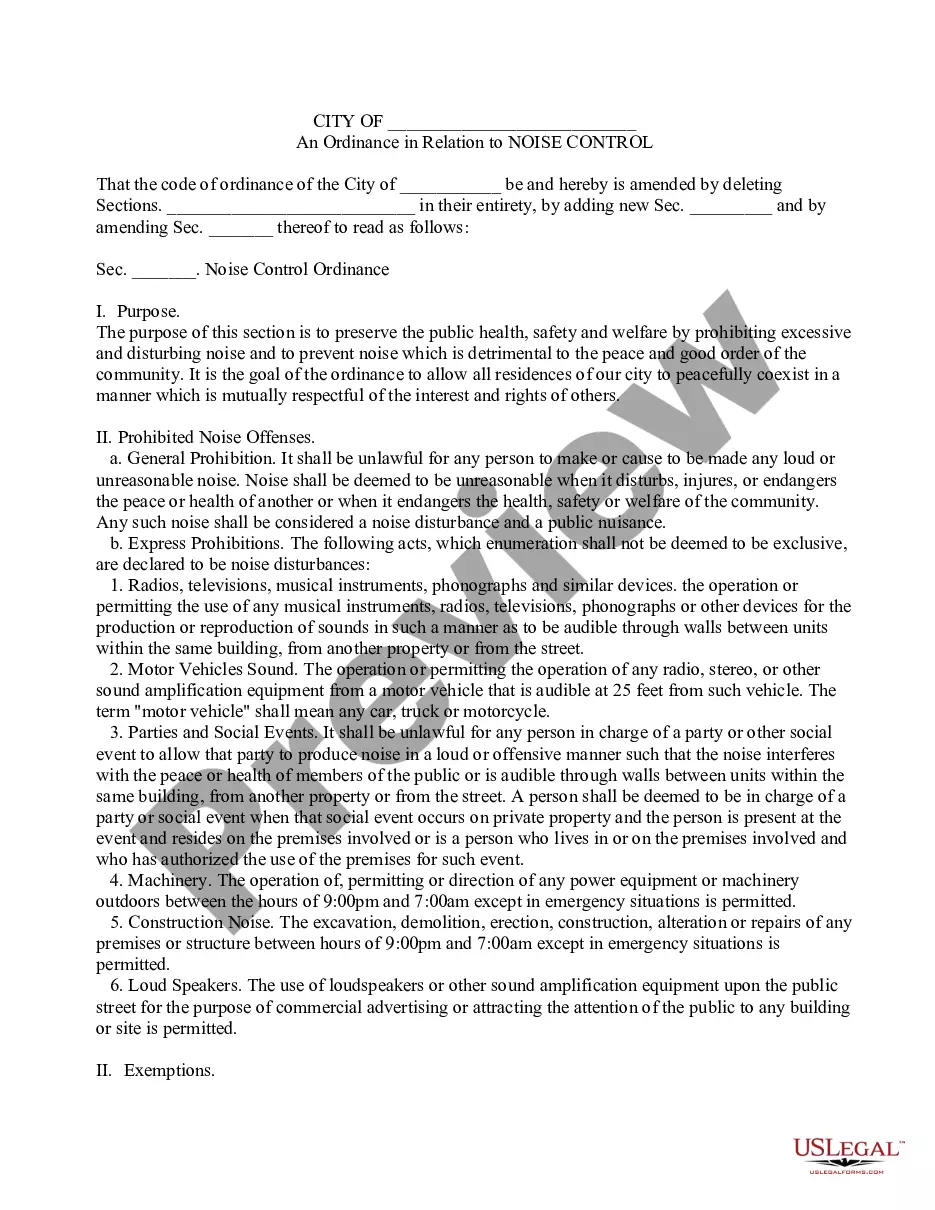


How to fill out Noise Ordinance?
Whether you plan to launch your enterprise, engage in a transaction, request your identification update, or address familial legal matters, you are required to prepare specific documentation that adheres to your local legislation and regulations.
Finding the appropriate documents may require significant time and effort unless you utilize the US Legal Forms library.
The service offers users over 85,000 professionally drafted and verified legal documents for any personal or business situation. All files are organized by state and area of relevance, making it quick and simple to choose a document like the Chicago Noise Ordinance.
Documents offered by our site are reusable. With an active subscription, you can access all previously obtained paperwork whenever needed in the My documents section of your profile. Stop spending time on a continuous hunt for current official documentation. Join the US Legal Forms platform and keep your paperwork organized with the most comprehensive online form library!
- Ensure the sample meets your specific requirements and state law stipulations.
- Examine the form description and review the Preview if available on the page.
- Use the search bar at the top to find another template relevant to your state.
- Click Buy Now to purchase the document once you identify the correct one.
- Select the subscription plan that best fits your needs to move forward.
- Log in to your account and settle the payment using a credit card or PayPal.
- Download the Chicago Noise Ordinance in your desired file format.
- Print the document or complete it and sign it electronically through an online editor to save time.
Form popularity
FAQ
While the Chicago Illinois Noise Ordinance specifically addresses noise regulations in Chicago, Texas has its own set of noise laws that vary by city. Generally, noise regulations in Texas also aim to prevent disturbances, particularly during nighttime hours. To understand your rights and responsibilities under Texas law, consider using the uslegalforms platform for detailed information and resources tailored to your specific location.
The noise curfew in Chicago, as established by the Chicago Illinois Noise Ordinance, is generally from 10 PM to 7 AM on weekdays and 11 PM to 7 AM on weekends. This curfew is designed to protect residents from excessive noise during the hours when many people are resting. Adhering to these times not only maintains harmony but also showcases community respect.
In accordance with the Chicago Illinois Noise Ordinance, you should minimize noise levels from 10 PM to 7 AM during the week and from 11 PM to 7 AM on weekends. This ensures that residents can enjoy a peaceful night’s sleep. If you have any concerns about noise violations, contacting local authorities or filling out a noise complaint could be the next step.
Under the Chicago Illinois Noise Ordinance, residents must typically cease loud noises between 10 PM and 7 AM on weekdays, and 11 PM to 7 AM on weekends. If you live in a residential area, it’s essential to respect these hours to maintain a peaceful community. Violating these times may lead to penalties, so it's best to keep any festivities within these limits.
In Illinois, noise complaint laws vary by municipality, but they generally follow the guidelines set by the Chicago Illinois Noise Ordinance. This ordinance outlines permissible noise levels and permissible hours for activities that create noise. Understanding these laws helps you know your rights and empowers you to take appropriate action against disturbances.
Dealing with noisy neighbors in Chicago requires a few steps. Start by communicating your concerns directly and respectfully. If the situation doesn’t improve, you can file a formal noise complaint through the channels established by the Chicago Illinois Noise Ordinance. Additionally, uslegalforms offers resources that can help you navigate the legal aspects of dealing with noise complaints efficiently.
If you are facing issues with a loud and disrespectful neighbor, first try addressing the matter directly with them in a calm manner. If that does not yield results, consider documenting the disturbances and reporting them under the Chicago Illinois Noise Ordinance. You may also seek assistance from local mediation services to resolve the issue without escalating tensions.
To report a noise disturbance in Chicago, you can contact the city's noise complaint hotline or dial 311. It’s important to provide specific details about the disturbance, including the time, location, and nature of the noise. By following these steps, you can help enforce the Chicago Illinois Noise Ordinance effectively.
The noise laws in Massachusetts differ from those in Chicago and vary by city or town. Generally, they set guidelines to limit excessive noise levels, particularly during nighttime hours. If you need assistance with understanding noise regulations, platforms like USLegalForms offer valuable resources to help you navigate legal inquiries.
When approaching noisy neighbors, start with a friendly conversation to express your concerns about the noise. Calmly explaining how it affects you can often lead to a positive resolution. If the noise persists, you can escalate the issue by referencing the Chicago Illinois Noise Ordinance and filing an official complaint.