Chicago Illinois Fence Ordinance
Description
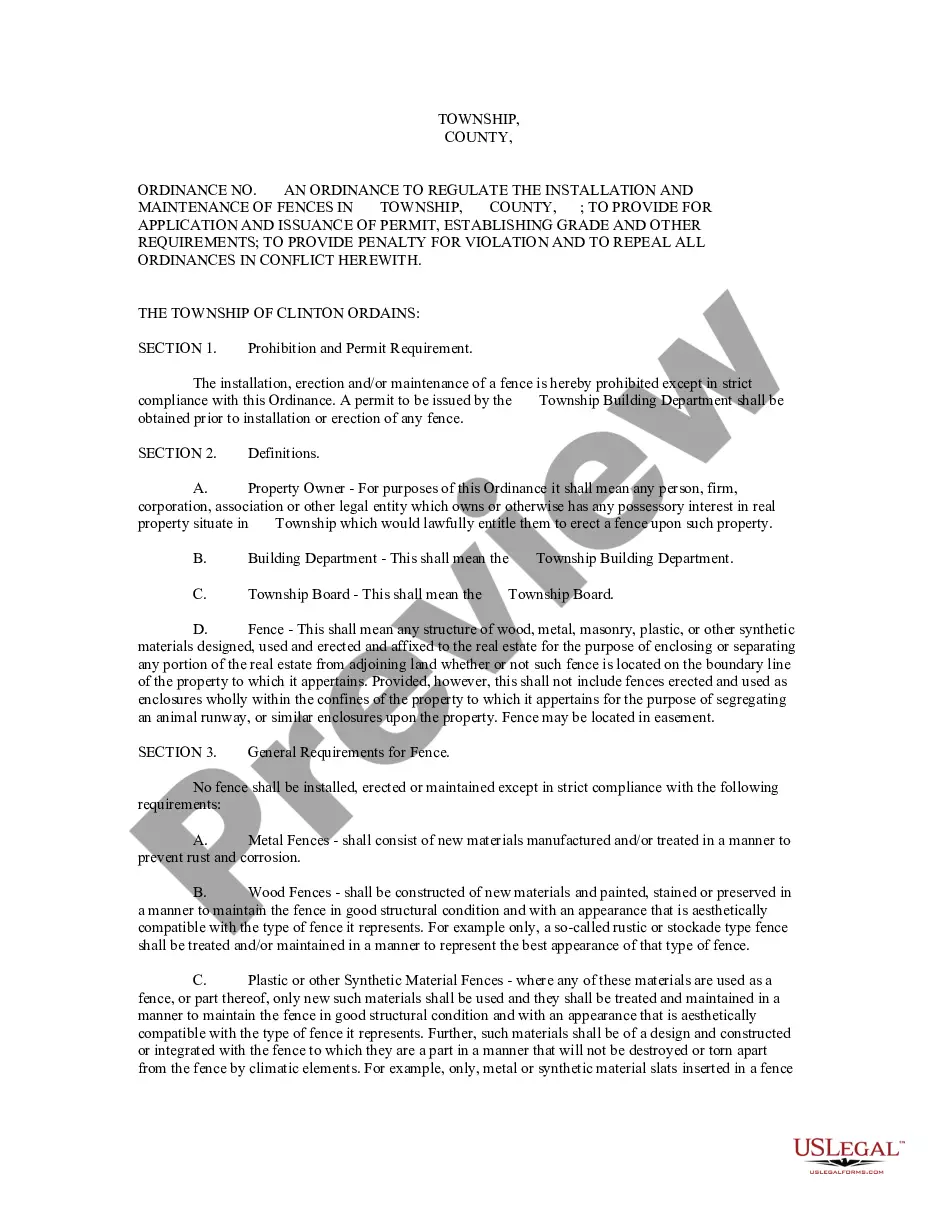
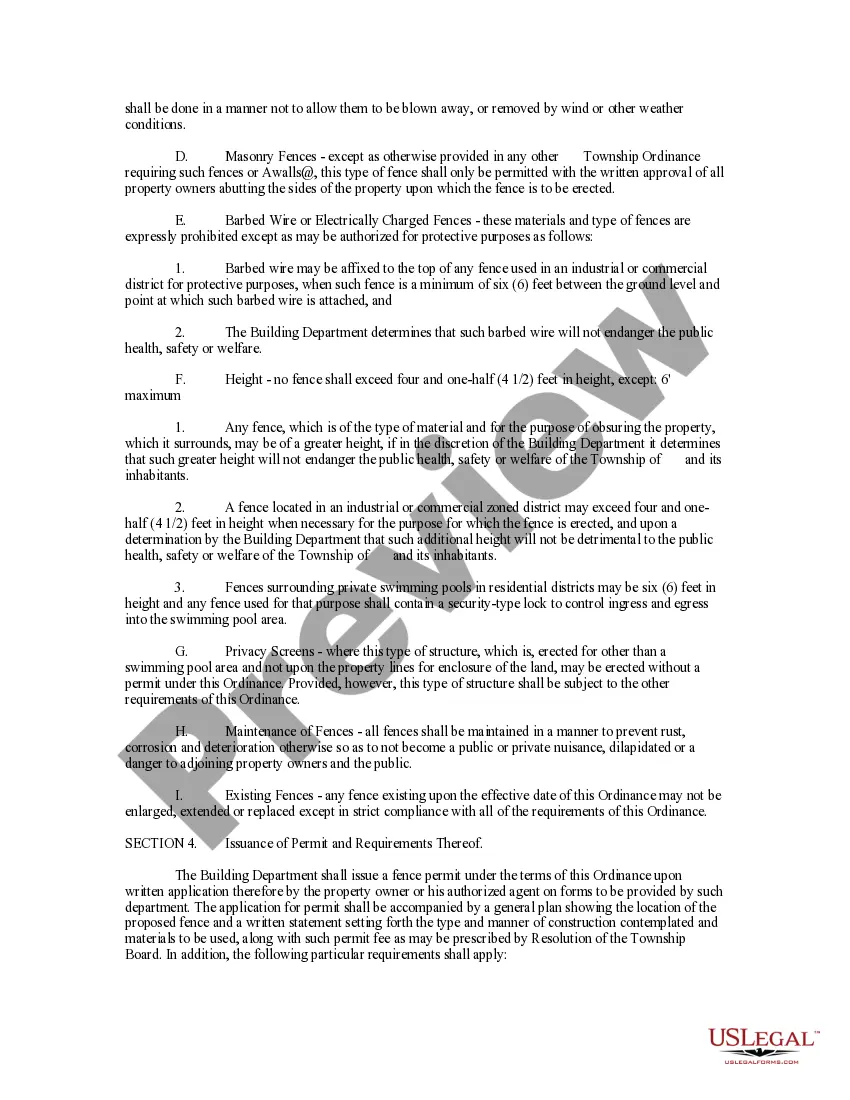
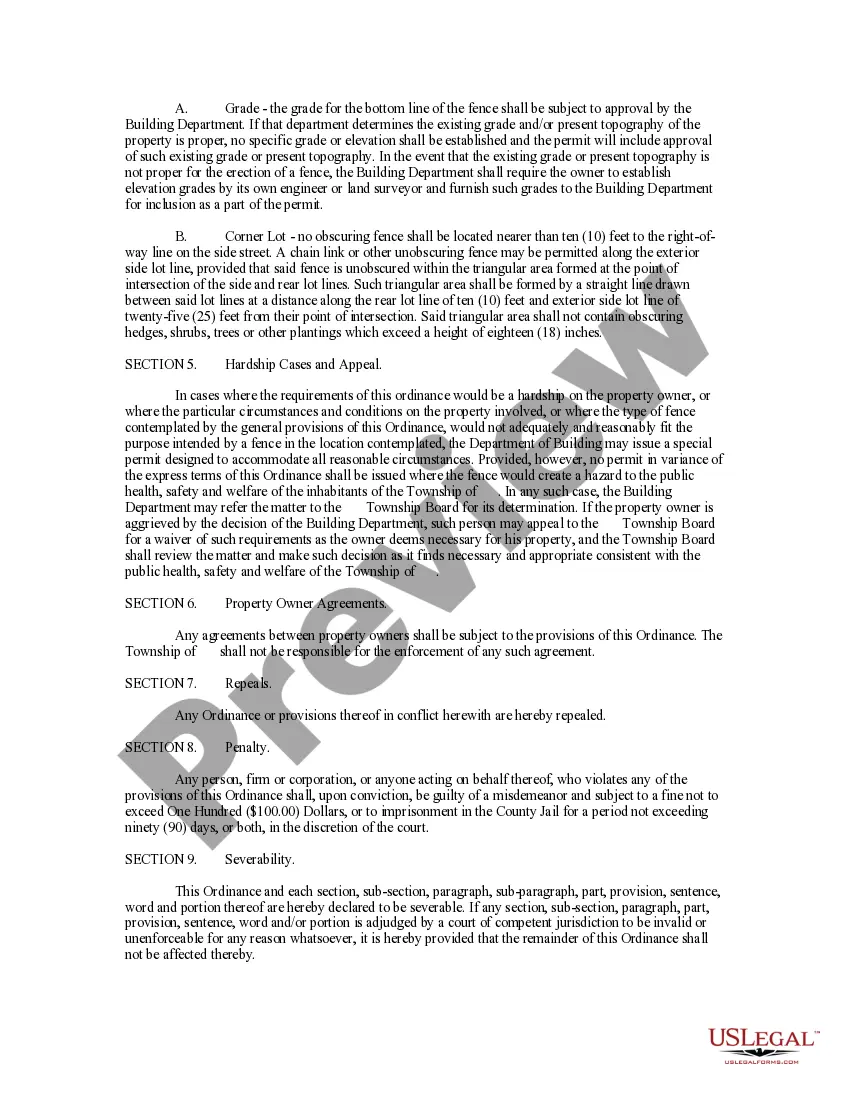
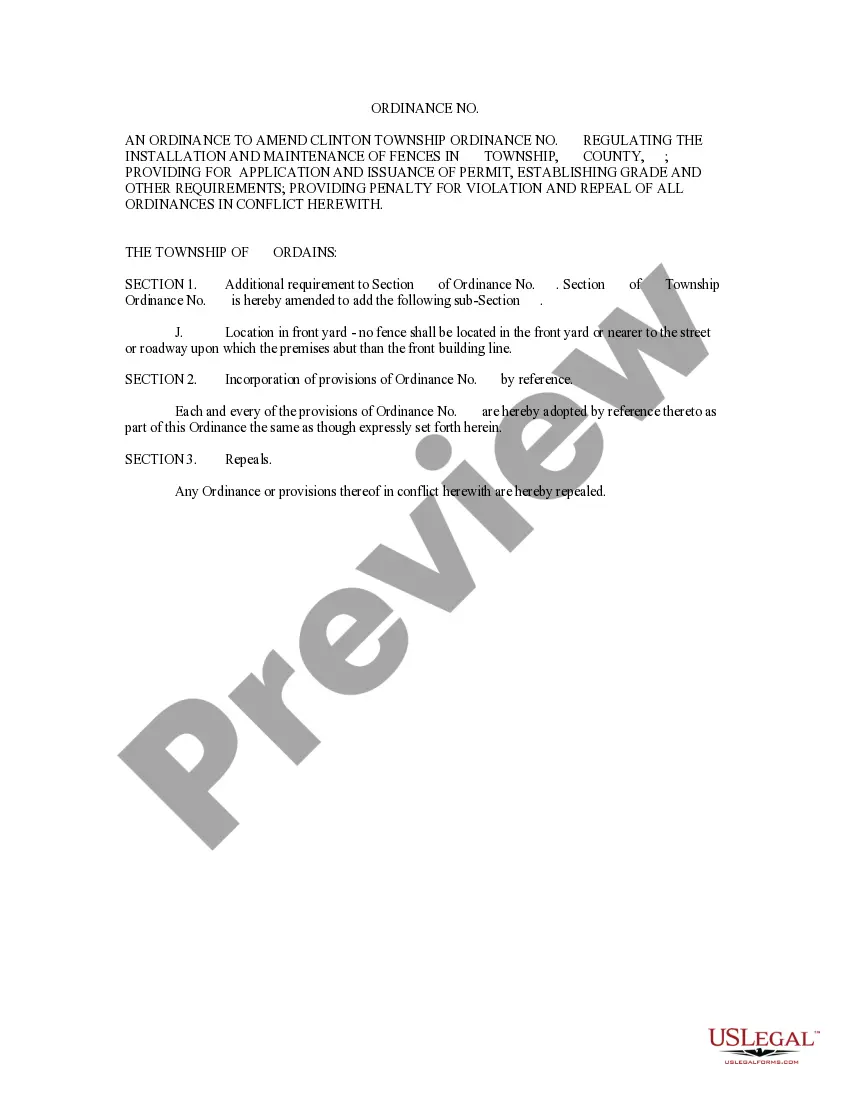
Get your form ready online
Our built-in tools help you complete, sign, share, and store your documents in one place.
Make edits, fill in missing information, and update formatting in US Legal Forms—just like you would in MS Word.
Download a copy, print it, send it by email, or mail it via USPS—whatever works best for your next step.
Sign and collect signatures with our SignNow integration. Send to multiple recipients, set reminders, and more. Go Premium to unlock E-Sign.
If this form requires notarization, complete it online through a secure video call—no need to meet a notary in person or wait for an appointment.
We protect your documents and personal data by following strict security and privacy standards.

Make edits, fill in missing information, and update formatting in US Legal Forms—just like you would in MS Word.

Download a copy, print it, send it by email, or mail it via USPS—whatever works best for your next step.

Sign and collect signatures with our SignNow integration. Send to multiple recipients, set reminders, and more. Go Premium to unlock E-Sign.

If this form requires notarization, complete it online through a secure video call—no need to meet a notary in person or wait for an appointment.

We protect your documents and personal data by following strict security and privacy standards.
Looking for another form?





How to fill out Fence Ordinance?
Creating documentation for business or personal needs is always a significant obligation.
When drafting a contract, a public service application, or a power of attorney, it's crucial to consider all federal and state laws and regulations for the specific area.
Nonetheless, small counties and even municipalities also have legislative processes that you need to contemplate.
The fantastic aspect of the US Legal Forms library is that all the documentation you've ever acquired is never lost - you can retrieve it in your profile under the My documents tab at any time. Join the platform and swiftly acquire verified legal forms for any circumstance with just a few clicks!
- All of these elements render it challenging and time-consuming to formulate the Chicago Fence Ordinance without expert assistance.
- It's simple to avoid squandering money on attorneys drafting your documents and create a legally sound Chicago Fence Ordinance independently by utilizing the US Legal Forms online library.
- It is the most extensive online directory of state-specific legal documents that are professionally verified, ensuring their legitimacy when selecting a sample for your county.
- Previously subscribed users merely need to Log In to their accounts to retrieve the necessary form.
- If you have not yet obtained a subscription, follow the step-by-step instructions below to acquire the Chicago Fence Ordinance.
- Review the page you've accessed and confirm if it contains the sample you require.
- To accomplish this, utilize the form description and preview if these functionalities are available.
Form popularity
FAQ
According to the Chicago Illinois Fence Ordinance, your neighbor must follow specific regulations regarding fence placement close to property lines. Generally, most fences should be built at least 1 foot away from the property line. This distance helps prevent disputes and maintains a good relationship. If you want to ensure compliance with these rules, consider using the resources available on US Legal Forms to guide you through the process.
The required distance for placing a fence from your property line can vary depending on local regulations, including those outlined in the Chicago Illinois Fence Ordinance. Most communities enforce specific setback requirements to ensure proper space between fences and property lines. Always check local codes to avoid any potential conflicts and ensure a smooth fencing project.
Fencing rules in Washington, DC, vary based on neighborhood and type of property. Residential fences in DC generally have specific height limits and material requirements that align with the Chicago Illinois Fence Ordinance. It is best to consult with local ordinances and possibly engage with uslegalforms to understand the precise regulations that apply to your property.
The distance from your property line to the fence largely depends on local zoning laws and ordinances, including the Chicago Illinois Fence Ordinance. Typically, you may need to set your fence back at least a few inches to several feet from the property line. To ensure compliance, it is recommended to check with your local regulatory body before installing the fence.
Nebraska is considered a fence-out state, which means property owners are responsible for keeping their livestock contained within their premises. While not directly related to the Chicago Illinois Fence Ordinance, this concept highlights the importance of understanding state-specific regulations. If you own property in Nebraska, familiarize yourself with local fencing requirements to avoid potential legal issues.
In Maryland, the rules regarding fence construction on property lines can vary by county and local ordinance. Generally, your neighbor can build a fence on the property line, but they must ensure it complies with local regulations, including height restrictions and materials used. To avoid disputes, it is advisable to communicate openly with your neighbor about the Chicago Illinois Fence Ordinance and any applicable local laws.
When placing a fence, you must maintain a distance of at least two inches from the property line in Illinois. This guideline, outlined in the Chicago Illinois Fence Ordinance, aims to prevent encroachment issues and disputes. Always verify local requirements which might differ from state regulations. If you're in doubt, look to uSlegalforms for comprehensive resources that can guide you through your fencing project.
Illinois law acknowledges the rights and responsibilities of property owners regarding fence construction, emphasizing neighborly agreements. The Chicago Illinois Fence Ordinance includes specific provisions regarding height, dimensions, and materials for fences. It's crucial to adhere to these laws to maintain property value and neighborhood standards. Consulting legal resources can clarify any uncertainties about your rights and obligations.
The Chicago Illinois Fence Ordinance specifies various rules for fences, including height restrictions and material guidelines. For instance, residential fences cannot exceed four feet in height in front yards and six feet in backyards. Compliance with these regulations enhances neighborhood aesthetics and can avoid potential fines. Always refer to local zoning laws for the most accurate information regarding fence construction.
In Illinois, the general rule is that any fence should be placed at least two inches from the property line. However, local ordinances, such as the Chicago Illinois Fence Ordinance, may impose stricter requirements. It's wise to check with your local regulations to avoid costly disputes with neighbors. A consultation on the ordinance can ensure compliance and harmony in your community.