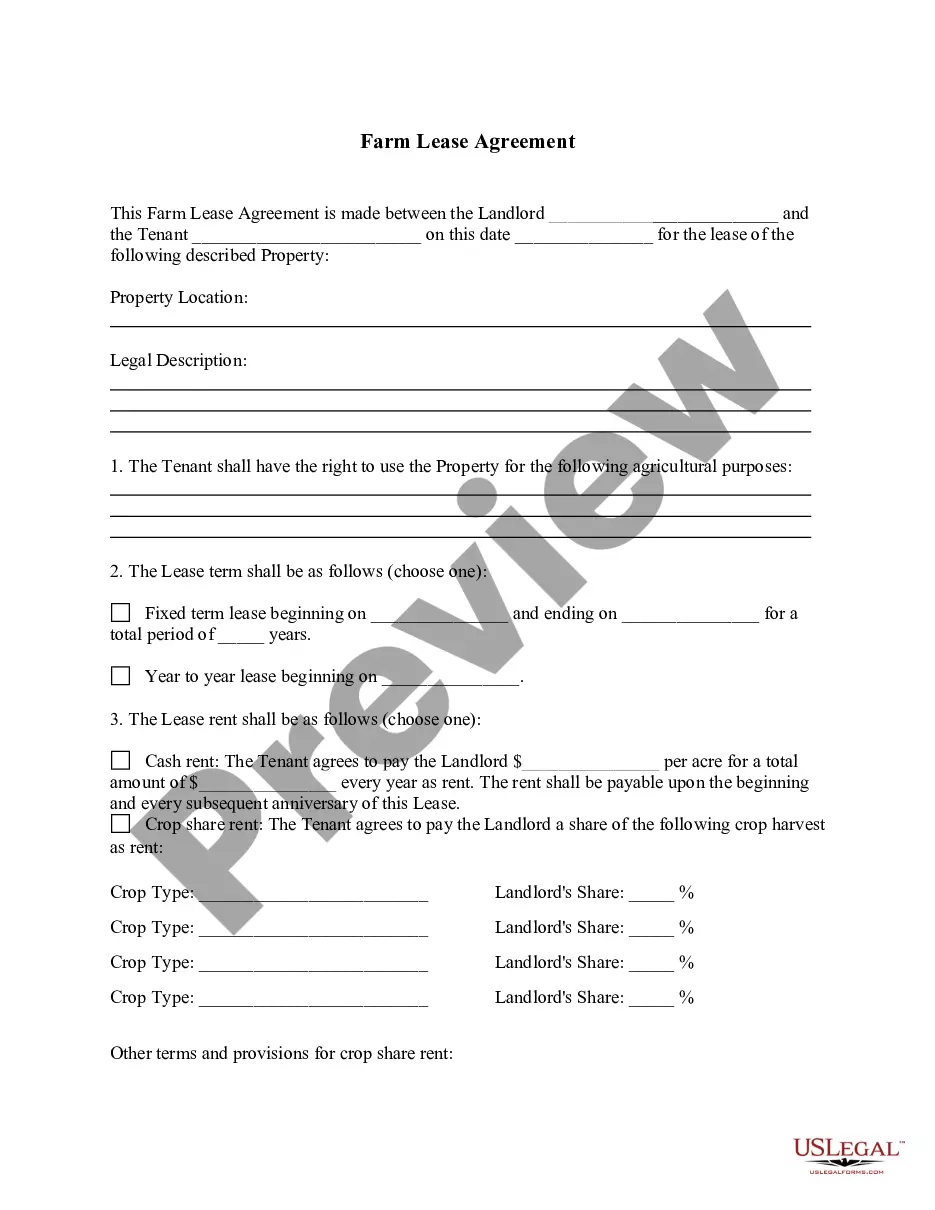
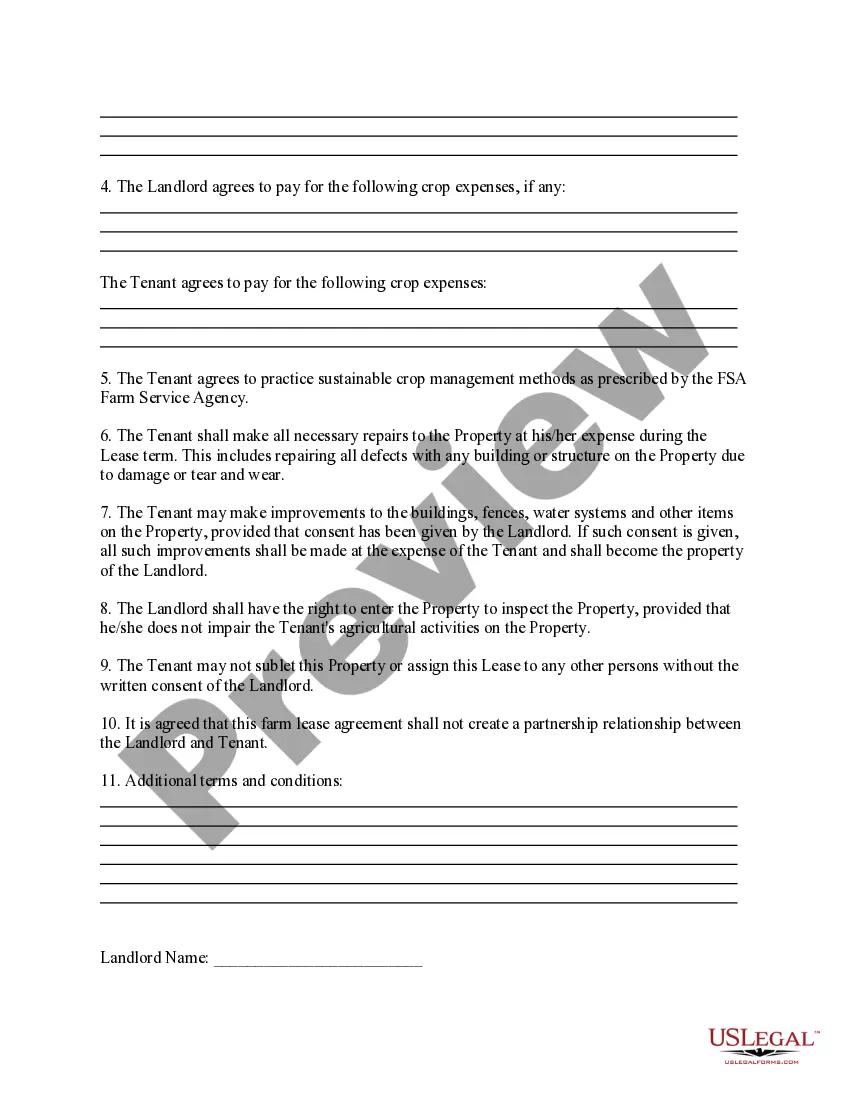
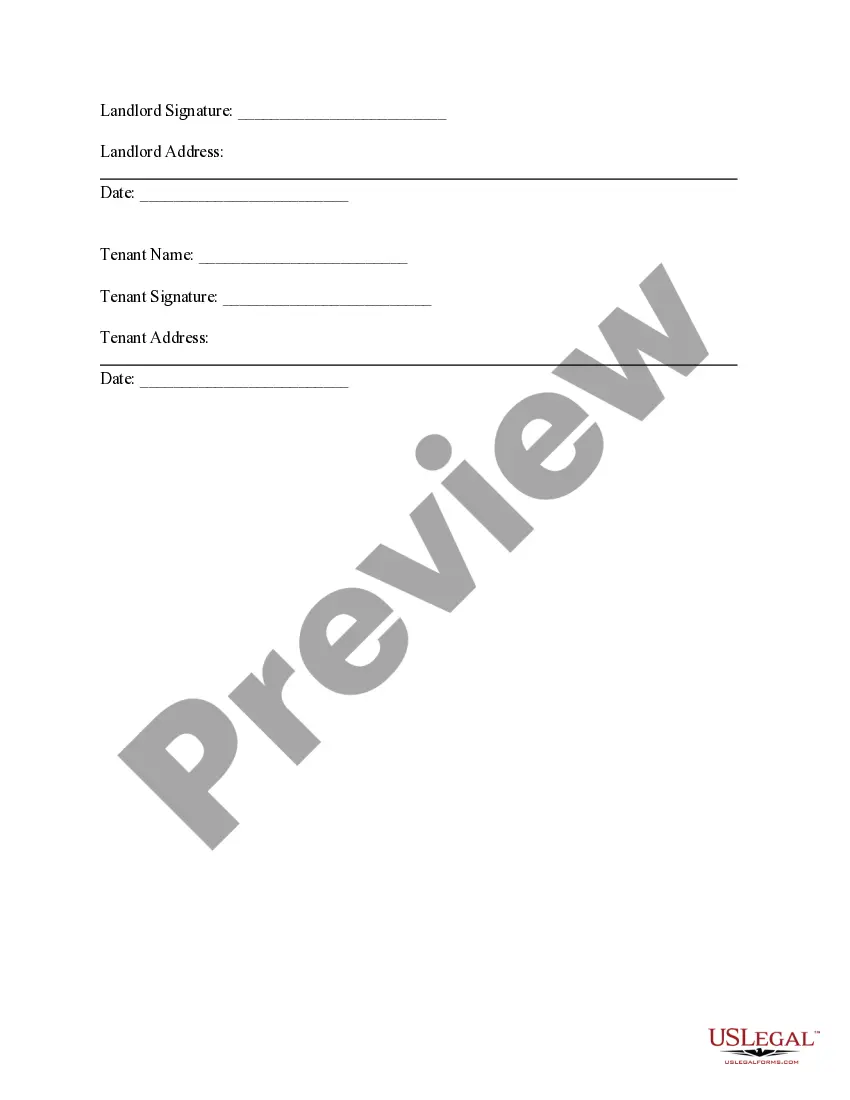
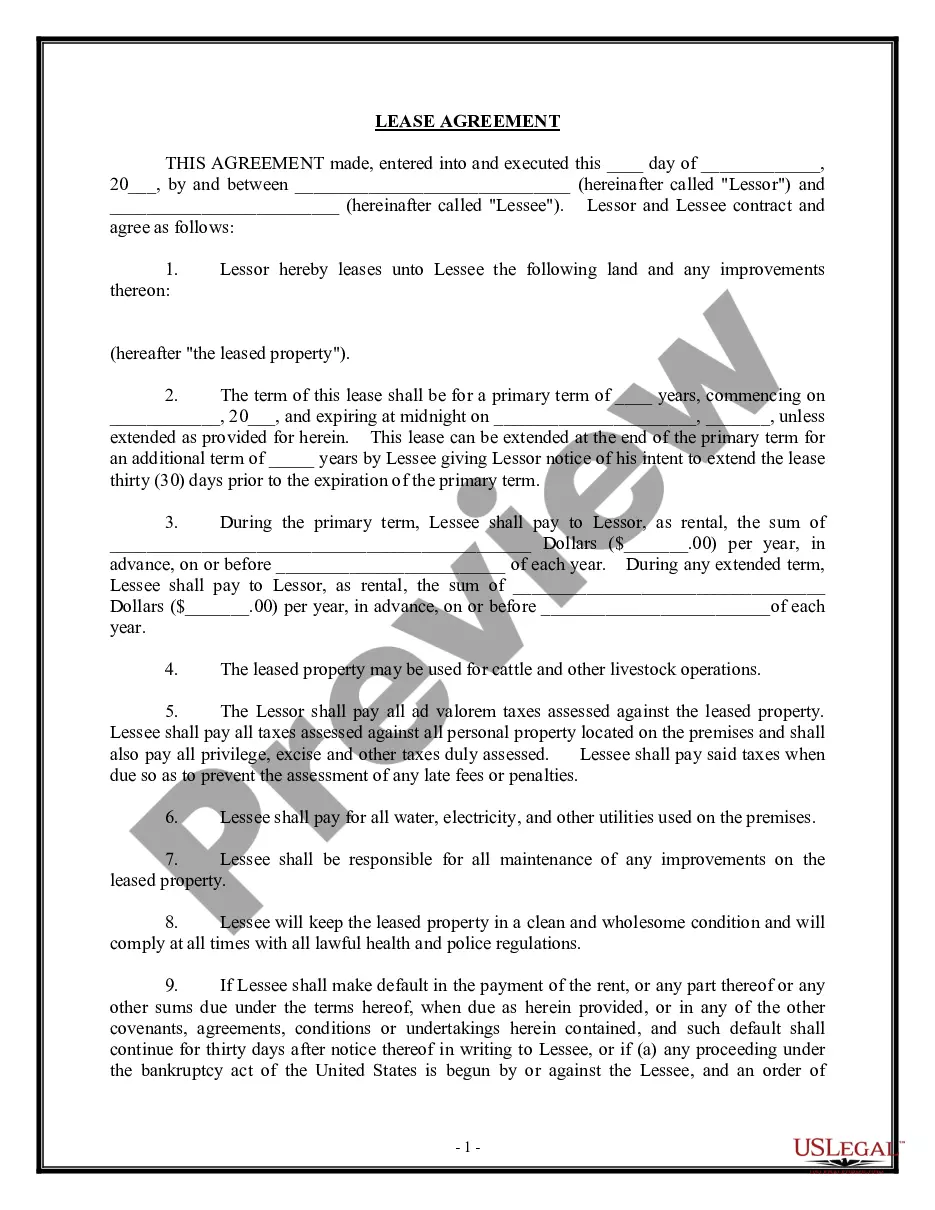
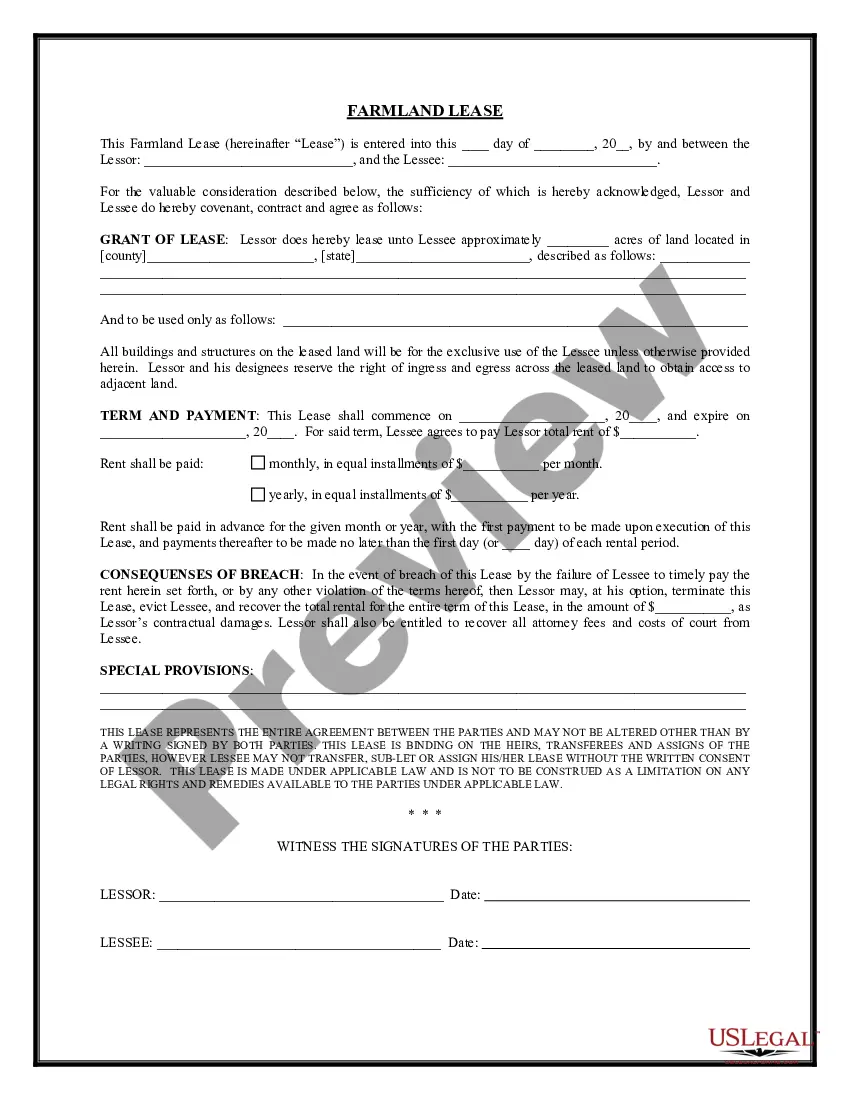
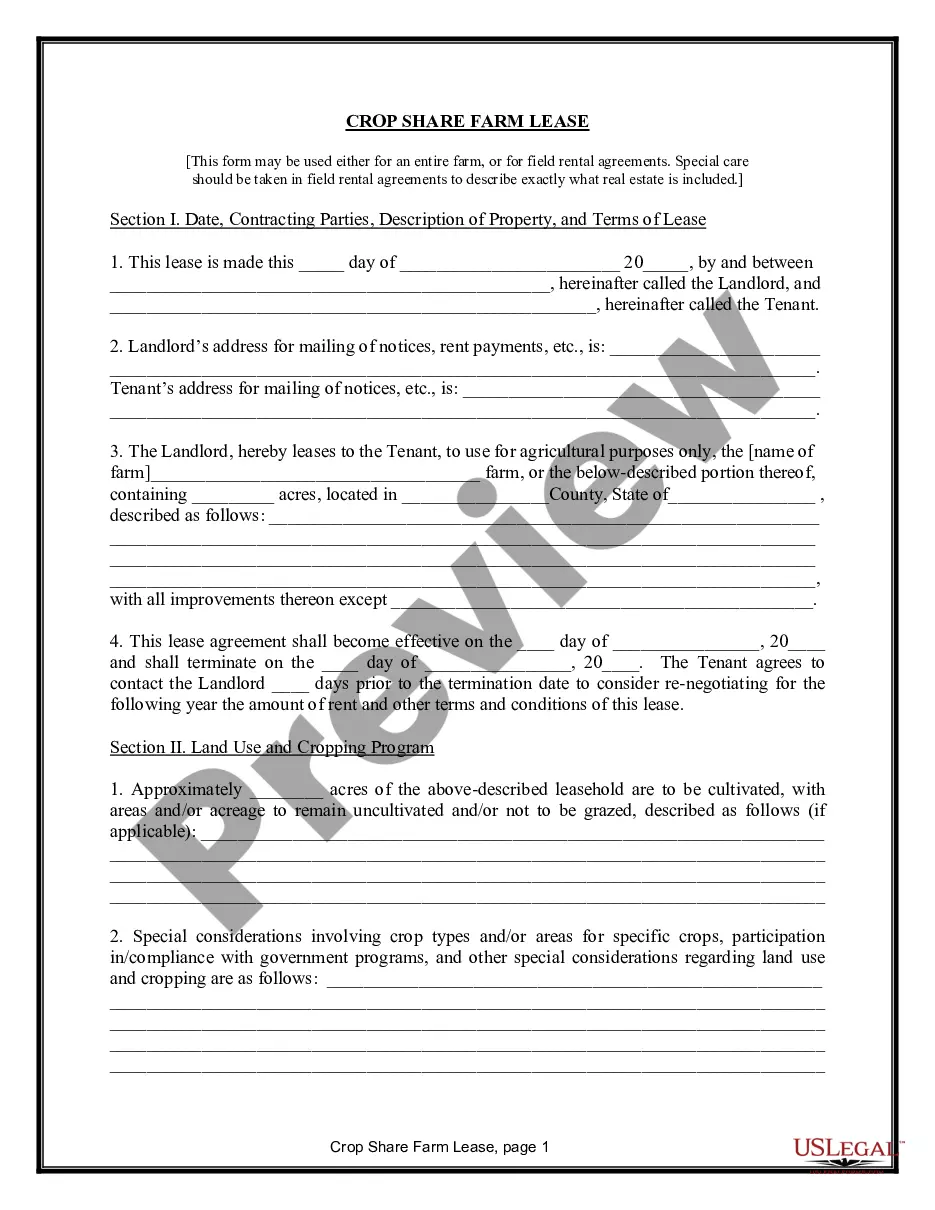
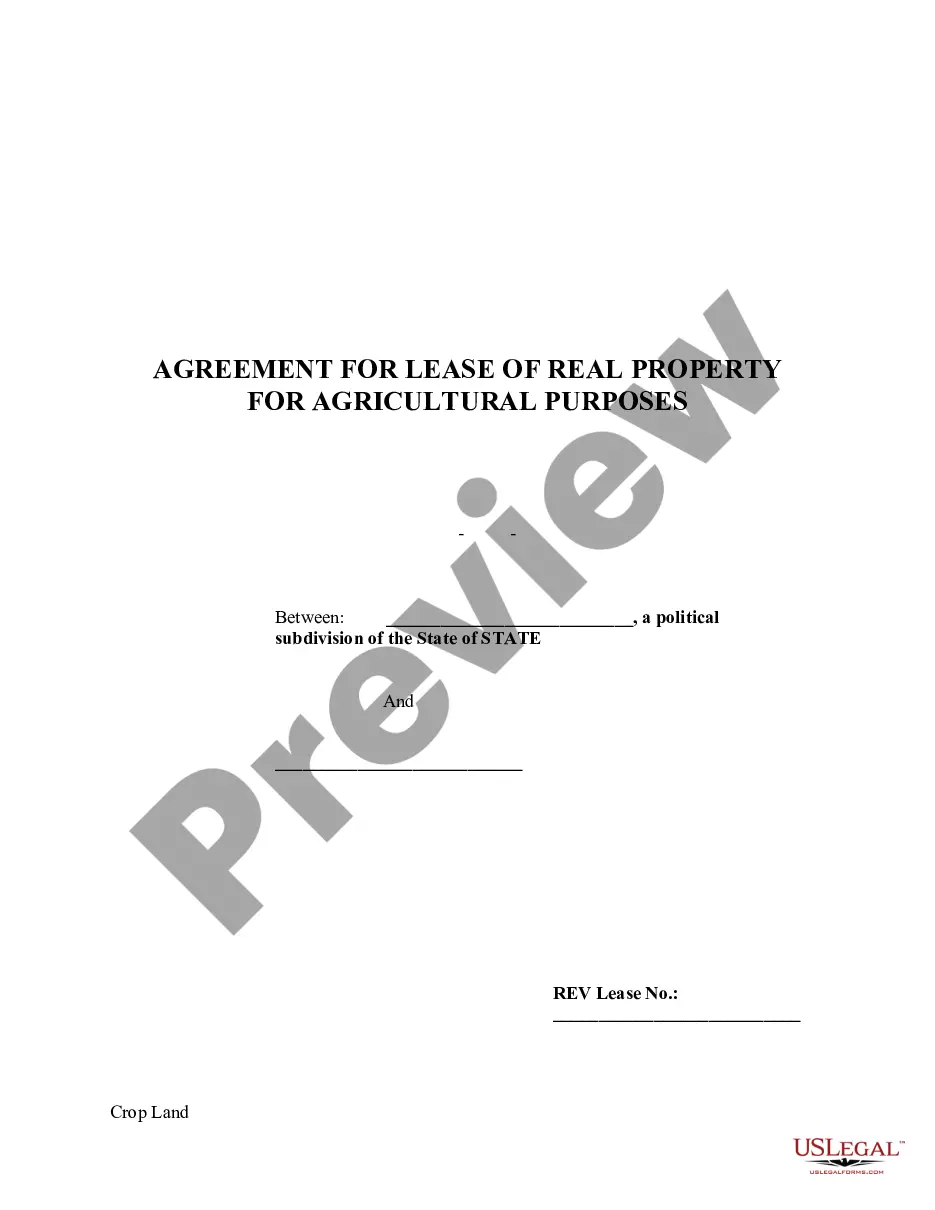
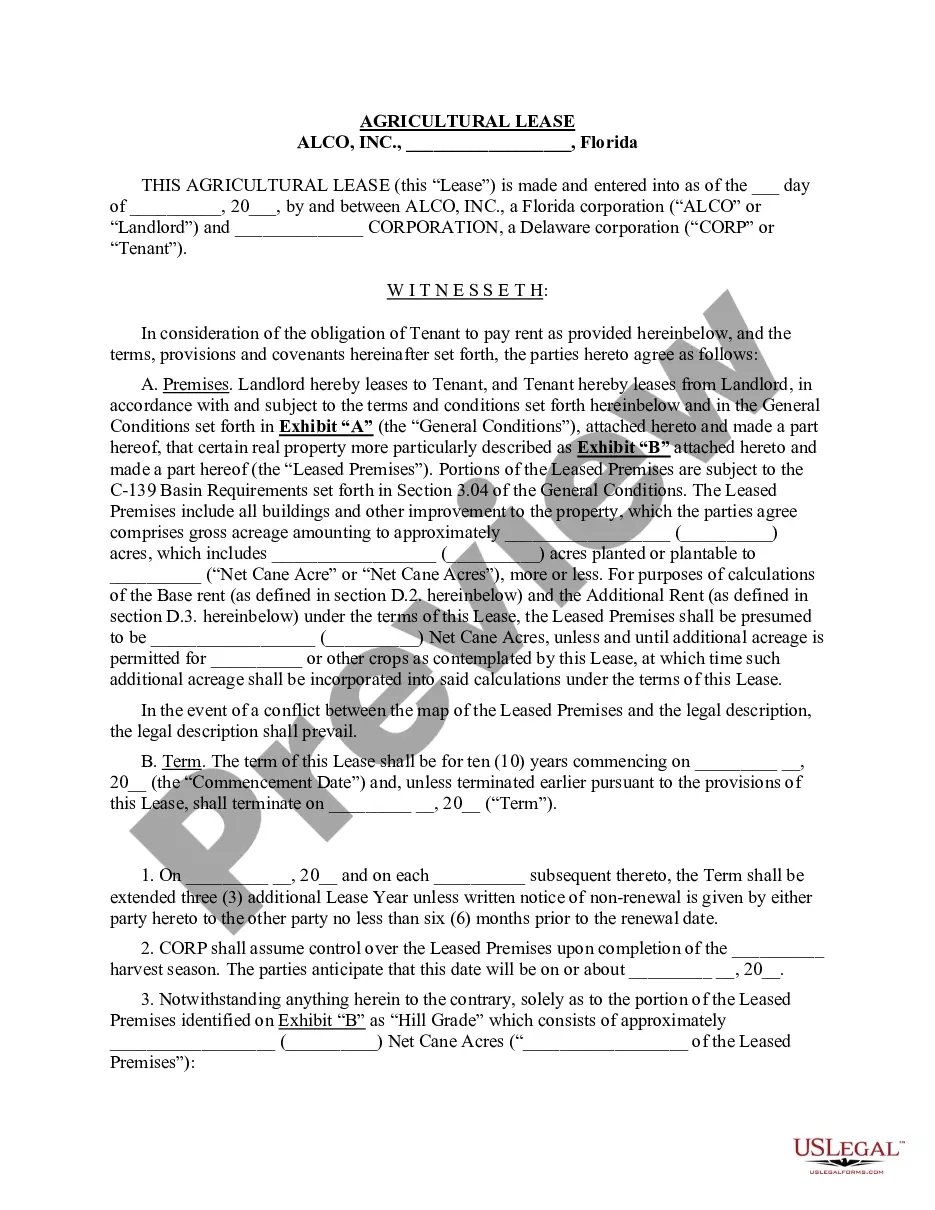
This is a sample Farm Lease Agreement. This type of an agreement is between an owner of farmland and a tenant who plans to use the land for farming or raising livestock. The property owner can make and sign a Farm Lease to safeguard interests and generate income without having to work the farm or ranch.
While it’s not mandatory, having a lawyer take a look can help ensure everything’s in order. It’s better to be safe than sorry when it comes to agreements like these.
Ending a lease early often requires written notice, as specified in the agreement. Make sure to check the terms to avoid any surprises!
If damages occur, it’s important to have a clear plan in your agreement. Usually, the farmer handles normal wear and tear, but major damages may fall on the landowner or be split based on your lease terms.
That's a good question! Subleasing usually depends on what's written in your lease agreement. If it's not mentioned, you might need to get the landlord's permission.
Be sure to add details like the lease duration, payment terms, land use, maintenance responsibilities, and what happens if either party wants to break the lease early.
Most farm leases run for a year, but some can go for several years. It all depends on what you and the landlord agree upon.
A basic farm lease agreement is a written contract between a landowner and a farmer that outlines the terms for renting farmland. It specifies how long the lease lasts, what the rent will be, and any responsibilities for both parties.