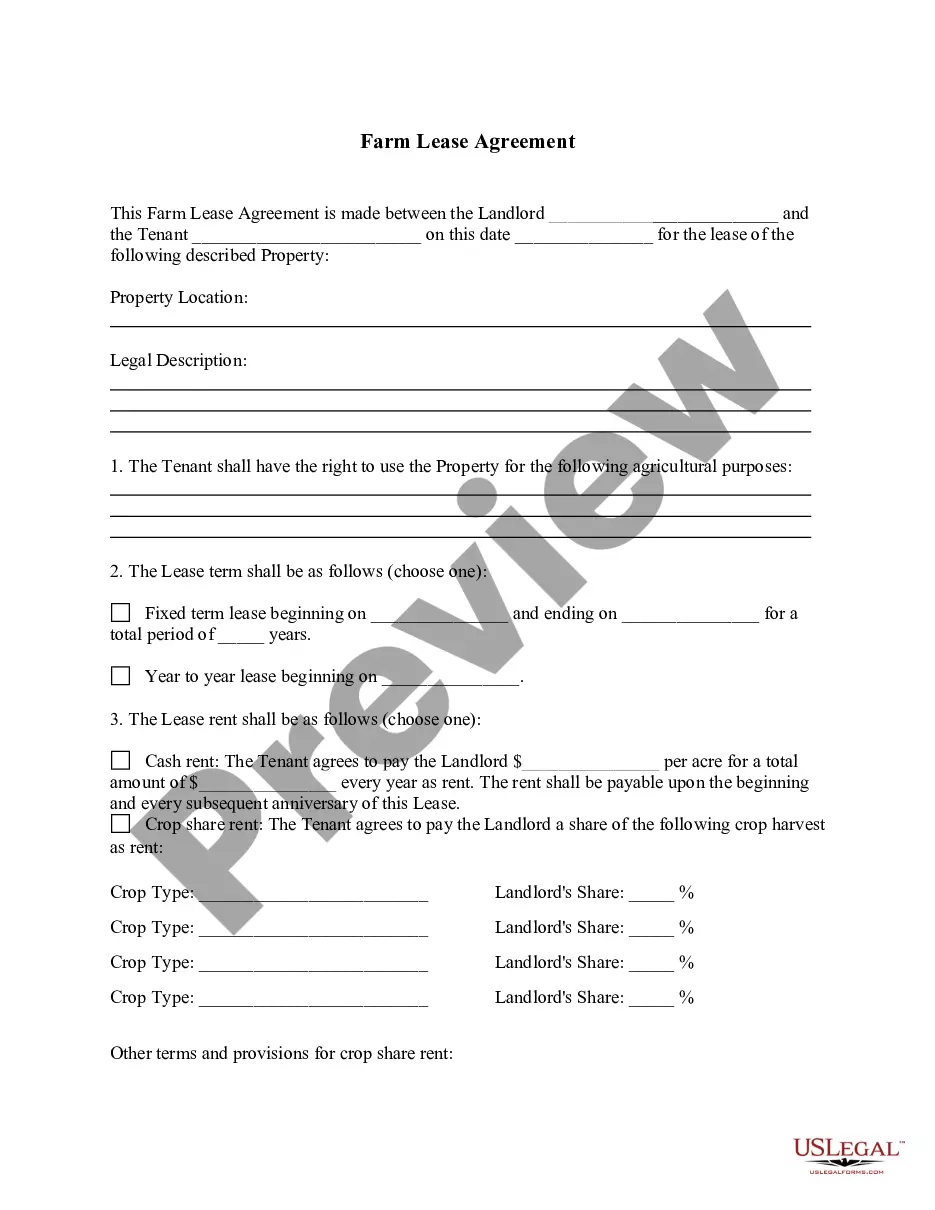
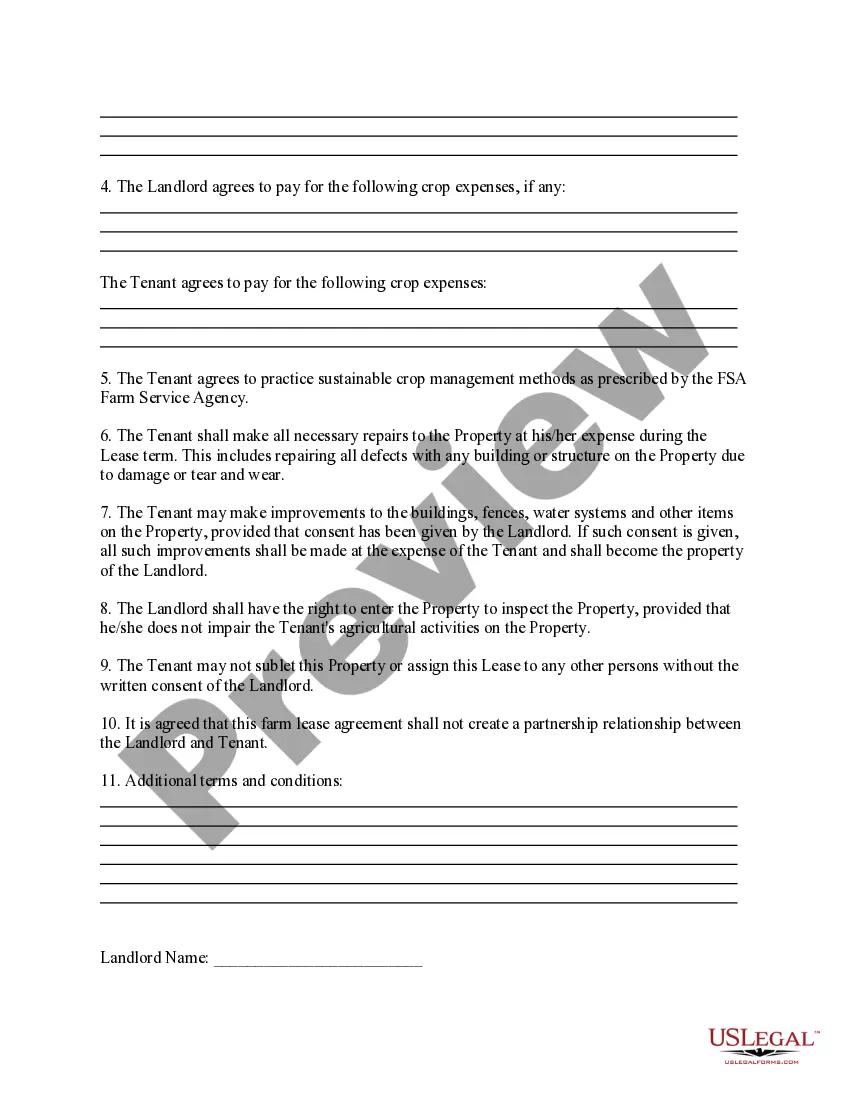
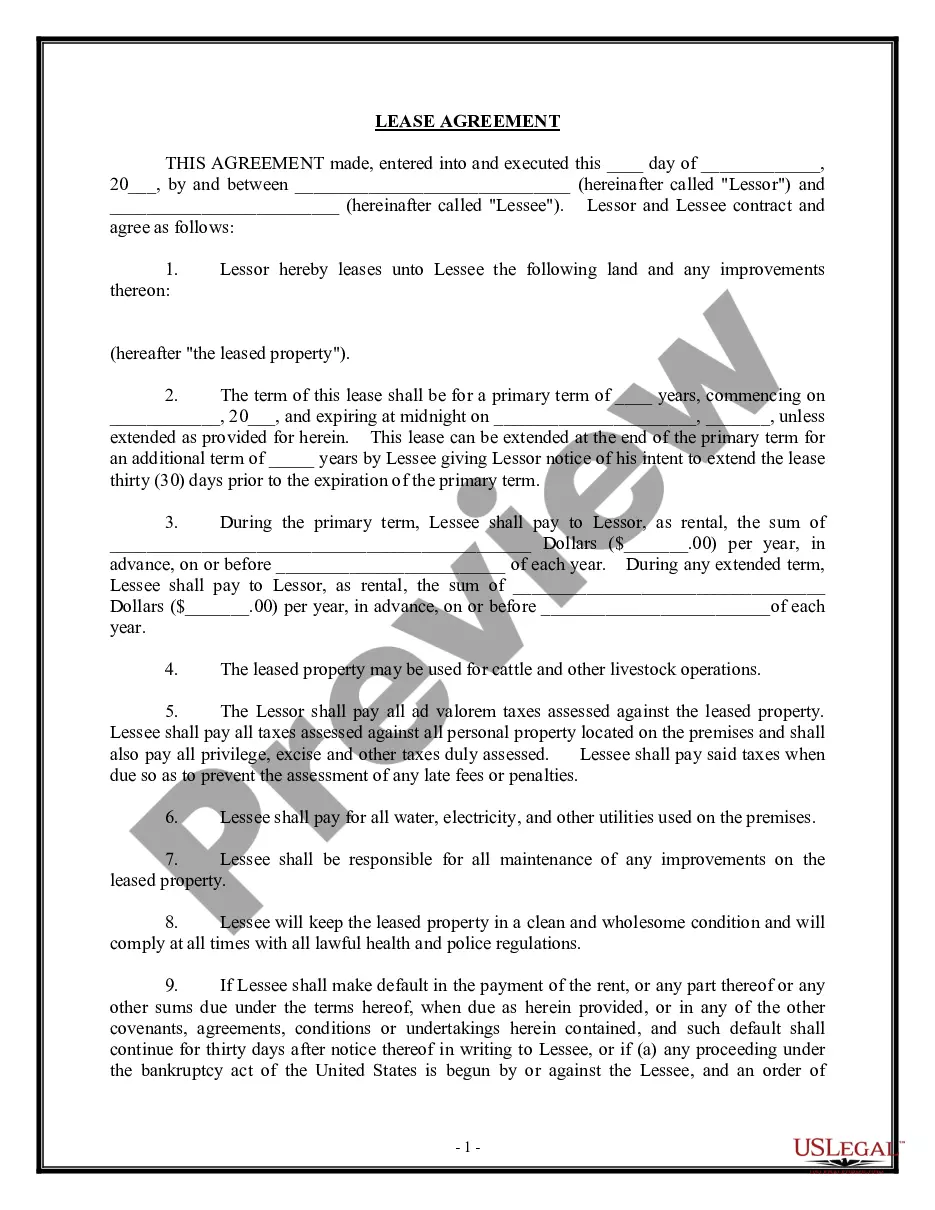
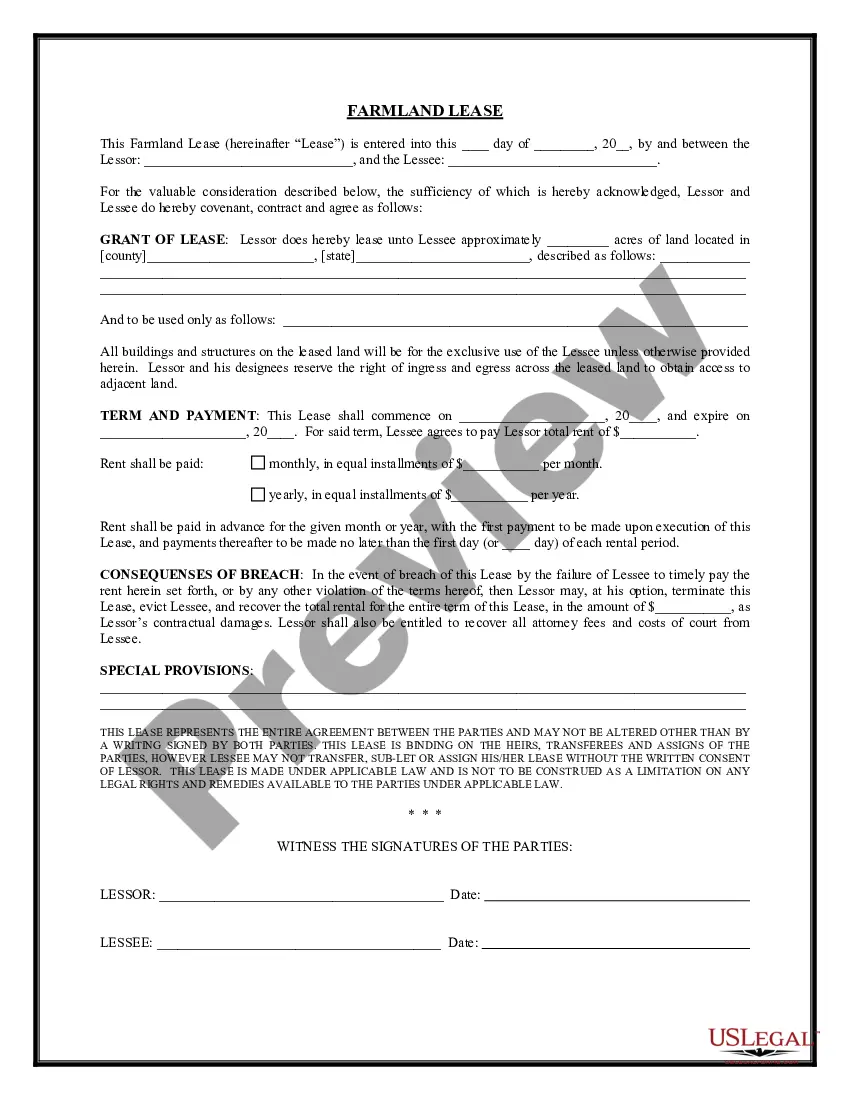
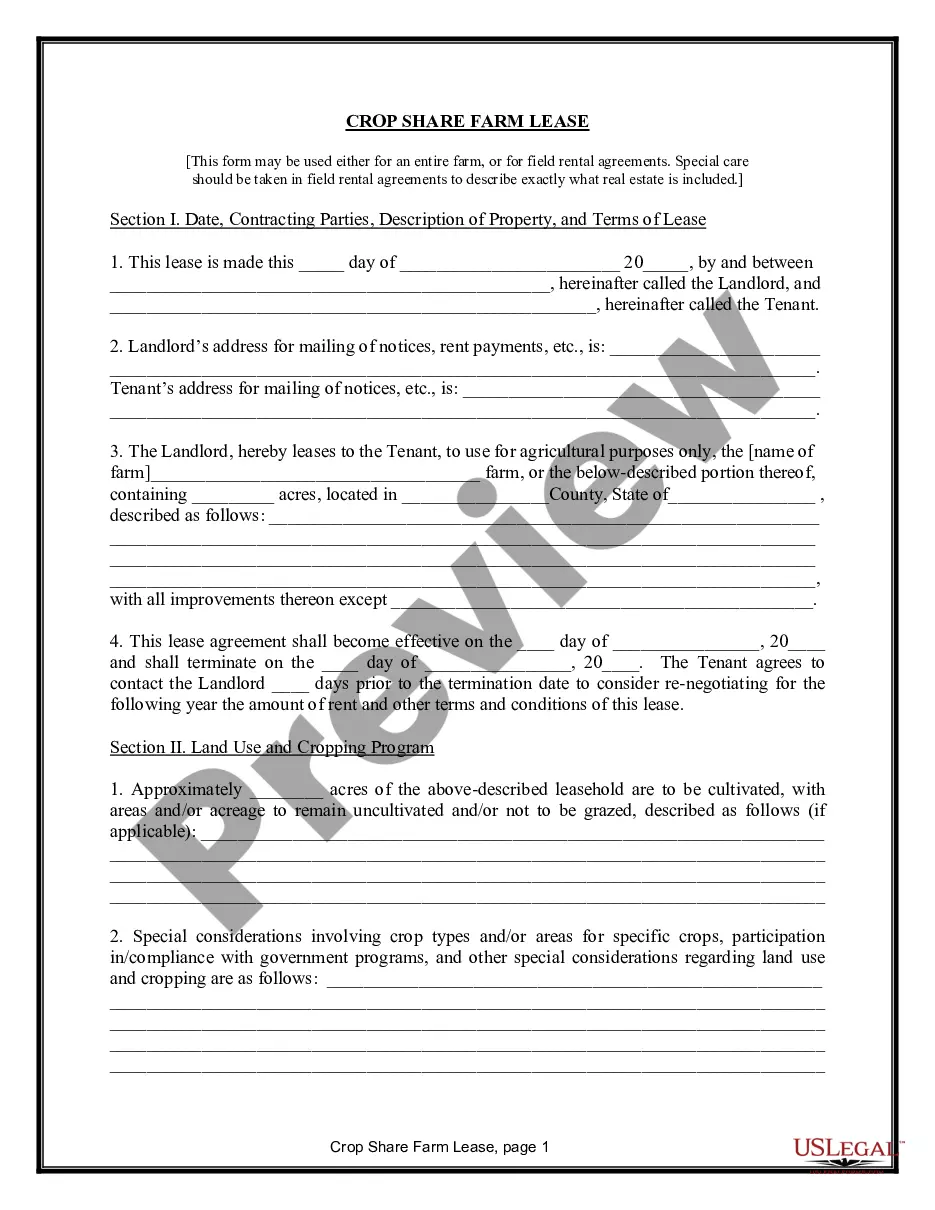
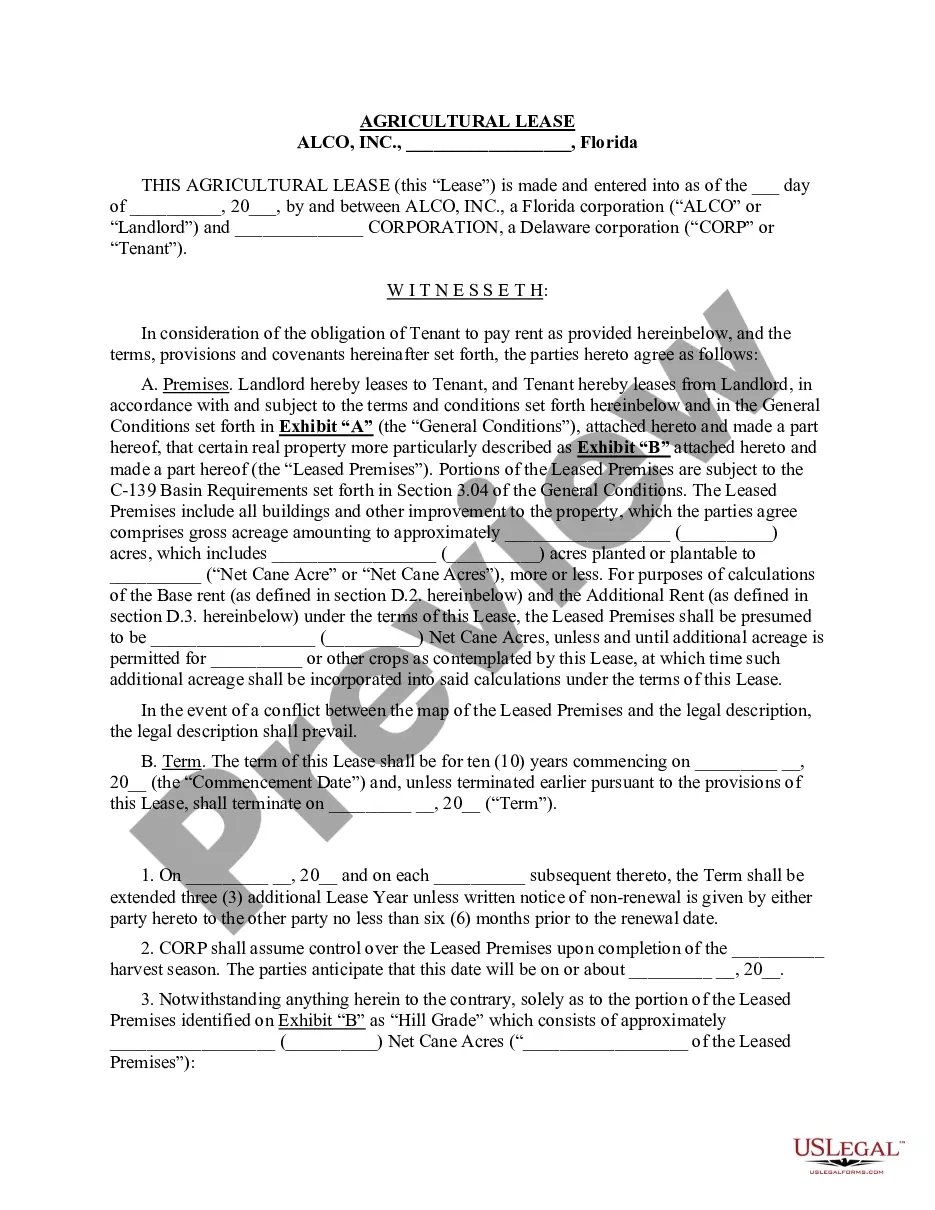
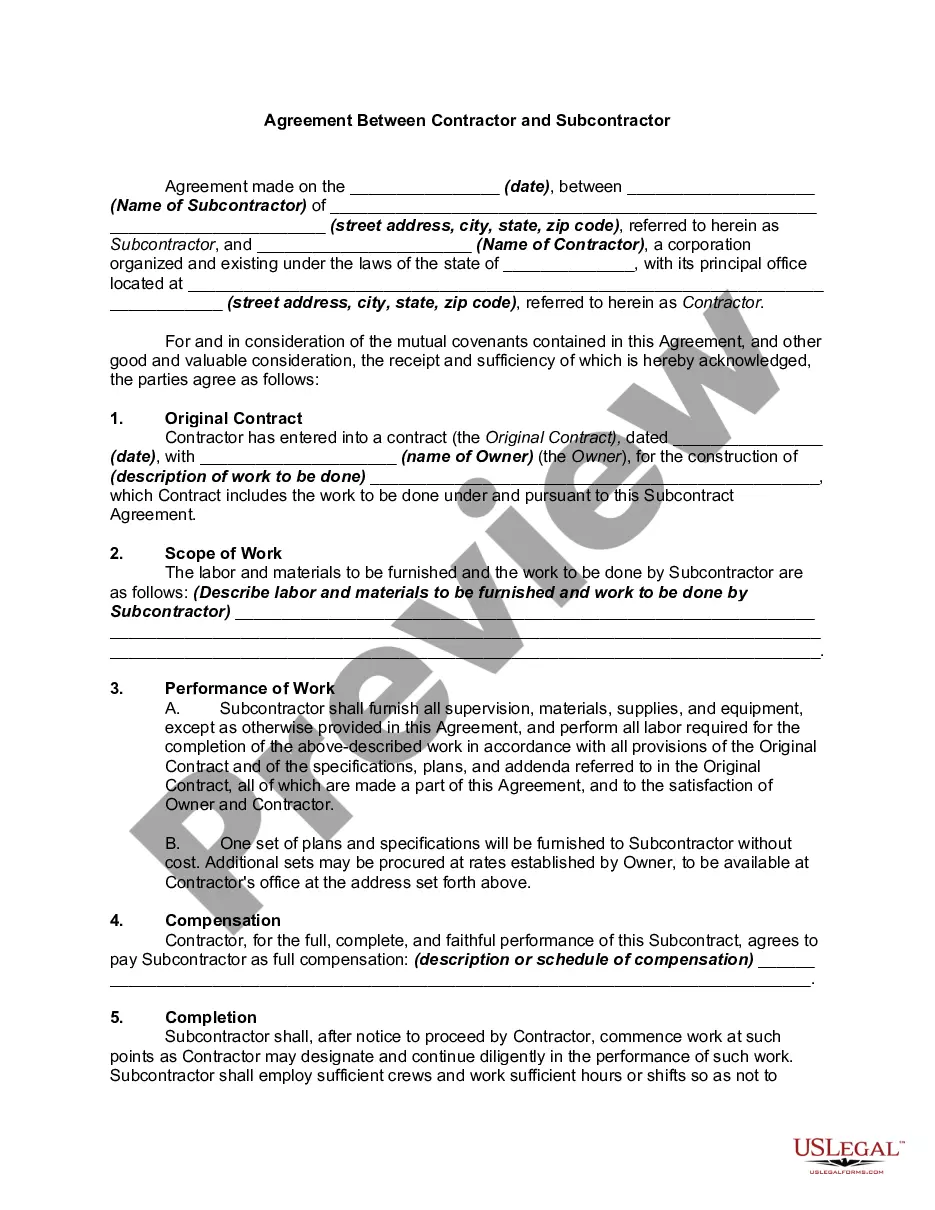
This is a sample Farm Lease Agreement. This type of an agreement is between an owner of farmland and a tenant who plans to use the land for farming or raising livestock. The property owner can make and sign a Farm Lease to safeguard interests and generate income without having to work the farm or ranch.
Absolutely! Having a lawyer review the lease can save you a heap of trouble later on. They can catch any tricky terms and help ensure everything is fair and square.
Yes, there are various local and state laws that can affect farm leases. It's a good idea to familiarize yourself with these laws or consult a legal expert to ensure everything's above board.
If either party wants to break the lease before it ends, they should look at the terms set in the agreement. Often, there are specific clauses that outline how to proceed, so it's wise to read the fine print.
Yes, changes can be made to the lease, but both parties need to agree on the modifications. Any changes should be documented in writing to avoid any misunderstandings down the road.
Farm leases can vary in length but typically range from one year to several years. The duration usually depends on what both the landlord and the farmer agree upon—it's all about finding common ground.
In a farm lease agreement, you'll want to include details like the rental amount, duration of the lease, responsibilities for maintenance, and how crops or livestock will be managed. It's important to cover all your bases!
A basic farm lease agreement is a legal document that outlines the terms and conditions under which a landlord allows a farmer to use their land for farming. It's like a handshake on paper, detailing what each party expects.
Trusted and secure by over 3 million people of the world’s leading companies