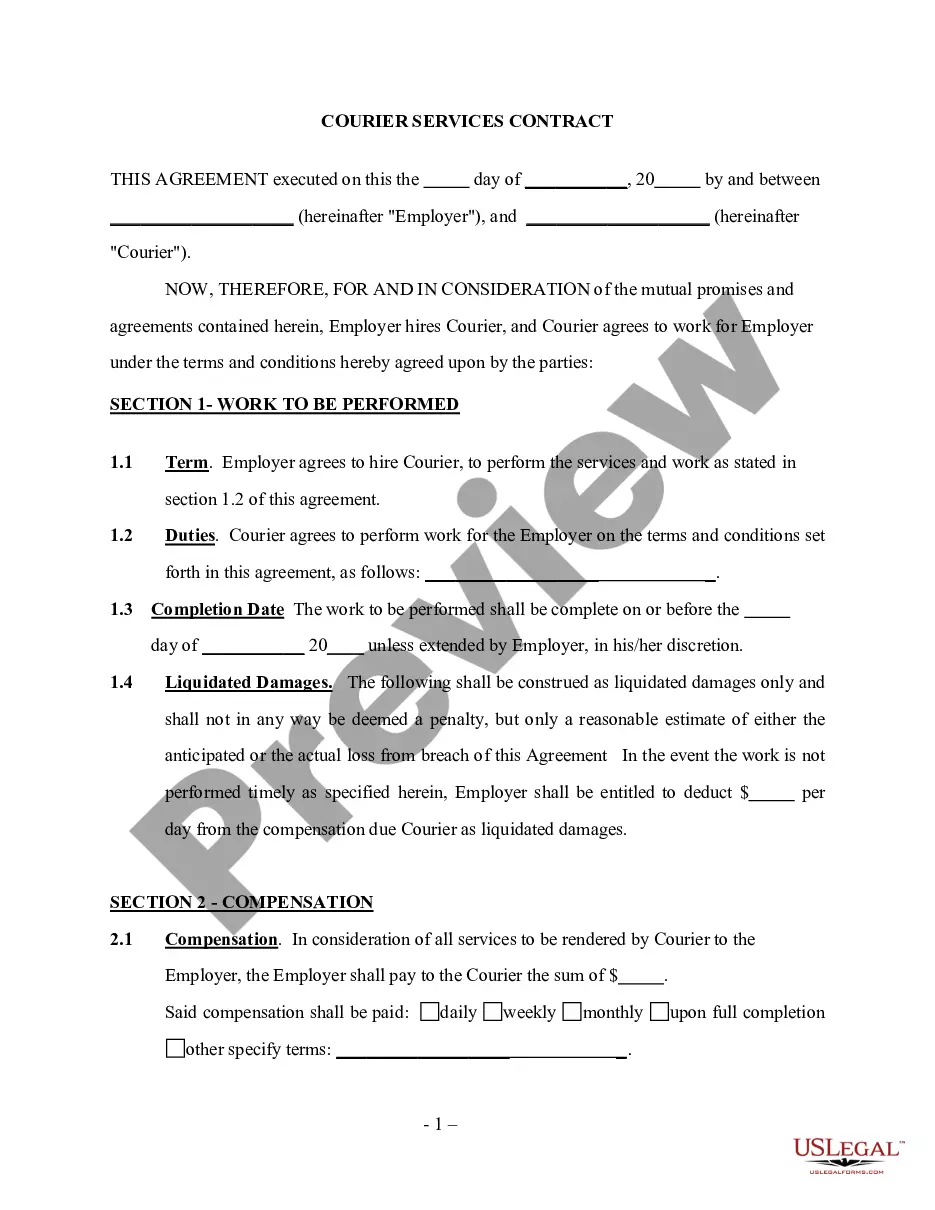
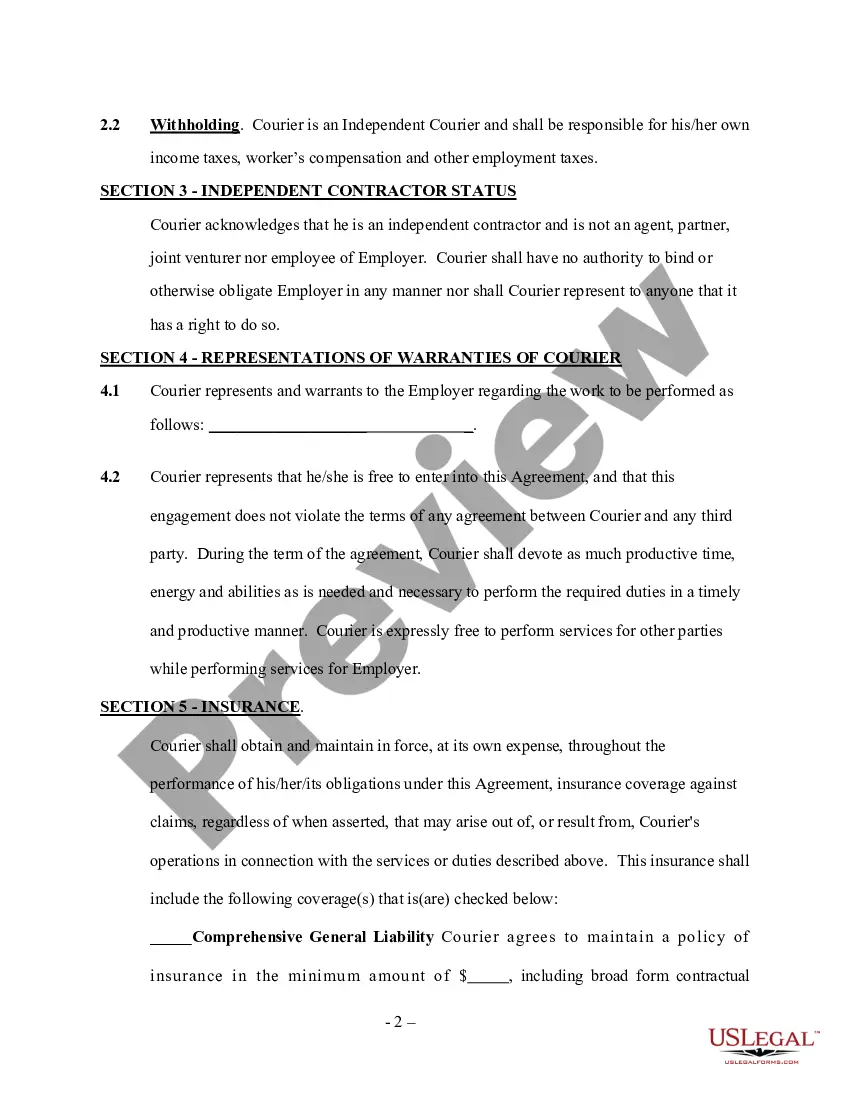
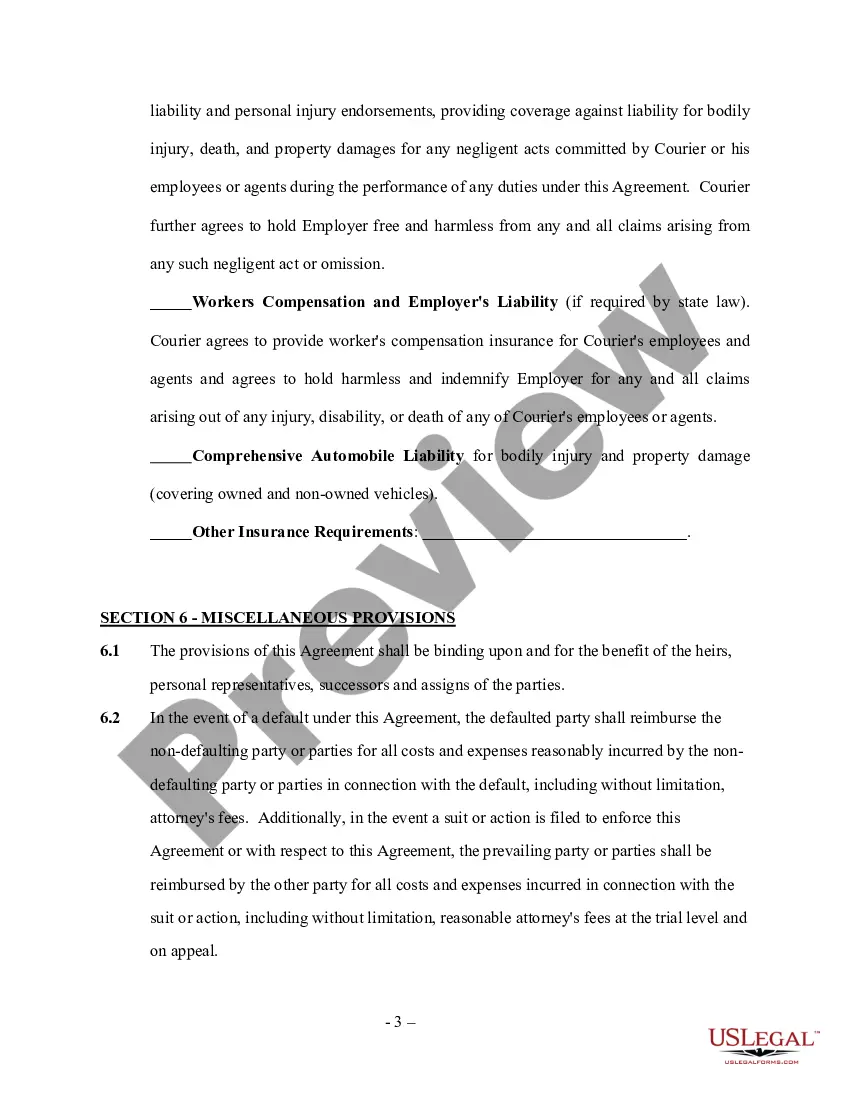
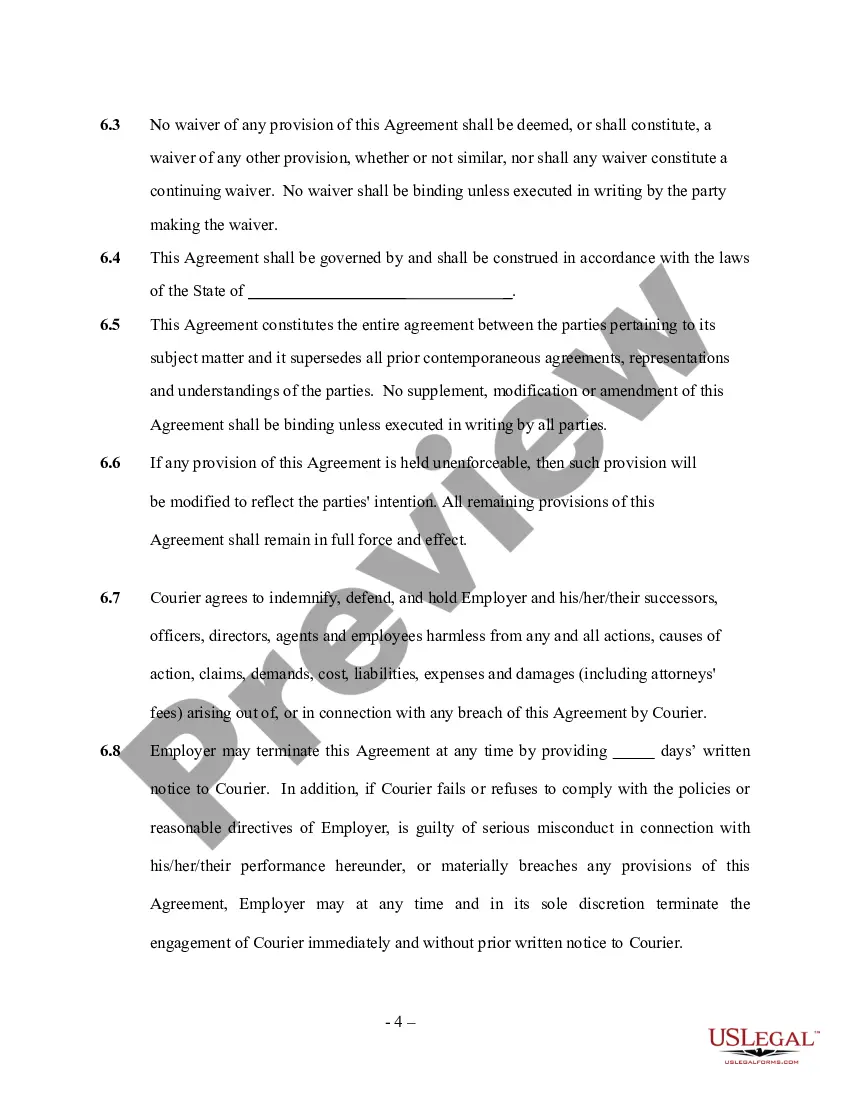
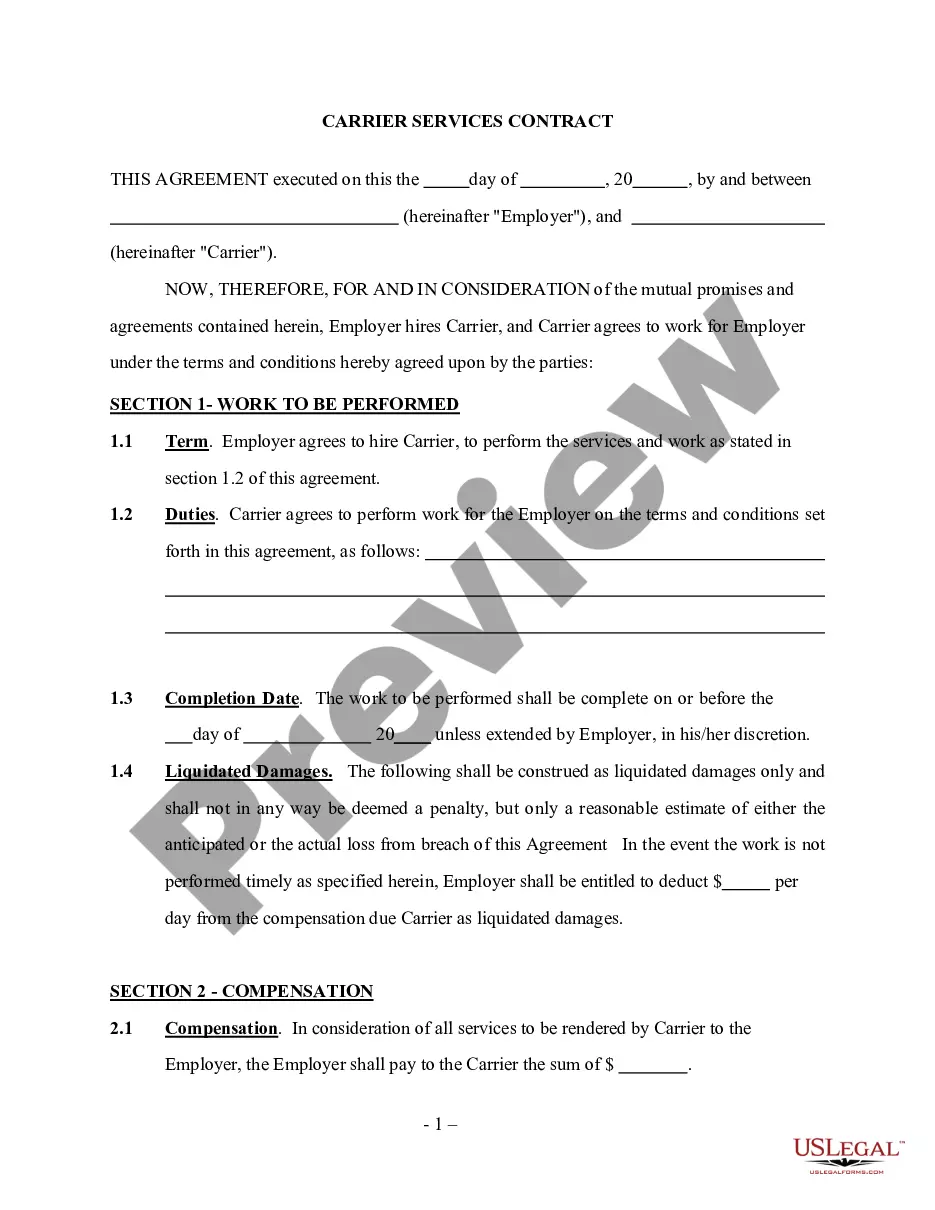
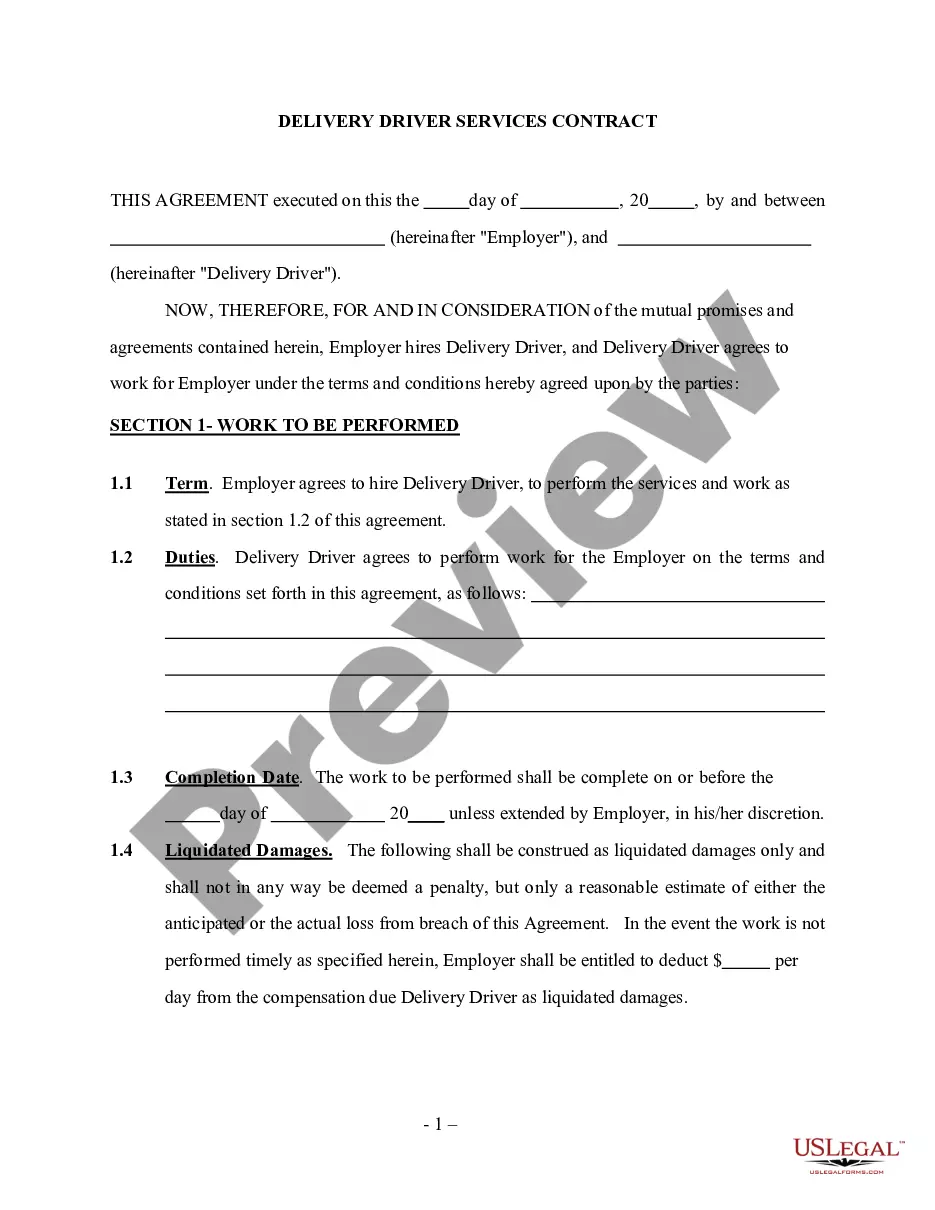
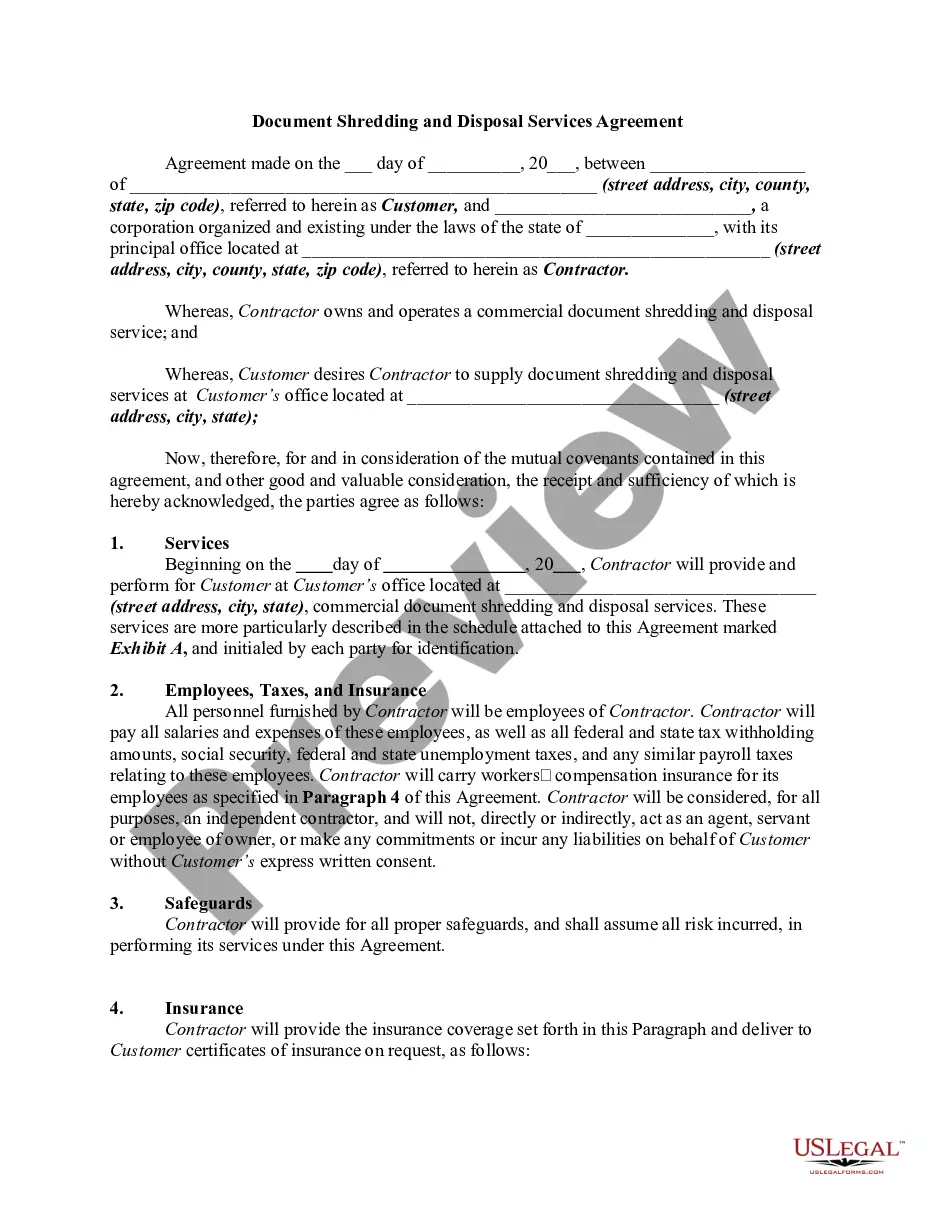
Employer contracts with an independent contractor to provide courier services as specified and agreed upon in the contract or Courier company contracts with employer/client to provide courier services to client.
If things go south during a delivery, stay calm, communicate with the client, and document the issue. Your contract should guide you on how to handle disputes.
Yes, having insurance is a wise move to protect yourself from accidents or damages while you're on the go with deliveries.
As a self-employed gig worker, you'll need to keep track of your income and expenses, and file taxes accordingly, possibly paying estimated taxes quarterly.
Absolutely! Many self-employed couriers use their own vehicles, just ensure they meet safety standards and are properly insured.
Make sure to cover delivery times, service areas, liability, and payment terms in your contract to keep everything crystal clear.
Yes, if you're running your own courier service, it's best to register it to stay on the right side of the law and maintain a professional image.
A courier service contract outlines the terms between self-employed couriers and companies they deliver for, detailing expectations, responsibilities, and logistics.