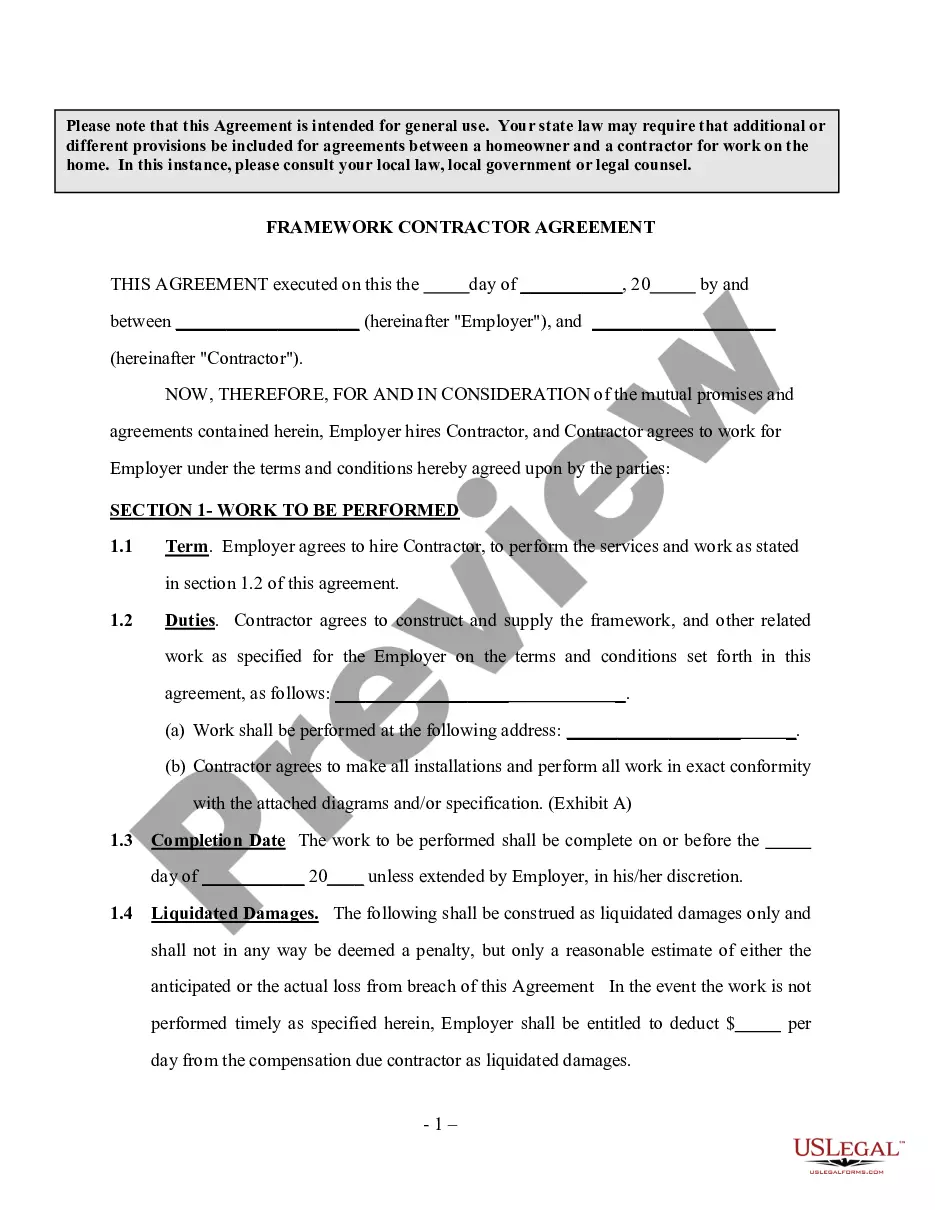
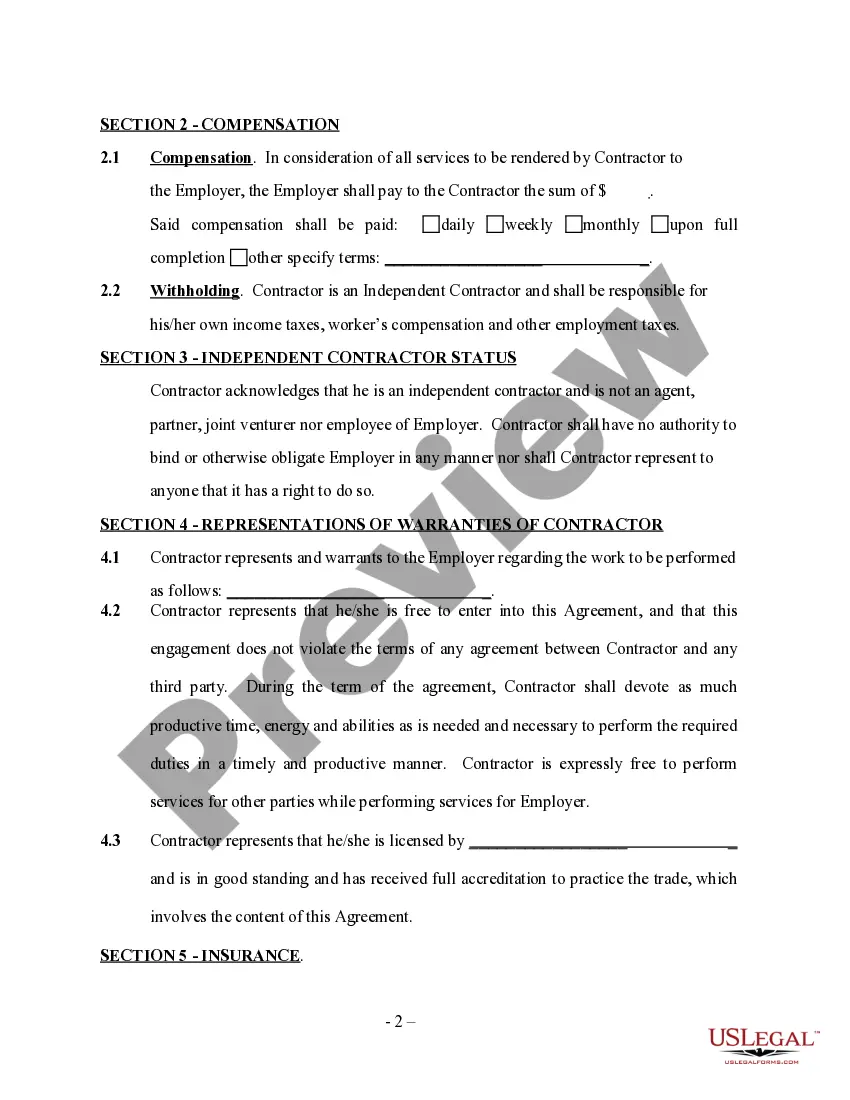
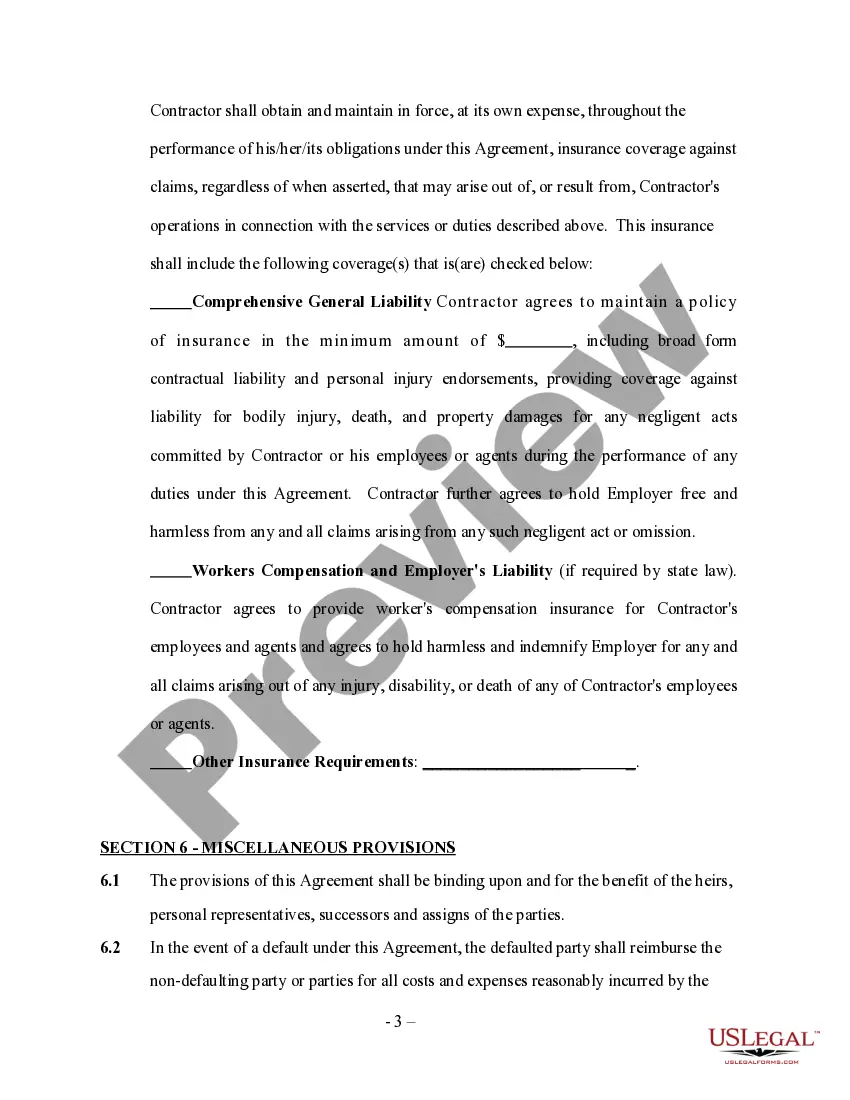
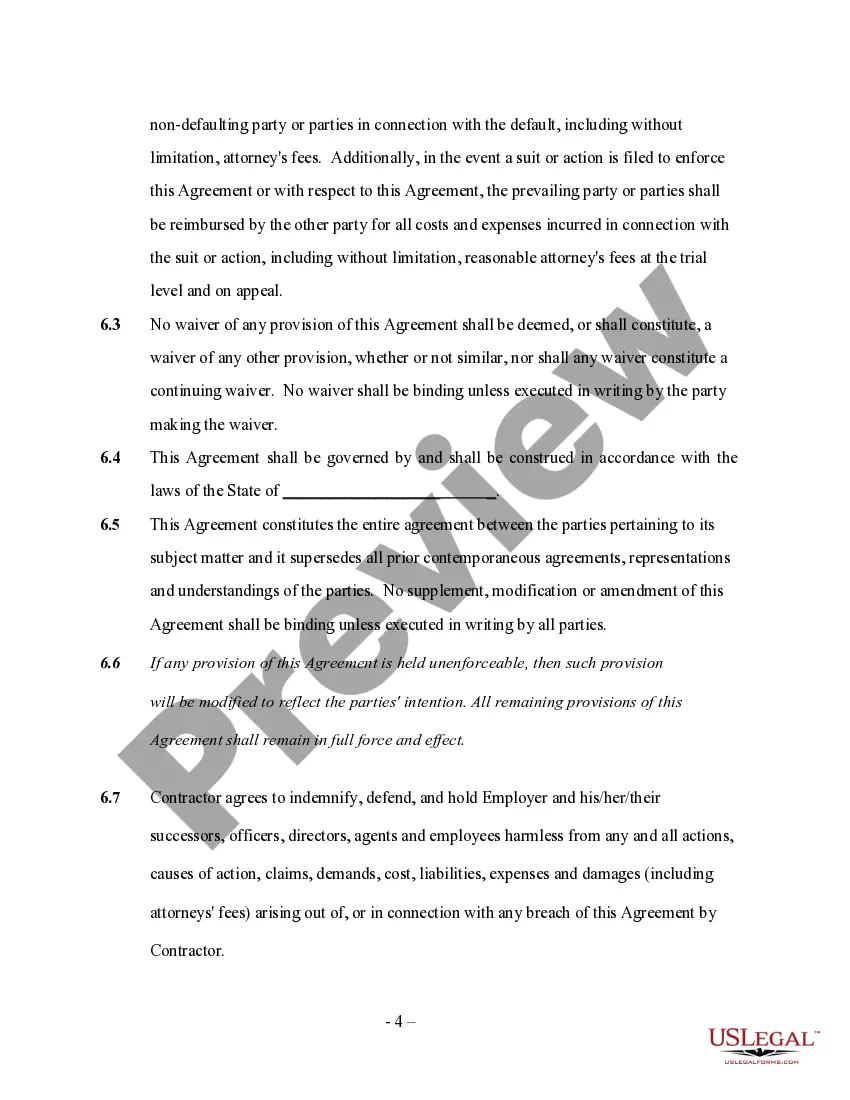
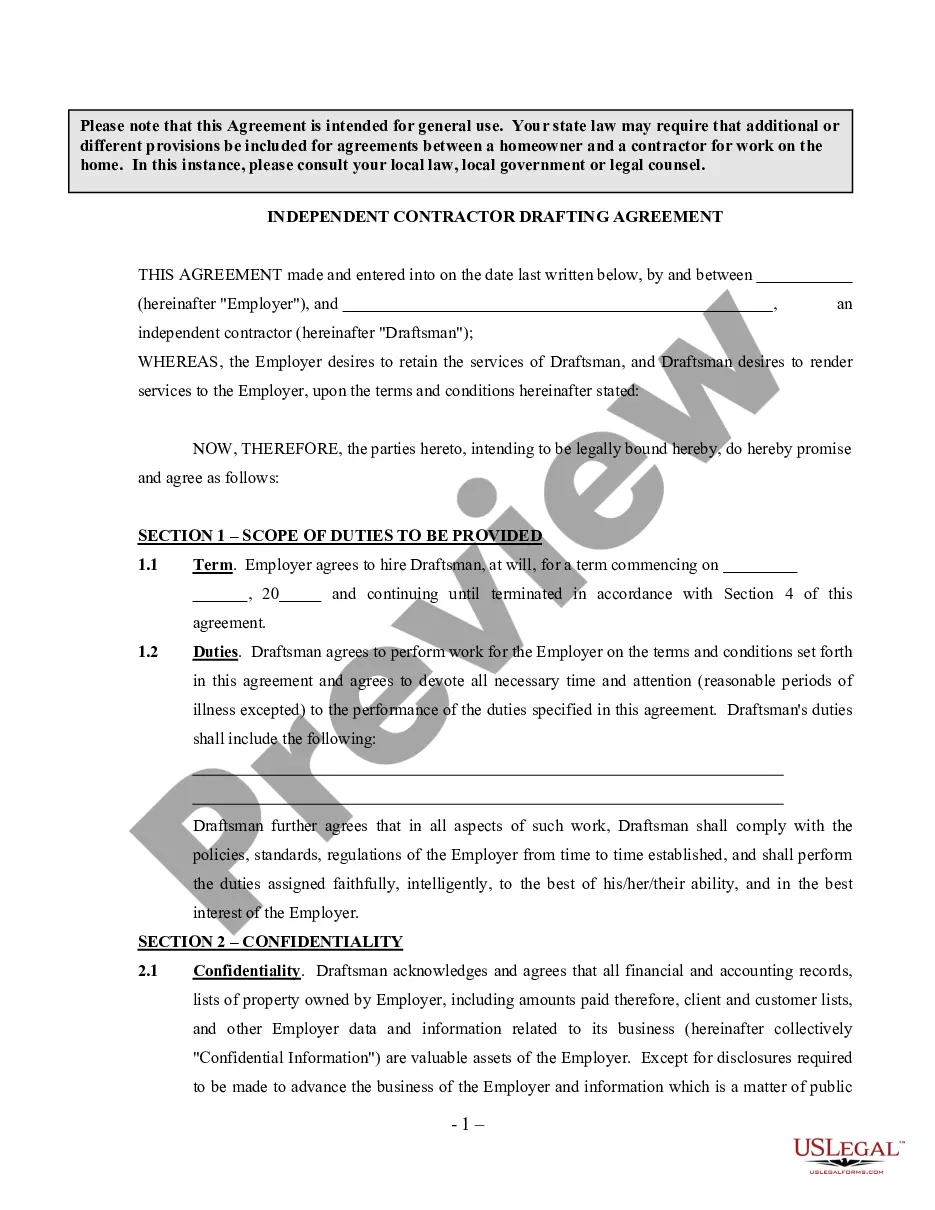
Employer contracts with an independent contractor to provide framework for a project as specified and agreed upon in the contract. Please note that this Agreement is intended for general use. Your state law may require that additional or different provisions be included for agreements between a homeowner and a contractor for work on the home. In this instance, please consult your local law, local government or legal counsel.
While it’s not mandatory, having a lawyer look it over can be a smart move to catch any potential pitfalls before you sign on the dotted line.
If the terms aren't met, it can lead to disputes. That's why it's crucial to communicate and address any issues as they arise.
Absolutely! Negotiating can ensure that the terms fit your needs and protect your interests, so don’t shy away from speaking up.
It provides a clear understanding of roles and responsibilities, which can make it easier for contractors to manage their work and expectations.
Key elements usually include project scope, payment terms, deadlines, and responsibilities. These help to keep everyone on the same page.
Any self-employed individual or contractor can work under this agreement, as long as they have the necessary skills and comply with local regulations.
A Framework Contractor Agreement is a set of terms that outlines the relationship between companies and self-employed contractors. It helps to clarify what’s expected from both sides.