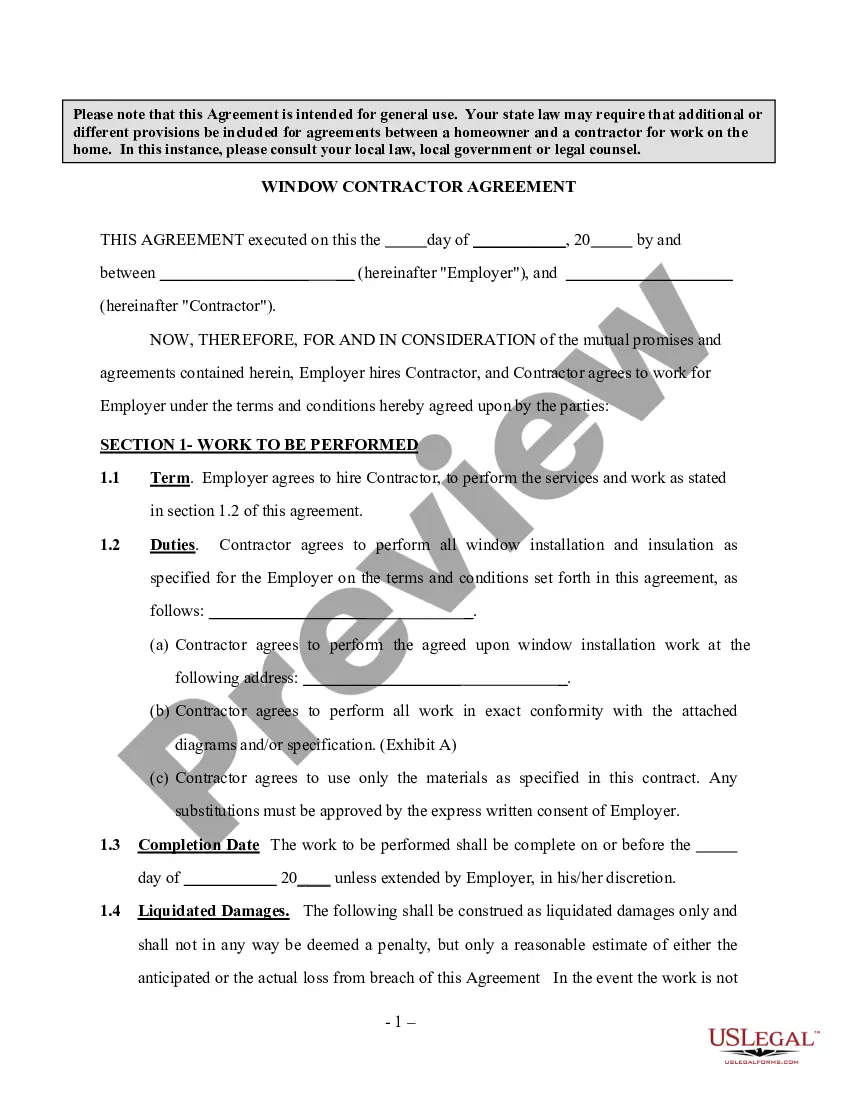
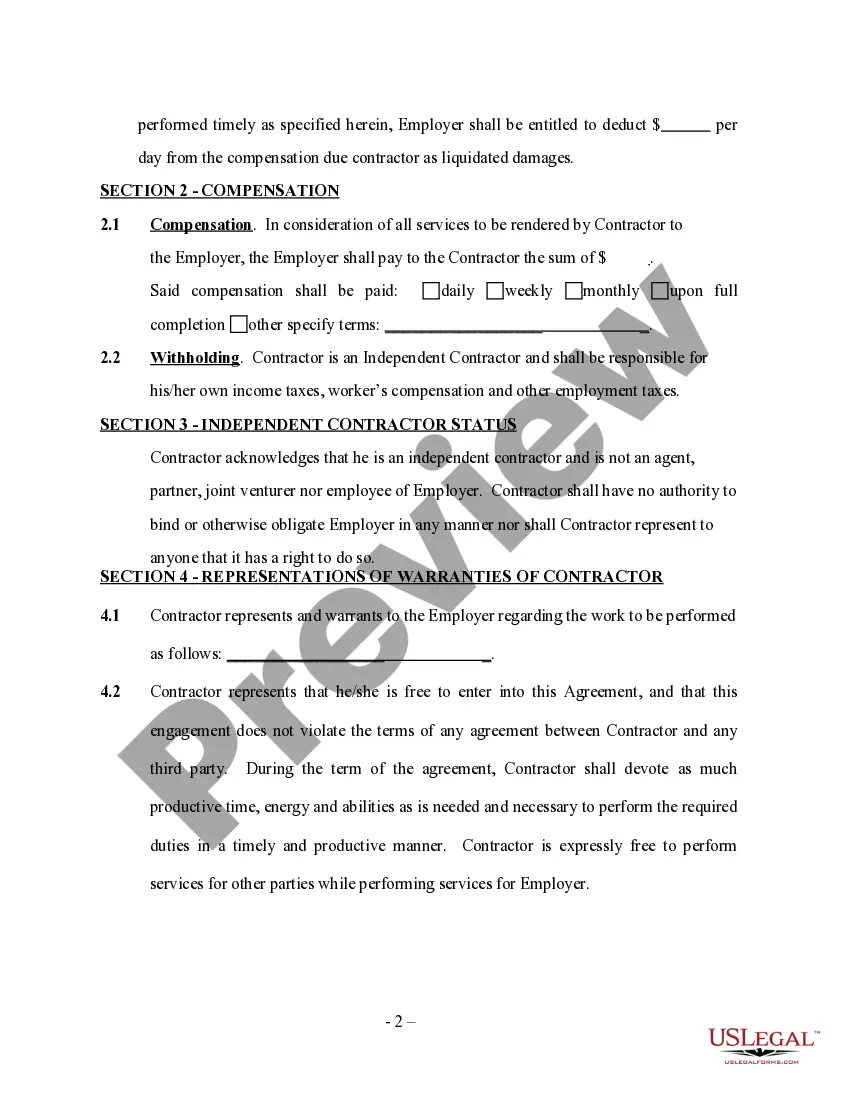
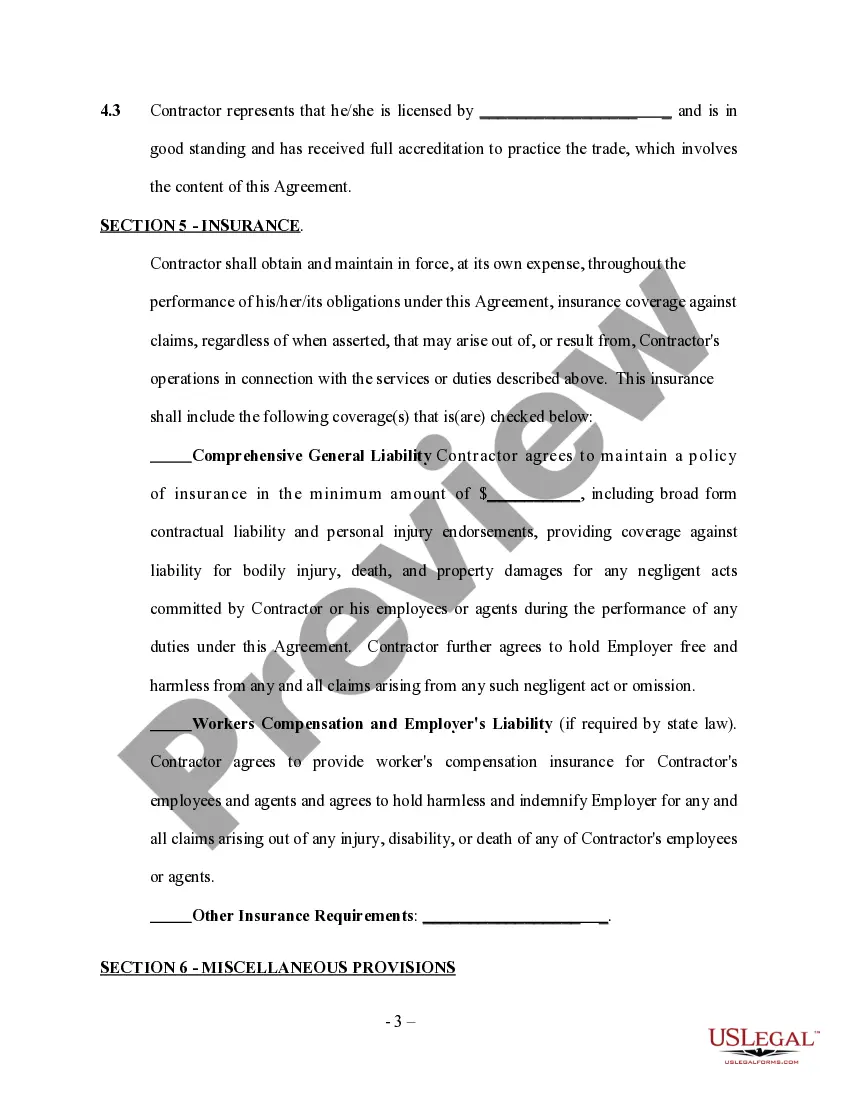
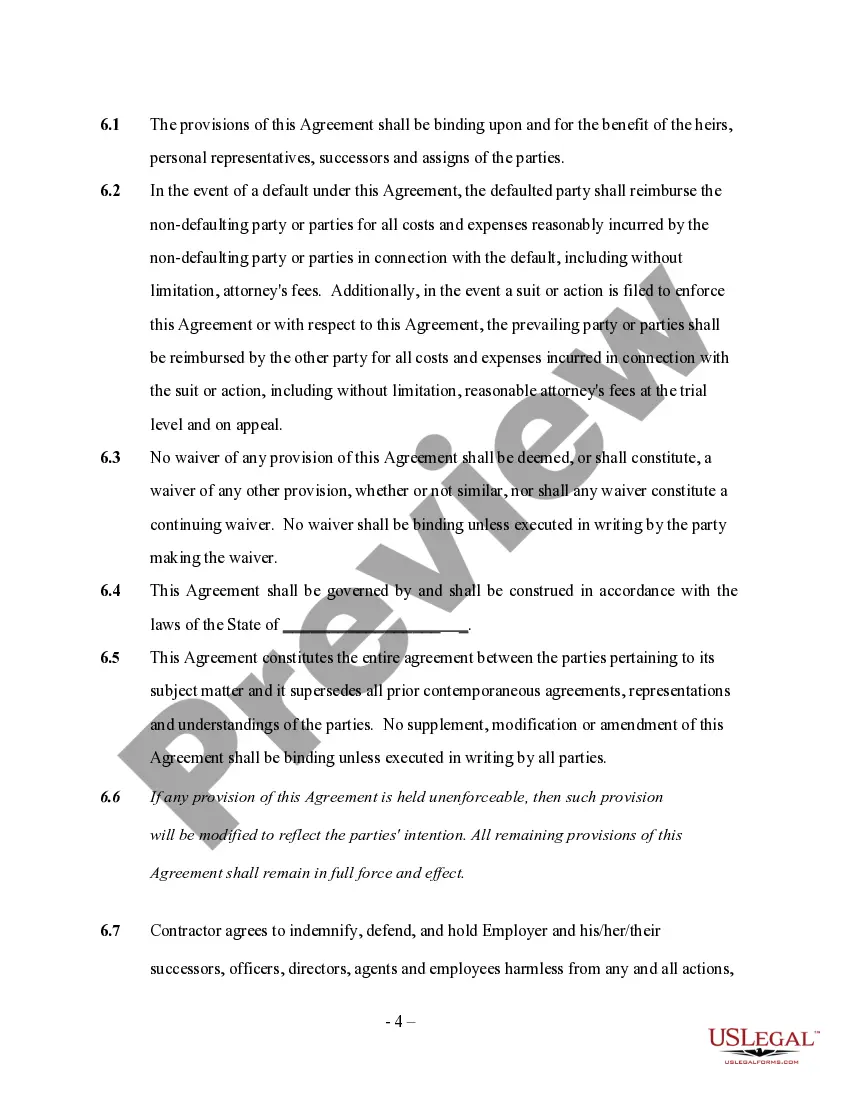
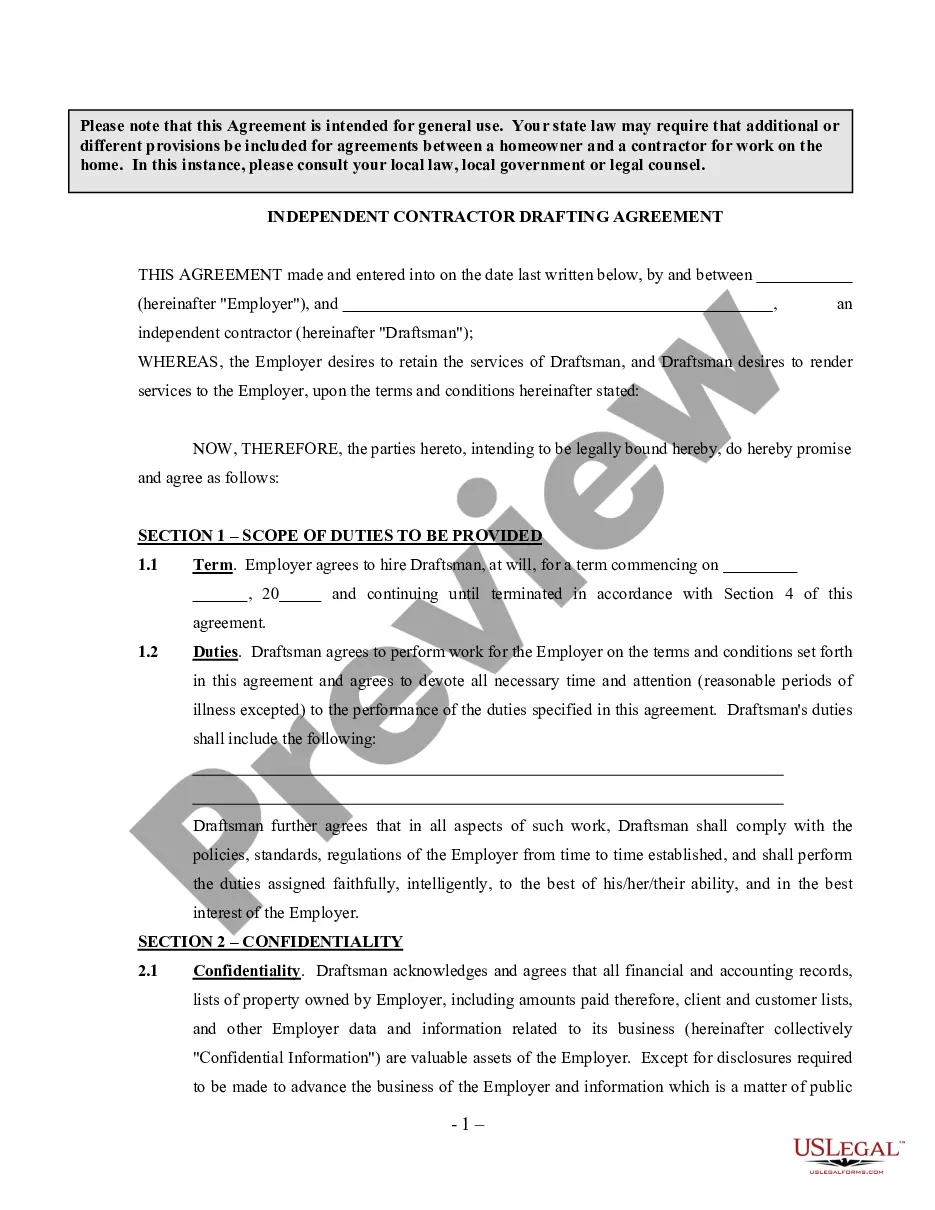
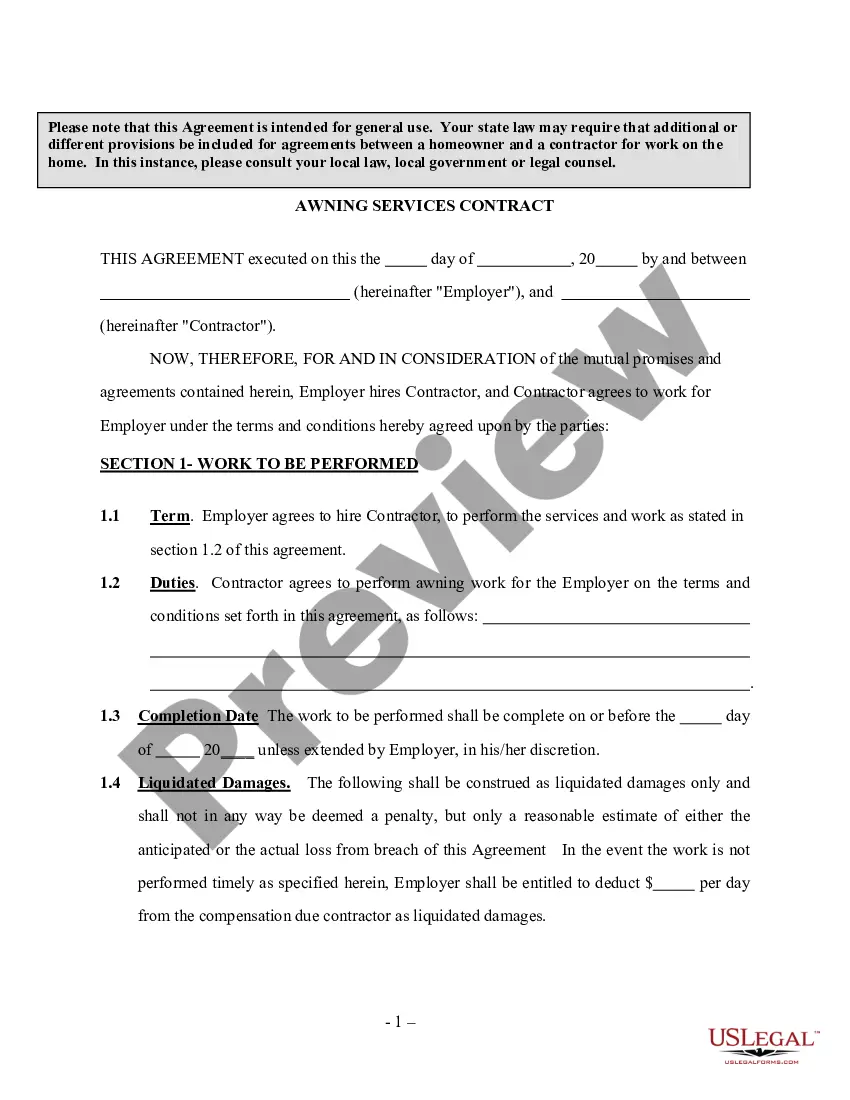
Employer contracts with an independent contractor to install windows and insulation as specified and agreed upon in the contract. Please note that this Agreement is intended for general use. Your state law may require that additional or different provisions be included for agreements between a homeowner and a contractor for work on the home. In this instance, please consult your local law, local government or legal counsel.
Most agreements will have a clause about handling disputes, often suggesting mediation or arbitration rather than heading straight to court. It might save you a world of headache.
If you don’t stick to the terms, it could lead to penalties or legal action. It’s best to play by the rules to avoid any sticky situations.
Yes, but it requires both parties to agree to any changes in writing. You can't just change the rules without a nod from the other side.
Normally, the duration aligns with the project timeline. It could be for a specific job or could cover multiple jobs over a set time, so it really depends on the situation.
The agreement should cover the scope of work, timelines, payment terms, warranties, and what happens if things go south. It's all about giving clarity to the job.
Having an agreement keeps everyone on the same page. It outlines what work will be done, deadlines, and expectations, preventing any misunderstandings down the line.
It's a legal document that lays down the ground rules between a self-employed window contractor and their clients in Seattle. Think of it as a roadmap for your working relationship.