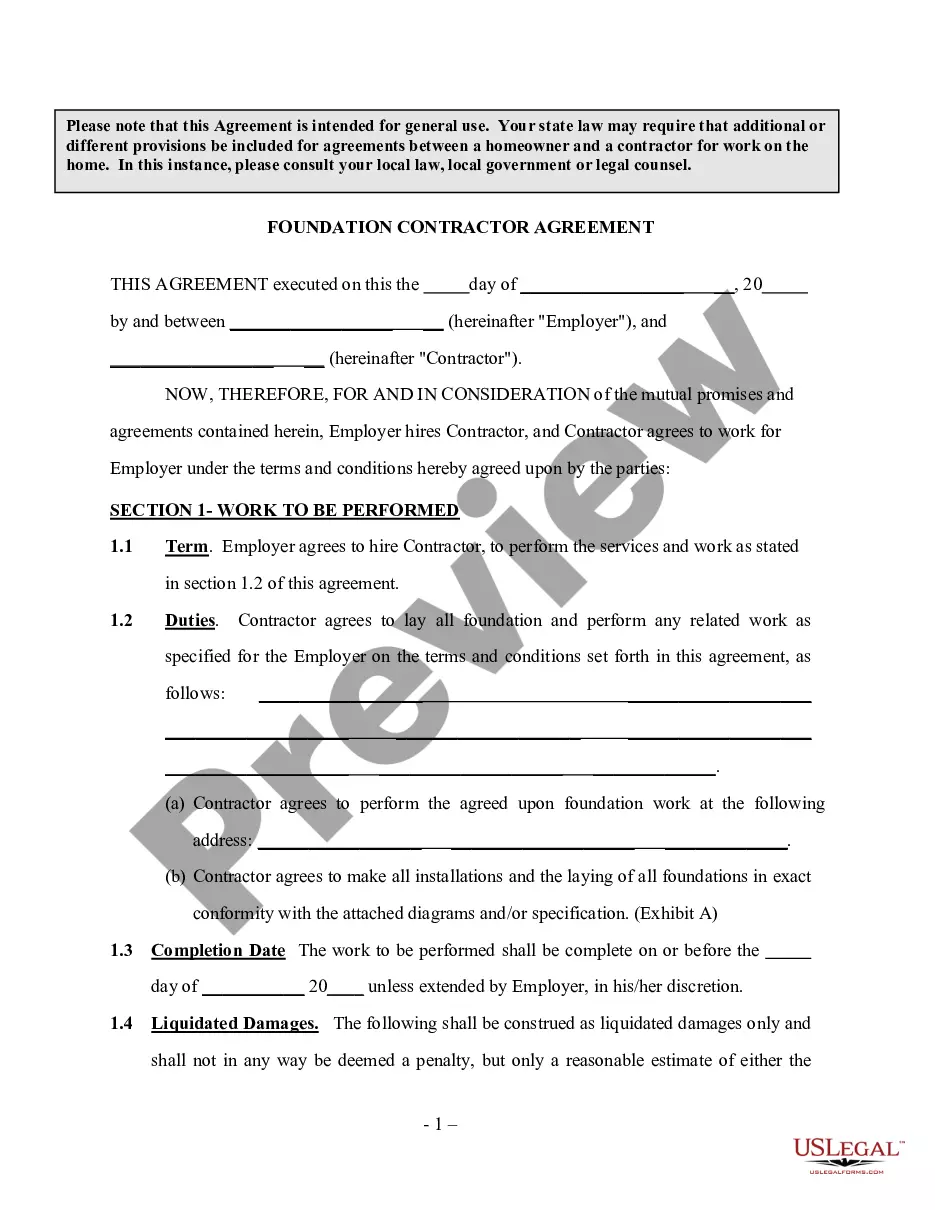
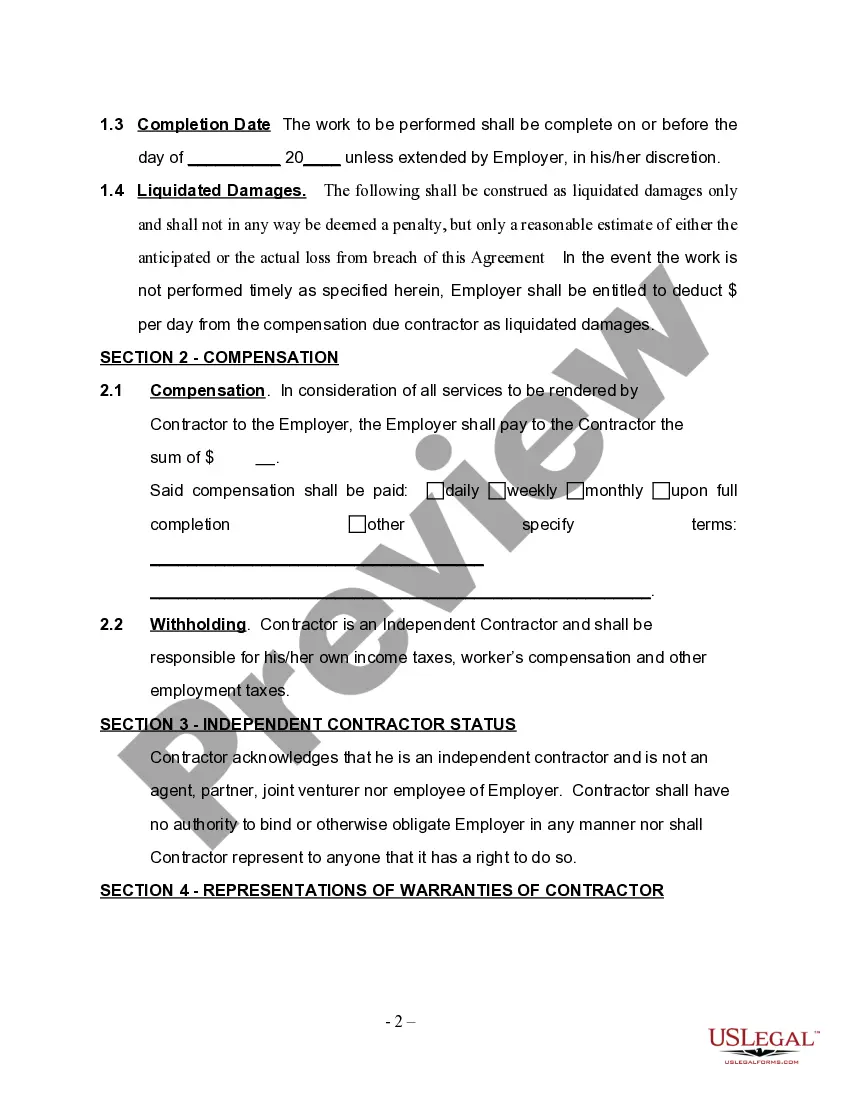
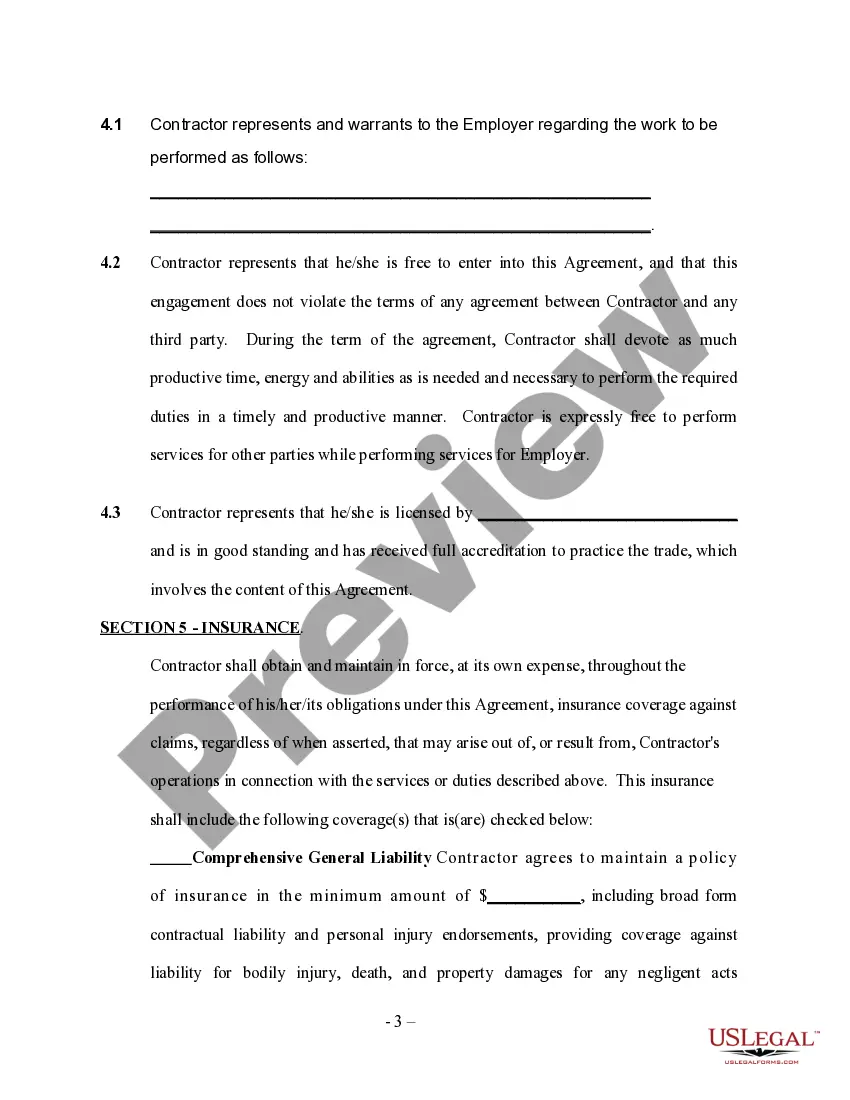
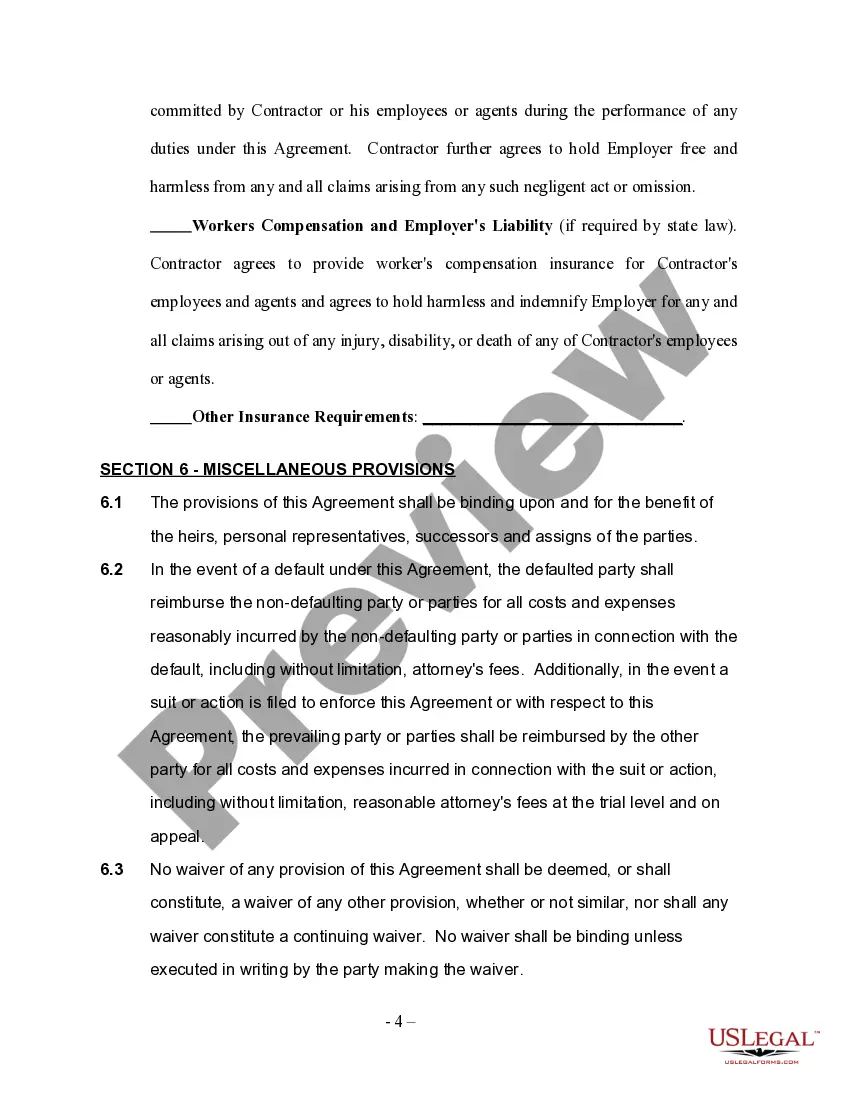
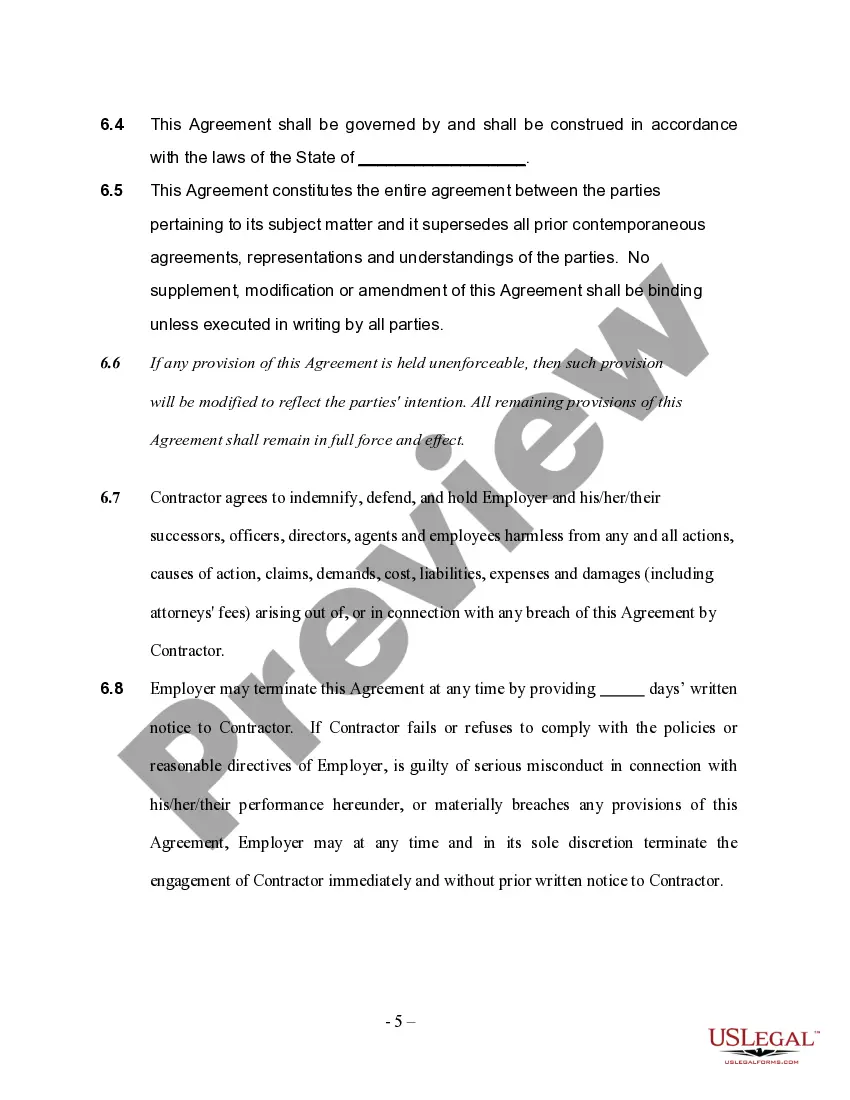
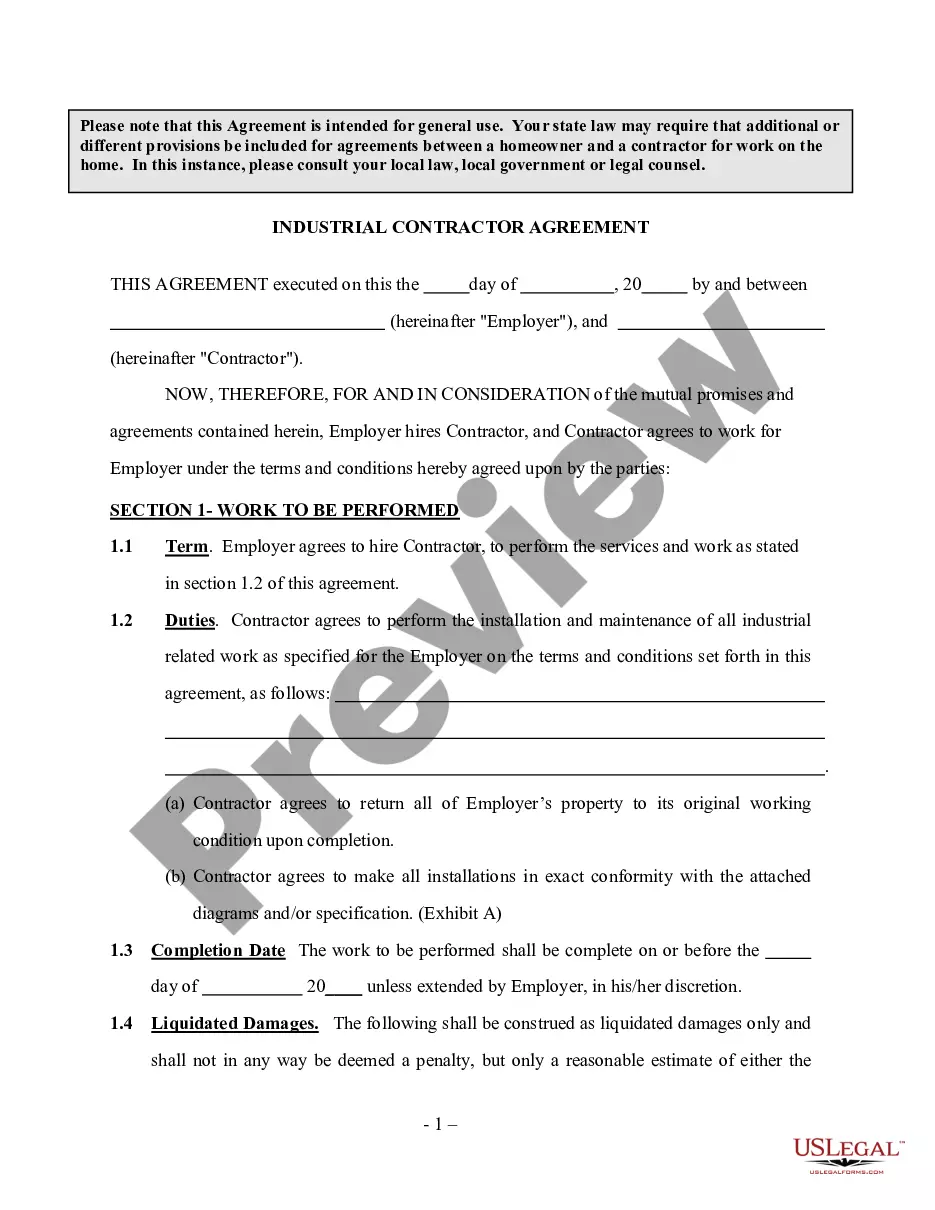
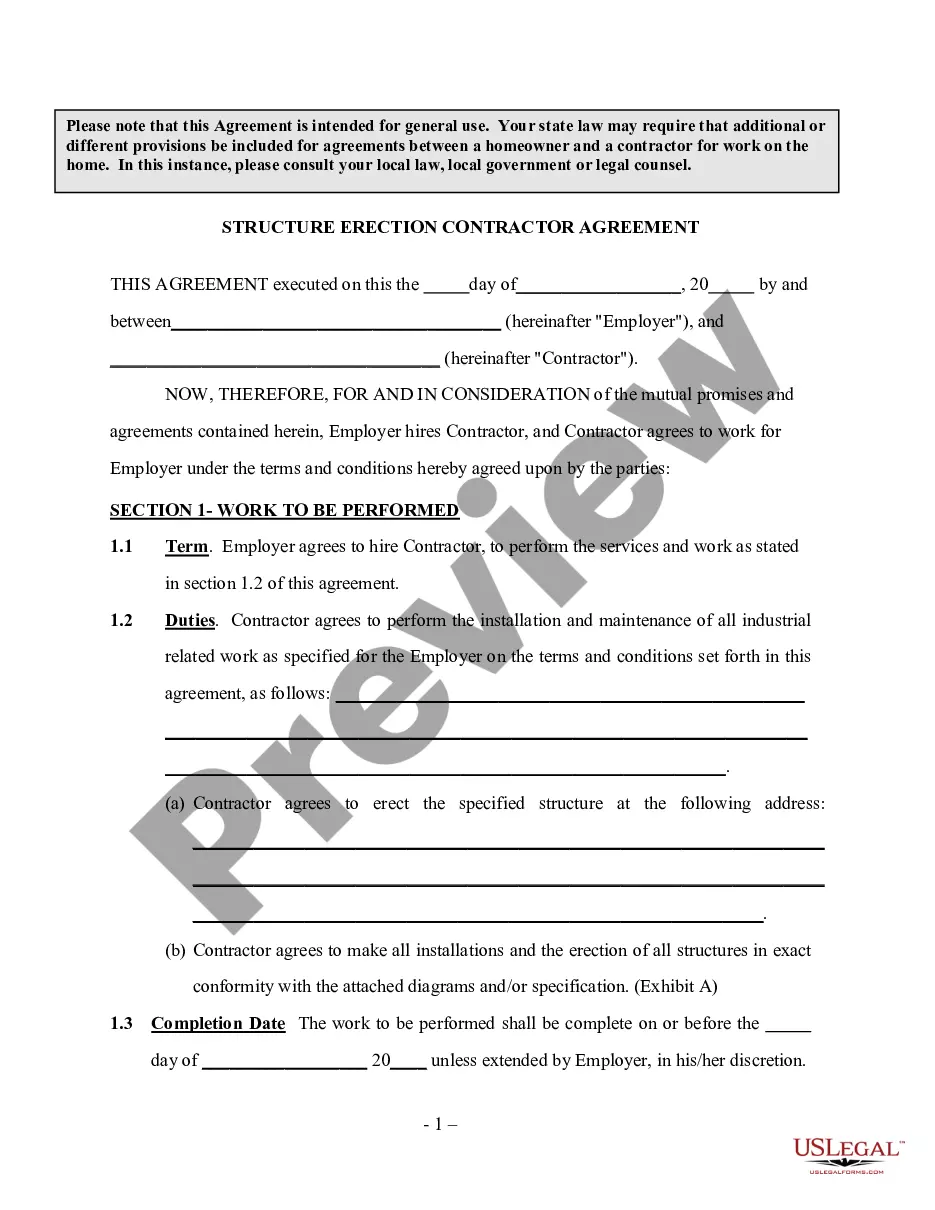
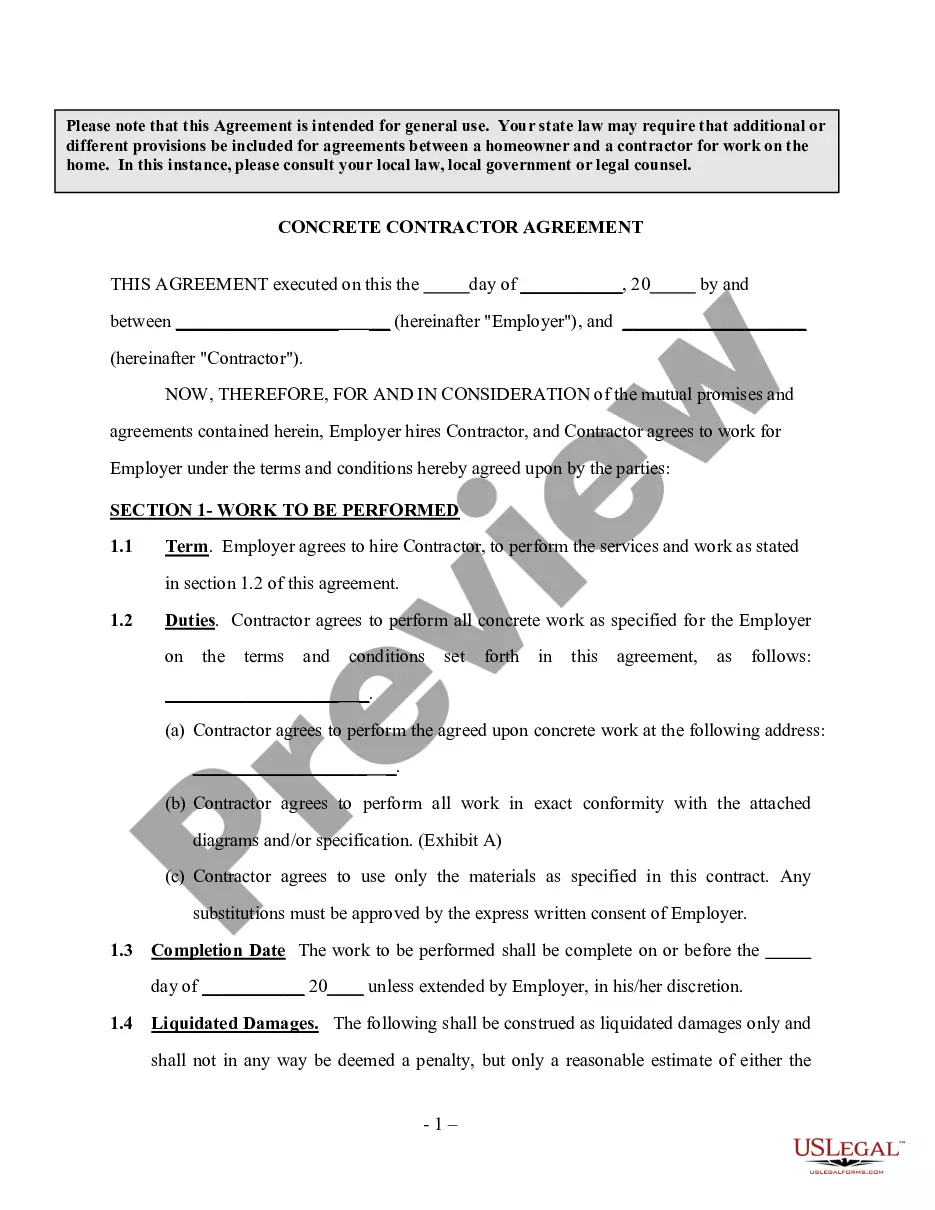
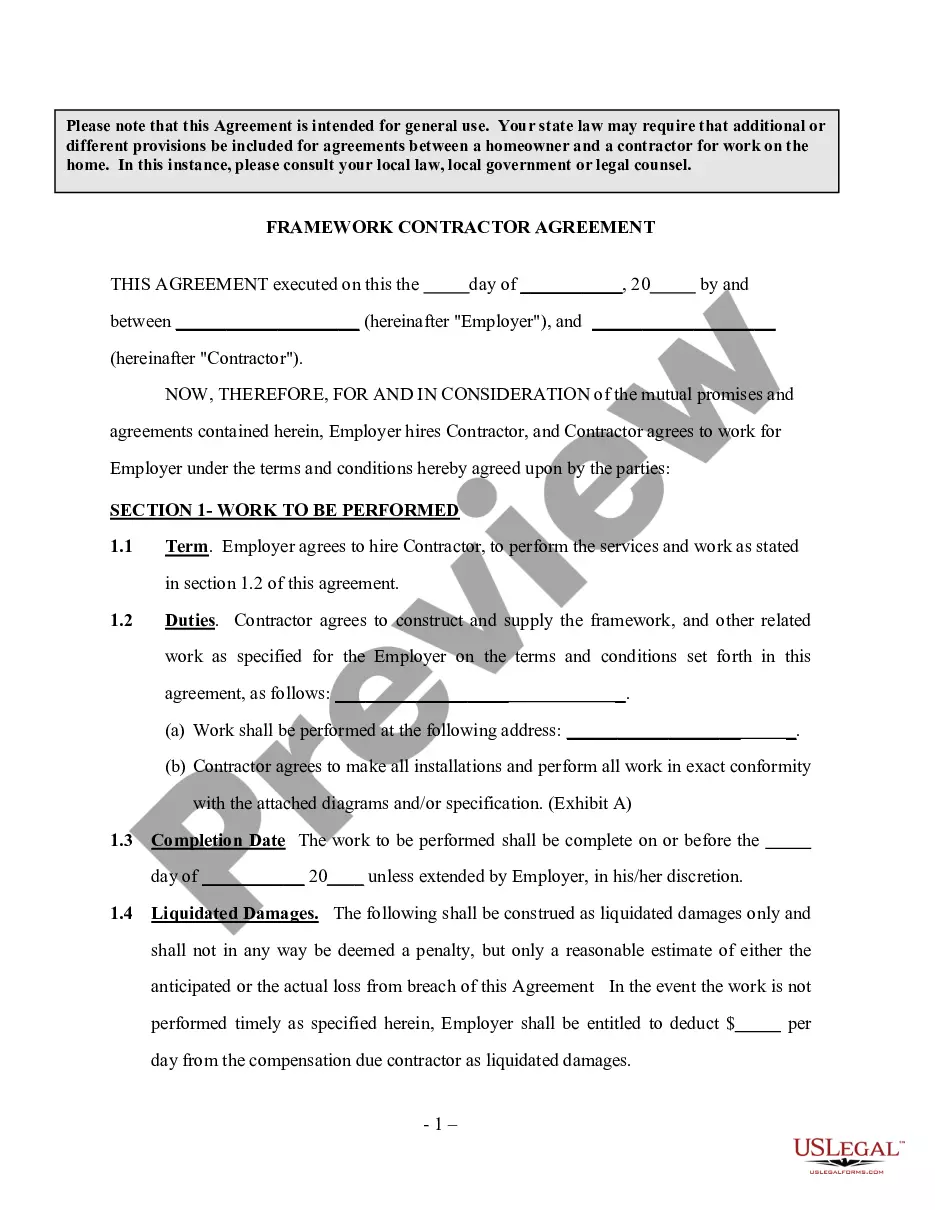
Employer contracts with an independent contractor to lay a foundation as specified and agreed upon in the contract. Please note that this Agreement is intended for general use. Your state law may require that additional or different provisions be included for agreements between a homeowner and a contractor for work on the home. In this instance, please consult your local law, local government or legal counsel.
The duration can vary widely depending on the project size and complexity. Generally, it could take anywhere from a few days to several weeks. Patience is key here, as good work takes time!
Start by asking friends or family for recommendations, or check online reviews. Do your homework so you don’t end up with a contractor who’s all talk and no action.
If that happens, you may have grounds to take action, whether it’s negotiation, mediation, or even going to court. Don’t take it lying down; know your rights and how to stand up for them.
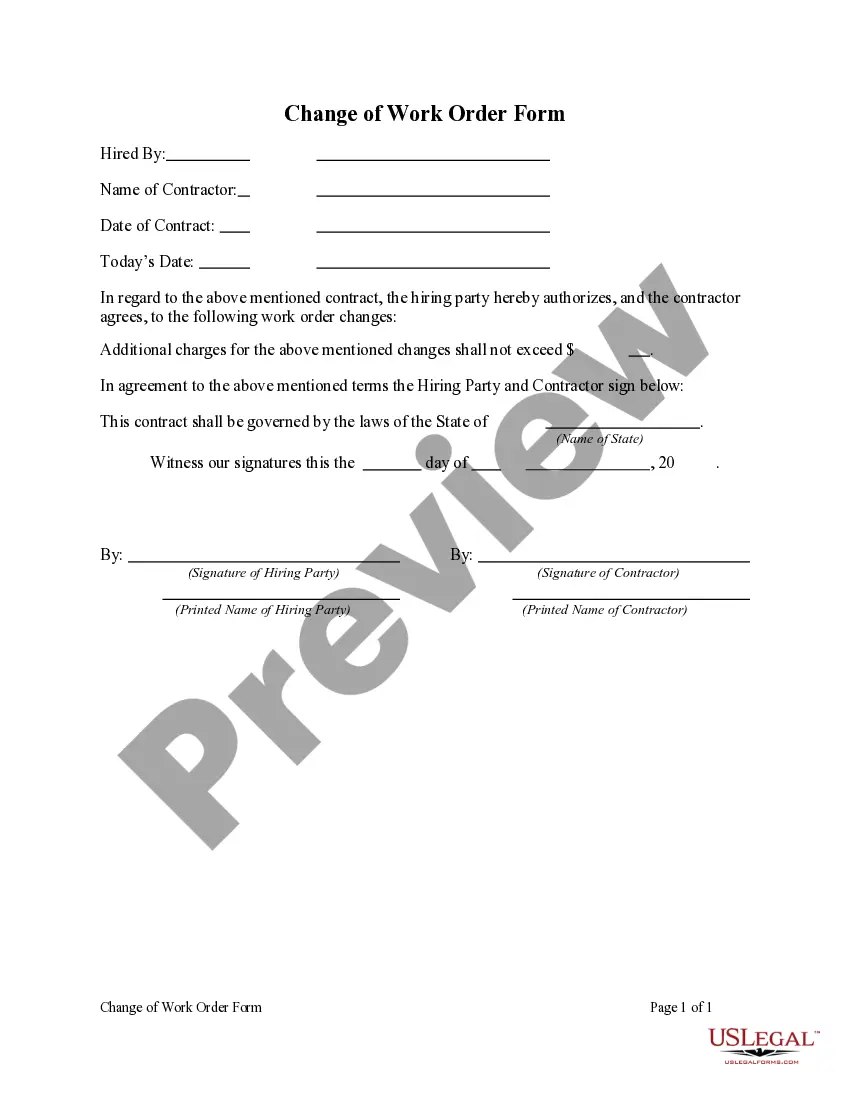
Yes, but you’ll need to get both parties to agree on any changes and possibly put it in writing. It’s best to keep things above board and avoid any heebie-jeebies down the road.
Your contract should cover the scope of work, timelines, payment terms, and any necessary permits. It’s your roadmap for the project, guiding you from start to finish.
Absolutely! A contractor agreement helps protect both you and the contractor. It’s like having a safety net, ensuring that everyone is on the same page before the work starts.
A contractor agreement is a formal contract that spells out the responsibilities and expectations between you and your foundation contractor. It’s like putting everything in writing to keep things clear as mud.