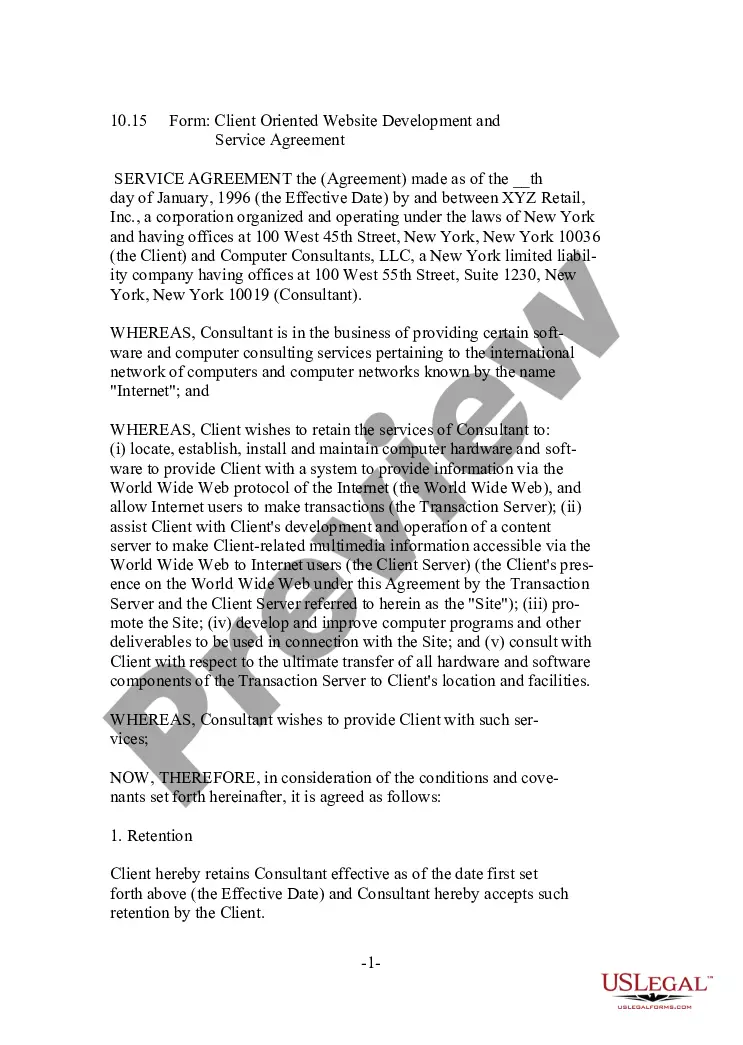
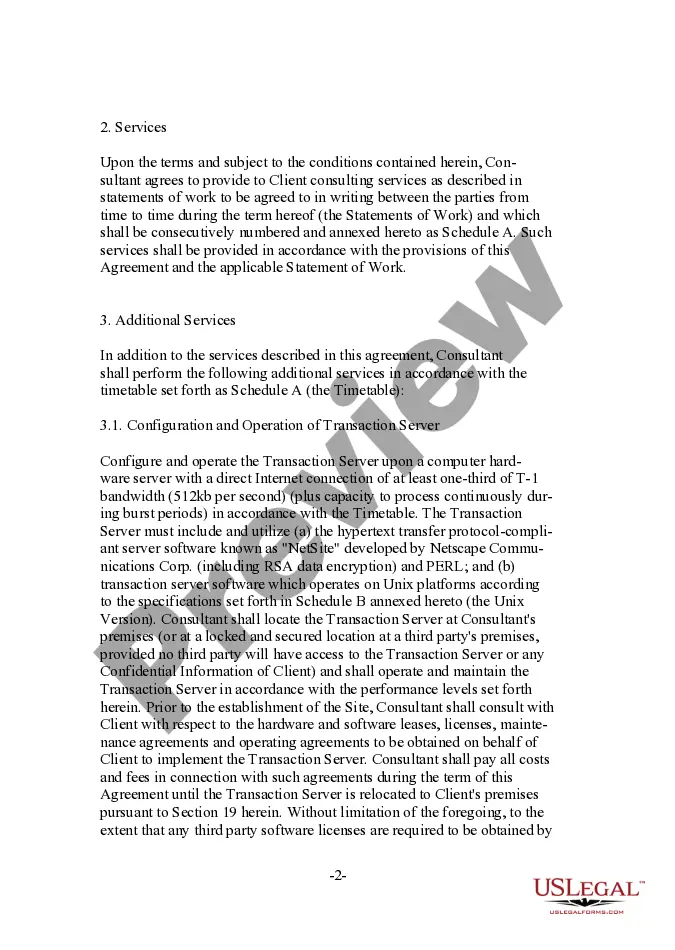
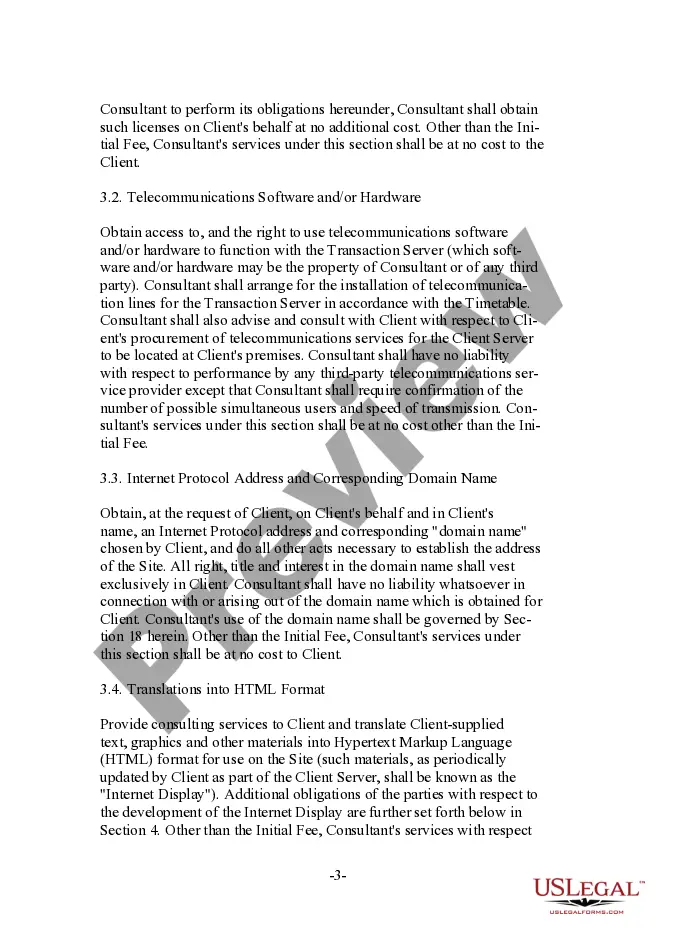
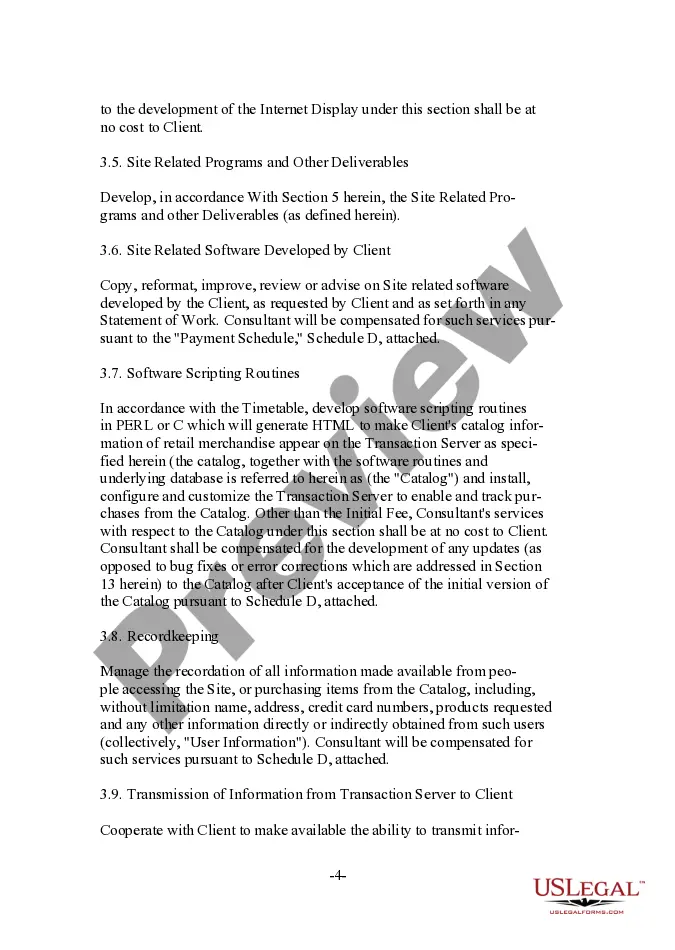
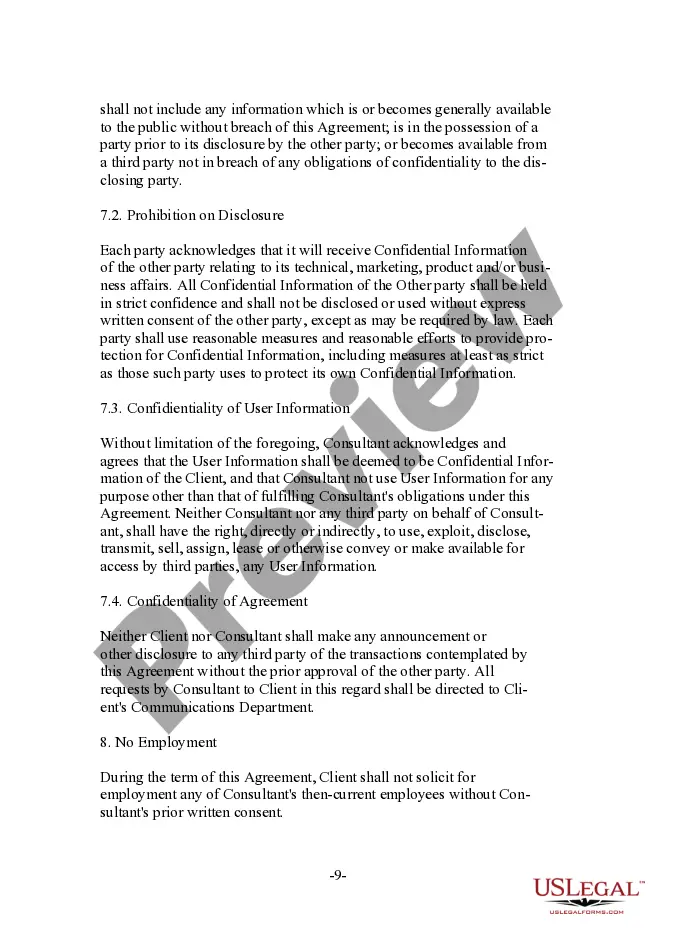
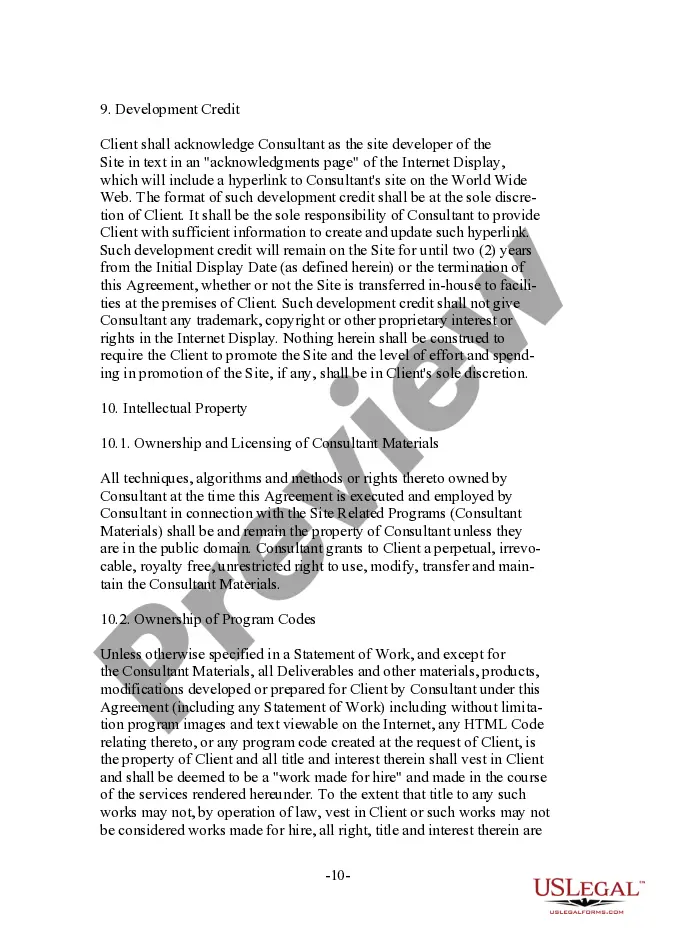
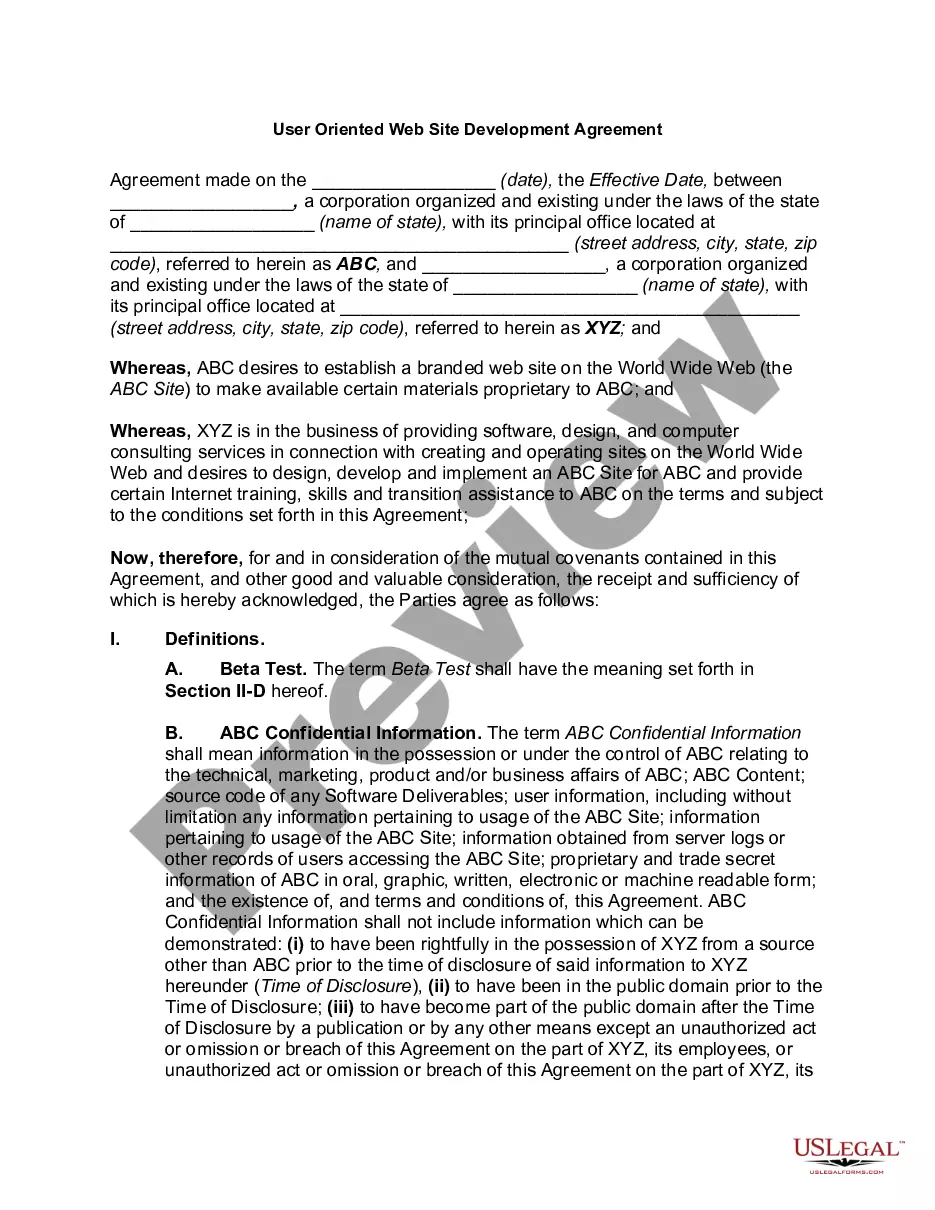
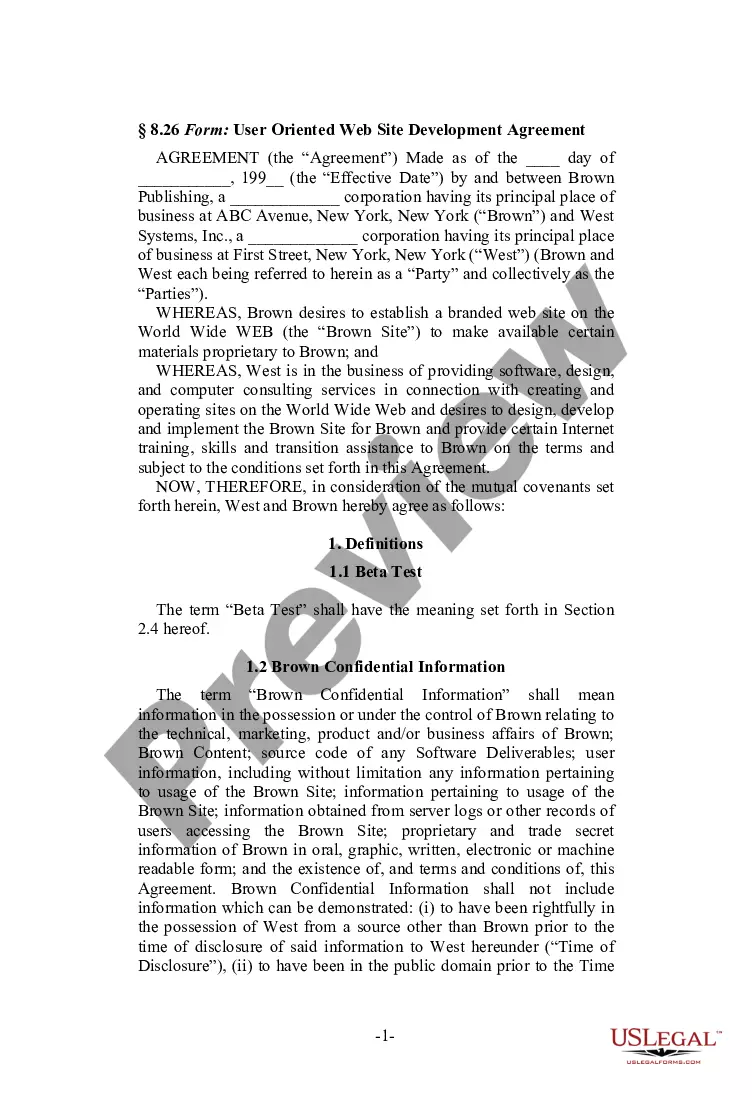
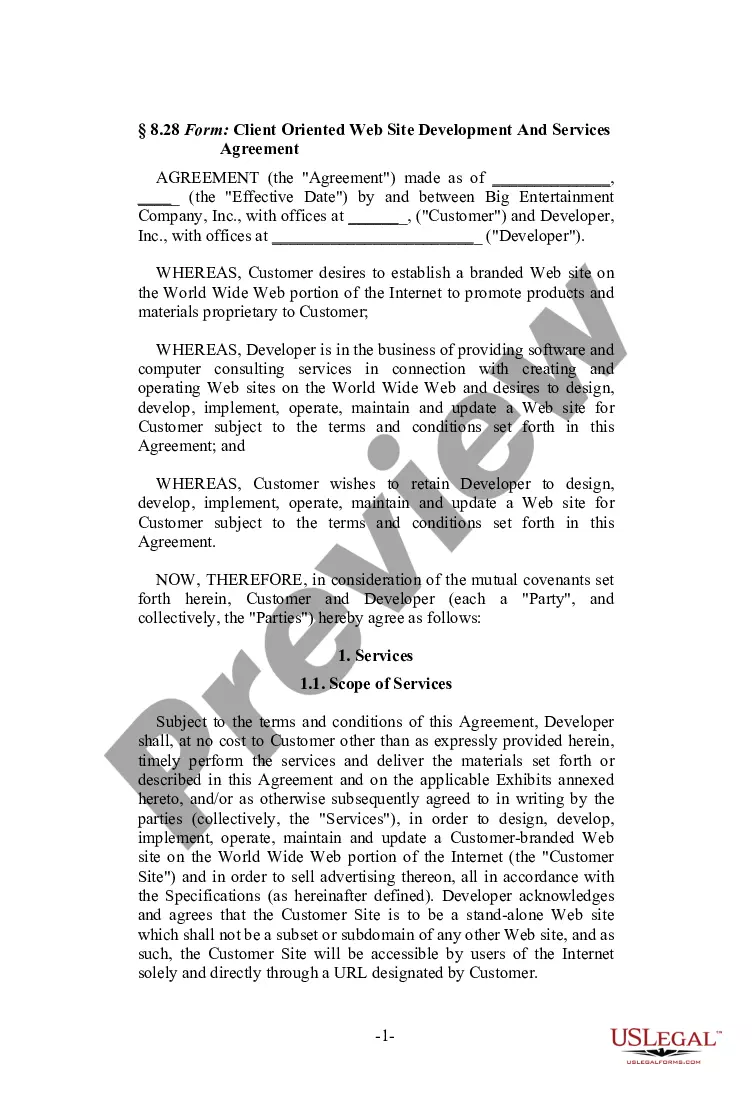
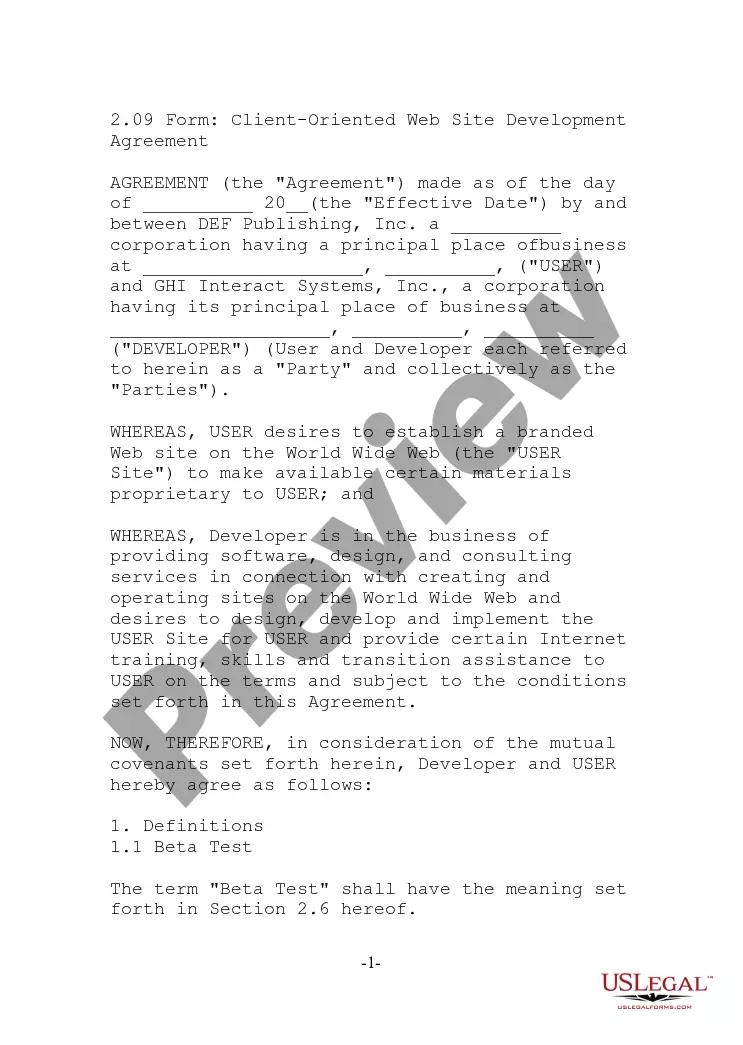
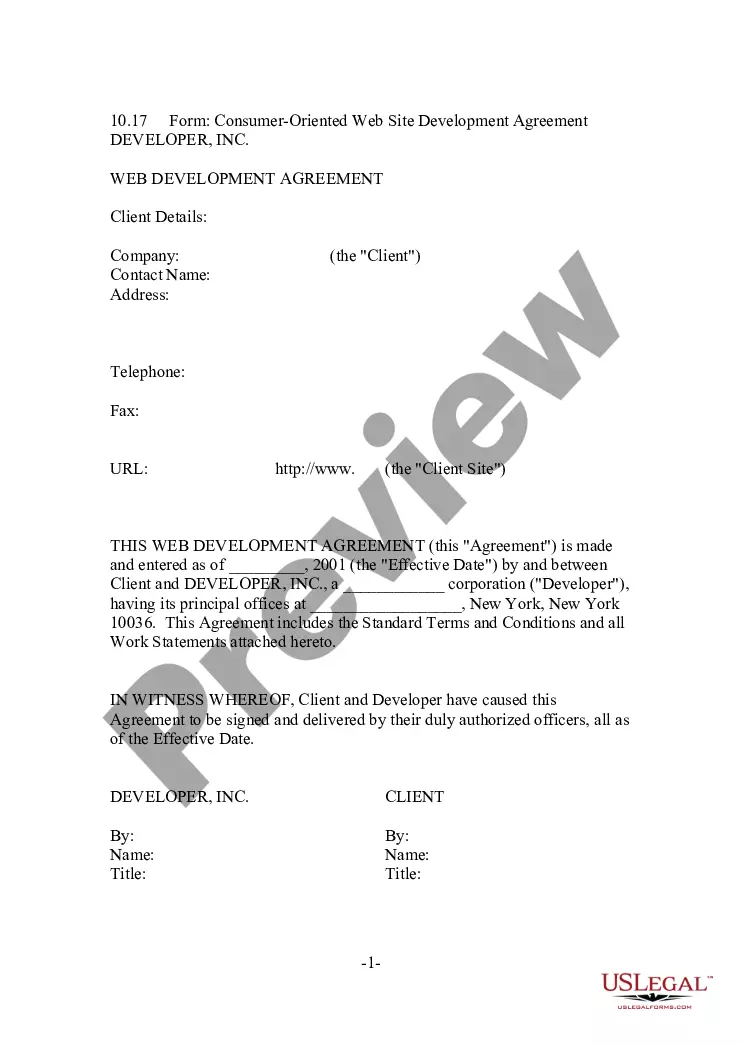
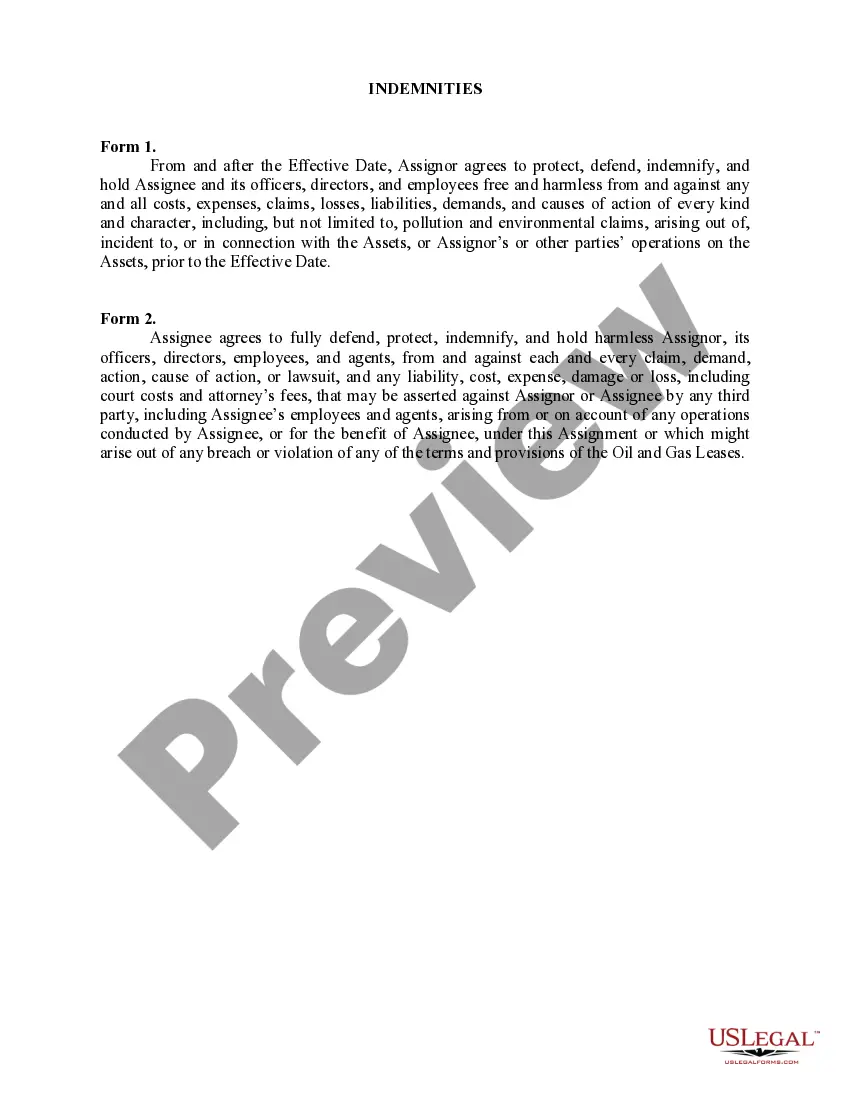
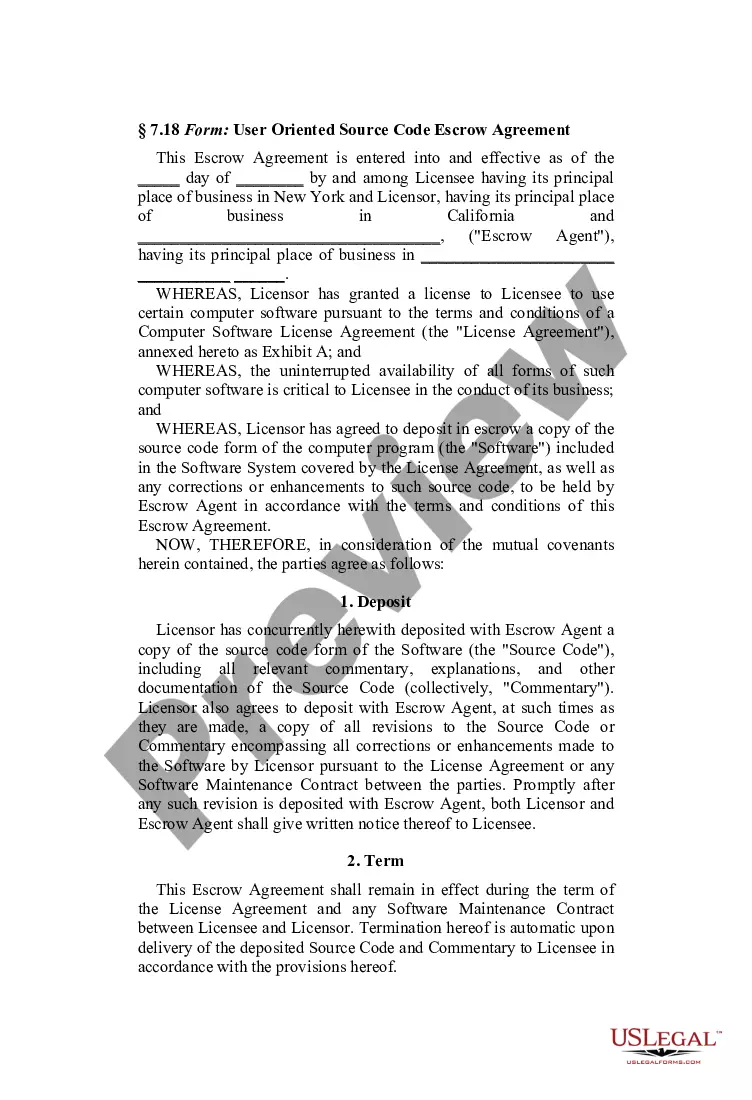
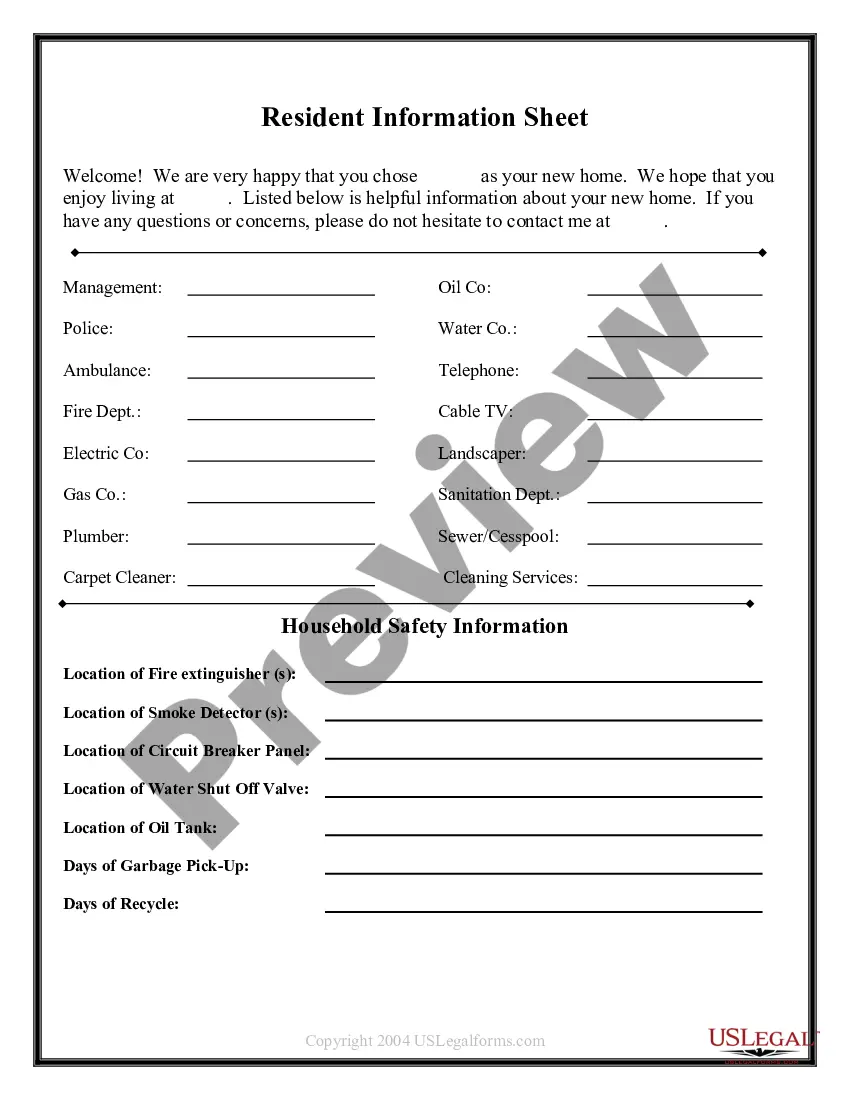
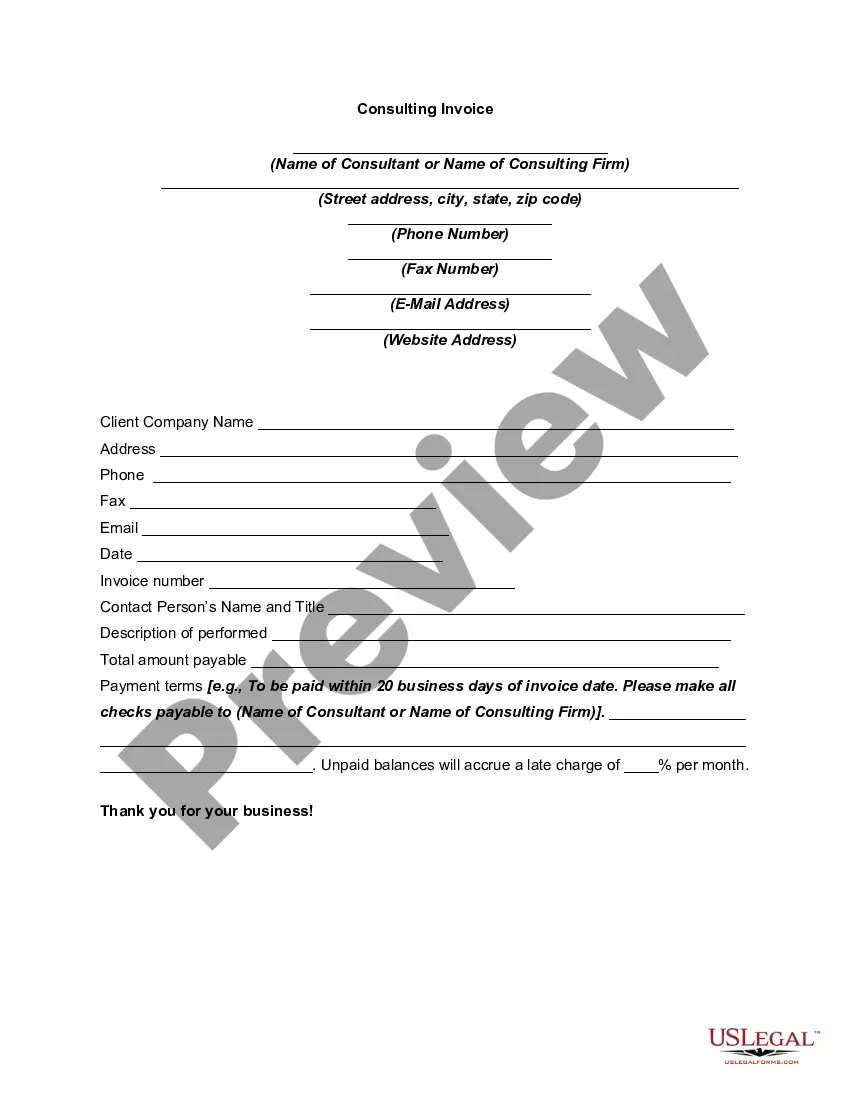
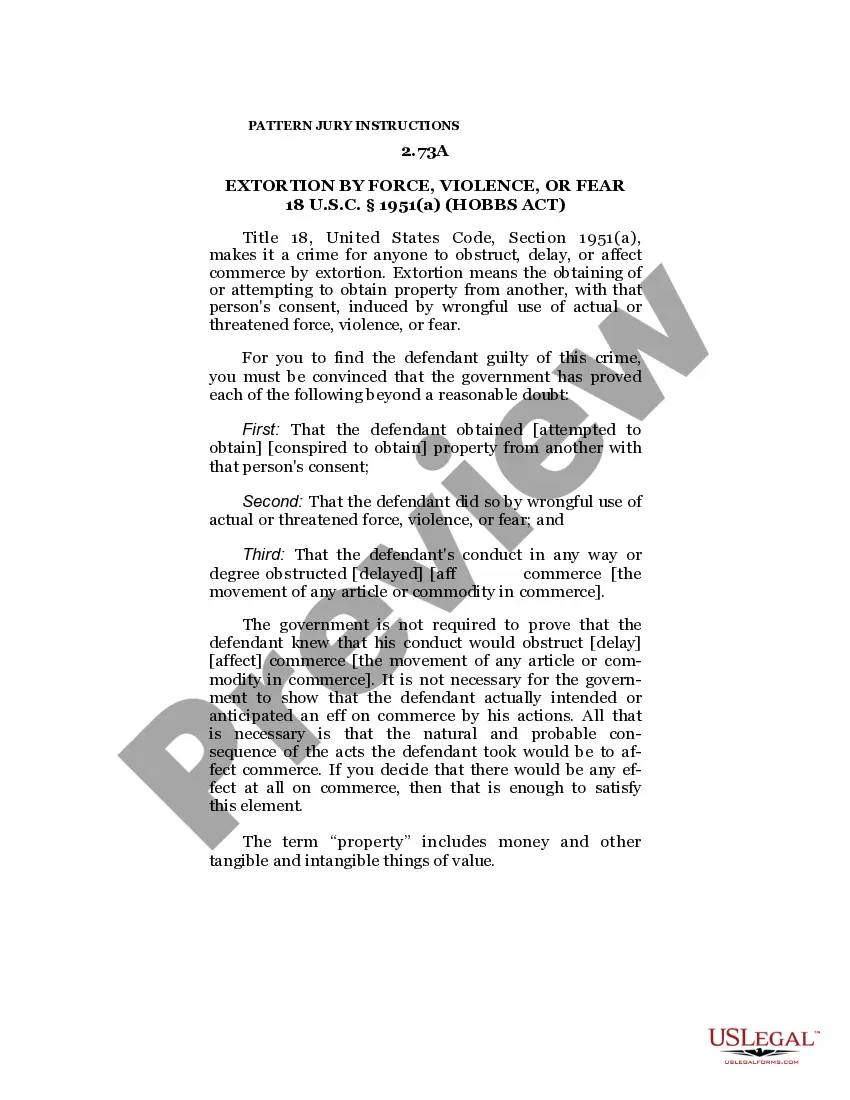
This form is a model adaptable for use in internet, technology and computer business. Adapt the form to your specific needs and fill in the information. Don't reinvent the wheel, save time and money.
Website security involves several layers, including SSL certificates, regular updates, and backups. Your consultant will likely implement best practices to keep your site locked and secure, so you can sleep easy at night.
Changes after project completion can typically be handled through an addendum to the service agreement. Just like any good plan, flexibility is important, and your consultant should be open to discussing adjustments.
To create a user-friendly site, gather feedback from potential users, implement a clean and simple design, and conduct usability testing. Making adjustments based on real user interactions can really hit the nail on the head.
Good communication is key! You'll likely communicate through emails, calls, or project management tools. Regular check-ins and updates will help ensure we're both in sync every step of the way.
Post-launch support typically includes troubleshooting, updates, and ongoing maintenance. You can also expect guidance on how to manage content and troubleshoot any issues that arise.
A service agreement serves as a safety net for both parties. It outlines expectations, responsibilities, and rights, ensuring everyone is on the same page and reducing the chance of misunderstandings down the road.
When building a client-oriented website, it's important to focus on user experience, mobile responsiveness, and easy navigation. A clear call to action and visually appealing design can also make a world of difference.