Columbus Ohio Joint Venture Agreement
State:
Multi-State
City:
Columbus
Control #:
US-ENTREP-0023-1
Format:
Word;
Rich Text
Instant download
Description
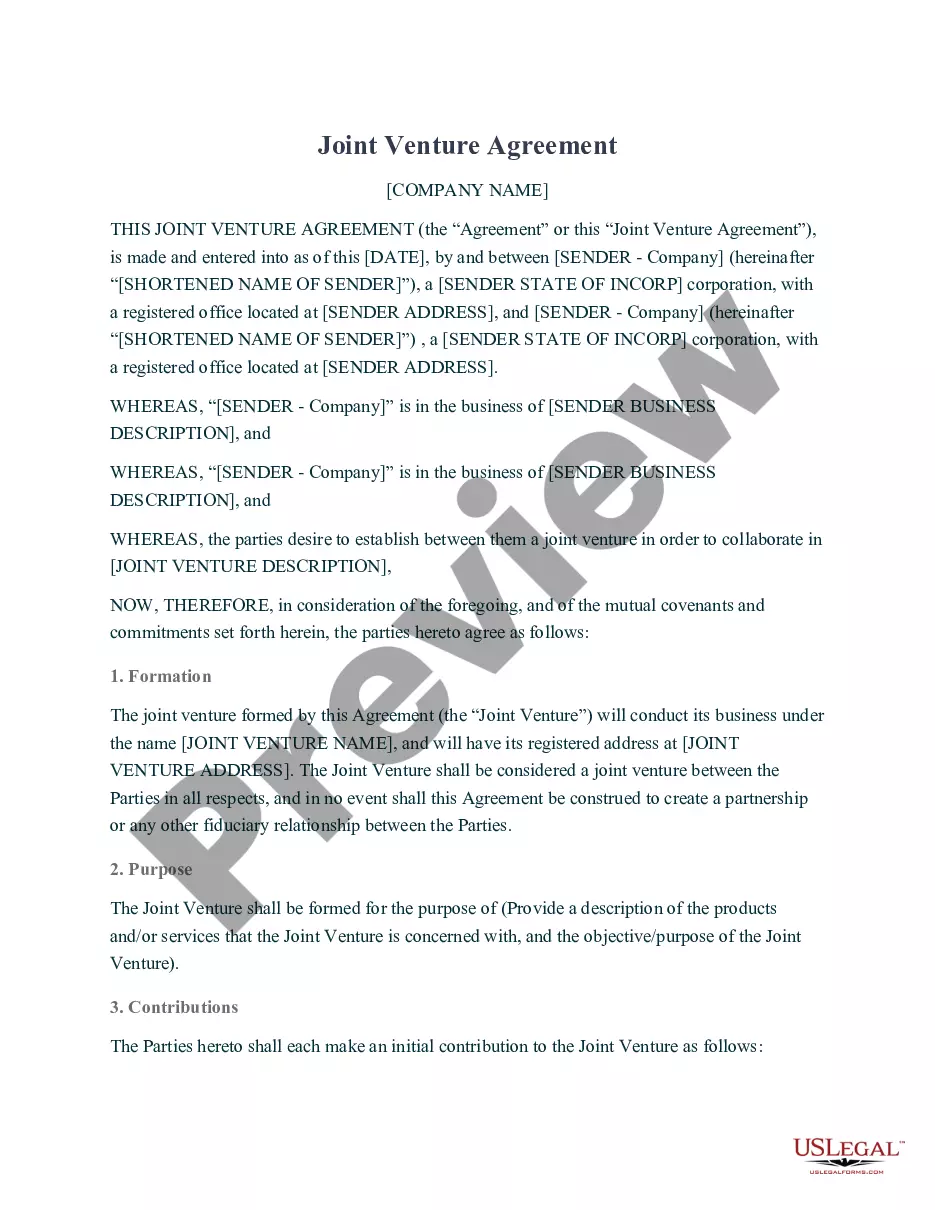
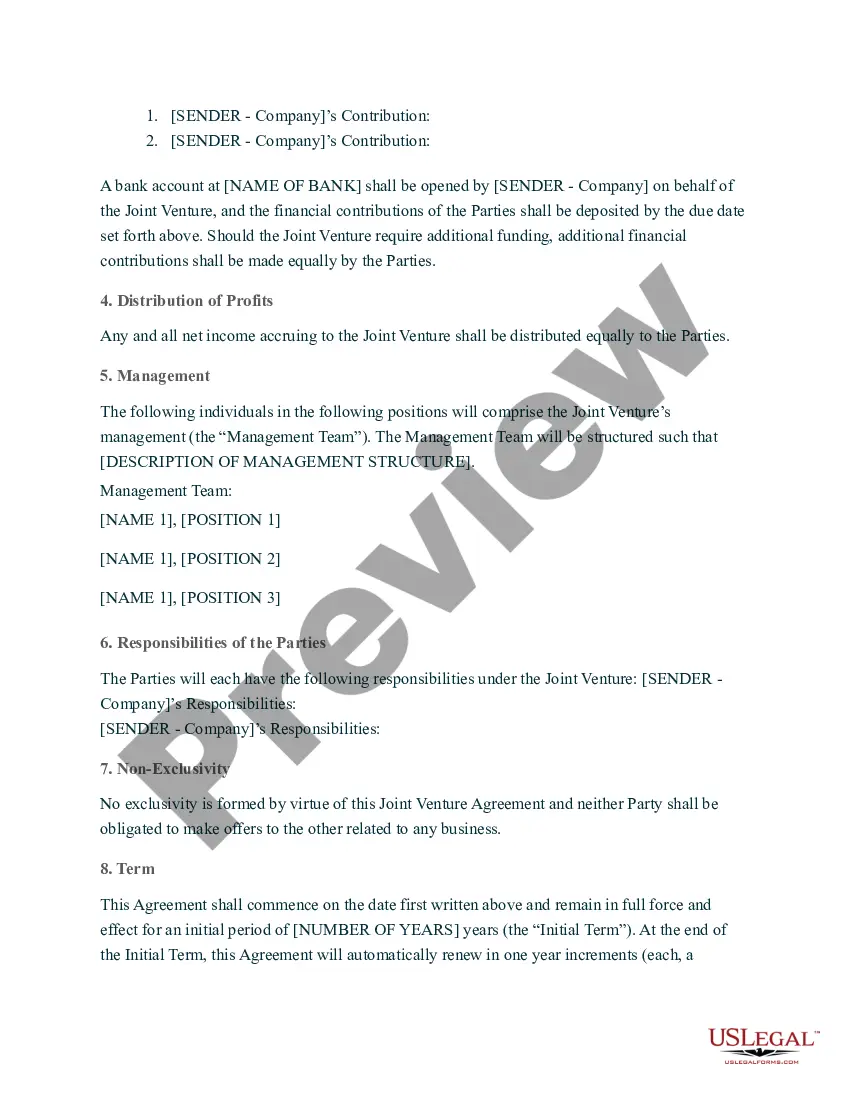
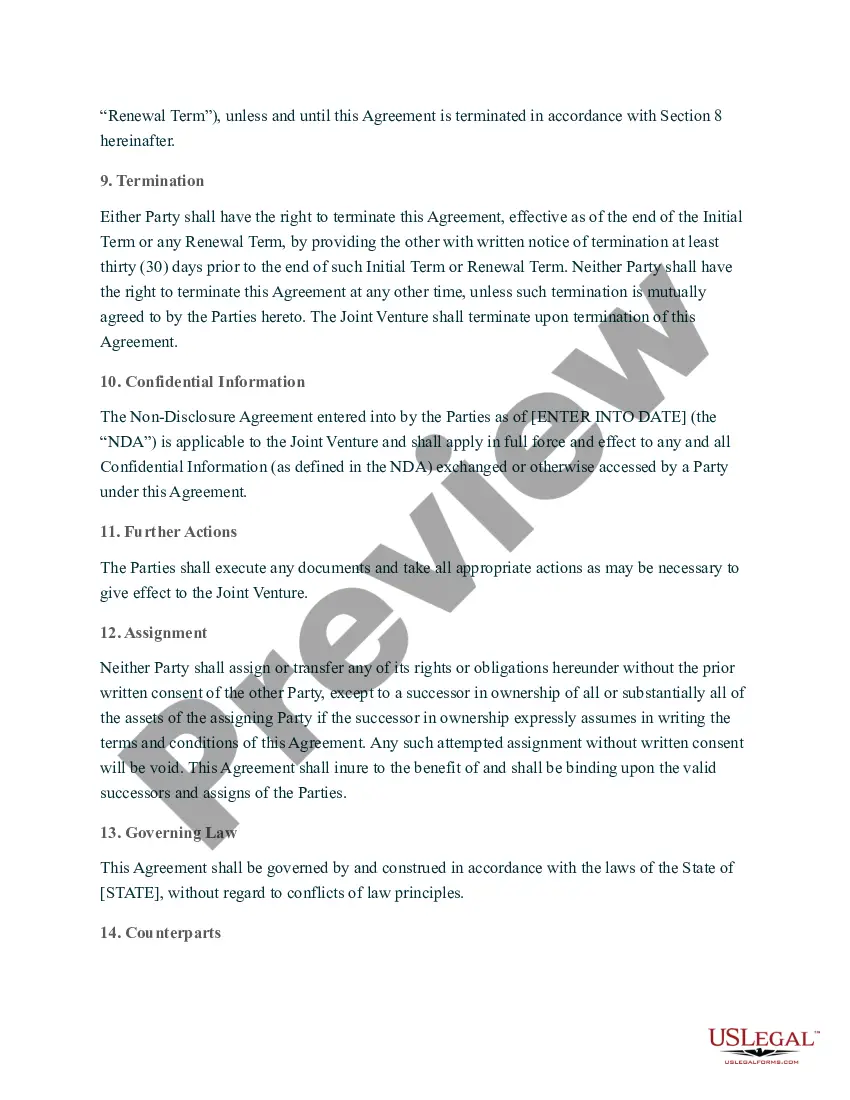
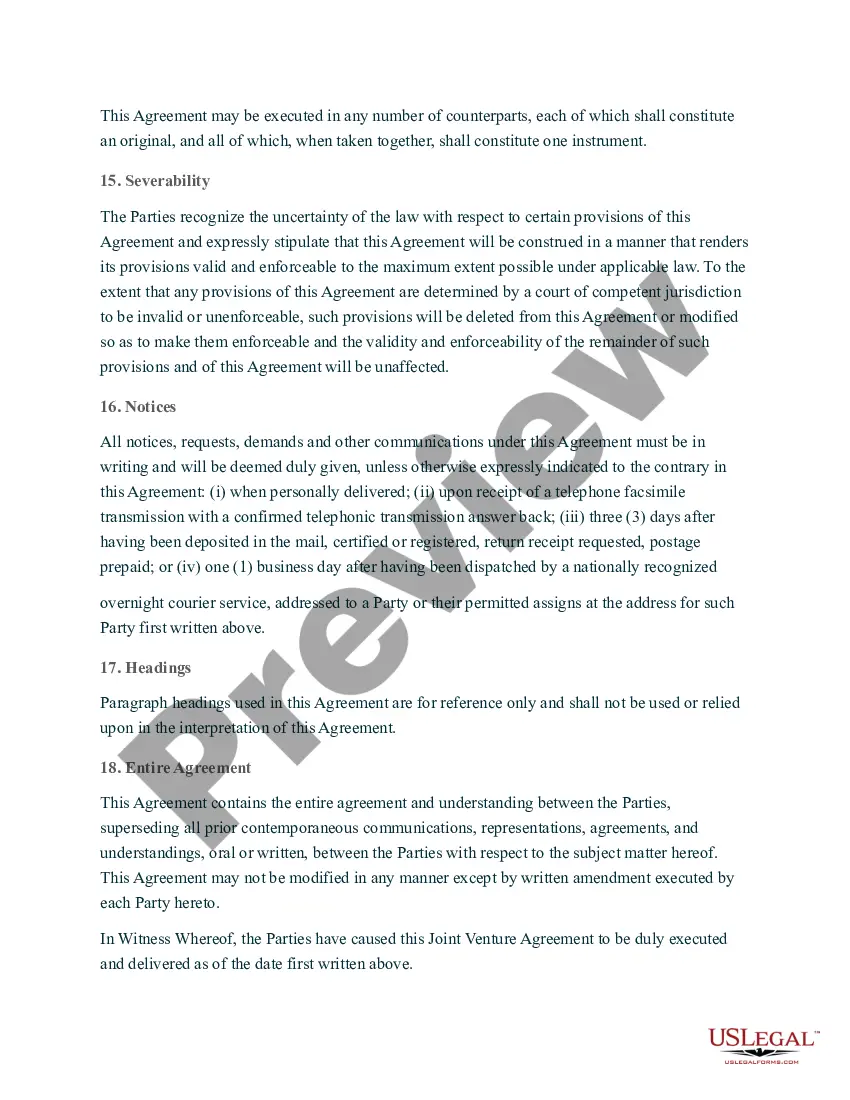
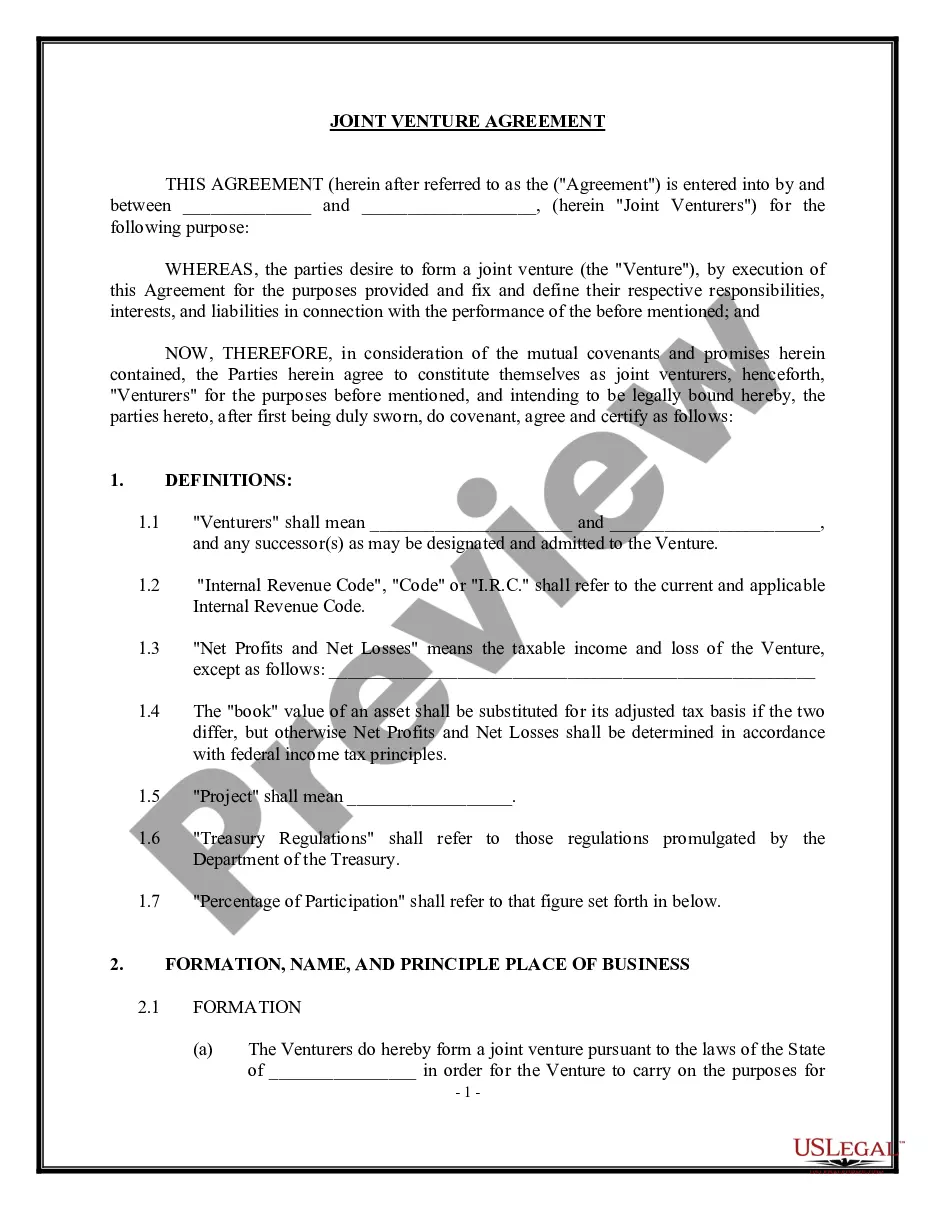
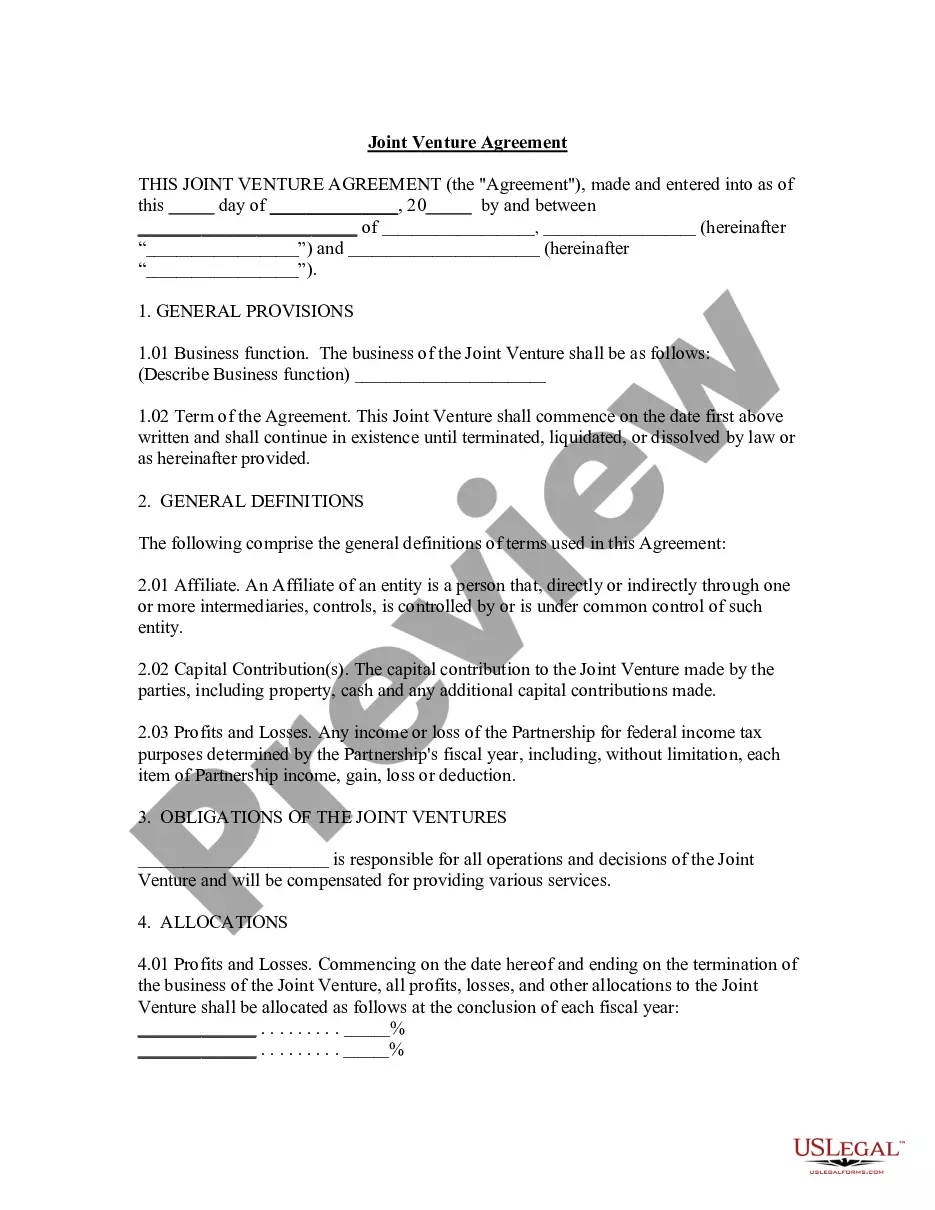
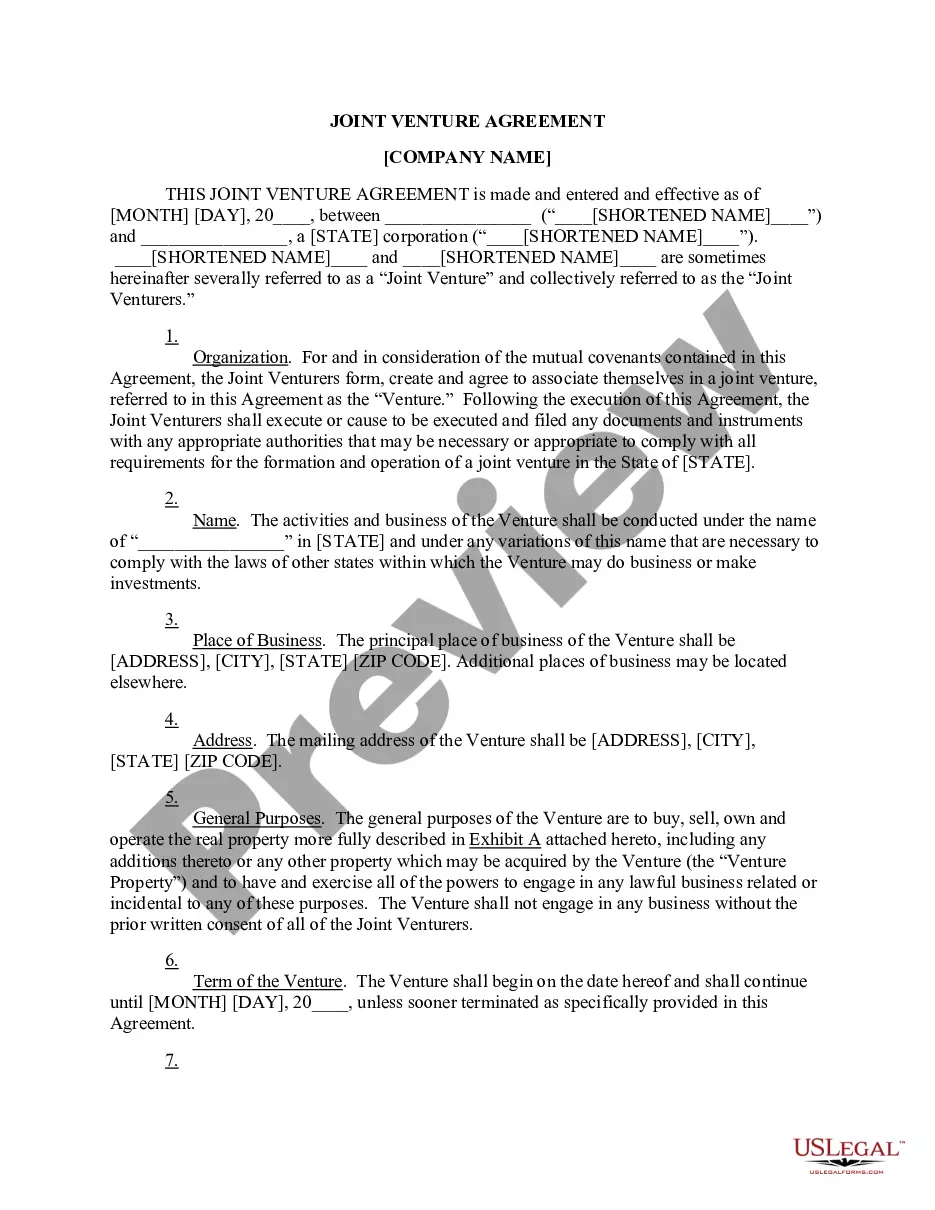
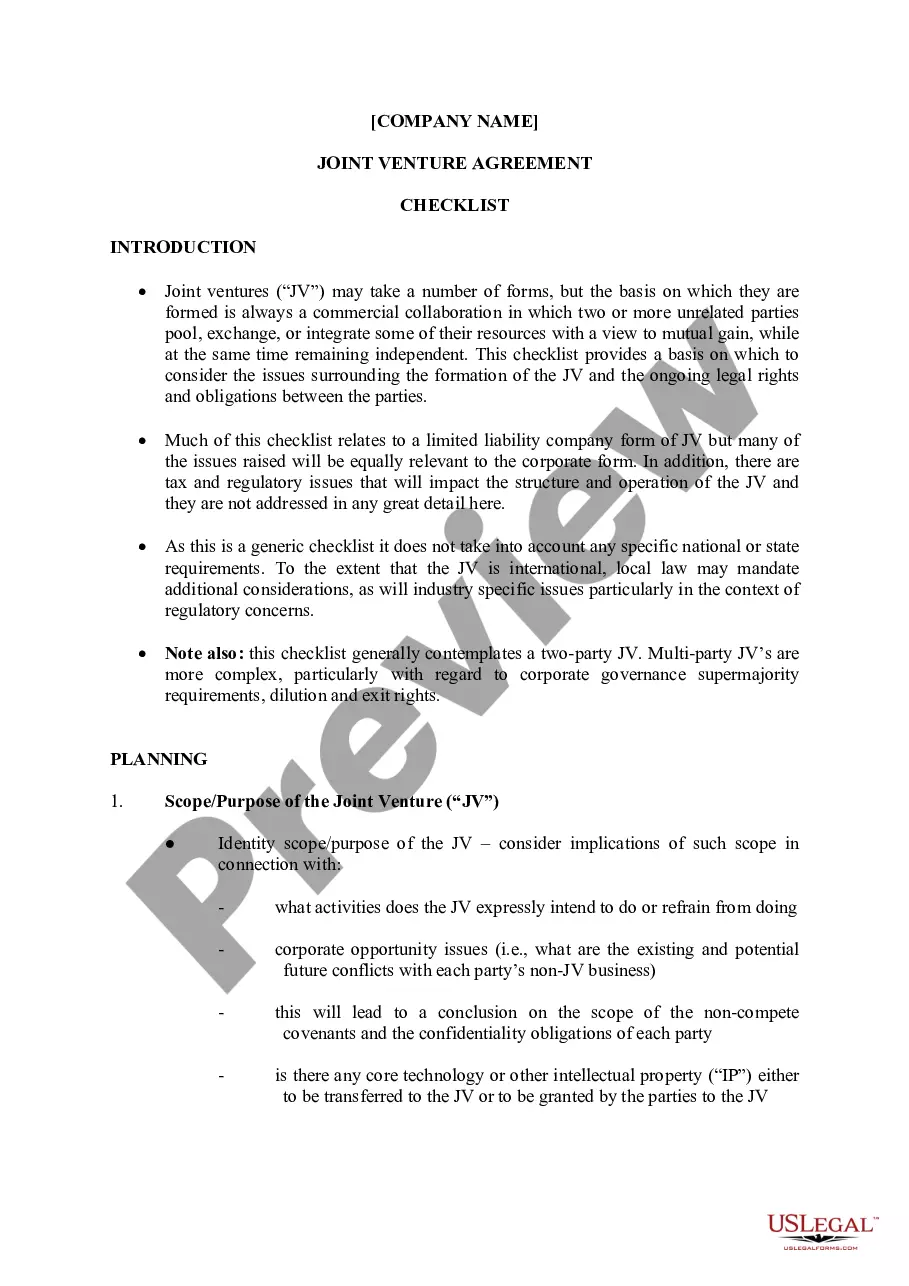
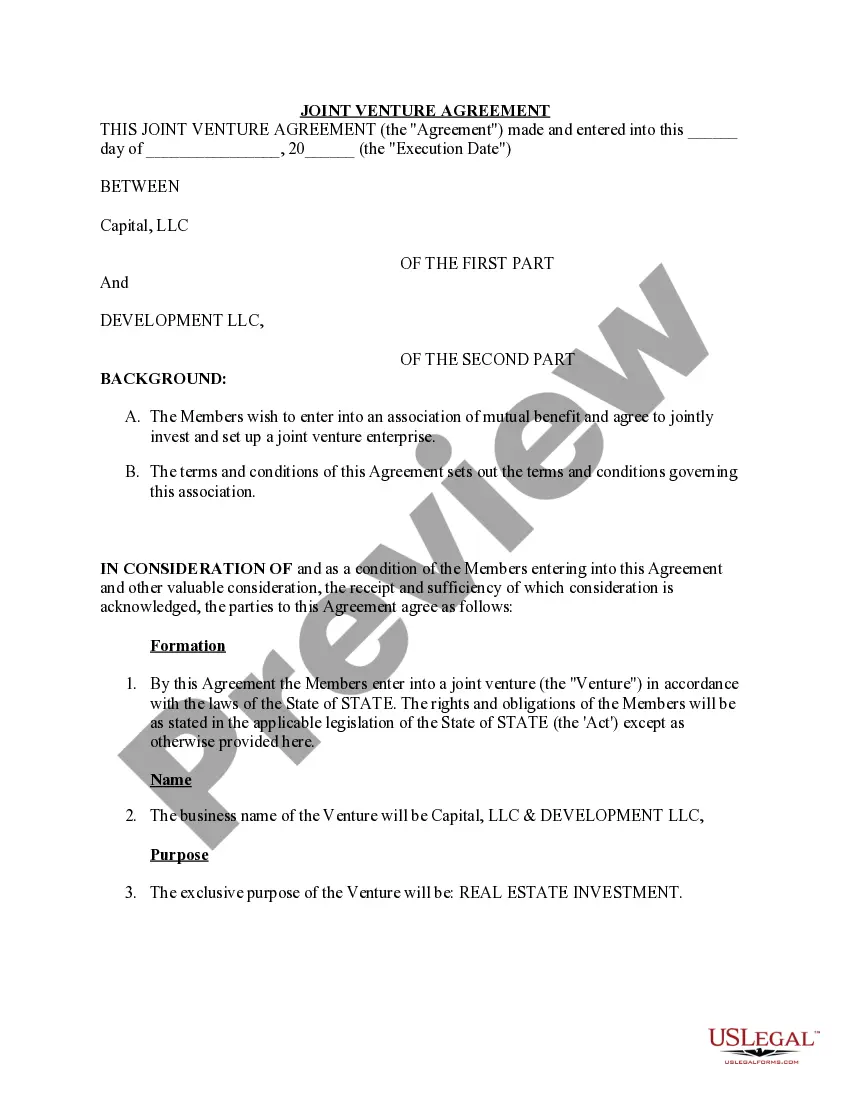
Joint venture contracts are when two parties come together in an agreement for a specific business project. The contract outlines the expectations, obligations, terms, and responsibilities that are expected of both parties during the project. In a joint venture, the two companies no longer act as two separate entities, but rather function as a partnership for the purpose of the contract. Many elements go into a joint venture contract, but some of the most important items to include are: (i) The objectives that the joint agreement was created for (ii) A layout of the contributions provided by both companies whether in cash or assets, as well as the value of those contributions (iii) Each of the parties' individual functions in the project, such as technical contributions or commercial commitments (iv) Instructions on how the parties will meet to stay updated on the progress of the project (v) The length that the partnership will be in effect. (vi) Instructions for how the agreement can be terminated if it no longer works out (vii) Terms laid out for who will manage the day-to-day options of the project (viii) Whether profits will be based on the level of contribution of each party or by a specific formulation (ix) A section that includes specific terms for details of the project such asconfidentiality agreements.
Free preview