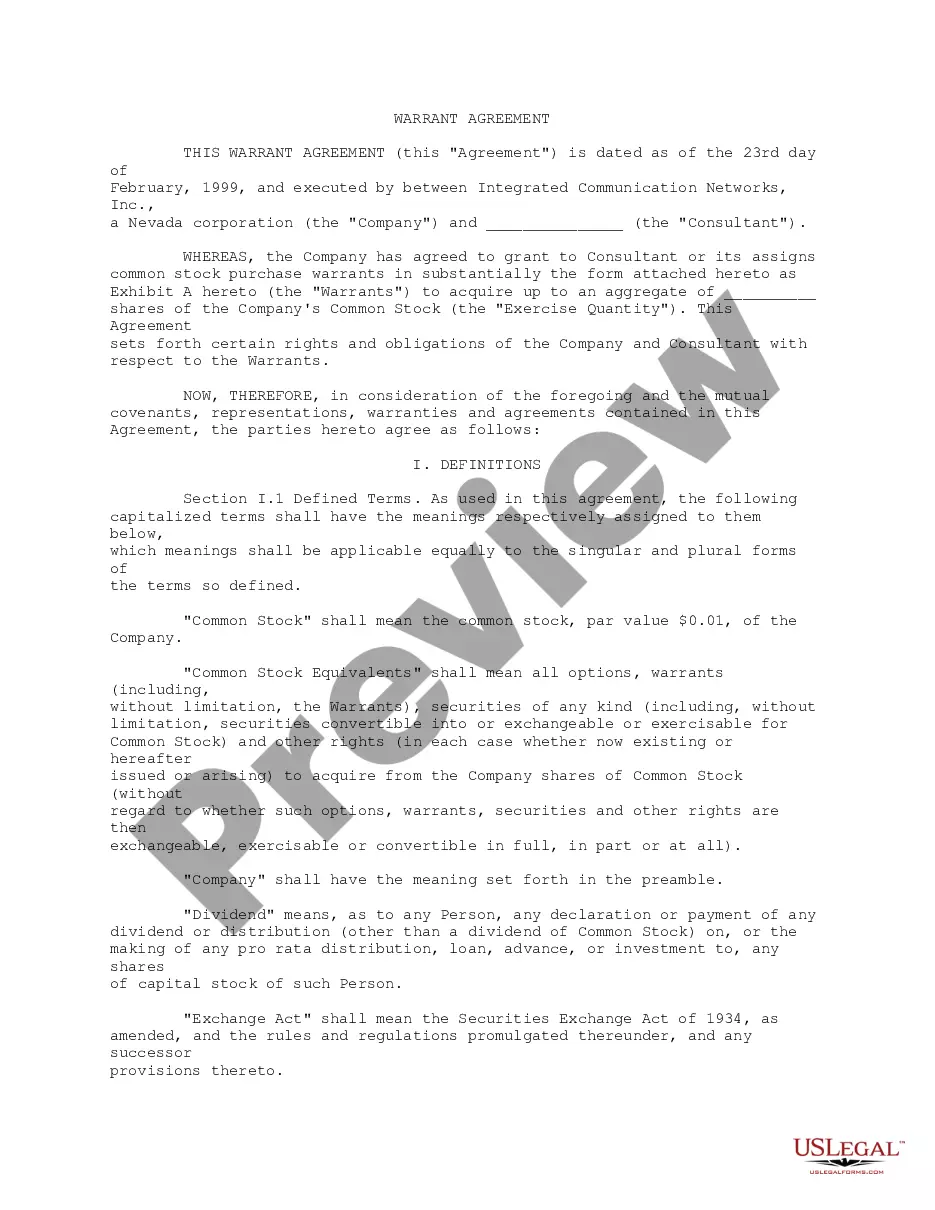
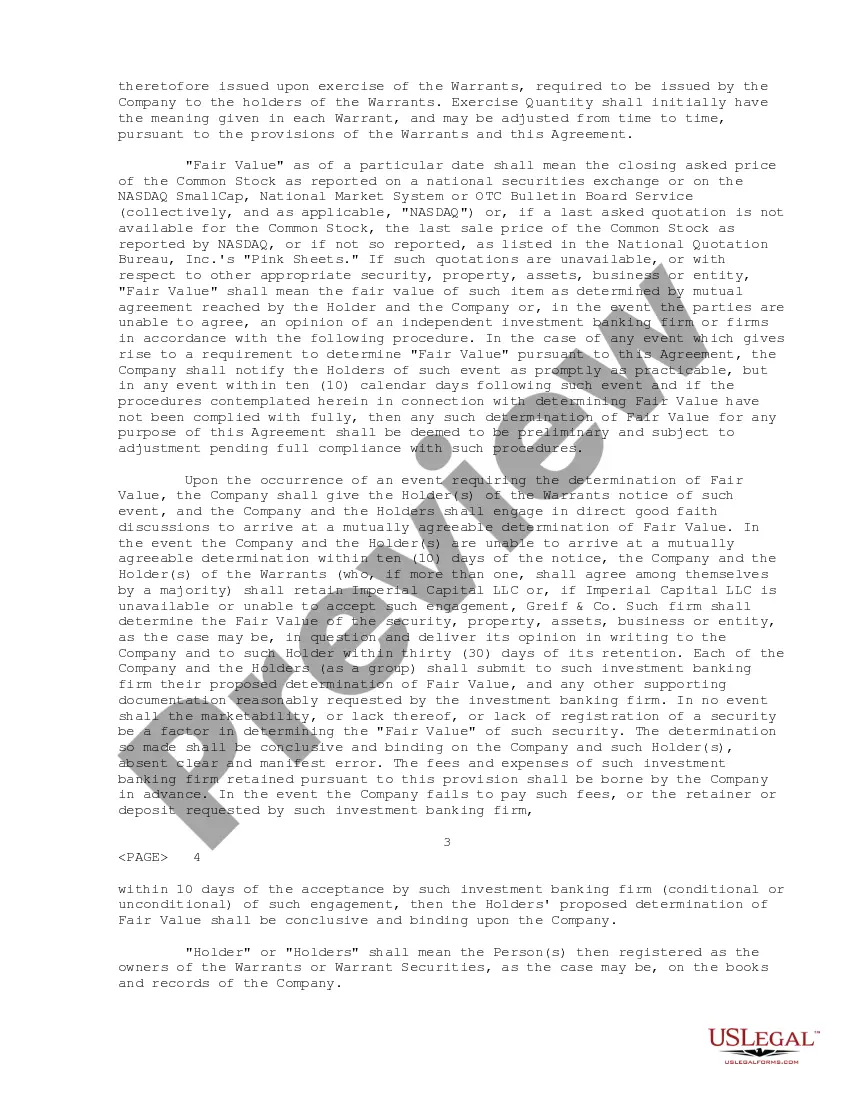
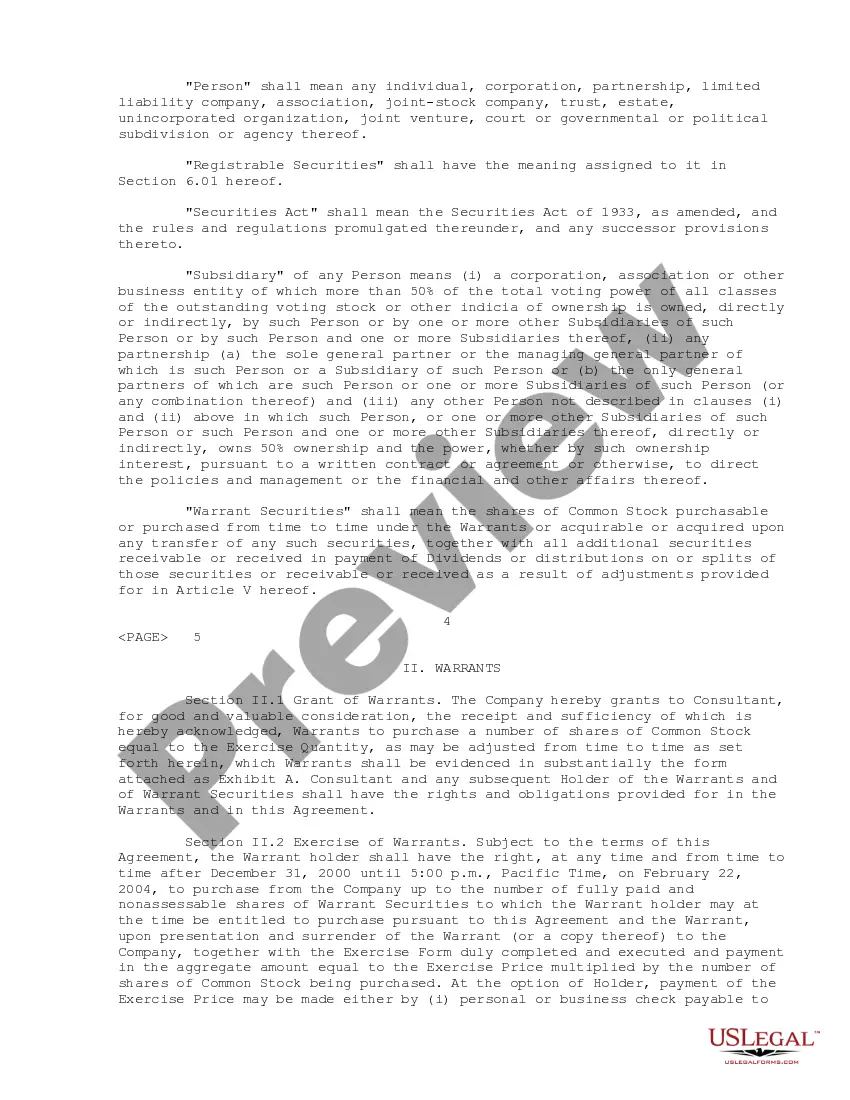
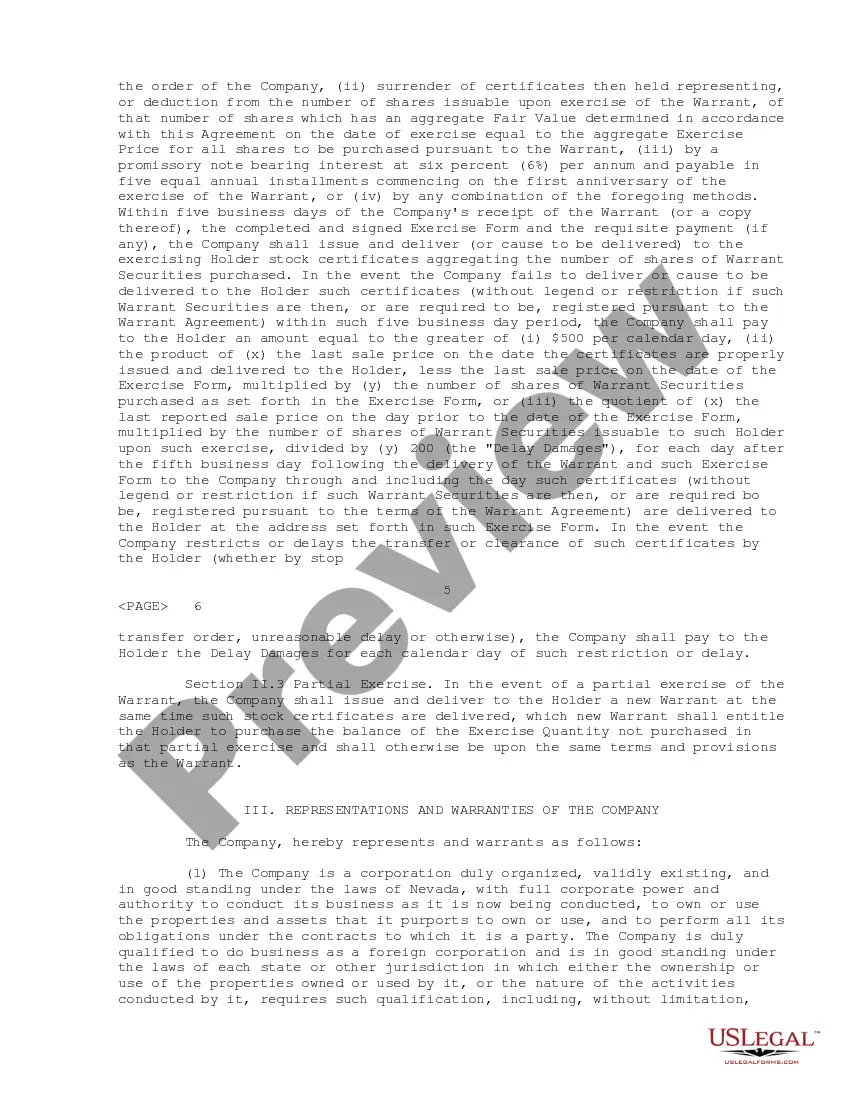
Collin Texas Warrant Agreement of Integrated Communication Networks, Inc.
Description

Get your form ready online
Our built-in tools help you complete, sign, share, and store your documents in one place.
Make edits, fill in missing information, and update formatting in US Legal Forms—just like you would in MS Word.
Download a copy, print it, send it by email, or mail it via USPS—whatever works best for your next step.
Sign and collect signatures with our SignNow integration. Send to multiple recipients, set reminders, and more. Go Premium to unlock E-Sign.
If this form requires notarization, complete it online through a secure video call—no need to meet a notary in person or wait for an appointment.
We protect your documents and personal data by following strict security and privacy standards.

Make edits, fill in missing information, and update formatting in US Legal Forms—just like you would in MS Word.

Download a copy, print it, send it by email, or mail it via USPS—whatever works best for your next step.

Sign and collect signatures with our SignNow integration. Send to multiple recipients, set reminders, and more. Go Premium to unlock E-Sign.

If this form requires notarization, complete it online through a secure video call—no need to meet a notary in person or wait for an appointment.

We protect your documents and personal data by following strict security and privacy standards.
Looking for another form?
How to fill out Warrant Agreement Of Integrated Communication Networks, Inc.?
Handling documentation for business or personal requirements is consistently a significant obligation.
When drafting a contract, a public service application, or a power of attorney, it's crucial to reflect on all federal and state statutes and regulations applicable to the particular area.
However, smaller counties and even municipalities also possess legislative protocols that must be taken into account.
Make sure the template adheres to legal standards and click Buy Now.
- All these factors render it stressful and labor-intensive to prepare the Collin Warrant Agreement for Integrated Communication Networks, Inc. without professional help.
- It is simple to prevent unnecessary expenses on lawyers for drafting your documents and create a legally acceptable Collin Warrant Agreement for Integrated Communication Networks, Inc. independently, utilizing the US Legal Forms online library.
- It is the largest internet repository of state-specific legal templates that have been professionally verified, ensuring their legitimacy when selecting a template for your county.
- Previously subscribed users only need to Log In to their accounts to retrieve the necessary document.
- If you do not yet possess a subscription, follow the step-by-step guide below to acquire the Collin Warrant Agreement for Integrated Communication Networks, Inc.
- Browse the page you've accessed and confirm if it contains the template you require.
- To achieve this, utilize the form description and preview if these options are available.
Form popularity
FAQ
Warrants are typically offered to investors in a new company as a way to increase their investment in the future without investing much more money. This can be used as an incentive to attract new investors into a company.
Stock warrants can last for up to 15 years, whereas stock options typically exist for a month to two to three years. Therefore, for long-term investments, stock warrants may be a better investment than stock options because of their longer terms. However, stock options may be a better short-term investment.
If it's a merger for shares, the warrants will be adjusted to reflect the share terms of the merger and will continue to trade. If it's a cash buyout then warrant expiration is accelerated and the warrant will be worth its intrinsic value if in-the-money and worthless if out-of-the-money.
Warrants are issued by companies, giving the holder the right but not the obligation to buy a security at a particular price. Companies often include warrants as part of share offerings to entice investors into buying the new security.
If Company XYZ shares rose to $40 during that time, the warrant holder could purchase the shares for $20 each, and immediately sell them for $40 on the open market, pocketing a profit of ($40 - $20) x 100 shares = $2,000. Thus, the minimum value of each warrant is $20.
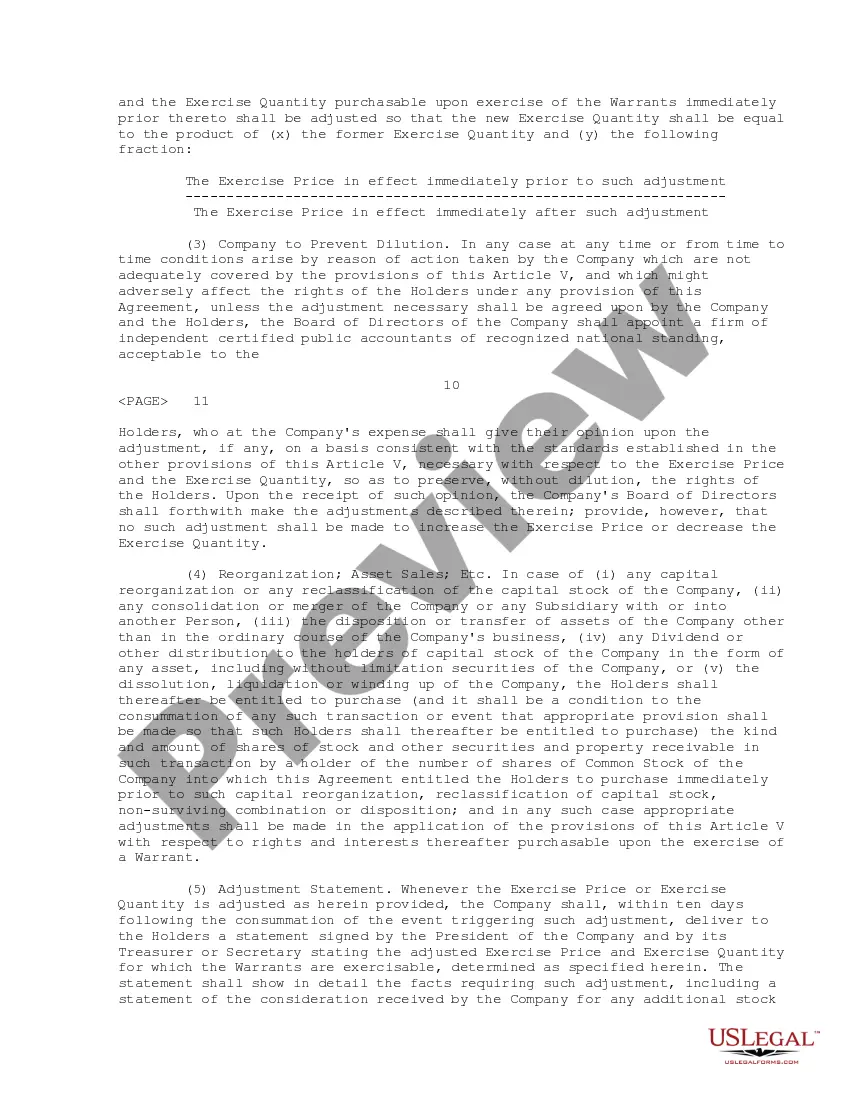
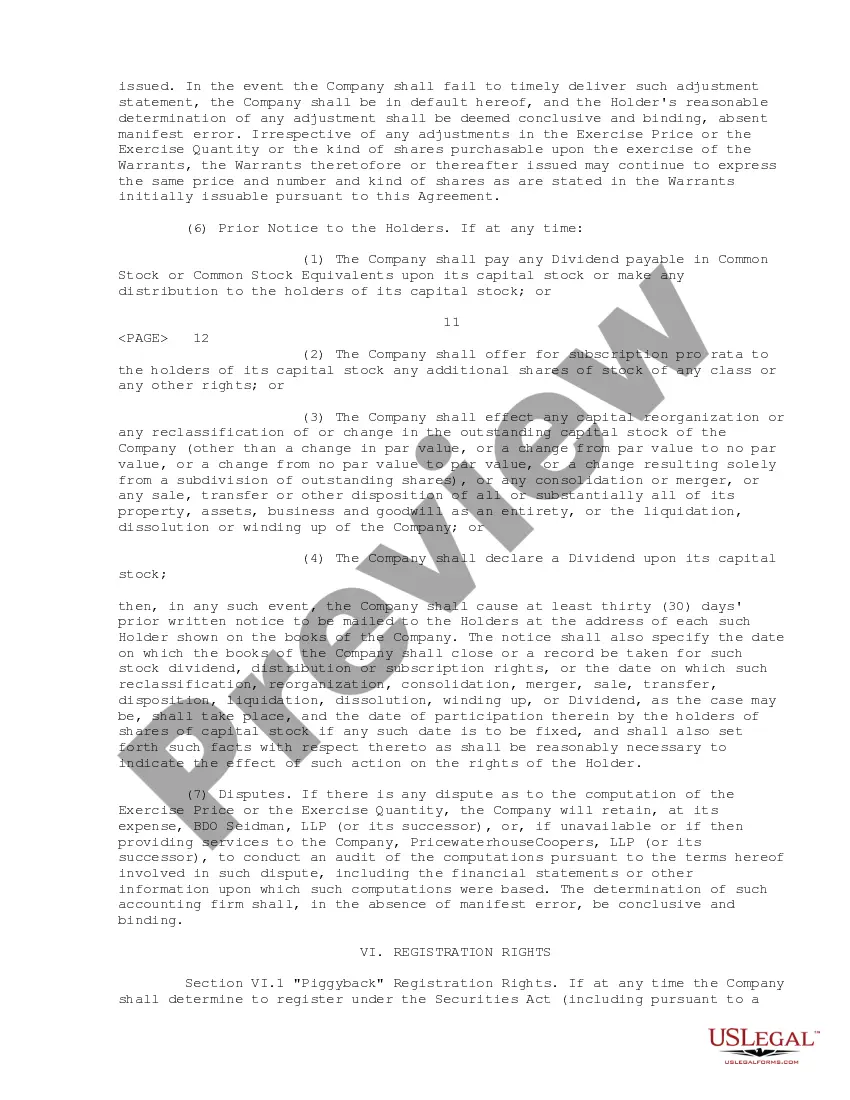
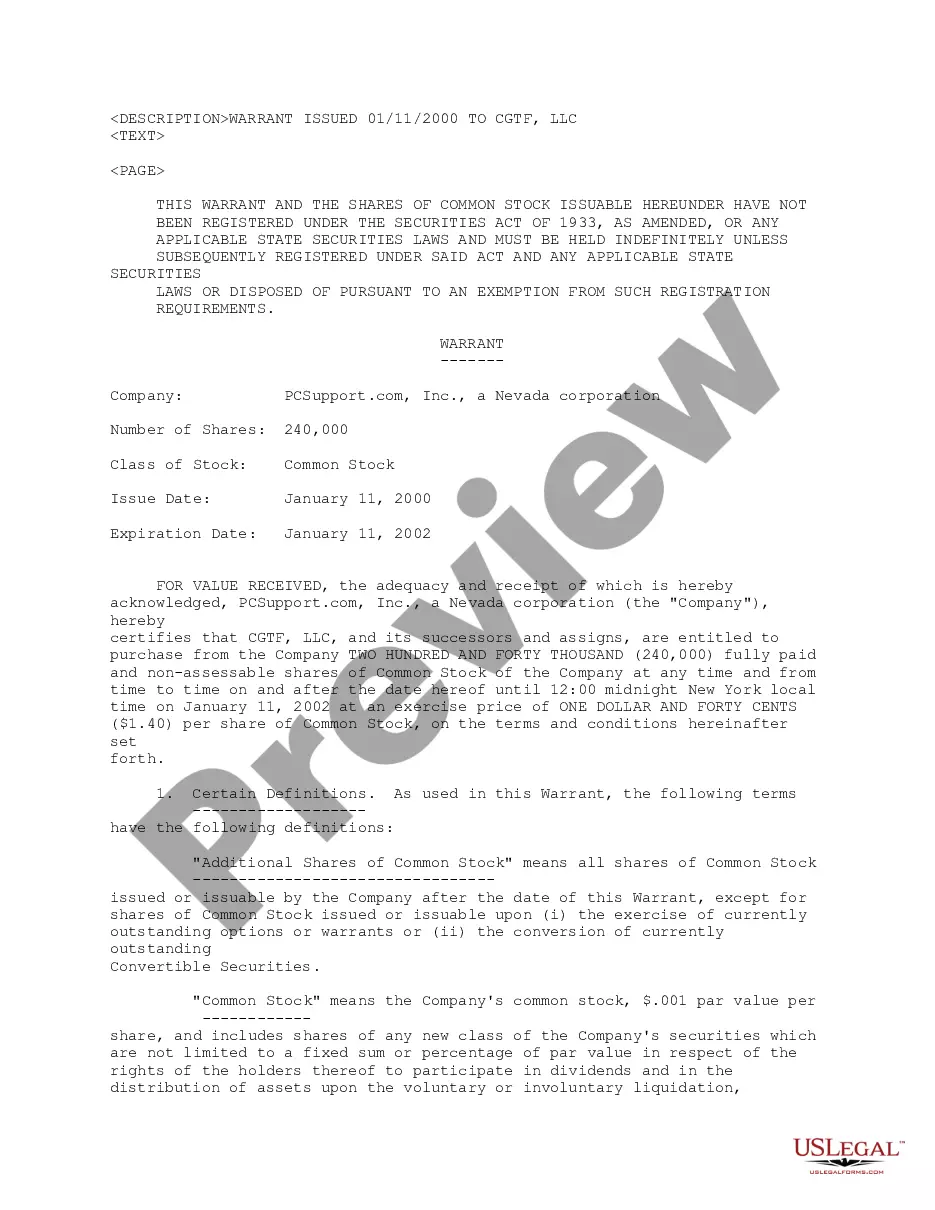
A warrant agreement is an agreement to purchase stock, also called a stock warrant. The agreement provides one party the right to purchase a company's stock at a specific price and at a specific date.
Often used as an alternative to acquiring common or preferred stock, a warrant is a contract to purchase stock at a specific price on or after a specific date in the future. In this way, a warrant is like an options contract in that it specifies a price and time for purchase of the shares in the future.
Warrant Contract means a written Contract between the Company, the Parent, and a Warrant Holder in form and substance acceptable to the Parent, regarding the treatment of the Warrants that such Warrant Holder holds in connection with the Merger.
A warrant is a contract that gives the holder the right to purchase from the issuer a certain number of additional shares of common stock in the future at a certain price, often a premium to the stock price at the time the warrant is issued.
Stock warrants can last for up to 15 years, whereas stock options typically exist for a month to two to three years. Therefore, for long-term investments, stock warrants may be a better investment than stock options because of their longer terms. However, stock options may be a better short-term investment.