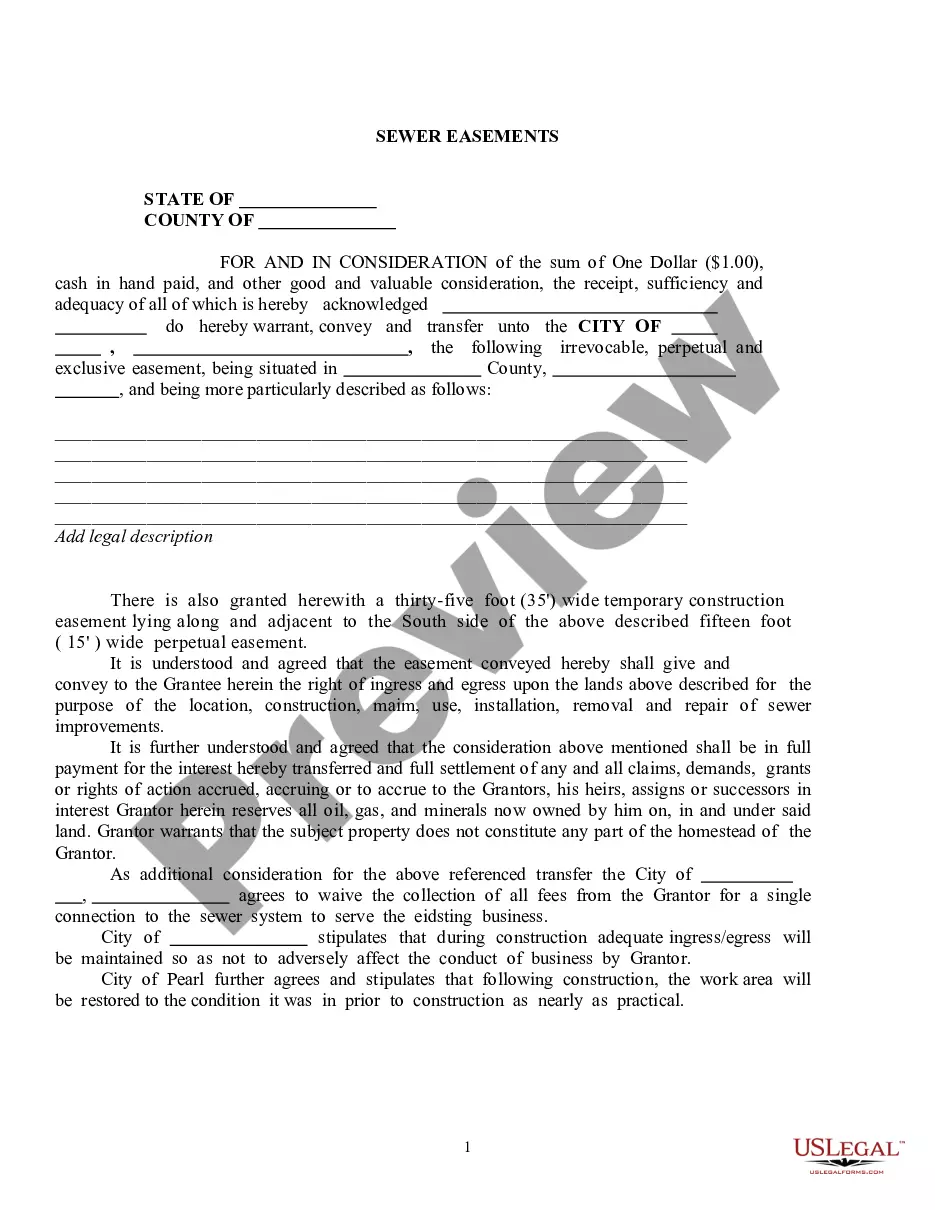
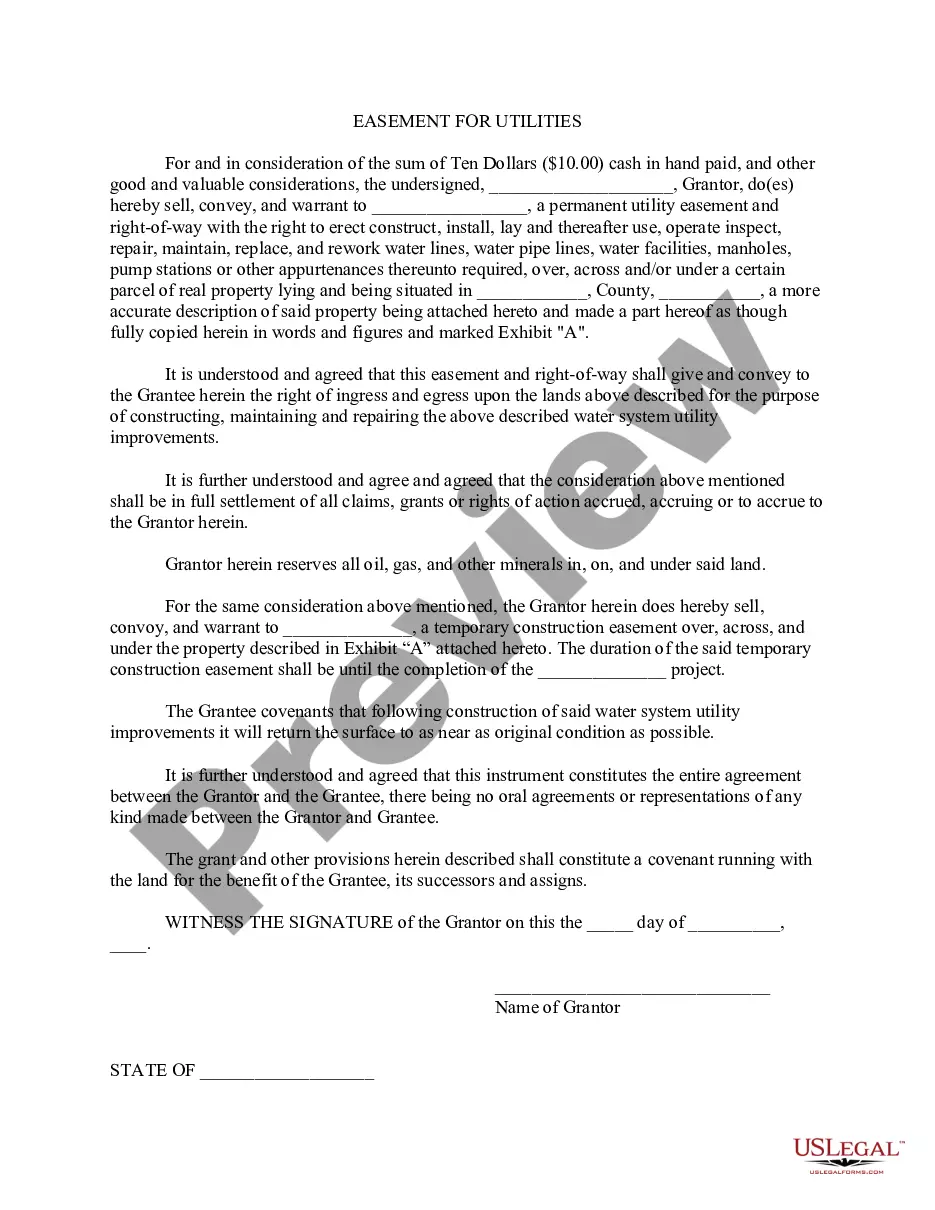
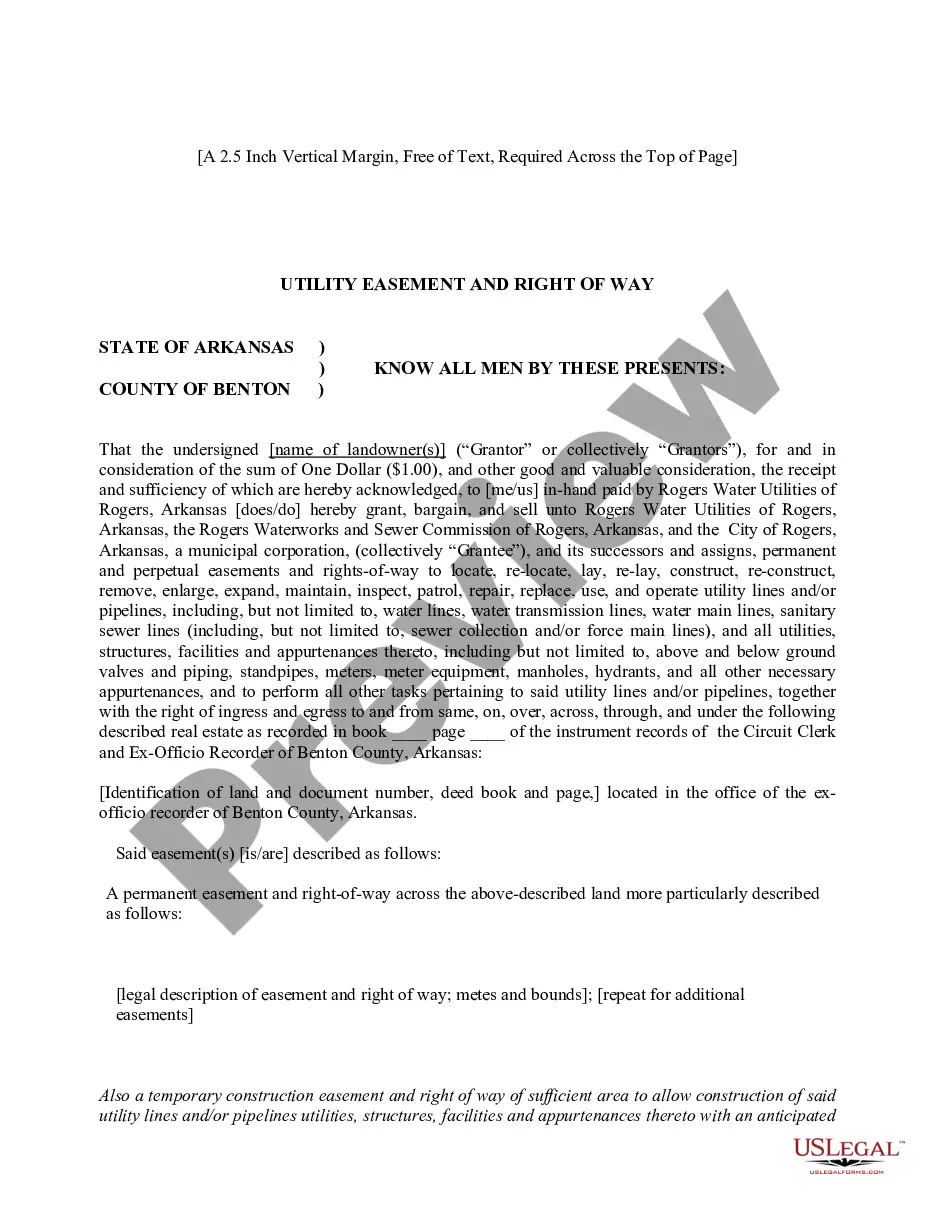
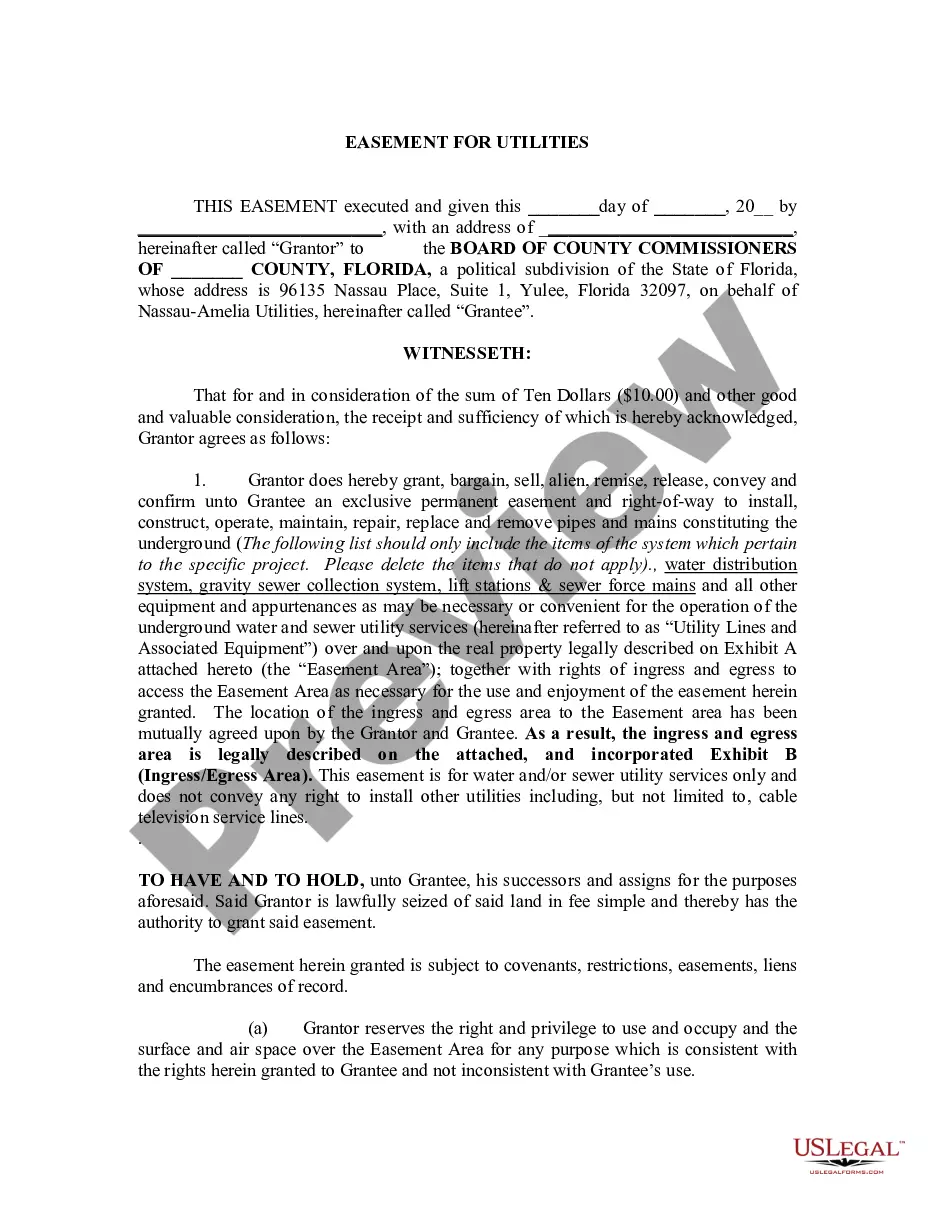
This is a sample form for use in transactions involving easements, a Sewer Easement. Grants sewer easements to government for temporary and permanent sewer improvements.
An easement gives one party the right to go onto another party's property. That property may be owned by a private person, a business entity, or a group of owners. Utilities often get easements that allow them to run pipes or phone lines beneath private property. Easements may be obtained for access to another property, called "access and egress", use of spring water, entry to make repairs on a fence or slide area, drive cattle across and other uses. The easement is a real property interest, but separate from the legal title of the owner of the underlying land.
You can find out the dimensions by looking at your property survey or contacting the city’s planning department. Think of them as your guiding star in navigating those murky waters!
Sewer easements are vital for maintaining public health and safety. It’s kind of like keeping your car in good shape; if something goes wrong, it can really back up the works!
Ignoring the rules can lead to a whole mess of problems, including fines or the city having to remove obstructions. Nobody enjoys a surprise visit from the city inspector, so staying compliant is the way to go.
If you spot any buildings or structures encroaching on the easement, it's best to reach out to the city. Like they say, it's better safe than sorry!
Building over a sewer easement is generally a no-go. You wouldn’t want to put a roadblock in front of a freeway, would you? Always check with city regulations first to avoid any headaches down the line.
You can check your property’s title documents or consult the city’s property records. It's like checking your wallet for old receipts; it might surprise you what you find!
A sewer easement is a designated area where the city or a utility company has the right to access and maintain sewer lines. Think of it as a pathway for pipes under your property, ensuring everything flows smoothly.